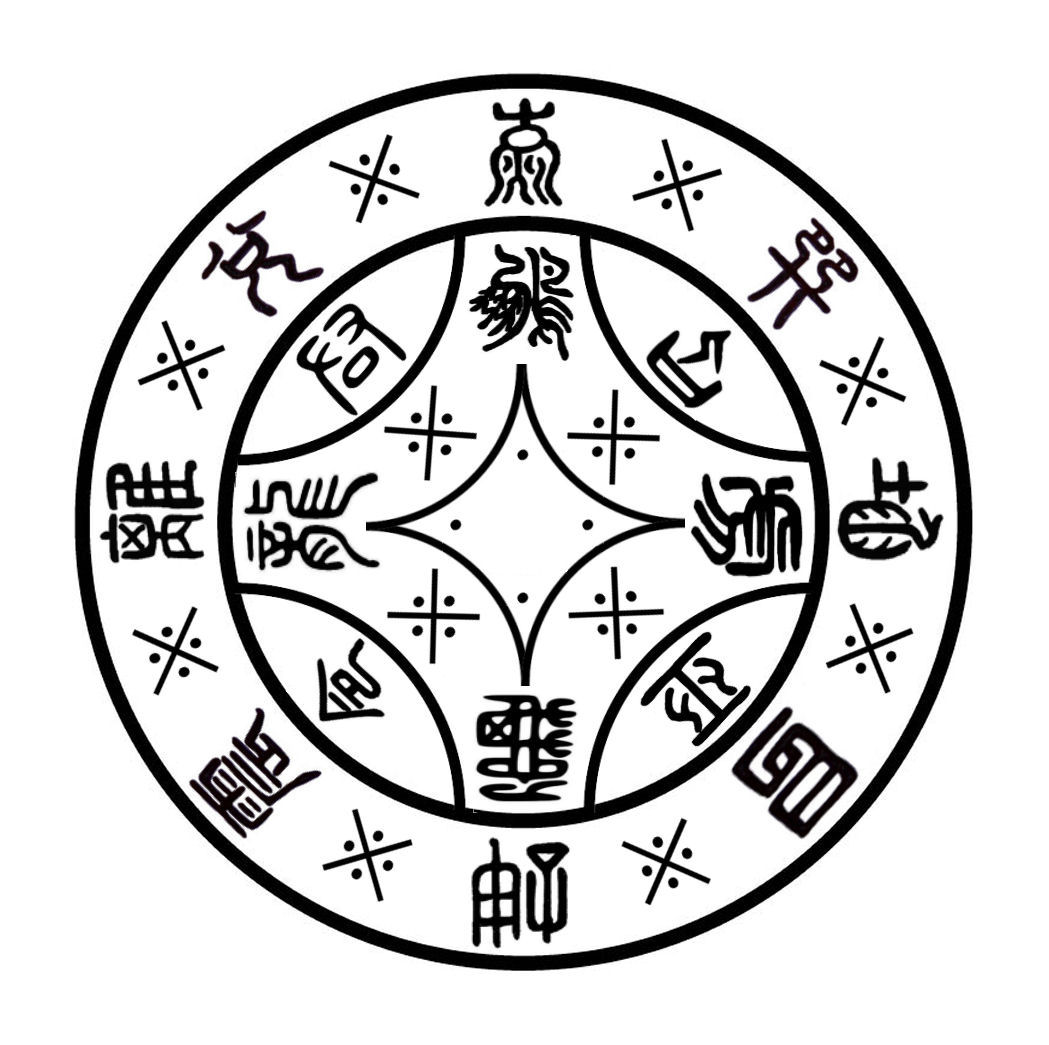
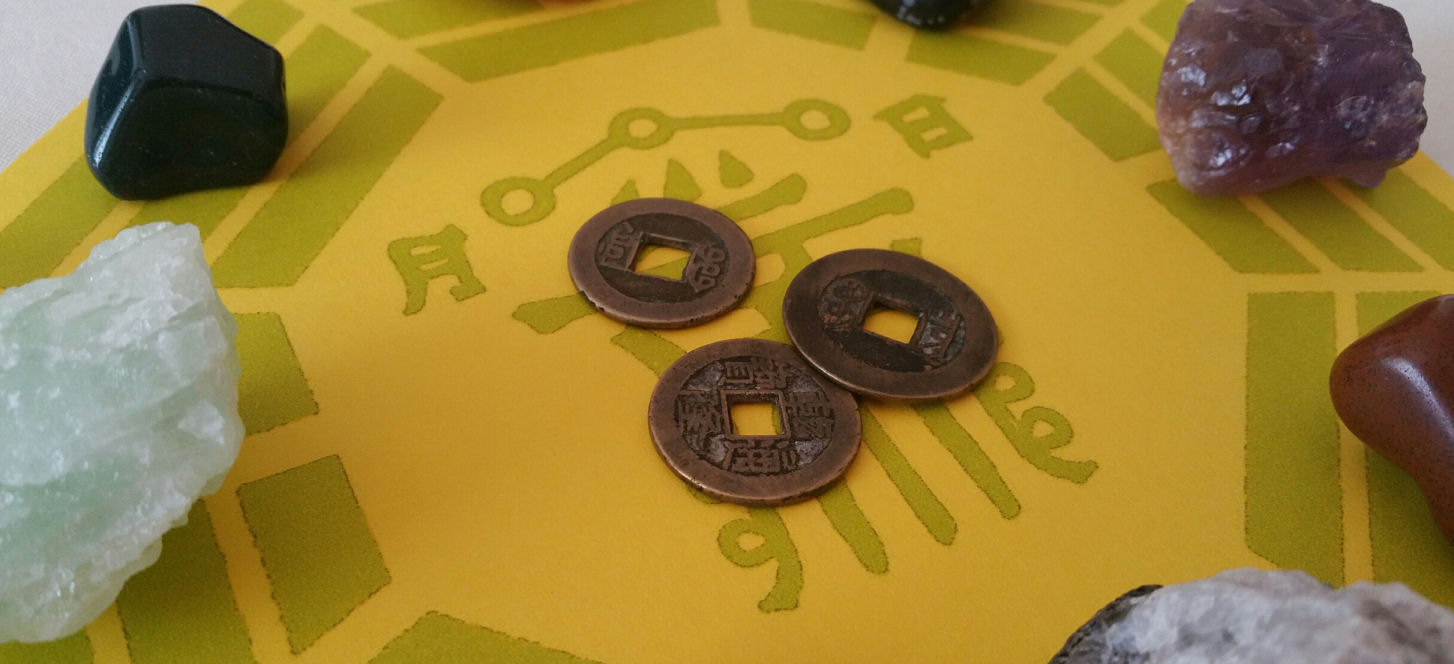
The Seal of Changes is a template for crafting 64 talismanic sigils that harness the 64 powers encoded into the I Ching: Book of Changes. In this practicum video, I’ll share with you my favorite one: the Seal for Raising an Army based on Hexagram 7.
This work is dedicated to the public domain.
Download the blank template for the Seal of Changes:
If you want to fully understand how to operate the Seal of Changes for controlling the 64 powers from the I Ching, then you’ll first need to understand the 64 hexagrams of the I Ching and some of their metaphysical and occult correspondences. A great place to attain a solid foundation to that regard is my “I Ching and Practitioner” course, which you can find and order below.
I love watching videos of people sharing their deeply personal experiences with deities of different pantheons and what those experiences have meant to them, so now I’m sharing one of my own. =)
We’ve arrived at our final installment of the “Bell Chimes In” series for 2017. For those of you who’ve watched all 18 episodes, thank you so much for coming along on this journey with me. As I close out the year of venturing into the terrain of YouTube (I know I am no pioneer on this front, but it was for sure an unfamiliar and new adventure for me), I should probably share with you why I ventured out in the first place: the Lady of the Ninth Heaven.
“Poison magic” is the English translation for a tradition of black magic, or malevolent spell-crafting, found in Chinese witchcraft and Taoist sorcery, called Gu Dao (蠱道) or Gu Shu (蠱術) [Long form: 蠱道巫術 or Gǔ Dào Wū Shù]. You might also find it translated as Ku.
Those who have read Chapter 13 from The Tao of Craft know my stance on so-called white magic versus black magic, i.e., energy work inherently is neither good nor evil, but it is the intentions that humans put into the work that we may categorize as either good-intentioned or evil-intentioned.
Thus, it is important to note here that Gu Dao is not necessarily evil-intentioned. The tradition of Gu Dao, or Ku, is multi-faceted, nuanced, and complex, which I hope this video will be able to expound upon.
Plus. What better way to talk about baneful magic than through a campy Tinkering Bell video? Exactly.
In my world view, it’s important to start occult study with the elephant in the room. I don’t understand why practitioners would wait until the very end to cover malevolent spell-crafting or not even address it at all. Not addressing it doesn’t change the fact that it exists. Better to address it head-on, with eyes open, get yourself informed, figure out what your own bright line ethical boundaries are, and then continue on your course of study.
Following each installment of the series will be a suggested practicum, or homework, for you to try out. Homework material presumes that you are an occult practitioner who is working on developing your craft.
Your Code of Ethics: Take this opportunity to reflect on your own code of ethics when it comes to craft. Where do you draw the line when it comes to baneful magic? While I am a strong proponent that all practitioners learn as much about metaphysical craft and occult study as they can, including aspects of craft they might not necessarily agree with as a form of personal practice, I also advocate that you draw bright lines for yourself, write down what those bright line rules are, and then never cross them. For reference, also consider watching two Bell Chimes In videos: (1) Curses and Baneful Craft, and (2) Can’t Curse, Can’t Heal?
Three Poisons Karmic Requital Spell: If the three poisonous ingredients I mentioned in the video are ones you can source easily where you live, then use those. Otherwise, take some time to do research on natural poisons and what can be sourced locally for you. During the episode, take notes on the instructions for how to follow the Three Poisons Karmic Requital spell, a form of Ku, or poison magic. Formalize and organize your notes into a comprehensive how-to that you can add to your personal grimoire. Before adding it to your grimoire, research different poisons and include that research as reference material in your grimoire to go along with the Three Poisons Karmic Requital Spell.
Apologies! The I Ching and the Practitioner online course is no longer available.
However, if you’re interested in studying the I Ching through the lens of Taoist mysticism, my third book with North Atlantic Books, I Ching, The Oracle: A Practical Guide to the Book of Changes is forthcoming in the summer of 2023.
The text will be an updated translation of the Oracle, with a full roster of practicum that will introduce you to East Asian occultism and ritual magic.
The issue of general readings versus specific readings is pertinent to most divinatory forms, whether we’re talking tarot, astrology, the I Ching, or even in terms of configurations for feng shui analysis. Rather than frame this post as general commentary, I want to talk about my personal approach, and since most of the divinatory work I do for people are in the modes of tarot and astrology, that’s what I’ll focus on.
Let’s start with my definitions.
A general reading is when a seeker doesn’t have a cogent, cohesive question to present for divination, but just wants insight for moving forward at the particular juncture point the seeker is at. For example, a seeker sits down in front of a tarot reader and the reader simply begins casting cards and reporting back what the reader interprets from the cards. Another example is a solar returns or birthday chart reading in astrology. A reading service such as a twelve-month forecast is also considered a general reading. In theory for a general reading, any subject matter that comes up in the reading is game.
A specific reading is when a seeker has a question in mind that is narrowly tailored and will require a direct, responsive answer. For example, the seeker wants to know about romantic prospects up ahead, or which career path to take, or which of three possible office site locations would be optimal for setting up a business. Here, even a broadly-cast inquiry such as “just whatever comes up that’s money related in my life” is an inquiry I’ll tuck under the category of a specific reading.
One more point before we proceed. To debate which is better, general reading or specific reading methods, is absurd. Readers also come with different strengths. No reader is all-powerful. Some excel at the general reading. Others excel at the specific reading. Play to your own strengths. That’s all there is to it.
Sandalwood mala prayer beads and a smoky quartz cintamani stone.
My earliest memory of a psychic reading was in Taiwan with a nun at a monastery that my aunt, who is a nun, resided at. (Do I still refer to her as my aunt if she’s now a nun? I have no idea…) When you’re an Asian kid, grown-ups, especially grown-ups of the holy variety, don’t have names. They only have titles. So in Chinese, since we only spoke to her in Chinese, she was Shi Fu, or Teacher, and in English, privately amongst ourselves, she was The Psychic Nun. The aunt who is a nun is Auntie Nun. Auntie Nun is a little bit psychic while The Psychic Nun was full-on knew-your-past-life and knew-your-future psychic plus could-speak-to-the-dead so also medium. The Psychic Nun is referred to in the past tense because she’s no longer with us. I heard of her passing a few years after my maternal grandmother’s passing. It’s okay. She was like a billion years old already anyway and with all that good karma, is off to somewhere awesome.
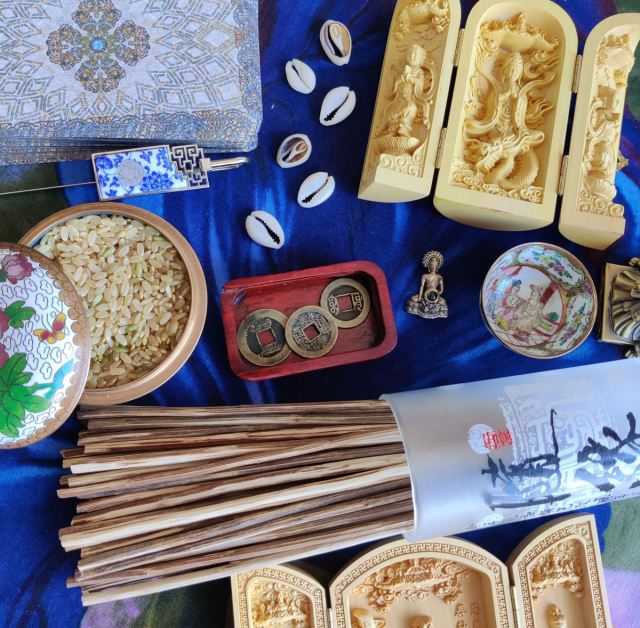
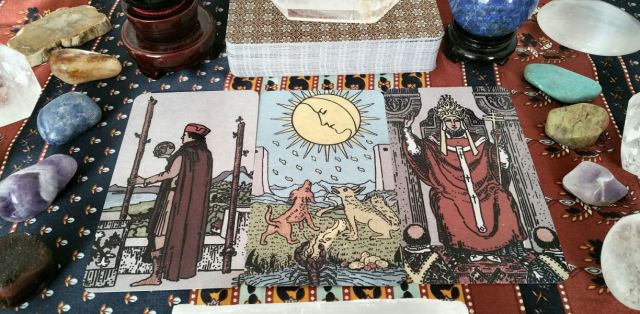
Anyway, that introduction was way off-track from the subject matter of this post. This post is about go-to knick knacks in a tarot or divinatory reading space. I’m not asking about what you need to get your read on (because inevitably some holier-than-thou advanced tarot reader master will pipe up and say, “I don’t need anything but the power of my mind… I am not bound to materialism… toot toot“)–right, right, we all know that. But I’m asking what kind of knick knacks do you like in your reading space. I don’t need a pink toothbrush for effective dental hygiene but I like it when my toothbrush is pink, so I have a pink toothbrush. Get it?
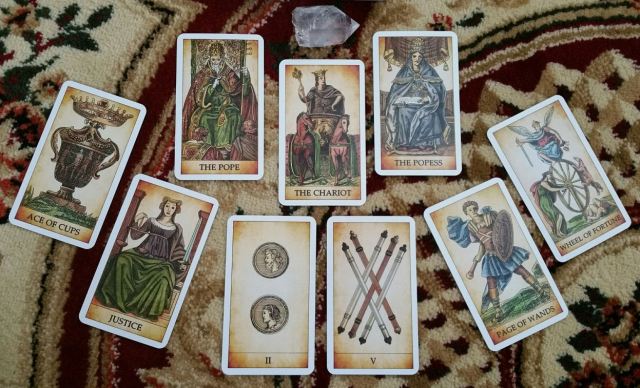
I’m going to walk you through an easy beginner’s methodology for I Ching and tarot divination. We’ll be doing a simple one card tarot draw plus casting I Ching hexagrams by the coin toss method. So in addition to the instructions here for the I Ching divination, I’m presuming you have a tarot deck and know how to operate one. If not, no worries. This doesn’t need to be I Ching and tarot. It can just be I Ching! 🙂
I use traditional coins for my personal practice, but we won’t be needing those today. Any three coins of the same value in your change purse will do. Go find three pennies, or three nickels, or three quarters–whatever pleases you. And give them a good wash.
Here I’m using disinfectant soap and water. Dry them thoroughly. You can use a towel. Anything. Just be practical.
Click on the above image to visit the product description page.
$25
The Metaphysician’s Day Planner
I juggle a full-time day job in corporate law with writing and publishing books, doing interviews and talks for the book tours, part-time professional tarot reader and astrologer, blogger, avid home cook, and pro bono legal work on the side, all while being a metaphysician and keeping myself buried in metaphysical studies, so I do get asked a lot about how I organize my day. How do I make sure I am on top of my schedule of court appearances, hearings, and conferences for work, my client reading list for tarot and astrology, food prep for the week and menu planning, domestic chores, personal health and fitness, and everything in between?
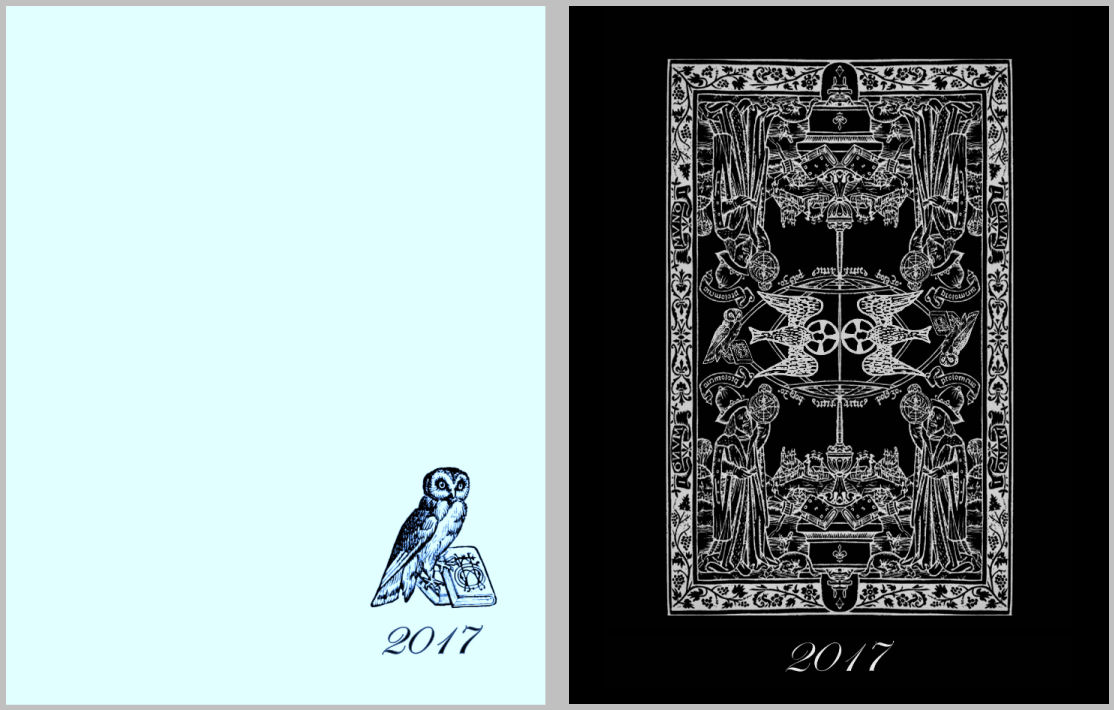
With a day planner, of course. There is a set way I organize and format my personal day planner to cover everything I do. And now I’d like to share it with you. I’ve put together a 2017 day planner and organizer for the metaphysician.
It’s part day planner–annual, quarterly, monthly, and daily. And it’s part grimoire.Carrying around metaphysical correspondences and quick reference sheets helps immensely with memory retention. It’s my approach to broadening and deepening my esoteric knowledge.
Out on the market right now you’ll see a ton of beautiful, vibrant, inspiring, mind-body-spirit-based day planners and calendars rolling out for sale now.
Mine is none of that.
So if you’re looking for something with lots of pastel colors, inspirational quotes, affirmations, and space for you to jot down your secret desires, then this is not it.
Rather, this is a glimpse into how I organize my life and how I balance professional and personal accomplishment with esoteric studies. I don’t spend three hours filling in blank workbook prompts on what I love about myself. I don’t need “go get ’em, tiger” quotes in sans serif font printed in glittery hues across my planner cover. Instead, my planner is about optimizing the hours of my day and getting stuff done. I need a day organizer that helps me get stuff done. I don’t want color, because color ink is expensive. I want substance and I want economy.
That’s what my day planner is all about. And I’d like to show it to you. I made one up for my sister Cindy, so you’re going to see screenshots of hers for illustration.
This has been going on for a while already and I am having so much fun! However, I don’t know if I’m reaching enough folks, so here is a blog post. You can sign up to get on a list of folks who consent to possible free randomized divinatory readings to be delivered to your e-mail inbox, perhaps when you least expect it. This is offered alongside all my reading services that you can book. More info on my “Book a Reading” page. Scroll all the way down to see the info on the Free Randomized Divination Sign-up.
First of all, it needs to be said upfront that I’m an Air sign, both sun and rising, and my birth chart is dominated by the presence of Air. I’m fickle and flighty and am always changing my mind. So the most I can say is I’m answering these prompts based on me right now and only right now. Ask in, gosh I don’t know, a year or heck maybe even next month and my answer could change. So there’s that.
Nonetheless, let’s give it a go.
3 Favorite Tarot Decks
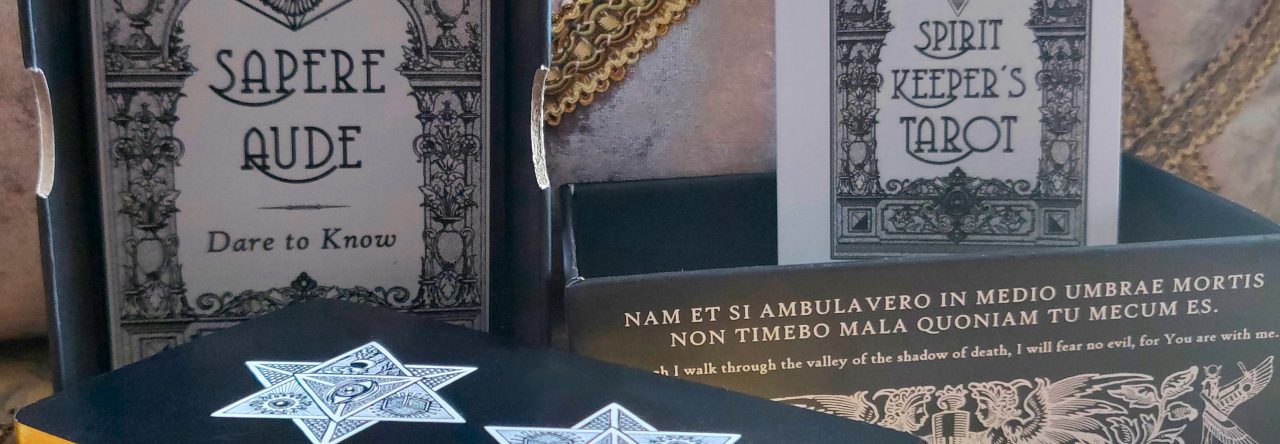
I’m naming my 3 personal favorite decks, not my go-to public reading decks. While I do use some of the decks I’m about to name in professional reading situations, I am far more likely to go with a Rider-Waite-Smith (such as the Smith-Waite Centennial or just the Rider Waite 1971) or the Golden Universal (basically RWS). Every once in a while, a seeker’s energy pulls me toward an entirely different deck, so it’s hard for me to give absolutes here. However, generally speaking, my favorite go-to reading deck for others is going to be a straightforward, classic RWS deck and from time to time, a TdM (Tarot de Marseille). There are a multitude of reasons for this discrepancy between personal favorites and public reading favorites, but that may be for another blog entry.






 benebell wen