For anyone interested — and also I’m documenting this for myself so I have an easy, accessible aggregation of my favorite scent recipes — I’m creating this page to house my “best of” recipes. So I’m anticipating that in the future I’ll return to this page and update it with more scent recipes.
I think it’s useful to approach everything I share here within the context of this past article I wrote, “Essential Oils: My (Hopefully) Holistic Perspective.”
Though that write-up is more about using essential oils with the intention of holistic healing, whereas here, while there’s a lot of cross-over, my main focus will be on scent.
There’s also this old post, “On Spell Oils (Cf. Anointing Oils).”
As you probably know, the quality of the essence or absolute you’re using matters a lot and can make all the difference. So two people following the same exact recipe but using different quality essences are going to get two very different results. Fruit notes tend to be more forgiving, but resins and some florals, no, you are very likely going to get what you pay for.
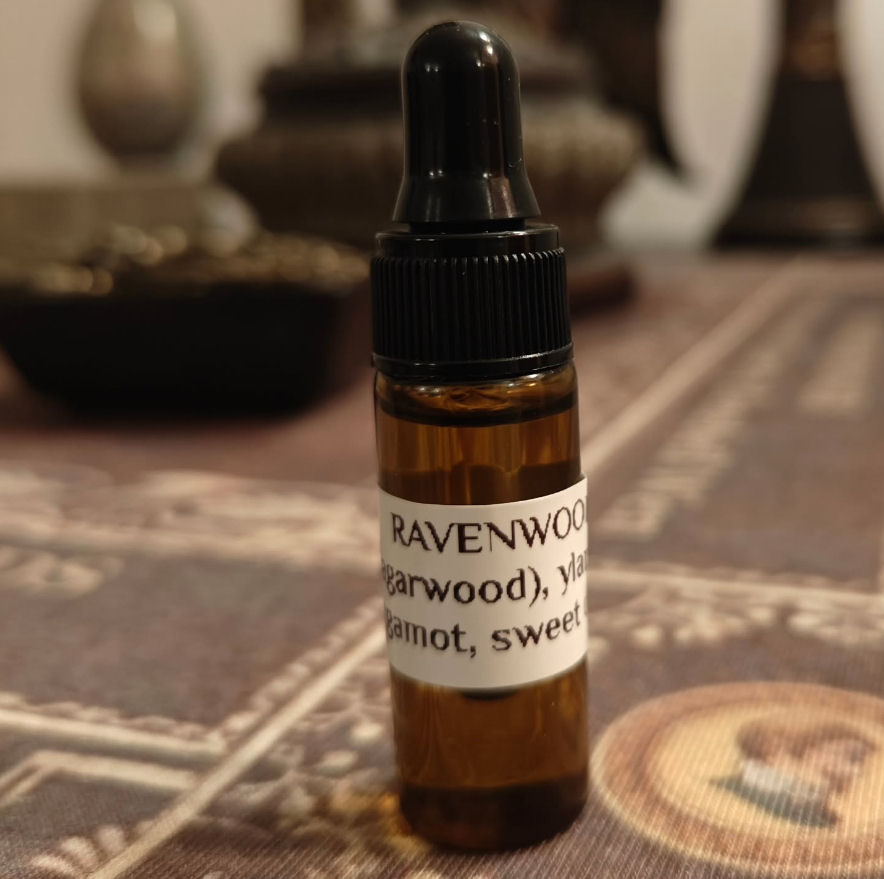
Ravenwood
- Base Note: Oud (agarwood)
- Heart Note: Ylang ylang
- Top Note: Bergamot, sweet orange
This smells like a powerful aristocratic enchantress. It’s complex, mysterious, sophisticated, with depth and refinement. The scent is not too musky, not too floral, not too fruity, and yet just enough hint of all three to invoke their qualities.
Seasonally it feels more autumnal. Reminds me of horseback riding across the English countryside, for some reason. Yet this is someone well-traveled and cosmopolitan, who speaks many languages. And I don’t know how it does it, but it seems to amplify gender performance, meaning if you’re masculine, this smells hyper masculine; if you’re feminine, it smells hyper feminine. Don’t ask how that’s possible because I have no idea, but it is.
Do equal parts oud, ylang ylang, and bergamot, and then at the end, a teensy tiny itty bitty drop of sweet orange.
This one I blend perfumer’s alcohol and some Vitamin E, but my guess is a neutral carrier oil will work fine.
I’ve used this as an anointing oil for consecrating my divination tools, protection amulets, and talismans. Oud historically in so many different cultures is about divine protection and purification. Ylang ylang is the lightbringer, with Venusian associations for creativity, productivity, and the power of attraction. Both bergamot and sweet orange invite in prosperity and longevity while cleansing away that which harms.
And I’ve also worn it for a nice dinner. I find that when I’m wearing this, I feel more confident, more regal than my usual self. I manage to convince myself I’m royalty when I’m wearing this, and in an inexplicable way, it rubs off, because I then get treated like royalty. Doors open, more smiles and polite nods of the head, free dessert on the house for no reason at all that no one else is getting, extra nice drivers, and shows of generosity all around. You don’t have to believe me — try it. You’ve got the recipe.
Hubby likes all of these scents, by the way, but he says his clear favorite would be this one, Ravenwood. That being said, it’s a very distinct scent, and so for others, it may be a bit too… assertive. opulent. distinctive, pronounced. I dunno. Dramatic. Enchanting. If you don’t resonate with any of those words, Ravenwood might not be for you, but then do check out Terrace by the Sea (below).
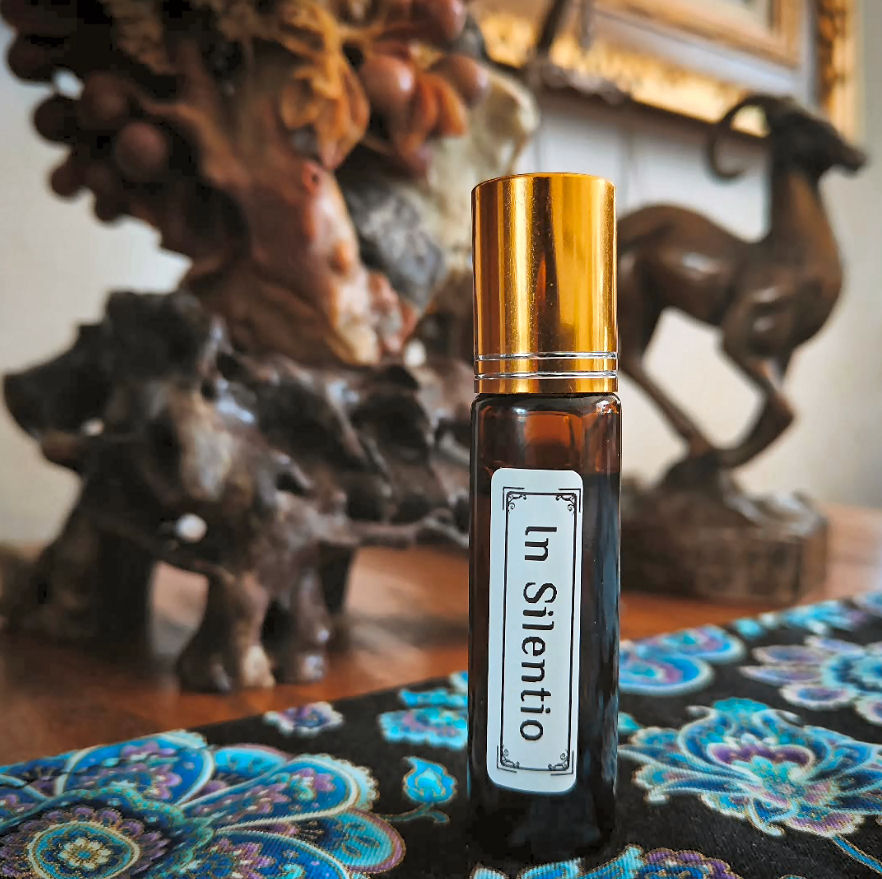
In Silentio
- Base Tier: 25 drops sandalwood, 20 drops agarwood, 15 drops patchouli, 25 drops cedarwood, 15 drops tangerine
- Heart Tier: 40 drops lavender, 20 drops agarwood, 40 drops frankincense
- Top Tier: 40 drops basil essential oil, 40 drops bergamot, 20 drops sweet orange
- You’ll need 3 glass containers for mixing each of the 3 Tiers separately
- For the In Silentio blend, start with adding 36 drops from the Base Tier
- Then add 36 drops from the Heart Tier
- Then add 28 drops from the Top Tier
You can see my Instagram post of this blend here. The above gives the easiest directions for getting the percentages just right.
This is an elegant, complex woodsy scent evocative of being in solitude, deep in a forest, calling upon the old gods. Or reading from ancient texts in a library of rare occult books. I describe it as dark academia meets quiet luxury meets mountaintop temple. I say “quiet luxury” here because unequivocally this scent smells expensive. The scent itself exudes executive presence. And so on the occult side, amplifies the way you embody sovereignty. Wearing it makes you feel like the most powerful person in the room.
And there’s no wasting the excess! Each tier, in my opinion, can also stand on its own as a simple and basic scent.
The Base Tier blend can be used for consecrating space prior to ritual or divination.
The Heart Tier blend is a great personal anointing oil to anoint yourself with for spirit conjurations, astral journeying, shamanic journeying, pathworking, or ancestor work.
And the Top Tier blend is a great spell oil for prosperity, wealth, material abundance, and transforming bad luck to good fortune.
Cundi Blessing Oil
- Base Note: Frankincense, cedar wood, eucalyptus
- Heart Note: Rose otto, jasmine
- Top Note: Tuberose
A blessing and inner temple oil for calm, peace, healing, and contentment.
I would describe the scent as a clean floral that has a refreshing, clarifying effect. It’s atmospheric. I say that because if you close your eyes and breathe it in, you get transported to a distant temple, and the visuals in your mind are so clear and vivid. It’s also evocative of a Great Mother.
You’ve got a woodsy base note where frankincense, cedar wood, and eucalyptus combined make up one-third of the blend. I go with more frankincense and less eucalyptus in that combination, but go with a proportion that’s tailored to your personal preferences around that menthol-minty note.
Then the center is very obviously floral, as is that top note. I hold back on the rose otto for a more jasmine-weighted center, and then it’s tuberose top-heavy. Again, these are just personal preferences for the ratios, and I don’t even stay consistent for myself. It’s a little bit different every time.
南無颯多喃三藐三
菩陀俱胝喃怛姪他
唵折隸主隸準提娑婆訶
Nama saptanam samyak-sam
Buddha kotinam tadyatha
Om, chalei chulei Chundi svaha.
That’s the Cundi 準提菩薩 mantra recited 108 times over the blessing oil, which is placed before a consecrated ritual mirror upon a Cundi altar. This will be repeated every night from the new moon until the full moon.
I mix the ingredients and prepare the oil in advance of the new moon, consecrate it with incense smoke, so that I can commence on the new moon (early Friday morning).
To me, invocation of Cundi helps to refine, tame, and control the intense raw Fire power we’ve got going on in the cosmos. The metaphysical associations with the ingredients (very Venusian) vs. the astrology (potent Mars force) creates a converging of the polarities.
I like to anoint or oil the crown of my hair with this. Or put it into a diffuser to scent a room.
This scent inspires empathy, joy, and mental acuity. It really helps facilitate clarity and presence of mind. All that plus whatever your assets, skills, and talents are, this just seems to amplify.
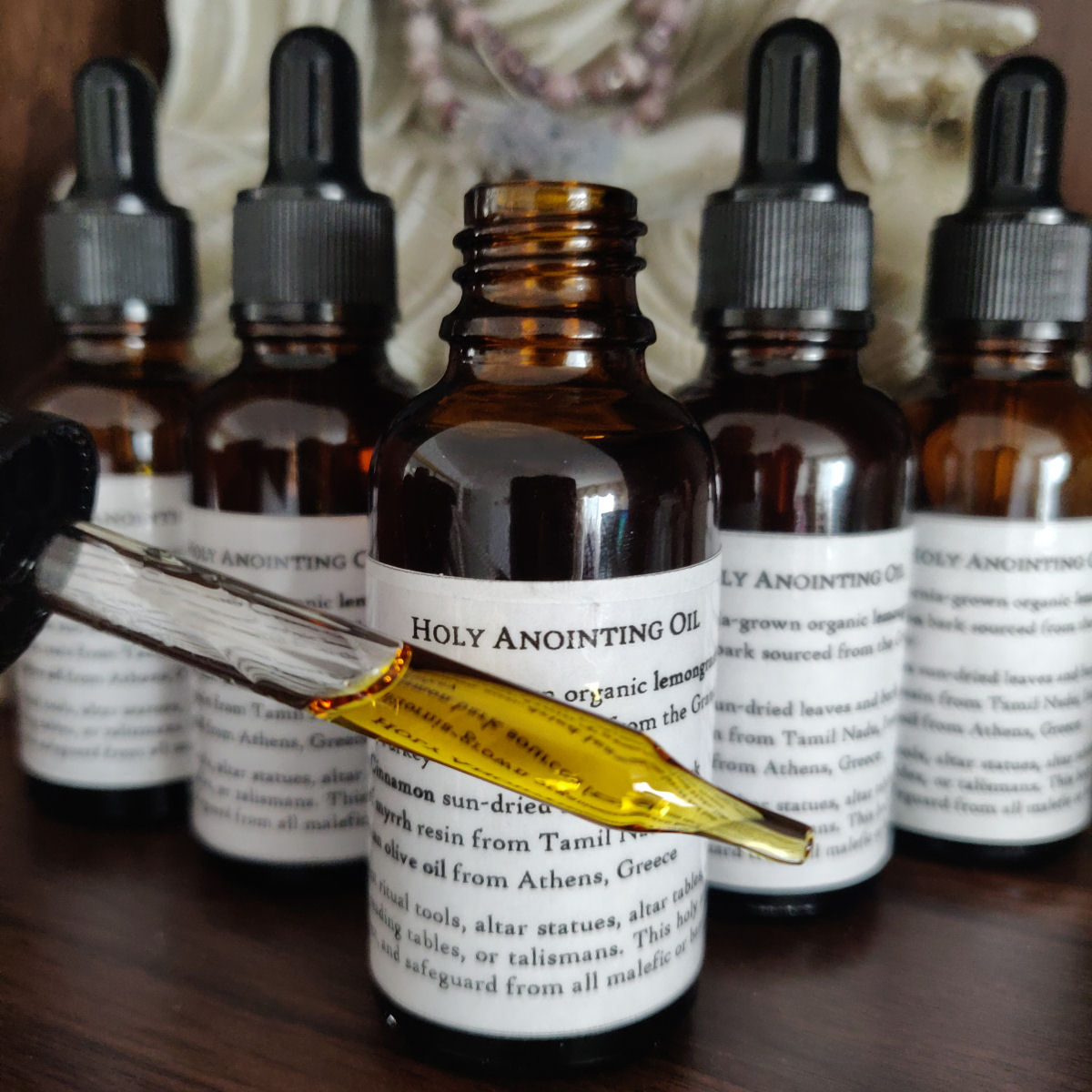
Sacred Space (Holy Anointing Oil)
- Base Note: Myrrh
- Heart Note: Ceylon cinnamon, cassia cinnamon
- Top Note: Lemongrass
I have an old Tinkering Bell video walking through how I make holy anointing oil, or Oil of Abramelin. When I had an excess amount of holy oil after the First Edition of SKT, I put up for silent auction all the extra holy oil, which you can read about here, at least for some of the insights and info I shared about the oil.
Oil of Abramelin is myrrh, both types of cinnamon, and calamus in olive oil, though in lieu of calamus, other sources interpret it as myrrh, the cinnamons, and galangal in olive oil.
I go with 20% myrrh, 40% for the two different types of cinnamon combined, sourced from two different regions of the world, and instead of calamus or galangal, I opt for 15% lemongrass. For the carrier, I then top off that blend with 25% Greek olive oil.
A very important point to emphasize here is that I make my own herb and spice infusions from raw materials over many months, and then combine them in the 20-40-15-25 ratio. I can get away with a more essence and less carrier oil because the essence itself is homemade, and therefore not as chemically strong as what you might get from lab-created commercial essential oils. If you’re going with commercial essential oils, you cannot use these ratios. You’re going to need more dilution and be super mindful of quality.
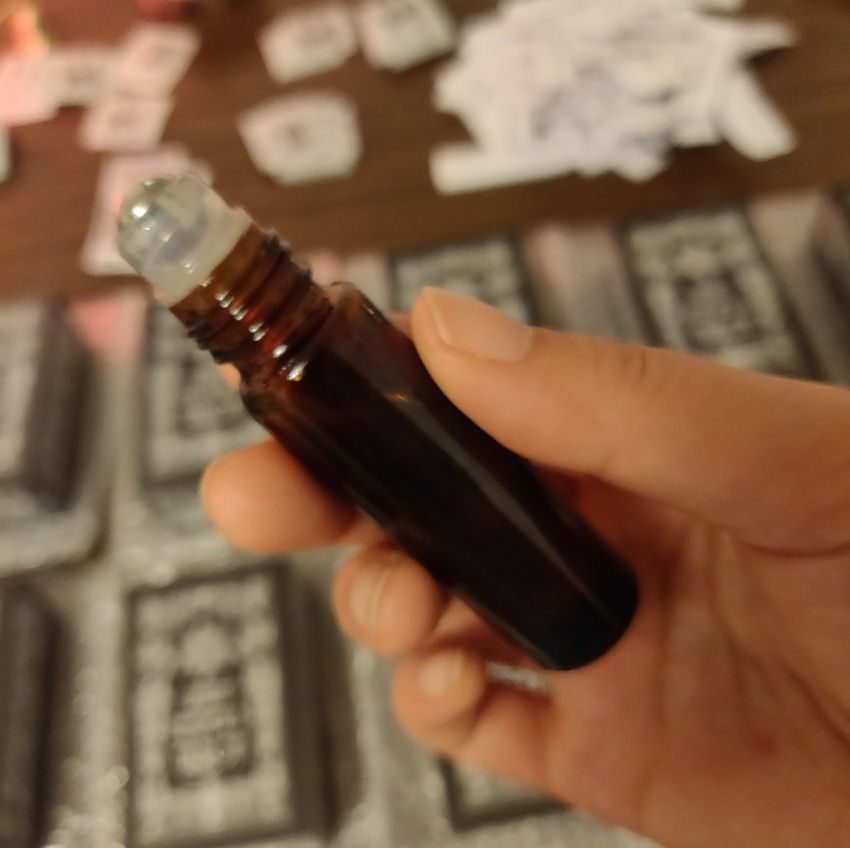
In addition to this oil being what I anointed every single Spirit Keeper’s Tarot deck with, this is surprisingly one of the most universally-loved scents. If I step into an elevator, strangers in a corporate setting will absolutely ask me what scent I’m wearing, because it’s simply divine. (You have no idea…I think to myself, amused.) Whether I’m at a tarot or pagan conference, in a board room, or at a cocktail party, this scent will inevitably attract compliments. I’ve actually come to intentionally not wear it to certain events just to avoid the scent becoming part of the conversation.
Interestingly, the scent of this holy oil helps me with nausea, headaches and migraines, and minor colds or mild illness. I’ve also talked about how I’ve used it as an antiviral, antibacterial oil, which really helps me to ward off illness.
If I’m going somewhere with lots of people I don’t know and I think I might need a little bit of extra warding, I’ll put this on. But also, if I’m going to hang out with close friends, I’ll still put this on just because I think it smells so good and I want to share the scent! Plus, if they like it, I’ll offer to make them a bottle of it the next time I craft a batch of this oil.
And then, of course, for me, it is a “holy anointing oil,” meaning I have a dedicated bottle of it just for anointing my altar or used for casting sacred space.
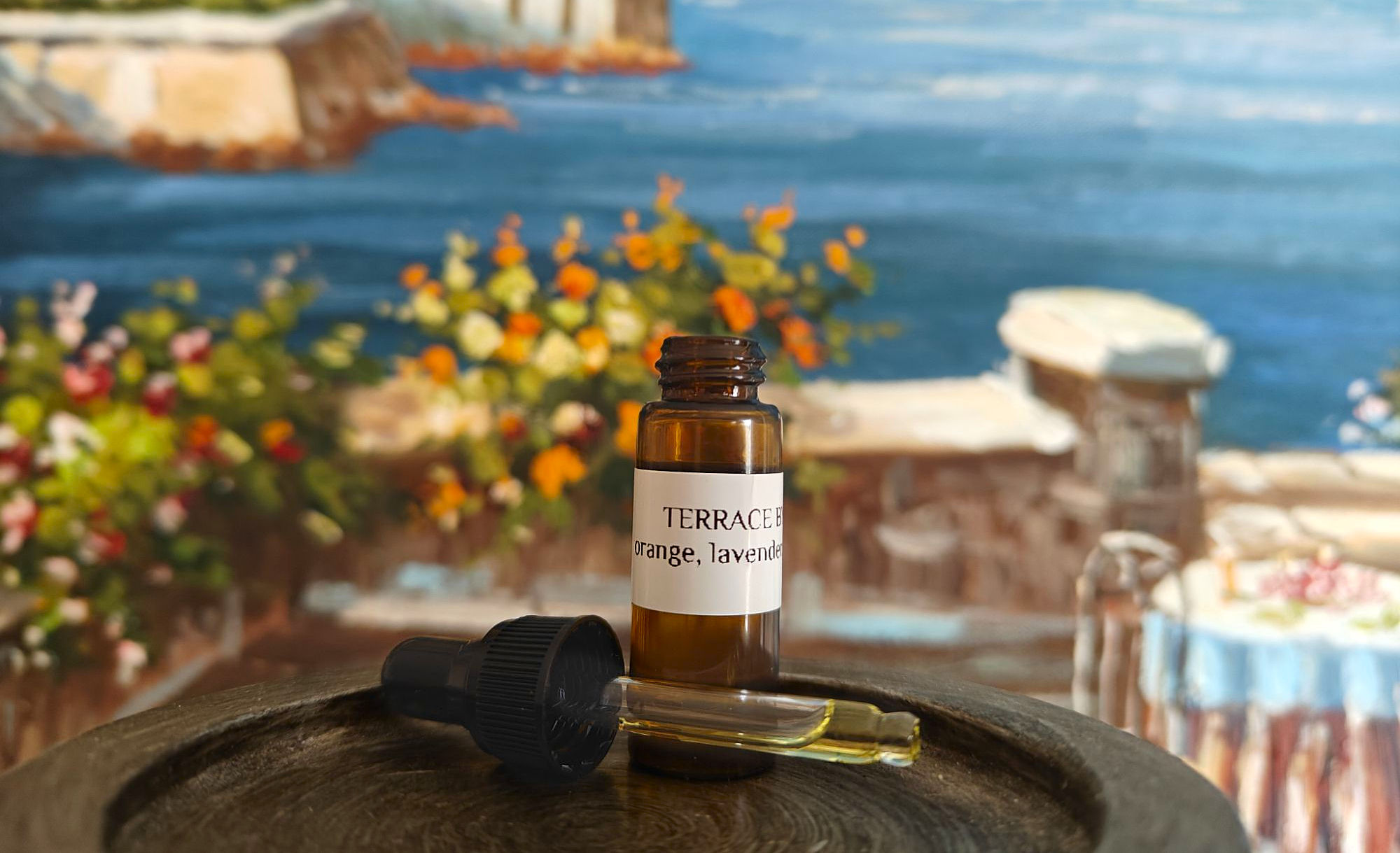
Terrace By the Sea
- Base Note: Sweet orange
- Heart Note: Lavender
- Top Note: Frankincense
I go for about 40% sweet orange, 25% lavender, and 35% frankincense, but also, I’m eyeballing it, not measuring it exactly.
The best way to describe this blend is coastal California, probably because that’s where I’m living right now and the environmental vibes I am most familiar with, but then also, oddly, reminds me of the Mediterranean, particularly Spain, Italy, or Greece. The scent reminds me of vineyards, fog and cool winds, yet bright sun, vegetable gardens, redwood forests, and pebbled beaches. It’s got strong citrus notes that are sweet, juicy, yet gives a subtlety from the cooling lavender and serene, otherworldly frankincense counter-balance.
It reminds me of luxury spas, meditation retreats, and weekend farm-to-table brunch with mimosas and gastronomic fusion tasting menus. My go-to use for this scent blend is to wipe down kitchen and bath counters, tabletops, or as a misting spray for linens.
I love this as a room scent because it both energizes me and reminds me to slow down, enjoy the present, and be unhurried, I think because it smells like a vacation home.
When I’m working from home, I scent my home office with this and it just immediately puts me in an uplifted mood. I find this scent bright and cheery, and also gives this “clean girl aesthetic” vibe, that be either lovely or offputting. Interestingly, Hubby doesn’t love this one. He says it’s okay, but that it’s just un-impressionable. “Terrace by the Sea” is someone who wants to blend in with the cool “in” crowd, he says; whereas “Ravenwood” is someone who will be remembered. Dang, Hubs!
Despite Hubby’s opinion, I’ve still posted this one here as a “best of” because it really does smell great when you scent a home or personal space with this.
Not to mention, more importantly, the specific trinity here brings joy, prosperity, and good health (via sweet orange), purification and protection plus calming (via lavender), and attunement to divine realms, elevation of mind and spirit (via frankincense).
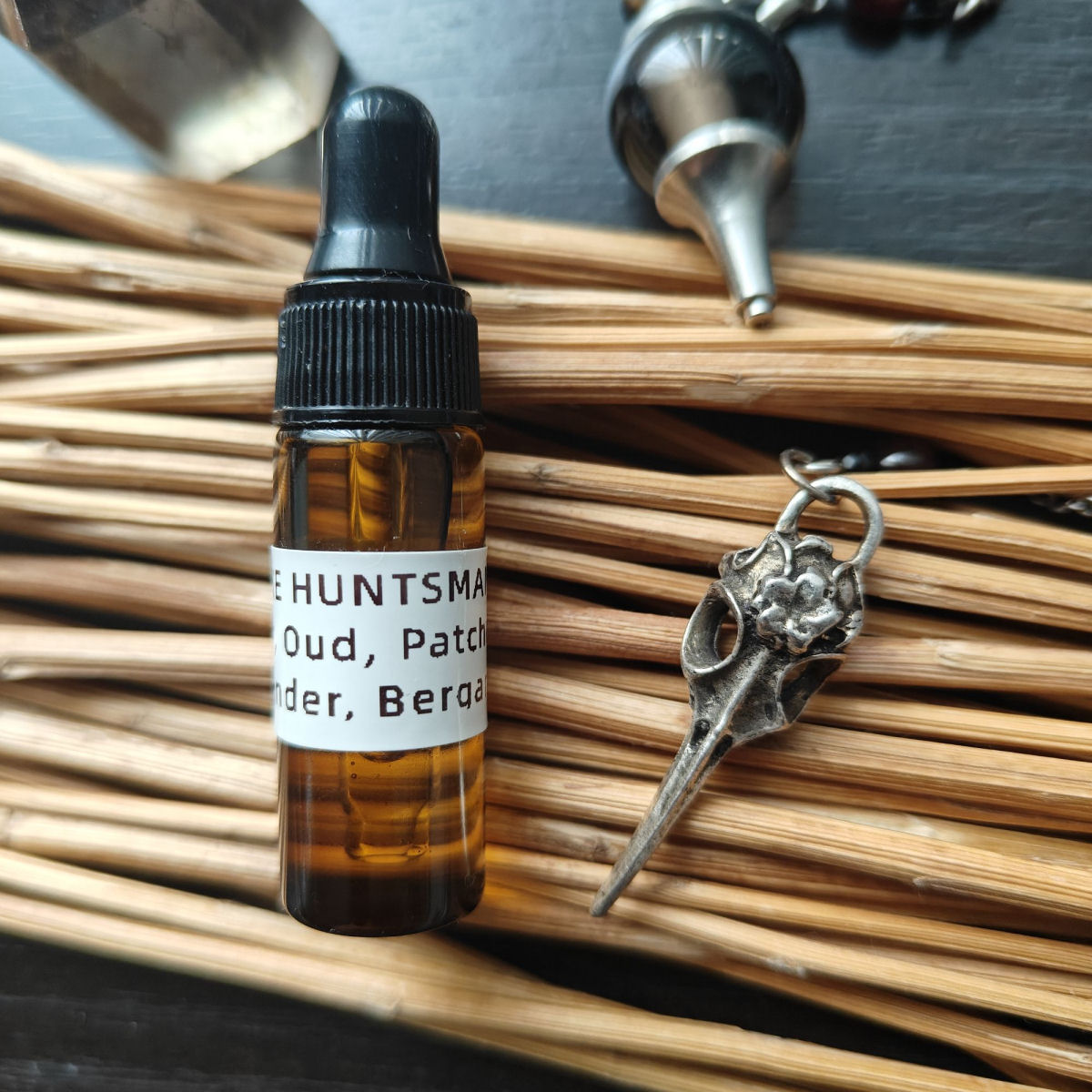
The Huntsman
- Base Note: Cedarwood, Patchouli
- Heart Note: Oud
- Top Note: Lavender, Bergamot
This one’s got that strong masculine, woods dark and deep, worn leather, night predator sort of vibe. It’s a cologne I made for the hubby James. And he loves it! He says this is even better than any of the pricier high-end stuff he’s ever come across!
Cedarwood is the wood of kings, and it’s long associated with royal ancestral halls, and patchouli seems to magnetize or enhance it. Plus, you’ve got the correspondences to prosperity and authority. Lavender and bergamot as the top notes gives the scent composure, mystique, and this trusting commanding figure energy.
Again, I don’t measure, I eyeball. A lot of cedarwood. This one is base-heavy. A teensy drop of patchouli. Go very easy on the patchouli. Just a trace hint amount that you can’t quite pinpoint as patchouli, but it rounds out the rest of the notes.
Oud is the heart note and soul of this masculine cologne. Then for top note, if I’m going for something more gender-neutral and I’m going to be wearing this scent for myself, then more lavender than bergamot. For the hubby, more bergamot than lavender.
As I craft this blend, I intend for the cedarwood to bring the strength and protection of ancestors, and the patchouli to evoke them from the spirit realm into the physical so they themselves are empowered to safeguard one who wears this scent. Then I ask for blessings of prosperity and rising status.
Oud (jinko) for spiritual purification and consecration of the wearer, divine protection, and authority across the three realms. Across Asia, from West Asia to East Asia, North and South, oud signifies transformation of hardship into opportunity, curses into blessings, per how oud is formed– a wounded or infected tree that, out of self-defense, transforms its injury into this resin to protect and sustain itself, and so it signifies transcendence through adversity, spiritual refinement, and resilience. Not every injured tree can create this resin, and so it’s also associated with rarity and exceptionalism.
Lavender for battle magic, and for clarity and sharpened psychic and intuitive abilities, in addition to helping to calm any nerves; bergamot to always attract success, victory, and fortuitous opportunities your way.
I call it “The Huntsman” because it empowers you with sharpness and clarity of mind, strategy, discipline, and both inner and outer strength as you navigate a wilderness. It’s about amplifying your instincts so you can spot opportunity in the deep forests of life.
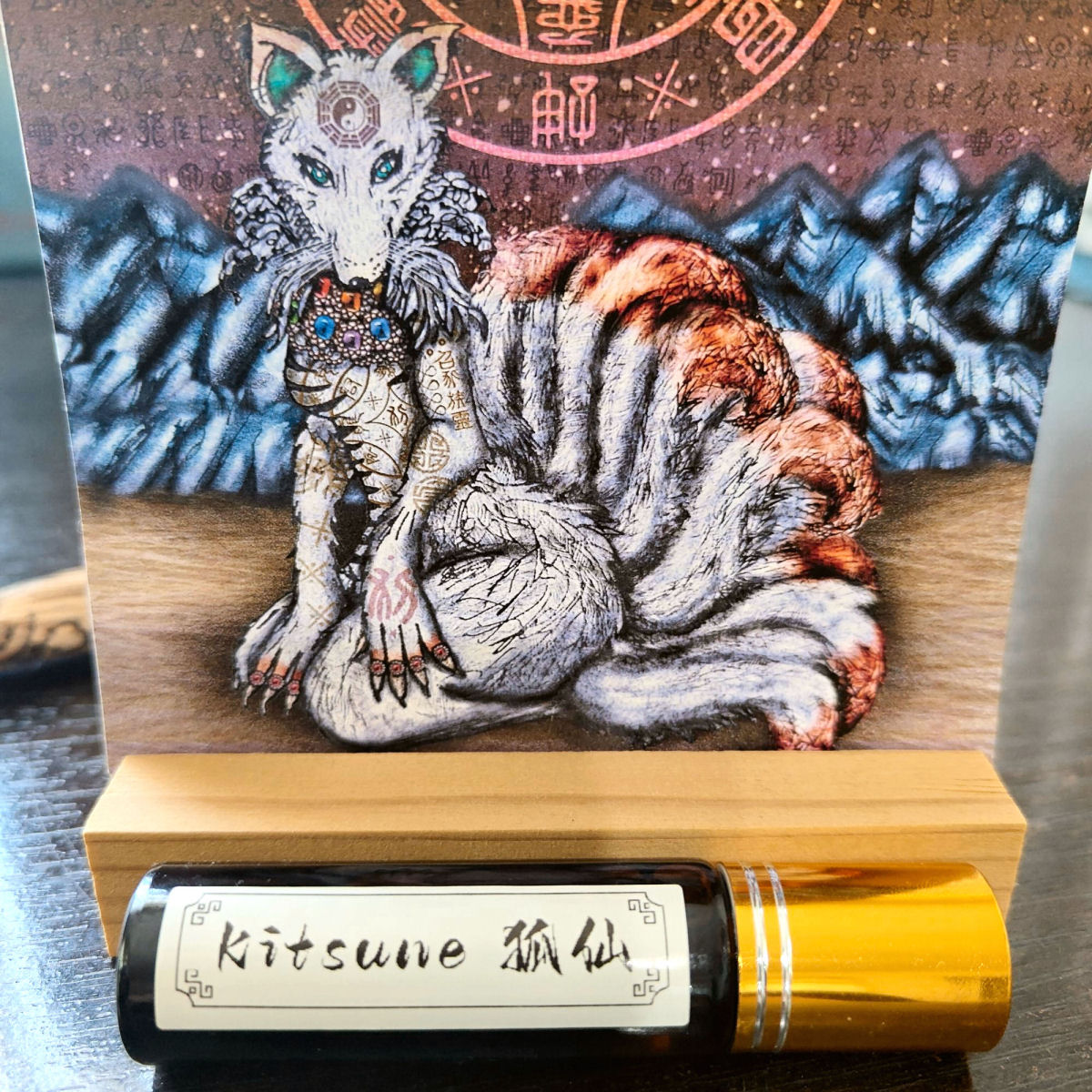
Kitsune
- Base Note: Agarwood (oud), sandalwood
- Heart Note: Osmanthus, jasmine, chrysanthemum, peach
- Top Note: Mugwort, pine, cinnamon
This is the fox spirit of East Asian lore. I’m using the Japanese term “kitsune” here because in the English speaking world, it’s the most well-known terminology for the Asian fox spirit. In Korean, it’s the gumiho; in Chinese, the hulijing, though in specific folk traditions that venerate the fox spirit, you’re more likely to hear the term huxian or hushen.
Each of the three layers makes up one-third of the total blend and there is a total of nine, signifying the nine tails of the fox spirit. The base note combination is about 50/50 agarwood and sandalwood within that lower third.
The heart of this scent is floral: heavy on the osmanthus and jasmine, secondarily with chrysanthemum, and since I’m using commercial peach essential oil that’s likely synthetic, just a teensy touch of peach at the tip end of the center notes. I’m eyeballing this and not really using exact measurements. Just go easy on the peach, otherwise you’ll have to re-name this scent “Peach.”
The top note is herbal and green; within that 33% of the top layer, it’s going to be about 85% mugwort and pine, and only about 15% cinnamon notes. Cassia cinnamon is warmer in tone, and in Asia, you’ll find distinctions between Cassia cinnamon leaf and cinnamon bark. The leaf gives a matcha tea scent to your blend, while the bark will be more familiar to the iconic cinnamon spice.
For this one I’ll use perfumer’s alcohol, though I’ve also just made a simple essential oil blend with it before, and just went with jojoba or almond oil as the carrier. When you apply it, give it about 30 minutes to settle in. What I love so much about this scent is how magical it seems to be — it needs a minute to interact with your skin and natural scents, and then foom, it wakes up. It’s activated.
Also, after you’ve made it, you’ve gotta give it about three days for the blend to settle in. Right after you’re done, smell it, and try your best to remember its scent and your impressions. Set it aside and three days later, smell it again. It will have transformed, both the scent and your impressions.
I would describe this as hyper-feminine, someone cunning, strategic, and purposeful, on a mission. It’s enchanting. It’s also mature, wise, and sophisticated, siren-like, and doesn’t have any trace of maiden-ingenue to it. It smells like confidence and authority.
Speaking of enchantment, on a full moon, I’ll form a triangle with divination rice grains before a consecrated image or figurine of a fox spirit, burn incense offerings of agarwood, cypress, or sandalwood, and also leave overnight offerings of sake, green tea, fruit candies, and I’ll make these tofu skin wrapped seasoned sweet rice topped with black and white sesame seeds.
I’ll place the bottle of this that I’ve made within that triangle and also anoint a ring around the bottle with the scent itself. Then call upon huxian (the immortal fox spirit), inviting her in to my space, presenting my offerings to her, and basically, introduce myself.
I’ll state my mission, something carefully crafted and thoughtfully worded prior to this ritual. Here, just have a candid, sincere conversation. State what it is you’re going through, or what it is you need. In return, offer protection: these fox spirits will always have a home in my home.
Kitsune summons forth the fox spirit to be present, accompanying you. The kitsune is then nearby while this scent lingers, and then what ensues in your orbit as a result of having a kitsune fox spirit around you is in part somewhat within your control per command, but also in part outside of your control, a bit like being accompanied by a cat that respects you, but also has their own agency. (We do not put spirits on leashes around here.)
I have one friend in litigation who says every time she wears this to court, she wins. Any battle she’s heading into, she wears this and she prevails. Another friend remarked that wearing this is a bit like glamour magic. She noted that one time, a guy was being condescending and rude toward her, it got her angry, and then all of a sudden he tripped on nothing and fell on his face, hurting his wrist. A colleague who saw the whole thing go down joked aloud at him, “Karma, I guess.” My friend didn’t lift a finger and it all just kinda went down around her, because of her thoughts. Allegedly. Possibly. Who knows. We don’t know. Strike that. Pure coincidence. What we’ll say is wearing Kitsune sure triggers a lot of happy coincidences in your favor.
It’s not the scent; it’s what this scent seems to be able to unlock within you. It’s just able to unleash your inner force of nature.
Hair Oils
For my hair texture and length, hair oils are essential. For the carrier, I go with argan oil, which helps with dryness and tames the frizzies, or camellia seed oil, which is what a lot of East Asian beauty traditions will opt for, to give you that silkiness and shine. Either jojoba oil or avocado oil will also work.
For a floral, herb garden scent, I like cedarwood, jasmine, and lavender, in that order for base, heart, and top notes.
That whole petrichor, after-the-rain, fresh crisp forest air scent, go with frankincense, rosemary, and peppermint. Rosemary oil is fantastic for healthy hair growth. Another similar alternative for similar vibes is myrrh, lilac, and eucalyptus.
Tea tree oil is good for scalp health, helps reduce dandruff, and soothes scalp itchiness, if those are concerns. But it’s not that great for your actual hair. Nonetheless, for a hair scent that you will be applying only to the scalp to address scalp health while also wanting to smell good, go with frankincense, tea tree oil, and peppermint.

There’s something really powerful about scent magic or ritual work with scent, fragrance, and aromatics. Craft an essential oil blend where each ingredient is thoughtfully chosen, and the resulting alchemy is also thoughtfully considered. Then charge it with a specific intention through some form of ritual. Anoint talismans with enchanted aromatics. Anoint yourself with it, especially as you’re going in to an event or situation where you need to call upon a version of your higher or more empowered self.
I can’t explain to you with evidence-backed science how or why it works. Maybe it’s placebo, I don’t know. I won’t get mad if a skeptic says that’s all it is.
My best guess is that specific scents do activate specific states of mind and because you’ve transformed your state of mind, you’ve also subconsciously transformed your behavior and even the vibes you’re giving off. Which is why it seems like magic.
Then the fact every civilization has been into perfumes tells us something, too. Fragrance influences how other people perceive us or engage with us.
Please feel free to try any of these scent recipes for yourself, make modifications that make more sense for you, or create your own versions inspired by these recipes. I share these publicly exactly so you might be able to reap some benefit from them. Can you commercialize these recipes or your own variation of them? Yeah, sure, honestly I don’t really care.
 benebell wen
I’d love to know if you ever sell these oils!
LikeLike
I too would love to know if you’d sell these x
LikeLike
I would love to hear your brand recommendations for sourcing 100% pure essential oil and buying plant ingredients that may not be so local! Thank you so much for another stellar post.
LikeLike
Osmanthus! I had never heard of it before! It smells incredible, can’t wait to try your blends. Thank you!
LikeLike
This is amazing. Thank you!!!! I’ve been cautious about essential oils (many can be toxic to cats) but am very tempted to mix up a scent for traveling use so I can enjoy its magic while the furry rascals are safely at home.
LikeLike