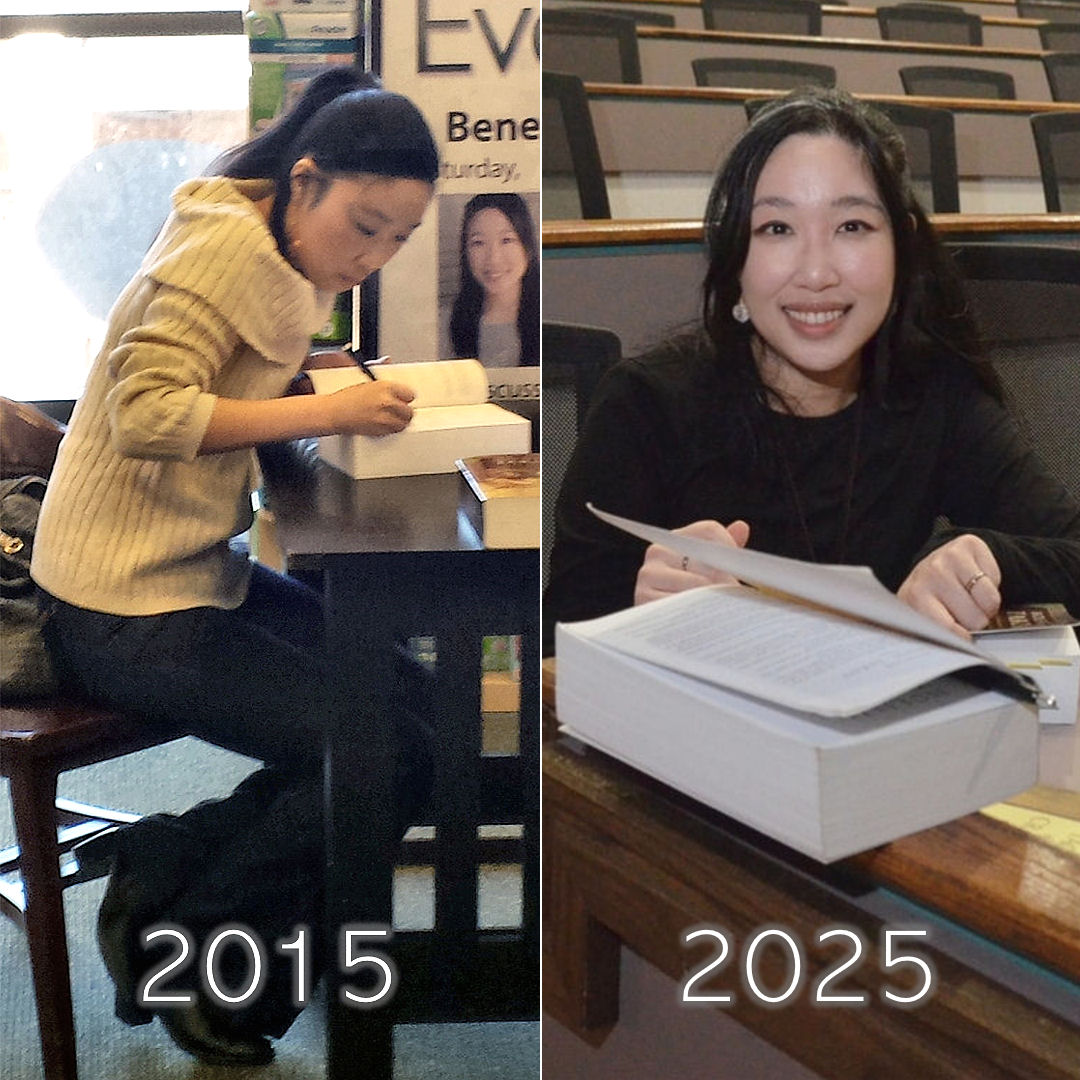
I was cleaning through old computer files when I came across these two photos, 10 years apart. The 2015 photo is from my very first Barnes & Noble author event and the first time anyone ever asked me to sign a copy of my book. It was wild. What does one even write when autographing a book. And since I use a pen name, I couldn’t even get my own (new) signature right. The 2025 photo just happens to be a similar snapshot of me signing books, which I thought made for a nice “then and now” side by side. Like, holy cow, I’ve been doing this for 10+ years.
This is going to be a ruminating, reflective sequel to an old post I wrote right after finishing I Ching, The Oracle: “Author’s Thoughts After Three Books.” Reading that before this post will provide background context. For anyone interested in yet another layer of subtext, there’s this old video and companion write-up: “To the New Pagan Author.”
I think it’s funny how writing 250,000 words back in 2012 took me one Thanksgiving holiday break to complete (not really, it’s a bit more complicated and nuanced than that), whereas editing it into a 78,000 word book took me the greater part of a whole year.
Though again, that’s reductive and not really an accurate representation. What I actually did that Thanksgiving 2012 was spend a week assembling a binder of old tarot journal notes gathered over 20 years and stitched it into a tarot fundamentals book by working on it obsessively every single minute, day to night, pulling all-nighters, for seven days straight, no breaks.
Whereas this revised, shortened version was me working on it a few hours at a time, here and there, bit by bit, and going weeks without touching it at all.
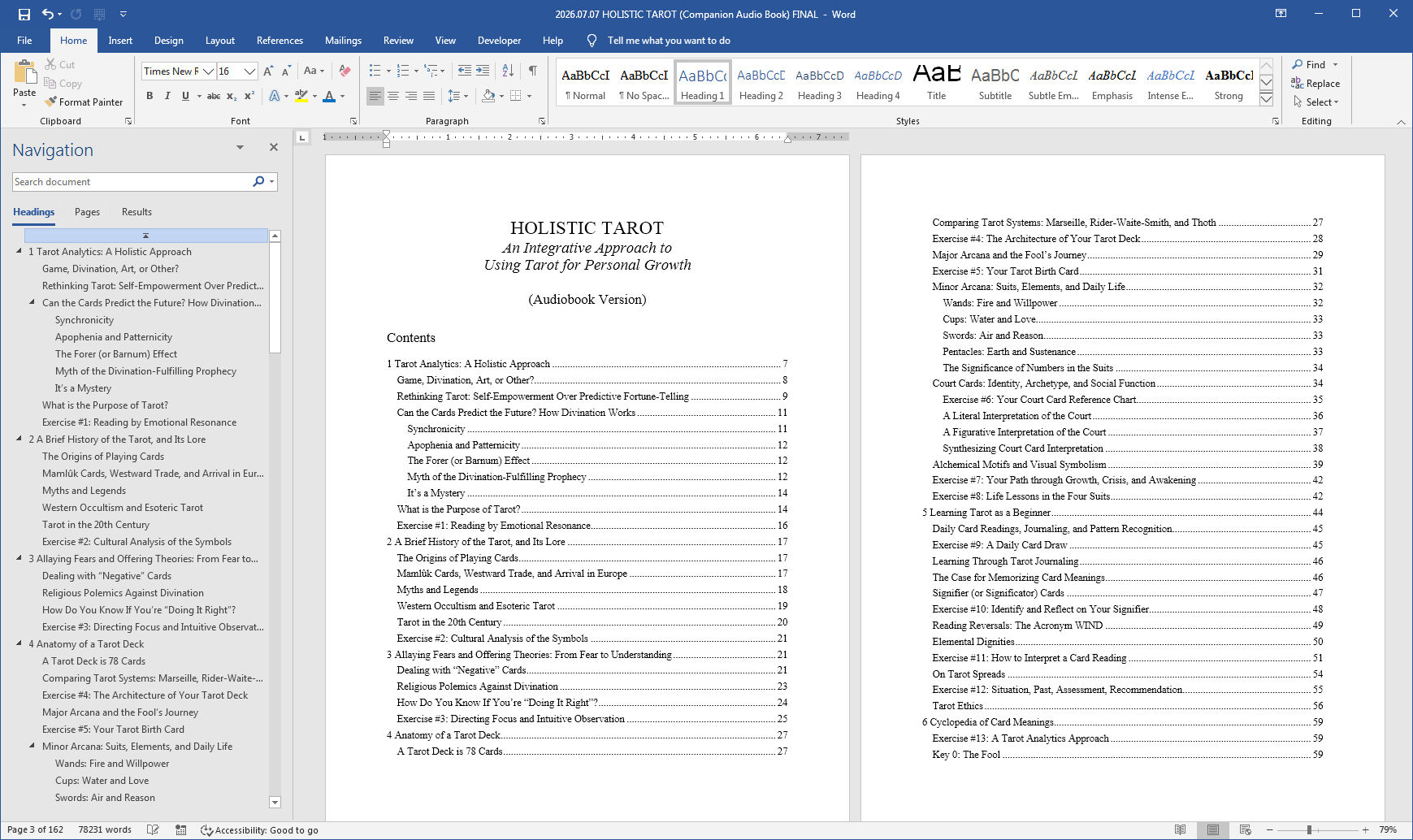
For the audiobook, I had to reduce the word count from 250K to a contractually bound “50,000 – 70,000 words and will not exceed 85,000 words.”
Some major reconstructive surgery later, this version is now — get this — 7 chapters (a septenary), featuring 21 guided tarot exercises listed in the table of contents, but actually 22 total exercises– one of them is not explicitly labeled as “Exercise #__” but precedes Exercise #21, immediately following Exercise #20. =) Just a little RWS Pictorial Key easter egg.
Not too long ago Serena Saint-Sinclair hosted an AAPI Esotericism Panel where I was one of the panelists, alongside Angela Yuriko Smith, an award-winning Ryukyuan-American writer and poet, David Shi, a North Asian shamanic worker, and Yeong-Tae, a baksu (Korean shaman).
Earlier this year I posted on this blog and my Substack, “Are Asian Folk Traditions ‘Pagan’?” I also have an old post showcasing Asian voices in the tarot community. At the end of that post I reflect a bit on AAPI activism as I’ve experienced it through the decades. Just some related links in case you’re interested.
Anyway, to dovetail on the AAPI Esotericism Panel, I wanted to add an afterword to remark on this newfound popularity of Asian Americans returning to their ancestral spiritual practices. I see it on TikTok and Threads, and I see it among the local AAPI youth.
Let’s explore the Taoist and Chinese folk religious concept of Hun-Po soul dualism, which is found throughout East Asian spirituality, mysticism, shamanism, Traditional Chinese Medicine, and spirit mediumship traditions.
Drawing from more than two millennia of primary source texts– from the Zhou dynasty through medieval Taoist classics– we’ll examine the belief that the human soul consists of two complementary yin-yang aspects: Hun, an ethereal, heavenly principle that is the source of inspiration, destined purpose, and cultivated wisdom, and Po, a dense, corporeal instinctive principle that stabilizes us and keeps us grounded, encompassing our adaptive drives (self-preservation, being territorial, our attachments, our appetite, emotional reactivity, fight or flight response).
We’ll see how this system of the soul complex became the foundation for practices such as soul retrieval, ancestor veneration, spirit mediumship, shamanic healing, TCM, and Taoist cultivation.
This is tentatively Module I of Introduction to Soul Retrieval: Theory and Practice, a course on the Han Chinese folk tradition of healing soul fragmentation. I say “tentatively” because we’ll wait and see what the level of interest is for such a course series.
READING ASSIGNMENT: For those who plan on going through the entire Soul Retrieval course, you’re going to want to have fully read through the below study outline before starting the subsequent Module II, because it will be set up assuming you’ve read through this document.
And (ugh) before some uninformed bad faith person screeches “AI! AI!,” no. I’ve been sharing wordy stuff like this since forever. See, for example, my downloadable law outlines, like this 96-page outline on U.S. Trademark Law & Unfair Competition from 2005. I know I’ve posted my copyright law one somewhere on here as well, also from the early 2000s, though I can’t seem to keyword-search locate it at the moment. Or check out any of the other free downloadable PDFs I’ve been sharing on this site since 2013.
Initially I had done a master class on soul retrieval for ConVocation 2025 in Michigan, only to realize after-the-fact that it wasn’t the optimal venue for the scope of content I wanted to put together and share. So I’ve been working on reorganizing the master class materials and turning them into YouTube videos.
Now, a couple of points I want to discuss further, beyond that video.
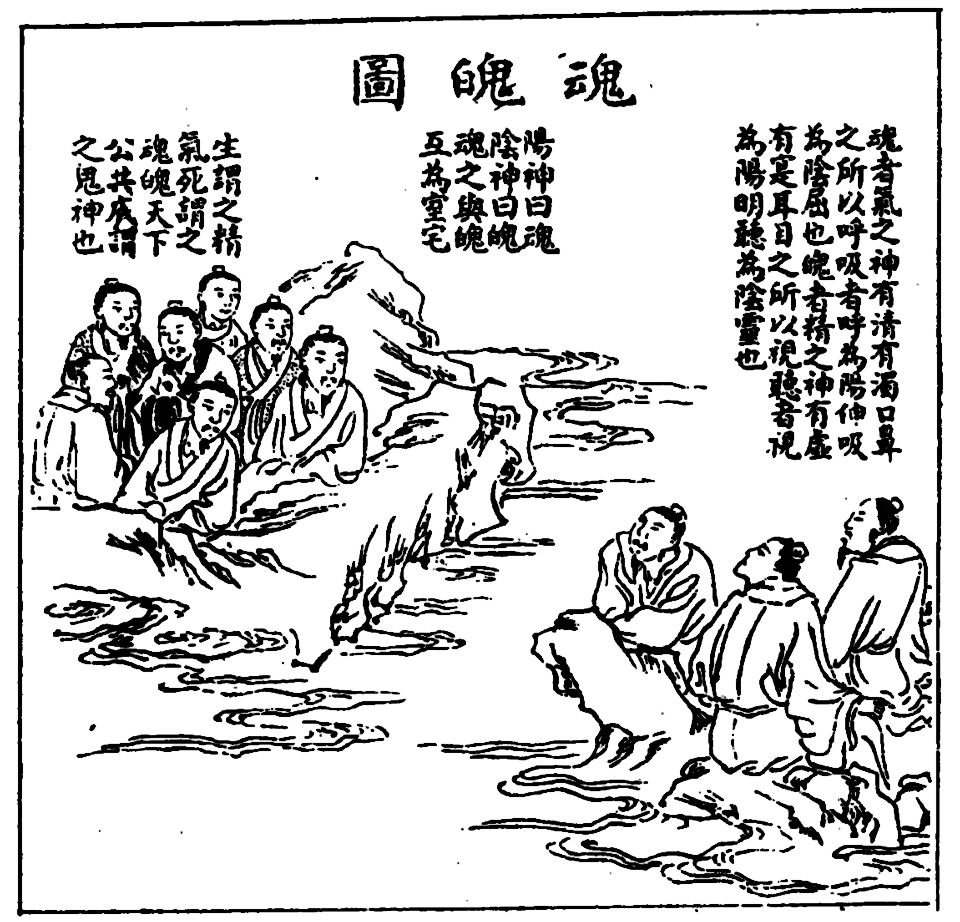
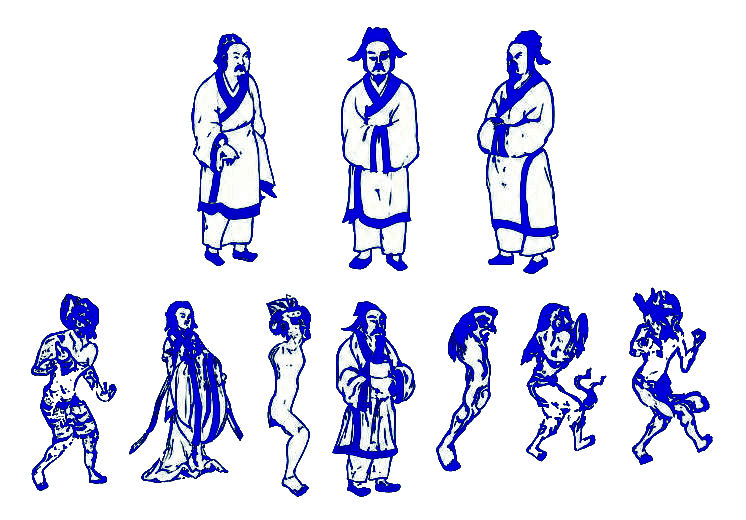
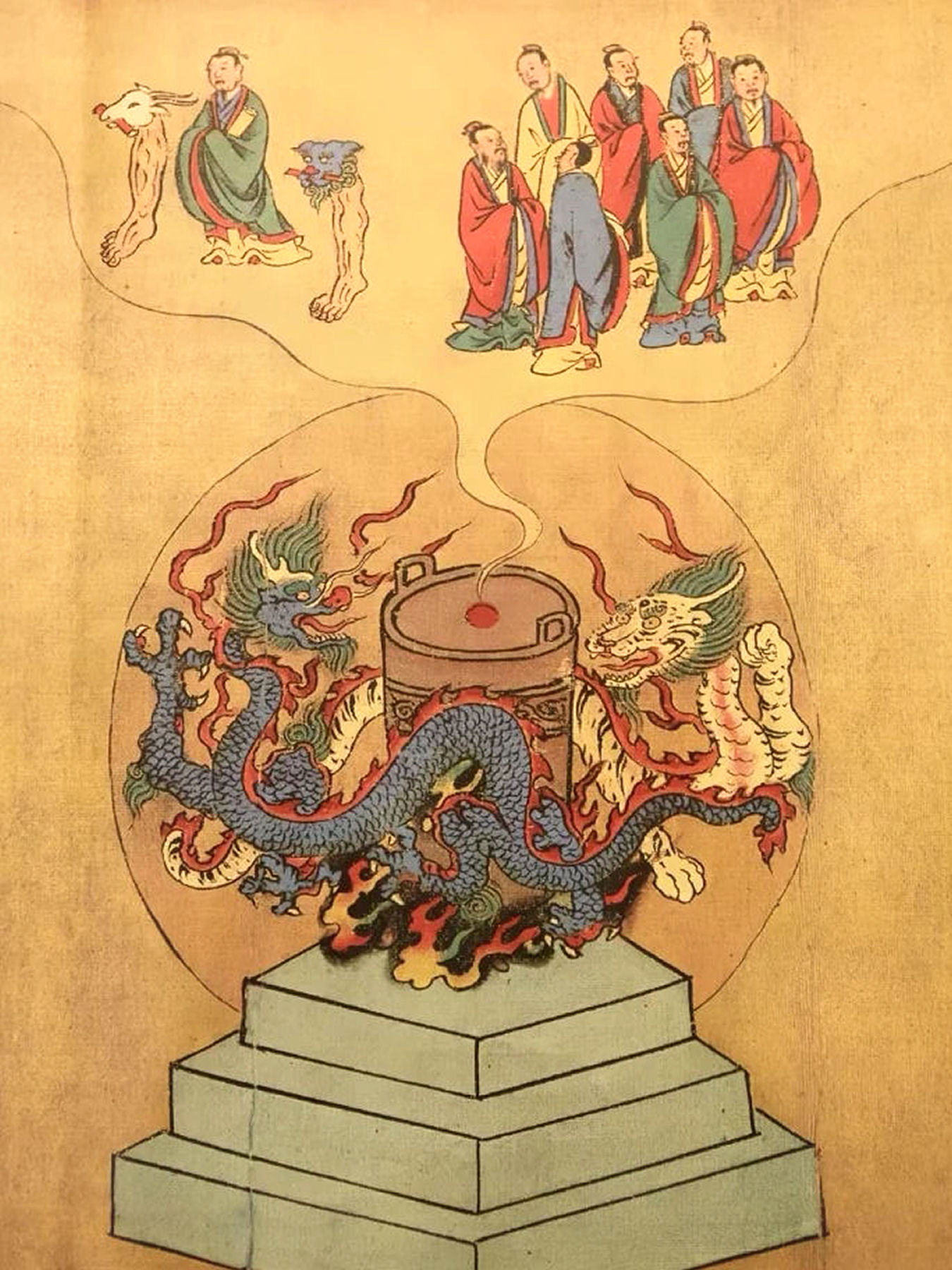
Depiction of the Hun and Po Souls from Xingming Guizhi 性命圭旨 (1615), a Ming dynastly inner alchemical text that syncretizes Taoism, Buddhism, and Confucianism
Summarizing the Hun-Po 魂魄 for the Subsequent Modules
In the same way medical science has an anatomical model of 11 (or 12) major organ systems, but we fully understand it as one single complex — the body — and all of these systems are interdependent, and in many ways, inextricable from one another (impact one, another will be impacted), Traditional Chinese Medicine has (A) an anatomical model of organ systems for the physical body, and (B) an anatomical model of 10 functional aspects of the soul.
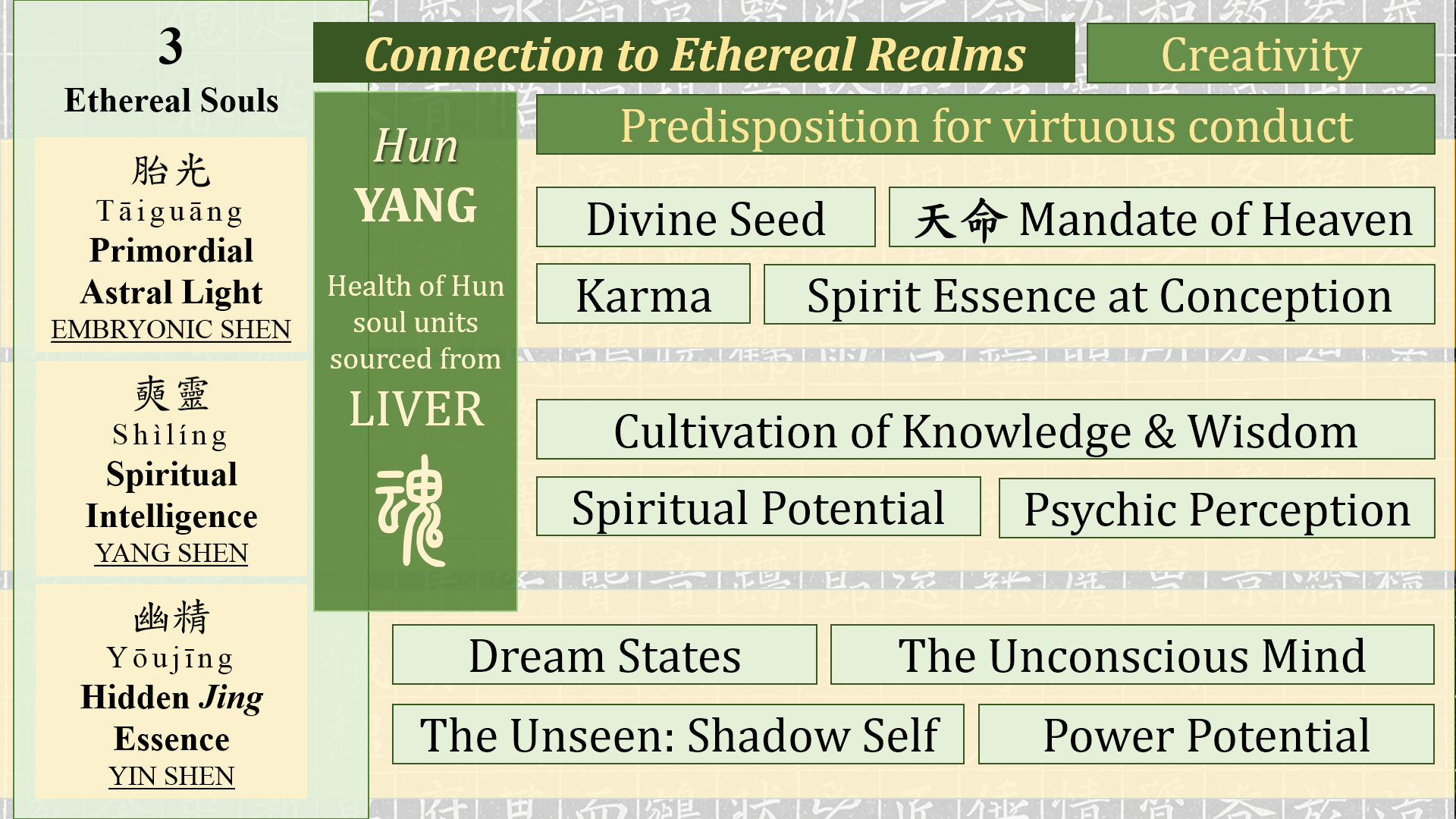
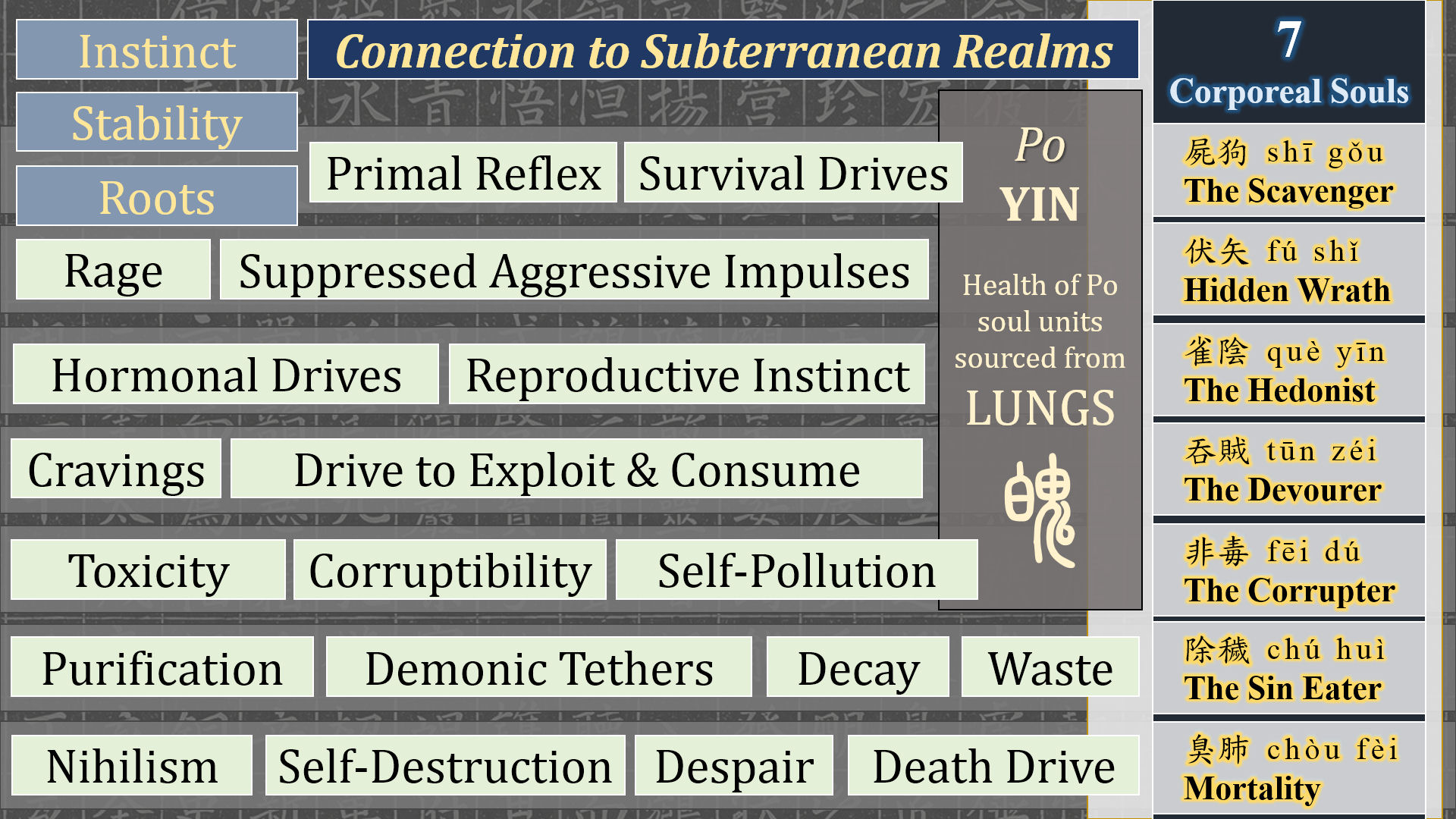
The soul is one single complex, like the body, but also, it’s 10 interdependent systems, and in Taoist metaphysics, that’s expressed as 3 Hun (yang aspects) and 7 Po (yin aspects), though Hun isn’t pure yang, and Po isn’t pure yin. It’s yang dominant and yin dominant, respectively.
I’ve noticed that across various Taoist texts, the 3 Hun when personified and depicted in human-like form, are portrayed as prim, proper, gentlemanly, at peace, whereas the 7 Po are depicted as wild, more animal-like, primal, and with highly-expressive emotional facial expressions. So take from that what you will.
Soul retrieval is a folk practice where the spirit-medium starts by assessing which aspect of soul fragmented, which part of Hun-Po is weakened, detached, overactive, deficient, stagnant, or otherwise causing the Hun-Po system to be out of balance. In the account from the video of Wu Yang 巫陽 the shamaness, first a divination was performed to help determine the nature of the soul fragmentation. Today, divination is still used by spirit-medium healers, though those with a Traditional Chinese Medicine background, will incorporate that body of knowledge into how Hun-Po is assessed.
The Three Hun (Inner Yang Balance)
The Hun is the yang aspect within, though it isn’t pure yang; there are still elements of yin in the Hun. The Hun is magnetized to go East and corresponds with the Wu Xing element Wood. Wood strengthens the three Hun.
Hun is the source for our connection to the ethereal realms, our creativity, divine genius, and vision. It fuels our dreams, intuition, imagination, and psychic abilities. An overactive Hun can result in personal instability, someone not feeling very grounded and rooted in material reality, and who has a difficult time navigating the physical world, i.e., have you ever been told “your head is in the clouds”?
Yet overactive Hun can cause your inner soul to attempt self-correction, causing your Po to go off balance, which is the explanation for many of the behavioral health symptoms those with an overactive Hun tend to experience, at a much higher rate than those with a typical balance of Hun.
The Seven Po (Inner Yin Balance)
The Po is the yin aspect within, though it isn’t pure yin; there are still elements of yang in Po. The Po is magnetized to go West and corresponds with the Wu Xing element Metal. Metal strengthens the seven Po.
Po is what keeps you stabilized, gives you a sense of roots, and these seven aspects are your body’s primal instincts and survival drives.
Hun governs or “leads” Po. Therefore the health of your Po is determined by the health of your Hun, although it is interdependent, so imbalanced Po further exacerbates imbalance in the Hun.
PRACTICUM #1
The above meditative recitation is an abridged English variation of the “Incantation for Mastery of All Inner Spirits” from the Yunji Qiqian 雲笈七籤 (1016 AD), Seven Tablets of Sacred Writings, which features a “Method of Body-Spirit Immortality 存身神法” used as a soul healing ritual. The practitioner is to wear white and face east while reciting the sutra. The full-length version of the sutra in Chinese and its more literal English translation is provided in the description box of the above video.
As a form of simple personal energy clearing, on the day of a full moon, follow the video recitation while facing east, palms pressed together in closed prayer position to keep your energy circuit closed and sealed. Just to follow grimoiric tradition, wear white. =) It’s short, low commitment, and just gives you this sense that you’ve cleansed your breath and now you feel slightly more rejuvenated.
Keeping Vigil on Gengshen Eve 庚申: The Three Vermin and the God of Destiny
We talked about this old ritual practice found in both Chinese Taoism and Japanese Shugendo 修験道 (syncretized esoteric Buddhism and Shinto) called Keeping Vigil on Gengshen Eve 庚申守夜.
It was premised on the belief in Three Vermin or Three Corpse Spirits resident within your three dantian: the vermin in the upper dantian corresponds with vanity; the central dantian was home to indulgence; and the lower dantian was home to desire. Gengshen 庚申 is one of the 60 days in the lunisolar calendar. In other words, every 60 days, the Three Vermin leave your body while you’re asleep and report your transgressions to the God of Destiny 命神. Hearing the Three Vermins’ reports, the God of Destiny will shorten your life span accordingly, in penance for the transgressions.
Ritual practices arose where people would not sleep on Gengshen Eve, and instead perform all-night meditations, ritual purification, ritual fasting, or group religious observances, believing that as long as they were awake, the Three Vermin could not leave their bodies, and therefore would miss their check-in with the God of Destiny.
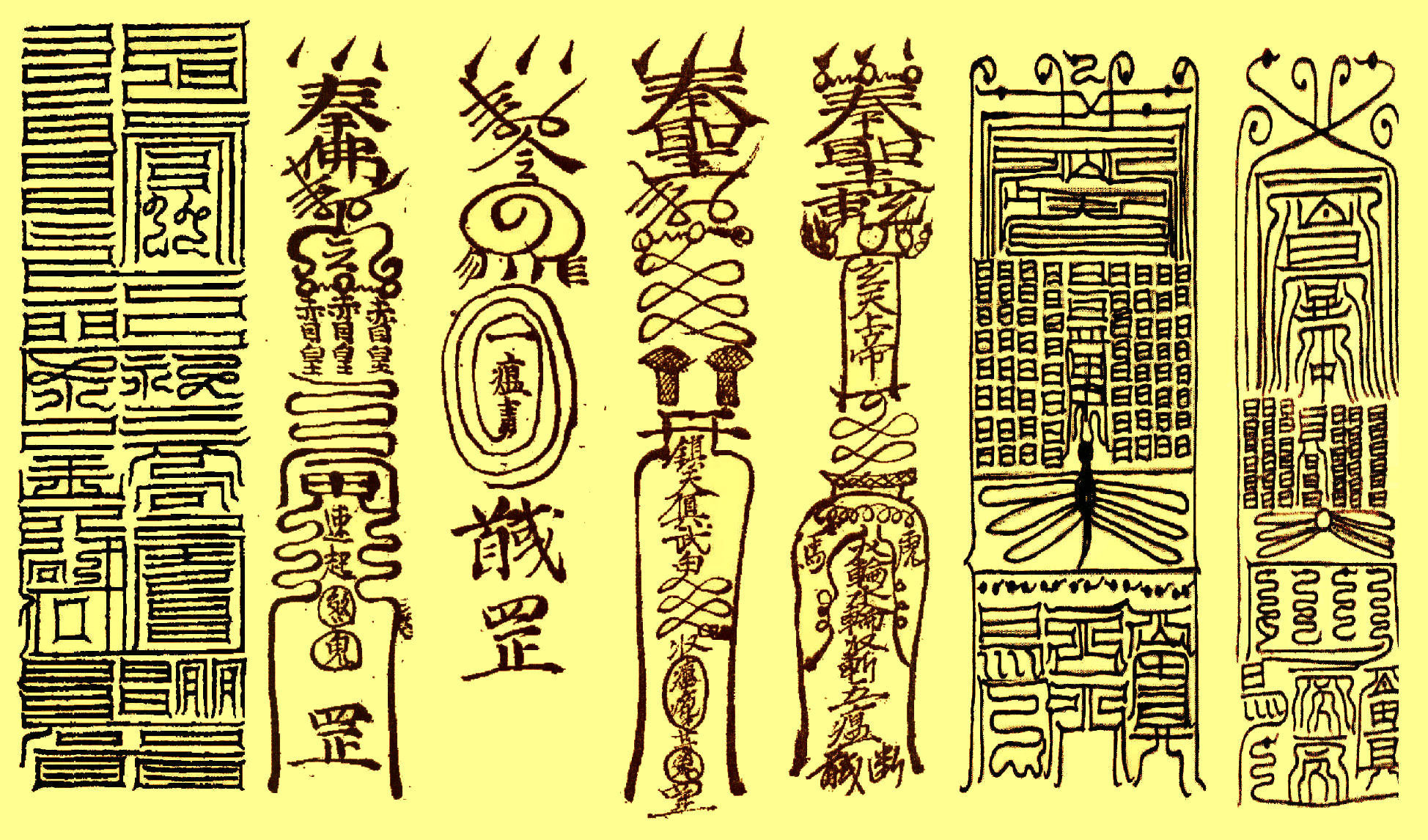
There were even magical practices involving talismans and spells intended to permanently sever the Three Vermin from your body entirely.
I think there is still some value to observing Gengshen Eve, not just to honor and uphold tradition. Even if you don’t take the Keeping Vigil on Gengshen Eve for subduing the Three Vermin literally, it’s still a generally positive self-reflection practice every 60 days to just think about whether you’ve been keeping your ego, vanity, unnecessary extravagances, and compulsive cravings in check.
I don’t think anyone disagrees that self-destructive thoughts and self-destructive behavior can fragment our sense of personal wholeness.
And so this Keeping Vigil practice every 60 days is kind of an incredible personal ritual for being accountable to yourself, fostering self-awareness, and catching yourself before things go haywire so you can course-correct.
PRACTICUM #2
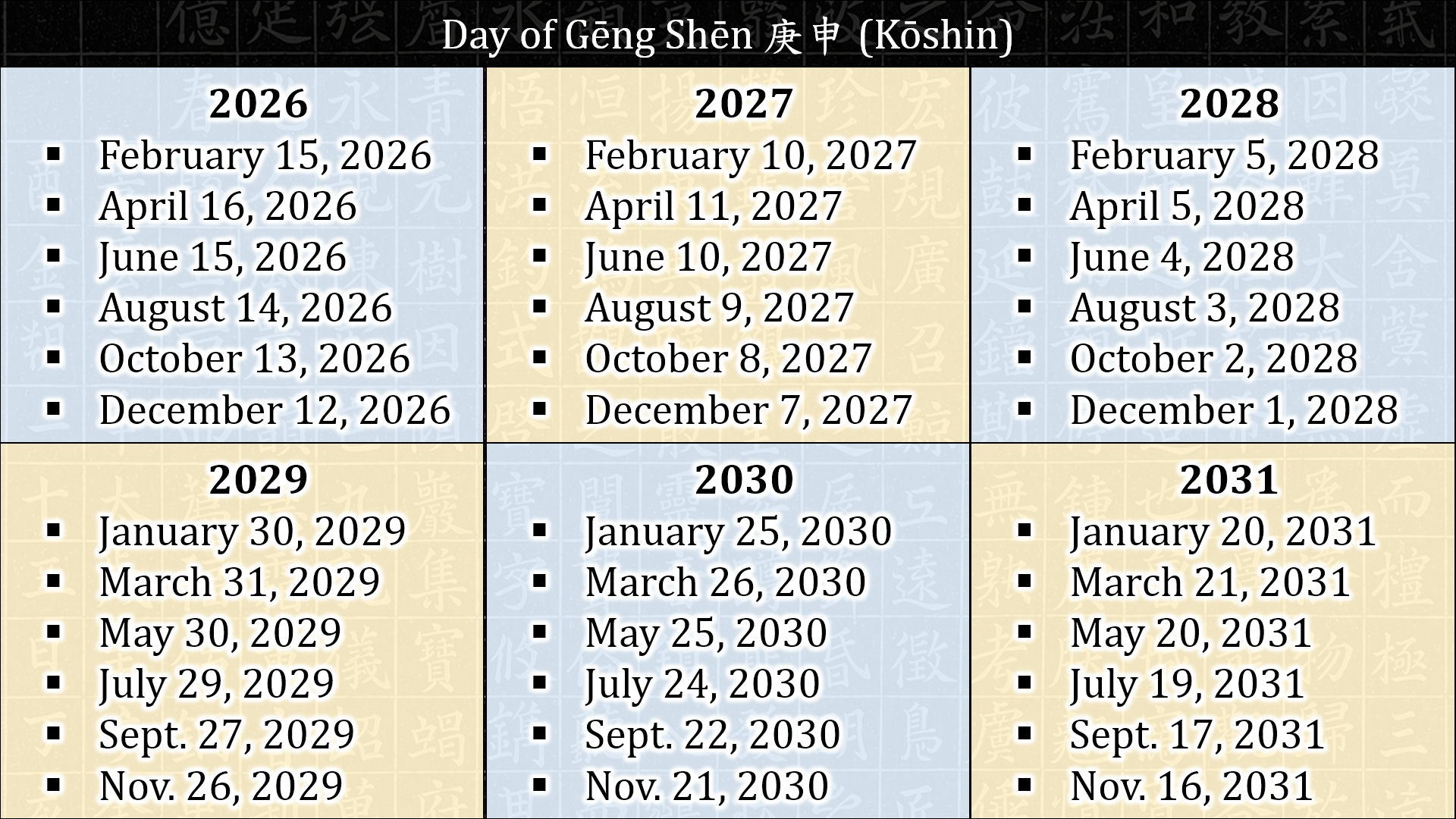
For the rest of this year, on each Day of Gengshen, or in Japanese, Kōshin, reserve some time in an evening hour to self-reflect on what you might need to overcome and do better for the next 60 days in terms of neutralizing the Three Vermin.
Commit to habit and mindset changes, or maybe do a little magic, so that, you know, the God of Destiny will bless you with good health and fortunes.
Depending on your appetite for the mystical and unverified, calendar in the above dates, every 60 days, to do what can range from journaling self-reflections on where you’re at in terms of vanity, keeping your ego in check, and curbing unhealthy indulgences and cravings, to Taoist alchemical cultivation practices or spell-crafting to placate the Three Corpse Spirits.
魂魄圖 (Diagram of the Hu-Po Soul Spirits and the Inner Cauldron 鼎), from the Xingming Guizhi 性命圭旨 (1615).
To See One’s Own Hun-Po: The 金水分形 (Jin Shui Fen Xing) Ritual
“金水分形” (jin shui fen xing) means “separating Metal and Water into their distinct separate forms.” Metal and Water are referring to the Wu Xing elementals, Metal for white and light luminosity, Water for darkness and opaqueness. Together they represent the polarity of light and dark. As noted in Ge Hong’s Baopuzi, performing this ritual successfully enables you to visualize the ten spirits that are your Hun-Po, the seven Hun and three Po.
While the term “Separate the Forms of Metal and Water” in its original intended meaning was in the scope of outer alchemy, it became a symbolic term used in folk magic, for visualization practices that employ mirrors, and specifically, a ritual using a mirror to see one’s ten Hun-Po as spirit entities or energy bodies within.
PRACTICUM #3
I learned this particular method back in my 20s in Taiwan, no citations, no “this is where it came from,” just “follow me and do as I say.” Now as an adult, I tried to trace the steps backward to see if I could source its origins. It seems like it’s based word for word on lines from Ge Hong’s Baopuzi but doesn’t appear exactly in Baopuzi.
Here’s a video clip of what the wording sounds like:
People will have varying opinions on what language you “must” use for the incantation to work. My approach is to focus on the objective, and work backward, discerning what means will be most effective for you to achieve the end goal. If you’re going to stumble and fumble and feel weird over the pronunciation of the Chinese, then go with a poetic translation of it in your native tongue. If going with a language other than the one you speak everyday in the mundane helps facilitate change to a heightened, transcendent state, then go with the Chinese.
The full step-by-step write-up “To See One’s Own Hun-Po” is in the study outline.
In the video lecture I mentioned my strong recommendation that you not try this unless you have some foundational experience in ritual magic already. It doesn’t have to be Taoist. You just need to have a working toolkit for basic cleansing, consecration, creating sacred space, and monitoring the situation. You integrating your know-how from that working toolkit into this culture-specific ritual approach is totally fine because those core competencies are transferable.
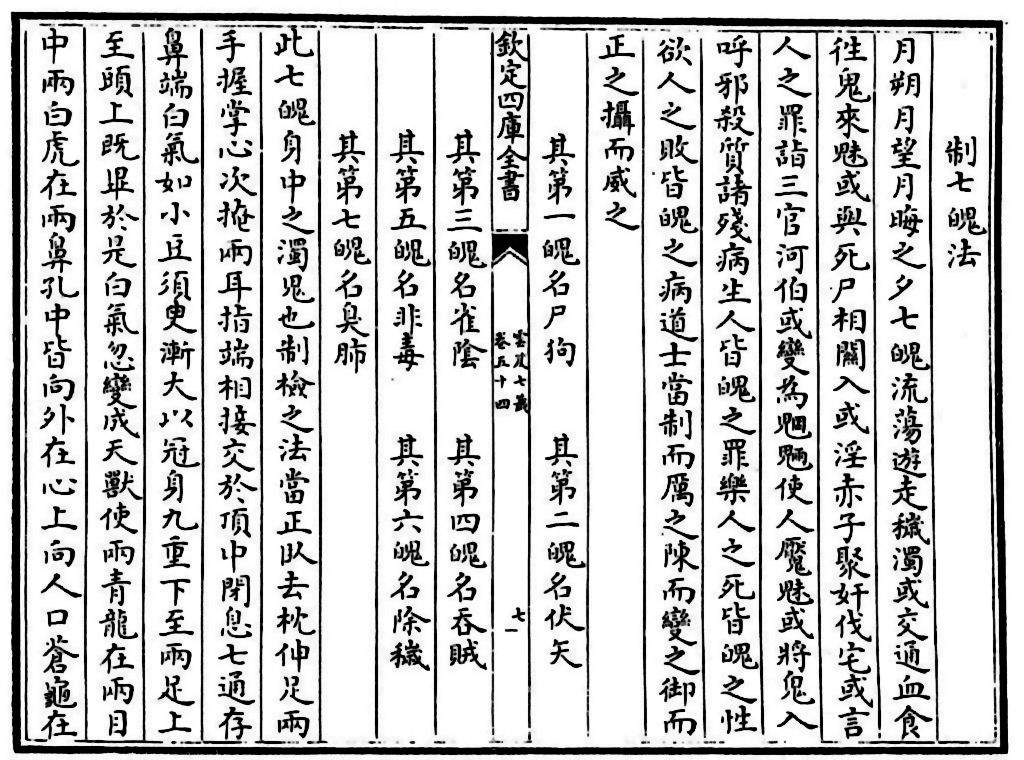
“Method for Regulating and Controlling the Seven Po 制七魄法” (from the 11th c. Yunji Qiqian 雲笈七籤)
The above is a page from Yunji Qiqian (Seven Tablets) titled “Method for Regulating and Controlling the Seven Po” that enumerates the names of the Seven Po (the names given in that downloadable outline), and then provides instructions for a visualization and breathwork practice intended to give you perception and control over the Po aspects of soul.
The instructions start with the practitioner lying flat on your back, entering a meditative state through breath retention and internal visualization. You visualize white Qi transforming into celestial beasts– two azure dragons where your eyes are, and then two white tigers where your nostrils are. (Random interesting note: Those with extreme astigmatism might see two azure dragons that look rather different from one another.) They signify the Hun and Po respectively, east and west, yang and yin. The practice is presented as a method for being able to see and visualize your inner Po, and then regulating them into harmony.
Instructions and guides on visualization techniques for how to see your Hun-Po are aplenty, because being able to see them is the crucial, required Step One to, well, all aspects of Taoist cultivation, and, as noted in the esoteric interpretation of Verse 10 from the Tao Te Ching, for knowledge and understanding of the Hidden Code (i.e., the Sacred Mysteries). Once you’re able to see the spirit map formed from your Hun-Po aspects, you’re able to begin soul healing work.
Do you need a lineaged master or teacher to practice Taoist or Buddhist occultism? Is the whole “you must have a master teach you The Way or else danger, danger” true or a myth? Can reading books replace live teachings and direct transmissions from a master?
Here’s where we’re going to start:
I’m Here for the 99%, Not the 1%
Hubby was telling me how it’s necessary to have a 1:1 personal trainer or fitness coach with you at the gym. It’s necessary for safety reasons, to make sure you’re handling the gym equipment safely and to ensure proper form. You need a seasoned expert to be designing your workout routine, to make sure it’s covering everything it needs to cover, to make sure it’s comprehensive enough, but customized to your very specific individual needs, in short, you can’t just pick up arbitrary gym equipment or hop on a treadmill and hope for the best. You can’t do it on your own based on general knowledge, because you won’t know how to be efficient with your routine. We are never as self-aware as we think, and unchecked errors can solidify into permanently bad workout habits. You won’t improve at an optimal rate, what you’re working out might be imbalanced, and also, is your dietary intake and your workout routine reconciled. And that’s the best case scenario. Worst case scenario is you physically injure yourself.
He’s not wrong. Except the ability to have a 1:1 personal trainer and fitness coach is a privilege. It’s not something accessible to the majority.
Whether it’s the privilege of being a mega corporation vs. a small family-owned or sole proprietor business, or it’s the ultra-wealthy 1% vs. the middle class American, the hallmark of privilege is having on retainer subject matter experts for every stripe. You hire specialists to provide personalized guidance and counsel to you on everything you do. You have an interior decorator, home art curator, you have a CPA, a CFA long-term investments advisor, a realtor, an attorney, a concierge physician on call who shows up at your penthouse within 30 minutes of your text, and yes, a 1:1 fitness instructor, a dietitian, and if you please, a spiritual advisor, also at your beck and call.
Meanwhile the masses, the not-1%-elite, either end up with a shit version of one of those professionals because they can’t afford the best of the best, or they’re resigned to doing it on their own. We’re not saying “you never need a CPA.” We’re saying it’s probably a bit tone deaf to assert “everyone must get a CPA or else.”
And so if your karma is such that time, place, and resources align for you to be blessed with that 1:1 personal tutelage from a bona fide and sincere lineaged spiritual master who is genuinely doing this for your good, not theirs, then congrats, you are in that rarefied 1%. Of course that is going to be the path for you to take. Bless you, off you go! What are you still doing here?
In no way would I ever say don’t seek out a spiritual teacher. In fact, I am totally co-signing those prominent voices asserting that as the ideal approach, assuming you’ve found the right spiritual teacher for you and one who is selfless, self-sacrificing, and sincere.
What I share isn’t for that rarefied 1% with karmic privilege. I’m here for the other 99%, because I believe with a little boost, they, too, can get to where they want to go.
The following is from a keynote presentation I did at the Northwest Tarot Symposium in 2022, the materials now made freely and publicly available.
The subject of this presentation was one more often seen as taboo: using the tarot to do health readings.
Spiritual health and its interaction with physical, psychological, and social wellness had been gaining serious attention in medical literature. So I wanted to consider those perspectives in a discussion on spiritual health and tarot.
What this post provides is a summary of the workshop, the PowerPoint presentation slides I used during the keynote that you can now download and walk through, and all the handouts and resources that were provided to the attendees.
For anyone interested — and also I’m documenting this for myself so I have an easy, accessible aggregation of my favorite scent recipes — I’m creating this page to house my “best of” recipes. So I’m anticipating that in the future I’ll return to this page and update it with more scent recipes.
Though that write-up is more about using essential oils with the intention of holistic healing, whereas here, while there’s a lot of cross-over, my main focus will be on scent.
As you probably know, the quality of the essence or absolute you’re using matters a lot and can make all the difference. So two people following the same exact recipe but using different quality essences are going to get two very different results. Fruit notes tend to be more forgiving, but resins and some florals, no, you are very likely going to get what you pay for.
Yamantaka will be our entry point into doctrinal medieval Buddhist magic as we explore ritual practices around mandalas, mantras, mudras, and empowerment rites. Which is a bit like throwing you in the deep end of the pool to teach you how to swim. But hey, that’s how I was taught how to swim, so you’re welcome. What’s that species where the mama bird throws the babies off the edge of a cliff and the baby birds either learn how to fly or they die?
I kid. Think of this as just a witchy social studies class. But for those who want to go down the rabbit hole, this write-up will provide you with a well-rounded starter pack, accompanied by exquisite public domain high-res downloads of religious art and Yamantaka mandala references.
The Six Syllable Mantra (Om Mani Padme Hum 唵嘛呢叭咪吽) is the foundational entry point for Asian folk magic traditions. This is a mini-course where we’ll be covering both the doctrinal Buddhist foundations and the practical applications.
Part 1 focuses on Doctrine; Part 2 focuses on Ritual. The subsequent Video 2 is for ritual, to convey a direct empowerment so you can experience the magic and the Mystery for yourself. Both videos are now up on my YouTube channel and also linked in this companion article, where I’ll highlight some of the key points from the video and also drop in the references you might need for the recommended practicum.
Buddhist Mysteries emphasize the distinction between conceptual understanding (which Video 1 strives to deliver) and direct realization (which Video 2 strives to deliver). Dedicated, repetitive, sincere resonance with the Mantra itself, which Video 2 helps to facilitate, is how you receive direct realization and actualization.
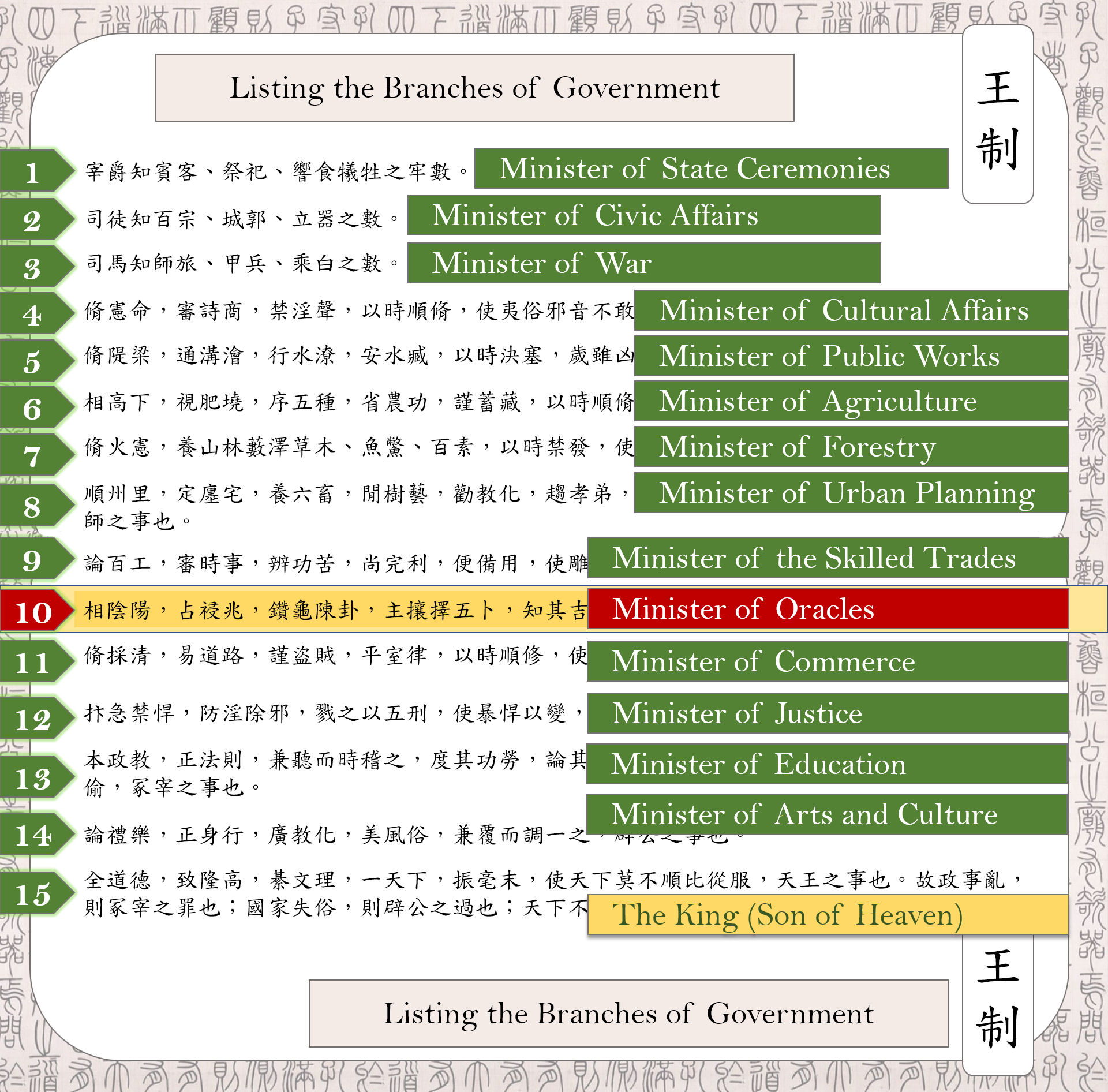
A single line statement from Xunzi (3rd c. BCE) becomes the framework for mastering Chinese folk magic. In this lecture, we unpack the “Minister of Oracles” (Minister of Magic?) in the royal bureaucracy of early China and reveal how it encodes a five-step curriculum.
From 王制, Scroll 9, Section 35, in Xunzi 荀子
There’s a passage in Xunzi that lists out fifteen branches or bureaus of government ending with the one who oversees them all, the Son of Heaven, or the Head of State. The tenth office listed is the Minister of Oracles, chief among the shamans 巫.
You could even make the argument that this translates to the Minister of Magic, as that title more fully encapsulates everything this particular government official is in charge of for the kingdom.


 benebell wen