To the New Pagan Author…

A video I watched inspired me to hit the record button and share these thoughts. But this is no longer a direct VR to that video (and in fact this video might have taken on a more melancholic tone than intended).

Instead of being a direct VR to the video inspiring this sharing, I will be commenting on what my own experiences have been like.

Here are some of my thoughts 7 years in.

This video is unlisted, which means it won’t appear on my YouTube channel or on the public YouTube platform. I will be experimenting with moving away from that platform and posting more unlisted videos here on the personal website.

Video Transcript

For those who prefer reading over watching a video, here’s a cleaned up, polished transcription of the video:

This began as a possible video response to something I watched recently—a video where someone shared their thoughts on being a pagan author. But then, my ramblings diverged into something else entirely. Still, for context, this started as a reflection on the social and professional pressures of being a pagan author.

Specifically, I was thinking about how, once you’re published, people start to treat you differently. Your voice becomes memorialized in a public, two-dimensional space with a lot of visibility—and when that happens, something reductive tends to occur to your personal identity. The audience no longer sees the full human behind the words. They reduce you—the author, a red-blooded, complex person with a past, biases, emotions, and opinions, some of them flawed—into a flat, two-dimensional caricature.

Once you become a pagan author, you’re no longer allowed to be multifaceted. You’re no longer seen as someone with complex or evolving thoughts. Heaven forbid you once published something a decade ago that no longer reflects who you are today—it will still haunt you.

When you brand yourself as an author, you’re branding yourself as a single archetype. And yet, a fully developed human being is made up of many archetypes at once. If your branding is successful, then people will only see that one archetype you’ve presented. And they will judge you as that limited version of yourself.

How people perceive that reduced archetype—this caricature—is often polarized. You’re either pure brilliance or pure awful. You’ll either be the hero on a pedestal or the villain someone is determined to take down. And when they do take a swing at you, they get to be the underdog hero that the audience roots for.

The irony is that most of us who become authors—most writers—are shy, introverted, insecure people. We’ve experienced marginalization. We were often the outcasts, the underdogs, the kids who got picked on. And now, suddenly, because we’re published, we’re perceived as the Goliath. But not a single bone or nerve in your body actually feels like Goliath.

There’s a kind of dissonance there—I don’t even know if I’m using the word “cognitive dissonance” correctly—but something happens when you’re faced with that mismatch between how you’re perceived and who you know yourself to be.

People say, “Never meet your heroes,” and now, bizarrely, they’re referring to you.

And with the rare exception of the narcissistic bad apples in any field, I can assure you—no author wants to be a hero. No one wants to be seen that way. And it’s not about false modesty. It’s just the truth. When you call someone a hero—when they’re just an ordinary person trying to live their life—you’re setting them up to fail.

An author is just someone who took the time and effort to sit down and write out their thoughts in a (hopefully) cohesive, organized way—and had the grit to see the manuscript through to publication. That’s it. That’s all it is.

I don’t think Noam Chomsky or Eckhart Tolle necessarily has more brilliant ideas than, say, my husband James hasn’t already come up with himself—while sitting in the bathtub with a beer in hand. You know what I mean? The difference is that a published author has a particular skill set and stamina for completing manuscripts that maybe Joe Plumber hasn’t developed, or hasn’t had the time or opportunity to develop yet.

To the new pagan author: I warn you—people will forget that you have feelings. Or worse, they won’t forget. They’ll realize you have feelings and just not care.

And to be fair, it’s not entirely the public’s fault. It’s partly our fault, or maybe the industry’s. There’s intense pressure to brand yourself as an author. If people can’t sum up who you are and what your work is about in three words, you won’t gain popularity. But if they can sum you up in three words—congratulations, you’ve branded well—and you’ll be rewarded with visibility.

But then, to maintain that visibility, you have to stay on brand all the time. There will be constant external pressure for you to stay in your lane. A private person who hasn’t branded themselves can have different opinions on all kinds of topics. No one asks them for sources or a CV. But as a public figure, you don’t get that grace anymore—not after publication, and certainly not if your branding is successful.

Once you become known for something, you’ll only be “allowed” to speak on that narrow range of subjects. You’ll be told to stay in your lane. People will say that author branding is a double-edged sword—and they’re right. The more successful your branding, the more your voice seems to matter. But at the same time, the more your true self gets lost in the process.

Live by the sword, die by the sword, I guess.

To the new pagan author: I warn you that, at some point, you will be called a gatekeeper.

Let’s say in your book, you write something simple, like, “Personally, I think strawberry jam is better than blueberry jam. I’m not particularly fond of blueberry jam.” That’s all you said. But people will misinterpret it. They’ll claim you said blueberry jam is inferior to strawberry jam. That you’re disparaging people who like blueberry jam. That you’re dismissing the entire population who prefers it.

And before you can even clarify, you’ve become that author—the one who gatekeeps jam.

To the new pagan author: seasoned authors will often tell you not to care what others think. Don’t worry about what people say. Shrug it off. Don’t pay attention to the negativity.

I’m still conflicted about whether that’s healthy advice. I really don’t know.

We should care what our loved ones think of us—because how they perceive us is a reflection of how we’ve treated them. And in my personal spiritual worldview, we should treat everyone as our loved ones. We should love all people. And if we do love people—truly—then we should care about what they think of us. Their thoughts and feelings about us reflect, whether we like it or not, how we’ve been treating them.

So in that sense, shouldn’t we care? Shouldn’t we be open to hearing when someone thinks something negative about us—and ask, “Is that a fair reflection of how I’ve treated them?”

But then again—what do you do when it’s the entire internet calling you a terrible human being?

How do you process that in an emotionally healthy way?

Here’s the conundrum: when you publish a book, you need to consent—at least intellectually—to being critiqued. To being criticized. That’s part of the deal. And if your voice becomes influential, then for the sake of intellectual checks and balances in a democratic society, your ideas should be vigorously challenged.

If you’re smart, then on some level, you understand that.

But… do we ever really grow out of being that little kid who got picked on for being different?

Why does public condemnation of your publicly celebrated work feel so much like the bullying you endured as a kid, when you were nobody?

So to the new pagan author, I’ll just say this: For some reason, the grass is always going to feel greener on the other side.

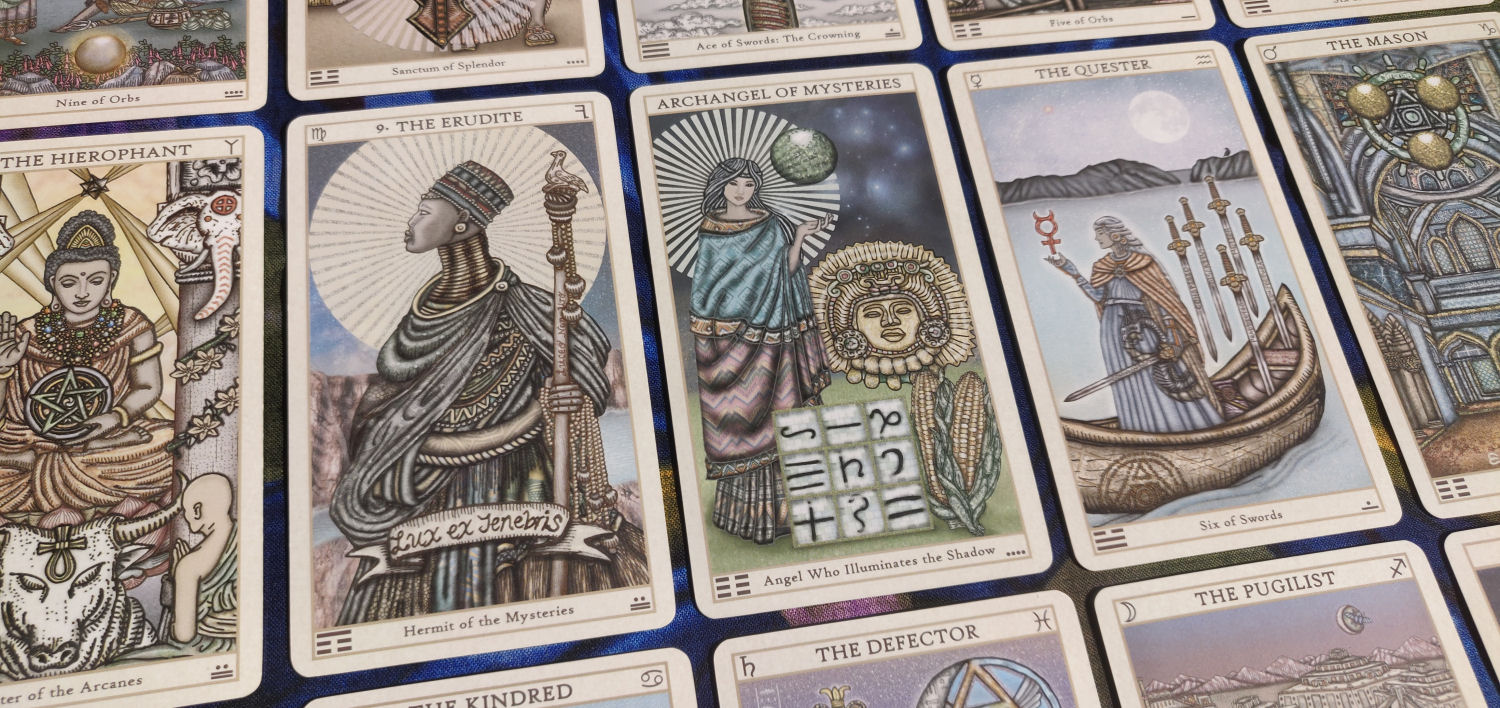
Reflecting on My SKT Tarot Art Journey

Evolving from the pen and ink line drawing you see above to the digitally-remastered in-color version of The Priestess was a journey. As 2021 comes to a close and I send out the final shipment of first print run decks of the Revelation Edition, I’d like to share my reflections on this journey.

Fair warning upfront: This is going to be a looooong blog post. I also share some tips, from direct personal experience, to aspiring indie deck creators.

Completing the Revelation Edition is one of the coolest things I’ve ever achieved, because I leveled up so much in terms of my own art. I did something I didn’t even know I was capable of doing.

Continue reading “Reflecting on My SKT Tarot Art Journey”

Working with My 2022 Metaphysician’s Day Planner

So if you saw me share this video earlier but it was the same video as the one on the Day Planner pre-order page about how to upload to Lulu, then you saw the wrong video. I took that down and re-uploaded with the correct video. Serves me right for naming both video files “2022 day planner how-to.” Totally confused me this morning when I went to upload to YouTube.

THIS video walks you through how I’m filling in the different page sections of the day planner. Sorry, it’s been one of those weeks. I’m frazzled and fried. Going to go take a nap now. Thanks.

BA GUA (EIGHT TRIGRAMS) PRINT-OUT

Order Your 2022 Metaphysician’s Day Planner
+ Complimentary 2022 Forecasts & Guides

#only10decks The 10 decks I’d take with me

…to that stranded remote island where I will only ever be able to use these 10 decks for the rest of my mortal life. Or so goes the prompt. I may have embellished a little. Katey Flowers on Tarot Tube started the hashtag. You can watch her video here.

By the way, at the start of her video she says she was inspired by the makeup community’s tag “only 10 eyeshadow palettes” and I have to confess I kind of guffawed at the thought of “only” 10 eyeshadow palettes.. Ten…palettes? I don’t even have one! Ah but then I’m sure most of the known world would guffaw at my struggles over choosing just 10 decks for this prompt.

Continue reading “#only10decks The 10 decks I’d take with me”

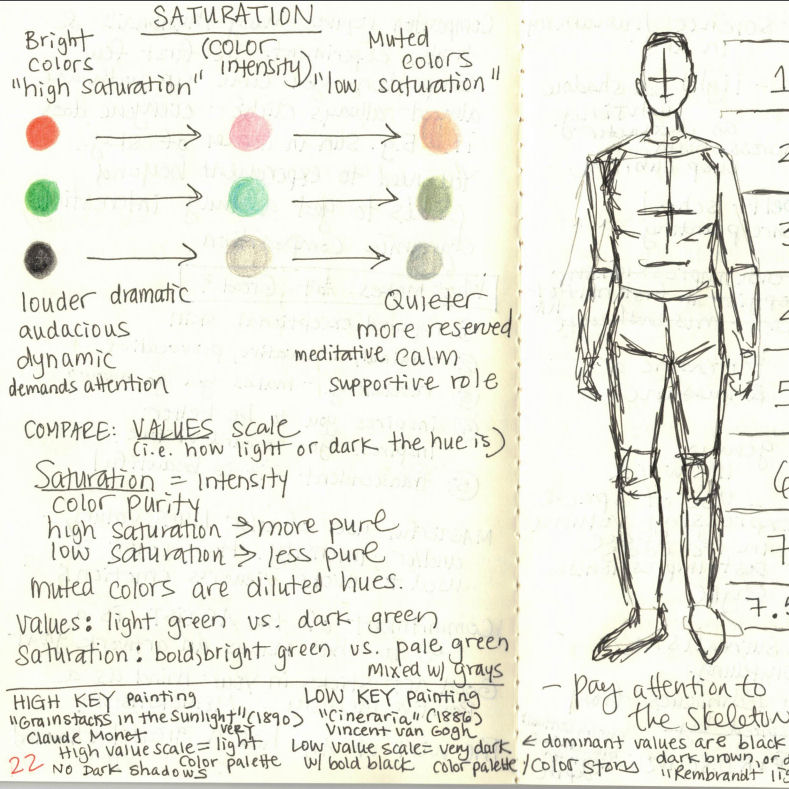
Download My Art Study Journal

A while back on my Instagram feed, I shared photos of my 2020 art study journal. Now here’s the whole thing, though it’s still just a slim and sparse booklet.

I kinda didn’t wanna share this because it’s so, ew, a hot mess, disorganized, and you can even witness my mood changes as my handwriting teeters from neat and meticulous to hasty and illegible.

Continue reading “Download My Art Study Journal”

Random Personal Update

Most of this blog on my website consists of deck reviews, some book reviews, and right now because SKT III is in production, SKT status updates. I haven’t checked in with you with a personal update in a while. So let’s chat. Hi! How’ve you been? Let me share with you what’s been going on in my corner. =)

That Novel I Kinda Started Talking About… and then Didn’t?

In March of 2020, I posted this: “Novel Writing Adventures.” And this: “What Writing and Publishing a Novel Means to Me + Asian American Kid Problems.”

Back in 2013 I started this ambitious novel (I say “ambitious” because the plot and premise is really convoluted and in terms of my own skill level, I was trying to accomplish way more than my technical proficiency or storytelling ability was capable of.) I got up to 37,000 words before I abandoned ship.

I revisited that same manuscript in 2015, discarded about a third of what I had written in 2013, continued on, and got to 59,000 words before, again, abandoning the undertaking because it got too overwhelming.

In 2018, I threw away all 59k words of the previous manuscript, started from 0, wrote furiously for 2 years straight, and by February/March of 2020, exactly when the pandemic hit the U.S., completed the manuscript at 118,000 words.

Continue reading “Random Personal Update”

Journey to the West (Monkey King) Taiwanese Playing Cards

Click on image files for enlarged view

This is kinda for Kim from FablesDen. I was listening to her chat with Wai here where she talked about wishing there was a Journey to the West tarot deck. While I don’t have that, and don’t know if one exists, I do have this very cool Journey to the West themed deck of playing cards.

Journey to the West is a Chinese epic from the 1500s. It’s about Tripitaka, a Buddhist monk from China’s ancient capital (think: somewhere in the central north of the modern-day country you’re familiar with) who is tasked by Kuan Yin to journey to India to receive Buddhist scriptures.

Kuan Yin frees the Monkey King, a trickster figure with magical abilities, from his incarceration, who was punished by the Buddha and imprisoned after he stole peaches of immortality from Heaven. In exchange for helping the monk on his quest, the Monkey King will not only be freed, but will achieve enlightenment.

White Dragon Horse, a banished dragon spirit transformed into a horse, serves as Tripitaka’s steed. At the end of the journey, the horse becomes a bodhisattva and is restored to his original white dragon form.

Pigsy, a philandering and gluttonous warrior general banished from Heaven’s army after he offended Chang’er, the moon goddess, is also tasked to accompany Tripitaka, as is Sandy, another former warrior general in Heaven exiled to the mortal realm due to anger management issues. It’s a quest story about a virtuous, principled monk and a band of misfits who fight or outsmart demons and survive supernaturally perilous terrain.

Continue reading “Journey to the West (Monkey King) Taiwanese Playing Cards”

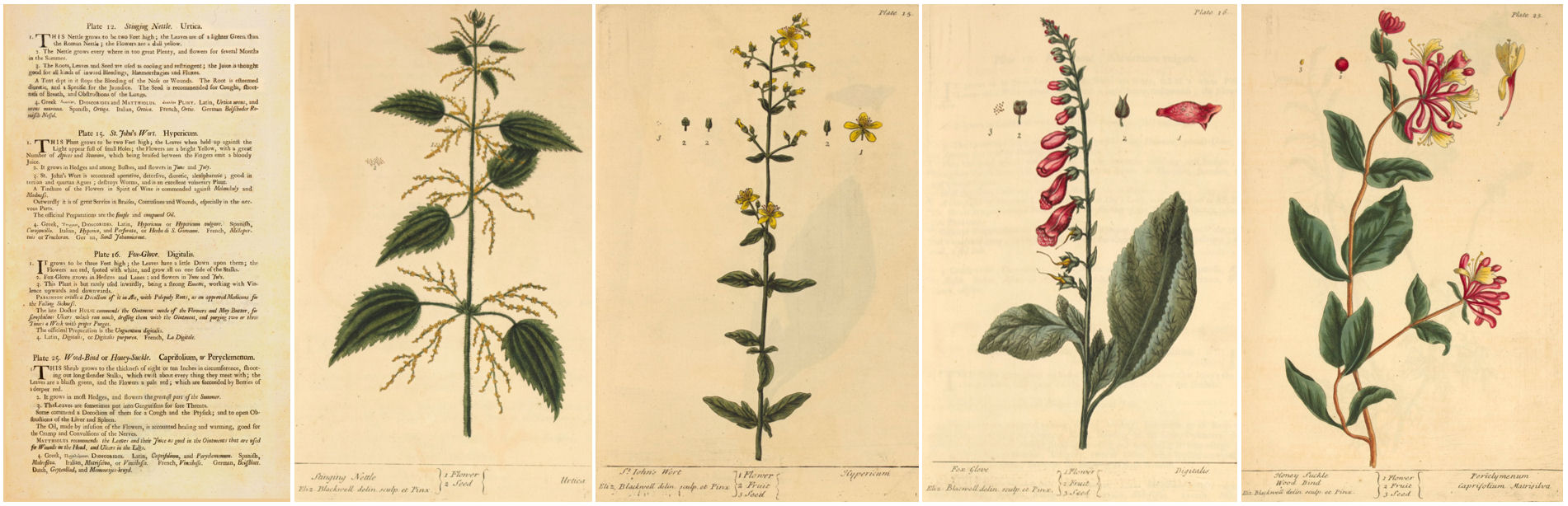
A Curious Herbal (1737) by Elizabeth Blackwell: Hand-colored engravings

These hand-painted engravings of healing herbs and garden vegetables are a delight, and I’m sure at least one creative person seeing this will get ideas, download, and do something lovely with these illustrations, so here you go.

They’re from Elizabeth Blackwell’s A Curious Herbal (1737). Below you’ll find a zip file you can download of high-res images from the book. Or view it in the entirety, courtesy of The British Library, Catalogues & Collections.

A Curious Herbal (1737)

Download Zip File

About the Book:

Elizabeth Blackwell’s A Curious Herbal is notable both for its beautiful illustrations of medicinal plants and for the unusual circumstances of its creation.

[It] contains illustrations and descriptions of plants, their medicinal preparations, and the ailments for which they are used.

The first herbal was written by the Greek physician Dioscorides in the first century AD.

Elizabeth Blackwell was born in Aberdeen in about 1700, but moved to London after she married. She undertook this ambitious project to raise money to pay her husband’s debts and release him from debtors’ prison.

Blackwell’s Herbal was an unprecedented artistic, scientific and commercial enterprise for a woman of her time.

She drew, engraved and coloured the illustrations herself, mostly using plant specimens from the Chelsea Physic Garden.

It was highly praised by leading physicians and apothecaries (makers and sellers of medicines), and made enough money to secure her husband’s freedom, although she later had to sell the copyright as well.

This finely-bound copy of A Curious Herbal is from the collection of King George III, held in the British Library.

British Library 34.I.12 -13

Last SKT III Update for 2020: Revelation

Going in the order of the cards I’ve presented here, I’m ending 2020 and beginning 2021 on the Ten of Swords. Hmm. Yah I’m not going to read into that. =) Moving on.

While the style and approach for the earlier editions asked of you to journey inward, this third edition, which I’m calling The Revelation, asks of you to journey outward. If my earlier editions were about depth, then this third edition is about expanse.

Realm of Sevens

The Revelation Edition can be treated as an entirely different deck from the First and Vitruvian Editions. It’s within the SKT family, hence the deck name remains the same. And while it shares the same DNA, SKT III has really evolved to solidify its own unconnected identity.

Realm of Eights

I cannot wait to share with you the companion guidebook. It’s basically a new Book of Maps, because it had to be. I go into detail explaining the who, what, where, when, and why for each card illustration, and then for interpreting it, the how.

Continue reading “Last SKT III Update for 2020: Revelation”

Selling Art Prints & More Diary Notes on Learning How to Art

benebellwen.com/artprints

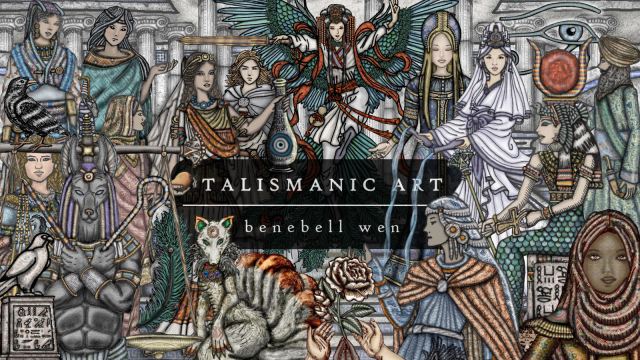
I’m now offering my art prints for sale, and if you’re interested, click on the above hyperlinked banner to go straight to the art descriptions page and instructions on how to order. But this is a blog post, so I want to get a little more cas (casual, pronounced “kage,” where “ka” is like “cat” and “ge” is pronounced like “george” omigod why am I taking so much time and text explaining something so stupid) and ramble about that process.

The above banner thing was totally just for fun, to amuse myself. I didn’t bother following any art composition principles, other than, well, the one I made up myself, which is “more is more.” =D Every single feature you see in that banner comes from the illustrations for the Spirit Keeper’s Tarot, The Revelation (my name for the third edition of SKT).

This blog post is just to share some of the behind-the-scenes art journeying.

Continue reading “Selling Art Prints & More Diary Notes on Learning How to Art”