
This is a companion write-up to the above video.
Continuing from what I said in the video chat, if this is something you seriously want to do, then start by getting that three-ring binder. Though I think organizing it into eleven sections is sufficient, I noticed you can’t buy packs of just eleven binder dividers. They come in sets of 12, so that’s fine. Having a final “Miscellany” tab is always a good idea anyway.
I’d insist on compiling this info in a three-ring binder rather than writing in a notebook. With a binder, you can move page entries around. Maybe as a newbie you thought something belonged over here in this category, but as you progress in your studies, it makes more sense for that info to go somewhere else. Now you’ll be able to move it with ease. Also, maybe you find yourself wanting to rearrange the order of sub-sections. Now you can.
ORGANIZING YOUR REFERENCE BINDER
Here’s how I’d label the twelve divider tabs and some starter thoughts on how to populate the twelve divider sections:
- Pantheon
- Start by creating a “profile page” for each divinity, immortal, nature spirit, or important historical figure (who has become immortalized by Taoist practitioners) that you feel resonant with and may want to learn more about.
- Listed below under this tab are a few as referenced in the video to help you get started.
- You might want to further sub-divided this tab just for clarity.
- The following listings are not intended to be comprehensive, but just initial starting points… and what I could think up quickly off the top of my head. =)
- So there’d be one for the primordials, including such entries as:
上帝 (Shàngdì): Heavenly Emperor; Supreme Sovereign
太乙 (Tàiyǐ): Supreme Primordial God of Oneness
斗母 (Dòu mǔ): Big Dipper Mother
玉皇 (Yù huáng), 玉帝 (Yù Dì) or 天公 (Tiān gōng): Jade Emperor
天后 (Tiān hòu): Queen of Heaven
三清 (Sān qīng): Three Pure Ones
西王母 (Xīwángmǔ): Queen Mother of the West - Other popular gods and goddesses in the Taoist pantheon:
西王母 (Xīwángmǔ): Queen Mother of the West
伏犧 (Fúxī): Fuxi, god father of humanity; inventor of music, writing, and civilization
女媧 (Nǚwā): Nuwa, goddess mother of humanity, with a woman’s head and coiled serpent body
九天玄女 (Jiǔ tiān xuán nǚ): Lady of the Ninth Heaven
觀世音菩薩 (Guān shì yīn púsà): Kuan Yin [觀音]
地藏王菩萨 (De záng wáng púsà): Kṣitigarbha
八仙 (Bā xiān): Eight Immortals
哪吒 (Nézhā): Protection divinity of spirit mediums
準提菩薩 (Zhǔn tí púsà): Tantric/esoteric Buddhist bodhisattva Cundi - Nature deities that you would invoke when the work is specifically within scope of the divinity’s powers/authority:
雷公 (Léi Gōng): Thunder God
東嶽大帝 (Dōng Yuè dà dì): Mountain God; also the God of the Underworld
風婆婆 (Fēng Pópo): Old Woman of the Winds - Historical or legendary figures of importance to Taoist practitioners:
巫賢 (Wū Xián): Deified Chief Shaman 大巫 or Grand High Priest circa 1600 BC
婦好 (Fù Hǎo): Military general, warrior, and shamaness priestess circa 1200 BC
張道陵 (Zhāng Dàolíng): 1st c. Taoist occultist, founder of Way of the Celestial Master
葛玄 (Gé Xuán): 2nd c. Taoist alchemist and occultist
葛洪 (Gé Hóng): 4th c. Taoist alchemist and occultist
魏華存 (Wèi Huácún): 3rd c. Taoist priestess, founder of Shangqing Taoism
- Taoist Metaphysics
- This is where I’d collect the correspondence tables. Watch this video on Taoist Metaphysics, take notes, and tuck those notes into this section.
- Include any of the correspondence tables provided here from The Tao of Craft
- Or the correspondence tables and reference charts provided here from I Ching, The Oracle
- 五行 (wǔ xíng): Five Movements (Five Elements) – I’d recommend definitely including something like this correspondence table for the Wu Xing Five Movements
- 八卦 (bā guà): Eight Trigrams – Subscribe to my YouTube channel and this blog to receive updates when I post more resources in the future (ex. a Ba Gua Eight Trigrams correspondences overview similar to the Wu Xing one is forthcoming)
- Setting aside one page entry to explain the below might be useful:
內丹 (Nèi dān): inner alchemy
外丹 (Wài dān): outer alchemy
- Incantations and Rituals
- 煙供儀軌 (yān gōng yí guǐ): Smoke Offering Ritual – To start, see method instructions on the Smoke Offering Ritual here.
- There’s a Mantra to Reverse Misfortune rendered from Hexagram 29 in the I Ching, which you’ll find in that section of I Ching, The Oracle
- The Pavamana Mantra and how to work with it in purification rituals can be found in I Ching, The Oracle
- 守一冥想 (Shǒu Yī míng xiǎng): Guarding of the One Meditation – I recommend including the Guarding of the One Meditation practice, sourced from the Scriptures of the Great Peace (太平經, Tàipíng Jīng or 太平清領書, Tàipíng qīng lǐng shū), circa 32 – 7 BC. You’ll find a full discussion of it in I Ching, The Oracle.
- You will find many in The Tao of Craft and in I Ching, The Oracle, with the incantations from I Ching, The Oracle sourced directly from the Zhouyi or Book of Rites 禮記 (Lǐjì).
- Divine Justice
- Perhaps include your own take on a Model Code of Ethics for Malevolent Craft, like the one I’ve shared here
- Some of the methods shared here, “Expelling Malefic Attachments” might be helpful to include in your binder, plus approaches you begin to develop for yourself
- 雷法 (léi fǎ): thunder rites – Hard to say whether resources on thunder rites should go here or under the tab “Incantations and Rituals.” I’d make cross-references between both. That way it’s easy for you to find your own reference materials. More info here.
- 蠱道 (gǔ dào): Ku, poison magic – Include a sub-section here for methods in poison magic, which often gets translated as Ku in English. More info here.
- There’s a Binding Spell to Immobilize an Adversary you’ll find under the Hexagram 33 entry in I Ching, The Oracle
- Though it may not seem perfectly in-scope for this divider tab section, I’d still insert info on Crafting with a Ba Gua Mirror here
- Divination
- 筊杯 (jiáo bēi) moon block divination – Include your notes and references on moon block divination. More info here.
- 八字 (Bāzì) Four Pillars of Destiny [kr. 사주 (Saju)] – A case could be made that a Taoist practitioner will consider it essential to be knowledgeable about how to read Bazi charts. So you will want to get a working section devoted to Bazi references here under this tab. Make cross-references to the correspondence charts you add to the Taoist Metaphysics tab. Psst… Somewhere down the line in the future, I have a Four Pillars of Destiny book I would like to write and publish.
- 風水 (Fēng shuǐ) – Personally, I’d put all my research and reference materials on feng shui here under the divination tab (though let’s acknowledge the controversy with that categorization). Because to me, feng shui is the divination of place.
- Please consider supporting my work by buying your own copy of I Ching, The Oracle
- Healing and Protection
- Though perhaps better categorized as Esoteric Buddhist practices and Buddhist magic, the methods shared here on crafting Vairocanā Blessed Sand 金光明沙 can go under this divider tab. Crafting instructions and more info here.
- I’d include a page entry on acupressure here. Basic acupressure techniques is one of those things worth your time to be knowledgeable on.
- There’s instructions on crafting a protection amulet to ward against poison magic in I Ching, The Oracle, under Hexagram 18. That might be something you want to copy down and add here.
- Nine guiding principles or precepts of the healer can be found here.
- Here you’ll probably need cross-references to your Folk Medicine/Herbalism tab. Here’s how I personally make the distinction, in terms of note-keeping: “Healing and Protection” includes magical, mystical approaches to these concepts, plus references on core principles, etc. Whereas instead of going with “Folk Medicine,” I would use the label “TCM” or “Herbalism” and keep that section strictly to plant medicine, food science, diet as preventive health, and TCM learnings.
- Exorcism and Soul Retrieval
- A historical exorcism ritual using Hexagram 63 is provided in I Ching, The Oracle, which you can copy down verbatim and add to this section
- There will be a whole chapter section at the end of my book I Ching, The Oracle dedicated to addressing soul retrieval. Your notes gathered from that section would go here.
- 地藏王菩萨 (De záng wáng púsà): Kṣitigarbha – Sutras and mantra recitations invoking Kṣitigarbha are traditionally used for the exorcism of demons or to retrieve a soul from hell
- 觀世音菩薩 (Guān shì yīn púsà)- Personally, I would include a print-out of the full text of Kuan Yin’s Great Compassion Mantra and tuck it in here.
- Fu (Talismans)
- This is where you collect sigil designs and memorialize how to use those sigils. I would further sub-divided this section by subject matter for easy referencing.
- You’ll find many historical examples and also examples of my own crafting approach here that you can add to your binder
- Here’s a Seal of Changes to add to this section
- In general you’ll find lots of printable resources and design elements you can use to create your own pages here
- And, of course, please consider supporting my work by buying your own paperback copy of The Tao of Craft
- Folk Medicine (or) Herbalism
- This is where you collect your resources on Traditional Chinese Medicine (TCM), herbalism, and flora correspondences.
- You can approach this section as a glossary in alphabetical order, or you can further sub-divide this section by subject matter.
- I often share specific insights into TCM or herbal remedies on my Instagram, so if you come upon something that intrigues you, copy it into this section of your binder.
- Spirit Mediumship
- These will be shamanistic, astral journeying, and other practices in guided visionary work oft used by Taoist spirit mediums.
- If you’re pressed about what to put here, an easy place to start is to collect information about other people’s practices. When you come upon stories of practicing spirit mediums, document your observations of their practice here. Observing spirit mediums at work is a great way to start thinking about how you might approach the practice.
- This section can be less “factual” and more “personal gnosis,” meaning you’d record reflections on your own firsthand experiences with channeling particular divinities and logging astral journeys you had so you can reference them later in time.
- Even if not directly Taoist, you could reserve this section for collecting references and resources on different Asian modalities of spirit mediumship.
- Qi Cultivation
- Include page entries documenting your findings and research with regard to dietary practices. More information here, “Strengthen Your Qi: Essential Guide to All Metaphysicians.”
- 大悲咒 (Dà Bēi Zhòu): Great Compassion Mantra – Consider including the Great Compassion Mantra or the short form invocation to Kuan Yin. More info here and here. You may need to include cross-references to the Incantations and Rituals section of your binder, as this Mantra is used in a lot of important rituals.
- Again, there may be a lot of cross-referencing throughout your binder. This is going to be helpful in locating information you’re looking for, so be diligent with your cross-references.
- Miscellany
- This is going to be a useful “catch-all” section.
- “Book Reports.” If you’re super-nerdy, then you might want this as its own standalone divider tab. Otherwise, I like to reserve a subsection for single-page nutshell summaries on key Taoist texts as you come across them, or as you’ve read them.
- Personal Reflections. That ongoing personal reflections on how you interpret and approach the concept of immortality, which I talked about in the video, can go here.
- Chinese Pronunciation Guide. An at-a-glance pronunciation guide for Chinese pin yin could be useful here.
- Confucianism. An at-a-glance overview of Confucianism is helpful because then you can discern when something you’ve come across is Confucian influenced or not.
- The Six Schools of Thought. Heck, while you’re at that, mind as well include a page entry listing the Six Schools of Thought:
道家 (Dào jiā) Taoism
儒家 (Rú jiā) School of Ru (what you know as Confucianism)
法家 (Fǎ jjiā) Legalism
陰陽家 (Yīn Yáng jiā) The Yin-Yang School of Thought
墨家 (Mò jiā) Mohism
名家 (Míng jiā) School of Names (branch of Mohism) - Word List (or Glossary). Keeping a running glossary of specialized terms you come across can be helpful. Word list that might inspire entries in your binder… put here only because I didn’t know where else to drop this:
煉金術 (liànjīn shù) alchemy
巫蠱術 (wū gǔ shù) witchcraft
預言術 (yùyán shù) divination
君子 (jūnzǐ) sage; higher self
長生不老術 (chángshēng bùlǎo shù) immortality
Alternatively, yes of course you can archive your collection of materials digitally. Instead of a three-ring binder and divider tabs, you would create twelve sub-folders on your computer and begin collecting document files under each folder.
Please please do not treat these recommendations as gospel. Of course you can modify and tweak so it’s customized to what will work best for you.
As you make your way through the chapters of either Tao of Craft and I Ching, The Oracle, you’ll come upon information you’d like to archive in your reference binder. So that would be my recommended starting point on how to populate this working binder of yours.
- You can probably find Fu talisman/sigil related stuff here to download and organize into your binder. Likewise, check out past blog posts tagged under the category “Fu Talismans“ for more niche articles that might pique your interest.
- I Ching correspondence tables are basically transferable as Taoist metaphysics correspondence tables, because the fundamentals are the same. So there may be tables and diagrams here you’ll want to print out or design into your own organized handouts/printouts. You can also download I Ching worksheets keyed to the Practica in I Ching The Oracle.
- Assemble your own reference notes and materials from the Feng Shui Basics section.
- You can find additional resources you might want to integrate in past articles filed under “Taoism” or “Tao of Craft (book).“
In the years to come I’ll be uploading video lectures on topics based on the above framework. With this working binder and the series of video lectures, you’ll have attained a fairly comprehensive primer on Esoteric Taoism.
A FEW SPECIFICS
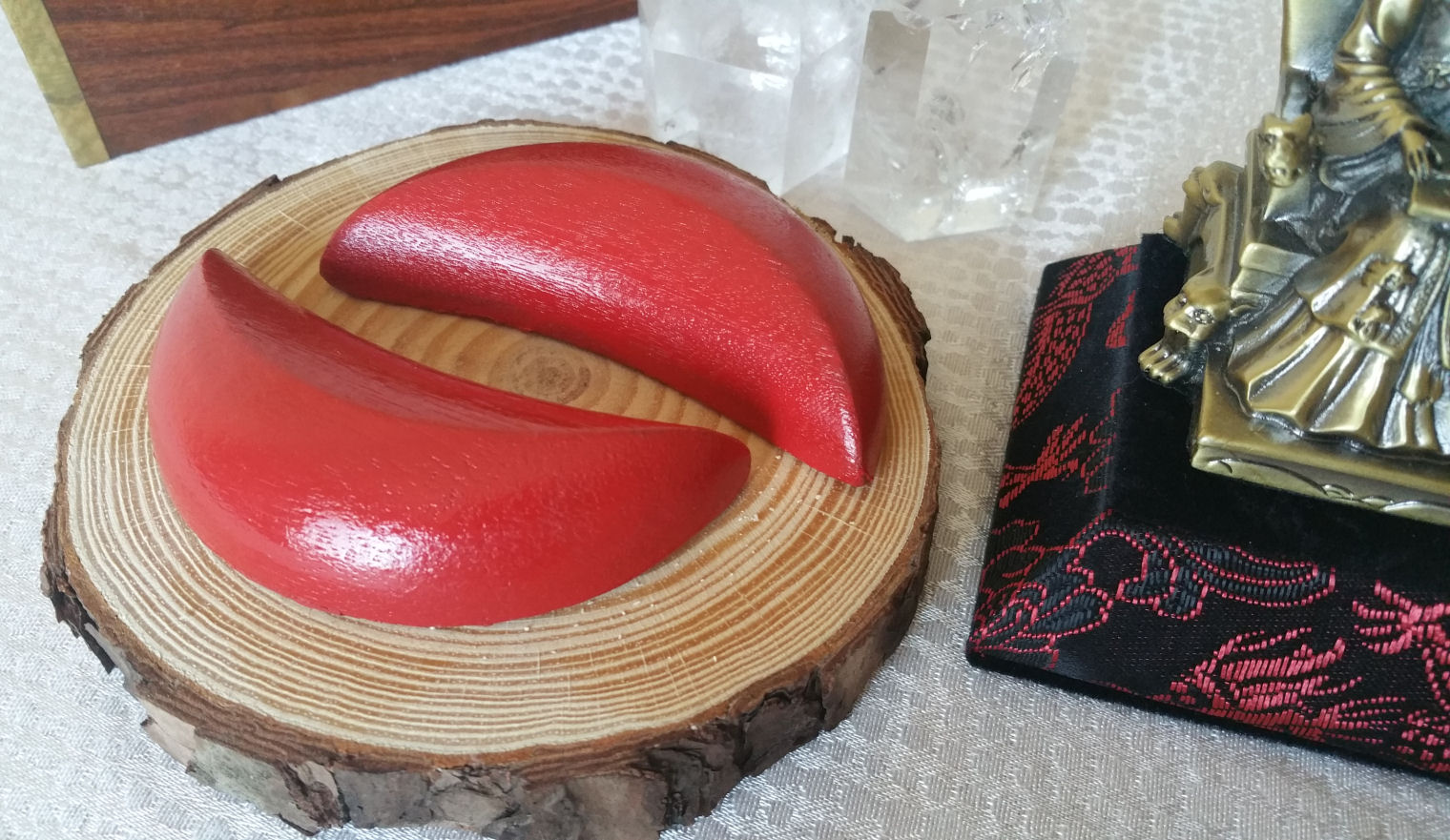
Get yourself a set of divination moon blocks (see above photo). In Taoist traditions, peach wood is preferred. In Buddhist traditions, sometimes peach wood, but you’ll also see sandalwood, cypress, or you’ll also see them as the two semicircle halves of sliced bamboo. You don’t have to limit yourself to what I’ve listed, but be thoughtful of the metaphysical significance of the wood you do end up choosing.
Moon blocks are used for spirit communication. A ritual is performed to invoke a certain deity or spirit, you present your question as a yes-no question, and then toss the moon blocks. The result of the toss is that deity or spirit’s answer.
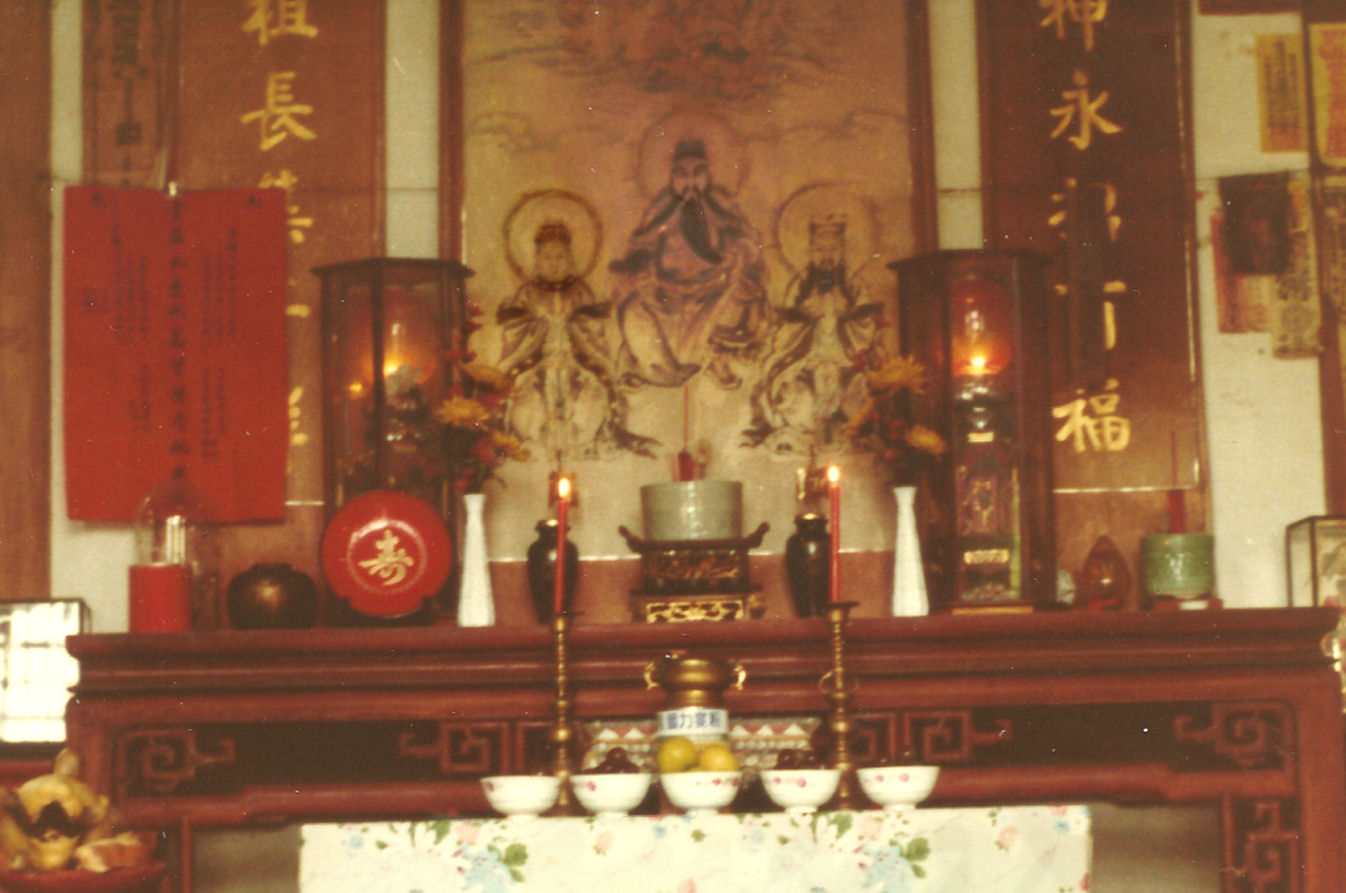
Set up an altar at home for gods and ancestors. Some practitioners have one altar dedicated to their ancestors, and a separate one for their patron deities, though it’s also totally okay and common to have an all-in-one.
If you’re living in a single family home, have both an indoor and outdoor home altar. Otherwise, just an indoor one is fine. Typically the outdoor one is set up on the ground close to the earth, and is a devotional space for offerings to the resident land gods and nature spirits.
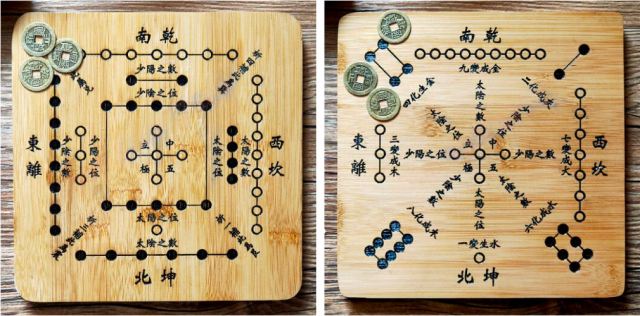
Further Reading. If you’re one of those purists, then a good place to start for collecting materials to populate your Taoist Magic binder are notes and references you gather from the following historical texts:
- 道藏 (Dàozàng): Taoist Canons
- 太平經 (Tàipíng jīng): Taiping Jing, or the Classics of the Great Peace, circa Eastern Han dynasty, 25–220 AD
- 道德經 (Dào dé jīng): Tao Te Jing [+ its esoteric companion 闕尹子 (Guan Yin Zi) aka Wen Shi Zhen Jing (文始真經)]
- 黃帝陰符經 (Huángdì Yīn Fú Jīng): Yellow Emperor’s Classics of the Hidden Talisman
- 黃帝內經 (Huángdì Nèijīng): Yellow Emperor’s Inner Classics [on TCM]
- 通玄真經 (Tōng Xuán Zhēn Jīng): Sutra of the True Mysteries (also called simply the Holy Scriptures)
- 洞靈真經 (Dòng líng zhēn jīng): Caverns of the True Spirits Sutra
- In most of the educational videos I put up on classical Taoism, I include source text citations, so those are additional resources for you to look up.
I published Tao of Craft and I Ching, The Oracle specifically to help those seeking to connect or reconnect with Chinese folk magical traditions. Tao of Craft presumes a total beginner who (1) is not lineaged, (2) doesn’t have any prior personal connections or experiences in this tradition, (3) needs some guidance to bridge cultural gaps, and (4) cannot otherwise read or write Chinese, and I say that specifically because the way I present certain information in Tao of Craft is how I would teach to someone who can’t read or write, but if you were fully fluent, then I would have presented that same information differently.
I Ching, The Oracle is one part my translations and commentaries on the 64 hexagrams, specifically for how an occult practitioner, folk magical practitioner, or spirit medium would use the Oracle, and one part grimoire, with step-by-step practicums to teach you the basics of Chinese folk magic, using the I Ching.
You might also be interested in this playlist, “Introduction to Taoist & Buddhist Mysticism” on my YouTube channel. Scroll through that playlist and bookmark to watch what piques your interest, or think might be helpful in your overall education and immersion in the subject. Fair warning: Some of these videos are old, made using technology from the early 2000s, and it shows.
 benebell wen
I’m waiting for your translation I Ching !
LikeLiked by 1 person
I saw Amazon pushed the preorder date back.
LikeLike
Yes, and the publisher is going to go with a hard cover instead of a paperback. 🙂
LikeLike
That’s good news!
LikeLike
Pingback: How to Get Started – benebell wen – Dinesh Chandra
emerging truth . . . TBC
LikeLike
The power ball # is?
LikeLike
Pingback: Ba Gua: The Eight Trigrams – benebell wen
Pingback: Advanced Introduction to Taoist Alchemy – benebell wen
I love Benebell Wen man, she’s so good.
LikeLike
Pingback: Five Core Skills in Chinese Folk Magic – benebell wen
Pingback: Om Mani Padme Hum in Asian Magical Traditions – benebell wen
Are they real
LikeLike