Crafting with a Ba Gua Mirror in Traditional Asian Witchcraft

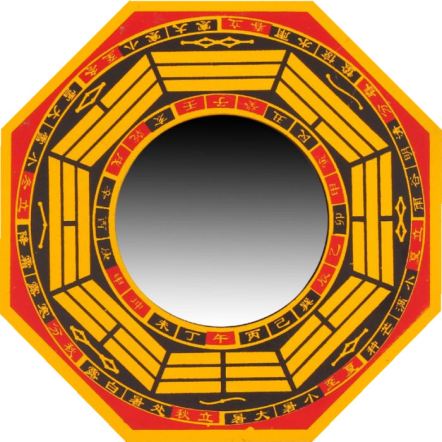
Learn a little more about this common ritual tool in traditional Asian folk magic. I’m inviting you to give the ba gua or eight trigrams mirror a try.

This video covers a few pointers on how to use a ba gua mirror to tell whether you’ve been hexed or cursed (a folksy practice that’s interesting to learn about, at the very elast), how a ba gua mirror can amplify your spell-crafting techniques, a simple intention-setting candle spell, how to make your own ba gua mirror if you can’t source one, and how to integrate this one tool and folk practice into what you’re already doing.

Continue reading “Crafting with a Ba Gua Mirror in Traditional Asian Witchcraft”

Elemental Directional Correspondences in Ritual Magic, East vs. West: How Do You Reconcile Conflicts?

One of my favorite personal rewards from launching the Witchcraft Fundamentals course is the Google Group, where all of us are exchanging insights, asking tough questions, trying to answer tough questions, and getting to know each other. To give you a sampling of what that e-mail list-serv group is like, I’m sharing something I wrote on there in one of the threads started by a practitioner of both Eastern and Western metaphysics.

The question presented is, in short, how do you reconcile Eastern elemental-directional correspondences with Western elemental-directional correspondences?

By the way, scroll all the way down for the PDF downloads of this post, which you can then print out and tuck into whatever reference manual for your metaphysical studies you have going on.

IN THIS WESTERN WITCHCRAFT COURSE, you’ll learn fairly soon that there are different systems of elemental-directional correspondences even within the umbrella of Western occult philosophy, and we cover three of them in this course:

Continue reading “Elemental Directional Correspondences in Ritual Magic, East vs. West: How Do You Reconcile Conflicts?”

1: The Candidate [from the online course offering, Western Witchcraft I]

The Candidate

This is the second module of Western Witchcraft I: Fundamentals and Doctrinal Basis online course  provided for free preview. Learn more about that course and how to enroll by clicking here.

VIDEO LECTURE:

DOWNLOAD LECTURE NOTES:

Click here to download the lecture notes (pdf)

WORKBOOK READING:

Chapter 1: The Candidate (pdf)

Continue reading “1: The Candidate [from the online course offering, Western Witchcraft I]”

0: Introduction [from the online course offering, Western Witchcraft I]

INTRODUCTION

This is the preliminary module to the Western Witchcraft I: Fundamentals and Doctrinal Basis online course. Learn more about that course and how to enroll by clicking here.

VIDEO LECTURE:

DOWNLOAD LECTURE NOTES:

Click here to download the lecture notes

WORKBOOK READING:

Continue reading “0: Introduction [from the online course offering, Western Witchcraft I]”

Western Witchcraft I: The Fundamentals and Doctrinal Basis

WESTERN WITCHCRAFT I:
WITCHCRAFT FUNDAMENTALS
Doctrinal Basis and Theory

COURSE SYLLABUS

Click above link to download pdf

$79 usd

What is the key to happiness?

Eliphas Levi, considered one of the most influential occultists in Western ceremonial magic and witchcraft, asks and then answers that question.

His answer:

The knowledge of great secrets and the consciousness of power.

Those are my two objectives for you in this course: (1) to confer to you the knowledge of great secrets, and (2) to endow you with the consciousness of your personal power, to show you the heights that your power can achieve.

At every single point of my work in putting this course together, I thought, how do I facilitate development of the most powerful, most knowledgeable, most versatile, wisest, and most formidable occultist there ever was? How do I show you how to be that person?

And that was the inspiration and the ambition behind this course.

Western Witchcraft I focuses on the doctrinal basis and theoretical fundamentals of transcendental magic. This course is an immersive study of the first 12 chapters in Eliphas Levi’s Doctrine, Part I, of the greater collected work Transcendental Magic: Doctrine and Ritual, and structured like a one semester 400-level university elective.

Be prepared for an intense amount of reading. The video lectures only supplement the reading assignments and are not a replacement for them. In addition to the reading assignments, the weekly practicum, ritual, and energy training is also demanding on your time and your efforts.

COURSE OBJECTIVES:

  • Attain familiarity with the doctrinal basis and theoretics of Western ceremonial magic
  • Study the first 12 chapters of Eliphas Levi’s Transcendental Magic, Part I: Doctrine (and to supplement, pick up selected key principles from the first 12 chapters of Part II: Ritual)
  • Gain essential insights from Levi’s Key to the Great Mysteries, the book he wrote after Doctrine and Ritual
  • Craft your first four altar tools and use Levi’s Conjuration of the Four ritual to charge and empower those tools (main focus in this course will be on the wand and the pentacle, per Levi’s assertion that the wand is first and foremost your most important ritual tool and second in importance to the wand is your pentacle)
  • Craft a divine lamp for ritual use and work through a prophetic astral vision
  • Train yourself to harness the Astral Light, then learn techniques to both strengthen and increase your flexibility with the Light to produce the Magic Chain
  • Build a rock solid foundation in the theoretical and magical principles of Western witchcraft and ceremonial magic, which will then be able to support the structure and edifice of any mystery tradition or Path you subsequently pursue

A future course offering, Western Witchcraft II, will advance upon the fundamentals established in this course. Western Witchcraft II will conform to Levi’s Ritual, Part II and delve into spell-crafting, talismans, seals and sigils, spirit conjuring, and the many forms, types, and purposes of ritual in transcendental magic.

By the way, if you’re wondering about my conflation of the terms witchcraft and ceremonial magic, here’s a written newsletter rambling about that: Witchcraft vs. Ceremonial Magic. Read my ramblings on this subject: Click Here

Continue reading “Western Witchcraft I: The Fundamentals and Doctrinal Basis”

Seal to Defeat All Foes

A “Seal to Defeat All Foes”? Oh, snap. That sounds badass. We definitely need to give this one a try, right?

You’ll find my write-up of this in one of the back-end appendices of Key of Solomon and Collected Studies on Spirit Conjure. It’s a free e-book download hereand if after checking out the pdf version you realize you want it in physical hard copy paperback, that link will give you instructions on how to order one.

In the pdf, check out p. 505.

Continue reading “Seal to Defeat All Foes”

Witchcraft vs. Ceremonial Magic?

First posted in a newsletter e-mail 2019 Dec. 5 to talk about my Western Witchcraft I: The Fundamentals and Doctrinal Basis independent study course

What is the difference between witchcraft and ceremonial magic?

I’ve been struggling to understand for myself what the distinction is between witchcraft and ceremonial magic. Because the immediate go-to points of differentiation you often hear people reach for feel kinda superficial.

There are more significant differences between two different traditions under the heading “witchcraft” (or two different traditions under “ceremonial magic”) than there are the alleged differences between the main generic headings “witchcraft” or “ceremonial magic.”

It was all “maleficia“…

Pretty much up until witchcraft or maleficia was no longer outlawed, what we today might associate with ceremonial magic would have been tucked under the heading “witchcraft.”

The law (back when the law cared about public accusations of maleficium…) lumped it all together and while I was doing historic research for my novel, bishops and otherwise powerful men had gotten accused of witchcraft and for being witches (though in those cases, they were probably false accusations; those men were just challenging political power).

Continue reading “Witchcraft vs. Ceremonial Magic?”

Postel’s Key of Things Kept Secret (1547)

Published in 1547, Guillaume Postel’s Key of Things Kept Secret from the Foundation of the World (full title Clavis, Absconditorum a constitutione mundi clavis) proposed the notion of a universal wisdom and truth that underlies all religions, languages, and symbolic systems, and that there was a unifying language — a divine script — by way of symbolism and math (sacred geometry) with correspondences into each human language, which unlocks that universal wisdom and truth.

To access that unifying language, one would need a Key to decode from the language you speak now to that language, and French occultist and mystic Eliphas Levi would later revive this concept as the Key to the Great Mysteries, which he said was the tarot, and all this became a key principle in Western esotericism.

Guillaume Postel (1510 – 1581) was a French scholar, diplomat, Christian Kabbalist, and mystic who traveled widely across the Middle East where he learned Hebrew, Arabic, and Syriac. His Key of Things Kept Secret came at the height of the Renaissance’s prisca theologia movement, this intellectual current that believed all religions and philosophies derive from a single, ancient, and divine source. Postel sought to reconcile Christianity, Judaism, Islam, and all human traditions through what he called Orbis Concordia, or a universal harmony of the world. And the Key, the Clavis was the methodology for deciphering that prisca theologia.

Postel believed in the Eastern esoteric concept of soul dualism, though he framed it differently, i.e., instead of saying “yin and yang” aspects of soul, he said “female and male” aspects of the soul, with one being emotion and the other being intellect. Oh. Wow. Anima and animus, anyone? (Yeah, yeah, I know, not the same…) Nonetheless, bear in mind that Postel pre-dates Carl Jung by some odd 365 years.

Concept Postel’s View
The Key The universal code that reveals divine order in all things
Basis Hebrew Kabbalah + Christian theology + Hermetic correspondences
Purpose To restore humanity to its original divine knowledge
Means Study of sacred language, numbers, and symbols
Outcome The reunification of all religions and nations under divine harmony

The more you dig into Postel, the more interesting it gets. At one point he believed himself to be a prophetic interpreter in possession of such a Key, and that as a result, he is here to proclaim that there would be a female messiah, a Mater Mundi, who would usher in a new age of universal harmony. Needless to say, he eventually found himself a target of the 16th century Inquisition and was subsequently imprisoned and forced to recant his propositions. At one point, Clavis was even a banned text.

Postel’s Key endeavored to unlock a universal code for deciphering any mystery or esoteric wisdom, with the “translation” work happening by way of correspondences. In other words, the “Key” isn’t a physical instrument, but a methodology for interpreting Matter and Spirit.

Continue reading “Postel’s Key of Things Kept Secret (1547)”

Seals of Solomon Magic Cards by Inna Vinitski

Inna Vinitski’s Seals of Solomon Magic Cards are the perfect companion tool to go along with your copy of the Key of Solomon, or Clavicula Salmonis, which I offer a free download of here. So although this deck does not come with a guidebook, everything you need to know about these seals and now to work with them can be found in that free download. I’m going to be making page references to that free download pdf of Key of Solomon.

I think the single most compelling reason to acquire this deck for your toolkit is to use them as easy, go-to charging plates for your charms, talismans, gemstones, crystals, and other metaphysical knick-knacks. Here, Inna Vinitski has already done the work for you. Once you get these cards, consecrate them and voila! Incredible! A set of tools for planetary magic at your fingertips!

This post will both showcase the Seals of Solomon cards, which I urge you to get if you want to deep-dive into working with the Key of Solomon, and also get into what the Key says about these seals, or pentacles.

To start, let’s try a little something, shall we? Below in the photo of the three magic cards, take a moment to gaze at each one, connecting your third eye (that space just between your brows) with the eye depicted on the card back. For one of these three cards, the tug at that space between your brows will feel stronger, more intense than for the others. Note which of the three cards gives you the strongest intuitive sensation.

Remember it, because we’ll be returning to your card selection later.

Continue reading “Seals of Solomon Magic Cards by Inna Vinitski”