The Metaphysician’s Day Planner (MDP) is going to continue, at least for another year, though for 2026, as a “Lite” scaled back offering. It’s $17 for the personalized day planner customized with your natal chart and 2026 solar returns chart, e-delivered to your e-mail address as a digital file (PDF). We recommend using Lulu.com (not sponsored) a third-party print-on-demand site to print the physical spiral-bound copy of your MDP.
A few weeks ago I announced that we were retiring the annual Metaphysician’s Day Planner offering, after nine consecutive years of making them, each one custom-made to order with your birth chart and that year’s solar return chart. Plus the companion Metaphysician’s Guide that comes with the year ahead’s astrological forecasts, auspicious dates, inauspicious dates, and the dates to notable astrological or astronomical events.
Although we won’t be selling and making them anymore, we also didn’t want to leave you in a lurch, especially since we acknowledge that many of you have come to rely on it year after year. First, thank you so, so very much for your support over so many years. That’s amazing! Second, thank you for your understanding, patience, and sympathies that it’s just no longer feasible for us to be doing this, as our process is entirely manual and “old school” in this new world of everything getting generated instantly by digital automation.
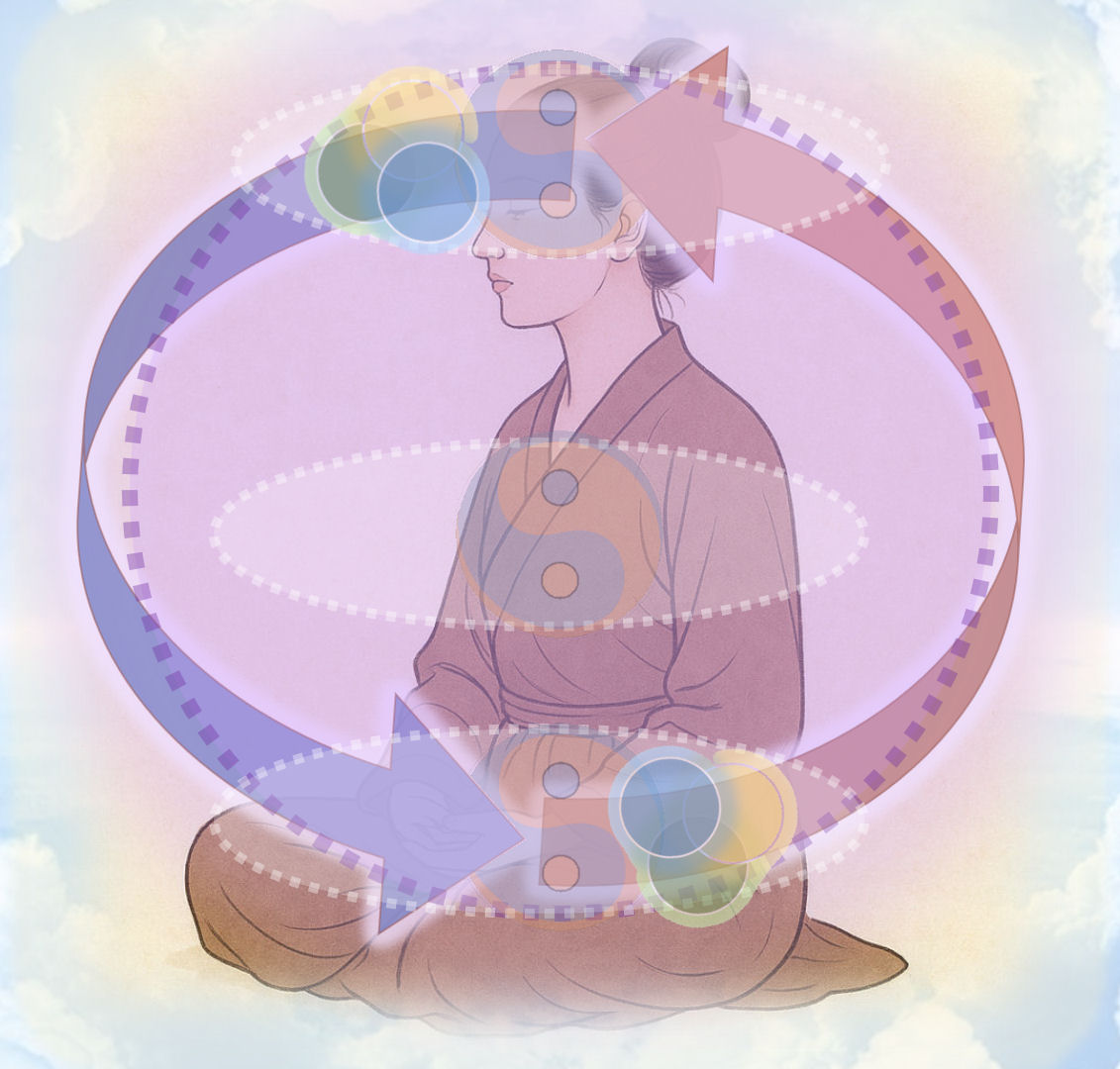
This is Part I of a two-part video lecture that introduces a Taoist secret breathwork practice known as the Lesser Mandala of Heaven, or Xiao Zhou Tian 小周天.
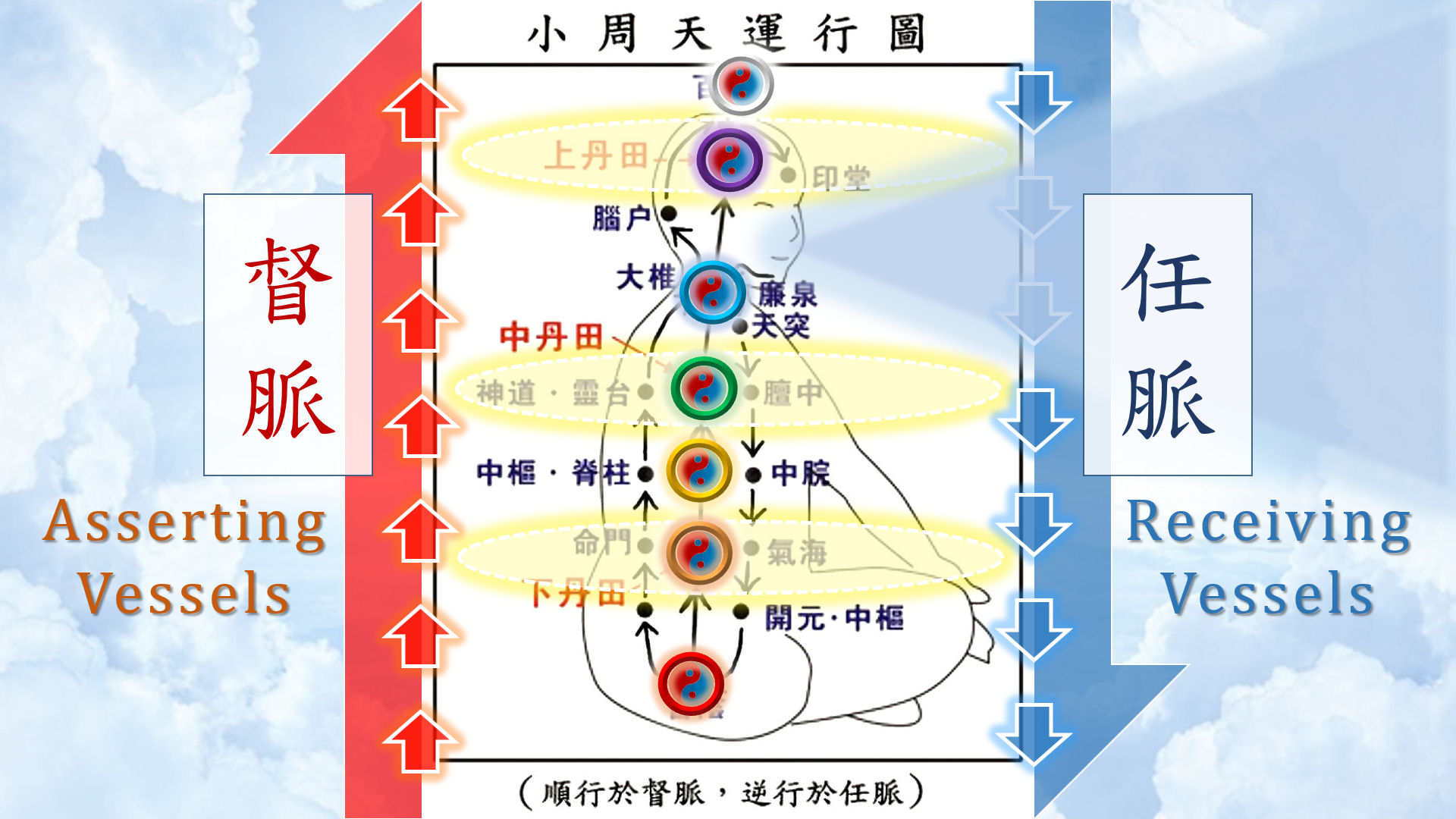
Rooted in classic Taoist inner alchemy (內丹, neidan), it teaches you to unlock a hidden energy circuit that runs through your body, up the spinal Du 督 meridian and down the frontal Ren 任 meridian, forming a continuous loop of vitality.
By circulating the triple treasures along this hidden energy path, you harmonize the body’s three dantian 丹田, or energy centers, with the three realms and cycles of the universe. Taoist masters believe this alignment refines your essence, restores internal balance, and elevates your personal power.
To round out the discussions, we’ll be covering:
Guarding the Center 守中 baseline Taoist practices and their textual/historical origins
The Guarding of the One 守一冥想 guided meditation
Principle of Union of Heaven and Humanity (Tian Ren He Yi, 天人合一)
Ethical foundations (de, 德) and the Three Virtues as the basis of cultivation
Lifestyle precepts
The Du 督 and Ren 任 meridians
Jing, Qi, Shen 精氣神: The Triple Treasure
About Your Dantian (Three Internal Fields)
The Internal Body Clock & Wu Xing
Personal ritual space mirroring Taoist cosmology and numerology
The Six Omens of spiritual awakening, confirming readiness for Greater Mandala of Heaven work
Study of the translations and annotations of the Fundamentals of Taoist Alchemy 道門語要 (1271 – 1325) source text
This orbit is set up to attune with the cyclical convection current of nature: heat rises and expands, as it rises, it then cools, contracts, becomes denser, and so the denser, cooler flow sinks down, contracting.
The video is timestamped, and you’ll find a step-by-step guided practice on how to direct breath up and down this internal orbit, transforming your body into a living mandala and tuning it to the rhythmic cycles of nature.
This practice is more typically transmitted from teacher to disciple, but here, let’s see if we can offer a more direct and more easily accessible method.
Whether your goal is improved health, increasing your energy reservoir so you can get more done in a day, or to unlock your mystical potential, this is a cultivation technique worth your while to learn.
Two of my current go-to blends. “Anti-Itch Oil” consisting of tea tree oil, eucalyptus, and lavender really does (at least for hubby and me, and all the friends and family I give this to) alleviate minor itching and bug bites. It also clears my sinuses, and helps with congestion. The blend of frankincense, rosemary, and peppermint smells like petrichor! That after-rain scent! This one’s a great massage oil to soothe tense muscles, carpal tunnel, and I also use it as a hair and scalp treatment oil.
Essential oils get a really bad rep these days, and for good reason. Beyond the scams and pyramid schemes, its contemporary New Age associations with “this can cure cancer” claims and people replacing evidence-based healthcare with fragrance blends is why people are – and should be – skeptical.
Not only is there insufficient scientific and medical research to conclusively make claims, but often it’s misused, or people are uninformed about how to use plant extract essences. They definitely can cause skin irritation, allergic reactions, and in extreme cases of misuse, adversely interfere with your body’s regular functions (this is why those who are pregnant, trying to get pregnant, and young developing children need to heighten their discernment around use of essential oils). Some concentrated plant essences can also interact adversely with prescription medications.
Then of course there are the sweeping claims in the realm of magical thinking. This oil blend will bring you luck in love and romance, or this will exorcise demons, or this will help you to manifest wealth. This oil is for glamour magic. That oil is a cure-all.
The historical origins of the term “snake oil” is synchronistically telling here, actually. When Chinese laborers immigrated to the United States to work on the Transcontinental Railroad in the 1800s, they used a traditional Chinese medicine containing actual snake oil. Per TCM, fat extracted from non-venomous water snakes rendered into an oil, mixed with ginger and camphor extracts was a legitimate medicinal remedy for joint pain and muscle inflammation, which the railroad workers would use. Americans then capitalized on that idea by selling fake snake oil as a magical, mystical ancient Chinese remedy for all ailments. Hence the term “snake oil” came to mean a fraudulent health hype, when actually, the original source material wasn’t fraudulent at all.
Similarly, there are bona fide legitimate uses for essential oils, but capitalistic bad faith sellers of fake stuff give essential oils a bad name. Sadly.
Let’s time travel and step into the mystical lineage of the Neolithic Wu 巫 shamans that laid the foundation for Taoist mysticism. This free public video lecture explores the birth of Taoist magic and the enduring legacy of Wu shamanism. We’ll decode Taoist occultism as it is practiced today to reveal the hidden history of how shamanism shaped the mystical practices of East Asia, preserving and refining early shamanistic techniques into a structured magical system, giving rise to Taoist mysticism.
Taoism is the enduring legacy of the Wu 巫, and how their oft-forgotten roots and history have shaped the modern practices of spirit mediums, Asian modalities of witchcraft, and Taoist ritual magic today. We’ll bridge the gap between the ancient traditions we’ve inherited from the Yellow River cradle of civilization and modern mystical practices, presented in a way rarely explored in the English language.
This is Taoist witchcraft decoded, in reclamation of the Wu 巫’s shamanic practices of the Tao 道.
Also known as the: 三皇文 (sān huáng wén); 三皇經 (sān huáng jīng); 三皇内文 (sān huáng nèi wén); Version transmitted to Ge Hong: 小有三皇文 (xiao you sān huáng wén)
Is the Seal of the Nine Immortal Realms 九老仙部印圖 from the Secret Book of the Three Sovereigns 三皇內文遺秘, which is now canonized in the Daozang, or Taoist Canons, part of the lost, legendary grimoire, the Book of the Three Sovereigns 三皇文?
According to lore, during the Three Kingdoms Era (220 – 280 AD), the Taoist mystic and later an ascended master Bó Hé 帛和 finds this text buried inside a stone wall atop Mount Xīchéng 西城山. From Bó Hé’s teachings arose of the earliest traditions of Taoist magic: the School of Bó Taoism 帛家道 (bó jiā dào), or The Way of Bó. Popular among the upper class during the Jin (266 – 420 AD) and Wei (386 – 534 AD) dynasties in the northern central plains of China, the tradition focused on study of the Book of Three Emperors and formulated their own approach to talismanic magic, invocation of gods, and alchemy.
Then, around 300 AD, atop Mount Songshan 嵩山, the Taoist occultist Bao Liang 鲍靓 receives this text painted on silk, as transmitted to Bó Hé. Bao Liang was a renowned master of various occult practices, from astrology and alchemy to necromancy. He married his daughter Bao Gu to the alchemist Ge Hong.
also known as the Wen Shi Zhen Jing: Sutra of Magical Spells and Aphorisms for Attaining Primordial Truth
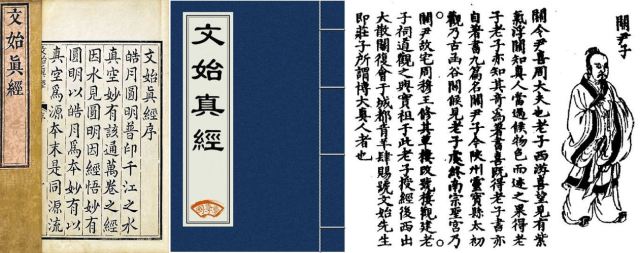
The more recognized naming convention for the sutra is the Guan Yinzi (闕尹子) or Wen Shi Zhen Jing (文始真經) attributed to the gatekeeper who Laozi encountered.
The Guan Yinzi (or Wen Shi Zhen Jing)
According to lore, the gatekeeper at the Western Pass, named Yinxi 尹喜, later given the name Wenshi (文始), transcribed the teachings of Laozi and that text became the Tao Te Ching (道德經). Alternate tellings have Laozi writing the teachings down into two books himself, which the gatekeeper then receives.
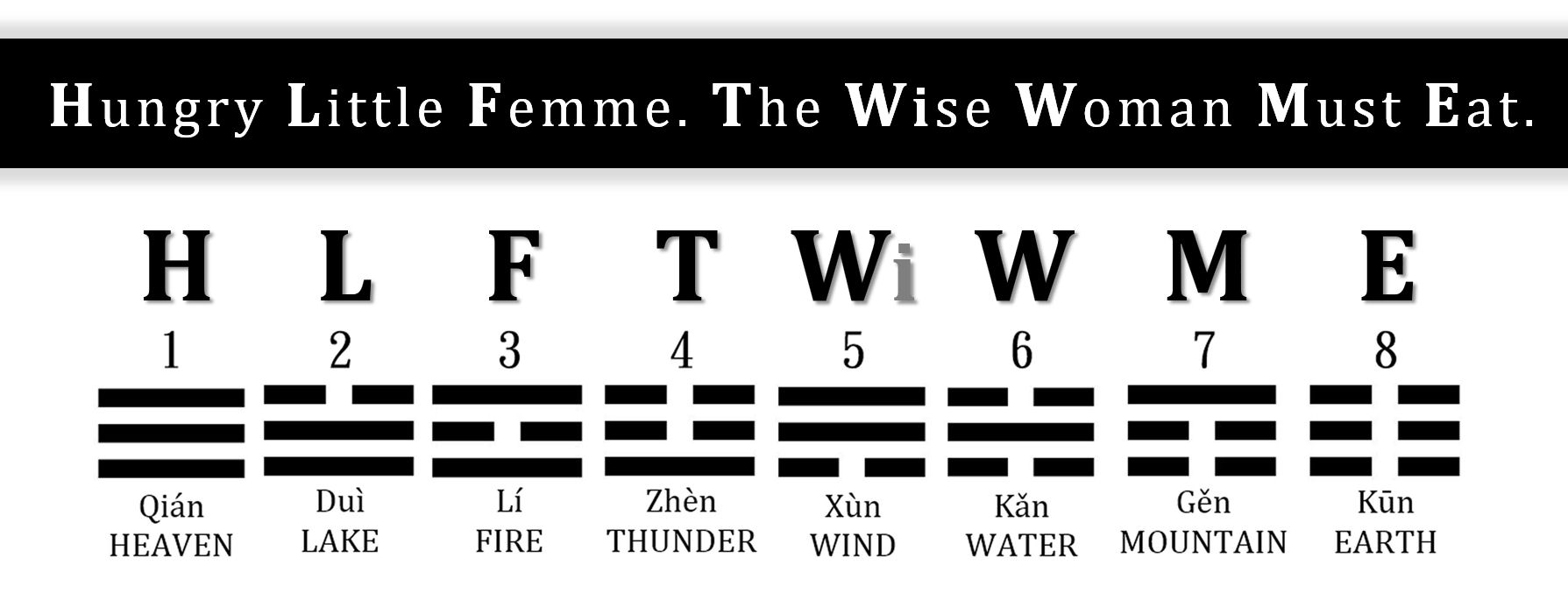
This video lecture course is an overview of the eight trigrams (八卦, Bā Guà). It is part of a companion course series leading up to the release of my third book, I Ching, The Oracle.
My goofy mnemonic for remembering the order of the trigrams
Timestamps provided in the video description box (you’ll have to watch on the YouTube platform). Apologies, the editing and audio are a bit choppy. The timing of the slides and voiceover narration are off in a few places.
Continuing from what I said in the video chat, if this is something you seriously want to do, then start by getting that three-ring binder. Though I think organizing it into eleven sections is sufficient, I noticed you can’t buy packs of just eleven binder dividers. They come in sets of 12, so that’s fine. Having a final “Miscellany” tab is always a good idea anyway.
The above video commentary is a short introduction to esoteric Buddhism, covering the distinctions between sutra-based Buddhism and tantric Buddhism. As noted at the end of the video, this write-up will give instructions to the “homework assignments,” practica[I don’t know why I’m such a nerd and called these “homework assignments”] intended to give you a firsthand experience with Buddhist folk magic.
Timestamp 11:39 Addendum: Oops, I cut out too much of the raw video chat and omitted the part where I talked about where I was going with this. =) So if you were left confused, it’s not you, it’s me. =) Continuing from what I am saying at this timestamp, if tantric esoteric Buddhist cultivation is characterized as a “shortcut” to the destination but one that’s far more dangerous and riskier terrain, then endeavoring to take this route all but requires a highly skilled guide to help you navigate the tougher terrain. It’s not a route you’d want to go at on your own or, worse yet, with a guide falsely self-proclaimed as a lama or spiritual leader who will lead you astray, or who isn’t equipped to help you deal with mara. Thus, the framing of the question shouldn’t be “is it open or closed,” but rather as “what, really, would be the most assured path for you?” Can you fully trust someone else’s claim of endowing you with the empowerment you’re seeking?
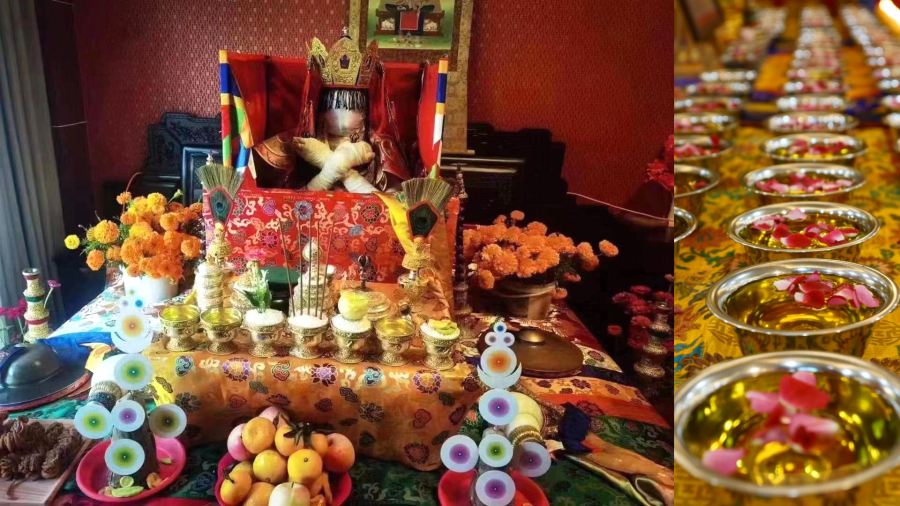
Taipei Katok Ten Directions Buddhist Association
As a beginner-level introduction, these practices are intended to be general enough for all, so you’ll be encouraged to piecemeal neutral elements often found in esoteric Buddhism and graft it onto your preexisting practice, and most importantly of all, your local environment.
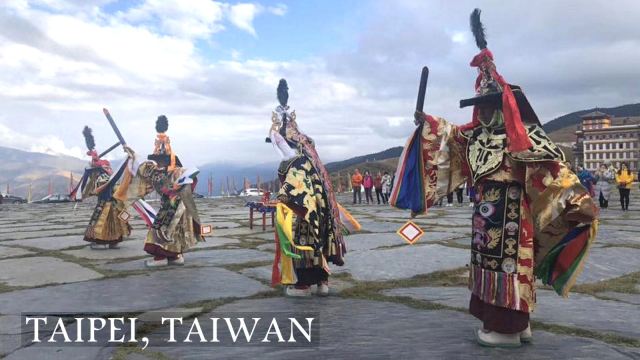
Taipei Katok Ten Directions Buddhist Association
Just like esoteric Buddhism takes on the indigenous practices and magical systems from the land it touches, be that Bön folk magic syncretized with Buddhism in Tibet, Taoist mysticism with Buddhism in China, Shinto in Japan, or tantric Buddhism melded with Tai and Hmong shamanic practices in Southeast Asia, you’ll be working with features of esoteric Buddhism syncretized with what’s native to you.





 benebell wen