Cirque du Tarot by Leeza Robertson and Josh Tufts

The Cirque du Tarot is a Llewellyn deck by acclaimed author Leeza Robertson and illustrated by Josh Tufts. I am a really big fan of Tufts’ art. It’s got this Neo-Impressionistic flavor with a little Georges Seurat inspiration. Tufts is a master at character design, which is why this tarot circus cast springs to life.

I love the way Tufts works with contrast and lighting. The colors are just absolutely exquisite. There’s almost a Moulin Rouge aesthetic in low saturation where the colors are pale, giving the art a misty, dream-like atmosphere.

If you can, click onto the photographs so you can view the layout of cards on a large monitor. Zoom in and take a look at the detailing. Don’t know if you’ve read Erin Morgenstern’s The Night Circus, but I’m getting those vibes as well.

For the court cards, the same digital image is used for each rank/title, with different coloring. In the above photo, the last four cards in the bottom row, which all look alike, are the four Pages. The coloring of the smoke around the mirrors is what lets you know which suit the Page is from. Some of the minor detailing in the backdrop also differ.

Above you see the four Knights and the four Queens. “The court of this troupe is not quite as you would expect, for it is not as vast as you are accustomed,” writes Robertson, anticipating how the court cards might be perceived. “Instead of sixteen members, you will find only four sharing the stage of the sixteen court cards.”
The subdivisions of the tarot deck are described as five acts, an intermission, and an encore. Act I introduces you to the main characters– the Major Arcana. A brief intermission takes you into the court cards, which represent the backstage where the actors are preparing for the next four acts of the show. Thus, the Pages are in a quiet dressing room. The Knights are non-binary, without specified gender roles. In all four Knights, the figure is preparing their dress.

Act II is the world of Swords, “where you will travel through space and time to see worlds within worlds.” Above you’ll see the cards Ace through Ten of Swords. I love the interpretation of this airy suit through the Cirque du Tarot– here is a “land of dreams and nightmares.” This Act is one of mentalism, delving into the workings of your mind. “They will explore your dreams, your fears, your nightmares, your points of inspiration, and your decision-making.”

Act III starts with a bang as the ringmaster lights up the stage with the fiery Wands. “It’s all fire and smoke,” is the tagline introducing the chapter on the Wands. This is the stage of the fire dancers. The Wands and the Pentacles suits in this deck stay the most consistent in terms of a limited color set following the elemental. There’s more color variety in the Swords and Cups.

Act IV moves us from fire to water and we flow through the world of Cups. And finally, Act V takes us to the land of Pentacles, where time, work, and gears grind together. These are the four worlds– the wonders of balancing blades, blazing fire dancers, water acrobatics, and clockwork machines. The Pentacles suit has a steampunk vibe to it, doesn’t it?

I love how Robertson stays “in character” throughout the guidebook. It’s written as if the tarot deck is a circus show extravaganza.
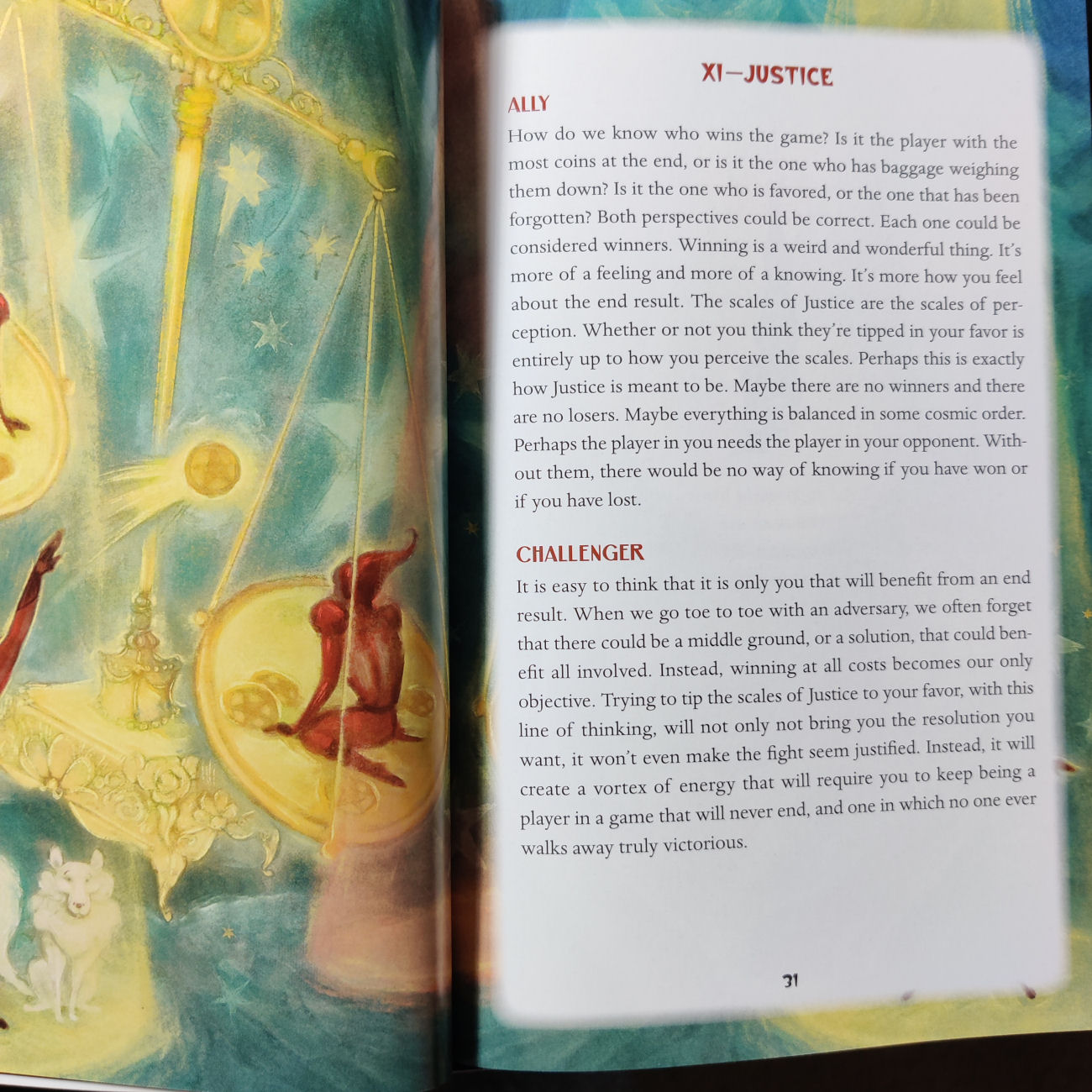
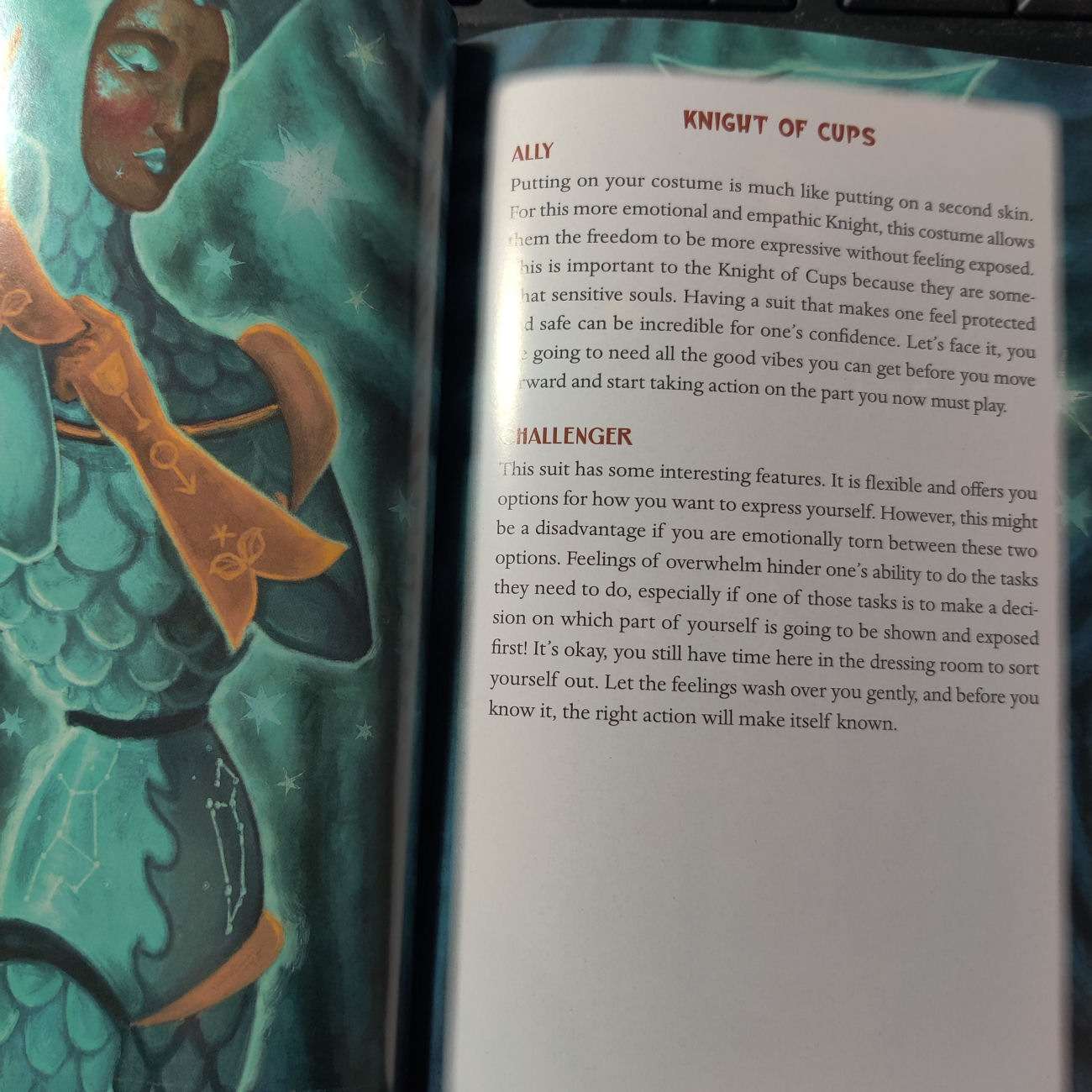
Yet it’s practical and will serve a tarot beginner well. For each card you get a full-page spread. You’ll get the Ally aspect of the card and the Challenger aspect.
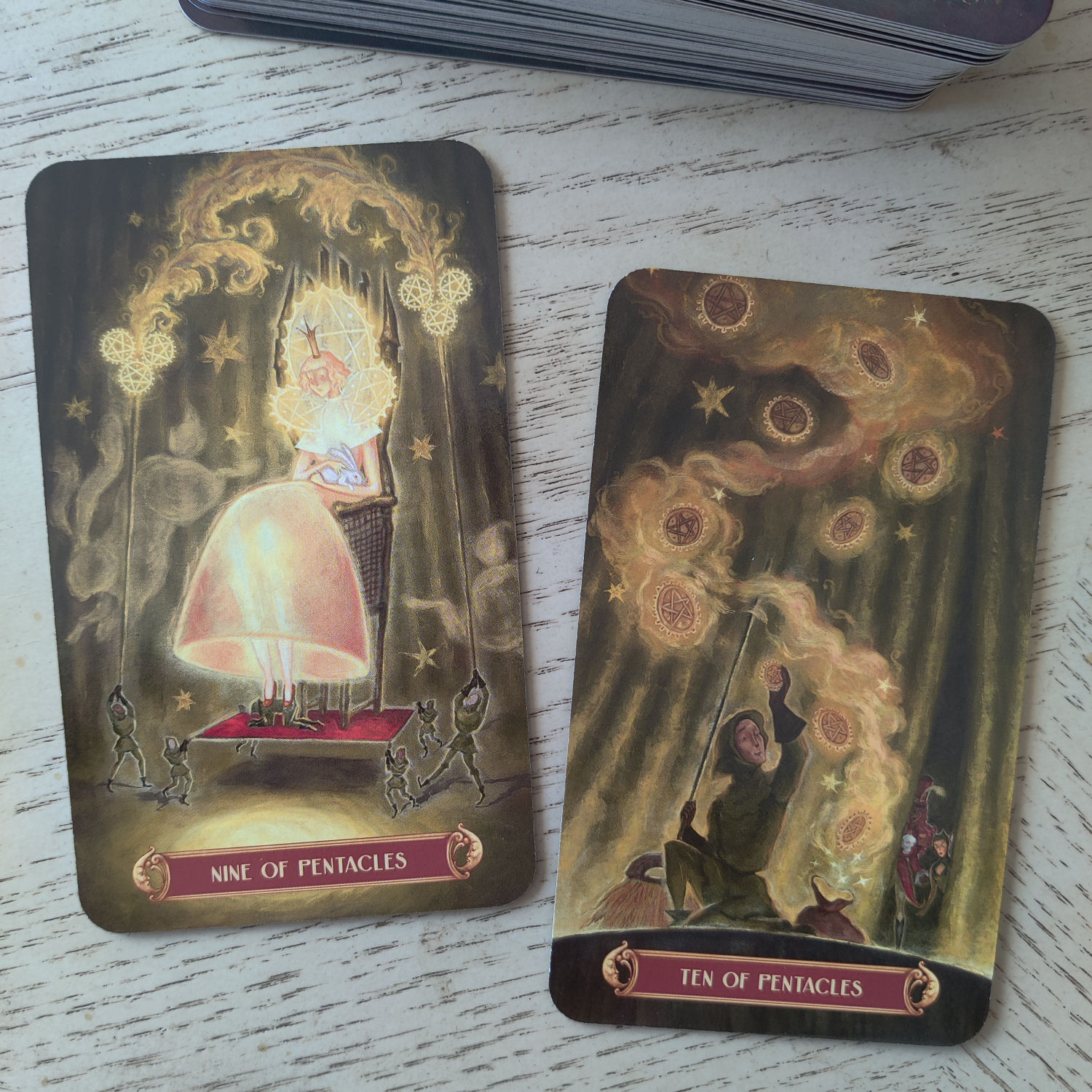
Whimsical yet mystical, charismatic with its humor and yet with Robertson’s masterfully written card meanings, a very readable deck, Cirque du Tarot is kitsch with substance. Tufts artwork plus Robertson as the ringmaster, with her mischievous-magical written text create a delightful chemistry. If you like the creepy-cute aesthetic or want to add a tarot deck to your collection that’s an homage to entertainers, then you’re going to love Cirque du Tarot.

line

FTC Disclosure: In accordance with Title 16 of the U.S. Code of Federal Regulations Part 255, “Guides Concerning Use of Endorsements and Testimonials in Advertising,” I received this deck and guidebook set from its publisher for prospective review. Everything I’ve said here is sincere and accurately reflects my opinion of the deck.

The Tens: Tarot Card Meanings

I’m so close to completing the Minor Arcana for this series. =) Here we are on the Tens, then the Pages, and done. At least for the Minors. After that, the Majors.

But as of this moment, I’m anticipating that the Majors should go fairly quickly. I plan on doing a septenary per video, so that’s  7 of the Majors knocked out in each installment. I dunno. What do you prefer– long videos covering more cards? Or short videos with less cards covered in each?

Download the written Video Transcript

The Tarot Tens

PDF

The transcript for every video lecture is provided. You can go to the Video Series Homepage, scroll down to “CONTENTS LISTING,” and download the PDF transcript notes for each installment.

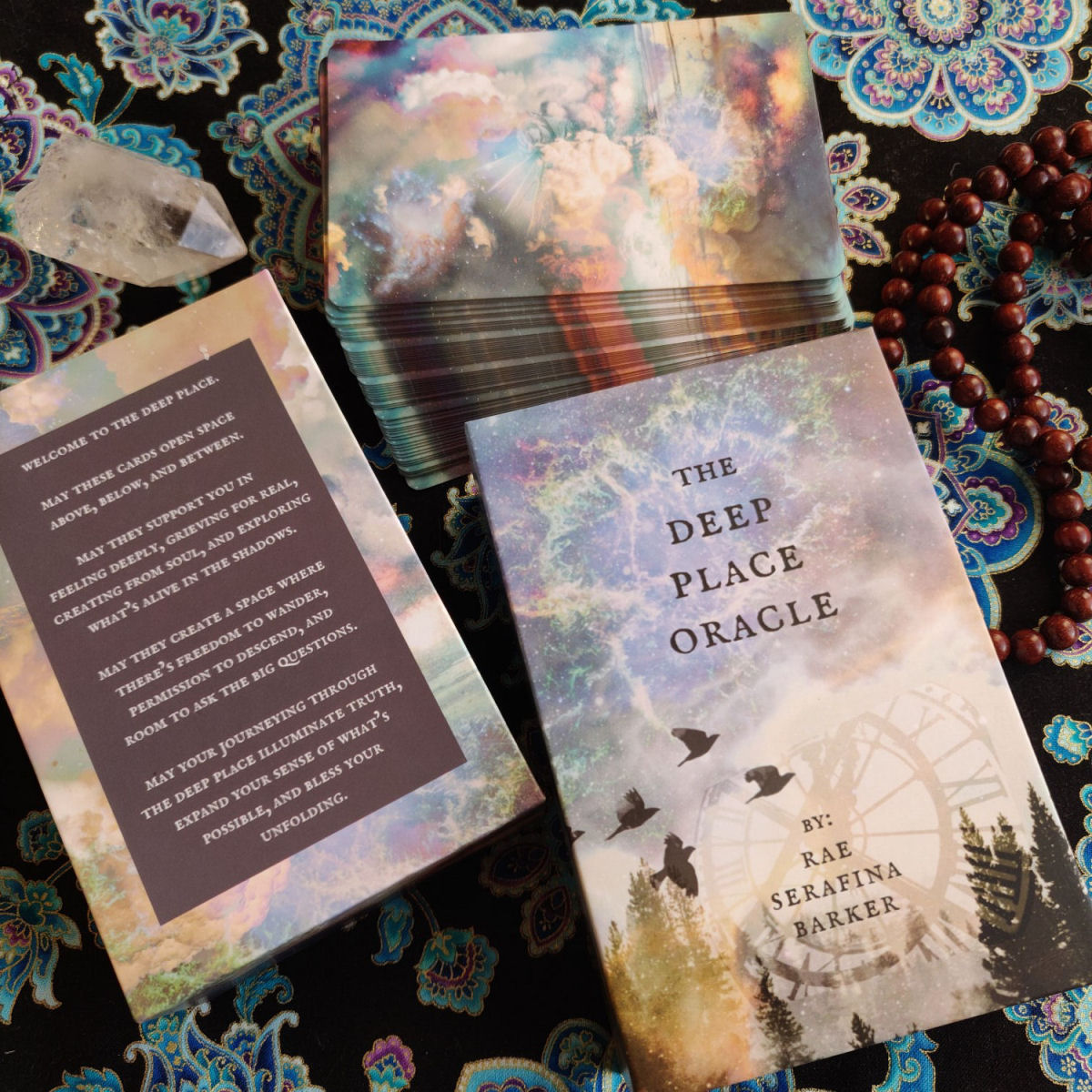
The Deep Place Oracle by Rae Serafina Barker

The Deep Place Oracle by Rae Serafina Barker is a 60-card oracle deck created to help you process the depths of your emotions, to work through grief, to be there as a companion and guide when you navigate the dark night of your soul, and to be the light when you explore your shadows.

It is a hug deck in the best possible way, creating an expansive space for you to work through difficult times and complex feelings. As the deck description notes, this deck is to help you when you’re “journeying through the deep place” and need a guiding light to “illuminate truth, expand your sense of what’s possible, and bless your unfolding.”

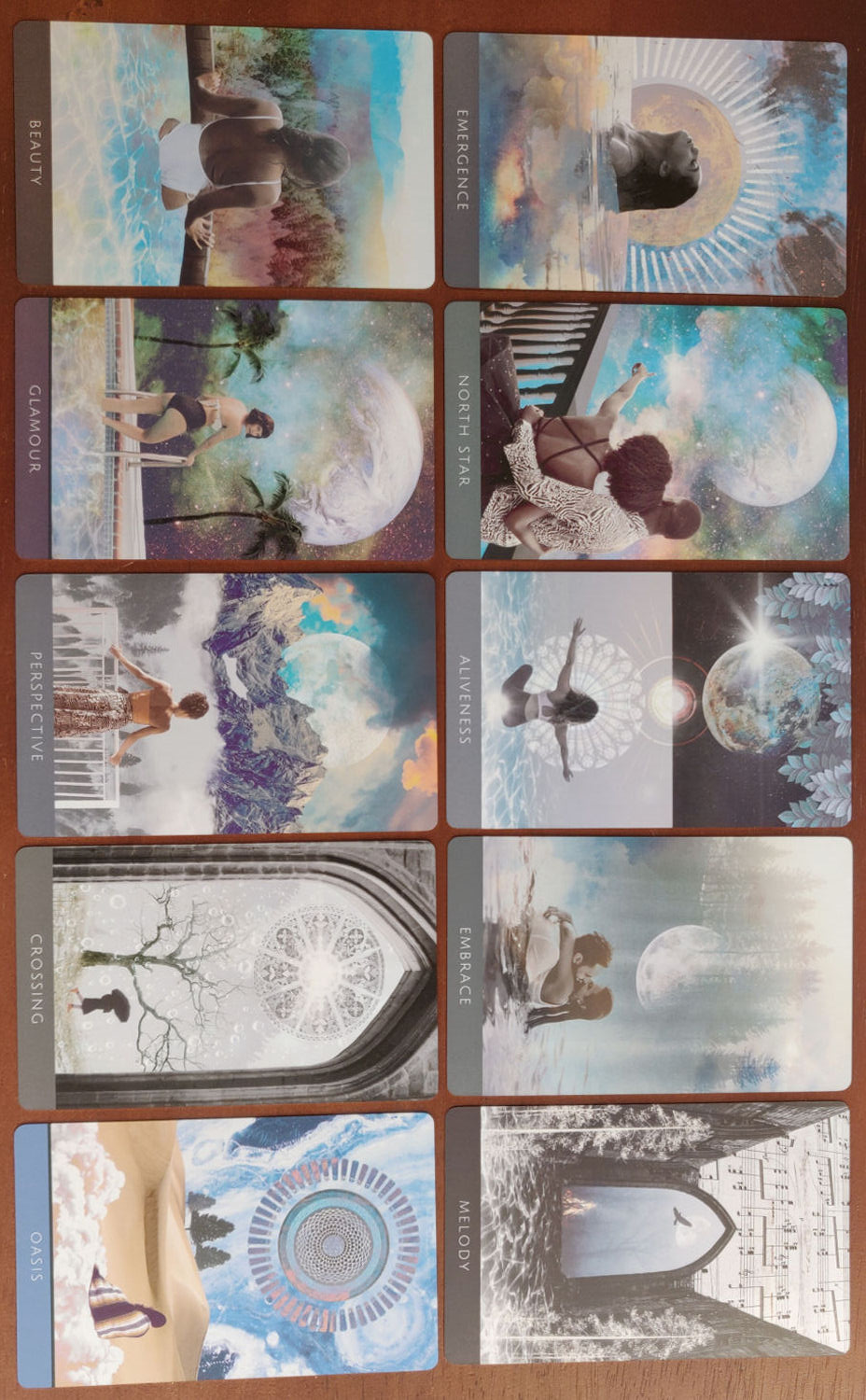
There are three subdivisions in this deck’s architecture: The Above, The Below, and The Liminal. The Above is the daylight world–that which is visible and clear; that which you can  already see, that you already know, and experience in full light of consciousness. This is about validating and reinforcing your awareness. Cards like Emergence, North Star, Aliveness, Embrace, Melody, and Beauty are from The Above.

Continue reading “The Deep Place Oracle by Rae Serafina Barker”

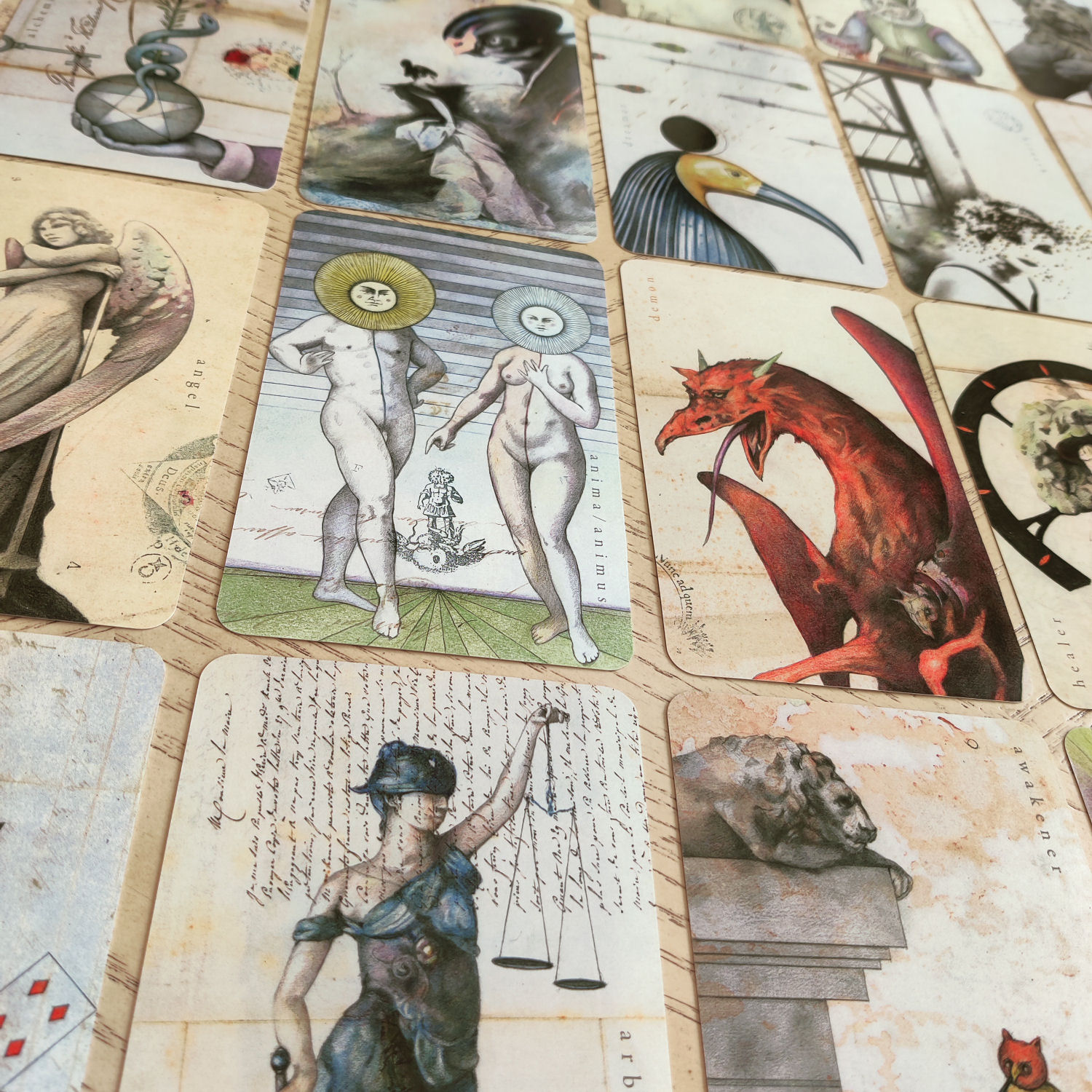
The Archeo Personal Archetype Cards by Nick Bantock

Nick Bantock is the author of 30 books, with about a dozen of them making bestseller lists, including the New York Times. He’s also an artist. His latest publication is a deck of personal archetype cards, The Archeo.

This deck of 40 cards represents 40 inner facets, or characters of you that make up your identity, though some– or most– of these facets remain latent. Archetypes are flexible, not fixed, stereotypes, and meditations on our inner archetypes help us to grow and shape our individual needs.

The term “archeo” is coined by Bantock to represent the concept of multiple archetypes in one. The word also calls to mind “archiac,” to signify that these archetypes are primordial, and are psyches we’ve inherited from our ancestors. The purpose Bantock set out to achieve with The Archeo cards is to produce a tool that will help you to cultivate a healthy, functional personal mythology.

Continue reading “The Archeo Personal Archetype Cards by Nick Bantock”

Reading and Understanding the Marseille Tarot by Marsucci and Aloi

It’s not as easy to find good foundation primers on the Marseille system of tarot, so I’m pleased to share Reading and Understanding the Marseille Tarot by Anna Maria Morsucci and Antonella Aloi first published in 2018 by Lo Scarabeo and distributed by Llewellyn.

Morsucci is an Italian writer, former journalist, spiritual and life coach, who has organized numerous astrology and tarot conferences throughout Italy. Aloi is a psychologist, counselor, and director at the Italian Humanistic Counseling Center, with a background in communication sciences.

This is a comprehensive beginner’s guide to the Marseille Tarot that begins by defining what the tarot is: a deck of 78 cards grouped into 22 Major Arcana numbered 1 to 21 with an unnumbered or designated 0 Fool card, placed either at the beginning or end of the Major Arcana sequence, plus 56 Minor Arcana cards subdivided further into four suits– Wands, Swords, Chalices, and Pentacles.

Continue reading “Reading and Understanding the Marseille Tarot by Marsucci and Aloi”

Secrets of the Rose Tarot by Nigel Jackson

Upon my first walkthrough of this deck, Nigel Jackson’s Secrets of the Rose Tarot skyrocketed immediately up to my top faves. This deck is beautiful. Steeped in Christian mysticism, Cabala, hermetic theosophy, and alchemy, the Rose Tarot is a seamless tapestry of Western esotericism. Not to mention the artwork is just beautiful.

There’s a Paul Huson Dame Fortune’s Wheel Tarot vibe, meets an echo of the card layout design from the Russian Tarot of St. Petersburg in the pips, with the color palette of a William Blake painting, all rendered in a reconstructed medieval illuminated manuscript art style. The Rose Tarot is totally my aesthetic.

Click on image for enlarged view.

In the Preface of the guidebook, Jackson opens by describing the tarot as “a language of symbols, an emblematic poem, an oracular device, a game of chance.” Surviving from the European Middle Ages, this deck has truly evolved over the centuries into a diversity of refractions. The Rose Tarot takes it back to the cards’ medieval paradigm as revelations of eschatological mysteries.

Continue reading “Secrets of the Rose Tarot by Nigel Jackson”

The Incidental Tarot by Holly DeFount — A Must-Have

I’m completely flummoxed at myself for not having posted a deck review or walk-through of Holly DeFount’s Incidental Tarot before. I’m still fairly sure I have, somewhere, and it’s simply a matter of me unable to find where I’ve posted it. =P

This is going to be a walk-through of the card images and sadly, at the time of this posting, I believe the deck is out of print. My main purpose for posting this is for you to discover how amazing this deck is and reach out to the deck creator with pleas requests for a reprint!

Continue reading “The Incidental Tarot by Holly DeFount — A Must-Have”

Shades of Gold Tarot by F. Nathan

The Shades of Gold Tarot (or Oracle– we’ll talk about that–) is a 59-card gold and black deck that reads intuitively and with precision accuracy. When I say “intuitively,” I mean that you don’t really need to bring all that much prior knowledge to operate this deck. On its own, it’s got a way of inspiring the messages to download straight into your thoughts and feelings.

If you want to bring in a more psychology-based, case in point Jungian approach to the tarot, or you like to use the tarot in free association exercises, then you’re going to love Shades of Gold Tarot. It’s perfect for that.

Continue reading “Shades of Gold Tarot by F. Nathan”

21-Card Spread from Joseph D’Agostino’s Tarot: The Path to Wisdom

Download the Worksheet (PDF)

INTERPRETING YOUR 21-CARD SPREAD

For even more “training wheels” support, download the following quick reference table of keywords (DOCX file):

Download the REFERENCE HANDOUt (DOCX)

Tarot Keywords Quick Reference Table

After noting the card drawn for each position in the 21-card spread, write down the keywords from the reference table onto your worksheet pages. The keywords themselves will support your arrival at the divinatory significance of the reading.

Tarot: The Path to Wisdom by Joseph D’Agostino was first published in 1976. A second edition was released in 1994, which is the copy of the book that I have.

I’m not sure whether this book was intended for beginners, but I’m guessing so, since it devotes most of its pages to card meanings, and gives the obligatory opening chapters on what the tarot is.

As a beginner’s guide to the tarot, it starts you off with instructions for two divinatory methods: the Celtic Cross and this 21-card tableau. . . . Beginner tarot books have come a long way since then. =)

Continue reading “21-Card Spread from Joseph D’Agostino’s Tarot: The Path to Wisdom”