DIY your own SKT study journal

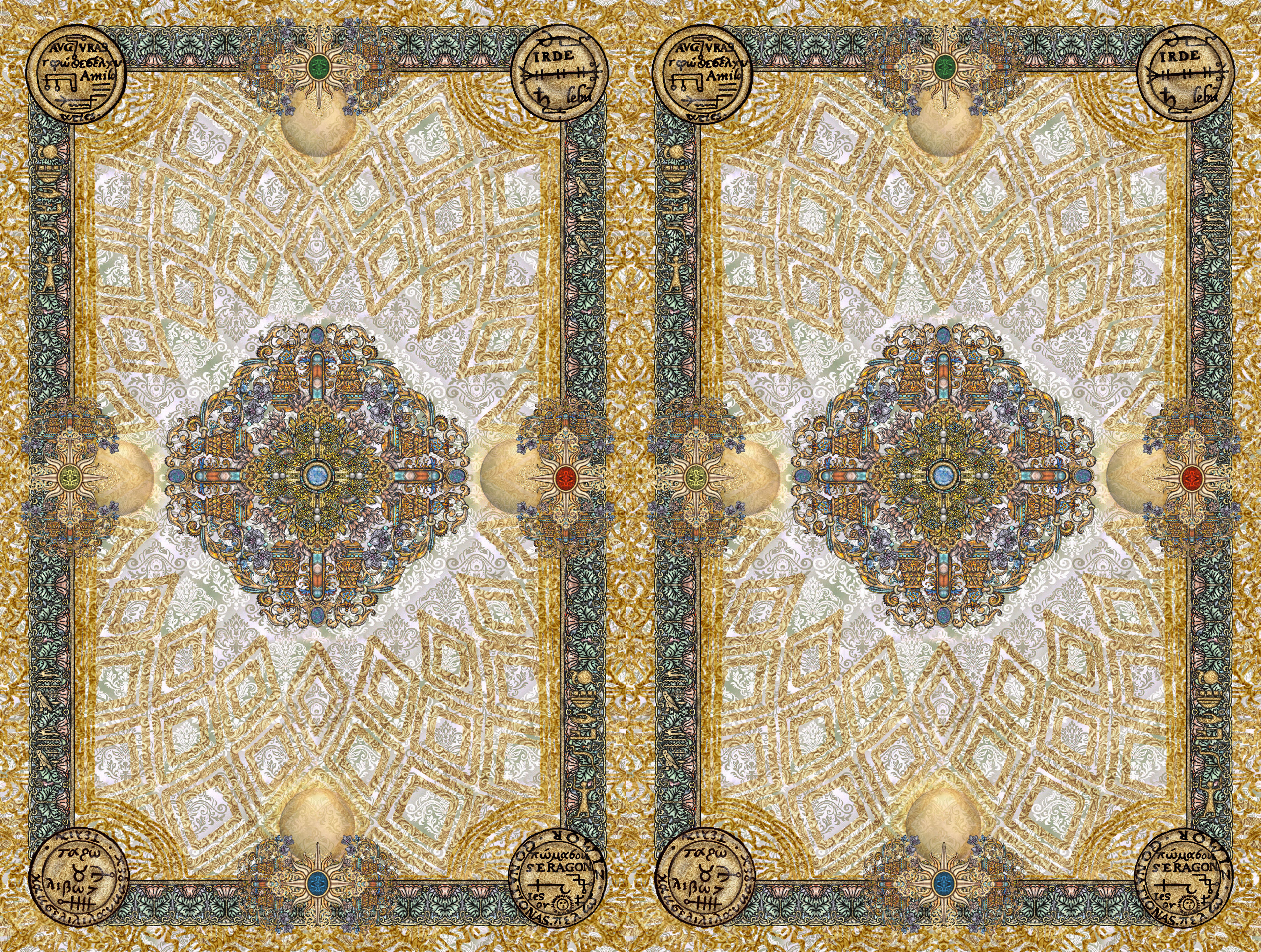
click to download high-res 4 MB journal cover (back and front), for spiral-bound production

If you have MS Word, then you can use all the templates in this post to create your own spiral-bound tarot journal keyed to the Spirit Keeper’s Tarot.

Convert your final document to PDF and upload it onto a third-party print-on-demand publishing site like Lulu.com.

The above cover design is for 6″ x 9″ trade paperback size journals, spiral bound.

Continue reading “DIY your own SKT study journal”

Sámi Erasure, and Takeaway Lessons; Angels and Ancestors Oracle

Inlé’s Inlet recently posted the above deck review and commentary on the Angels and Ancestors Oracle Cards, which raises cultural awareness of some concerns with the imagery in this deck. To be more precise, it’s not the imagery that’s of concern, but the lack of credit and acknowledgement for where the sources of inspiration came from.

The distinct drum design featured on the Drum card, the Shaman card, and on the card back of the Angels and Ancestors deck (photographs of it in my deck review) have been taken directly from Sámi religious and spiritual iconography.

However, no credit, reference, or source citation was provided in the accompanying guidebook, in effect erasing the Sámi, who are a historically marginalized indigenous minority.

This is a form of appropriation of indigenous cultural intellectual property rights. Yet this particular instance is one that could be reasonably remedied.

In this type of a scenario, I do think addressing the issue head-on is the compassionate approach.

Continue reading “Sámi Erasure, and Takeaway Lessons; Angels and Ancestors Oracle”

Etteilla Cups: Ace, Two, and Three

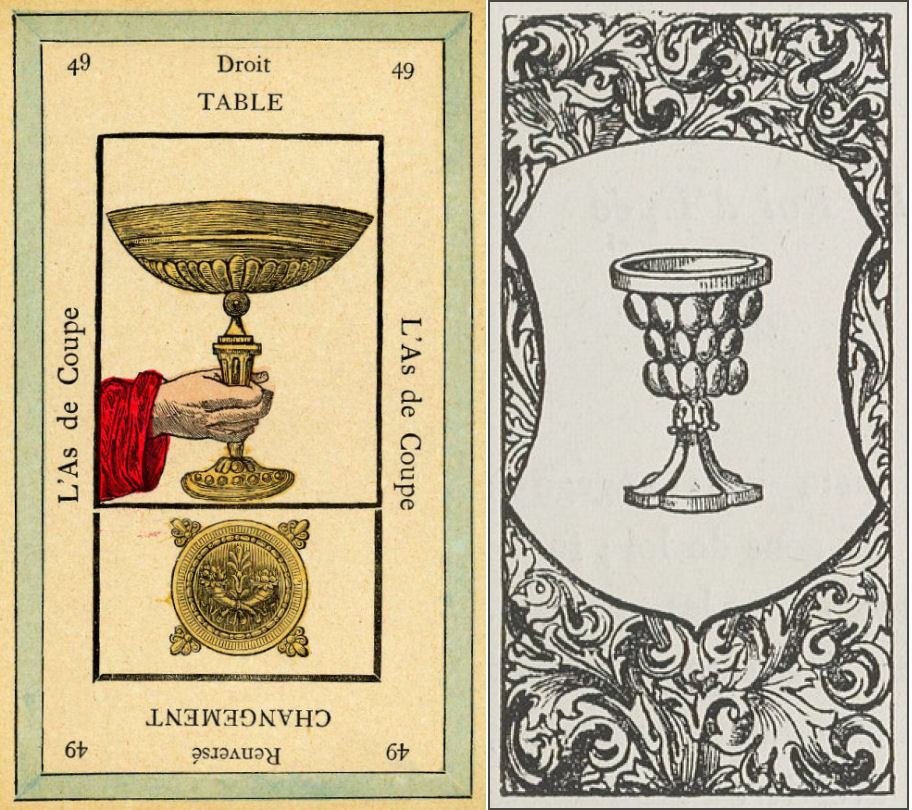
Just another blog post update on the progress of my Etteilla deck. This is the Ace, Two, and Three of Cups.

Please continue to treat what you see in these progress posts as works-in-progress. Everything is subject to change. Keywords are temporary placeholders. And I still don’t know about the final layout design.

Ace of Cups

My last Etteilla tarot deck project update left off with an incomplete Ace of Cups. I’m back from my hiatus, but due to a lot going on in my life right now, the pace at which I’ll be creating these cards will be significantly slower than what I could do for the SKT.

For the suit name I decided on Cups instead of Chalices because this isn’t an occulty esoteric deck like the SKT. I want the Etteilla deck to feel more mundane and versatile.

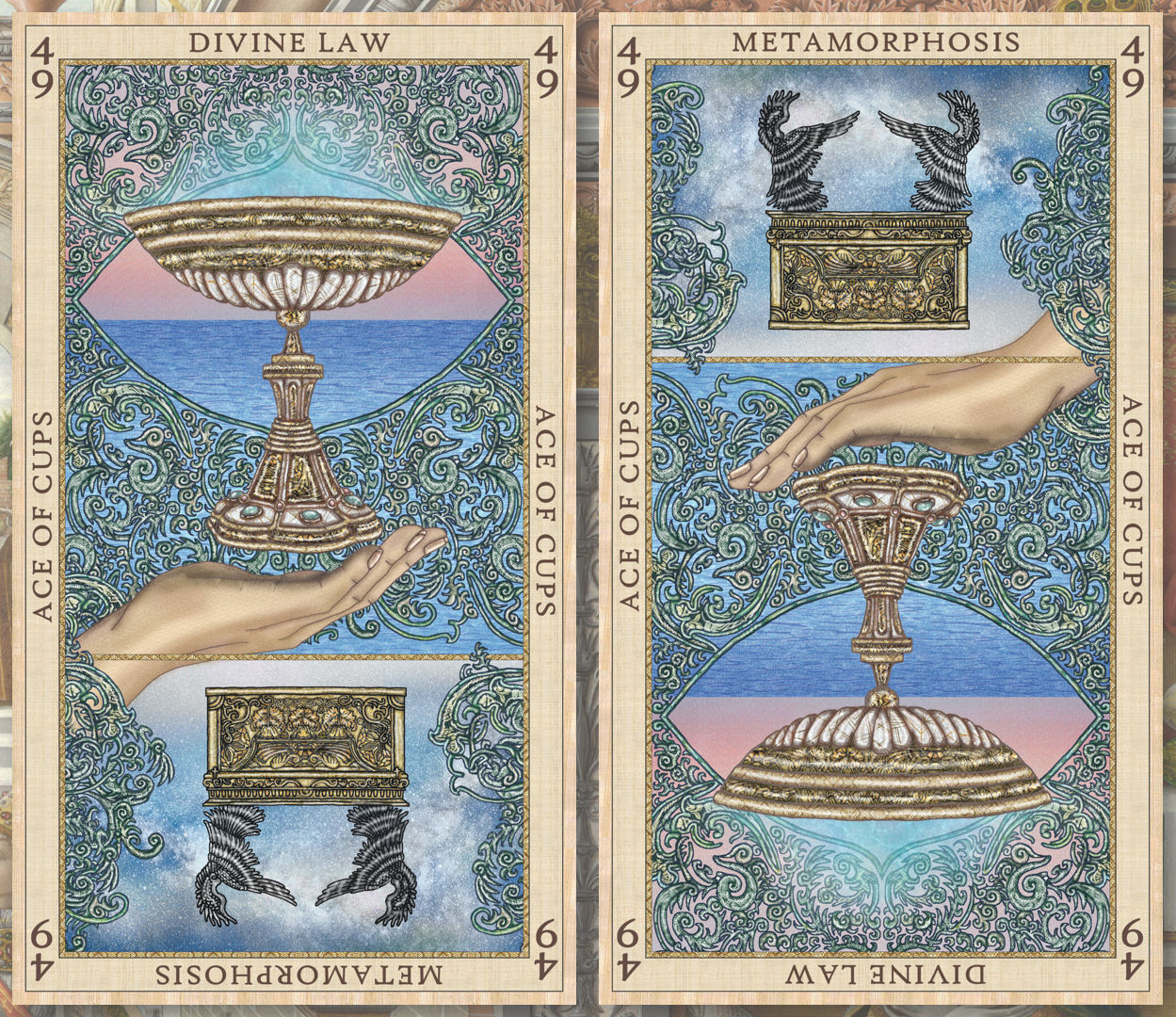
Etteilla associated the Ace of Cups card with the Ten Commandments, so in the reversed position, I feature the Ark of the Covenant, which houses the tablets.

The Ark is depicted on the Ace of Cups reversed as a divinatory omen that a profound change has already occurred in the querent, a complete change to your essence that results from reconciliation between Divine Will and personal will.

There’s also another fun connection. In theosophic numerology, the Ace of Cups corresponds with the number 4. Note here in Etteilla’s numbering, card 49 = 4 (4 + 9 = 13, 1 + 3 = 4). And that Ark image I’m using is the same one from SKT’s Key 4: The Emperor. =)

Continue reading “Etteilla Cups: Ace, Two, and Three”

Reading with the Livre du Destin (or Book of Fate)

A while back I shared zip file downloads of the above deck here. I called it the Petit Etteilla, because that’s what it was called on the British Museum page that I got the images from.

And then much smarter cartomancy community members pointed out that it’s actually a deck called the Livre du Destin, or Book of Fate.

Continue reading “Reading with the Livre du Destin (or Book of Fate)”

The Lost Tarot by Hans Bauer (Guidebook by Carly Fischer)

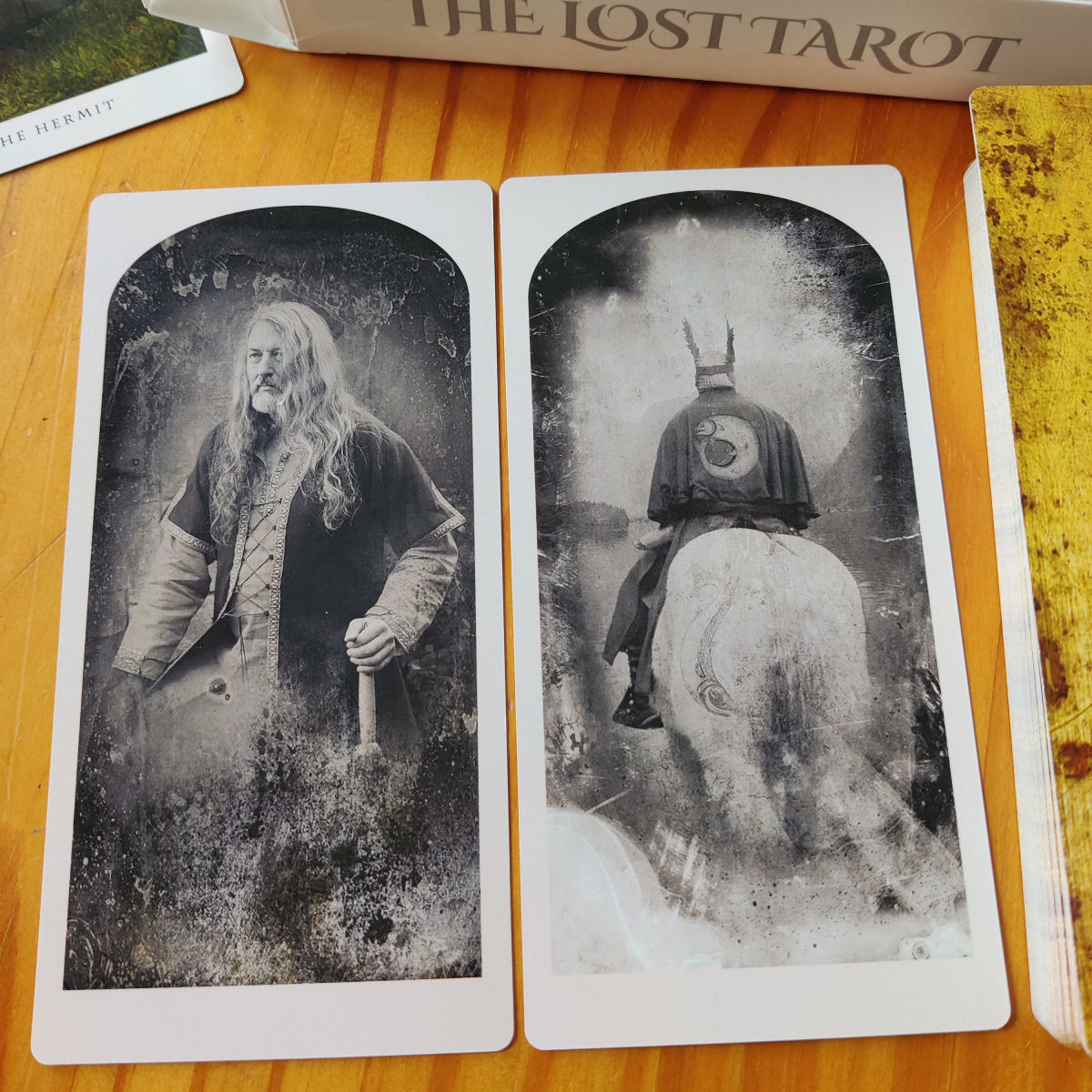
Back in 2018 I had the great privilege of reviewing the Majors Only version of Hans Bauer’s The Lost Tarot. The deck is premised on a fictionalized back story of an English merchant, William Bradford, who purchases from Leonardo da Vinci an optical device and early prototype of the modern camera.

Two bonus cards in the deck

This certain Mr. Bradford takes a series of photographs with da Vinci’s device, which was then lost in time, and only rediscovered in 1994. After some restoration efforts of those medieval photographs, The Lost Tarot is born.

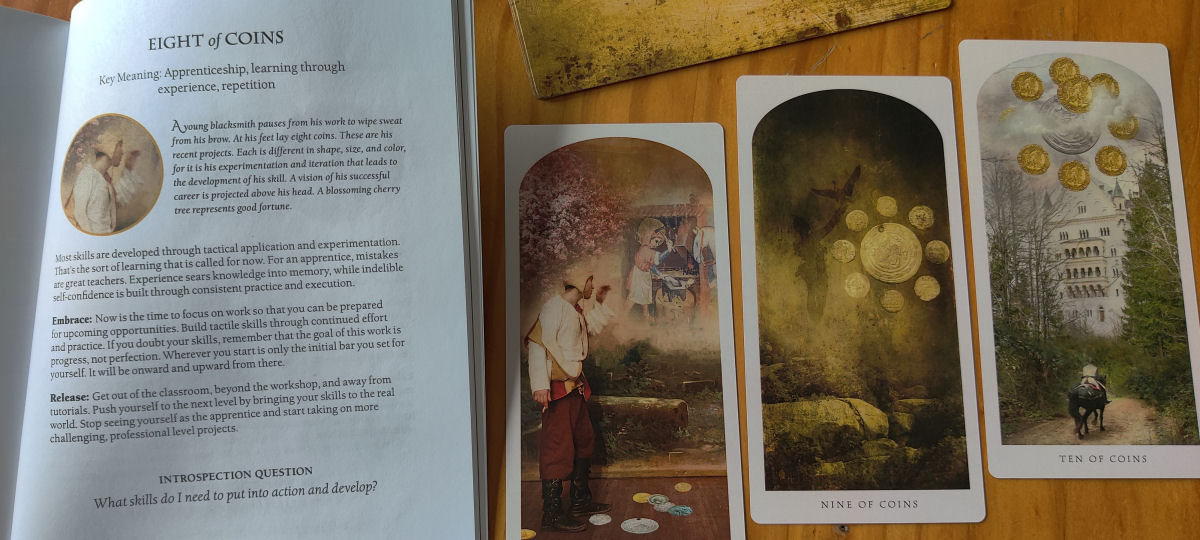
Finally in 2022, the full deck is realized, accompanied by a fantastic full-color guidebook written by Carly Fischer. The guidebook is absolutely amazing. Not only does it make for a great primer on the tarot, following popular RWS card meanings, but it supports Bauer’s deck beautifully.

I do love the parchment design for the card backs. It works well with the premise of the deck. Love that Ace of Cups!

Continue reading “The Lost Tarot by Hans Bauer (Guidebook by Carly Fischer)”

Etteilla Redux Project & Hiatus: Finishing the Second Septenary

I’ll be taking a several-month hiatus from working on the Etteilla deck project because I have a book manuscript to complete. But before I take that hiatus, I want to “leave off” on a happy card.

And the last card of the Second Septenary in the Etteilla– The Devil– isn’t quite the happy card I’m thinking of. =)

So I’ve started the Ace of Cups, and am intentionally leaving it incomplete. That way it’s the prolonging energies in my space until I return. More about that. Keep reading.

POLL #1: Should I call the suit Chalices or Cups? I think technically for this deck, it’s supposed to be Chalices, right? But Cups just flows off the tongue better than Chalices, and much easier to verbalize. Let me know what you think.

Continue reading “Etteilla Redux Project & Hiatus: Finishing the Second Septenary”

Jean Dodal Tarot (a hand-crafted masterpiece by Justin Michael and Shell David)

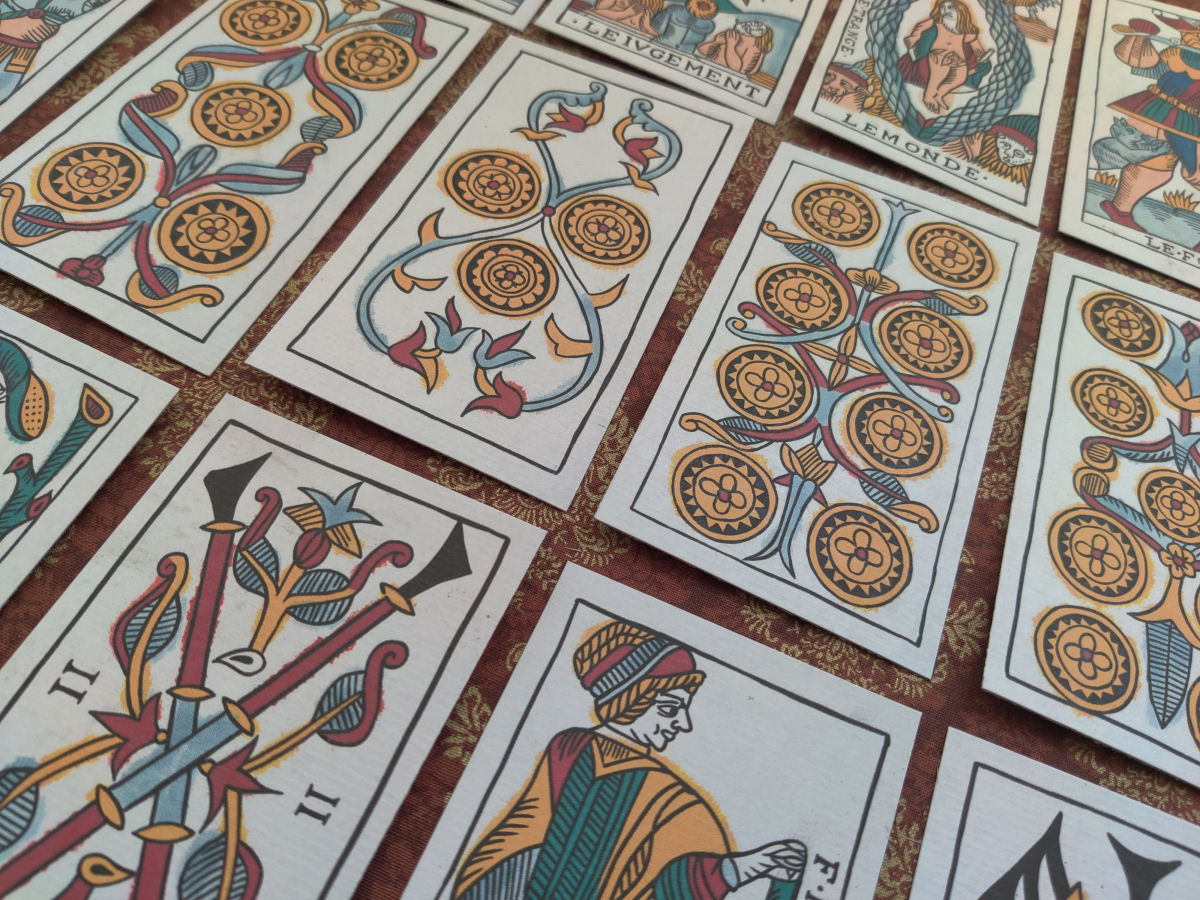
This masterpiece reproduction of the Jean Dodal Tarot by Justin Michael and Shell David (of East Tarot) is everything to me right now. It’s a fixture on the corner of my personal reading desk and when I’m catching up with old friends via zoom video calls, I’ll reach for this particular deck, sling some cards while we virtual-klink wine glasses, and read about Life.

I wish I could tell you that they’re selling these and you can buy one for yourself, but I’m not sure. You’ll need to reach out to either Justin Michael or Shell David directly to find out. Whatever the cost, having just one of such decks is worth your investment.

It becomes that prized tool. You’re not paying for just another tarot deck for your collection. Something like this is special. It’s the artisan craftsmanship and the personal touch that you’re investing in, which I truly believe is converted into energy and gets infused throughout the deck.

Dating back to around 1701, the Jean Dodal deck, one of the early iterations of the Tarot de Marseille tradition of tarots, were printed from woodcut engravings and hand-colored by stencil, produced primarily for export. Shell David’s restoration project is top notch, and Justin Michael’s printing and production– just, wow.

Continue reading “Jean Dodal Tarot (a hand-crafted masterpiece by Justin Michael and Shell David)”

Petit Etteilla, Paris: H. Pussey, 1860-1886 (32-card piquet pack download)

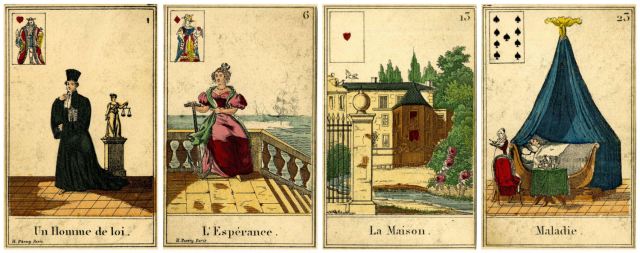
What we call the “Petit Etteilla” refers to a class of 32-card piquet decks for cartomancy based on Etteilla’s 1770 text, which used the courts (Kings, Queens, Jacks), Aces, Tens, Nines, Eights, and Sevens from a playing card deck. To the 32-card pack, Etteilla added a 33rd card called “Etteilla” to designate the querent. And thus he proposed that the original Egyptian tarot pack consisted of 33 cards.

UPDATE: I referred to this deck as a “Petit Etteilla” because that’s how the British Museum referred to it. However, one of our community’s preeminent tarot historians, with a particularly vast amount of knowledge on the Etteilla, John Choma, came back with some clarifications.

This is not a Petit Etteilla deck, but an unrelated deck called the “Livre du Destin” (or Book of Fate), created some time in the mid-1800s. You can check out a few historic examples (thank you, John, for the links!): here (M. Violet, éditeur), here (Le Livre du destin), and here. These images are also notably similar to other 19th-century oracle decks like the 53-card Sibylle des Salons and the 36-card Petit Cartomancien.
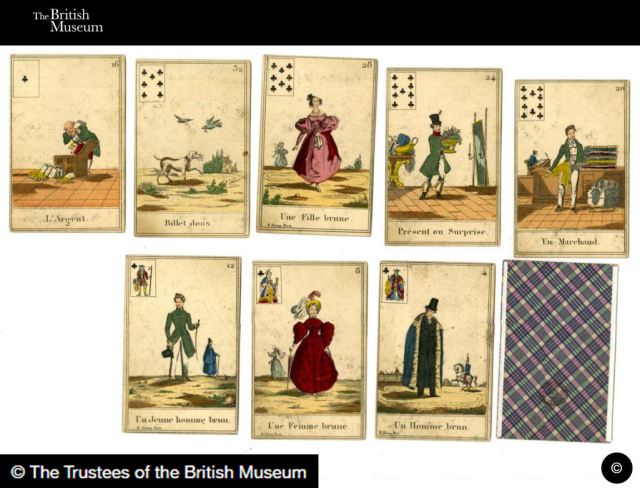
This download of Petit Etteilla card images, courtesy of the British Museum, is the edition published between 1860 and 1886 by Jean-Henri Pussey in Paris, France. The originals were 70 mm x 111 mm, hand-colored etchings on pasteboard.

Petit Etteilla

(Originals, 70 mm x 111 mm)

CLICK ON LINK TO DOWNLOAD ZIP FILE

If you’re savvy with digital photo editing and graphic design, then work directly from the 70 mm x 111 mm originals, and format the layout design to your personal preferences.

Continue reading “Petit Etteilla, Paris: H. Pussey, 1860-1886 (32-card piquet pack download)”

Progress Notes on My Etteilla Tarot Redux

You can ignore the misalignment issue with the card numbers (like what you see above between 7 and 8) because I need to change the layout design entirely.

Above for reference you’ll find Cards 7 & 8 from Etteilla II on the left and how they look in Etteilla III on the right (these are illustrations from the Lemarchand text). I’m slowly translating the card meanings found in the Orsini and Lemarchand texts from French to English for the guidebook.

Eighteen cards in and I realize my initial vision for the layout design is not going to work. The font size right now is at 64 pts. By my estimations, it needs to be at 85 pts.

Continue reading “Progress Notes on My Etteilla Tarot Redux”

Etteilla Tarot Reconstruction: Sacred Seven in the Coins

I previously posted my first complete drafts of the first seven Major Arcana cards in my reinterpretation of the Etteilla Tarot, here.

Instead of continuing on to the second septenary of Majors, in order, I realized that practically speaking, I had better try my hand on some of the pips early on, because the last thing I want to happen is to finish the artistic labor for all the Majors then start on the pips, only to realize I hated the direction I was going in and having to abandon the project altogether, after all that work had already been done.

So I thought, okay, let me see if I can even come up with a good approach to the pip cards first, before committing to this deck project.

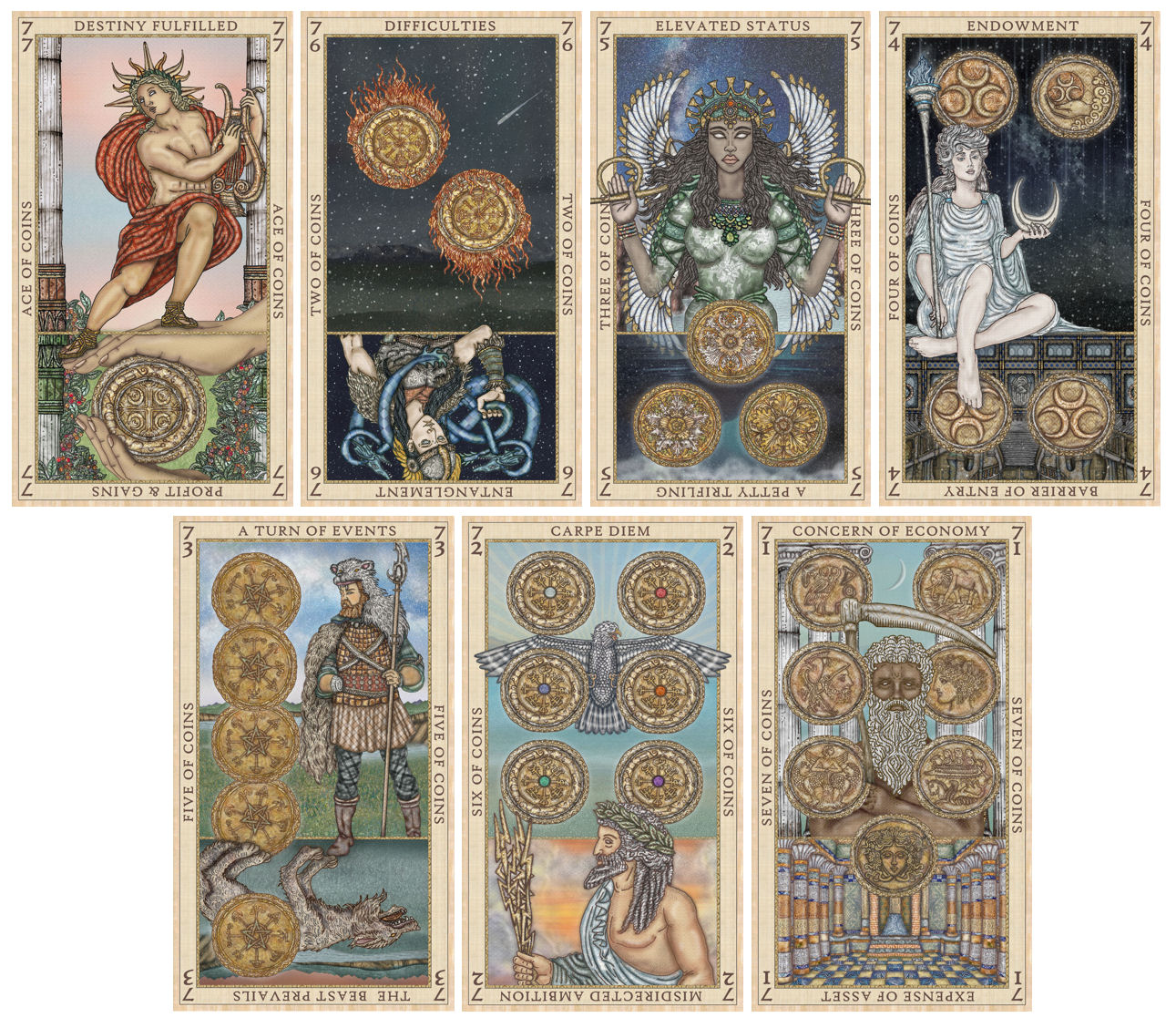
But where do I start? I started at the tail end of the deck (but not Card 78 or Key 0 The Fool). I started with Card 77, the Ace of Coins, then worked backward to Card 76, the Two of Coins, Card 75, the Three Coins, and so on.

This blog post will showcase the first drafts of the seven Coins cards corresponding with the Sacred Seven (in the order of Sun, Mercury, Venus, Moon, Mars, Jupiter, and Saturn).

Continue reading “Etteilla Tarot Reconstruction: Sacred Seven in the Coins”