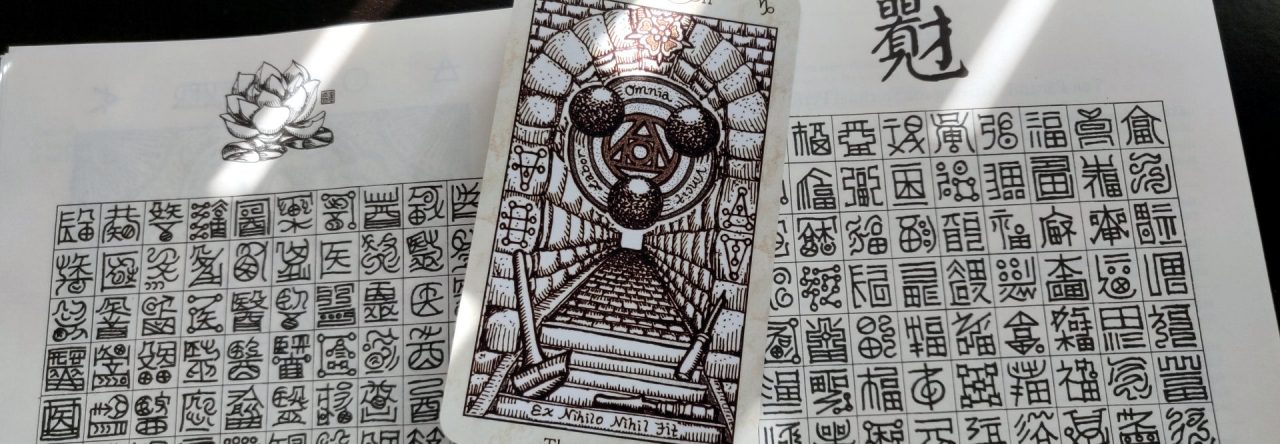
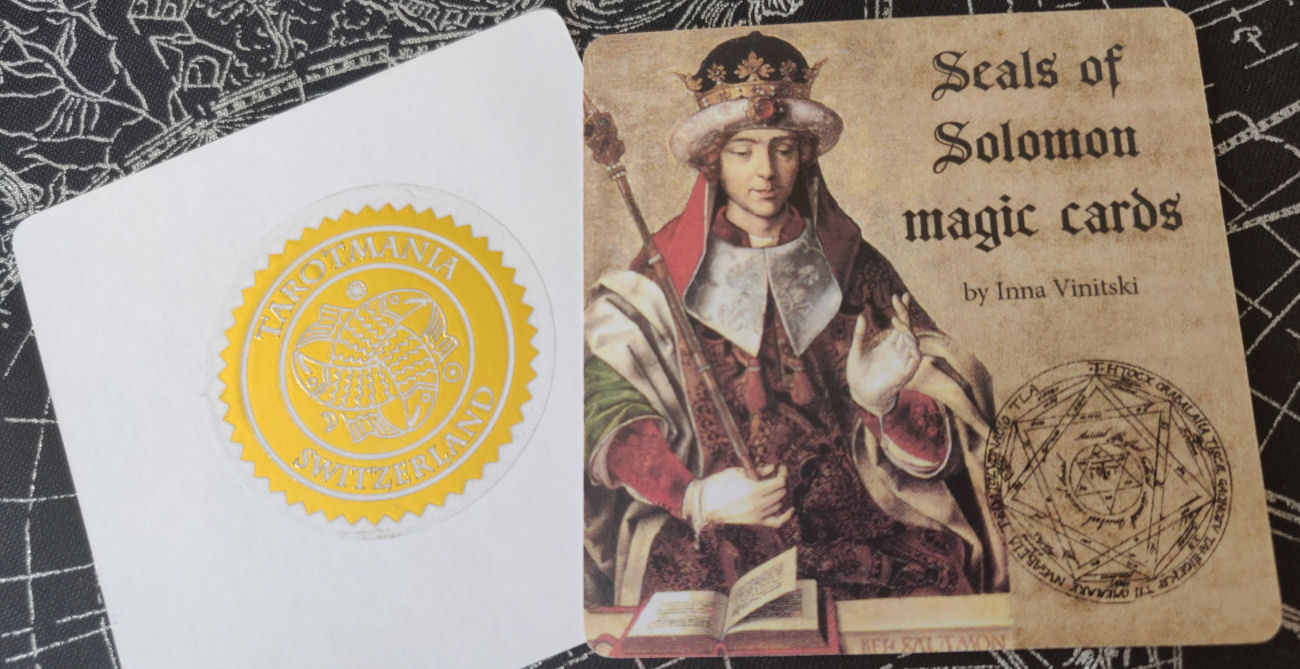
I think the single most compelling reason to acquire this deck for your toolkit is to use them as easy, go-to charging plates for your charms, talismans, gemstones, crystals, and other metaphysical knick-knacks. Here, Inna Vinitski has already done the work for you. Once you get these cards, consecrate them and voila! Incredible! A set of tools for planetary magic at your fingertips!
This post will both showcase the Seals of Solomon cards, which I urge you to get if you want to deep-dive into working with the Key of Solomon, and also get into what the Key says about these seals, or pentacles.
To start, let’s try a little something, shall we? Below in the photo of the three magic cards, take a moment to gaze at each one, connecting your third eye (that space just between your brows) with the eye depicted on the card back. For one of these three cards, the tug at that space between your brows will feel stronger, more intense than for the others. Note which of the three cards gives you the strongest intuitive sensation.
Remember it, because we’ll be returning to your card selection later.
Solomonic magic is pretty much the foundation of occultism, modern witchcraft, and ceremonial magic west of India and China, encompassing Europe, the Middle East, and now the Americas.
What you will discover within the pages of this book I’m sharing, you’re going to find to be the keystones of Persian magic and witchcraft, the magical practices of Muslim-influenced Southeast Asian countries, the Golden Dawn (though many of their correspondences differ), hoodoo, Wicca, and maybe even the traditions you’ve inherited and have been wondering where those traditions might have come from.
If you’re serious about your occult studies, then I hope you’ll add this text to your library and read through it cover to cover at least once.
From my vantage point, this book is essential reading, even if for no other reason than to take it apart to realize once and for all this is not for you. That, too, is invaluable. Whether you want to strengthen the connection to these roots or you want to sever ties with the roots altogether and grow anew, either choice calls for an examination of this text.
The images from historically significant grimoires, the essence of the ritual instructions provided, and the methodology behind the crafting of seals, devising the magical scripts, and even how to prepare for ritual can help to inspire your own creativity, offering sparks and revelations for how to do Craft your way.
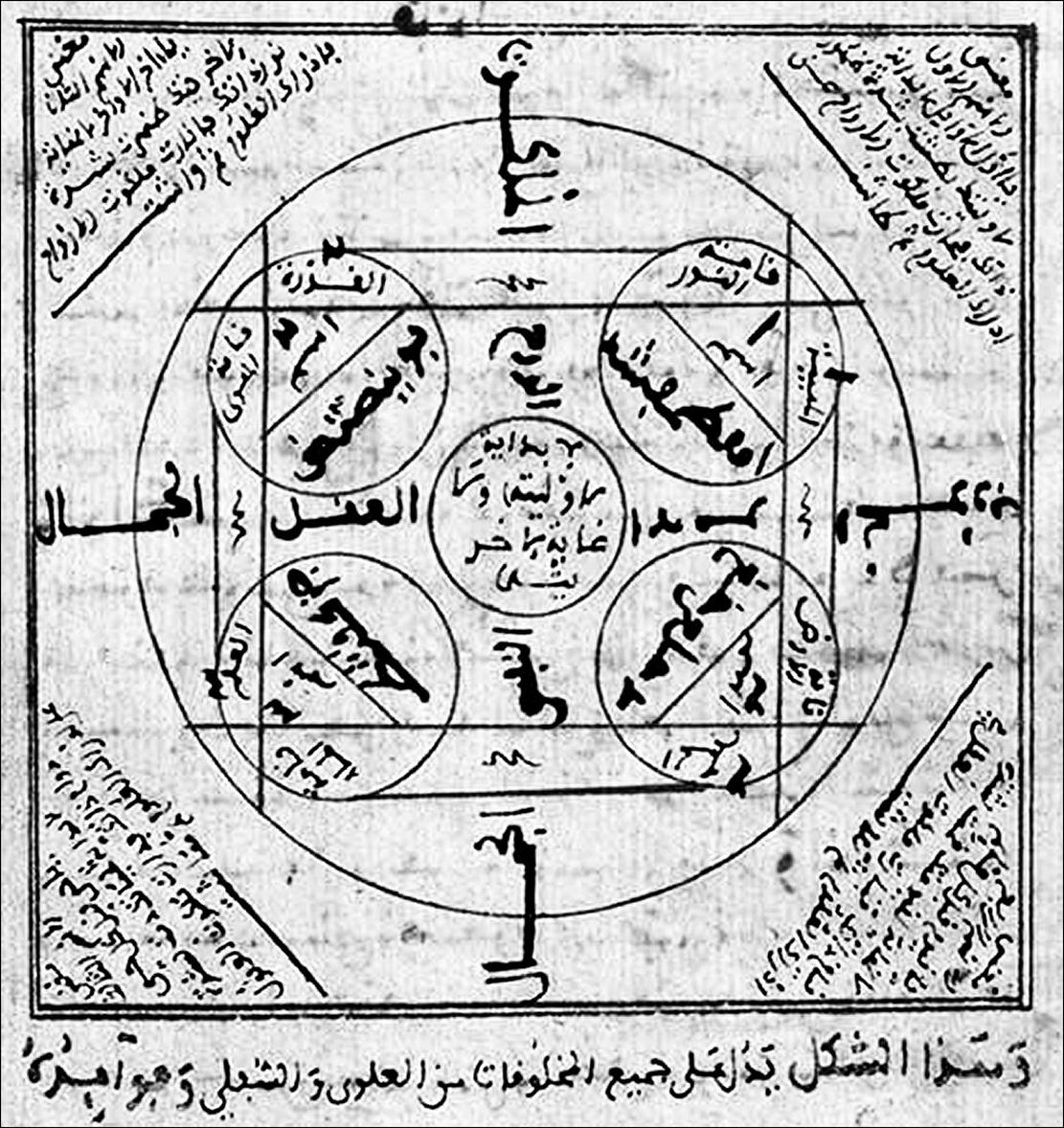
From the Tractatis de Nigromatia (16th century), A grimoire on necromancy
If you’re a total beginner, then please do not try out any of these rituals or operations on your own. Plus, the instructions are pretty clear that most of these conjurations should never be performed solitary.
At the beginner and intermediate level, a light read of this text is going to be the best introduction to ceremonial magic, witchcraft, and occultism west of the Indies you can get.
This should be your orientation manual into the Craft and the beginner steps for realizing your Great Work. Levi even says as much, which is why in a course I was putting together focused on Levi, I ended up having to back-track and start first with the Key of Solomon.
I’ve converted selected text from the Introduction chapter of Eliphas Levi’s Transcendental Magic: Its Doctrine and Ritual (here I’m using the English translation by A. E. Waite) into a much easier to digest reference table.
That is all. I’ll expound on this more at a later time. For now, those who know what to do with this, go forth and be merry; those who don’t care for this kind of thing, no worries! =)
Click on any of the tables for an enlarged view or to save the image file.
I posted an Instagram story and tweet asking you all whether you wanted me to chat about (a) ancestral power and the witch, or (b) secrecy in esoteric traditions. Option (a) won by a landslide. So here you go. Bell Chimes In, installment #44. Closed captioning is provided on this video, so if you’d like to read what I’m saying, be sure to turn the CC on.
I didn’t get to talking about everything I had wanted to talk about in the video, however, and in retrospect I think I rushed through this, not giving this subject the treatment I would have liked. So here’s a follow-up written blog post.
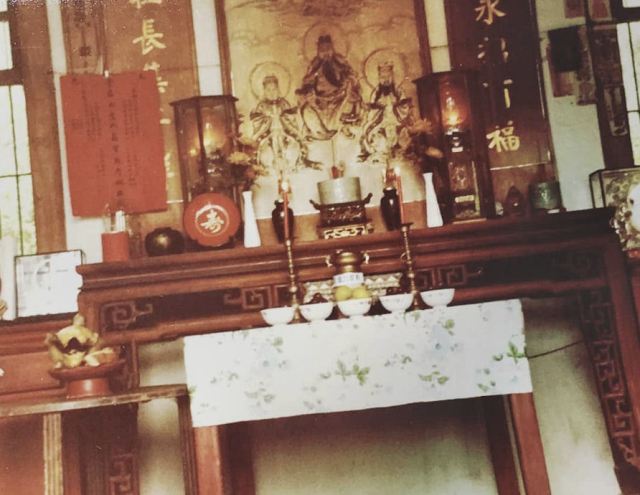
Hakka family altar set-up, circa 1980s.
Whether a Family/Ancestor Altar is Required
I would be ignorant of my own culture’s traditions if I didn’t acknowledge that according to some orthodox views, yes, one is required and you must routinely burn offerings and remember your departed, or else the power (and potential for future high accomplishments) of your family line will decline.
Now, as for whether I personally believe that? Ehrm….
I think if you surrender too much power to that notion, then you’re giving it a lot of power, so then of course it will be true.
There’s also the belief in a reciprocal relationship where the more you remember, give offerings, and honor your ancestral lines, the more powerful your ancestors are and therefore the better they can help you when you call upon them for assistance.
My world definitely has enough space for multiple and conflicting viewpoints on that count, though for myself, I believe it wholesale. So if a witch seeks to have available access to the power of ancestral lines, then yeah, maybe you want to remember, give offerings, and honor your ancestors, and the way to do that would be through an altar space in your home dedicated to them.
How to Set Up an Ancestor Altar
This is where you really have to listen to your own memories, especially the memories you don’t remember. They’ll often come to you through intuition or psychic revelations. Also, culture matters. The culture of your ancestral line will by and large determine the best way for you to set up your own ancestor or family altar.
Where the lines between cultures blur, look to the living in your family for some reference. For example, I don’t feel beholden to strict, orthodox traditional approaches to my family altar because the real life relationship I had with the elders in my family line demonstrate to me that I don’t need to, but that’s very, very specific to my family relationships. In that same way, the logistics and details get very specific to you and your family relationships.
For those who have no idea where to start and feel lost without some point of reference, look to the enduring traditions in your culture. If your family is a mix of cultures, then I would presume your ancestor altar will be curated in such a way that it reflects and honors that mix of cultures.
Your ancestor altar doesn’t need to be complicated, or even look like a religious altar. A few token things from loved ones dearly departed arranged beautifully yet in a discrete, minimalist way somewhere in your home that’s going to be meaningful to you, and perhaps accompanied by a few religious artifacts is perfect. A notebook where you write letters and notes to those who have passed on set out on your desktop with a crystal, a candle, and a small dish of salt to purify the area is far more magical and powerful than you may realize! =)
My opinion? Calm down. Stop worrying so much. I believe it is really, really, really hard to mess this up. Like, it is next to impossible to do this “wrong,” even in the eyes of the purist OGs of your family line. I believe they smile kindly and generously upon your love and your efforts. When they see that you’re ready, they’ll gently nudge you in the “right” direction (meaning, what they want to see on their own altar). Like I mentioned in the video–a loving father is going to love whatever Father’s Day gift his kid gives him, even if objectively it’s god-awful and hilariously misses the mark.
Soul Dualism and Power of the Ancestral Pillar
I talked about this in the video, though I’d like to talk about it some more.
Eastern esotericism believes in soul dualism, meaning your soul is a binary. It comes in two parts, a yin part and a yang part.
The yang part is where your karma is attached, so that’s the part of the soul that reincarnates into new physical bodies. The yin part of your soul remains behind on this physical universe, but only on the spirit realm, the metaphysical counterpart to our physical universe. It’s in this intangible dimension coexisting with our physical dimensions.
Spirit contacts, all these psychics and mediums communicating with the dead—they’re connecting to that yin part of the soul that inhabits the metaphysical counterpart or dimension of our physical universe. Meanwhile that yang part of soul is now, shall we say, downloaded into a new physical body, with a new personal consciousness.
Getting really nutso here, though it’s nevertheless esoteric beliefs found in many forms of shamanism across the Asia Pacific, this is why the world will end, or the esoteric theory behind the Apocalypse—the overpopulation of this yin soul energy filling up the metaphysical dimension of our universe.
I might get into some of my speculations on how this connects to what astrophysicists describe as dark matter versus dark energy.
Also, in other areas of metaphysical theory, yin energy is the source of psychic power. When I say psychic power, I’m speaking really broadly, as in the ability to use your mind and willpower to produce events that run counterintuitive to reason and rationalism.
Getting a bit supernatural now—as if I wasn’t speaking crazy already—in metaphysical theory, ancestor veneration is what infuses certain family lines with inordinate power. It’s part and parcel to that family’s power. When those of the physical world feed that metaphysical counterpart, that metaphysical counterpart (the family line) strengthens, and can then in turn strengthen the physical counterpart (of your family line). That’s what I meant earlier in this write-up about the reciprocal power dynamics.
I believe that we can see this in everyday visible terms that’s not occult. Really famous family names, for instance, family dynasties that clearly have a lot of power in society, often subconsciously engage in acts that are a form of ancestor veneration, of keeping a legacy alive, and that’s why those family names hold so much power, whether that’s political clout, wealth, or fame.
When you start to see that cohesion in a family dynasty disintegrate, that’s in metaphysical theory when that ancestral power begins to disintegrate.
So there is this deep reservoir of power that you can tap into when you venerate your ancestors, when you remember them, when you keep them alive.
In the comments section of that video, someone asked about ancestral lines that don’t have any witches. What’s the “first generation witch” in a line to do?
Honestly I wasn’t even thinking about that. I meant very, very mundane requests made to your ancestors. =) Like, hey ancestors, help me get that job so I can achieve the financial and socioeconomic security needed to ensure the success of our progeny. Or, if you don’t have children, to bring honor to the family name, and the more that family name is visible in the social collective, that, too, feeds power to the ancestral line. Your real world successes and accomplishments are a source of strength empowering your ancestors, which in turn further empowers that ancestral pillar that descendants can draw from.
Ultimately, I believe what fuels ancestral power is memory, which is why if you don’t remember, don’t have any access to family records, and want to remember so that you might help to strengthen the power of your ancestral pillar, try out the exercise with the candle and mirror during yin hours that I mention in the video.
What About Unintentionally Opening a Portal to Let Unwanted Spirits Come Through?
This is going to come up. It has already come up in the comments section of multiple videos on my YouTube channel. Sigh.
First, that sigh was not making light of the question. Do not misinterpret. It’s a legitimate inquiry because it is absolutely something that can happen and does happen.
My approach is diligence. Excruciating paranoid-level diligence. It’s like engineering a clean room in the manufacturing industry. I start at making sure the entire home is cleared and warded, something I talk about in Expelling Malefic Attachments for clearing, to every minutiae of how sacred space is set, which you can learn more about in this two-part video installment in my Tinkering Bell series, Harmonic Resonance and Architecture of Sacred Space.
In the same way unwanted bacteria or mold cannot grow in certain sanitized conditions, a home and an altar set up and outfitted in such a way will quite effectively keep unwanted spirits out.
The other aspect of preventative care is personal strength through shadow work. In these realms of beliefs, malefic spirits and demons get to you by exploiting your shadow. Shadow work means you deal with your own shadows before they’re weaponized against you. I offer a course, Tarot and Shadow Work for Activating Dynamic Personal Power, which you might find beneficial.
Finally, in the photograph of my paternal family line’s altar, Hakka-style, you’ll see iconography of patron deities of the family and talismanic sigils. Those are placed on the altar for many reasons, one of them being that these divinities will safeguard the area and bar unwanted spirits from entering.
Healing Generational and Transgenerational Trauma with Ancestral Power
I’m emphatic about the power and effectiveness of ancestral work to heal both generational and transgenerational trauma. When I say generational trauma, I mean repeating the cycles and mistakes of the generation that came before you, even when consciously, you don’t want to repeat those mistakes. Transgenerational trauma is when the transgressions and oppression committed against our ancestors or what they had to suffer are inherited by us, and we showcase what in effect looks like post-traumatic stress disorder from the suffering that our ancestors experienced, even though we ourselves may not have personally experienced those events.
This next part I want to address might bleed in a bit with the question about unwanted spirits coming through. It’s not so much unwanted spirits, but feeling a wave of feelings based on your ancestors’ suffering that you weren’t necessarily prepared for. But for me at least, it’s worth your effort to pull through.
You’ll hear this from shamans of many cultures who do ancestor work and it’s a common thread of sentiment that appears across many different traditions of metaphysical belief. Like it or not, one of the first most powerful experiences when you do ancestor work and contact is made, is your realization of what they suffered. It’s the suffering that often comes through, though of course, sure, with a few exceptions. If not suffering, then the weight of guilt they carry. In other words, pain.
I don’t think you will ever get hit with more than you can handle, but you have to realize for yourself that you can handle it. I don’t believe your ancestors bring this to your doorstep if they don’t know for certain that you’re more than strong enough to heal the ancestral pillar on everyone’s behalf.
You know that mirror and candle exercise I recommend in the video? That’s one way to help start the process of healing generational or transgenerational trauma. As you do remember, what will most likely come to you first is the pain and suffering they experienced and what it did to them. You will then see the ways in which you’ve inherited that memory you don’t remember, but now you do remember, so you revisit your own personal history to fill in those gaps of memory. Likewise, you will be led to the measures you can take to heal the wounds in your ancestral pillar.
After acknowledging that there is a wound in the pillar caused by trauma, one metaphysical approach is energy healing, where while deep in meditation, you send healing through your thoughts and intentions, in a potent, concentrated form, to heal wounds in the pillar. Just like medicine a physician might prescribe, this isn’t something you just do once and hope happily ever after. More often than not it’s something that will require dedicated, repeated practice from you. Multiple treatments are called for.
Also, in indigenous cultures, this is where a shaman might get involved. As I somewhat alluded to in the video, I have some strong opinions on that, however. =) Not all 21st century shamans are created equal, let’s just say. =) Going to a bad or even just well-meaning but inexperienced one will do much more harm than not going to any at all.
“But My Ancestors Would Have Hated Witches!”
My personal experience and perspective is you’d be surprised. I believe there are a lot of things we say we condemn while living because we don’t quite understand those things. Once we cross over to the other side, we come to understand those things (well, we have no choice, now do we…) and suddenly, those who can see the dearly departed, those who acknowledge them, those who reach out to them are suddenly in high demand… and appreciated!
So yeah, maybe you’re right. Maybe while living, some of your relatives would have judged your spiritual and religious practices in a negative light, but I’m pretty confident now that perspectives have had to shift for them, they are going to see what you do with very, very welcoming light. And in fact– they hope to be able to have some positive influence over you, so they’re going to be ever more eager to be present for you!
“But My Ancestors Would Have Disapproved of My Lifestyle Choices.”
I would certainly not make any blanket statements here, because of course, case by case, right? We are all individuals. We can’t generalize.
And yet if I may make a blanket statement anyway, I’m going to reiterate what I said in the previous section. I think you’d be surprised.
Materialistic, superficial, even ideological points that seemed to matter so much to us while living just seem to fade instantly away in significance when you’re on the other side in spirit. “What will the neighbors think?!” just doesn’t matter anymore. They only love you, want to know more about you, their descendant, no matter what you’ve chosen to do with your life, and because now they see so much more of this universe than they had before, they understand what they hadn’t understood about the bigger picture while living, I’ve found the deceased to be far more open-minded than you may presume, no matter what their views and opinions were when living.
When they were living, lots of these seemingly superficial things mattered. But where they are now, oftentimes what matters the most is bloodline, kin, the mere fact that you are their living legacy.
My Practices and Experiences
I believe a home needs a family altar because it’s creating a passageway through which those who are no longer with us can return and check in on us. It’s how you invite them to remain a part of you and your family’s lives. And it’s helping to make it very easy for them to send and direct power to you as you need it. When you need their help, they’ve got a direct route to come to you with aid.
Family altars keep the memory strong, and strong memory feeds the strength of the ancestral pillar. My intentions for my family are not specific to just certain relatives. Instead, I craft it as an open door for anyone I’m genetically linked to. Come! Visit! Take a look around! Stay as long as you like!
Unless you’ve got some really strong ancestor spirits or they have a matter of pressing urgency, I believe without a family altar in the home, they can’t come through (or to be more precise, it’s going to be a lot harder and take more effort on their part to do so) and visit their living relatives. They have to work harder to visit us without an altar, whereas with an altar, it’s like a safe, easy passage on their end.
I admit, my offerings tend to be culturally generic– fresh fruits, rice, clear hard liquors, water… And I believe that after the offerings have been left out for them with burning incense, when a full spiral of sandalwood incense has burnt to ash, the offerings have been blessed by our ancestors and can be eaten. Eating them will feed you with strength and spiritual protection. (Except here, note that in Asian culture, there can be a division in opinion on this count. Some will say you can’t eat food left out for the dead because it’s tainted with too much yin. Others say you should eat food, especially offerings you left out for your ancestors, because it’s now blessed. There are also distinctions made between offerings left out for the gods and offerings left out for ancestors. Me, I’ve always been part of the tradition that eats the food and counts them as blessings that bring me strength and protection.)
I also keep all ash burned from incense on a family altar, as I believe that ash in and of itself is powerful and protective.
The French fries thing with my maternal grandmother I mentioned in the video only comes in to play when I want to call upon her specifically because I am seeking her counsel. When I want to feel close to her again, that’s when there’s French fries involved. And this other dish called shou ba ji, which Ah Ma loved, and every time I was in Tainan, she’d take my sisters and me out to eat shou ba ji. =) Otherwise, no, it’s not something I leave out on a family altar on the regular. =)
How you approach your family altar is most effective when it accurately reflects your style, especially your style of interaction with your loved ones. So for me, I like to keep it subtle, modest, and minimalistic. It’s about the heart, about the intent, and all that you cannot see, all that is not superficial, that matters in the crafting of an altar. I don’t like it to be over the top or performative. Plus, I treat the family altar more as a portal than anything else, so my approach to it is going to be like, um, well… like a bat signal? Basically, just what it takes spiritually to convey an open invite and so all who I am genetically linked to can come through and stay with me in my home.
I want to emphasize that such an approach is specific to me and my family relationships. You might not want an open invite to all of your long lost relatives. You might not feel comfortable with all of them crashing in on you any time they want. You might prefer boundaries. So these are all things to think about. Me, I’m Asian. Asian families don’t have boundaries. =)
I’m writing this post mostly for my own benefit because I get the question asked so often and I’m kind of getting to the point of laziness where I dread typing and rehashing out my answer. Now in the future I can link to this post.
Everything I share….everything…is set with the intention, the hope, and aspiration that if you’ve found it, resonate with it even when it’s not your culture or even anywhere close to what ordinarily enters your personal path and craft, that you will nonetheless feel an untainted, anxiety-free freedom to integrate it into your path.
On an unintentionally related note, the way I did my makeup for the video is reminiscent of how Chinese demons get depicted in film. It was totally unintentional. Hence, interesting. Hmm. Anyway.
Figure I’d expand more on the juicier bits of the subject here in writing rather than in the video because guess how many people are going to watch the video but not read this post. Hidden in plain sight, yada yada. Right?
Demonology and the nearly universal cultural tendency to peg all ills of humanity on the work of demons is fascinating to me. Sick with disease? Acting out of the ordinary? Getting a bit too emotional for people’s comfort? Commit a crime? Oh. Demon possession. Of course. What else could it be?
In the Fall of 2017, I started a fun little series on my YouTube channel, called “Bell Chimes In.” Here’s a refresher of the 18 episodes that came out last year:
“Bell Chimes In” is a video series on my YouTube channel where I pick a topic that is oft talked about and chime in with my perspective. In doing so, I hope you’ll chime back. After the video, please join in conversation with me through a video response, blog post of your own, or by adding your thoughts in the comments section of the video.
I hope this series won’t be about me. I hope that it will be about us, about discourse, and the collective ideas of a community. There will be a new “Bell Chimes In” video every Sunday for the first quarter of the year.
Imagine yourself at Point A and you need to get to Point B, which is several winding hallways away. You are focused with this one objective, to get to Point B. However, as you start your way through the halls, flanking both sides of the hall are television and radio sets, every one of them on full blast, images of compelling narratives blinking at you from the glaring bright screens, and you catch snippets of phrases from the radio that sound important, that you wish very much you could stop and listen to acknowledge, but you’ve got to get to Point B and none of what’s bombarding your senses in these hallways relate to your destination.
The practical maybe even all too obvious advice is to ignore the distractions, stay focused, and get yourself to Point B, stat.
Now what if all those television and radio sets buzzing at you also happen to represent sincere cries for help. What if those weren’t television and radio sets but telephones, each one ringing at you and every ring is someone calling for you, hoping you’ll answer and give just one minute of your time, just one little moment, so that you can use your know-how and skill sets to help them solve their life problems.
What do you do? Do you still ignore the “distractions,” stay focused, and get yourself to Point B, stat? Or do you stop and answer those calls? If you stop to answer every call, you’ll never arrive at Point B, which is a destination you really, really want to arrive at. Do you stop to answer only some of the calls but not others? How do you discern which to answer and which to ignore? Speaking of calls, what’s your calling? In the midst of this chaos, you start to wonder: what exactly is your calling anyway? Is it to stop and answer as many of these calls as you can and that in and of itself is your life purpose? Or is your life purpose still to try to arrive at that destination Point B?
That’s the irony, or maybe paradox, I don’t know which, of the empath (which, by the way, my digital device keeps telling me is not a word and keeps wanting me to change to “empathy”).
In this episode, I answer a question that was presented to me: Can a non-Asian craft and sell Fu talismans to the public?
I recorded the video rather on the fly on the same day the question was presented to me, and didn’t fuss over my face before recording, so now in retrospect when I see the video, I cringe. Ugh. This is what happens when you don’t check your hair or makeup (the eyeliner was already smudging after a long working day) before you hit “record.”
The Fu talisman is a form of Chinese sigil magic that dates back to 400 BC and was later integrated into Taoist mystery traditions around 100 AD. If you’re not familiar with what a Fu talisman is, check out the below links:
This is the third installment of a video series on my YouTube channel called Tinkering Bell where I showcase my personal esoteric tinkerings.
Episode #3 Description
There is a common denominator among mystery traditions across the world that instruct on a perfected way for harmonizing human architecture with deity and with nature. In “Architecture of Sacred Space,” I share with you the basic criteria I follow for ensuring a sanctified living space.
This is Part 2 of 2 videos on the architecture and design of sacred space. Part 1 covered harmonic resonance. Part 2 (Episode #3) will cover magnetism, orientation, water, and anchoring. In touring each of these fundamental principles, we also touch down into feng shui, spell-crafting, and so much more.






 benebell wen