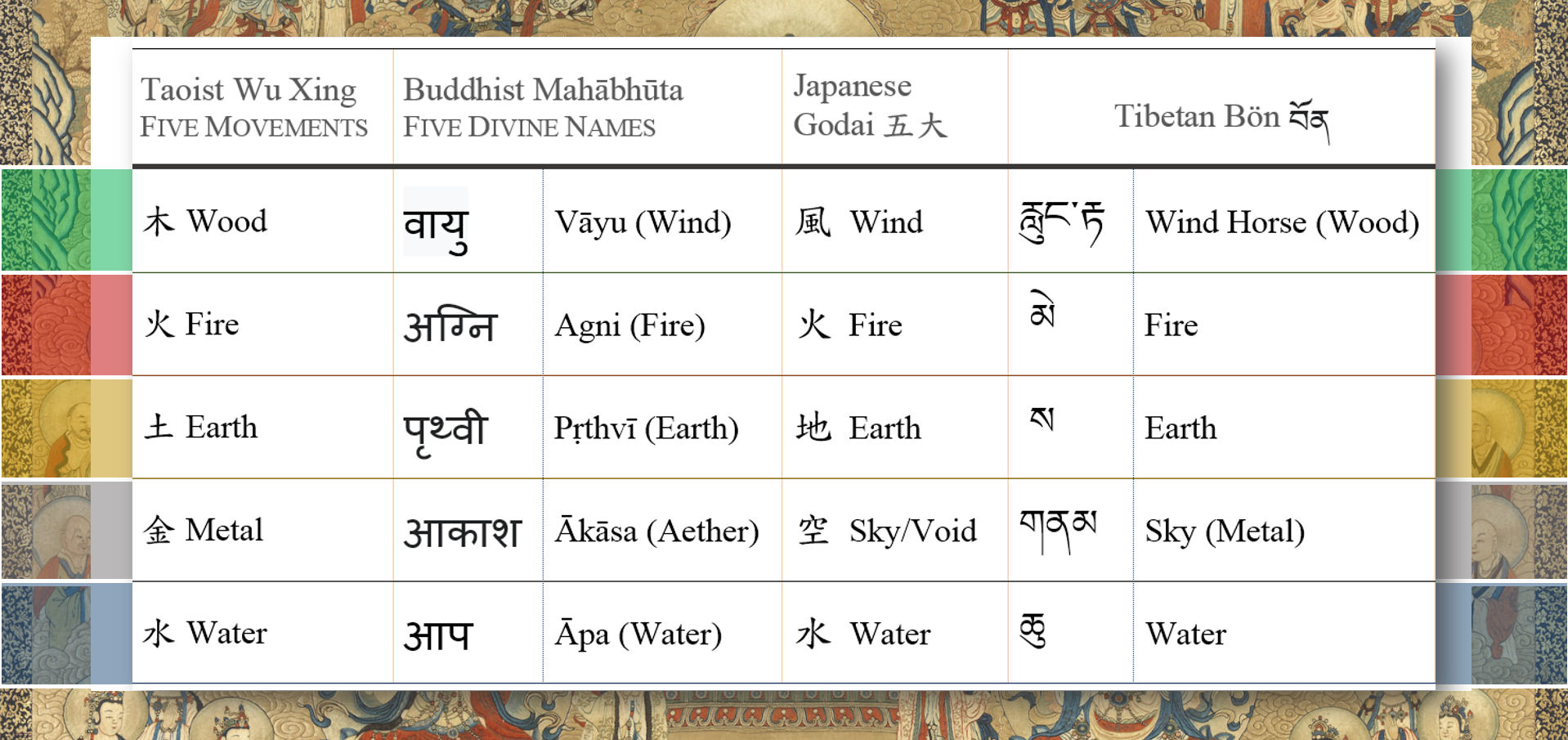
This is a crash course on the Wu Xing 五行, Five Dynamic Movements, though you’ll often see it called the Five Elements of East Asian metaphysics. These are five alchemical agents of change to describe how yin and yang qi create, destroy, and thus transform the physical world.
1/30/2023 Erratum Update: A few of the correspondence rows in the Metal and Earth columns got flip-flopped in the subsequent reference chart. If you downloaded the table before 1/30/2023, please delete it and re-download the rectified version. ❤
I say “East Asian” here because it’s not limited to any one culture, ethnic group, or nationality, not to mention the concept itself is much older than modern-day borders.
Since I made reference to some of these regions, below is an excerpted Appendix E from I Ching, The Oracle (North Atlantic Books, forthcoming 2023).
While the maps are not drawn to scale (I did them myself, by hand…) at least they help to give you a mental reference of where these kingdoms or states are located in geographical relation to one another.
Excerpt from Appendix E of I Ching, The Oracle (June, 2023):
Now that I think about it some more, “witchcraft” is probably not even the right term to be using. “Folk magic” might be the better descriptive? What do you think?
Don’t forget– if it helps, turn the closed captioning on! =)
When I say “open tradition,” I mean a culture-specific practice of a magical system and set of doctrinal beliefs integrated into that practice that anyone at all can work with for themselves, that it’s free and open to the public.
When I say “closed tradition,” I mean a culture-specific practice of a magical system and set of doctrinal beliefs integrated into that practice that can only be honorably accessed if certain conditions are met, such as initiation, heredity, clan or ethnic group membership, or a formally established master-student bond.
Esoteric Taoist practices, broadly speaking, are openly accessible to anyone and all, but not anyone and not everyone who seeks it will find alignment with this Path. It’s for anyone, but it’s not for everyone.
But when we’re having this conversation about esoteric Taoist traditions here in the West, then to be clear, the conversation is probably more about cultural appropriation, spiritual gatekeeping, and how to engage respectfully with living traditions.
Taoism is, by the nature of the philosophy, even occult philosophy, is syncretic. It absorbs indigenous shamanic traditions, other established religious traditions, and in terms of the values that are the compass for how to navigate the syncretism, it’s nature. It’s the study and understanding of qi in nature.
It’s about nature, but humans are part of nature, and humans have minds that formulate ideas that become aggregated into establishments, you can’t ignore the establishments. So in reality, a human – the practitioner – will study how the many establishments engage with the qi in nature and then work with what works, for them. Since that’s Taoist mysticism in a nutshell, it’s an open practice.
Lineaged traditions, on the other hand, are unequivocally closed. Some are initiatory. Some are hereditary. Some are a combination of both. The premise is a group of people have cultivated an elite access to potent qi in nature through a highly-specialized methodology, and they aren’t about to share that methodology with just anyone. So there are very limited ways to access that specific methodology. Some form of ritualized transmission must take place to receive access.
But what about non-lineaged individuals crafting, say, Fu talismans, performing Taoist rituals, be that ones they’ve made up themselves or followed step by step from a canonical grimoire, or working with Taoist ritual tools? To be fair, that’s where it gets a bit more complicated, and political.
You’re going to encounter folks who say no, unless you’re lineaged, you cannot. That or it’s more of a warning that if you’re just chaotically doing it on your own, it’s way too easy and too high a risk of going off the rails and getting yourself into spiritual hot water. There’s a kernel of truth there, in my opinion, which is why I believe strongly in being religious and cultivating a strong moral compass and code of ethics first before dabbling with the occult. If there isn’t going to be a teacher there to rap your hands with a stick when you’ve been bad, then you’ve got to be disciplined enough to self-monitor.
Whereas I’ve always made my personal opinion clear. It’s open access with an asterisk. It won’t be me (and I don’t believe it should be another human) who puts up walls or locks the gate to keep you out. It’s gonna be the gods. It’s The Craft itself. The Esoteric Tao lets in who it lets in.
As for cultural appropriation, I’ve always taken the view that, you’ll know it when you see it. It’s hard to come up with a one-definition-applies-to-all-case-analyses metric for determining what’s okay and what’s not okay. Not to mention each person’s appetite for something possibly appropriative is gonna vary. Plus, overly-worrying about whether you yourself are culturally appropriating is more demonstrative of caring too much about yourself than actually caring about the cultural tradition you’re working with. If truly your heart is with the culture, you’ll naturally focus on its people, its communities, with an organic passion to learn as much as you can. I don’t have to tell you to be reverent; you just will. And if somebody has to remind you to be reverent, then buddy, I think you’re already in the wrong.
My third book, I Ching, The Oracle: A Practical Guide to the Book of Changes, published by North Atlantic Books, is forthcoming mid-2023. It’s my translation and annotations of the Oracle with cultural and historical references that honor the shamanic origins of the I Ching.
What it really is, though, is a magical grimoire. I began with an aspiration to write a grimoire on Taoist mysticism and magical practices, and then decided to do so through the framework of the I Ching. This is going to be a practical hands-on primer on East Asian modalities of witchcraft and folk magic. A deep-dive learning experience into the history and mythological references found in the Book of Changes is the bonus.
Leading up to the release of I Ching, The Oracle will be this series of videos where I lay the foundation for working with this third book. If this is of interest to you, stay tuned! ❤
In my previous blog post recapping NWTS 2022, I talked about how much I enjoyed the “Which Witch is Which” lunch panel discussion. So that you don’t have to click between pages, here’s what I said about it:
The best part of all? Hands down, the Which Witch is Which lunch panel discussion. Each practitioner on the panel represented a different perspective on witch identity and witchcraft, from whether they identify with the moniker “witch” (some yes, some no), what is witchcraft anyway, and their takes on covens, solitary practice, closed vs. open traditions, altars, ancestor work, and more.
Thank you, Mat, for giving a shout-out to Taoist ceremonial magic! And wish the incredible Onareo, who was present in the audience with me, could have also been up there on the panel to represent brujeria.
In this Bell Chimes In video chat, I wanted to ruminate on my own responses to the questions “Do you identify as a witch?” and “What is witchcraft, to you?”
Answers to those two questions are not at all easy to arrive at.
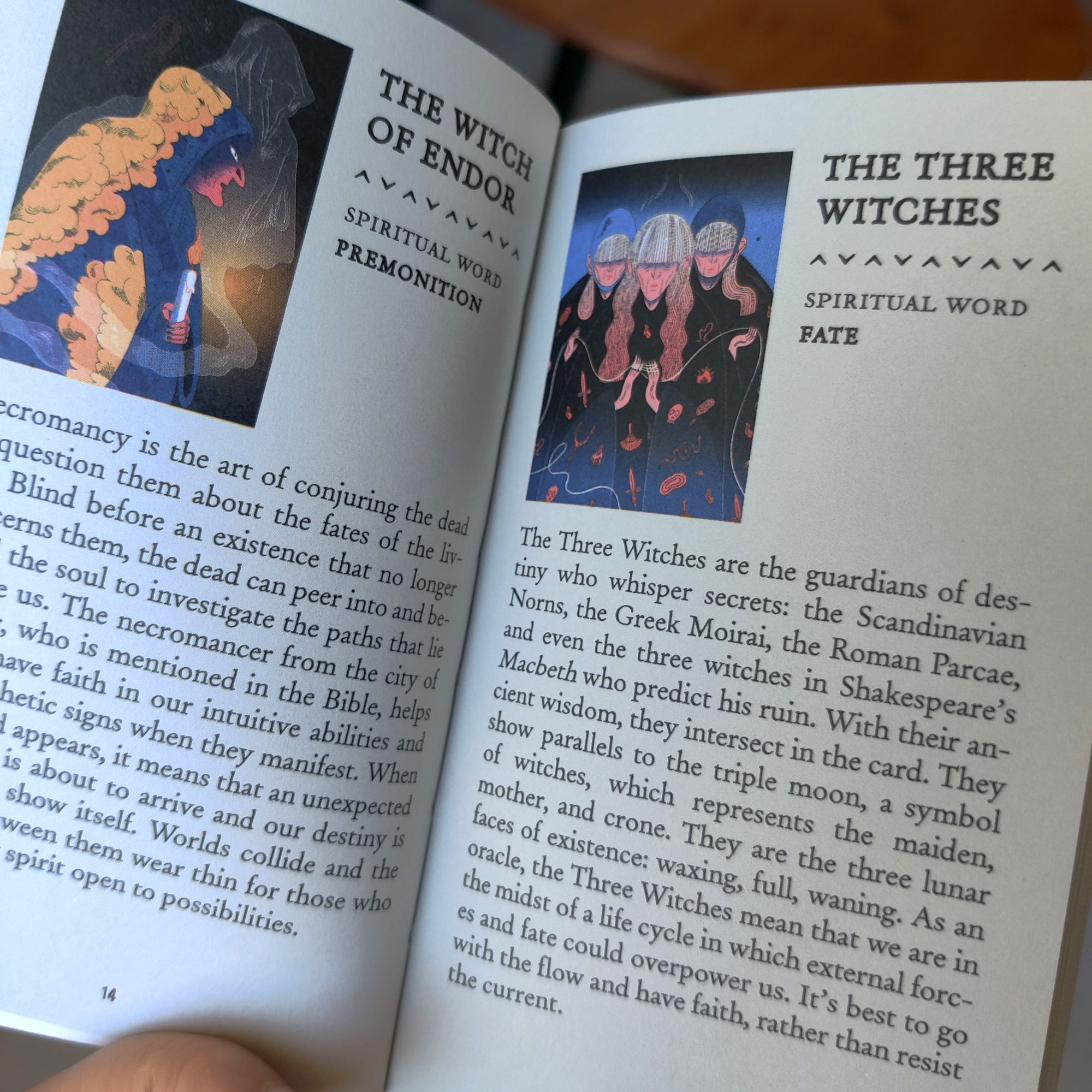
Oracle of Novice Witches is a 50-card deck featuring 24 witches and wizards from history and folklore, 13 tools of the craft, and 13 animal familiars. The deck was created by Francesca Matteoni and with art by Elisa Macellari.
The full-color guidebook accompanying the cards features a profile summary of every witch and wizard depicted. Entries for the tools of craft define each tool’s purpose and how it’s generally used. For the familiars, animal symbolism and correspondences are provided.
Sorting through the mess of files I have on my computer drives and found this. I think I shared these in a past Bell’s Newsletter. It’s excerpted from the textbook for the Western Witchcraft I: The Fundamentals course. References in this free handout to other chapters, etc. are because this is just an excerpt from that textbook.
72 Shem Angels, Tarot Correspondences & the Tetragram of the Zohar
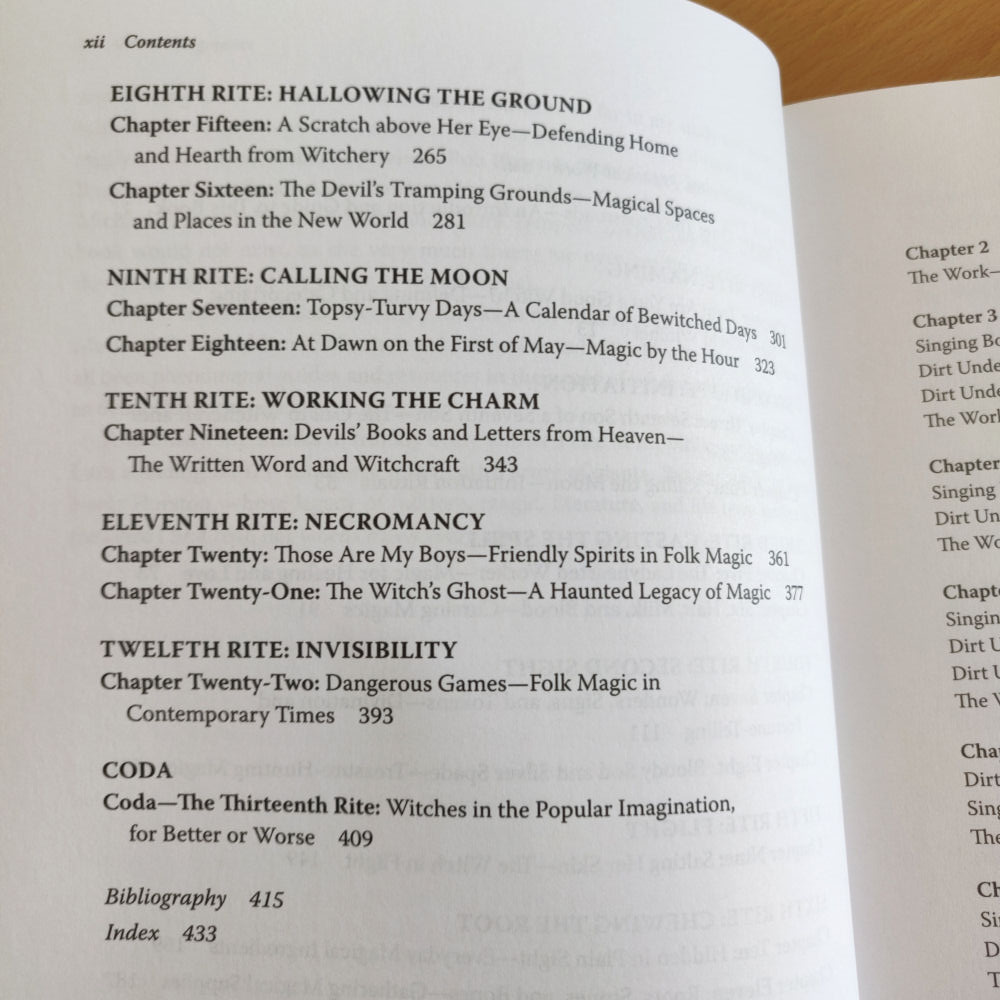
New World Witchery: A Trove of North American Folk Magic by Cory Thomas Hutcheson and published earlier this year by Llewellyn is a must-have for your personal occult library, and this book review will try to convince you of why.
The text is subdivided into Twelve Rites, from defining witchery and discussing initiation to coverage of common practices in North American traditional folk witchcraft, with exercises and practical work, all the way to commentary on witchcraft in pop culture.
That is one ambitious scope, and Hutcheson pulls it off– this is quite the hefty tome of a book!
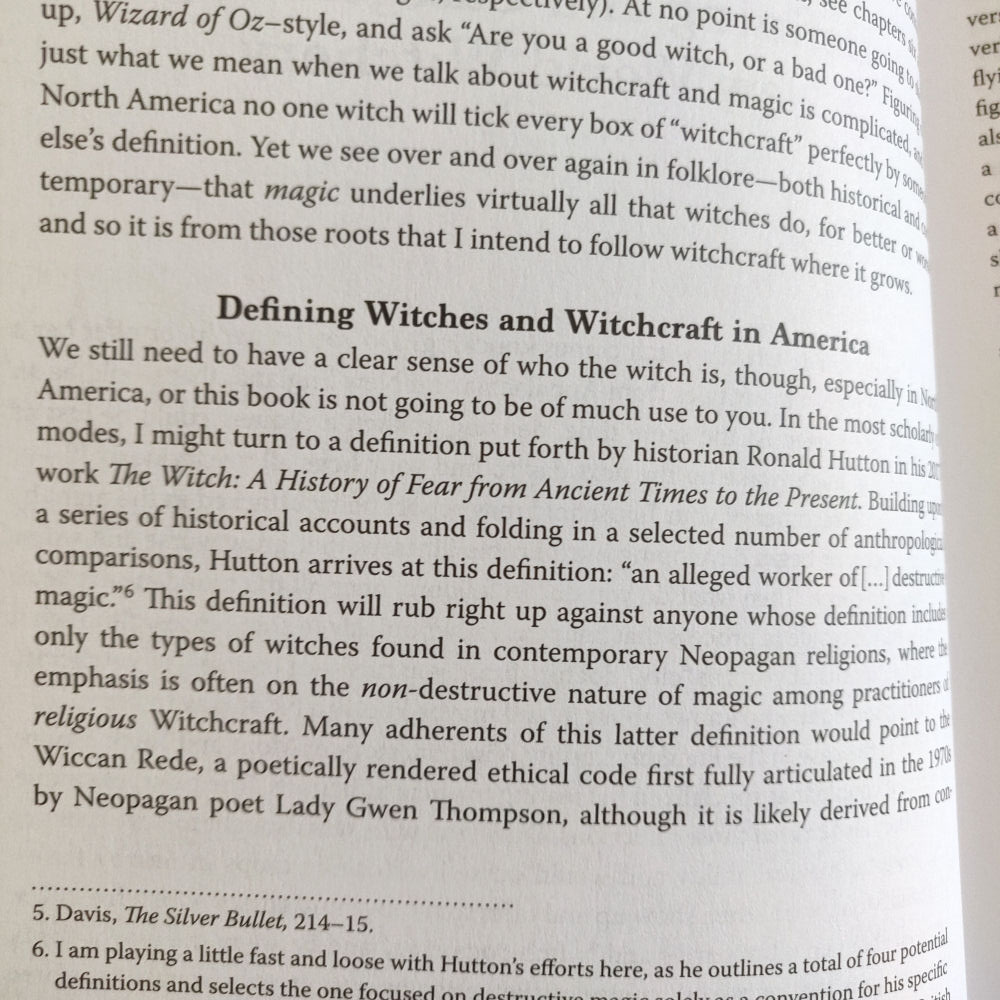
Let’s start with defining who is a witch. I appreciate Hutcheson’s acknowledgement: “Whatever image pops into your head when that word passes by in conversation–whether whispered reverently or barked in anger– that will be the definitive image for you.” That kind of has always been my own bone to pick with the term “witch.” What does it even mean? How is the label useful today? He continues, “Many magical practitioners reject the term ‘witch’ either because of its negative or its religious connotations.”
I received a question by letter, which I wanted to answer privately, but didn’t have an e-mail address or even mailing address. So here’s to hoping this post is seen by who it’s intended for. ❤
The question presented:
Dear Benebell,
I am a Taoist witch, but my religious family thinks I am a Baptist Christian and therefore against non-Baptist religious practices.
Last night my dad and I were watching a Taiwanese movie and an ancestor veneration scene came up. My dad began a conversation about Taoist traditions and said, “When I die, please don’t venerate me like a Catholic or Taoist would.”
I am a strong believer in ancestor veneration and plan to venerate both of my parents when they pass away.
I do not want to go against my father’s personal wishes as I love and respect him, but I also do not want his spirit to go un-venerated because I love him dearly.
What, in your opinion, is the best way to go about this?
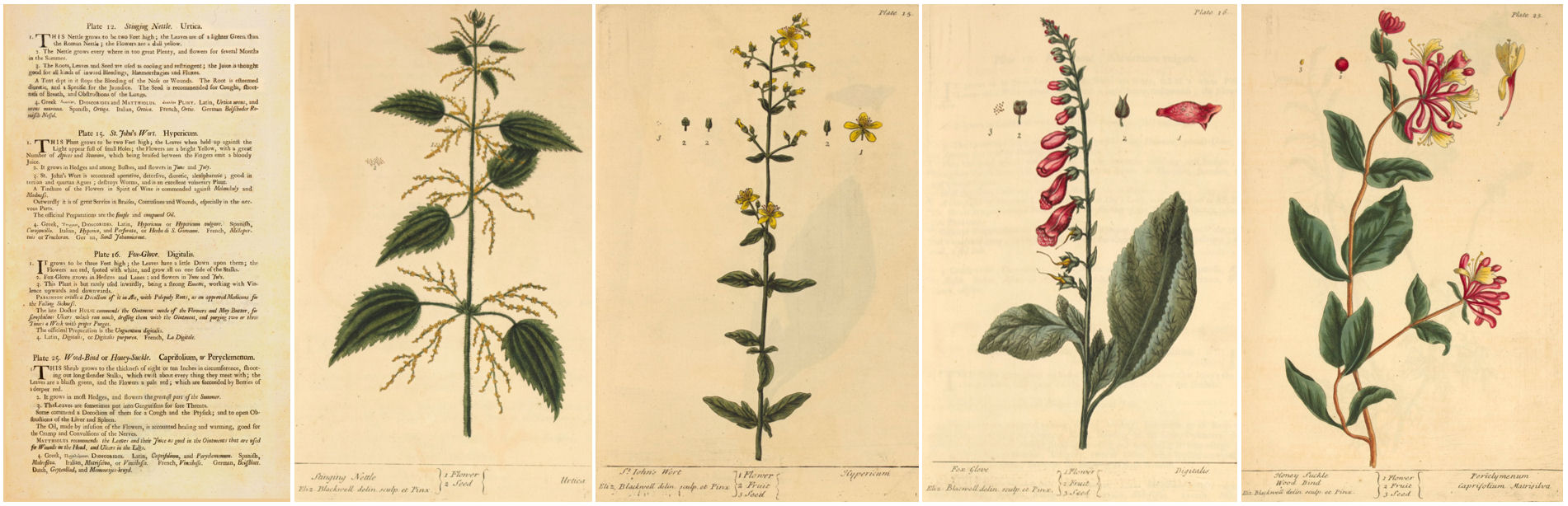
These hand-painted engravings of healing herbs and garden vegetables are a delight, and I’m sure at least one creative person seeing this will get ideas, download, and do something lovely with these illustrations, so here you go.
They’re from Elizabeth Blackwell’s A Curious Herbal (1737). Below you’ll find a zip file you can download of high-res images from the book. Or view it in the entirety, courtesy of The British Library, Catalogues & Collections.
Elizabeth Blackwell’s A Curious Herbal is notable both for its beautiful illustrations of medicinal plants and for the unusual circumstances of its creation.
[It] contains illustrations and descriptions of plants, their medicinal preparations, and the ailments for which they are used.
The first herbal was written by the Greek physician Dioscorides in the first century AD.
Elizabeth Blackwell was born in Aberdeen in about 1700, but moved to London after she married. She undertook this ambitious project to raise money to pay her husband’s debts and release him from debtors’ prison.
Blackwell’s Herbal was an unprecedented artistic, scientific and commercial enterprise for a woman of her time.
She drew, engraved and coloured the illustrations herself, mostly using plant specimens from the Chelsea Physic Garden.
It was highly praised by leading physicians and apothecaries (makers and sellers of medicines), and made enough money to secure her husband’s freedom, although she later had to sell the copyright as well.
This finely-bound copy of A Curious Herbal is from the collection of King George III, held in the British Library.







 benebell wen