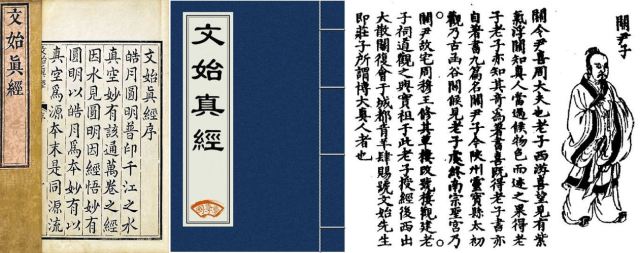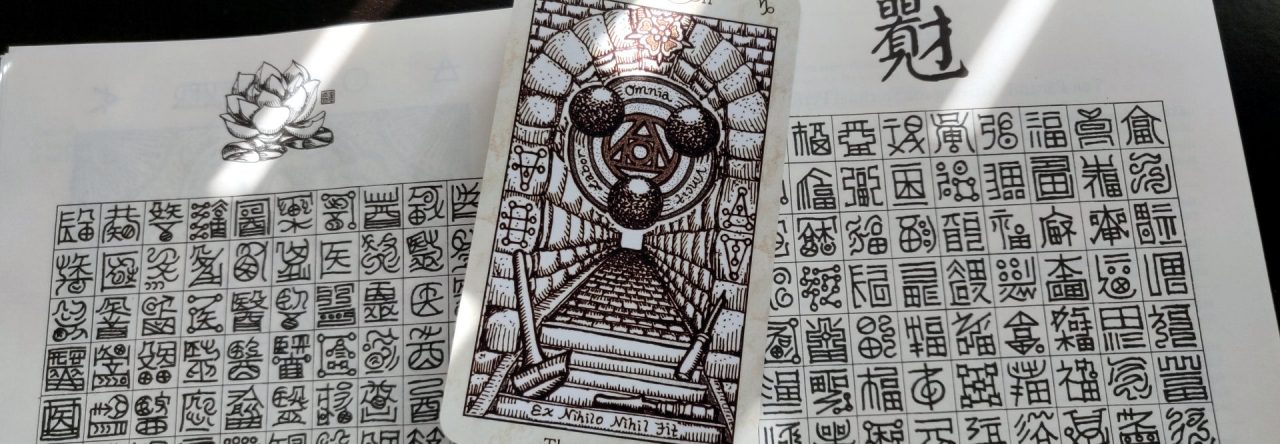
also known as the Wen Shi Zhen Jing: Sutra of Magical Spells and Aphorisms for Attaining Primordial Truth
The more recognized naming convention for the sutra is the Guan Yinzi (闕尹子) or Wen Shi Zhen Jing (文始真經) attributed to the gatekeeper who Laozi encountered.
The Guan Yinzi (or Wen Shi Zhen Jing)
According to lore, the gatekeeper at the Western Pass, named Yinxi 尹喜, later given the name Wenshi (文始), transcribed the teachings of Laozi and that text became the Tao Te Ching (道德經). Alternate tellings have Laozi writing the teachings down into two books himself, which the gatekeeper then receives.
I’m compounding several different topics into one video and probably should have done separate videos for each topic, but for me, they’re all related to each other, and so I guess from that personal perspective, it makes sense for me to be presenting them in one bundle.
Upfront, let’s clarify: I’m not teaching, I’m sharing. I wanted to learn more, went out and attempted to learn more, and this video and companion blog post is just me passing on to you what I’ve learned.
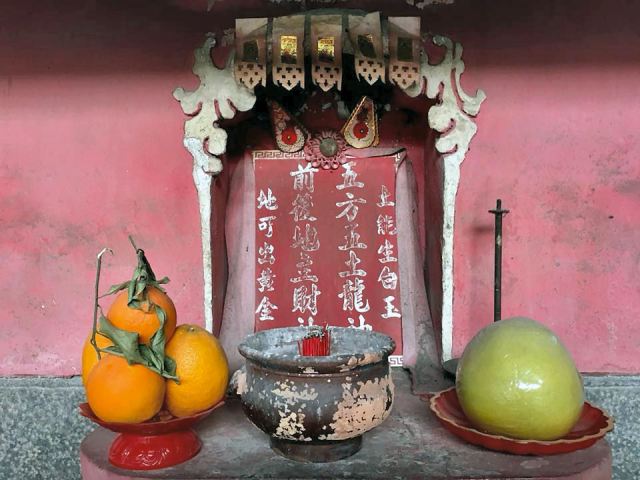
Dragon Gods of the Earth 土地龍神
Image Source: 香港古蹟行腳.
Dragon god(s) (土地龍神, tǔ dì lóong shén ) are personifications of the land, where mountains and rivers meet, and thus from a feng shui perspective, reveal dragon veins (龍脈, lóong mài).
Rituals (such as 化胎, Huàtāi; in Hakka, it’s pronounced Fā Tói) can be performed to harness the qi or powerful essence from these dragon veins to bless a home and bless lands that the Hakka now occupy to ensure good harvests, prosperity, safety, protection, and good health.
What’s distinct about Hakka dragon spirits veneration is its association with the earth rather than water. Traditionally in Chinese lore, dragon spirits/gods 龍神 and the Dragon King 龍王 are associated with the temperaments of the seas.
This blog post is an addendum and continuation after what I discuss in the video linked above.
The Akashic Records is very much a Western conception, right? The Theosophists of the 19th century formulated a mash-up of Eastern and Western esoteric traditions and from that mash-up came its most popular legacy– the Akashic Records.
Most of us get that the “Akashic” part was inspired by the akasha, a fifth element or essence found in various Asian traditions, associated with the sky, space, aether, and in Buddhism, even a state of mind. But what about the “Records” part?
But first, I’d like to start with the discussion on akasha and godhead.
Guan Luo Yin 觀落陰 is a practice of wu shamanism 巫術 found primarily in the South Pacific. While methodologies will differ, one approach is as an astral journey to the underworld to see the spirits of those who have passed on; another is as a method of “remote viewing.”
Some traditions conceptualize the descent as beginning from the entrance to a cave at the base of a mountain (associated with the Kunlun Mountain). Others conceptualize it as a palace with many floors descending (as opposed to ascending the way floors of a building are constructed in the physical earthly world).
This video serves as an introduction to the practice.
For a ballpark sense of how many videos are now unlisted, as of this posting only 129 of 405 total videos are publicly visible in the general Videos tab and thus only those 129 videos are searchable on the YouTube platform.
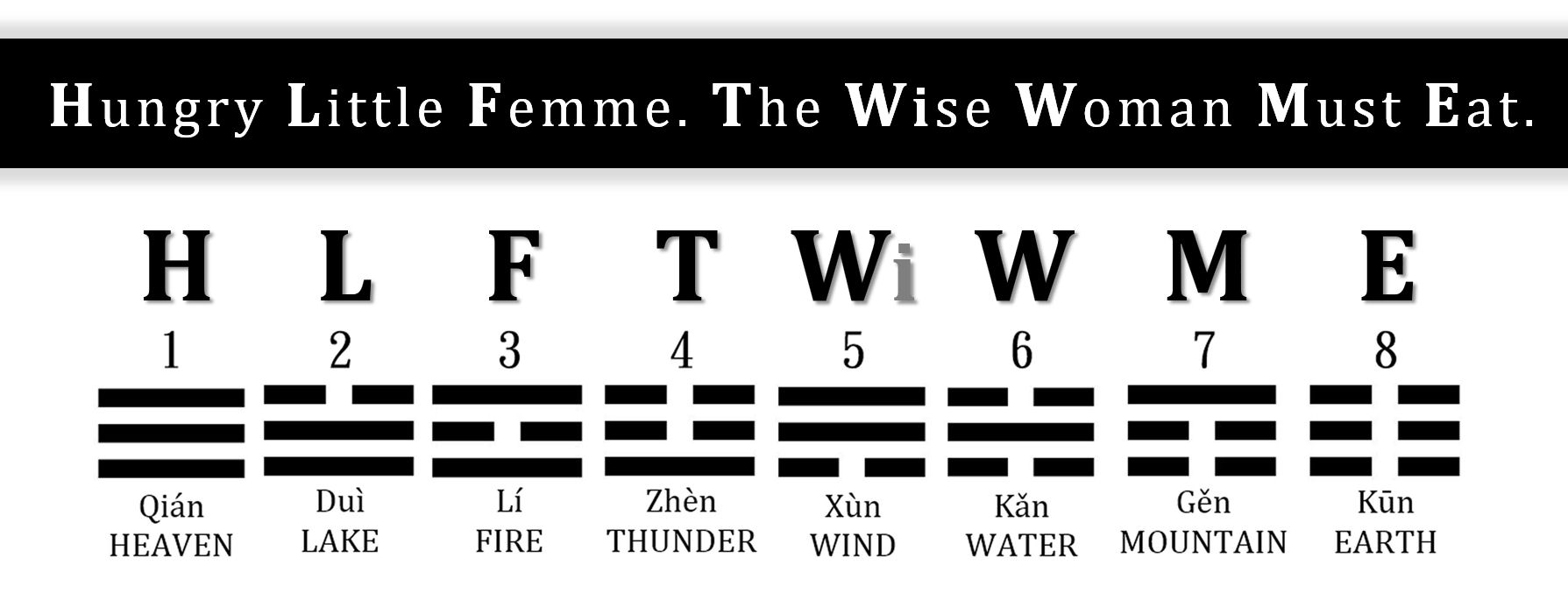
This video lecture course is an overview of the eight trigrams (八卦, Bā Guà). It is part of a companion course series leading up to the release of my third book, I Ching, The Oracle.
My goofy mnemonic for remembering the order of the trigrams
Timestamps provided in the video description box (you’ll have to watch on the YouTube platform). Apologies, the editing and audio are a bit choppy. The timing of the slides and voiceover narration are off in a few places.
Let’s make it unambiguously clear that nothing herein is science or evidence-based medicine.
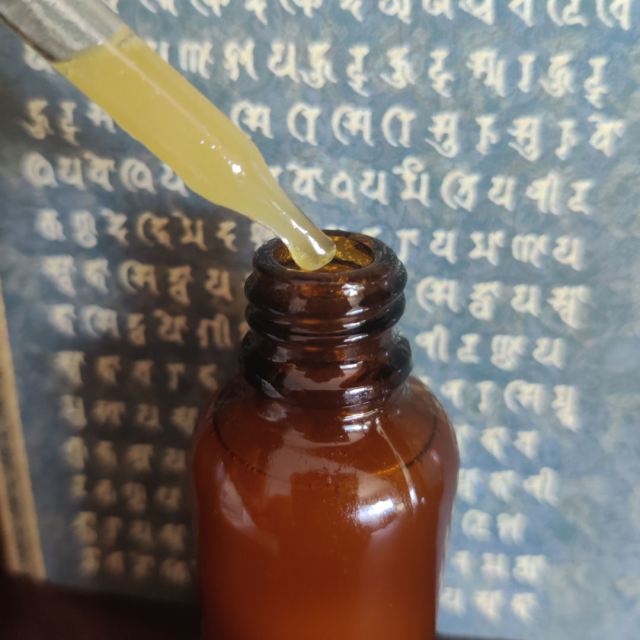
For the last three years, J and I have been routinely applying this multi-purpose antiviral treatment (in addition to getting vaccinated, boosting up the wazoo, and making prudent judgment calls with regard to masking). I sincerely believe this treatment oil has kept us Covid-free throughout the pandemic.
Oh, and not to mention, it’s great for my scalp, controlling dandruff, and promoting hair growth. Just a totally random incidental benefit. =)
You can convert the basic recipe into a mouth wash. Historically a myrrh mouth rinse was used after tooth extractions because the myrrh oil kills bacteria and sanitizes.
The base recipe also makes for a fantastic cologne. I get so many compliments about the scent when I wear this as a cologne.
Continuing from what I said in the video chat, if this is something you seriously want to do, then start by getting that three-ring binder. Though I think organizing it into eleven sections is sufficient, I noticed you can’t buy packs of just eleven binder dividers. They come in sets of 12, so that’s fine. Having a final “Miscellany” tab is always a good idea anyway.
The above video commentary is a short introduction to esoteric Buddhism, covering the distinctions between sutra-based Buddhism and tantric Buddhism. As noted at the end of the video, this write-up will give instructions to the “homework assignments,” practica[I don’t know why I’m such a nerd and called these “homework assignments”] intended to give you a firsthand experience with Buddhist folk magic.
Timestamp 11:39 Addendum: Oops, I cut out too much of the raw video chat and omitted the part where I talked about where I was going with this. =) So if you were left confused, it’s not you, it’s me. =) Continuing from what I am saying at this timestamp, if tantric esoteric Buddhist cultivation is characterized as a “shortcut” to the destination but one that’s far more dangerous and riskier terrain, then endeavoring to take this route all but requires a highly skilled guide to help you navigate the tougher terrain. It’s not a route you’d want to go at on your own or, worse yet, with a guide falsely self-proclaimed as a lama or spiritual leader who will lead you astray, or who isn’t equipped to help you deal with mara. Thus, the framing of the question shouldn’t be “is it open or closed,” but rather as “what, really, would be the most assured path for you?” Can you fully trust someone else’s claim of endowing you with the empowerment you’re seeking?
Taipei Katok Ten Directions Buddhist Association
As a beginner-level introduction, these practices are intended to be general enough for all, so you’ll be encouraged to piecemeal neutral elements often found in esoteric Buddhism and graft it onto your preexisting practice, and most importantly of all, your local environment.
Taipei Katok Ten Directions Buddhist Association
Just like esoteric Buddhism takes on the indigenous practices and magical systems from the land it touches, be that Bön folk magic syncretized with Buddhism in Tibet, Taoist mysticism with Buddhism in China, Shinto in Japan, or tantric Buddhism melded with Tai and Hmong shamanic practices in Southeast Asia, you’ll be working with features of esoteric Buddhism syncretized with what’s native to you.