What if the story of your life is told through a record of your acts of kindness, your benevolence, compassion, and personal sacrifices?
I’ve created a blank notebook that can help you to tell just that kind of story.
In fact, I’ve created three different versions of the notebook. You can either print out the notebook yourself and set it into a binder or you can have it print and bound by a third party publisher.
Keep scrolling down for the free downloads and printing instructions.
The above video explains the premise for this notebook and the #1111acts. For those who have a copy of my book, The Tao of Craft, check out page 152, in the chapter “The Tools of Craft,” section titled, “Accumulating Good Deeds.” I’ve even pulled that section out as an excerpt, so if you don’t have the book, just check out the PDF below.
Unlike most tags, this one is something you’ll work through for life. The idea is to log 1,111 acts within your lifetime.
Why the hashtag #1111acts? It’s my little effort to help transform the tone of discourse we see online these days. You’ll take part, too, won’t you? Any time you undertake neutralizing a negative energy in this world, even in the world of social media, especially in the world of social media, by contributing a positive energy, include the hashtag #1111acts.
* Extra if shipping internationally. All U.S. shipping is free, included in order.
Here’s what I’ve been working on for the last, oh, I don’t know… two weeks if not more. And still working on. Will continue to work on until the full moon in Scorpio!
Okay. Here’s the lowdown.
You’ll be getting:
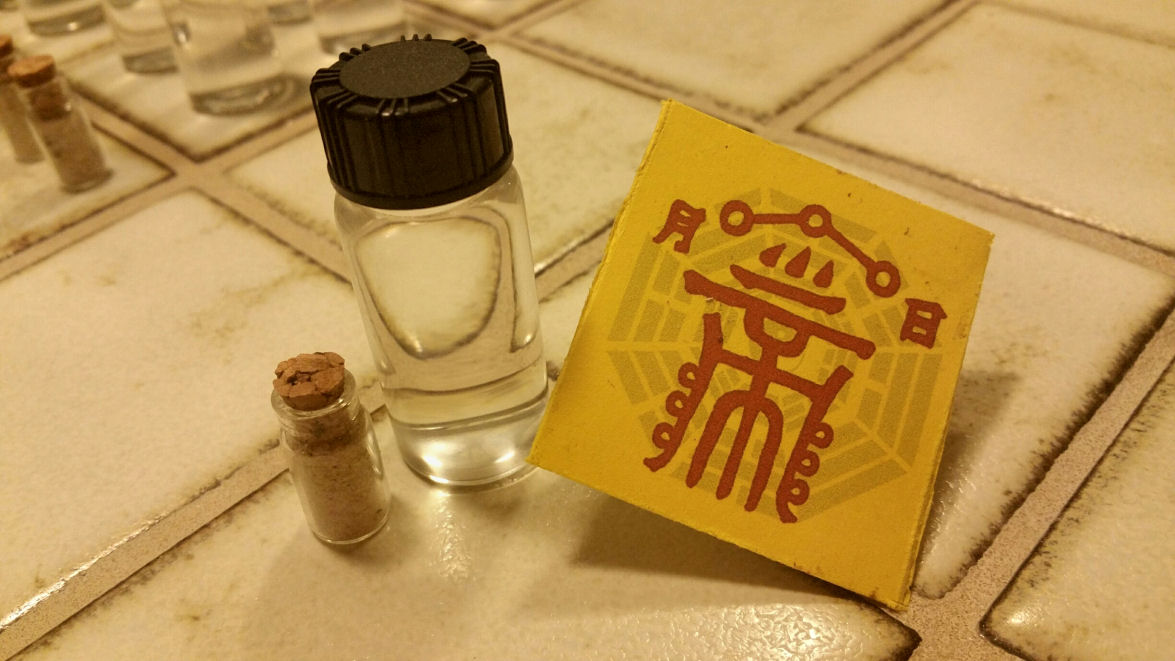
10 ml glass bottle of consecrated water (I’ll explain)
1 ml cork top glass bottle of consecrated powder (I’ll explain)
Customized Fu sigil talisman charged during the full moon in Scorpio (I’ll explain)
Only 3650* (fifty sets) available. Once all 50 orders have been reserved, it’s gone.
* To those who somehow managed to get on my private VIP email list and thus received a heads up about this already, I had said I only have 36. Yeah, I can’t count. I wrote that up at the office and my memory thought 36. I was mistaking it for something else. I have 50 of these. Just so you know, I had sent you photos, so you can actually look at the photos I sent you and count the number of vials lined up on my workspace. There were 50 pictured in the photos when I told you 36. Sorry for the sham.
* Oops, sorry, before I could even manage to get this blog post up, there are only 5 (five) left. So this blog post is only about filling up those 5 remaining orders. That way I can start the preparations this weekend for each of the 50 individuals.
Okay, now let’s explain each of the three items you’re getting.
I’m going to walk you through an easy beginner’s methodology for I Ching and tarot divination. We’ll be doing a simple one card tarot draw plus casting I Ching hexagrams by the coin toss method. So in addition to the instructions here for the I Ching divination, I’m presuming you have a tarot deck and know how to operate one. If not, no worries. This doesn’t need to be I Ching and tarot. It can just be I Ching! 🙂
I use traditional coins for my personal practice, but we won’t be needing those today. Any three coins of the same value in your change purse will do. Go find three pennies, or three nickels, or three quarters–whatever pleases you. And give them a good wash.
Here I’m using disinfectant soap and water. Dry them thoroughly. You can use a towel. Anything. Just be practical.
The first hour will be a talk on Taoist cosmology, the history of Fu talismans, the 13 principles of craft as derived from the Yellow Emperor’s Classics of the Esoteric Talisman, intersections of science and magic, and how practitioners use divination to know and then craft to change.
The second hour will be a hands-on workshop where you will use tarot divination to help you design and craft a Fu sigil, working with Chinese oracle bone script. Fu sigil paper consecrated on 11/11, cut and prepared at 11:11 am, and then consecrated at 11:11 pm will be provided for your use. You can take some home with you to craft the sigil. It is recommended that the final sigil be crafted on the day after the workshop, on the full moon.
I’ll bring my Jiao Bei divination moon blocks and set them out on the table top for anyone who seeks to use them for a personal divination. Free for your use at any time during the event. Please handle respectfully.
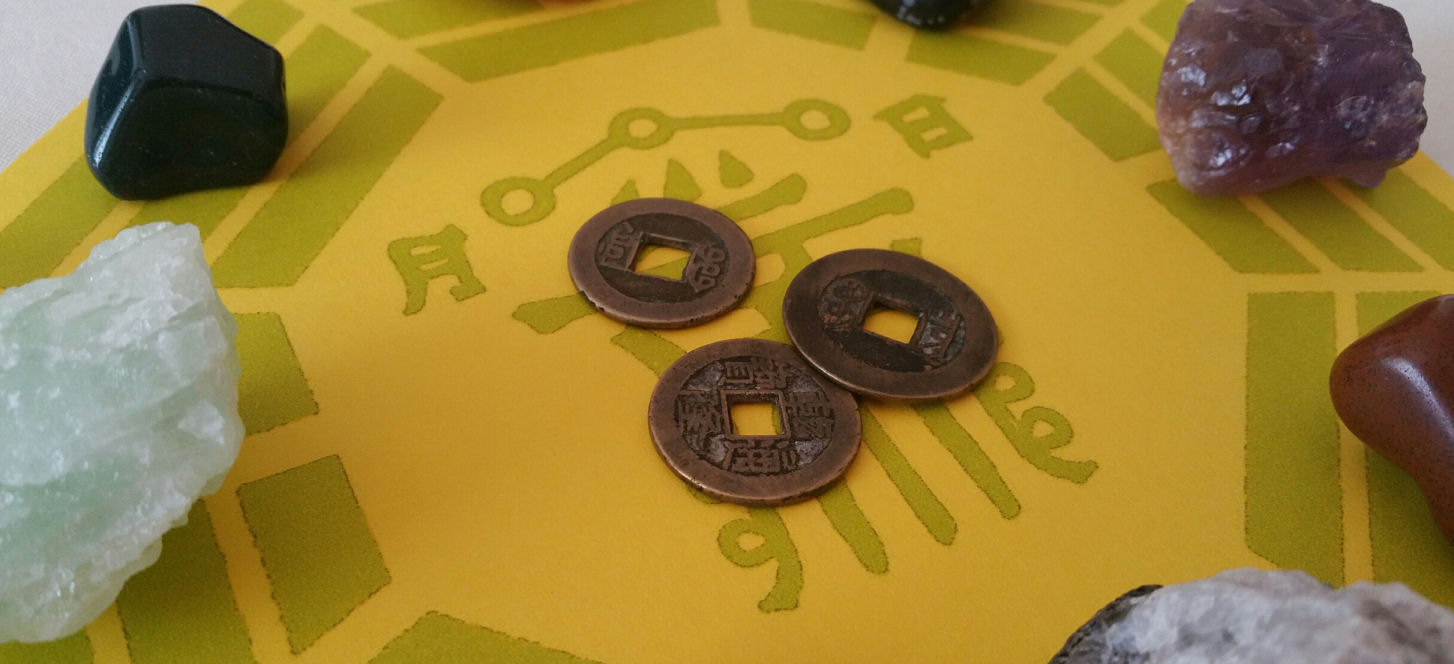
All attendees will also go home with a consecrated and blessed pocket gemstone, with the hopes that it helps you along in all your magical endeavors.
For more detailed metaphysical correspondences of the gemstones per my perspective, check out this previously uploaded PDF for a glossary of gemstone correspondences. Find the entry for the stone you picked (or the stone that picked you…) in the PDF if the one-two word correspondence on the yellow card wasn’t clear.
Here’s your chance to win a free copy of The Tao of Craft. One winner will be selected on September 16, 2016, weeks before the actual release date. The publisher will then contact you directly for mailing details.
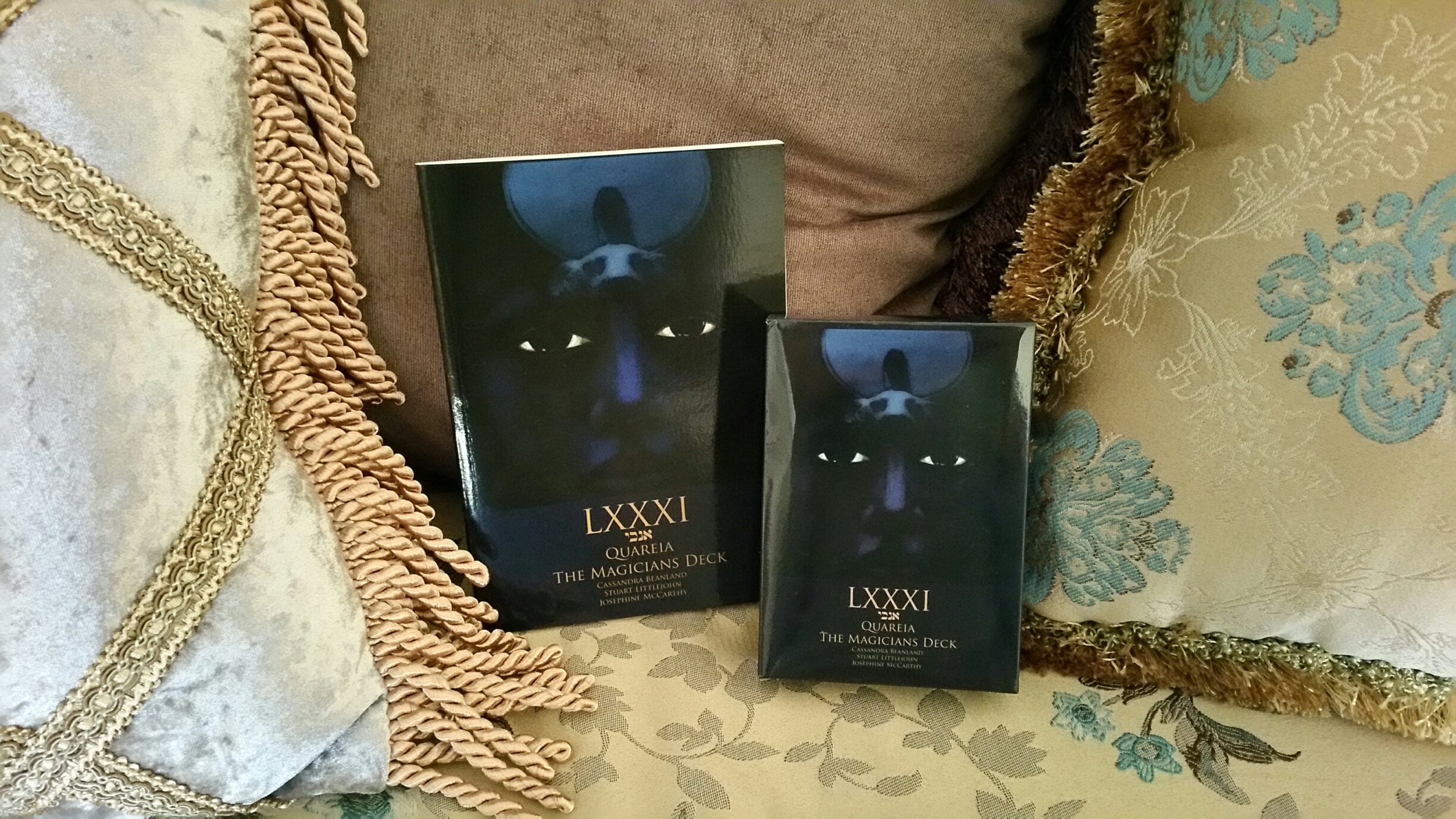
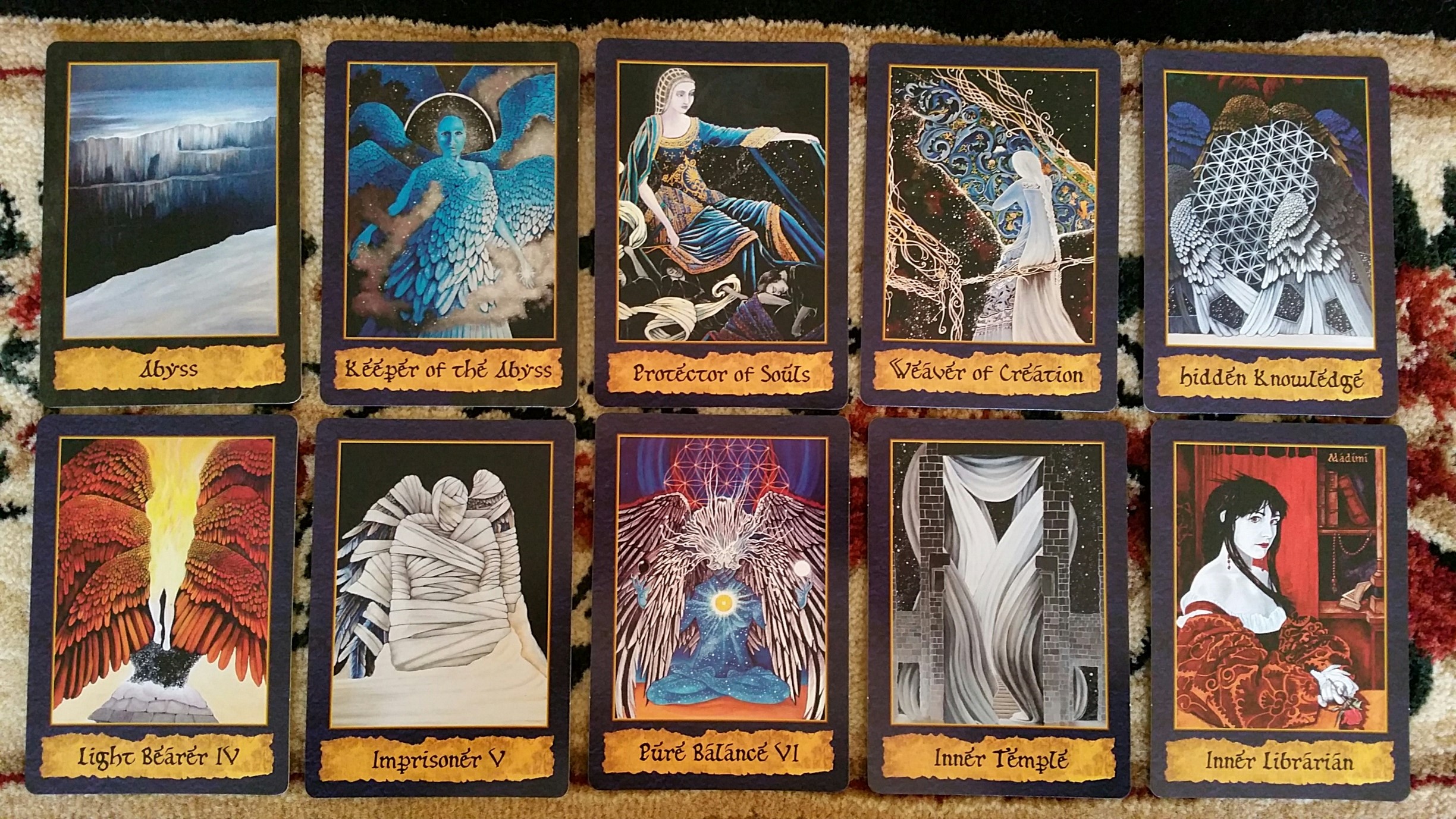
The LXXXI is an 81-card esoteric deck by Josephine McCarthy, Stuart Littlejohn, and Cassandra Beanland. It’s not a tarot deck, though you’ll see cards captioned “Chariot,” “Wheel of Fate,” Hierophant,” “Luna” (Moon), “Sol” (Sun), and “Death.” You’ll see “Fellowship” with imagery that may remind you of the RWS Three of Cups.
On a technicality, some might categorize LXXXI as an oracle deck, but I’ll just stick to what it’s been named: The Magician’s Deck. The LXXXI Quareia: The Magician’s Deck “draws upon the mythic, mystical and magical powers that underpin the magical systems that tarot eventually developed out of.” See here. “It is based upon real inner realms, real inner contacts, beings and forces that the practitioner of magic is very likely to involve themselves with. Because of this approach, the deck works as a contacted deck, i.e. used magically the images can act as gateways to inner realms, inner beings and magical patterns.”
The premise behind the LXXXI reminds me of the inner and outer gods concept in Taoism where, in short, certain “gods” reside within us (and they have names, along with descriptions of what they do) and certain “gods” are romping out and about, around us (both on earth among us and in other various supernatural realms). Granted that was the Cliff-Notes-Taoist-Deities-for-Dummies version but you get what I mean.
According to esoteric Taoist principles, a magician or metaphysical practitioner can invoke or summon these “gods” (I put the term in quotes because if you’re looking to translate/interpret the term, 帝, it can be “gods,” “emperors,” “divine beings,” “Divinities,” take your pick) and work with those energies to influence both the natural and supernatural worlds.
The deck is subdivided into four realms. Red bordered cards indicate contacts (the term that the companion guidebook for the deck describes these metaphysical energies as) from the Divine Realm. There are four contacts of the Divine Realm in this deck, pictured above. Star Father I correlates with Divine Intention. Creator of Time II is the energetic movement flowing from the Star Father toward manifestation. Holder of Light III expresses the eventual return of all souls to Divine Source. Archon and Aion are archangelic and symbolize a divine binary. In readings, the card serves as a warning that the practitioner has come to a threshold that cannot and should not be crossed. The message is to turn back.
In both the above photograph and the one below, note how some of the card titles end with roman numerals. I’ll address that later in this review.
Contacts from the Inner Realm are noted by blue borders, case in point Madimi, described here as the “Inner Librarian.” Madimi was one of the spirits that was purportedly in contact with 16th century occultists John Dee and Edward Kelley.
In the printing of the deck copy I received, the borders look more like a deep purple than a blue, but blue or purple, I’m not terribly concerned.
According to the deck description, the art here is done in oils, acrylics, and watercolors. They appear to have been polished and fine-tuned digitally afterward. The art and imagery is very much imbued with Western esotericism and is definitely going to resonate with any practitioner of such traditions.
So far I’ve been trying to remain fair, objective, and factual, but I’m going to break for a moment here and just gush. Omigod I love this deck! The deck fills a void in the tarot/oracle/cartomancy world that I haven’t seen any other deck on the market during the time I’ve been alive and interested in cartomancy even come close to filling. I am not a Quareia practitioner or even a practitioner of Western magic. I don’t even identify as a magician. And yet there is something for me here in this deck.
A revised and improved Version 2.0 of this free divination deck is now available. Go hereor click on the banner below.
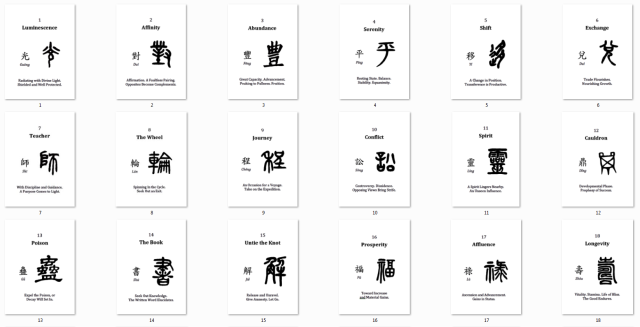
Chinese Oracle Bone Divination Deck, Version 2.0, Free Deck + Book Set
2015 September 24: Original Posting
While writing my forthcoming second book, tentatively titled The Tao of Craft, I had to do some intense study of oracle bone script. That’s where the knowledge for the card content comes from. All citations to the amazing references I used are in the book, but one person I want to thank right away is Richard Sears, who runs ChineseEtymology.org. Now, as for the inspiration, that’s a little harder for me to convey.
On a morning I was to drive my parents to the airport, I thought I heard a voice speaking to me in my room, while I was sleeping in bed, and that woke me up. Then after that, no matter how hard I tried to go back to sleep, I couldn’t, so I relented, booted up my computer, and in that same sitting, a complete first draft of this deck was done. I talk more about the conception of this deck in the accompanying 55-page Guidebook. The deck itself is made up of 33 cards.
Screenshots of the first 18 cards
These cards are not for sale, but I am offering a free license for you to use them. Keep reading for now. (Or skim and scroll down. Whatevs.)
I recount this as calmly as possible. That is said more for my frame of mind than yours.
I had stumbled upon a fortune teller in Chinatown sitting at a makeshift tabletop. The chairs were miniature and when sitting, your knees would be up next to your ears. What had intrigued me to stop and listen in was her method of fortune telling: the tarot. You don’t see tarot divination that often among the Chinese, so of course I had to observe. A young woman about 20-ish years of age and her friend sat across from the fortuneteller. From what I overheard, the question was about love.
The fortune teller used what appeared to be a Marseille-based deck. I couldn’t figure out a discrete way to take photographs, so let’s assume my memory is good and go with the below reenactment, using the CBD Tarot de Marseille.
I don’t have educational degrees that would qualify me to write about any of this, so please understand that I am writing my observations within that non-expert context. Lately I’ve been fascinated with pagan and neopagan belief systems, mostly for how strikingly similar paganism is to Chinese Taoist-based folk religion.
Here’s how I understand paganism in context: Back in the day across Europe, Abrahamic religions rose to dominance, became institutionalized, and began setting up centralized bodies of authority that often started in the cities and spread its influence from there. At the fringes of the countryside, however, pagan faiths endured among the minority. These pagan faiths were polytheistic, though pantheist, strongly nature-based, and because they believed that everything was connected, it was thought that certain herbs, incantations of words, ritualistic conduct, and representations of elements could be harnessed to manifest intentions–in other words, magic exists.
Replace a few specifics from the previous paragraph and you could apply it to the relationship between Confucianism (and to a great extent Buddhism) and Chinese folk religions. These folk religions were looked upon in the same way pagan faiths were looked upon by the Christians. Those who practice pagan/neo-pagan religions (like Wicca, Druidism, Heathenry, or some form of pagan reconstructionism) tend to keep their faiths concealed or strictly private. That’s less of an issue among those who practice Chinese folk religions, and so you’ll see altars set up in Chinese businesses that still pay homage to the faiths of their [often agricultural] ancestors. However, like what pagans experience, those who still practice Chinese folk religions are considered fringe.
from the CBD Tarot de Marseille by Yoav Ben-Dov (cbdtarot.com)
I grew up trained to fear the number 4. In any scenario where I had to be assigned a number, I would sit there praying that the number 4 would not appear in my assignment and dreading that it would. If my seat number in the exam room had a 4 in it, I’d take it as an omen of impending failure.
I’m not the only one. There’s a name for it: tetraphobia. If they’ve got a name for it, it means I’m not alone. The Taiwanese and South Korean navies avoid assigning the number 4 to their ships. In Hong Kong, Taiwan, Japan, and many other parts of East Asia, you’ll hardly ever see a 4th floor. It’s the 1st floor, 2nd, 3rd, and then 5th. For a race stereotyped to be good at math you’d think they’d know how to count. Hospitals don’t have a 4th floor for sure, and no room number in those hospitals will have a 4 in it.
To the Chinese, 4 means death. 4 means bad luck. 4 means misfortune. 4 means you’re going to suck at life. 4 means you are not a Chosen One. Chosen Ones never get number 4. They get, well, 1. Or 8. Chinese people love the number 8 the way tarot readers love the Ace of Cups or The World card. As for The World card, by most counts it is the 22nd card in the Majors and the theosophic reduction of 22, 2 + 2, is 4 and so take that tetraphobic Chinese people!
I guess back in the day in Chinese grammar schools, the concept of homonyms got glossed over. Everybody there missed the lesson on how a homonym is when two words sound the same but have different meanings. Different. So even though pronouncing the number 4 in most East Asian languages and dialects sounds the same way one might pronounce the word for death, the two words should still retain their different meanings.
Not so to the Chinese. Just because the number 4 sounds like the word for death, suddenly 4 means death. There’s some serious issues with logical reasoning there, which is hilarious to me, because in the Western tradition, 4 means logic, rationality. More on that later.
When I first started study of the tarot, especially when reading with a Marseille deck, numerological associations for the number 4 tripped me up. The numerological association for 4 seemed all too clear: you were doomed. 4 in batons? You’re doomed to fail at work. 4 of cups? You’re doomed to fail in love. You get the pattern. Growing up in the Chinese culture meant I hyperventilated just a little when the number 4 appeared in my life.
Tarot helped me overcome that fear of the number 4. Don’t laugh. I’m serious.
The Emperor might not be all sunshine and rainbows, but it is still a strong card with an empowering message. In western numerology, 4 symbolizes stability, like the four legs of a table or chair, the four corners of the universe, the four elements, the telegrammaton YHVH. 4 is the number of rationalism. Hey, I like rationalism– 44 means great power and physical vigor. 444 is said to be an omen of the Divine’s presence.
When four Fours appear in a tarot spread, there will be peace and order. The Four of Wands in the Rider Waite Smith deck is all about prosperity. The Four of Cups: introspection. Introspection is hardly death and doom. Four of Swords: repose, recuperation; not your preferred state of being but there is a positive message latent in the card–the loved ones awaiting your return depicted in the stained glass window, the secret weapon underneath you– whereas the number 4 according to the Chinese is straight up bad, no nuances.
Those of Life Path 4 are indispensable to a society. They’re our builders, our planners, our architects, the designers of all social constructs. People of Life Path 4 make things happen. Donald Trump, Oprah Winfrey, and Bill Gates are all 4s. Leonardo da Vinci, Mark Twain, J. P. Morgan, Paul McCartney? All 4s with 4s littered throughout their numerology charts.
Even more intriguing is how 4 is so not a big deal even in traditional Chinese metaphysics. Take the I Ching hexagrams. Hexagram 4 suggests naiveté, not death. Hexagram 14 is abundance, validation, all good stuff, like the Four of Wands. Hexagram 24 hints at progress. Hexagram 34 is a powerful, positive omen. So okay, Hexagram 44 is getting a bit darker. Entropy ain’t great news, but still. Hexagram 54 is back to positive again. I’m using the terms positive and negative very loosely here, by the way, as neither tarot nor the I Ching can be characterized with absolutes. And Hexagram 64 is like the Judgement card, give or take huge liberties with the interpretation.
The Four Pillars of Destiny (四柱命理學), which is said to date back to the Song Dynasty, is founded on the idea that there are four components to mapping out a person’s destiny chart. That destiny chart, based on month, day, year, and time (the four pillars) of birth, is supposed to be a playbook of your life. Four for life, people, not four for death!
Understanding quells fears. It is now my dedicated mission to alleviate tetraphobia among the Chinese. Or– okay– at the very least, the Chinese in my arm’s length social network…












 benebell wen