Tarot and I Ching Correspondences (Reference)

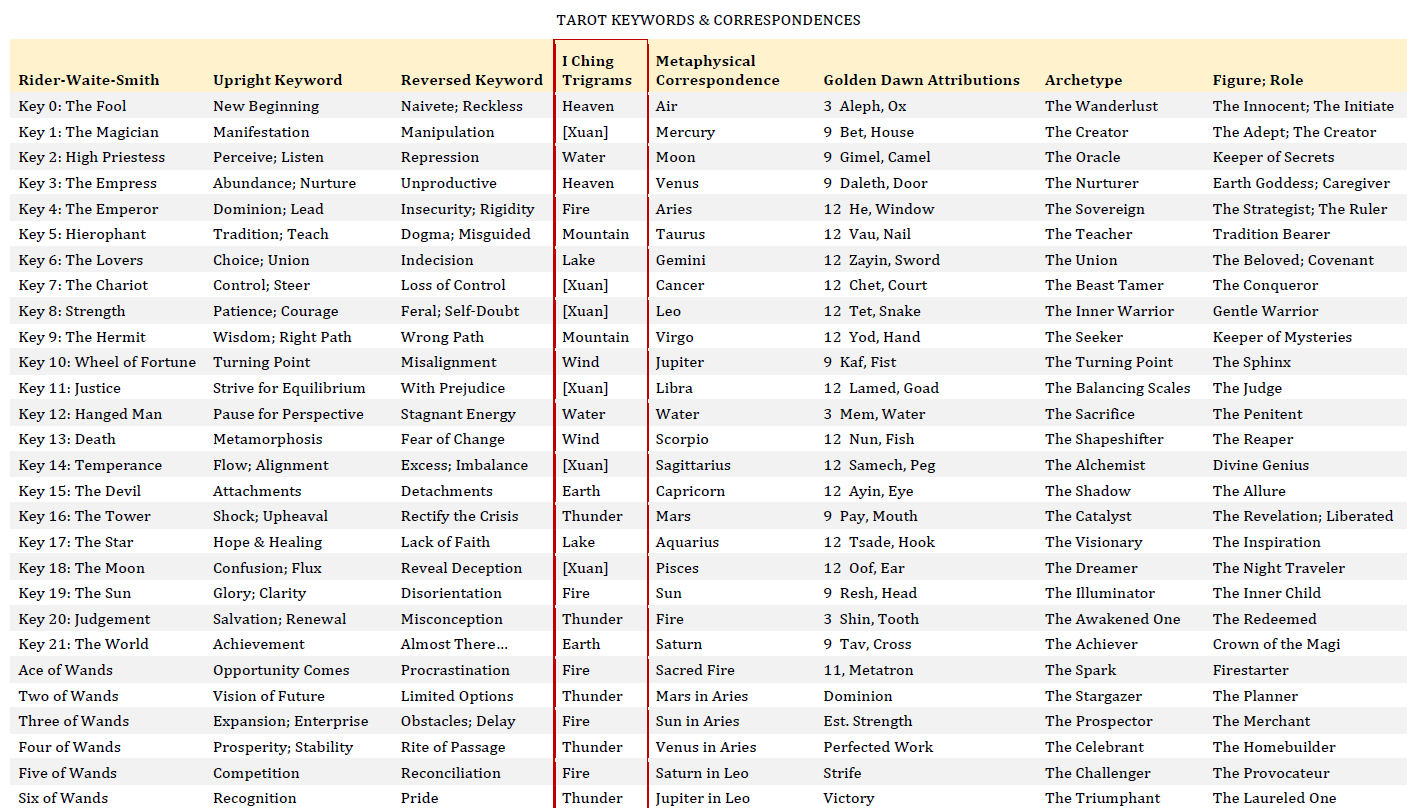
I’m an I Ching aficionado and also a tarot aficionado, wrote chonky books on both subjects, so naturally I’ve thought long and hard about how the two systems reconcile. This page is a download of a tarot and I Ching correspondence table for your easy go-to referencing.

PDF

DOCX

Continue reading “Tarot and I Ching Correspondences (Reference)”

Create Your Own Metaphysician’s Day Planner: Downloadable Templates

A few weeks ago I announced that we were retiring the annual Metaphysician’s Day Planner offering, after nine consecutive years of making them, each one custom-made to order with your birth chart and that year’s solar return chart. Plus the companion Metaphysician’s Guide that comes with the year ahead’s astrological forecasts, auspicious dates, inauspicious dates, and the dates to notable astrological or astronomical events.

Although we won’t be selling and making them anymore, we also didn’t want to leave you in a lurch, especially since we acknowledge that many of you have come to rely on it year after year. First, thank you so, so very much for your support over so many years. That’s amazing! Second, thank you for your understanding, patience, and sympathies that it’s just no longer feasible for us to be doing this, as our process is entirely manual and “old school” in this new world of everything getting generated instantly by digital automation.

I changed my mind and I am offering a “MDP Lite” version for 2026, which you can learn more about HERE. The layout design for many of the classic sections have been updated, and I will be updating some of the reference content as well.

You can still download the templates for the past day planner design and layout, however.

Continue reading “Create Your Own Metaphysician’s Day Planner: Downloadable Templates”

A Taoist Secret to Cultivating Personal Power

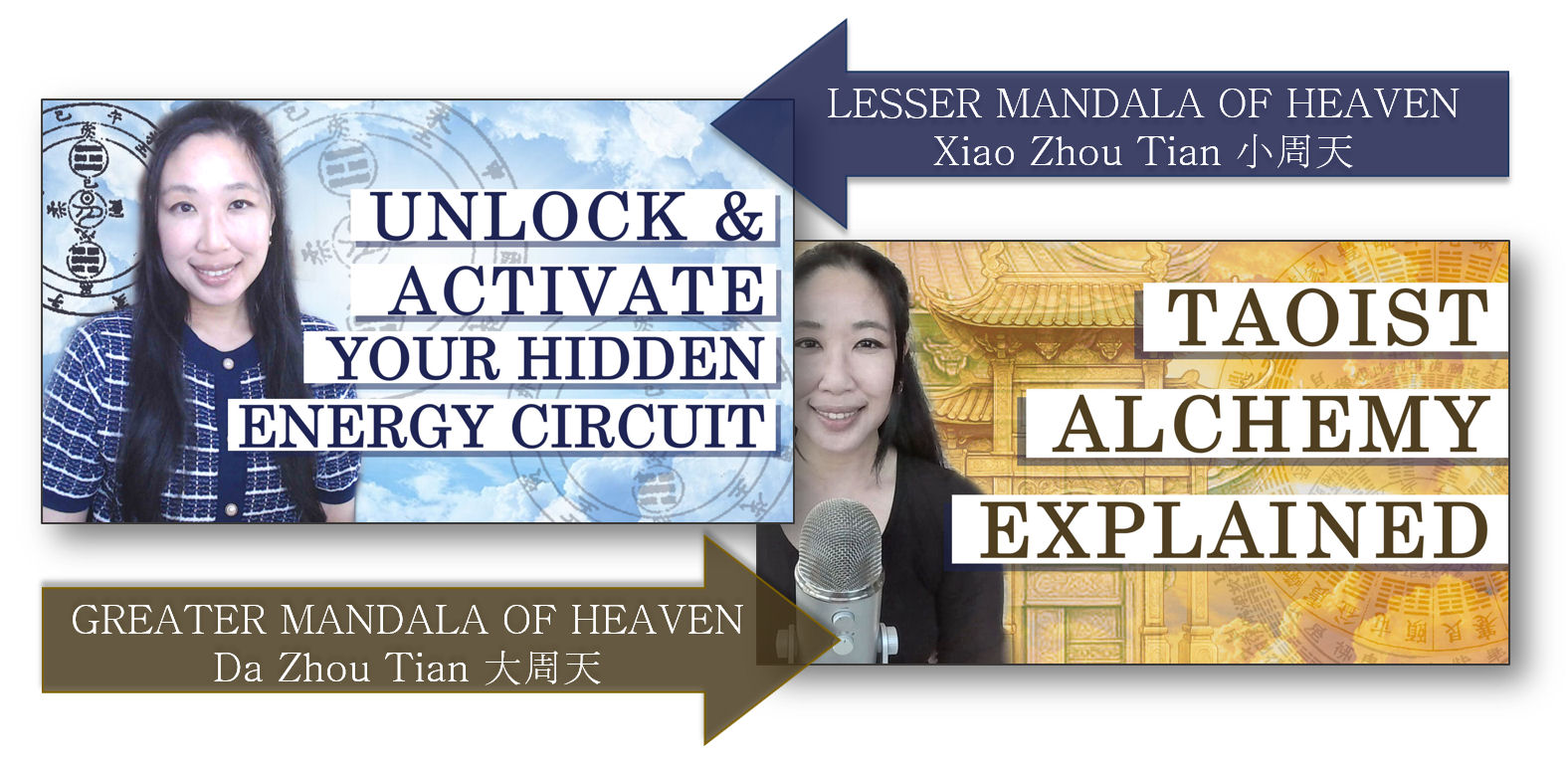
  1. Lesser Mandala of Heaven: A Taoist Secret to Cultivating Personal Power
  2. Greater Mandala of Heaven: Advanced Introduction to Taoist Alchemy

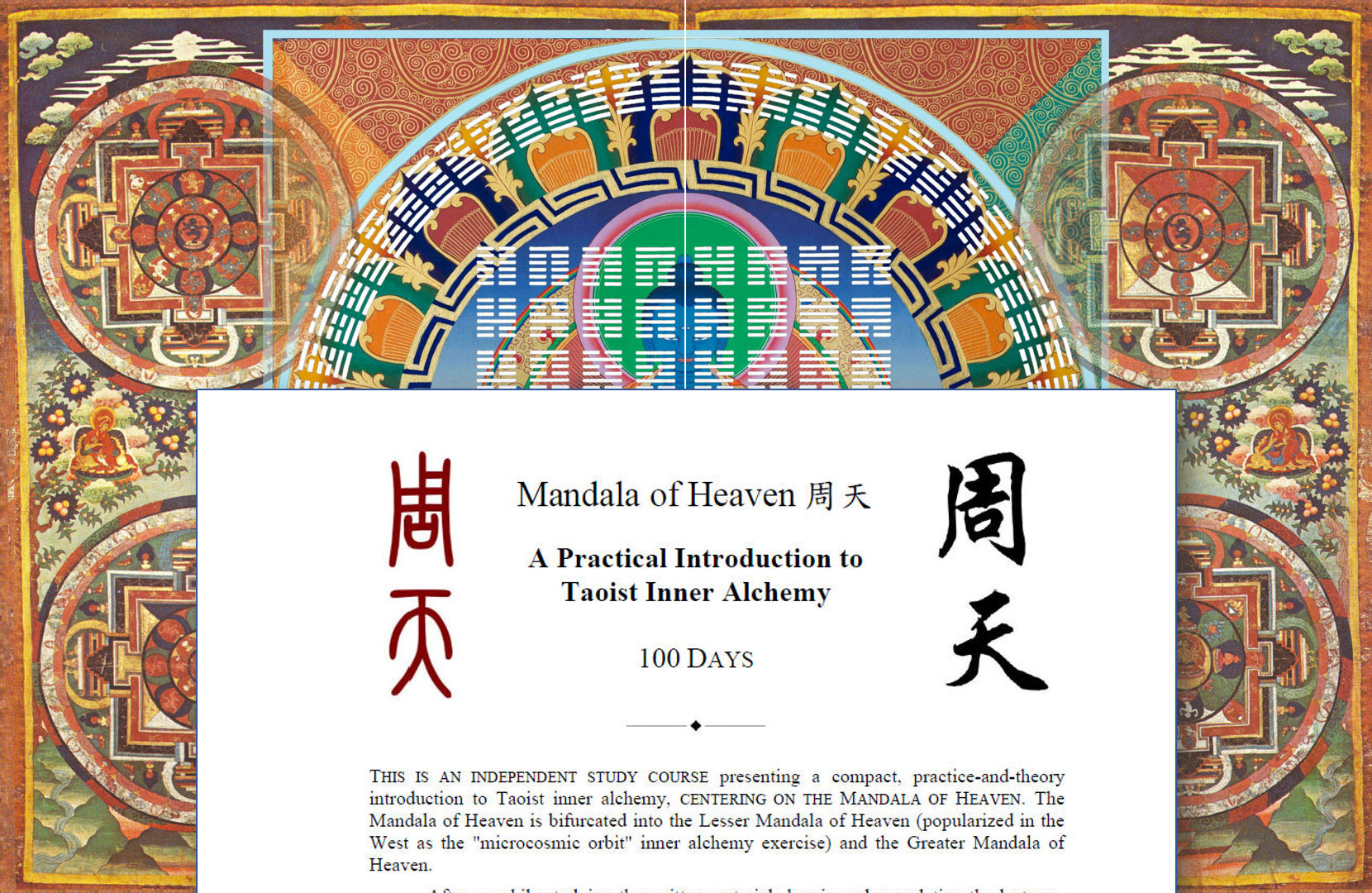
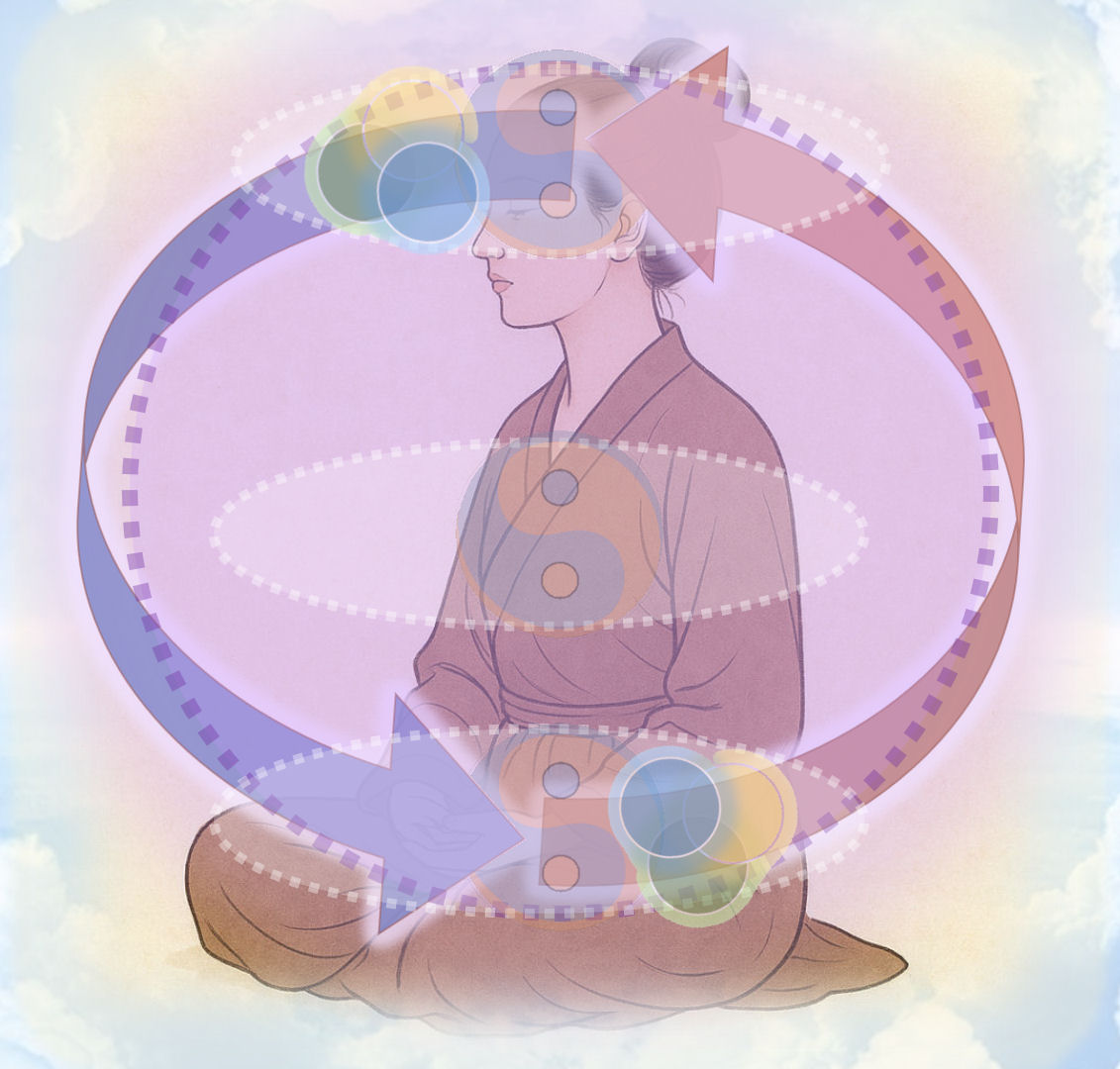
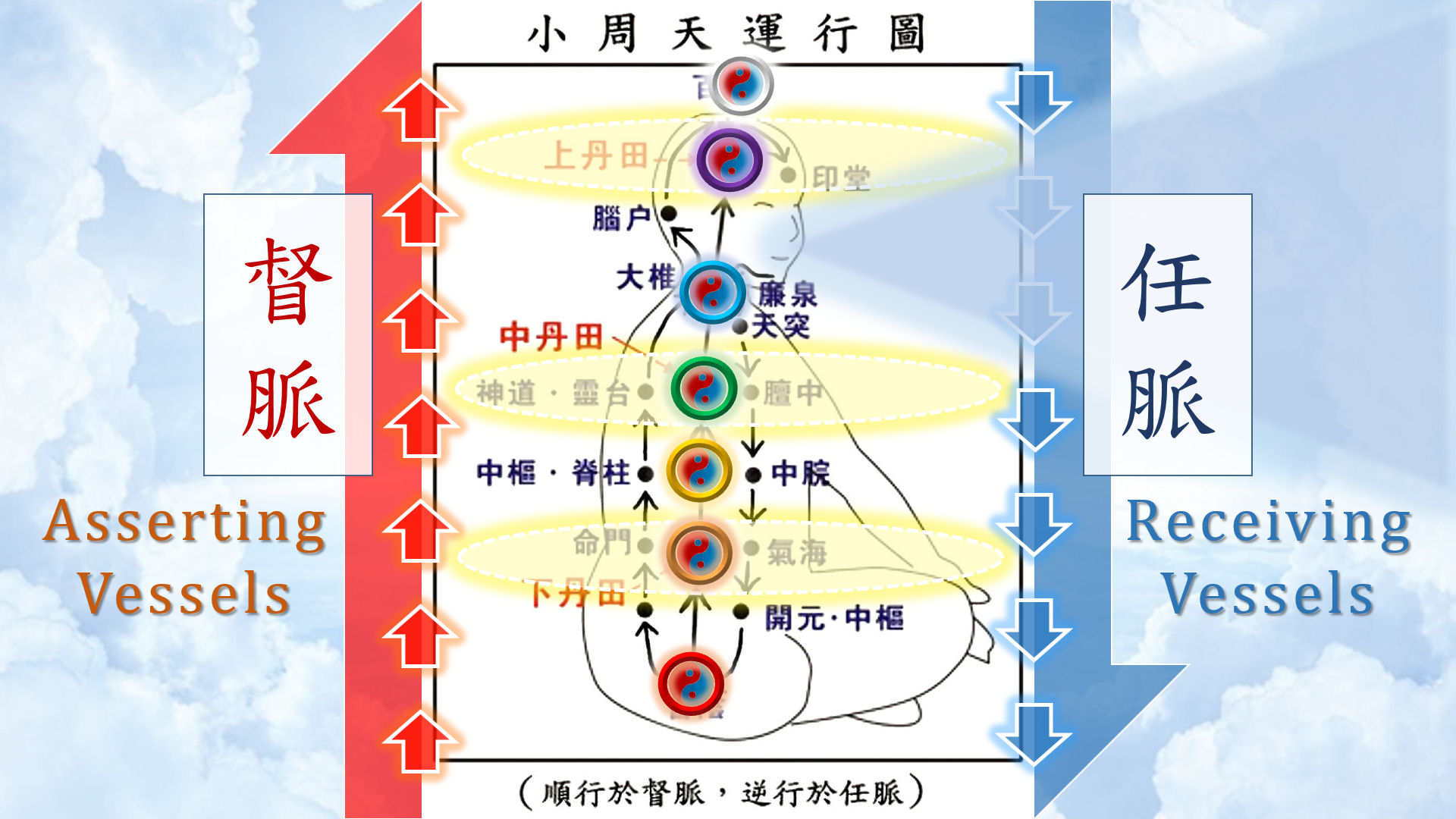
This video introduces a Taoist secret breathwork practice known as the Lesser Mandala of Heaven, or Xiao Zhou Tian 小周天. Rooted in classic Taoist inner alchemy (內丹, neidan), it teaches you to unlock a hidden energy circuit that runs through your body, up the spinal Du 督 meridian and down the frontal Ren 任 meridian, forming a continuous loop of vitality.

By circulating breath and intention along this hidden energy path, you harmonize the body’s three dantian 丹田, or energy centers, with the three realms and cycles of the universe. Taoist masters believe this alignment refines your essence, restores internal balance, and elevates your personal power.

This orbit is set up to attune with the cyclical convection current of nature: heat rises and expands, as it rises, it then cools, contracts, becomes denser, and so the denser, cooler flow sinks down, contracting.

The video is timestamped, and you’ll find a step-by-step guided practice on how to direct breath up and down this internal orbit, transforming your body into a living mandala and tuning it to the rhythmic cycles of nature.

This practice is more typically transmitted from teacher to disciple, but here, let’s see if we can offer a more direct and more easily accessible method.

Whether your goal is improved health, increasing your energy reservoir so you can get more done in a day, or to unlock your mystical potential, this is a cultivation technique worth your while to learn.

Continue reading “A Taoist Secret to Cultivating Personal Power”

Overview of Western Art Movements: Art History Timeline (Handout Download)

Back in 2021 after completing SKT the Third, I shared a scan of my personal art study notes here, “Download My Art Study Journal.”

I converted the handwritten notes from pages 25 – 33, and integrating notes from other pages in that notebook into the following cleaned-up and expanded handout:

Download Handout

Art History Timeline

PDF

DOCX

The PDF file will be easier to work with. However, for those who want to cut and paste or edit the contents in the handout to create something more custom-tailored to your own needs and purposes, feel free to do so from the DOCX file.

Continue reading “Overview of Western Art Movements: Art History Timeline (Handout Download)”

Critiquing Your Own Art (Handbook)

I’ve written about my self-taught art journey during the pandemic here. I found a bunch of MFA art program syllabuses online and aggregated them together into my own curriculum, then scoured the interwebs for online courses, video lectures, tutorials, books, blogs, anything and everything I could get my hands on to learn composition and the core principles of art making.
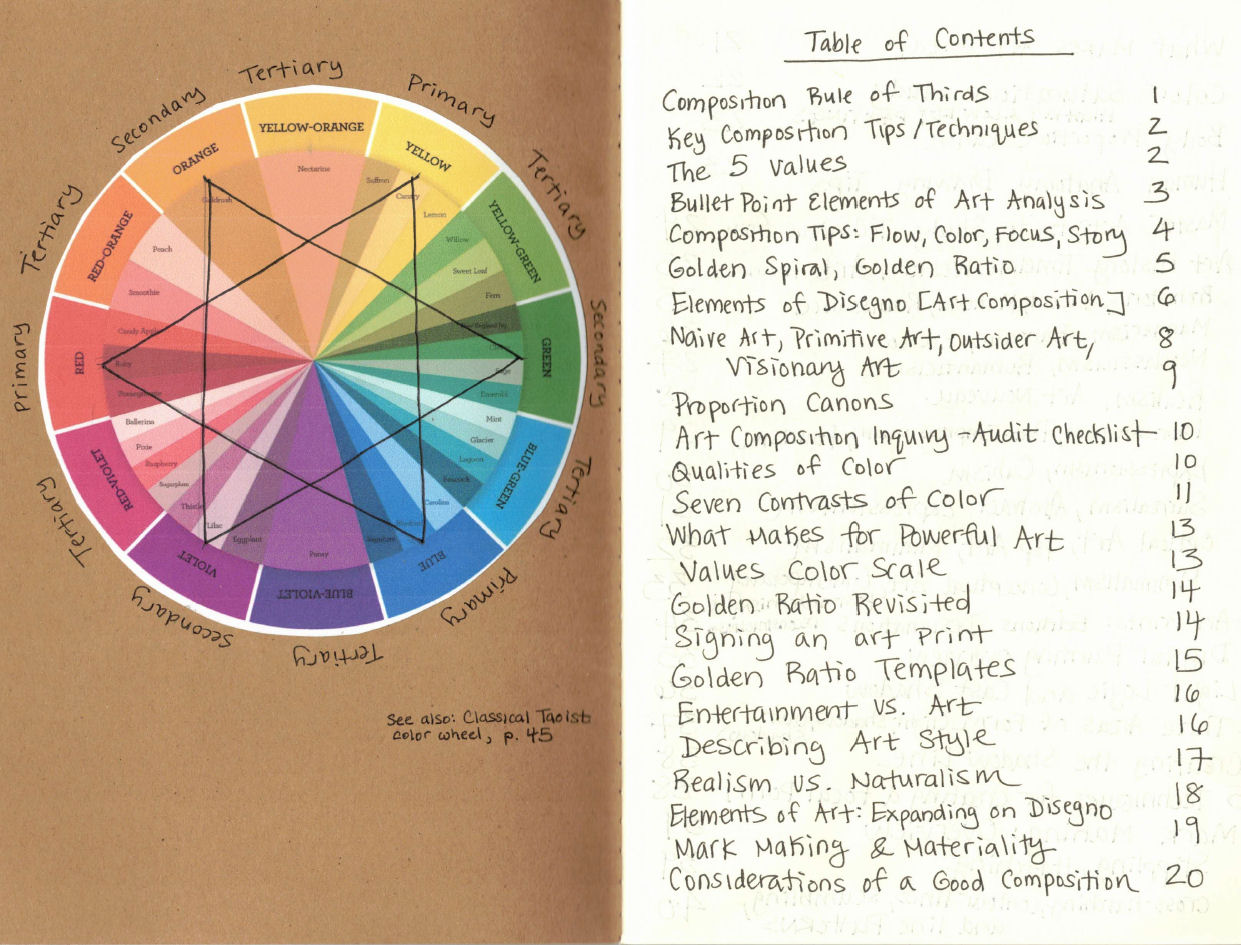
You can also download my art study journal here, which is what this handbook, a free download, is based on.

Critiquing Your Own Art

PDF Download

It reads as if after you’ve produced a work of art, you’re supposed to run through the checklist of items for review page after page in this handbook and self-audit how well you did in each of the categories. Yes and no.

It’s funny, whenever I endeavor to unpack something into its parts to analyze, people accuse me of being too analytical at the cost of creativity and intuition.

But if you observe me in the everyday, you’d think me a hypocrite, because in life, I very much operate off intuition rather than pure, cold logic. I go off my feelings way more than I go off rational deduction.

Yet rational analysis is the necessary checks and balances to your supposed intuition. Your intuition can get tainted by bias. So you have to be hyper self-aware and mindful.

While I would be the first to agree that you do not need a checklist to determine and define what is or is not great art, there is some value to deconstructing why we consider certain pieces “great art” and others not.

And if you can deconstruct that, can you then use it as elements to construct “great art”? I don’t know, but why not try? Even if you fail, you’re going to learn valuable lessons from that failure, so I welcome it, don’t you?

If anything, this sort of guided checklist helps you to more likely spot areas for improvement in your craft.

Anyway, that’s how this handbook got started, and you’ll see that the contents are extracted from that art study journal from 2021, which I kept as reference throughout 2020 while I was working on the Spirit Keeper’s Tarot. I converted the content into, well, a bunch of concrete, tangible points for consideration when critiquing your own art.

It’s not like every single one of the points in this handbook will be 100% applicable to you. It’s more about using it as a general reference, to help you navigate self-assessment of your craft.

Here’s the MS Word doc version for those who want to cut and paste around, and change it up to make it personalized:

Critiquing Your Own Art

DOCX Download

The content within this handbook is free for you to use, share, adapt, and build upon in any way that serves you, be that for personal or commercial purposes. Whether you distribute the PDF or DOCX as-is, remix it into your own content, my goal is for this to reach those who will benefit from it. So do whatever you Will with it.
Learning the Opening of the Key (OOTK) – Course is Now Free

Opening of the Four Worlds

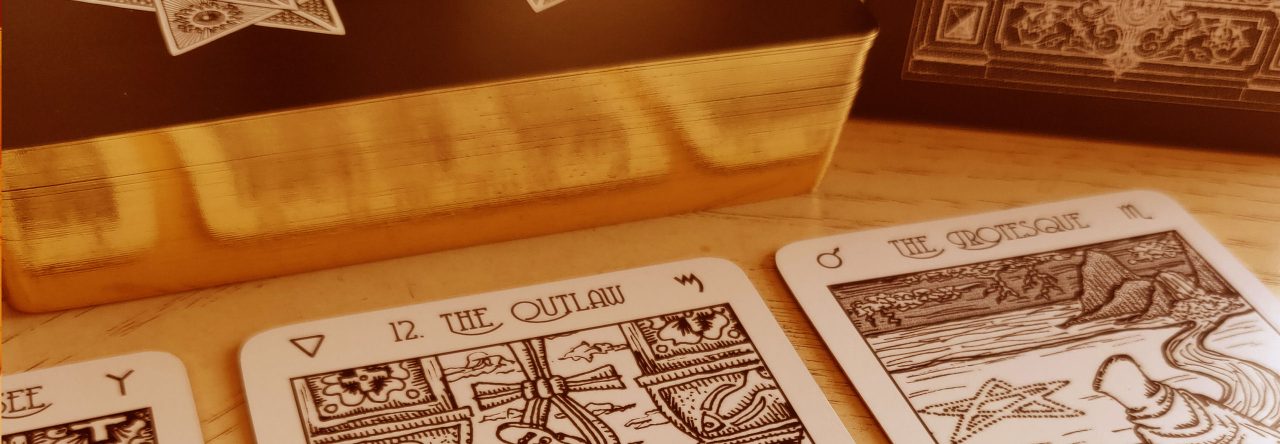
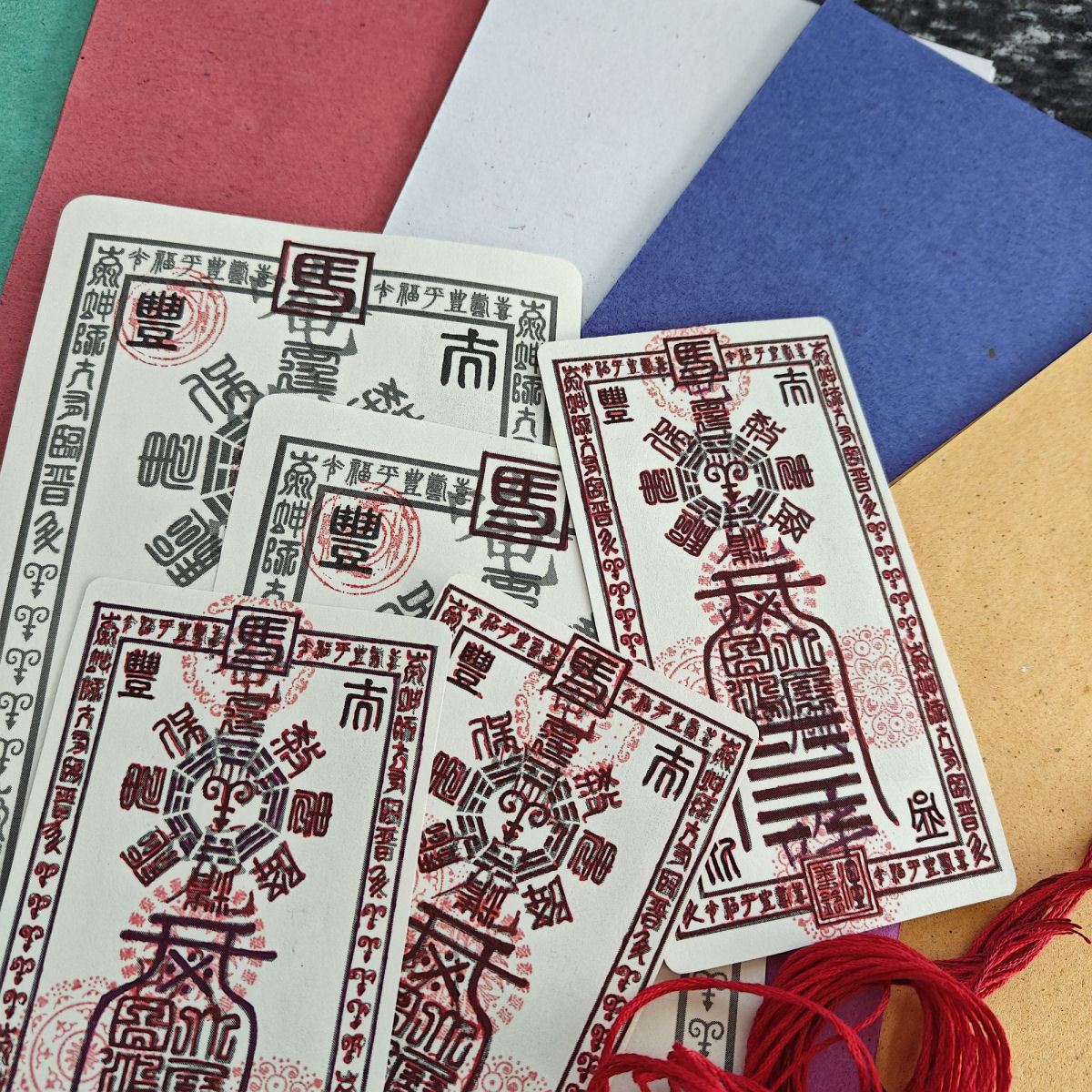
Just a note for those who might be interested: the “Learning the Opening of the Key” video and workbook course from 9 years ago is now freely available.

You’ll first want to click onto the below hyperlinked page to download the workbook PDF and all supplemental materials:

Learning the Opening of the Key (Online Course)

Continue reading “Learning the Opening of the Key (OOTK) – Course is Now Free”

Strategic Communications and People Skills Workbook

Master strategic communication, executive presence, and people skills with "Speak with Power, Lead with Trust." This powerful workbook offers tactical drills, emotional intelligence training, and leadership communication strategies to help you build trust, influence, and authority in any professional environment.
Master strategic communication, executive presence, and people skills with “Speak with Power, Lead with Trust.” This powerful workbook offers tactical drills, emotional intelligence training, and leadership communication strategies to help you build trust, influence, and authority in any professional environment.

I would rather not share this publicly, except geez do I wish someone had spared me so many failures and missteps simply by sharing something like this with me earlier, back when I was just starting out in my career, and life.

When you come from an immigrant family…

From a lower socioeconomic background and then suddenly for your career leap into an environment where everyone comes from so much more privilege and status than you ever knew…

When you’re a person of color and what goes for communication and people skills in your culture is not at all the same as what goes for communication and people skills in this society…

When you’re the only woman in a male-dominated industry…

When you’re neurodivergent and an introvert…

…when any of these situations are familiar to you, often a big obstacle that holds you back from the level of success you would otherwise enjoy is this: you’re terrible at corporate-friendly communication and people skills.

I know I am.

In my head I think I’m smiling, warm, affable, speaking clearly, slowly, and concisely, in a structured organized manner…

…in reality I’m looking nervous, shifty, I’m rambling off on tangents, I’m info-dumping on you, and I can’t seem to get to the point.

Improving Emotional Intelligence (EQ). What is Strategic Empathy.

Because I never had a workbook like this, my growth and improvement rate was slooooow. Like how many times did many, many people have to tell me I speak way too fast and am rambling and info-dumping before I made any effort to speak slower and enunciate better. How often did I cross my arms and slouch and avoid eye contact at important social gatherings and as a result made terrible first impressions with a load of very important people. Either I over-share or I under-share, and can never seem to “strategically share to present micro-vulnerability as a signal of authenticity.” (Like, did you even know that is a thing someone has methodically and intentionally thought through??)

Speech Cadence Skills

This is a free downloadable workbook based on strategic communication skills development and pattern-rewiring for executive leadership presence, with pretty easy-to-follow actionable techniques, skill development, and practice exercises to improve your people skills, your “executive presence,” and just all around be better at communicating to others.

Continue reading “Strategic Communications and People Skills Workbook”

MBTi Archetypes for Tarot and Animal Lovers: The Oneful Tarot by Maggie Man Sin Lee, Ph.D.

The Oneful Tarot is inspired by MBTI (Myers-Briggs Type Indicator) personality archetypes and using the tarot to recognize our personality patterns. It was created by Dr. Maggie Man Sin Lee, a Hong Kong-based academic researcher, caregiver advocate, naturopath, and corporate wellness consultant, and brought vividly to life by illustrator Chinkal Pareek.

NOTE: If you’d like to download my personal notes on the MBTi personality profiles for the tarot court cards, which I use as reference in tandem when working with the Oneful Tarot, scroll down to the end of the deck review.

Continue reading “MBTi Archetypes for Tarot and Animal Lovers: The Oneful Tarot by Maggie Man Sin Lee, Ph.D.”

Building Your Identity Capital: Personal Spirituality Edition

In an executive leadership workshop I attended, I learned about identity capital and how people leaders need to help their teams cultivate identity capital. It’s a concept popularized in The Defining Decade by Meg Jay, which in short summary is the collection of professional and personal assets that define why you’re great. This is subdivided into four categories: (1) skills and credentials, (2) social networks, (3) life experiences, and (4) personal qualities.

Identity capital is what sets you apart in your marketplace or industry. It attracts more opportunities, builds your credibility, and empowers you to be more persuasive. Even when headhunters don’t consciously realize it, they’re looking for candidates with identity capital in abundance. Those who stand out in competitive environments are the ones who are rich with these assets.

I found the workshop useful, so I want to share what I learned. And of course I thought, how fun would it be to combine those professional development learnings with divination as a tool for self-reflection.

Below is a free downloadable Identity Capital Workbook.

Continue reading “Building Your Identity Capital: Personal Spirituality Edition”

On Preventive [Spiritual] Care: Nine Precepts of the Healer

There’s this section in Chapter 9 of The Spiritual Axis (Ling Shu) from the classical medical treatise Inner Canons of the Yellow Emperor (Huangdi Neijing), which in canonical versions is often designated as Verse 27 that I love for many reasons.

Nine universally applicable precepts of healing can be extracted from Verse 27. The way they’re worded, you can interpret them through different lenses and they still hold true. The verse functions as axiomatic to acupuncture, and to both the ancient and the modern healthcare provider.

You can read it through the lens of how to ensure physical health, and also how to ensure mental, emotional health, and — as to the primary scope of work I operate in — to spiritual health.

If you’re looking at it as a road map for your own healing journey, it works. If you’re a healer of any stripe, these are nine clinical axioms for guiding patient care. You can look at these nine precepts as applied medical wisdom, or heuristics for clinical decision-making. They work as key tenets for helping a practitioner refine their diagnostic and therapeutic approaches.

And finally, in my view, these nine precepts can be instrumental to helping anyone set the foundation of their personal spiritual practice. It’s designed in such a way that you can account simultaneously for mundane physical health and hygiene tenets and for basic considerations in ritual or ceremonial magic.

Continue reading “On Preventive [Spiritual] Care: Nine Precepts of the Healer”