Consider these eight solar terms, their dates based on solar longitude (the path of the sun) and how they compare to close equivalents in the pagan Wheel of the Year:
The Four Beginnings 四立
1. 立春 Start of Spring Feb. 3–5
2. 立夏 Start of Summer May 5–7
3. 立秋 Start of Autumn Aug. 7–9
4. 立冬 Start of Winter Nov. 7–8
I apologize in advance if my mode of presentation here is going to be a bit overwhelming. In retrospect, I should have taken more time thinking on pedagogy and how best to organize this material so it’s less everything-all-at-once. =)
Now that I think about it some more, “witchcraft” is probably not even the right term to be using. “Folk magic” might be the better descriptive? What do you think?
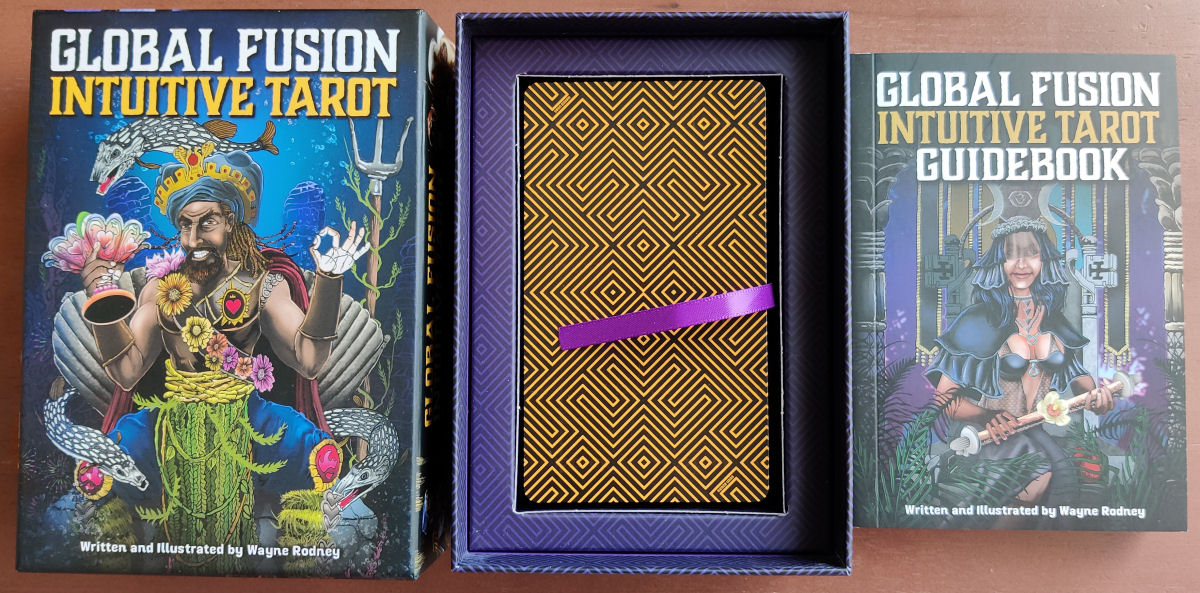
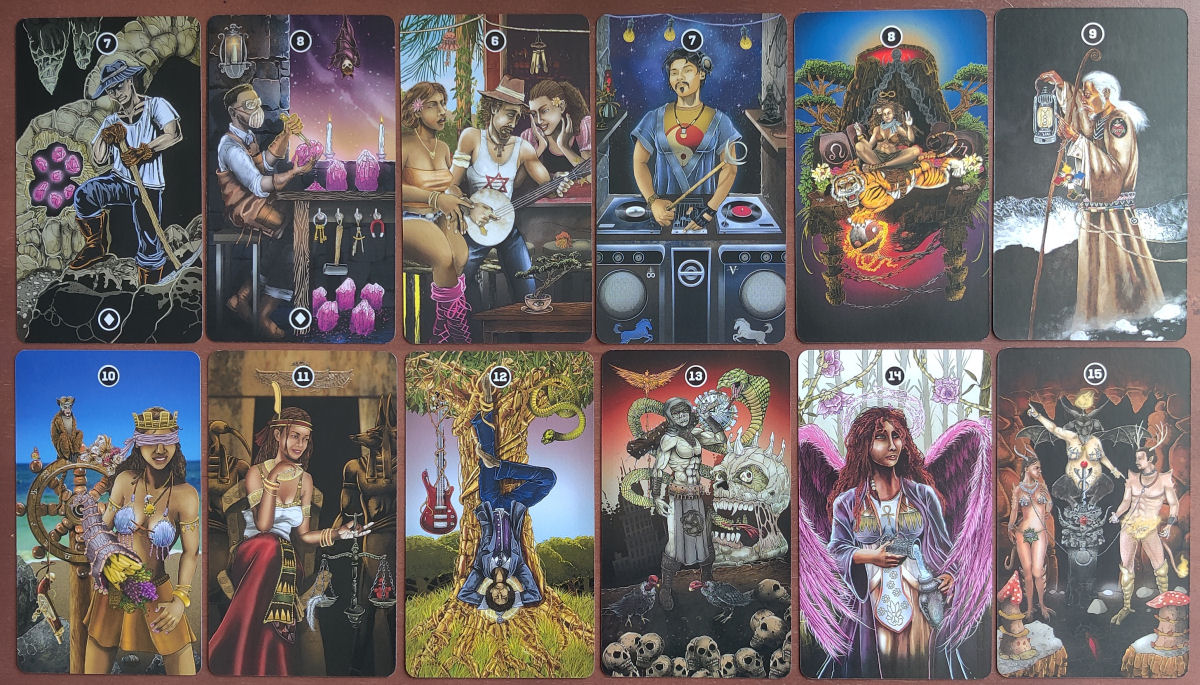
Wayne Rodney’s Global Fusion Intuitive Tarot is quickly becoming one of my favorite contemporary tarot decks. If you want a case study for diverse representation in tarot art done well, look no further than Global Fusion.
Rodney is a Jamaican American painter and illustrator who runs a martial arts studio. As an artist his work is heavily influenced by Rosicrucian mysticism, values of cultural diversity, and what I found throughout the Global Fusion Intuitive Tarot– Taoist metaphysics.
In this deck, Rodney orders the Minors before the Majors. The Sticks correspond with Wands or Clubs, expressing the traits of creative will and intuition. Of the four temperaments, he connects it to the Sanguine. Gems, Pentacles or Diamonds, signify the Phlegmatic, of the sensory and the practical. Vessels, Cups or Hearts, correspond with Melancholy, with emotions and feeling. Blades, Swords or Spades, signify the Choleric temperament, of reason, logic, and thought.
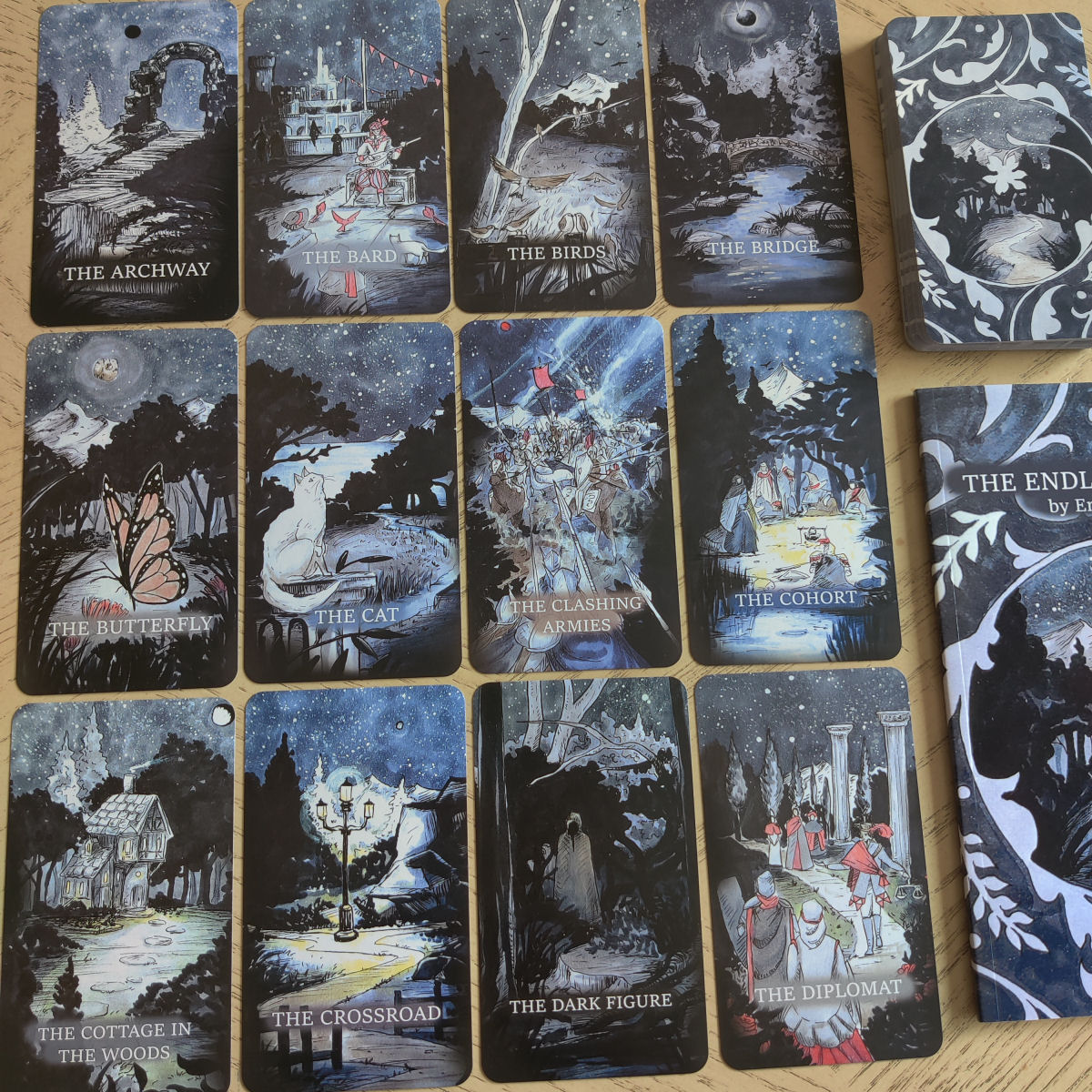
The Endless Oracle is a hand-drawn myriorama deck by artist Eric Maille, creator of the Ink Witch Tarot and the Lenormand-inspired Paper Oracle. Myrioramas were 19th century picture decks intended as a game for children. You could rearrange the cards in any order to create different landscapes. The arrangements would then tell a story.
Thus, the Endless Oracle tells an infinite number of tales. The silhouette outlines around the card edges connect any order of cards together to form a seamless landscape–a brilliant feature by Maille.
Inspired by Greek and Arthurian myths, the illustrations tap into collective knowledge, rendering these oracle cards remarkably readable. The Fisher is symbolic of leisure activities and our hobbies. The Forest is straying from the beaten path to go on an unconventional adventure. The Gathering Clouds is an omen of a plot thickening. The Giants is wonder and grandeur. Thee Goddess is religiosity. The Graveyard is loss and endings. In The Graveyard card you’ll also see the constellation Scorpio.
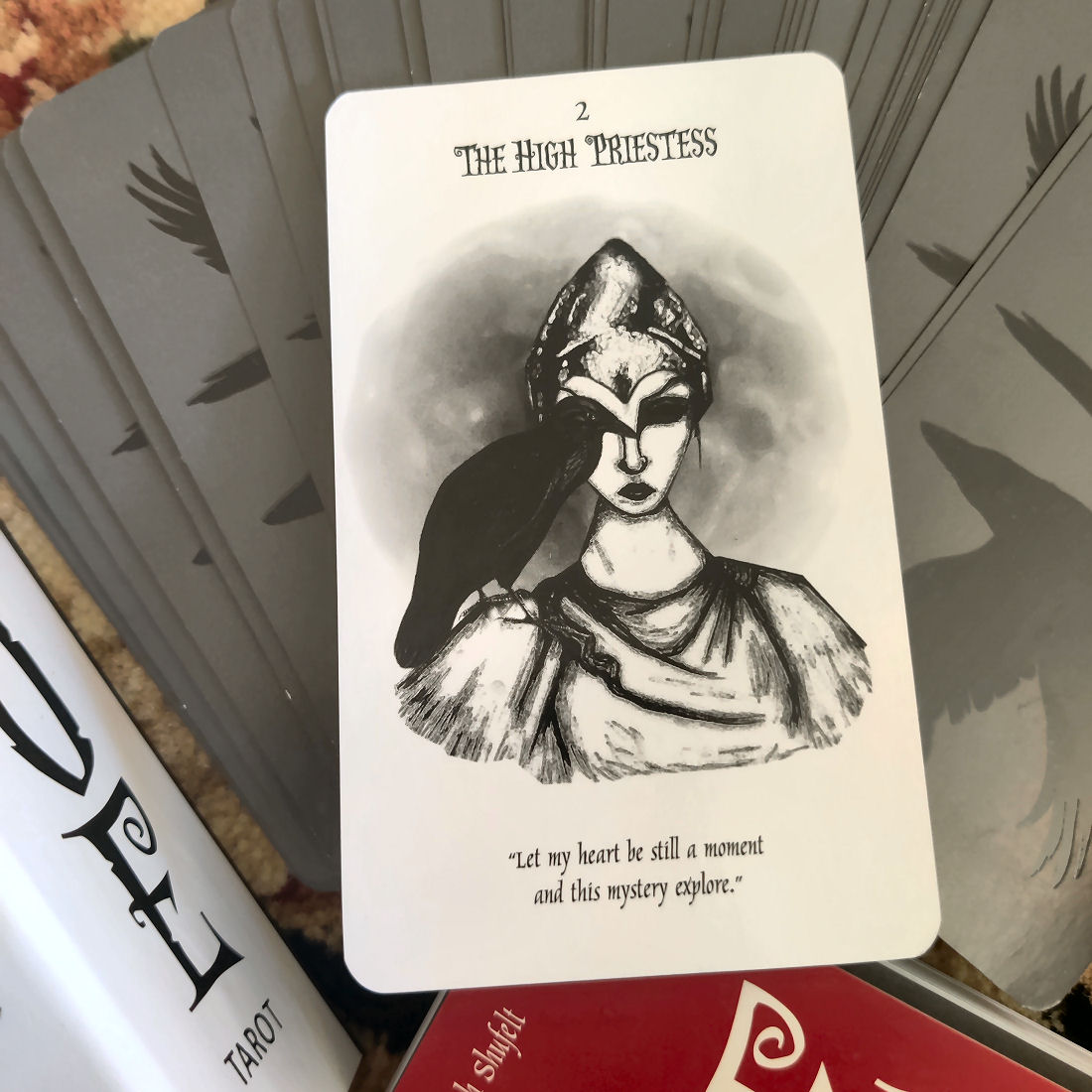
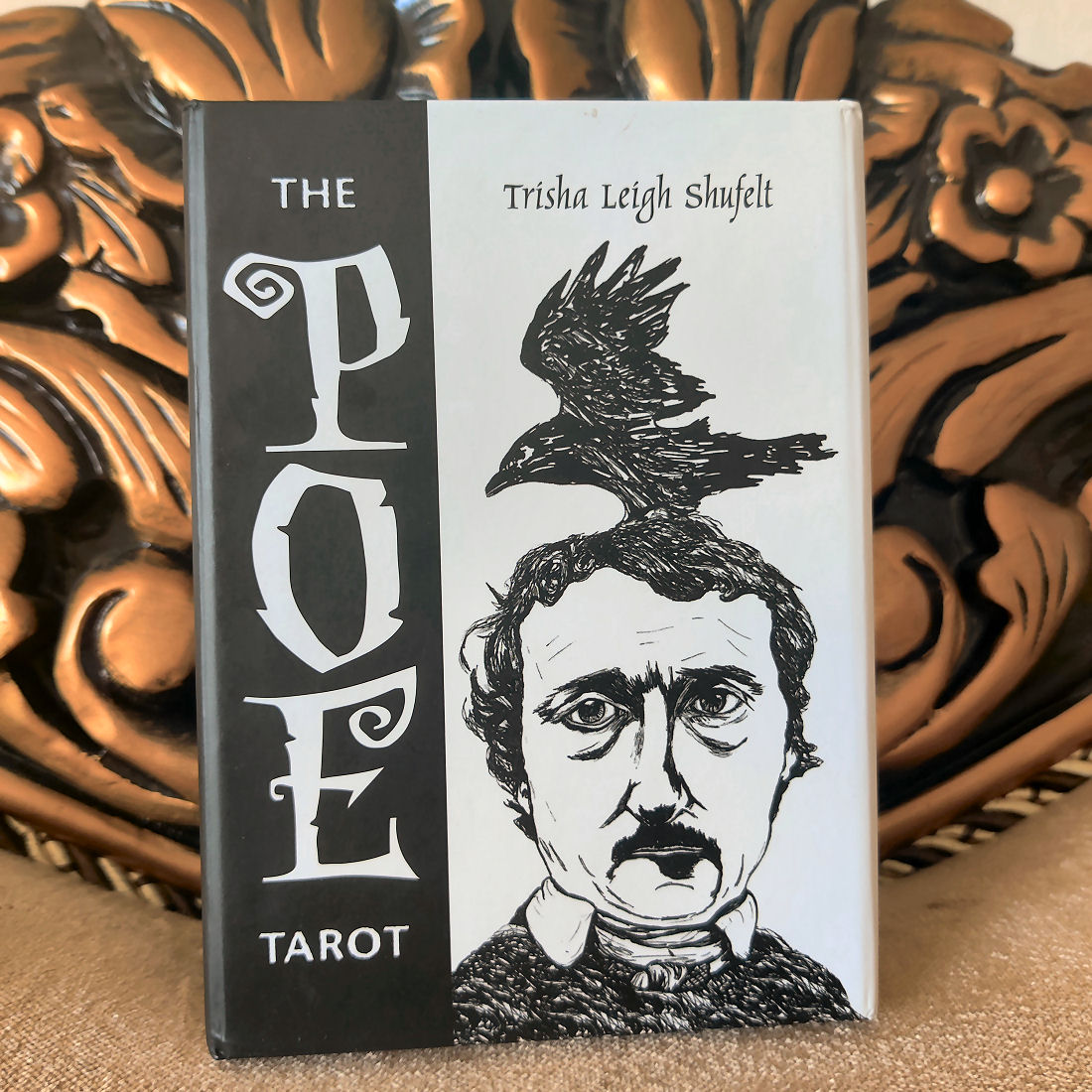
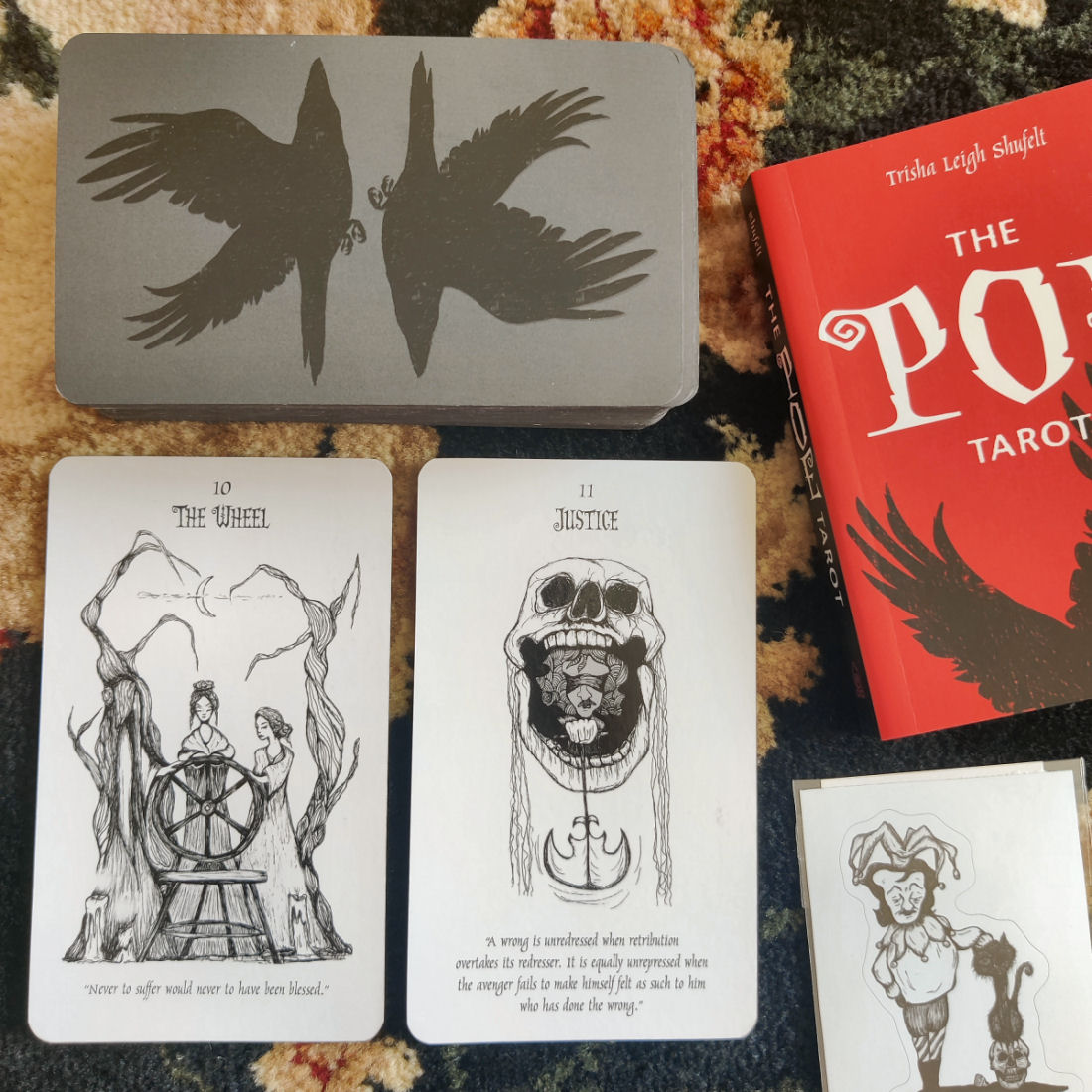
Published through Schiffer Red Feather, The Poe Tarot by Trisha Leigh Shufelt is a delectable black and white illustrated deck that I’ve been eyeing for quite some time. I was one of those kids who loved Edgar Allan Poe. I’m also a big admirer of pen and ink illustrations.
The raven resting on the bust of Pallas Athena.
And I really love a narrative-driven and thought-out tarot deck that has clearly been rendered with depth, passion, and copious amounts of research.
So it’s no wonder I’d take so easily to The Poe Tarot, which is all that and more. Bringing her depth of knowledge in Poe, weaves his life’s work, his struggles, passions, and motivations into the tarot, presenting each card as a lens through which you will ultimately find personal meaning.
The deck art illustrates scenes and characters inspired by Poe’s classics, from The Raven and Annabel Lee to The Masque of the Red Death and many more, bringing to life traditional tarot archetypes through a macabre meets whimsical 19th century pen and ink style.
For instance, the Six of Wells (Six of Cups) pictured above illustrates Poe himself reflecting on a portrait of his childhood sweetheart and fiancee before his death, Sarah Elmira Royster Shelton, with a quote from “Spirits of the Dead.” The composition itself was inspired by Poe’s short story “The Oval Portrait.”
Don’t forget– if it helps, turn the closed captioning on! =)
When I say “open tradition,” I mean a culture-specific practice of a magical system and set of doctrinal beliefs integrated into that practice that anyone at all can work with for themselves, that it’s free and open to the public.
When I say “closed tradition,” I mean a culture-specific practice of a magical system and set of doctrinal beliefs integrated into that practice that can only be honorably accessed if certain conditions are met, such as initiation, heredity, clan or ethnic group membership, or a formally established master-student bond.
Esoteric Taoist practices, broadly speaking, are openly accessible to anyone and all, but not anyone and not everyone who seeks it will find alignment with this Path. It’s for anyone, but it’s not for everyone.
But when we’re having this conversation about esoteric Taoist traditions here in the West, then to be clear, the conversation is probably more about cultural appropriation, spiritual gatekeeping, and how to engage respectfully with living traditions.
Taoism is, by the nature of the philosophy, even occult philosophy, is syncretic. It absorbs indigenous shamanic traditions, other established religious traditions, and in terms of the values that are the compass for how to navigate the syncretism, it’s nature. It’s the study and understanding of qi in nature.
It’s about nature, but humans are part of nature, and humans have minds that formulate ideas that become aggregated into establishments, you can’t ignore the establishments. So in reality, a human – the practitioner – will study how the many establishments engage with the qi in nature and then work with what works, for them. Since that’s Taoist mysticism in a nutshell, it’s an open practice.
Lineaged traditions, on the other hand, are unequivocally closed. Some are initiatory. Some are hereditary. Some are a combination of both. The premise is a group of people have cultivated an elite access to potent qi in nature through a highly-specialized methodology, and they aren’t about to share that methodology with just anyone. So there are very limited ways to access that specific methodology. Some form of ritualized transmission must take place to receive access.
But what about non-lineaged individuals crafting, say, Fu talismans, performing Taoist rituals, be that ones they’ve made up themselves or followed step by step from a canonical grimoire, or working with Taoist ritual tools? To be fair, that’s where it gets a bit more complicated, and political.
You’re going to encounter folks who say no, unless you’re lineaged, you cannot. That or it’s more of a warning that if you’re just chaotically doing it on your own, it’s way too easy and too high a risk of going off the rails and getting yourself into spiritual hot water. There’s a kernel of truth there, in my opinion, which is why I believe strongly in being religious and cultivating a strong moral compass and code of ethics first before dabbling with the occult. If there isn’t going to be a teacher there to rap your hands with a stick when you’ve been bad, then you’ve got to be disciplined enough to self-monitor.
Whereas I’ve always made my personal opinion clear. It’s open access with an asterisk. It won’t be me (and I don’t believe it should be another human) who puts up walls or locks the gate to keep you out. It’s gonna be the gods. It’s The Craft itself. The Esoteric Tao lets in who it lets in.
As for cultural appropriation, I’ve always taken the view that, you’ll know it when you see it. It’s hard to come up with a one-definition-applies-to-all-case-analyses metric for determining what’s okay and what’s not okay. Not to mention each person’s appetite for something possibly appropriative is gonna vary. Plus, overly-worrying about whether you yourself are culturally appropriating is more demonstrative of caring too much about yourself than actually caring about the cultural tradition you’re working with. If truly your heart is with the culture, you’ll naturally focus on its people, its communities, with an organic passion to learn as much as you can. I don’t have to tell you to be reverent; you just will. And if somebody has to remind you to be reverent, then buddy, I think you’re already in the wrong.
My third book, I Ching, The Oracle: A Practical Guide to the Book of Changes, published by North Atlantic Books, is forthcoming mid-2023. It’s my translation and annotations of the Oracle with cultural and historical references that honor the shamanic origins of the I Ching.
What it really is, though, is a magical grimoire. I began with an aspiration to write a grimoire on Taoist mysticism and magical practices, and then decided to do so through the framework of the I Ching. This is going to be a practical hands-on primer on East Asian modalities of witchcraft and folk magic. A deep-dive learning experience into the history and mythological references found in the Book of Changes is the bonus.
Leading up to the release of I Ching, The Oracle will be this series of videos where I lay the foundation for working with this third book. If this is of interest to you, stay tuned! ❤
In my previous blog post recapping NWTS 2022, I talked about how much I enjoyed the “Which Witch is Which” lunch panel discussion. So that you don’t have to click between pages, here’s what I said about it:
The best part of all? Hands down, the Which Witch is Which lunch panel discussion. Each practitioner on the panel represented a different perspective on witch identity and witchcraft, from whether they identify with the moniker “witch” (some yes, some no), what is witchcraft anyway, and their takes on covens, solitary practice, closed vs. open traditions, altars, ancestor work, and more.
Thank you, Mat, for giving a shout-out to Taoist ceremonial magic! And wish the incredible Onareo, who was present in the audience with me, could have also been up there on the panel to represent brujeria.
In this Bell Chimes In video chat, I wanted to ruminate on my own responses to the questions “Do you identify as a witch?” and “What is witchcraft, to you?”
Answers to those two questions are not at all easy to arrive at.
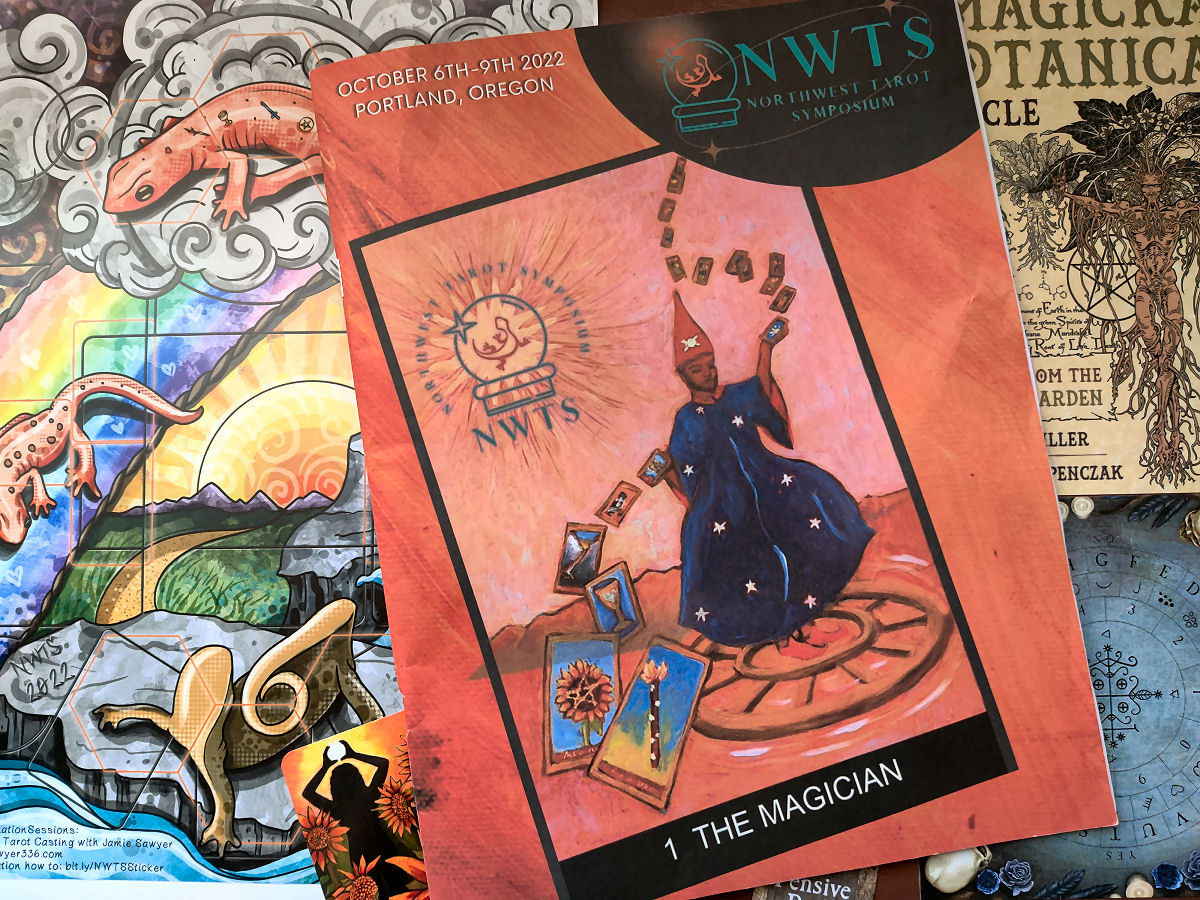
Whew! NWTS 2022 was a blast! This was Michelle and Roger of SoulTopia’s inaugural year as the organizers of NWTS, the Northwest Tarot Symposium in Portland, Oregon. And wow, what a comeback for NWTS, thanks to SoulTopia’s tireless efforts, persistence, and stewardship. This year, the tarot community really showed up for an impressive turnout, to the point where we might’ve outgrown the Monarch Hotel! Time for a bigger even more spacious venue? =)
Anyway, this is a casual recap of the event from my vantage point.
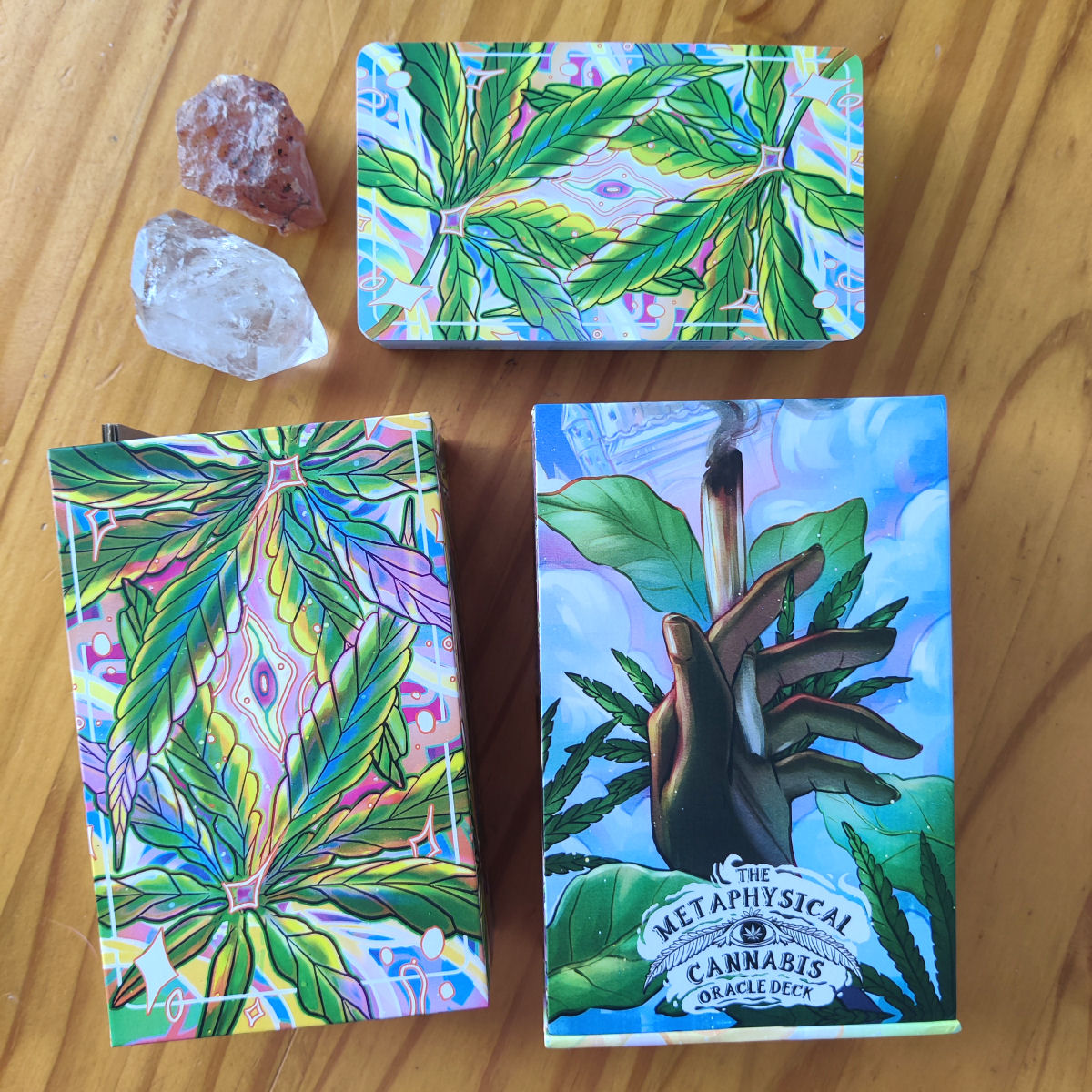
This is going to be a walk-through of the Metaphysical Cannabis Oracle deck, and not a full-on review. This Liminal 11 deck is the debut publication of Maggie Wilson, a cannabis sommelier, and is illustrated by Ejiwa Ebenebe.
I’m describing this as just a walk-through and not a deck review because I won’t be deep-diving into the substance of its system. I’m not sufficiently qualified to be doing an intelligent review of the deck, so all I can really offer are my first impressions.
Upon first impression, without taking a closer look, my immediate presumption was a tarot deck, and it wasn’t until a second glance that I realized this is being presented as an oracle. You could convince me that the first card is a Fool card, then Manifesteer: Creation is The Magician card, then The Witch Doctor: Wisdom is The High Priestess, the queen mother Sarauniya Uwa: Nurture is The Empress, and Sarki: Stability is The Emperor.
But since then there have been new developments in this subject area so I thought I might revisit the topic.
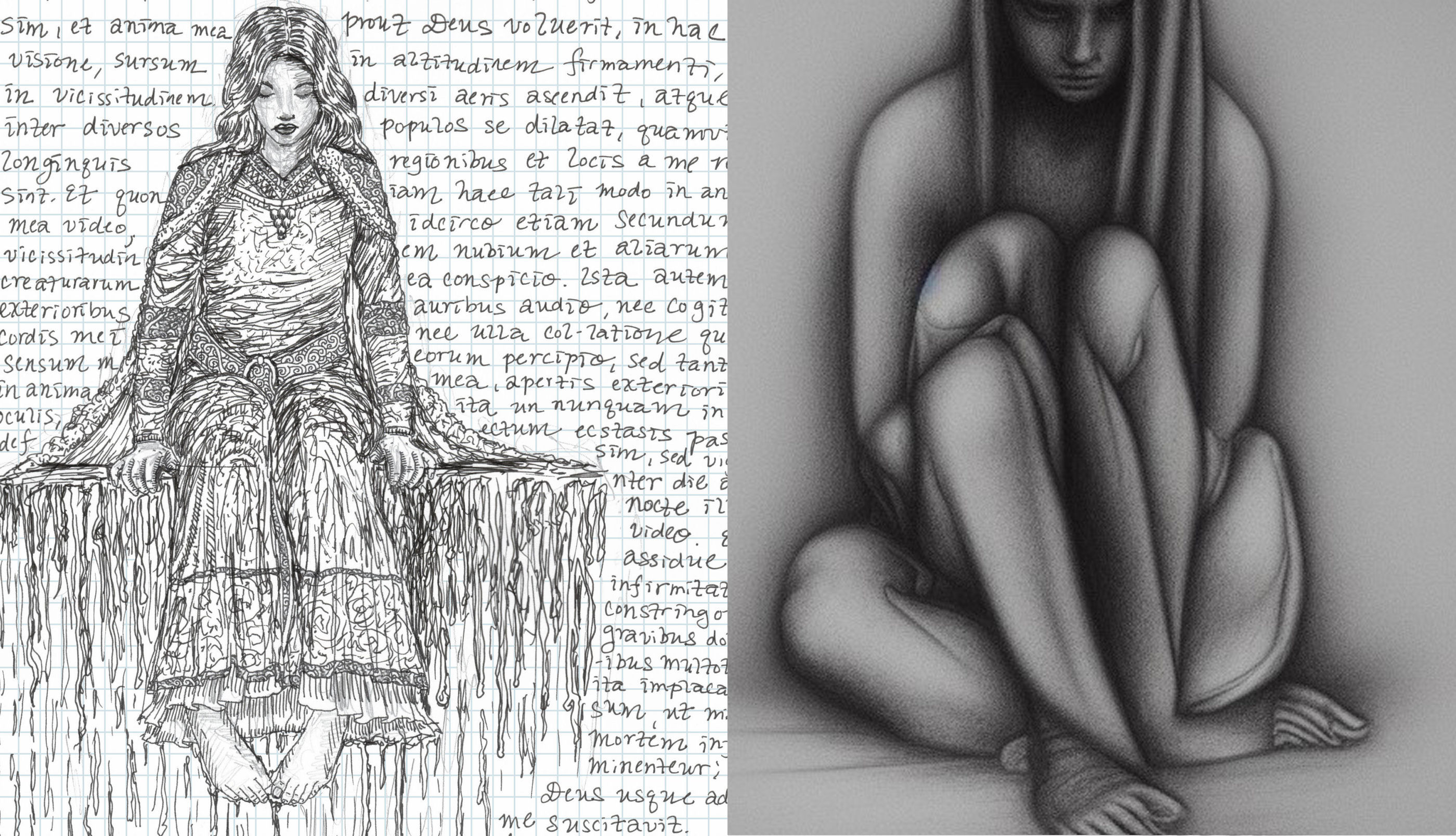
Left: My illustration, by hand in pencil and ink. Right: NightCafe, art style: “Charcoal”
Some Personal Dabblings with AI Art
Above to the left is a sketch I did by hand, first in pencil, then outlined in ink. I started with the following prompt, text I typed out myself and stared at for a good five minutes before putting pencil to paper: Solitude. Contemplating. Maiden in a moment of self-questioning.
I copied some text written by Hildegard of Binden on the transcendental experience of God, to fill the blank space. What you see took me two hours. Uh, tbh, probably longer than two hours. I lose track of time when I’m doodling. (The barely-there blue grid lines was added digitally, because that’s just something I like to do when I share my doodles to the public.)
What you see to the above right was produced via NightCafe, an AI art generator, with the same exact text as the prompt: Solitude. Contemplating. Maiden in a moment of self-questioning. I selected the art style “Charcoal” to see how close to a pen and ink sketch it could go. The illustration to the right took the program two minutes.
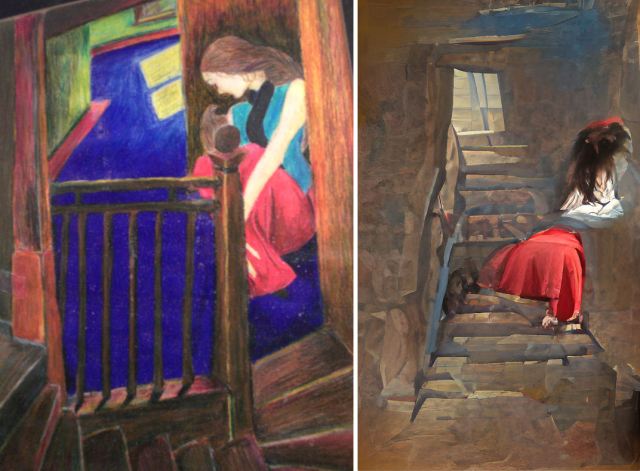
Left: High school art by yours truly, from the 90s. Colored pencil. Right: AI generated art based on text description of illustration to the left, via Wombo
I’m fascinated by how similar the interpretations were, between me, a human, and AI tapping in to collective knowledge. In fact, in the past I’ve drawn illustrations in charcoal very similar to what the AI produced!
The pose, the facial expression, the way the hair falls, the vulnerability– if I rummage through my old art portfolio from high school, I can excavate a charcoal or pastel drawing that looks more or less the same with that!
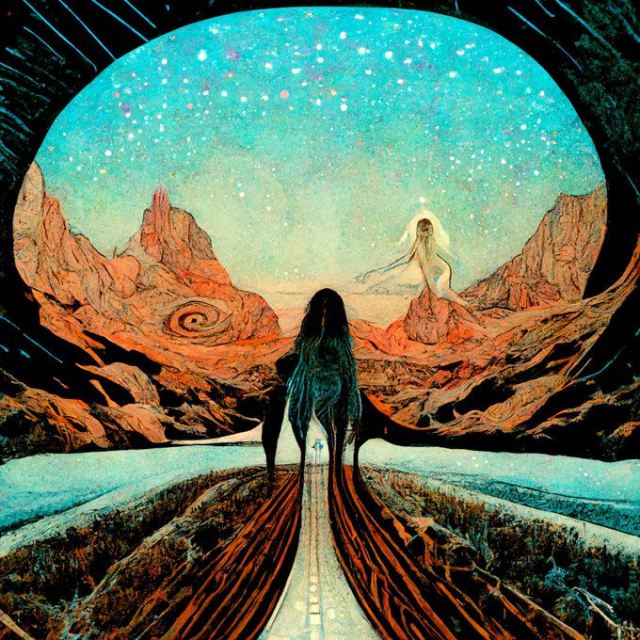
“You Are the Journey” by @KaliYuga_ai via MidJourney (AI art)
Does AI Art Lack Soul?
I explored the question “does AI art lack soul” here in an earlier rumination on the subject. In that blog post, I talked about how this advent of AI generated art has shifted my former paradigm on the mind-soul relation.
This declaration you’ll hear oft repeated — AI art lacks soul; AI lacks soul — is one I’m most apprehensive about. Perhaps we can say we don’t understand the soul of AI, but to declare that AI art lacks soul… I dunno. It doesn’t sit right with me.
I’m not convinced that these works “lack soul.” If I’m getting all psychic and woo, I might say the impression of the soul that’s present feels different from a human sapient soul, just like an animal’s sentient soul or a tree’s soul feels different. You hear people critique the evident style or aesthetic consistent in AI generated art, but just because you don’t love an artist’s style or technical approach doesn’t mean that artist suddenly lacks soul.
So while I have many conflicting thoughts about AI art, the accusation that it lacks soul isn’t one of them. If anything, I wonder if the full body of AI generated art is mirroring back something deep within us collectively, for us to see.
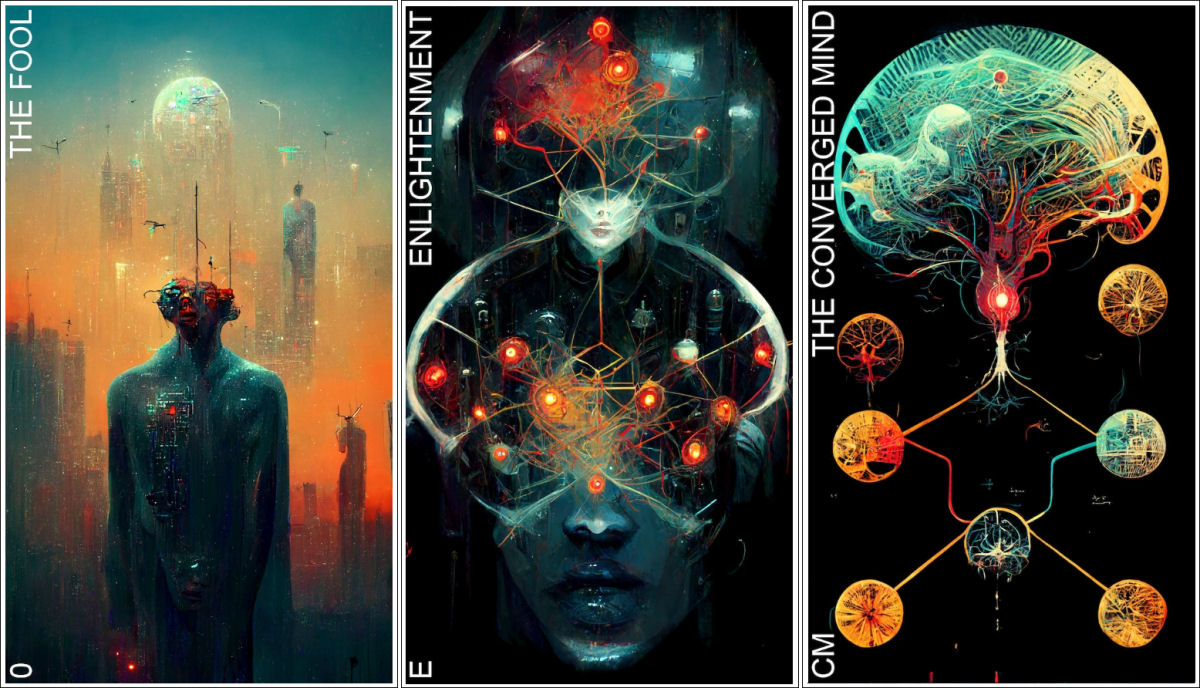
Technomage Tarot by Lee Duncan in collaboration with AI, via Kickstarter campaign (last visited 2022 Sep. 30)
A Rising Popularity of AI Generated Art Decks
Oh, and to illustrate what the community has been buzzing about with regard to AI-generated tarot decks (or in collaboration with AI) coming on to the market, I’ll feature several throughout this commentary.










 benebell wen