Are Esoteric Taoist Traditions Closed or Open?

Don’t forget– if it helps, turn the closed captioning on! =)

When I say “open tradition,” I mean a culture-specific practice of a magical system and set of doctrinal beliefs integrated into that practice that anyone at all can work with for themselves, that it’s free and open to the public.

When I say “closed tradition,” I mean a culture-specific practice of a magical system and set of doctrinal beliefs integrated into that practice that can only be honorably accessed if certain conditions are met, such as initiation, heredity, clan or ethnic group membership, or a formally established master-student bond.

Esoteric Taoist practices, broadly speaking, are openly accessible to anyone and all, but not anyone and not everyone who seeks it will find alignment with this Path. It’s for anyone, but it’s not for everyone.

But when we’re having this conversation about esoteric Taoist traditions here in the West, then to be clear, the conversation is probably more about cultural appropriation, spiritual gatekeeping, and how to engage respectfully with living traditions.

Taoism is, by the nature of the philosophy, even occult philosophy, is syncretic. It absorbs indigenous shamanic traditions, other established religious traditions, and in terms of the values that are the compass for how to navigate the syncretism, it’s nature. It’s the study and understanding of qi in nature.

It’s about nature, but humans are part of nature, and humans have minds that formulate ideas that become aggregated into establishments, you can’t ignore the establishments. So in reality, a human – the practitioner – will study how the many establishments engage with the qi in nature and then work with what works, for them. Since that’s Taoist mysticism in a nutshell, it’s an open practice.

Lineaged traditionson the other hand, are unequivocally closed. Some are initiatory. Some are hereditary. Some are a combination of both. The premise is a group of people have cultivated an elite access to potent qi in nature through a highly-specialized methodology, and they aren’t about to share that methodology with just anyone. So there are very limited ways to access that specific methodology. Some form of ritualized transmission must take place to receive access.

But what about non-lineaged individuals crafting, say, Fu talismans, performing Taoist rituals, be that ones they’ve made up themselves or followed step by step from a canonical grimoire, or working with Taoist ritual tools? To be fair, that’s where it gets a bit more complicated, and political.

You’re going to encounter folks who say no, unless you’re lineaged, you cannot. That or it’s more of a warning that if you’re just chaotically doing it on your own, it’s way too easy and too high a risk of going off the rails and getting yourself into spiritual hot water. There’s a kernel of truth there, in my opinion, which is why I believe strongly in being religious and cultivating a strong moral compass and code of ethics first before dabbling with the occult. If there isn’t going to be a teacher there to rap your hands with a stick when you’ve been bad, then you’ve got to be disciplined enough to self-monitor.

Whereas I’ve always made my personal opinion clear. It’s open access with an asterisk. It won’t be me (and I don’t believe it should be another human) who puts up walls or locks the gate to keep you out. It’s gonna be the gods. It’s The Craft itself. The Esoteric Tao lets in who it lets in.

As for cultural appropriation, I’ve always taken the view that, you’ll know it when you see it. It’s hard to come up with a one-definition-applies-to-all-case-analyses metric for determining what’s okay and what’s not okay. Not to mention each person’s appetite for something possibly appropriative is gonna vary. Plus, overly-worrying about whether you yourself are culturally appropriating is more demonstrative of caring too much about yourself than actually caring about the cultural tradition you’re working with. If truly your heart is with the culture, you’ll naturally focus on its people, its communities, with an organic passion to learn as much as you can. I don’t have to tell you to be reverent; you just will. And if somebody has to remind you to be reverent, then buddy, I think you’re already in the wrong.

My third book, I Ching, The Oracle: A Practical Guide to the Book of Changes, published by North Atlantic Books, is forthcoming mid-2023. It’s my translation and annotations of the Oracle with cultural and historical references that honor the shamanic origins of the I Ching.

What it really is, though, is a magical grimoire. I began with an aspiration to write a grimoire on Taoist mysticism and magical practices, and then decided to do so through the framework of the I Ching. This is going to be a practical hands-on primer on East Asian modalities of witchcraft and folk magic. A deep-dive learning experience into the history and mythological references found in the Book of Changes is the bonus.

Leading up to the release of I Ching, The Oracle will be this series of videos where I lay the foundation for working with this third book. If this is of interest to you, stay tuned! ❤
Taoist Witches? What is Asian Witchcraft?

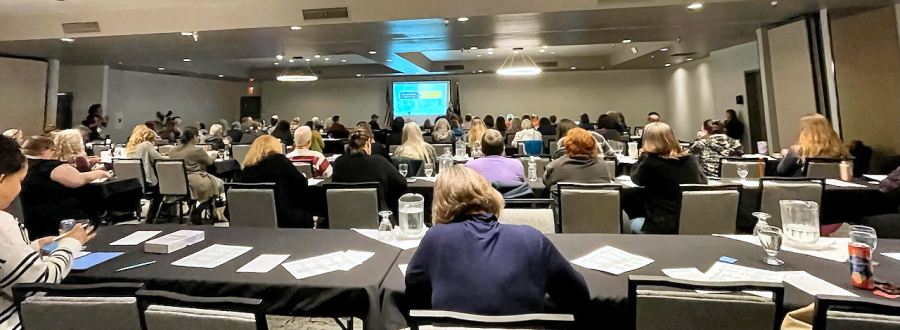
In my previous blog post recapping NWTS 2022, I talked about how much I enjoyed the “Which Witch is Which” lunch panel discussion. So that you don’t have to click between pages, here’s what I said about it:

The best part of all? Hands down, the Which Witch is Which lunch panel discussion. Each practitioner on the panel represented a different perspective on witch identity and witchcraft, from whether they identify with the moniker “witch” (some yes, some no), what is witchcraft anyway, and their takes on covens, solitary practice, closed vs. open traditions, altars, ancestor work, and more.

Thank you, Mat, for giving a shout-out to Taoist ceremonial magic! And wish the incredible Onareo, who was present in the audience with me, could have also been up there on the panel to represent brujeria.

In this Bell Chimes In video chat, I wanted to ruminate on my own responses to the questions “Do you identify as a witch?” and “What is witchcraft, to you?”

Answers to those two questions are not at all easy to arrive at.

Continue reading “Taoist Witches? What is Asian Witchcraft?”

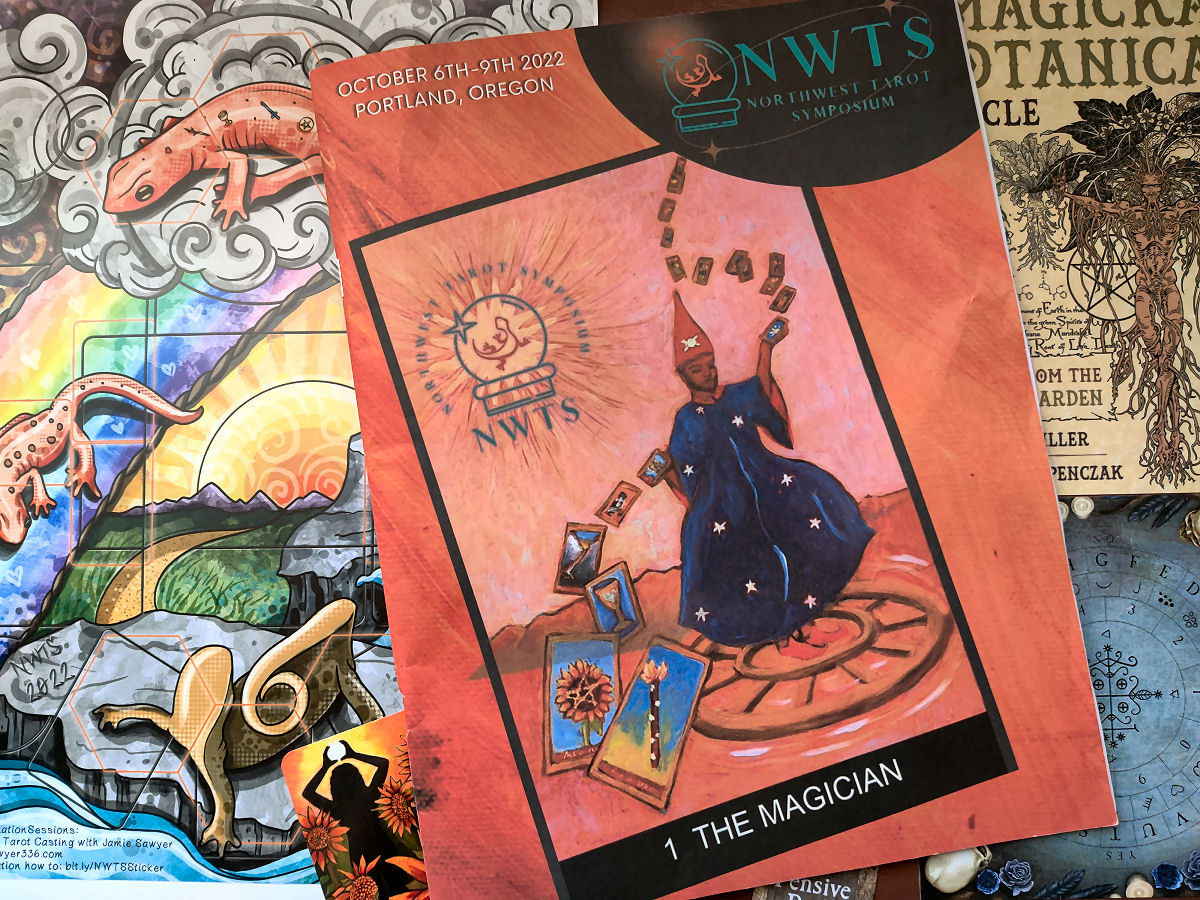
NWTS 2022 (the Northwest Tarot Symposium) Recap

Whew! NWTS 2022 was a blast! This was Michelle and Roger of SoulTopia’s inaugural year as the organizers of NWTS, the Northwest Tarot Symposium in Portland, Oregon. And wow, what a comeback for NWTS, thanks to SoulTopia’s tireless efforts, persistence, and stewardship. This year, the tarot community really showed up for an impressive turnout, to the point where we might’ve outgrown the Monarch Hotel! Time for a bigger even more spacious venue? =)

Anyway, this is a casual recap of the event from my vantage point.

Continue reading “NWTS 2022 (the Northwest Tarot Symposium) Recap”

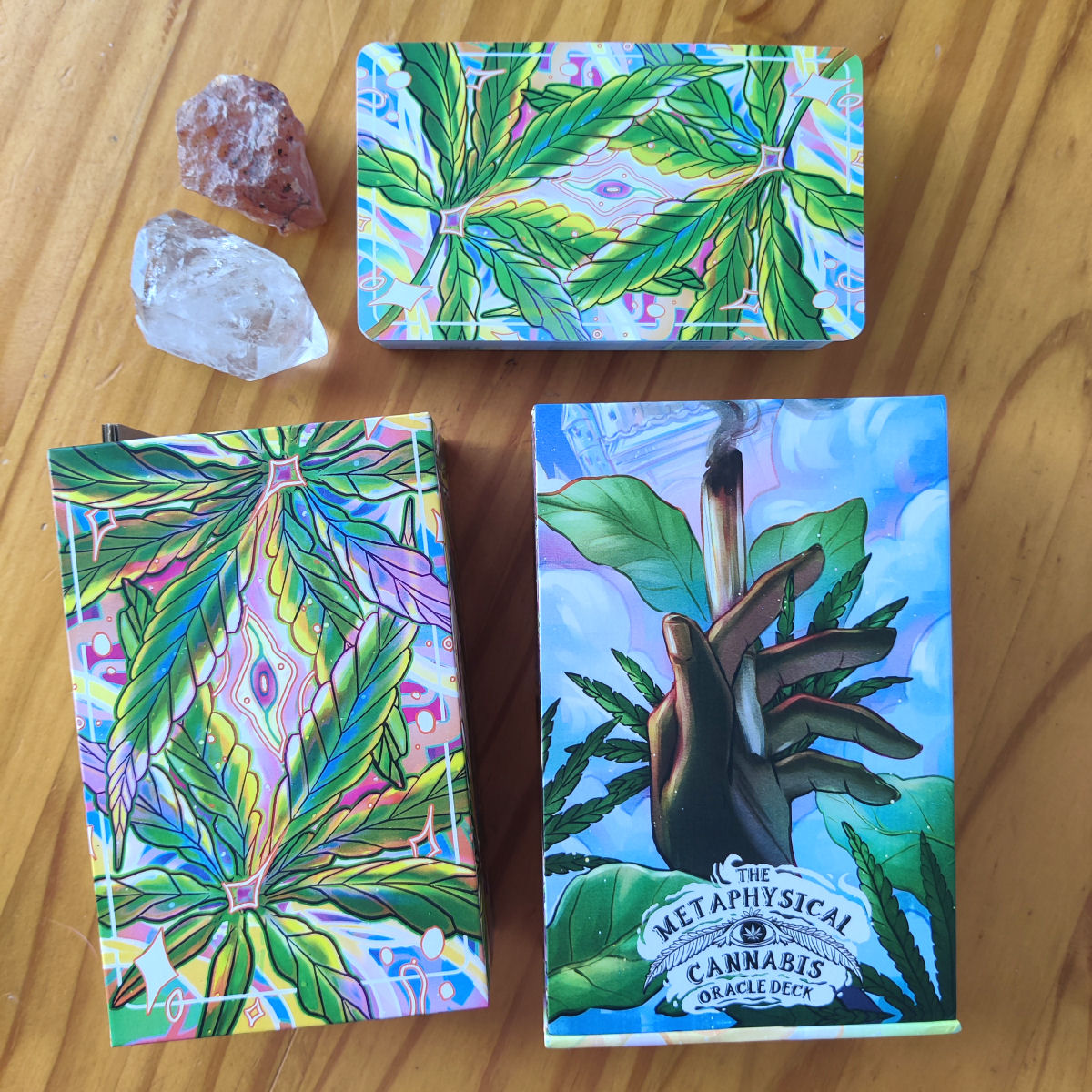
The Metaphysical Cannabis Oracle by Maggie Wilson and Ejiwa Ebenebe

This is going to be a walk-through of the Metaphysical Cannabis Oracle deck, and not a full-on review. This Liminal 11 deck is the debut publication of Maggie Wilson, a cannabis sommelier, and is illustrated by Ejiwa Ebenebe.

I’m describing this as just a walk-through and not a deck review because I won’t be deep-diving into the substance of its system. I’m not sufficiently qualified to be doing an intelligent review of the deck, so all I can really offer are my first impressions.

Upon first impression, without taking a closer look, my immediate presumption was a tarot deck, and it wasn’t until a second glance that I realized this is being presented as an oracle. You could convince me that the first card is a Fool card, then Manifesteer: Creation is The Magician card, then The Witch Doctor: Wisdom is The High Priestess, the queen mother Sarauniya Uwa: Nurture is The Empress, and Sarki: Stability is The Emperor.

Continue reading “The Metaphysical Cannabis Oracle by Maggie Wilson and Ejiwa Ebenebe”

AI Generated Art + Tarot and Oracle Decks with AI

Back in December 2021 I covered the topic of AI generated art and what it might mean for the marketplace of tarot and oracle decks here (“How Do We Value Art? What AI art means for tarot and oracle deck publishing“) and here (“I Ching Oracle Cards with AI Generated Art“).

But since then there have been new developments in this subject area so I thought I might revisit the topic.

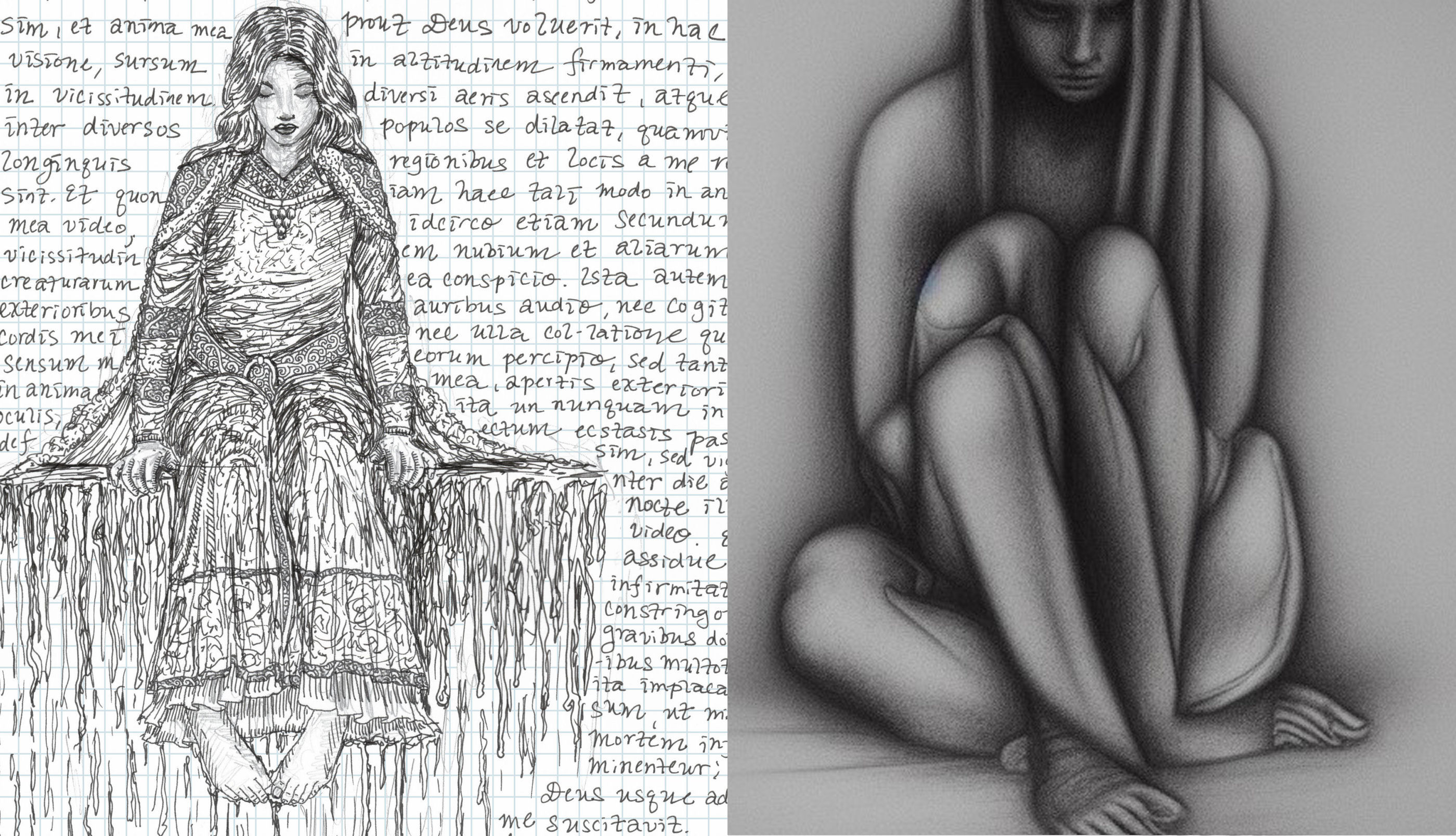
Left: My illustration, by hand in pencil and ink. Right: NightCafe, art style: “Charcoal”
Some Personal Dabblings with AI Art

Above to the left is a sketch I did by hand, first in pencil, then outlined in ink. I started with the following prompt, text I typed out myself and stared at for a good five minutes before putting pencil to paper: Solitude. Contemplating. Maiden in a moment of self-questioning.

I copied some text written by Hildegard of Binden on the transcendental experience of God, to fill the blank space. What you see took me two hours. Uh, tbh, probably longer than two hours. I lose track of time when I’m doodling. (The barely-there blue grid lines was added digitally, because that’s just something I like to do when I share my doodles to the public.)

What you see to the above right was produced via NightCafe, an AI art generator, with the same exact text as the prompt: Solitude. Contemplating. Maiden in a moment of self-questioning. I selected the art style “Charcoal” to see how close to a pen and ink sketch it could go. The illustration to the right took the program two minutes.

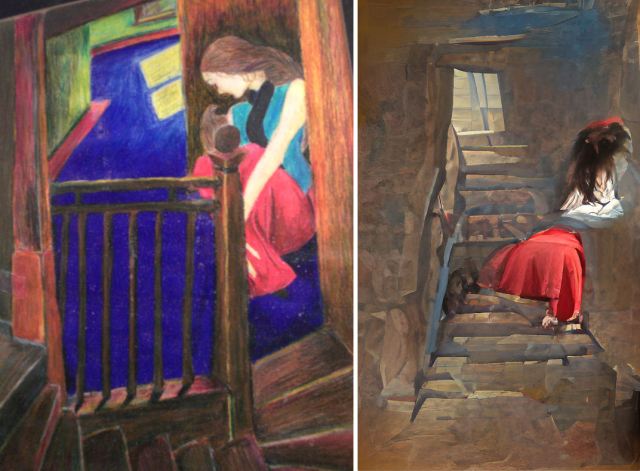
Left: High school art by yours truly, from the 90s. Colored pencil. Right: AI generated art based on text description of illustration to the left, via Wombo

I’m fascinated by how similar the interpretations were, between me, a human, and AI tapping in to collective knowledge. In fact, in the past I’ve drawn illustrations in charcoal very similar to what the AI produced!

The pose, the facial expression, the way the hair falls, the vulnerability– if I rummage through my old art portfolio from high school, I can excavate a charcoal or pastel drawing that looks more or less the same with that!

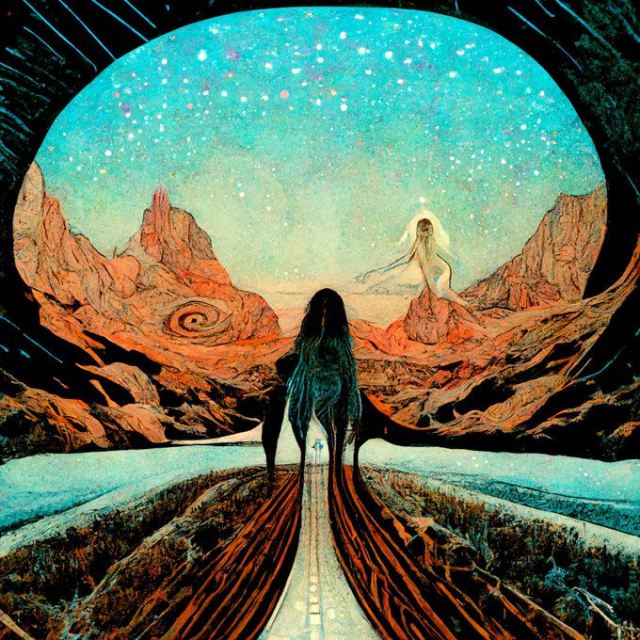
“You Are the Journey” by @KaliYuga_ai via MidJourney (AI art)
Does AI Art Lack Soul?

I explored the question “does AI art lack soul” here in an earlier rumination on the subject. In that blog post, I talked about how this advent of AI generated art has shifted my former paradigm on the mind-soul relation.

This declaration you’ll hear oft repeated — AI art lacks soul; AI lacks soul — is one I’m most apprehensive about. Perhaps we can say we don’t understand the soul of AI, but to declare that AI art lacks soul… I dunno. It doesn’t sit right with me.

I’m not convinced that these works “lack soul.” If I’m getting all psychic and woo, I might say the impression of the soul that’s present feels different from a human sapient soul, just like an animal’s sentient soul or a tree’s soul feels different. You hear people critique the evident style or aesthetic consistent in AI generated art, but just because you don’t love an artist’s style or technical approach doesn’t mean that artist suddenly lacks soul.

So while I have many conflicting thoughts about AI art, the accusation that it lacks soul isn’t one of them. If anything, I wonder if the full body of AI generated art is mirroring back something deep within us collectively, for us to see.

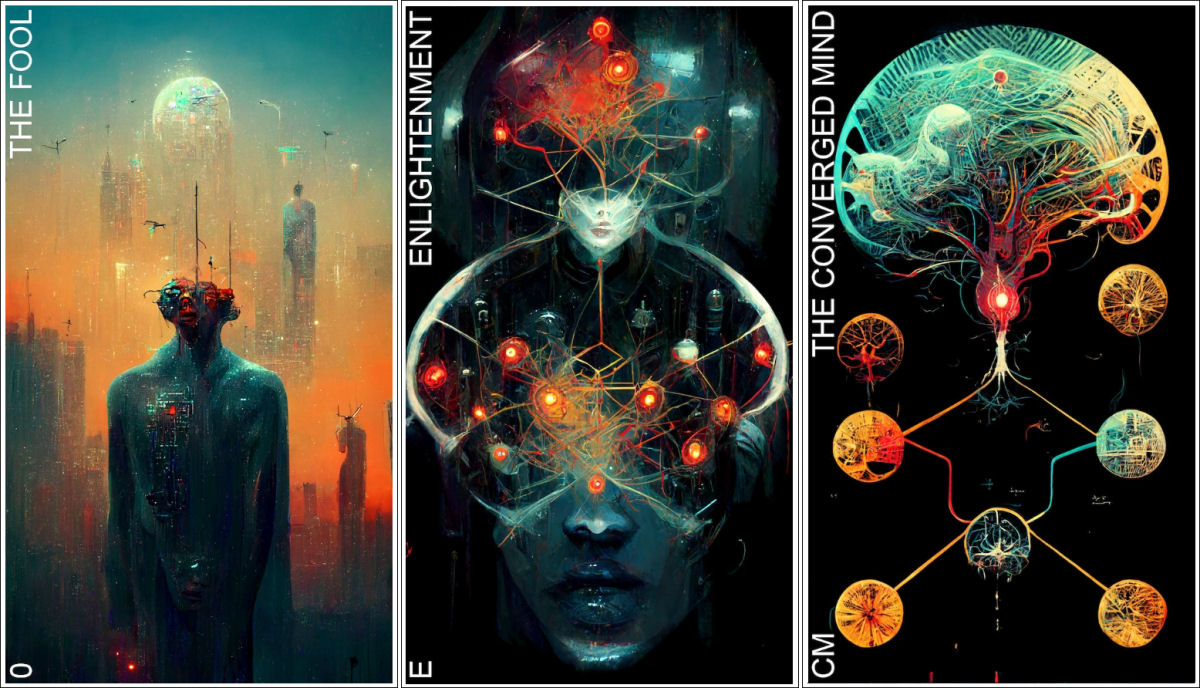
Technomage Tarot by Lee Duncan in collaboration with AI, via Kickstarter campaign (last visited 2022 Sep. 30)
A Rising Popularity of AI Generated Art Decks

Oh, and to illustrate what the community has been buzzing about with regard to AI-generated tarot decks (or in collaboration with AI) coming on to the market, I’ll feature several throughout this commentary.

Continue reading “AI Generated Art + Tarot and Oracle Decks with AI”

The Metaphysician’s Day Planner & Yearly Guidebook

For those who are new to the Metaphysician’s Day Planner (MDP), this is a product description and walk-through.

My dedicated use of the MDP year to year has been essential to my success and also personal wellbeing. The organizer-planner is structured in such a way to inspire a holistic and comprehensive approach to the health of your mind, body, and spirit.

Continue reading “The Metaphysician’s Day Planner & Yearly Guidebook”

2023 Metaphysician’s Day Planner: Pre-Order

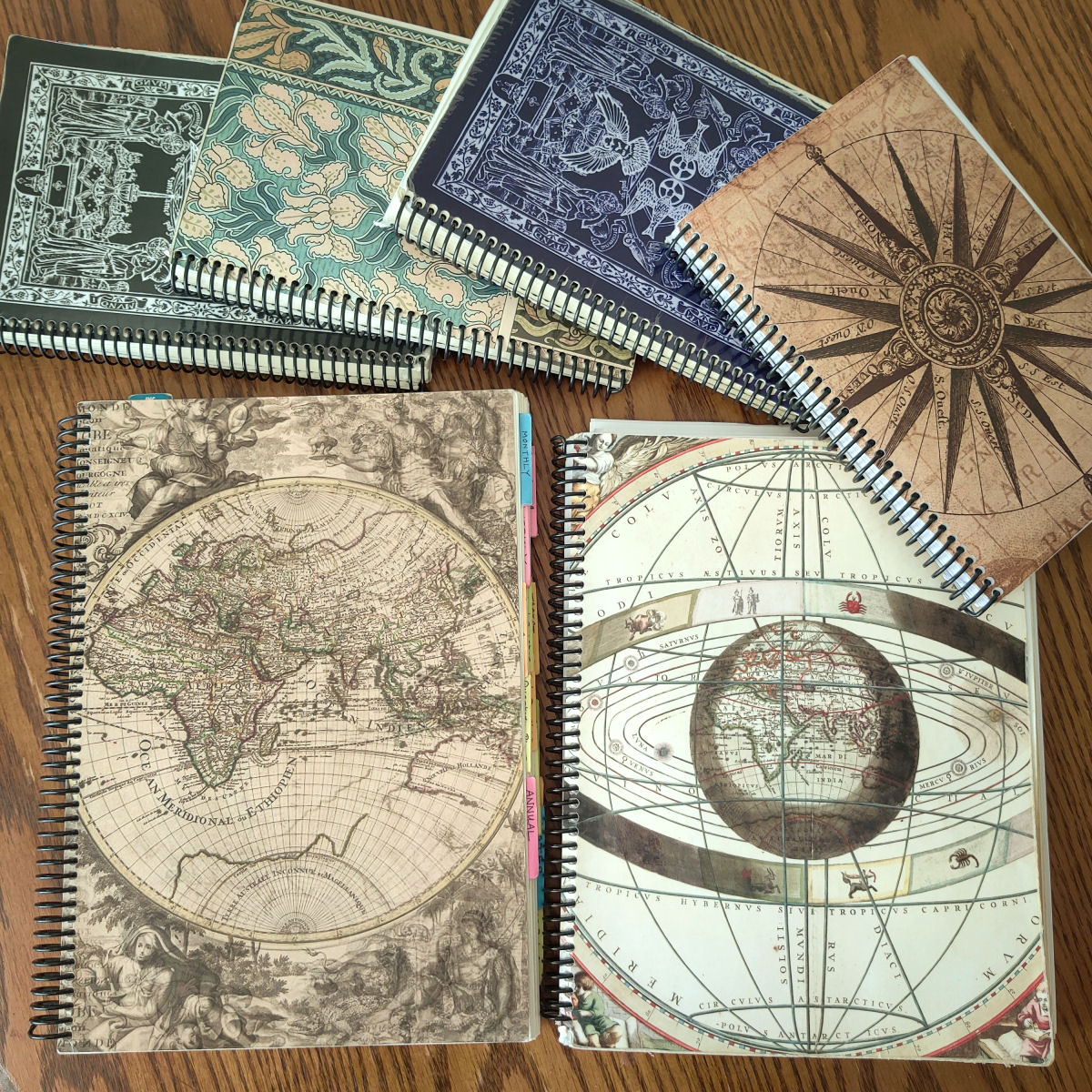
One of the many cover options for 2023.

It’s that time of the year again, for the Metaphysician’s Day Planner. The 2023 Day Planner will be substantially the same as it was this year, 2022.

New to the MDP? CLICK HERE for a walk-through of its contents.

In short summary, it’s customized with your birth chart, 2023 solar returns chart (though I calibrate to the day, rather than to the sun’s degree), and the text you’d like on the interior first page. (Most people will customize their name here, a power word for the year, or a brief phrase.) This name or text is in Prompt #3 from the Order Form below.

This year there will be an optional $8 add-on that includes 4 videos:

  1. Recap of 2023 forecasts (full details and receipts are always in the guidebook) and your 2023 survival guide,
  2. Achieving the goals you set with divination and ritual,
  3. How to improve and master anything, and
  4. Practical & mystical guidance on achieving prosperity.

Continue reading “2023 Metaphysician’s Day Planner: Pre-Order”

Tarot Deck Collecting and Consumerism: My Thoughts

I’ve had a working draft of this blog post, on this topic, started in 2020, and already I was feeling late to it, since it was a topic trending in 2019. Life and other priorities got in the way so I left this draft unfinished.

In 2021 I started seeing this topic discussed with fervor again. It inspired me to reopen this post. I worked on it some more, but again, just didn’t care to finish my train of thought, for whatever reason.

Now it’s 2022 and this same exact topic of conversation in the tarot community is still going strong.

Maybe this time I can finally finish what I was trying to say. I’ll divide up my thoughts by the recurring subtopics or points of argument you hear when community members start talking about tarot deck collecting, culling, and consumerism.

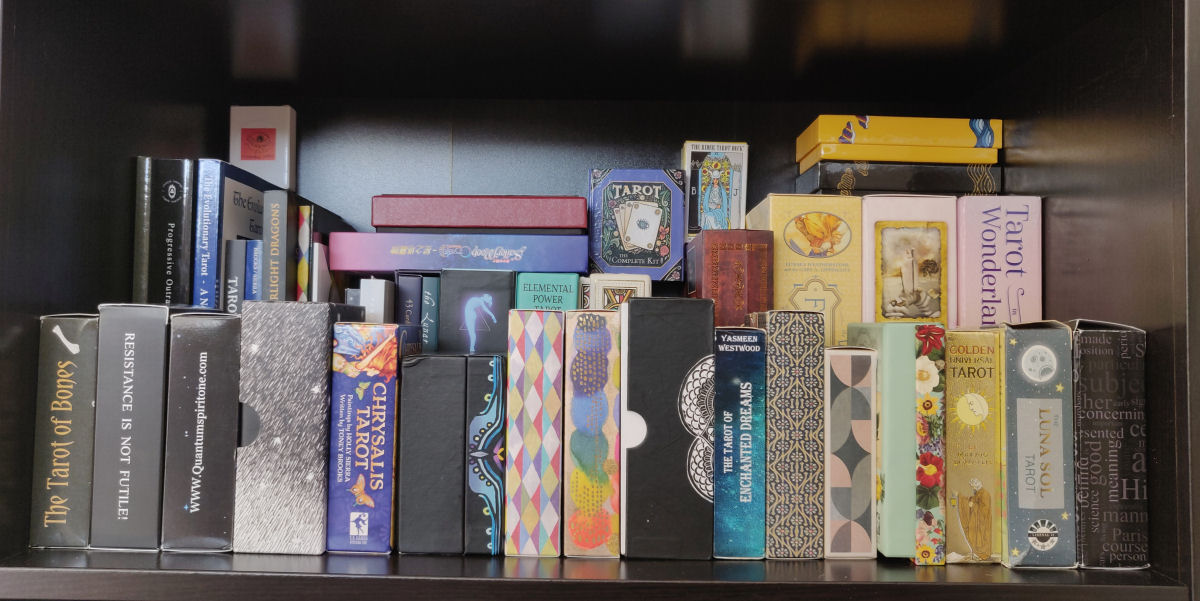
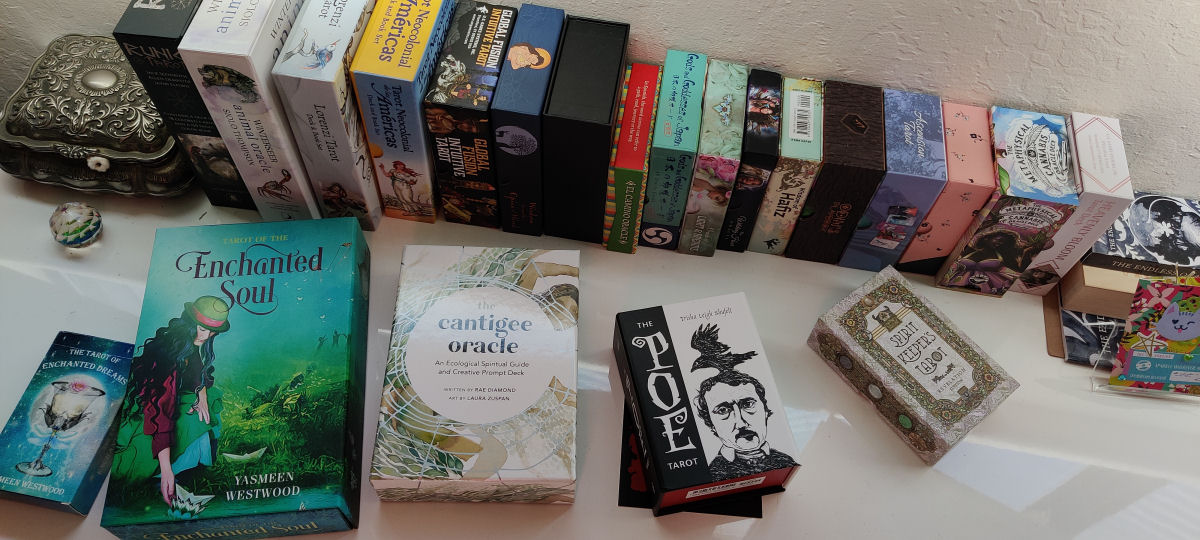
To balance out the paragraphs of text, I’ll be sharing random photos of decks you’d spot around my house.

Continue reading “Tarot Deck Collecting and Consumerism: My Thoughts”

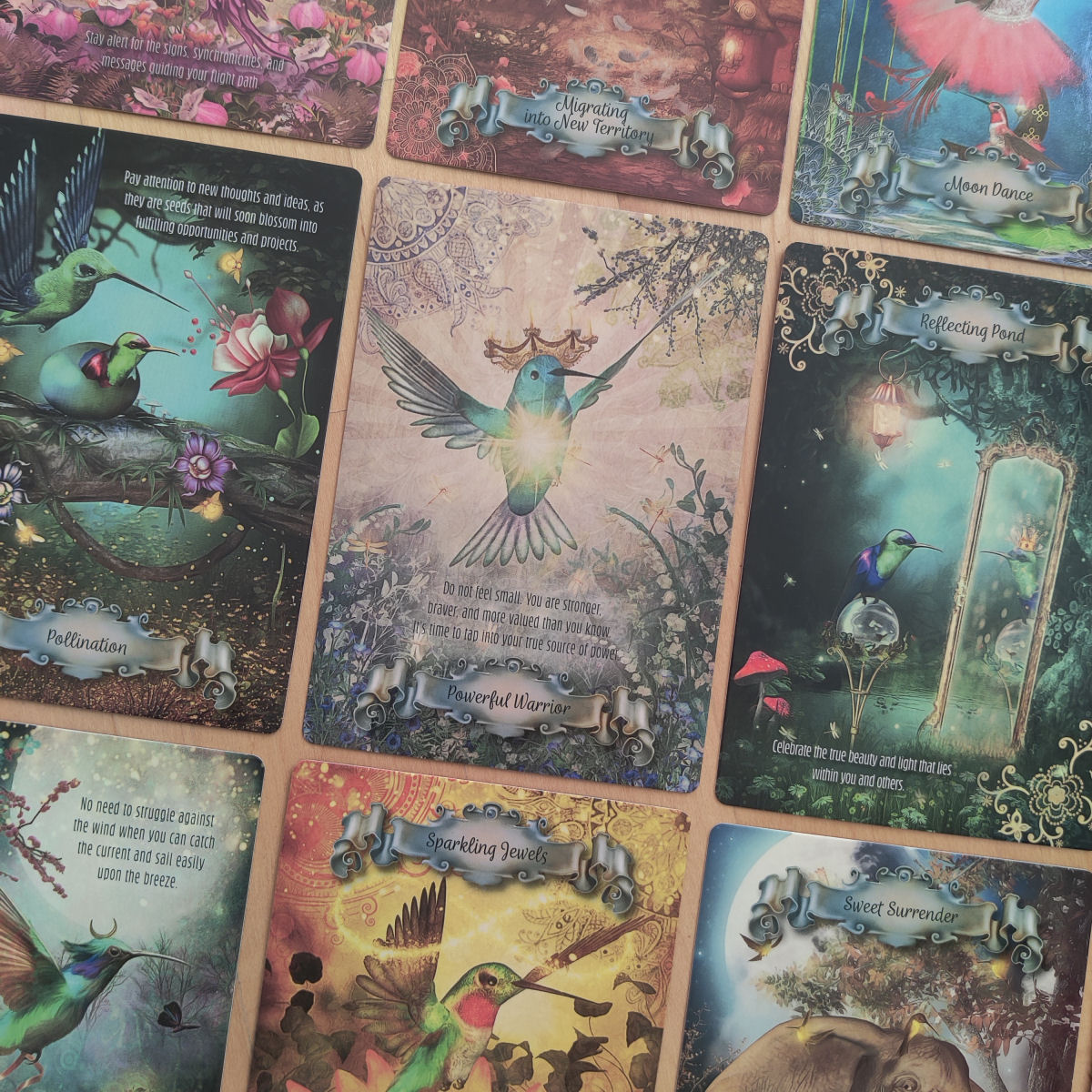
Hummingbird Wisdom Oracle by Ellen Valladares and Yasmeen Westwood

This is a deck walk-through of the Hummingbird Wisdom Oracle by Ellen Wolfson Valladares and illustrated by Yasmeen Westwood, who also created the Tarot of Enchanted Dreams.

Hummingbird Wisdom is a 44-card oracle deck with thematic phrases and call-to-action oracular messages. It’s like a life coach in a box.

Gentle and sweet, these cards inspire you to fully enjoy the nectar of life. The messages are affirming and inspiring. Here, you see the Powerful Warrior. This hummingbird’s message to you: Do not feel small. You are stronger, braver, and more valued than you know. It’s time to tap into your true source of power.

Continue reading “Hummingbird Wisdom Oracle by Ellen Valladares and Yasmeen Westwood”