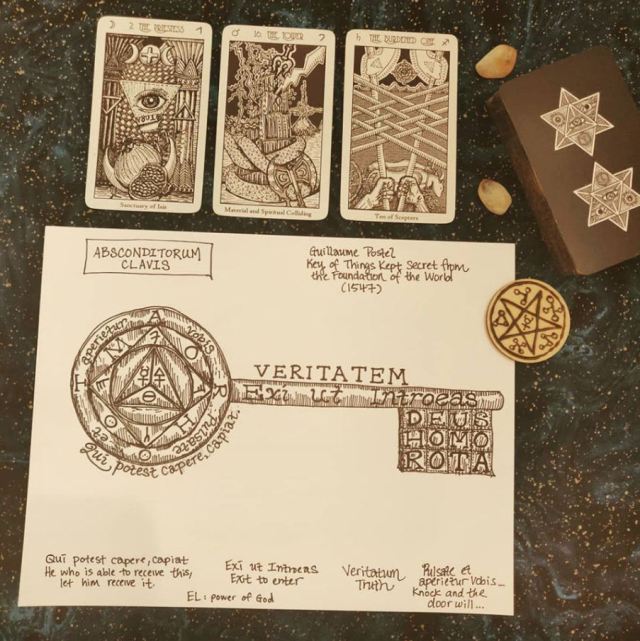
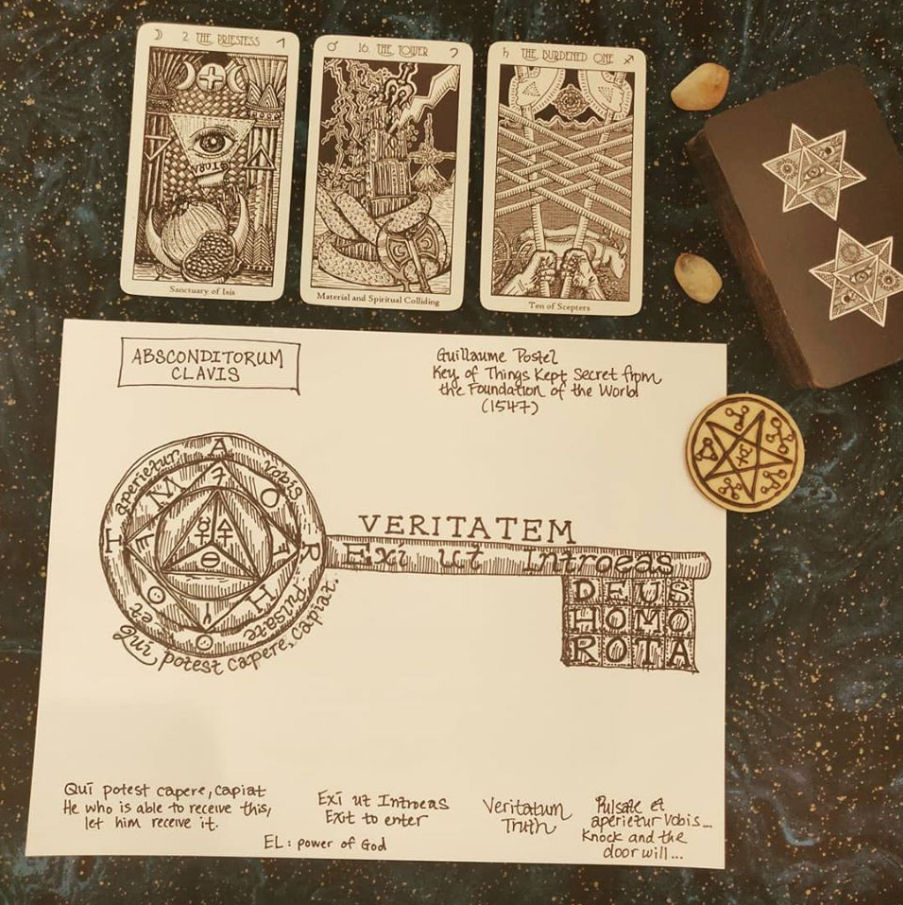
Published in 1547, Guillaume Postel’s Key of Things Kept Secret from the Foundation of the World (full title Clavis, Absconditorum a constitutione mundi clavis) proposed the notion of a universal wisdom and truth that underlies all religions, languages, and symbolic systems, and that there was a unifying language — a divine script — by way of symbolism and math (sacred geometry) with correspondences into each human language, which unlocks that universal wisdom and truth.
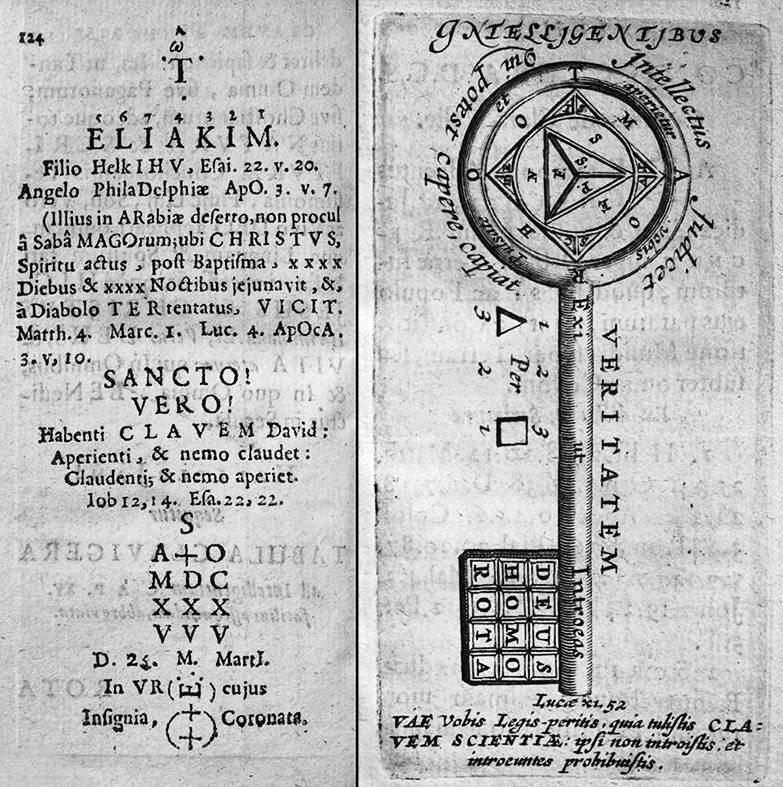
To access that unifying language, one would need a Key to decode from the language you speak now to that language, and French occultist and mystic Eliphas Levi would later revive this concept as the Key to the Great Mysteries, which he said was the tarot, and all this became a key principle in Western esotericism.

Guillaume Postel (1510 – 1581) was a French scholar, diplomat, Christian Kabbalist, and mystic who traveled widely across the Middle East where he learned Hebrew, Arabic, and Syriac. His Key of Things Kept Secret came at the height of the Renaissance’s prisca theologia movement, this intellectual current that believed all religions and philosophies derive from a single, ancient, and divine source. Postel sought to reconcile Christianity, Judaism, Islam, and all human traditions through what he called Orbis Concordia, or a universal harmony of the world. And the Key, the Clavis was the methodology for deciphering that prisca theologia.

Postel believed in the Eastern esoteric concept of soul dualism, though he framed it differently, i.e., instead of saying “yin and yang” aspects of soul, he said “female and male” aspects of the soul, with one being emotion and the other being intellect. Oh. Wow. Anima and animus, anyone? (Yeah, yeah, I know, not the same…) Nonetheless, bear in mind that Postel pre-dates Carl Jung by some odd 365 years.
| Concept |
Postel’s View |
| The Key |
The universal code that reveals divine order in all things |
| Basis |
Hebrew Kabbalah + Christian theology + Hermetic correspondences |
| Purpose |
To restore humanity to its original divine knowledge |
| Means |
Study of sacred language, numbers, and symbols |
| Outcome |
The reunification of all religions and nations under divine harmony |
The more you dig into Postel, the more interesting it gets. At one point he believed himself to be a prophetic interpreter in possession of such a Key, and that as a result, he is here to proclaim that there would be a female messiah, a Mater Mundi, who would usher in a new age of universal harmony. Needless to say, he eventually found himself a target of the 16th century Inquisition and was subsequently imprisoned and forced to recant his propositions. At one point, Clavis was even a banned text.
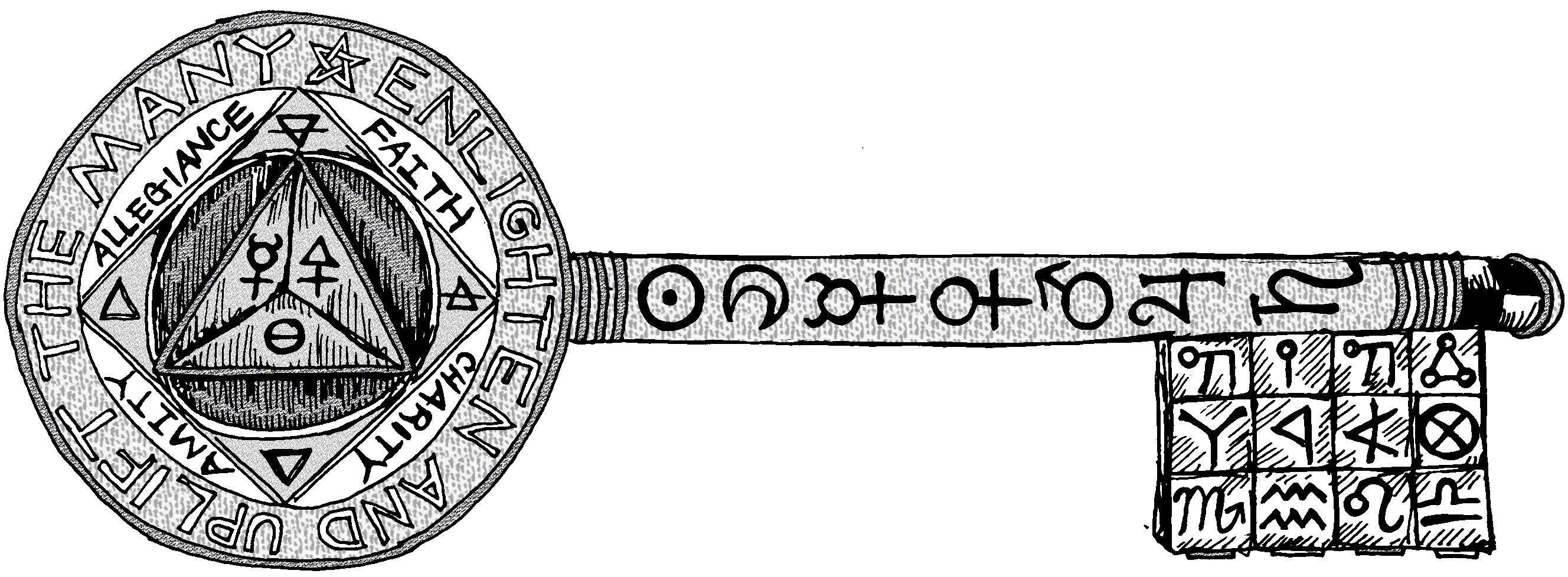
Postel’s Key endeavored to unlock a universal code for deciphering any mystery or esoteric wisdom, with the “translation” work happening by way of correspondences. In other words, the “Key” isn’t a physical instrument, but a methodology for interpreting Matter and Spirit.
Continue reading “Postel’s Key of Things Kept Secret (1547)” →





 benebell wen