Guan Luo Yin 觀落陰 is a practice of wu shamanism 巫術 found primarily in the South Pacific. While methodologies will differ, one approach is as an astral journey to the underworld to see the spirits of those who have passed on; another is as a method of “remote viewing.”
Some traditions conceptualize the descent as beginning from the entrance to a cave at the base of a mountain (associated with the Kunlun Mountain). Others conceptualize it as a palace with many floors descending (as opposed to ascending the way floors of a building are constructed in the physical earthly world).
This video serves as an introduction to the practice.
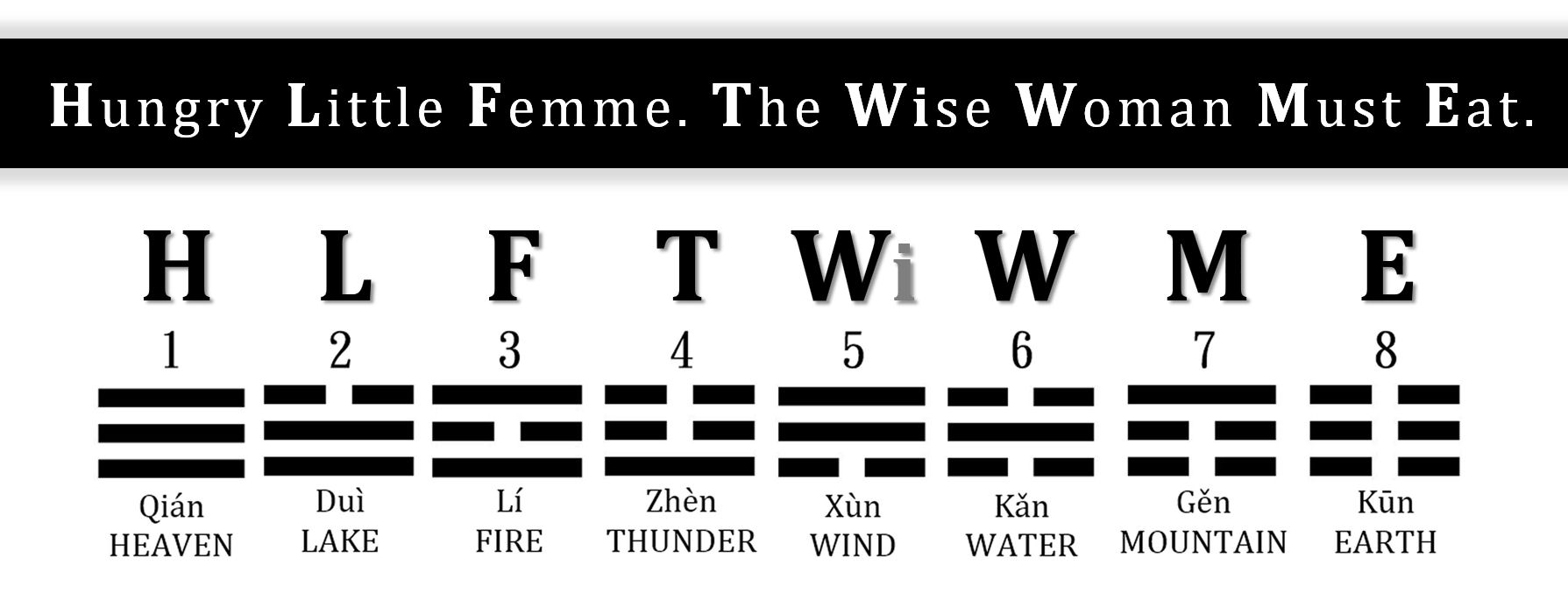
This video lecture course is an overview of the eight trigrams (八卦, Bā Guà). It is part of a companion course series leading up to the release of my third book, I Ching, The Oracle.
My goofy mnemonic for remembering the order of the trigrams
Timestamps provided in the video description box (you’ll have to watch on the YouTube platform). Apologies, the editing and audio are a bit choppy. The timing of the slides and voiceover narration are off in a few places.
Continuing from what I said in the video chat, if this is something you seriously want to do, then start by getting that three-ring binder. Though I think organizing it into eleven sections is sufficient, I noticed you can’t buy packs of just eleven binder dividers. They come in sets of 12, so that’s fine. Having a final “Miscellany” tab is always a good idea anyway.
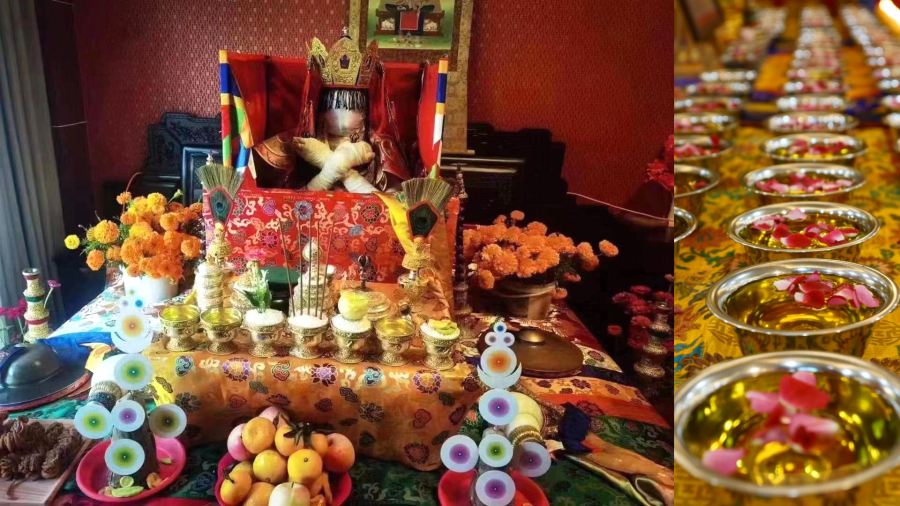
The above video commentary is a short introduction to esoteric Buddhism, covering the distinctions between sutra-based Buddhism and tantric Buddhism. As noted at the end of the video, this write-up will give instructions to the “homework assignments,” practica[I don’t know why I’m such a nerd and called these “homework assignments”] intended to give you a firsthand experience with Buddhist folk magic.
Timestamp 11:39 Addendum: Oops, I cut out too much of the raw video chat and omitted the part where I talked about where I was going with this. =) So if you were left confused, it’s not you, it’s me. =) Continuing from what I am saying at this timestamp, if tantric esoteric Buddhist cultivation is characterized as a “shortcut” to the destination but one that’s far more dangerous and riskier terrain, then endeavoring to take this route all but requires a highly skilled guide to help you navigate the tougher terrain. It’s not a route you’d want to go at on your own or, worse yet, with a guide falsely self-proclaimed as a lama or spiritual leader who will lead you astray, or who isn’t equipped to help you deal with mara. Thus, the framing of the question shouldn’t be “is it open or closed,” but rather as “what, really, would be the most assured path for you?” Can you fully trust someone else’s claim of endowing you with the empowerment you’re seeking?
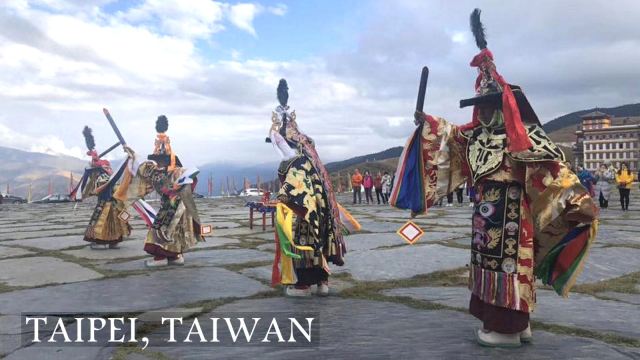
Taipei Katok Ten Directions Buddhist Association
As a beginner-level introduction, these practices are intended to be general enough for all, so you’ll be encouraged to piecemeal neutral elements often found in esoteric Buddhism and graft it onto your preexisting practice, and most importantly of all, your local environment.
Taipei Katok Ten Directions Buddhist Association
Just like esoteric Buddhism takes on the indigenous practices and magical systems from the land it touches, be that Bön folk magic syncretized with Buddhism in Tibet, Taoist mysticism with Buddhism in China, Shinto in Japan, or tantric Buddhism melded with Tai and Hmong shamanic practices in Southeast Asia, you’ll be working with features of esoteric Buddhism syncretized with what’s native to you.
Since I made reference to some of these regions, below is an excerpted Appendix E from I Ching, The Oracle (North Atlantic Books, forthcoming 2023).
While the maps are not drawn to scale (I did them myself, by hand…) at least they help to give you a mental reference of where these kingdoms or states are located in geographical relation to one another.
Excerpt from Appendix E of I Ching, The Oracle (June, 2023):
Now that I think about it some more, “witchcraft” is probably not even the right term to be using. “Folk magic” might be the better descriptive? What do you think?
Don’t forget– if it helps, turn the closed captioning on! =)
When I say “open tradition,” I mean a culture-specific practice of a magical system and set of doctrinal beliefs integrated into that practice that anyone at all can work with for themselves, that it’s free and open to the public.
When I say “closed tradition,” I mean a culture-specific practice of a magical system and set of doctrinal beliefs integrated into that practice that can only be honorably accessed if certain conditions are met, such as initiation, heredity, clan or ethnic group membership, or a formally established master-student bond.
Esoteric Taoist practices, broadly speaking, are openly accessible to anyone and all, but not anyone and not everyone who seeks it will find alignment with this Path. It’s for anyone, but it’s not for everyone.
But when we’re having this conversation about esoteric Taoist traditions here in the West, then to be clear, the conversation is probably more about cultural appropriation, spiritual gatekeeping, and how to engage respectfully with living traditions.
Taoism is, by the nature of the philosophy, even occult philosophy, is syncretic. It absorbs indigenous shamanic traditions, other established religious traditions, and in terms of the values that are the compass for how to navigate the syncretism, it’s nature. It’s the study and understanding of qi in nature.
It’s about nature, but humans are part of nature, and humans have minds that formulate ideas that become aggregated into establishments, you can’t ignore the establishments. So in reality, a human – the practitioner – will study how the many establishments engage with the qi in nature and then work with what works, for them. Since that’s Taoist mysticism in a nutshell, it’s an open practice.
Lineaged traditions, on the other hand, are unequivocally closed. Some are initiatory. Some are hereditary. Some are a combination of both. The premise is a group of people have cultivated an elite access to potent qi in nature through a highly-specialized methodology, and they aren’t about to share that methodology with just anyone. So there are very limited ways to access that specific methodology. Some form of ritualized transmission must take place to receive access.
But what about non-lineaged individuals crafting, say, Fu talismans, performing Taoist rituals, be that ones they’ve made up themselves or followed step by step from a canonical grimoire, or working with Taoist ritual tools? To be fair, that’s where it gets a bit more complicated, and political.
You’re going to encounter folks who say no, unless you’re lineaged, you cannot. That or it’s more of a warning that if you’re just chaotically doing it on your own, it’s way too easy and too high a risk of going off the rails and getting yourself into spiritual hot water. There’s a kernel of truth there, in my opinion, which is why I believe strongly in being religious and cultivating a strong moral compass and code of ethics first before dabbling with the occult. If there isn’t going to be a teacher there to rap your hands with a stick when you’ve been bad, then you’ve got to be disciplined enough to self-monitor.
Whereas I’ve always made my personal opinion clear. It’s open access with an asterisk. It won’t be me (and I don’t believe it should be another human) who puts up walls or locks the gate to keep you out. It’s gonna be the gods. It’s The Craft itself. The Esoteric Tao lets in who it lets in.
As for cultural appropriation, I’ve always taken the view that, you’ll know it when you see it. It’s hard to come up with a one-definition-applies-to-all-case-analyses metric for determining what’s okay and what’s not okay. Not to mention each person’s appetite for something possibly appropriative is gonna vary. Plus, overly-worrying about whether you yourself are culturally appropriating is more demonstrative of caring too much about yourself than actually caring about the cultural tradition you’re working with. If truly your heart is with the culture, you’ll naturally focus on its people, its communities, with an organic passion to learn as much as you can. I don’t have to tell you to be reverent; you just will. And if somebody has to remind you to be reverent, then buddy, I think you’re already in the wrong.
My third book, I Ching, The Oracle: A Practical Guide to the Book of Changes, published by North Atlantic Books, is forthcoming mid-2023. It’s my translation and annotations of the Oracle with cultural and historical references that honor the shamanic origins of the I Ching.
What it really is, though, is a magical grimoire. I began with an aspiration to write a grimoire on Taoist mysticism and magical practices, and then decided to do so through the framework of the I Ching. This is going to be a practical hands-on primer on East Asian modalities of witchcraft and folk magic. A deep-dive learning experience into the history and mythological references found in the Book of Changes is the bonus.
Leading up to the release of I Ching, The Oracle will be this series of videos where I lay the foundation for working with this third book. If this is of interest to you, stay tuned! ❤
I received a question by letter, which I wanted to answer privately, but didn’t have an e-mail address or even mailing address. So here’s to hoping this post is seen by who it’s intended for. ❤
The question presented:
Dear Benebell,
I am a Taoist witch, but my religious family thinks I am a Baptist Christian and therefore against non-Baptist religious practices.
Last night my dad and I were watching a Taiwanese movie and an ancestor veneration scene came up. My dad began a conversation about Taoist traditions and said, “When I die, please don’t venerate me like a Catholic or Taoist would.”
I am a strong believer in ancestor veneration and plan to venerate both of my parents when they pass away.
I do not want to go against my father’s personal wishes as I love and respect him, but I also do not want his spirit to go un-venerated because I love him dearly.
What, in your opinion, is the best way to go about this?
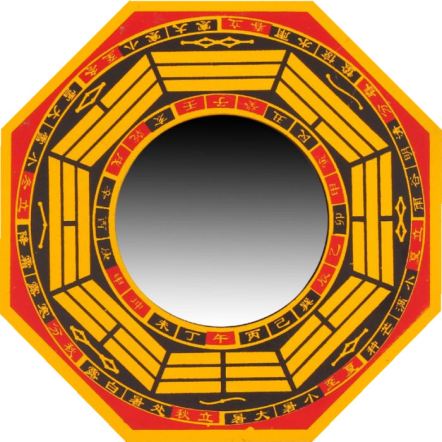
Learn a little more about this common ritual tool in traditional Asian folk magic. I’m inviting you to give the ba gua or eight trigrams mirror a try.
This video covers a few pointers on how to use a ba gua mirror to tell whether you’ve been hexed or cursed (a folksy practice that’s interesting to learn about, at the very elast), how a ba gua mirror can amplify your spell-crafting techniques, a simple intention-setting candle spell, how to make your own ba gua mirror if you can’t source one, and how to integrate this one tool and folk practice into what you’re already doing.




 benebell wen