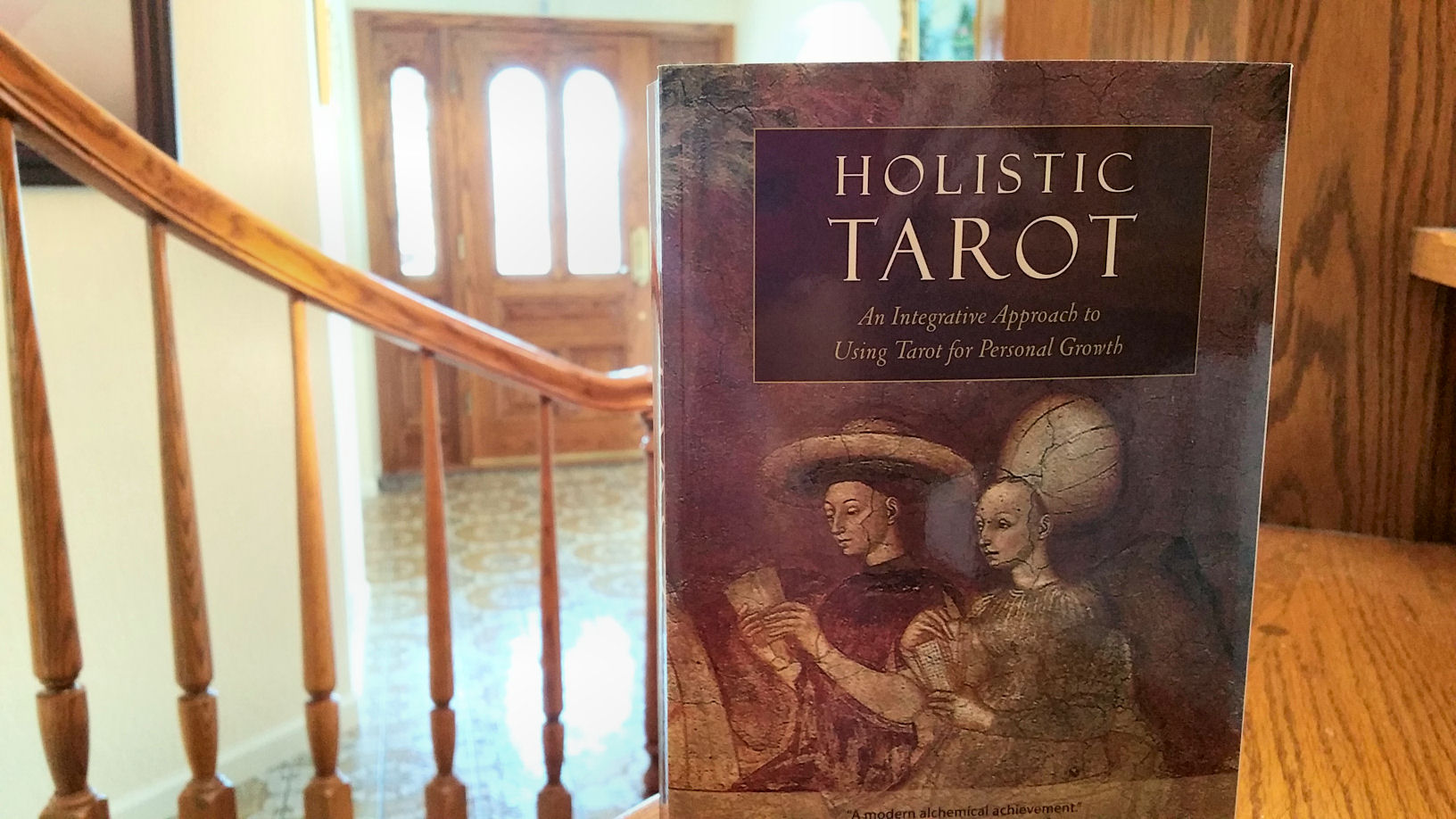
Holistic Tarot gets criticized for allegedly being unkind in its treatment of practitioners of craft, in particular witchcraft. Folks have interpreted my book as proposing that the magic of divination ought to be stripped of tarot entirely and that I’m telling you to approach tarot from a staunchly atheistic point of view. I wonder why for so many, life choices must be so mutually exclusive. Why does my personal spirituality let alone religious beliefs need to be apparent in everything that I produce?
The book’s tone has never been shy or misleading about taking an academic approach to understanding tarot. That is hardly a concentrated attempt to strip magic from tarot, an allegation rendered even more absurd if you know anything about my personal background. Also, I wrote Holistic Tarot as a beginner’s tarot book with a specific target reader in mind.
My intention for the book is to get you to a level of technical mastery over tarot. Technical mastery. That means yes, in the beginning, magic is stripped of the tarot the same way when you first learn a musical instrument for the purpose of someday mastering it, you strip all artistry from the practice of that instrument.
During your first 10,000 hours of lessons for mastering violin, it’s about how you hold the bow, how to string your own instrument, how to straighten your own bridge, how to tune your instrument, how to hold a whole note with no vibrato, not allowing you to use any vibrato at all until you’ve mastered your bow work, then how to master the vibrato, perfecting the execution of various techniques, rote learning, stripping you of all personal creativity and compelling you to learn technique your teacher’s way, playing boring scales and etudes until your fingers are blistered and your neck is bruised. It’s hardly musical at all. You could argue that such an approach is stripping the musicality from music.
This is a beginner’s course on how to read both a Placidus and a Whole Signs astrological chart with the tropical zodiac (the sidereal zodiac is not taught in this course, though we will cover the differences between a tropical and a sidereal zodiac). Yep, that’s right. Both will be taught. The mission of this course is to get you to know how to read both Placidus and Whole Signs, even if Whole Signs is my preferred system. (Meaning, there’s going to be a bias in favor of Whole Signs…)
This course does not teach chart construction and will only cover how to read a chart that you already have on hand, Placidus or Whole Signs. After covering the basics, you will learn how to read a natal chart, perform transits astrology readings, get a sense of both traditional astrology and modern astrology, dwarf planets and asteroids included, and if I’ll be damned, you are going to have one rock solid foundation in Western astrology that won’t be beat.
Competitive in content, by scope and depth, to beginner astrology courses that cost in the hundreds, Astrology Course for Beginners is intended to be budget-friendly, so everyone can learn how to simplify the complexities of Western astrology.
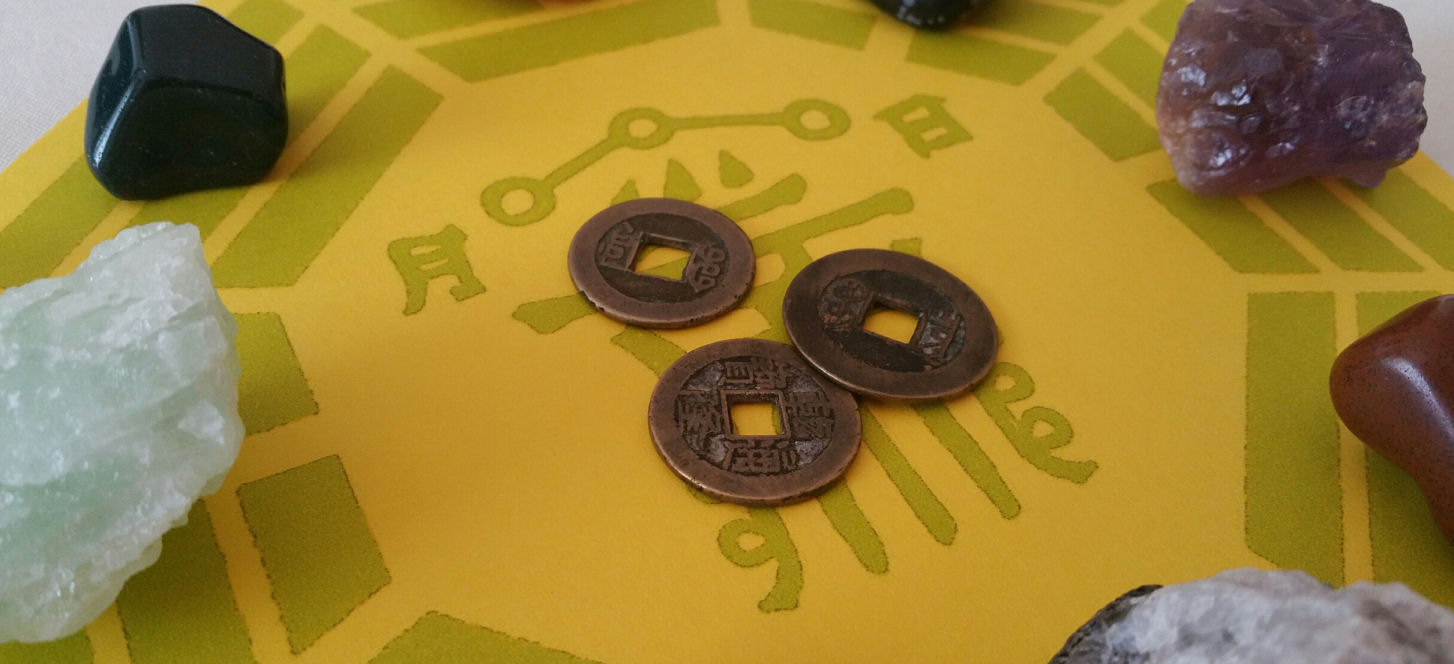
I’m going to walk you through an easy beginner’s methodology for I Ching and tarot divination. We’ll be doing a simple one card tarot draw plus casting I Ching hexagrams by the coin toss method. So in addition to the instructions here for the I Ching divination, I’m presuming you have a tarot deck and know how to operate one. If not, no worries. This doesn’t need to be I Ching and tarot. It can just be I Ching! 🙂
I use traditional coins for my personal practice, but we won’t be needing those today. Any three coins of the same value in your change purse will do. Go find three pennies, or three nickels, or three quarters–whatever pleases you. And give them a good wash.
Here I’m using disinfectant soap and water. Dry them thoroughly. You can use a towel. Anything. Just be practical.
In a social justice law course I took back in my law school days, the professor went around the room on the first day of class and asked each one of us to offer what we think brings about social change in this world. A classroom populated by, um, well, white folks, offered thought bubbles like grassroots mobilization, advocacy, charismatic leadership, lobbying, equal access to justice, public policy, etc. Funny, I was thinking about it from a different perspective.
When it was my turn, I said, “Pain.”
Pain is not only the impetus for social change, but it is the impetus to greatness. Profound feelings of marginalization lead to zealous advocacy on behalf of others. Even when your pain looks different from my pain, the common emotional denominator between our pains is the same, and through that common emotional denominator, you and I can connect, create an incredible, powerful fusion, and together, through collectivism, become the impetus for social change and for mutual greatness.
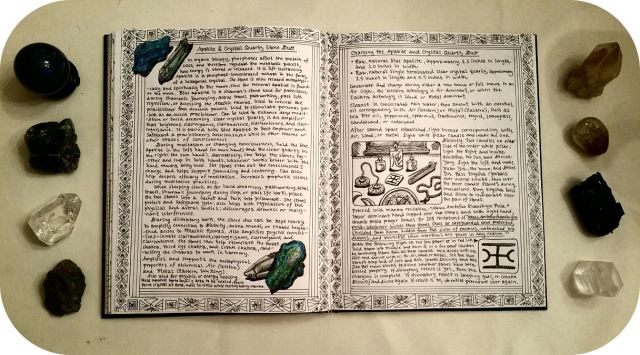
When you’ve dedicated yourself to the study of craft, you’re going to want to start your own written record of the path. It is the most natural thing and the concept of keeping a grimoire, book of shadows, or book of methods is found across all of the cultures of magical traditions, East to West. Now it’s your turn to feel that pull. You’ve got your big, beautiful blank book ready to go. Where do you start? How do you start?
By its nature, a private journal means no one can tell you what to do. Yet some of us just want tangible insights for inspiration, so that’s what this is. I’m most certainly not trying to tell you how to keep your own private journal. My own grimoire does not come close to following the instructions I am about to give.
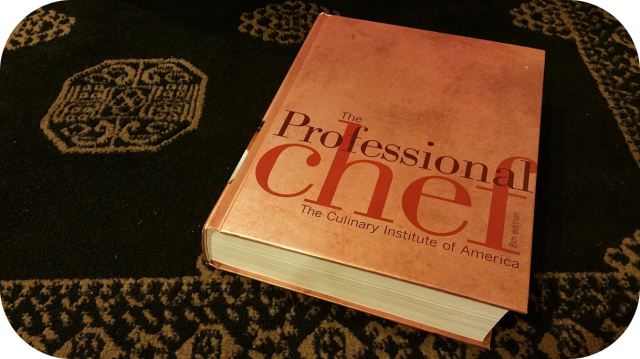
Yet the other day, I was thumbing through a rather incredible tome, quite esoteric in nature for sure, and that tome offered some of the most brilliant insights into grimoire organization that I have ever come across. So I shall share that text with you today.
That’s right. It’s The Professional Chef by The Culinary Institute of America.
Okay, it’s a cooking book. But I swear if you went through this thing you’d agree it’s esoteric as hell. Who knew broth making and a roux could be so complicated. I digress. And I’m serious. This book provides incredible insights into how you might consider organizing and creating your grimoire.
2025 June 15: Please note that the following course content was produced nearly a decade ago and may reflect the production standards and media quality that were even low for that time, so may foreseeably prove to be challenging for the present day user. We appreciate your understanding and grace as you engage with these materials.
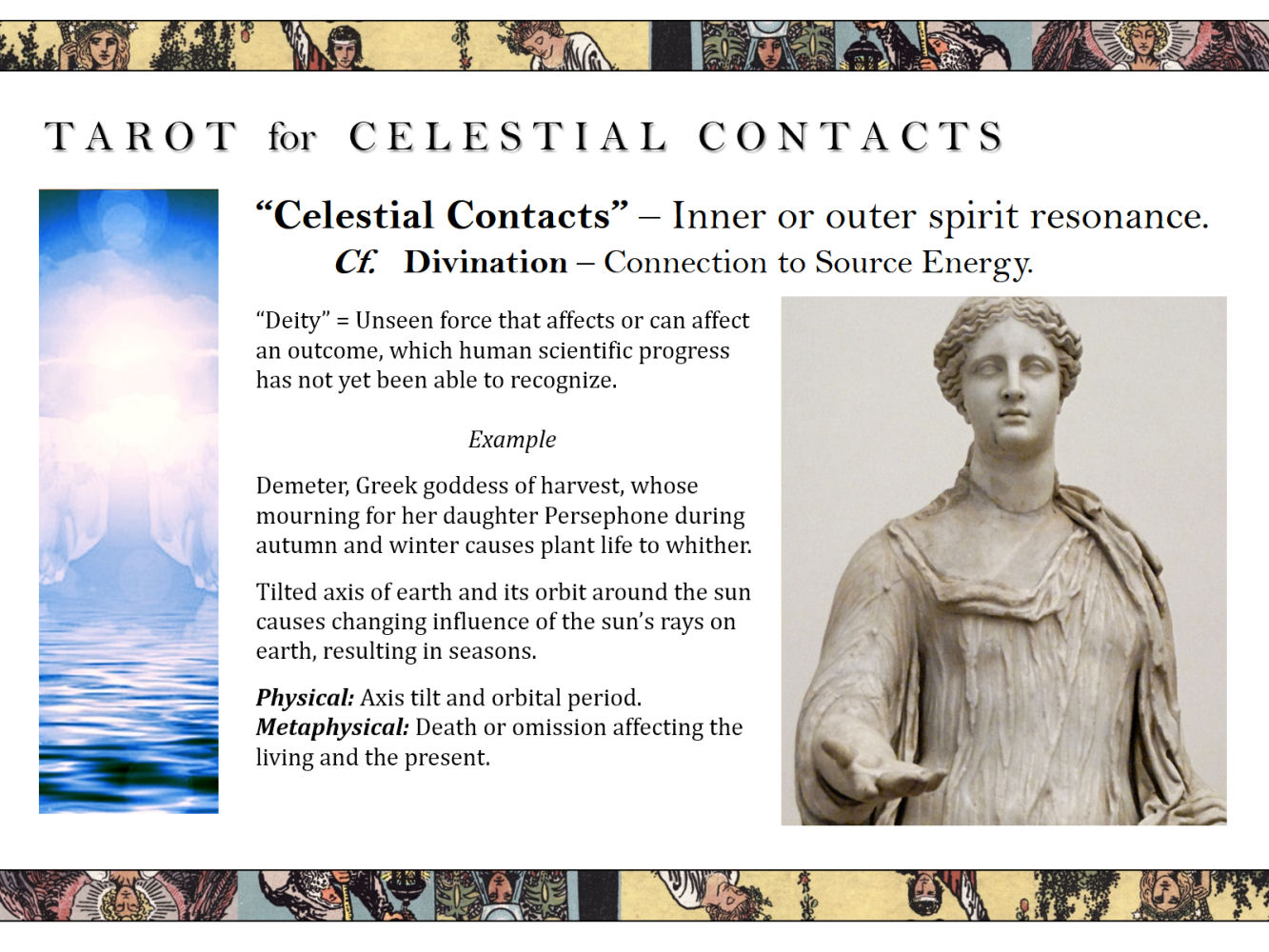
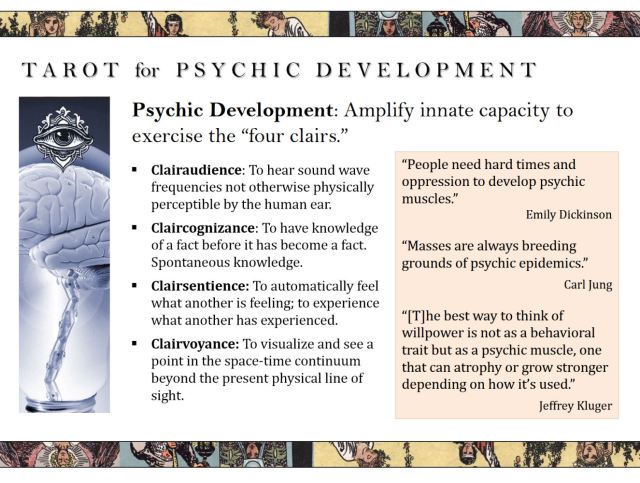
Video Lecture Screenshot
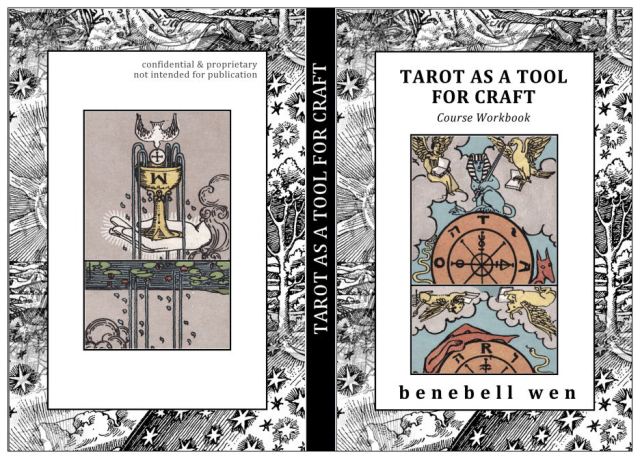
Tarot as a Tool for Craft is a FREE DOWNLOADABLE guided workbook course that teaches practitioners how to elevate tarot from a system of divination into a powerful tool for spellcraft, ritual, and magical workings. Rooted in Western esotericism and enriched by practical hands-on exercises, the course blends tarot theory, ceremonial ritual, sigil work, talismanic crafting, and energy channeling to help the student activate the cards as magical instruments. Through progressive lessons and experiential assignments, learners will explore how to work with tarot archetypes, construct effective magical workings, and cultivate a deeply personal practice integrating both high and low magic traditions.
An expansion on the talk I presented in 2016 at the Theosophical Society of the East Bay, this course covers how a practitioner of craft might use tarot, from triggering intuitive creativity for self-empowerment, divination, and amplifying psychic ability to communion with celestial contacts, mediumship, and summonings. This is an intermediate course that presumes proficiency with tarot. Subject matter also runs into esoteric and mystical applications of the tarot, so the tone of the course might not be right for everyone.
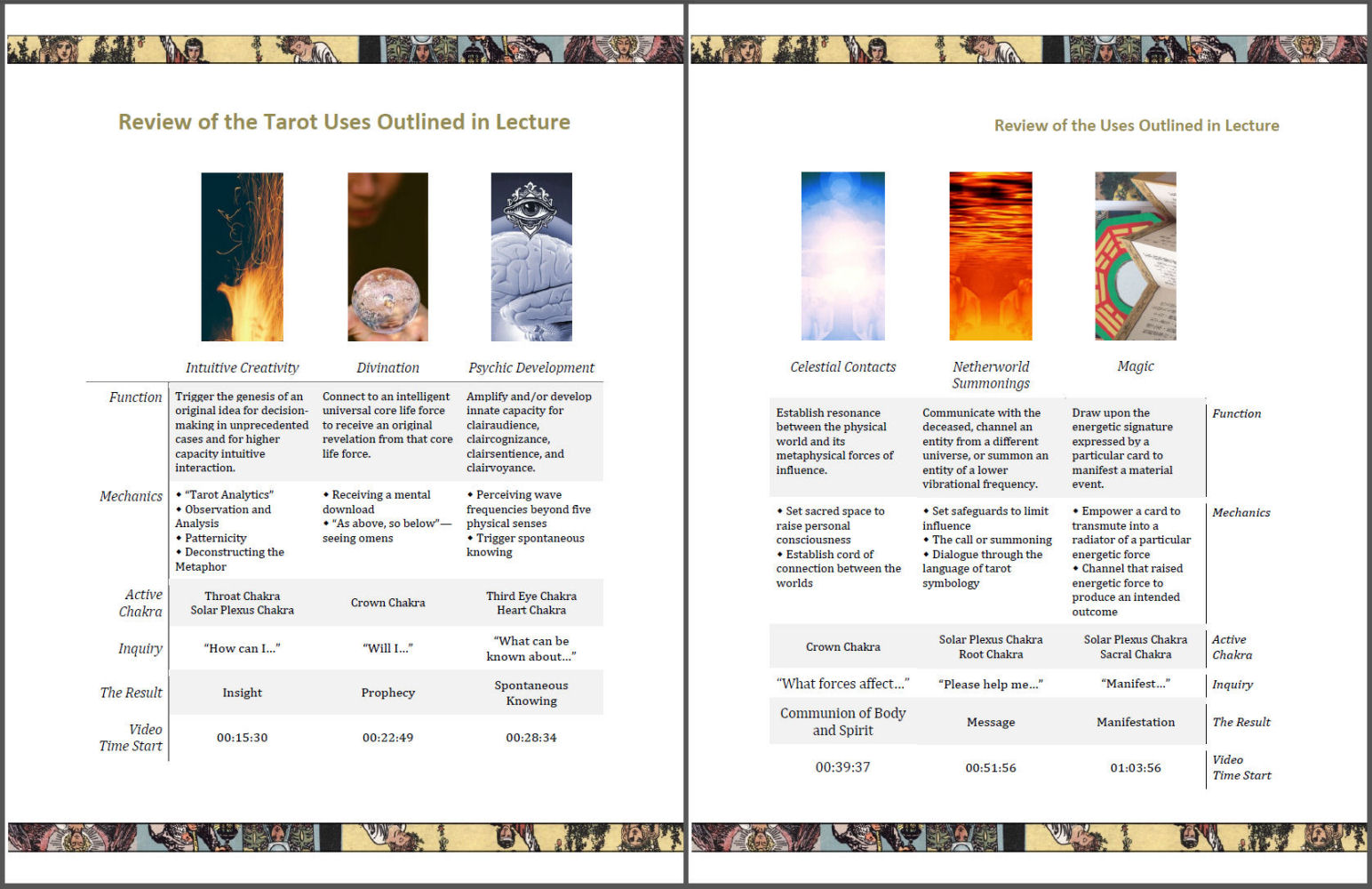
Workbook Page Spread Preview
Course Objectives
After completing this workbook course, you will:
Understand how to transform tarot cards from passive symbols into active magical tools.
Learn how to design and execute ritual spells using the tarot as both focus and channel.
Practice creating and charging talismans using tarot correspondences, sigils, and planetary hours.
Develop a personalized system of magical correspondences rooted in tarot structure.
Cultivate the mindset and discipline of a ceremonial magician working through a tarot framework.
Strengthen intuitive and psychic faculties through ritualized work with tarot archetypes and energies
Click image file to download the Workbook pdf
What my 2015 book Holistic Tarot taught was the first of the five pillars that are discussed in this course. This course deconstructs the form and mechanics of using tarot for:
Intuitive Creativity to achieve self-empowerment;
Divination to connect to what Paul Foster Case called the Cause of Causes—the Universal Intelligent Life Energy;
Psychic Readings both to amplify your innate psychic ability and to use tarot as a training tool for strengthening your psychic ability;
Celestial Contacts to connect with deities, angels, ascended masters, devas, or the metaphysical force affecting physical conditions; and
Netherworld Contacts and using tarot for mediumship, ancestral connections, or connecting to entities of nether-worlds and other-worlds.
Workbook Page Spread Preview
A workbook with exercises to help you learn and master the mechanics of such tarot operations will also be provided to supplement the video lecture.
Video Lecture Screenshot
Also, this is not a video lecture that you watch just one time. I propose that the video lecture and the workbook should be revisited routinely. Print out the workbook multiple times and routinely work through the exercises prompted in the workbook to help you advance and further develop the skills taught in the video lecture.
As it tends to be when you’re working with me, the workbook is the most important part of this course. The 49-page workbook is intended for use and re-use. Print it out many times throughout your development to work through the training exercises.
As it tends to be when you’re working with me, the workbook is the most important part of this course. The 49-page workbook is intended for use and re-use. Print it out many times throughout your development to work through the training exercises.
Workbook Page Spread Preview
The training exercises begin basic and analytical, compelling you to work with numerology, astrology, Kabbalistic references, and other forms of symbolism and system correspondences to broaden your working and experiential knowledge of the tarot.
Then the course deep-dives into training exercises for mediumship, using tarot for celestial contacts, using tarot in shamanic journeying, using tarot as talismans, and so much more. I hope you will be as thrilled and enthusiastic about this workbook as I felt when I went through the exercises for myself.
Workbook Page Spread Preview
I hope this workbook will be a game changer for you in terms of your relationship with tarot as your divinatory tool, especially if you’re looking to hone your psychic abilities, intuition, and experience various forms of mystical training. As I tend to do, I fuse together eastern and western esoteric principles.
Although this course presumes intermediate proficiency with the tarot prior to commencing, it is a beginner-level introduction to using the cards as living, breathing instruments of ritual magic and mysticism.
Your Course Instructor
Hi! I’m Benebell Wen, the author of Holistic Tarot (North Atlantic Books, 2015) and The Tao of Craft: Fu Sigils and Casting Talismans in the Eastern Esoteric Traditions (NAB, 2016). My background is in both law and classical studies, and so I strive to bring a synthesis of analytics-based scholarship, a practical teaching style, and yet also a deep initiatic understanding of occult systems.
WESTERN WITCHCRAFT I: This course is a 13-module immersive study of the first 12 chapters in Eliphas Levi’s Doctrine, Part I, of the greater collected work Transcendental Magic. There are 18 video lectures with a total run time of 9 hours along with a 363-page textbook/workbook. In addition, you’ll be getting a set of guided focused meditation for the magus videos. My recommendation is to work through the materials over a 13-week period. Both theory and practicum are covered. This course is structured after a one semester 400-level university elective.
This class is structured after a graduate-level course with a series of lectures plus guided tarot readings ritualized and crafted to show rather than tell you about tarot in witchcraft.
The lecture portion covers a comparative analysis of exoteric, psychology-based tarot reading vs. an esoteric, psychic-based tarot reading, and also tarot as a witch’s tool. We’ll cover the history and legacy of tarot in Western occultism, focusing in on applying Hermetic principles to the tarot. Then we’ll consider the role of tarot and witchcraft in the modern era.
Note: “Tarot, Occultism, and Modern Witchcraft” was first offered during Tarot Summer School 2018 at the Tarot Readers Academy.
Click on the above image to visit the product description page.
$25
The Metaphysician’s Day Planner
I juggle a full-time day job in corporate law with writing and publishing books, doing interviews and talks for the book tours, part-time professional tarot reader and astrologer, blogger, avid home cook, and pro bono legal work on the side, all while being a metaphysician and keeping myself buried in metaphysical studies, so I do get asked a lot about how I organize my day. How do I make sure I am on top of my schedule of court appearances, hearings, and conferences for work, my client reading list for tarot and astrology, food prep for the week and menu planning, domestic chores, personal health and fitness, and everything in between?
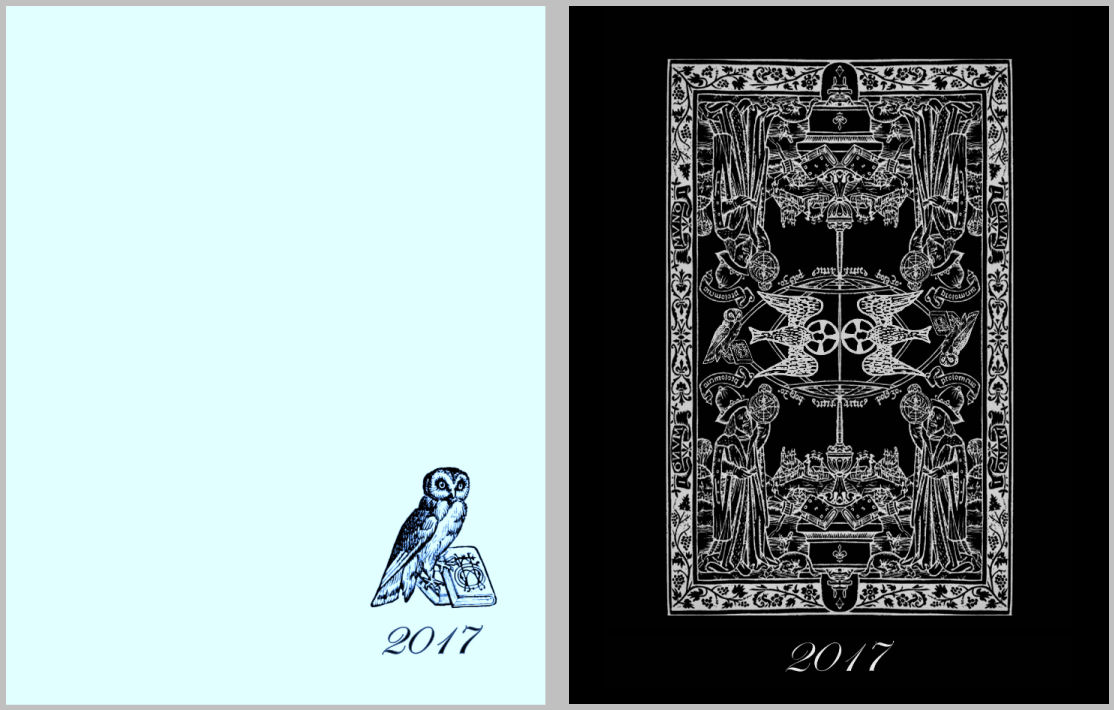
With a day planner, of course. There is a set way I organize and format my personal day planner to cover everything I do. And now I’d like to share it with you. I’ve put together a 2017 day planner and organizer for the metaphysician.
It’s part day planner–annual, quarterly, monthly, and daily. And it’s part grimoire.Carrying around metaphysical correspondences and quick reference sheets helps immensely with memory retention. It’s my approach to broadening and deepening my esoteric knowledge.
Out on the market right now you’ll see a ton of beautiful, vibrant, inspiring, mind-body-spirit-based day planners and calendars rolling out for sale now.
Mine is none of that.
So if you’re looking for something with lots of pastel colors, inspirational quotes, affirmations, and space for you to jot down your secret desires, then this is not it.
Rather, this is a glimpse into how I organize my life and how I balance professional and personal accomplishment with esoteric studies. I don’t spend three hours filling in blank workbook prompts on what I love about myself. I don’t need “go get ’em, tiger” quotes in sans serif font printed in glittery hues across my planner cover. Instead, my planner is about optimizing the hours of my day and getting stuff done. I need a day organizer that helps me get stuff done. I don’t want color, because color ink is expensive. I want substance and I want economy.
That’s what my day planner is all about. And I’d like to show it to you. I made one up for my sister Cindy, so you’re going to see screenshots of hers for illustration.
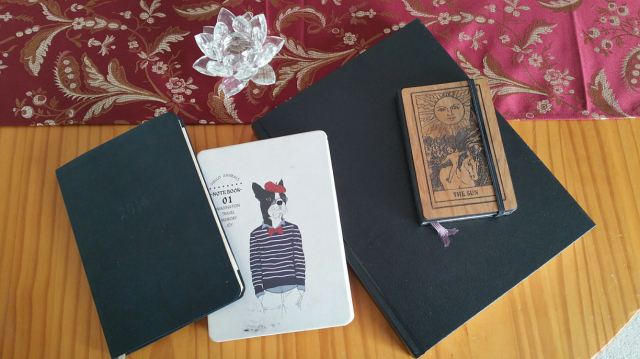
I’m often asked about my own journaling methodologies and how I document my personal work. At any given moment in time, I have the above-pictured four books/journals/what-have-you. Each one serves a different purpose for me.
If you want a more in-depth peek inside that big black one you see pictured above, check out this video I uploaded onto my YouTube channel:
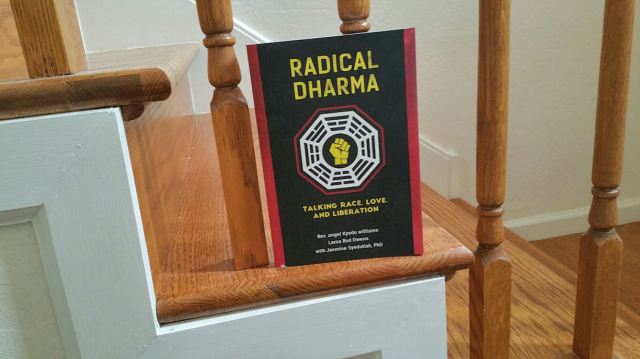
Tackling the legacy of racial injustice and white supremacy by applying Buddhist principles to take down privilege and trigger collective awakening, ministered by African-American Buddhists who temper Black prophetic traditions with the Dharma may seem ambitious, but that would be the incredible premise of Radical Dharma: Talking Race, Love, and Liberation by Rev. angel Kyodo Williams, Lama Rod Owens, with Dr. Jasmine Syedullah. With chapter sections like “The Abolition of Whiteness” and “A Theory of Queer Dharma,” Radical Dharma reads like a sermon at the kind of church I would want to attend regularly.
The book is philosophy; the book is in part memoir on spiritual journeying (“Remembering in Seven Movements” by Lam Rod Owens) and in part the proposition of a new religious doctrine, Radical Dharma. Through Radical Dharma, people of color and those from marginalized groups can finally achieve the healing they need and recover from the traumas of social injustice.
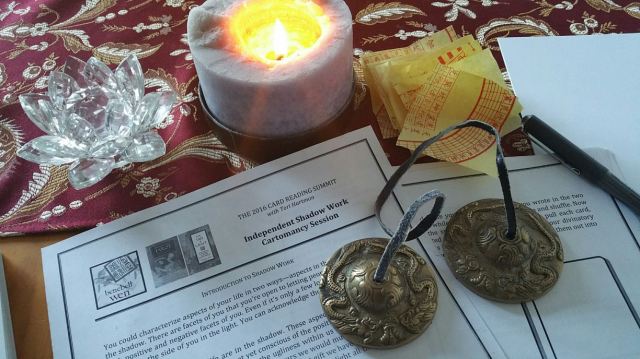
I’ve put together a self-guided workbook that takes you through one session of shadow working with a tarot or oracle deck. I used an oracle deck I created for myself, which I share for free here (scroll down). Go there and you can download all digital files for it to print out and produce your own copy of the deck.













 benebell wen