Some of you may know of the online video companion course to Holistic Tarot already. I put out the first few video lectures for the series this past week. The videos supplement the study guides and handouts, which supplement the book, Holistic Tarot. To check out the course outline and description, click on the above hyperlinked banner. This blog post is just to offer some of the behind-the-scenes commentary.
Offering a Beginner’s Tarot Course
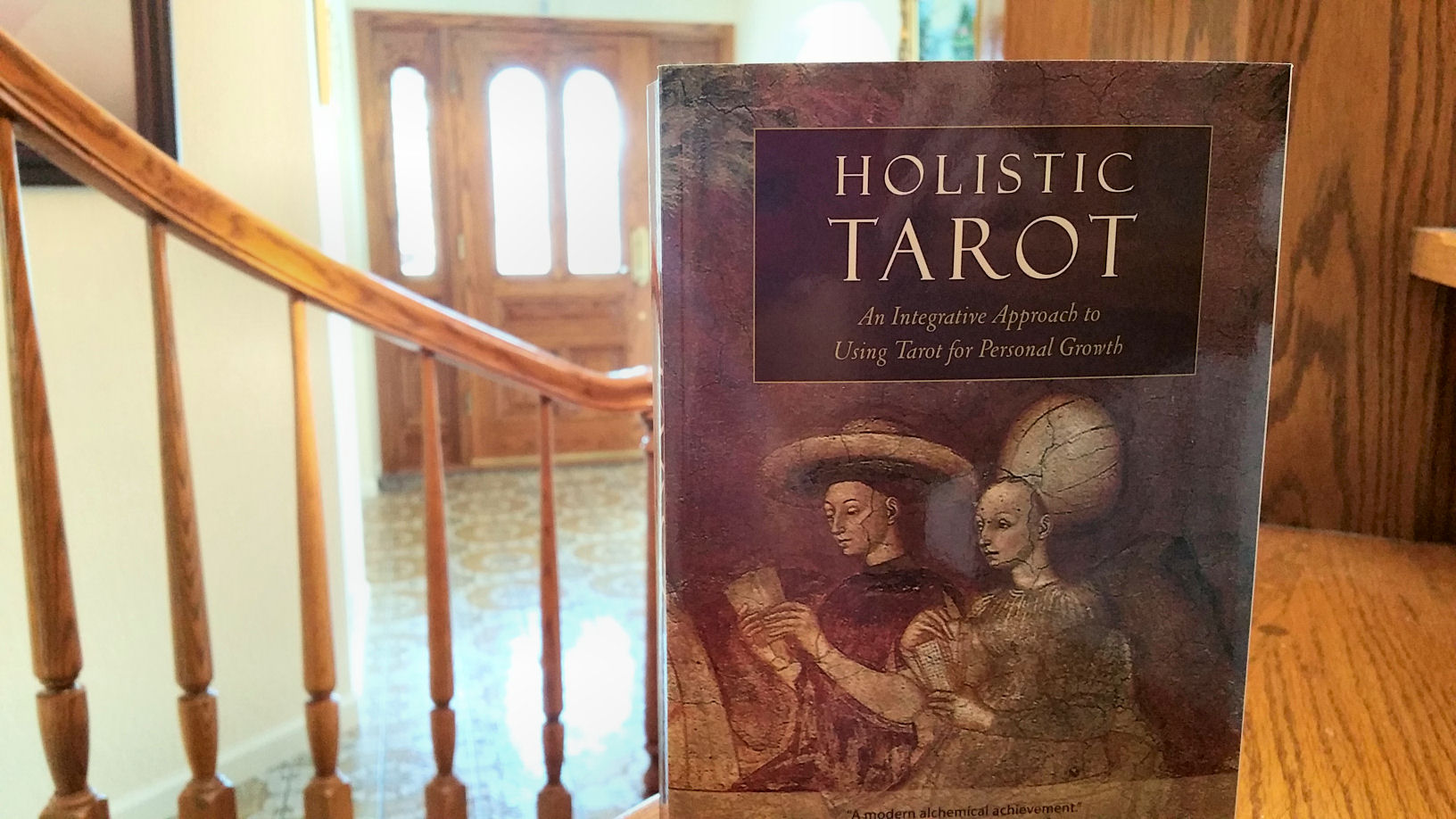
I have been pressed ad nauseum about offering a beginner’s tarot course. While I haven’t felt called to start production of materials with that specific intent in mind, as in an online multi-media course that teaches you how to read a deck of cards, I wrote Holistic Tarot with that specific intent (i.e., to instruct on tarot at the beginner level) in mind. Then when the book launched back in 2015, I created a portfolio of syllabi, study guides, and handouts to help people navigate the 800+ pages. That was my “beginner’s tarot course.”
Still I got pressed. Apparently that wasn’t what many of you folks had in mind when you think “beginner’s tarot course”?
Holistic Tarot gets criticized for allegedly being unkind in its treatment of practitioners of craft, in particular witchcraft. Folks have interpreted my book as proposing that the magic of divination ought to be stripped of tarot entirely and that I’m telling you to approach tarot from a staunchly atheistic point of view. I wonder why for so many, life choices must be so mutually exclusive. Why does my personal spirituality let alone religious beliefs need to be apparent in everything that I produce?
The book’s tone has never been shy or misleading about taking an academic approach to understanding tarot. That is hardly a concentrated attempt to strip magic from tarot, an allegation rendered even more absurd if you know anything about my personal background. Also, I wrote Holistic Tarot as a beginner’s tarot book with a specific target reader in mind.
My intention for the book is to get you to a level of technical mastery over tarot. Technical mastery. That means yes, in the beginning, magic is stripped of the tarot the same way when you first learn a musical instrument for the purpose of someday mastering it, you strip all artistry from the practice of that instrument.
During your first 10,000 hours of lessons for mastering violin, it’s about how you hold the bow, how to string your own instrument, how to straighten your own bridge, how to tune your instrument, how to hold a whole note with no vibrato, not allowing you to use any vibrato at all until you’ve mastered your bow work, then how to master the vibrato, perfecting the execution of various techniques, rote learning, stripping you of all personal creativity and compelling you to learn technique your teacher’s way, playing boring scales and etudes until your fingers are blistered and your neck is bruised. It’s hardly musical at all. You could argue that such an approach is stripping the musicality from music.
Click on image for direct link to unlisted YouTube video.
A Free Online Course Presentation
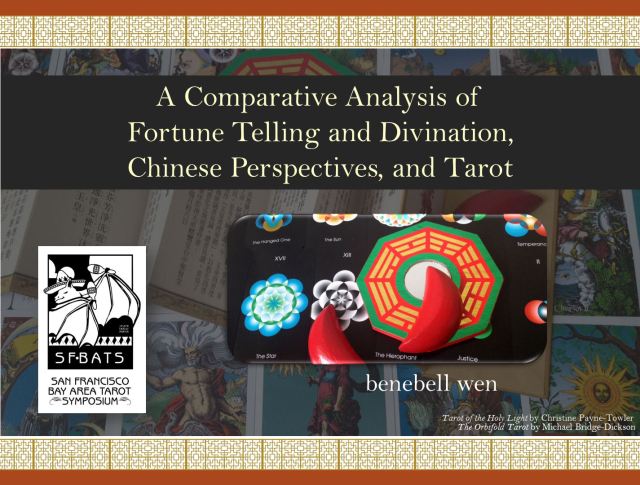
Is there any value to making a distinction between fortune telling and divination? How might Chinese perspectives compare to or inform Western perspectives? This free video (or audio) lecture will examine the etymological origins of the words for “fortune telling” and “divination” in the Chinese language, apply medieval esoteric Taoist texts to tarot reading, and propose a theoretical framework through which to read tarot, as either a fortune teller or a diviner, though the two are not mutually exclusive. We will then run a comparative analysis of that with Western perspectives and examine Western esoteric texts on the subject.
The video lecture is about 34 minutes in length. Click on the below to begin watching. Although it is in video form, you can also listen to it as an audio.
2025 June 15: Please note that the following course content was produced nearly a decade ago and may reflect the production standards and media quality that were even low for that time, so may foreseeably prove to be challenging for the present day user. We appreciate your understanding and grace as you engage with these materials.
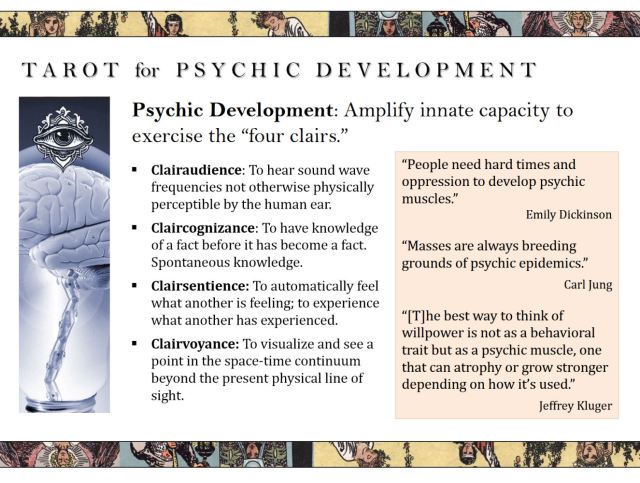
Video Lecture Screenshot
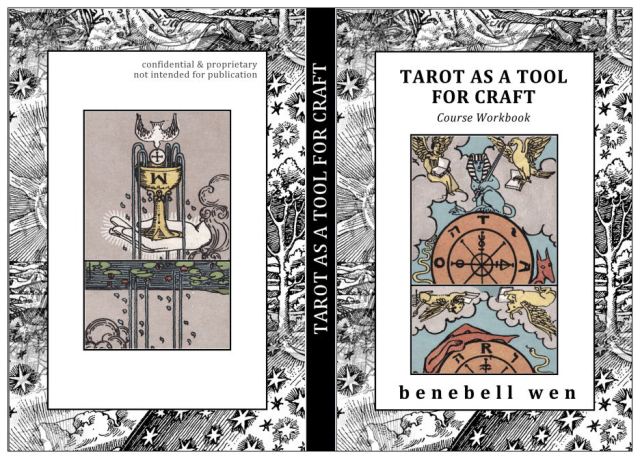
Tarot as a Tool for Craft is a FREE DOWNLOADABLE guided workbook course that teaches practitioners how to elevate tarot from a system of divination into a powerful tool for spellcraft, ritual, and magical workings. Rooted in Western esotericism and enriched by practical hands-on exercises, the course blends tarot theory, ceremonial ritual, sigil work, talismanic crafting, and energy channeling to help the student activate the cards as magical instruments. Through progressive lessons and experiential assignments, learners will explore how to work with tarot archetypes, construct effective magical workings, and cultivate a deeply personal practice integrating both high and low magic traditions.
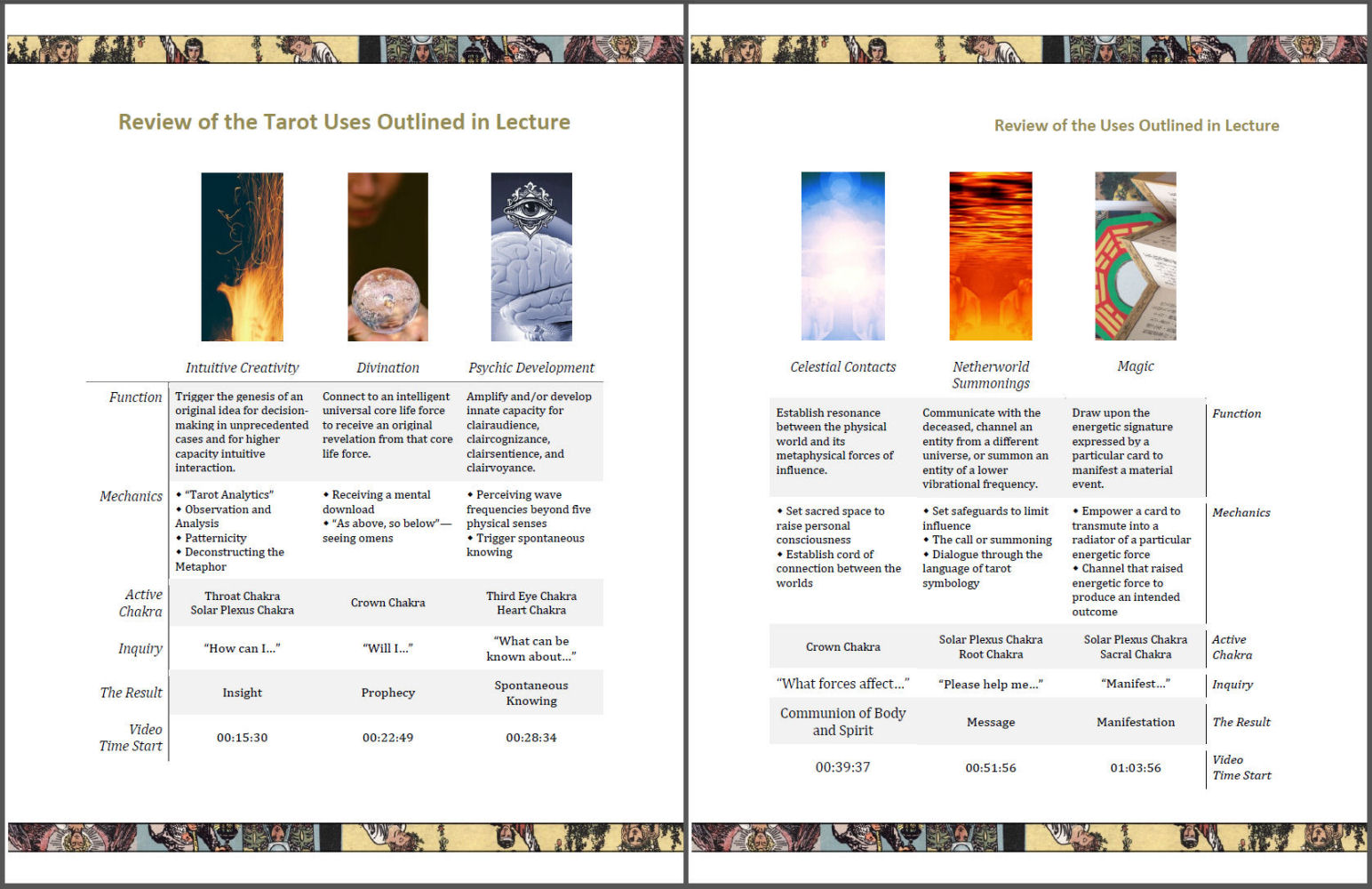
An expansion on the talk I presented in 2016 at the Theosophical Society of the East Bay, this course covers how a practitioner of craft might use tarot, from triggering intuitive creativity for self-empowerment, divination, and amplifying psychic ability to communion with celestial contacts, mediumship, and summonings. This is an intermediate course that presumes proficiency with tarot. Subject matter also runs into esoteric and mystical applications of the tarot, so the tone of the course might not be right for everyone.
Workbook Page Spread Preview
Course Objectives
After completing this workbook course, you will:
Understand how to transform tarot cards from passive symbols into active magical tools.
Learn how to design and execute ritual spells using the tarot as both focus and channel.
Practice creating and charging talismans using tarot correspondences, sigils, and planetary hours.
Develop a personalized system of magical correspondences rooted in tarot structure.
Cultivate the mindset and discipline of a ceremonial magician working through a tarot framework.
Strengthen intuitive and psychic faculties through ritualized work with tarot archetypes and energies
Click image file to download the Workbook pdf
What my 2015 book Holistic Tarot taught was the first of the five pillars that are discussed in this course. This course deconstructs the form and mechanics of using tarot for:
Intuitive Creativity to achieve self-empowerment;
Divination to connect to what Paul Foster Case called the Cause of Causes—the Universal Intelligent Life Energy;
Psychic Readings both to amplify your innate psychic ability and to use tarot as a training tool for strengthening your psychic ability;
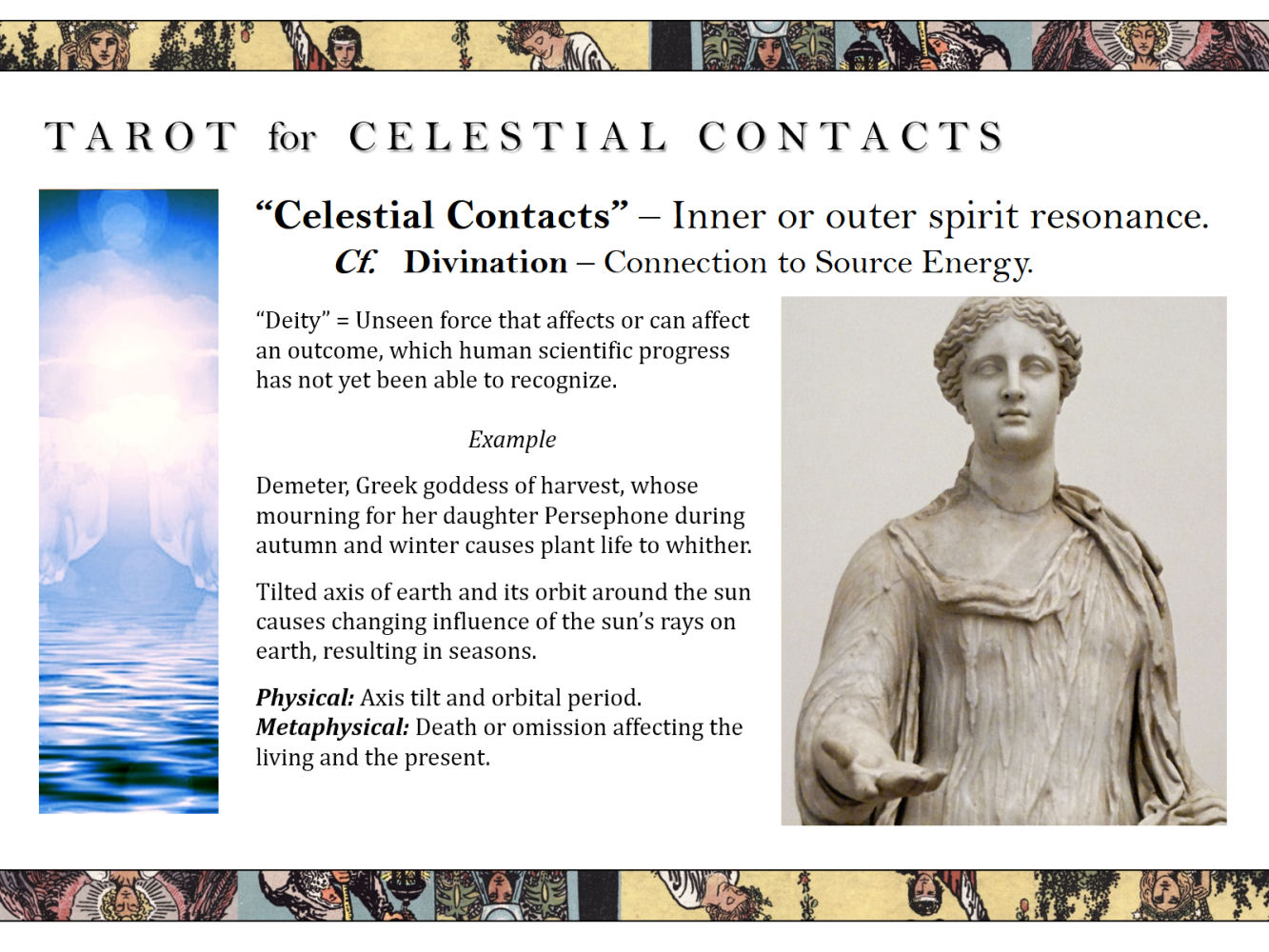
Celestial Contacts to connect with deities, angels, ascended masters, devas, or the metaphysical force affecting physical conditions; and
Netherworld Contacts and using tarot for mediumship, ancestral connections, or connecting to entities of nether-worlds and other-worlds.
Workbook Page Spread Preview
A workbook with exercises to help you learn and master the mechanics of such tarot operations will also be provided to supplement the video lecture.
Video Lecture Screenshot
Also, this is not a video lecture that you watch just one time. I propose that the video lecture and the workbook should be revisited routinely. Print out the workbook multiple times and routinely work through the exercises prompted in the workbook to help you advance and further develop the skills taught in the video lecture.
As it tends to be when you’re working with me, the workbook is the most important part of this course. The 49-page workbook is intended for use and re-use. Print it out many times throughout your development to work through the training exercises.
As it tends to be when you’re working with me, the workbook is the most important part of this course. The 49-page workbook is intended for use and re-use. Print it out many times throughout your development to work through the training exercises.
Workbook Page Spread Preview
The training exercises begin basic and analytical, compelling you to work with numerology, astrology, Kabbalistic references, and other forms of symbolism and system correspondences to broaden your working and experiential knowledge of the tarot.
Then the course deep-dives into training exercises for mediumship, using tarot for celestial contacts, using tarot in shamanic journeying, using tarot as talismans, and so much more. I hope you will be as thrilled and enthusiastic about this workbook as I felt when I went through the exercises for myself.
Workbook Page Spread Preview
I hope this workbook will be a game changer for you in terms of your relationship with tarot as your divinatory tool, especially if you’re looking to hone your psychic abilities, intuition, and experience various forms of mystical training. As I tend to do, I fuse together eastern and western esoteric principles.
Although this course presumes intermediate proficiency with the tarot prior to commencing, it is a beginner-level introduction to using the cards as living, breathing instruments of ritual magic and mysticism.
Your Course Instructor
Hi! I’m Benebell Wen, the author of Holistic Tarot (North Atlantic Books, 2015) and The Tao of Craft: Fu Sigils and Casting Talismans in the Eastern Esoteric Traditions (NAB, 2016). My background is in both law and classical studies, and so I strive to bring a synthesis of analytics-based scholarship, a practical teaching style, and yet also a deep initiatic understanding of occult systems.
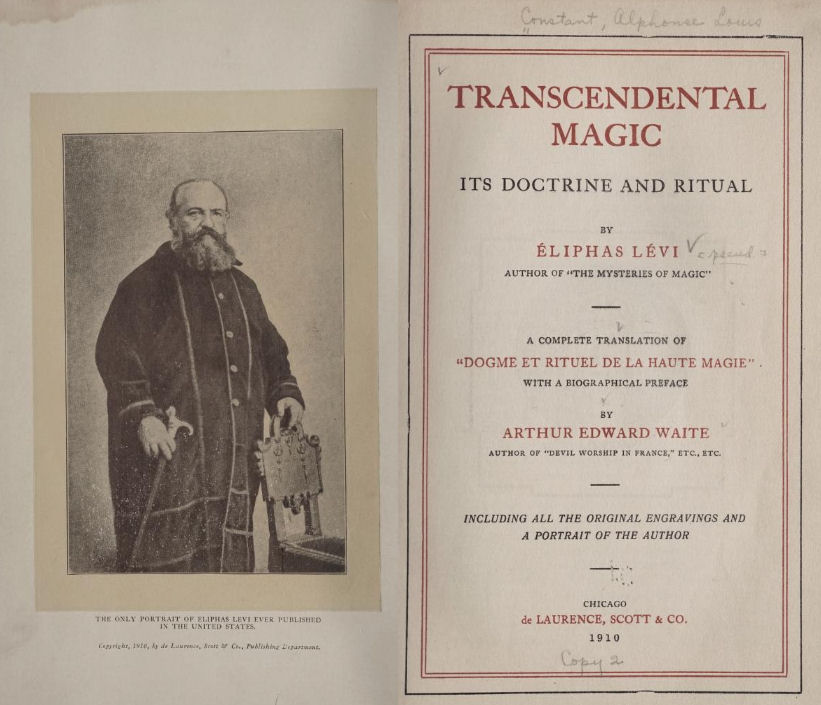
WESTERN WITCHCRAFT I: This course is a 13-module immersive study of the first 12 chapters in Eliphas Levi’s Doctrine, Part I, of the greater collected work Transcendental Magic. There are 18 video lectures with a total run time of 9 hours along with a 363-page textbook/workbook. In addition, you’ll be getting a set of guided focused meditation for the magus videos. My recommendation is to work through the materials over a 13-week period. Both theory and practicum are covered. This course is structured after a one semester 400-level university elective.
This class is structured after a graduate-level course with a series of lectures plus guided tarot readings ritualized and crafted to show rather than tell you about tarot in witchcraft.
The lecture portion covers a comparative analysis of exoteric, psychology-based tarot reading vs. an esoteric, psychic-based tarot reading, and also tarot as a witch’s tool. We’ll cover the history and legacy of tarot in Western occultism, focusing in on applying Hermetic principles to the tarot. Then we’ll consider the role of tarot and witchcraft in the modern era.
Note: “Tarot, Occultism, and Modern Witchcraft” was first offered during Tarot Summer School 2018 at the Tarot Readers Academy.
Click on the above image to visit the product description page.
$25
The Metaphysician’s Day Planner
I juggle a full-time day job in corporate law with writing and publishing books, doing interviews and talks for the book tours, part-time professional tarot reader and astrologer, blogger, avid home cook, and pro bono legal work on the side, all while being a metaphysician and keeping myself buried in metaphysical studies, so I do get asked a lot about how I organize my day. How do I make sure I am on top of my schedule of court appearances, hearings, and conferences for work, my client reading list for tarot and astrology, food prep for the week and menu planning, domestic chores, personal health and fitness, and everything in between?
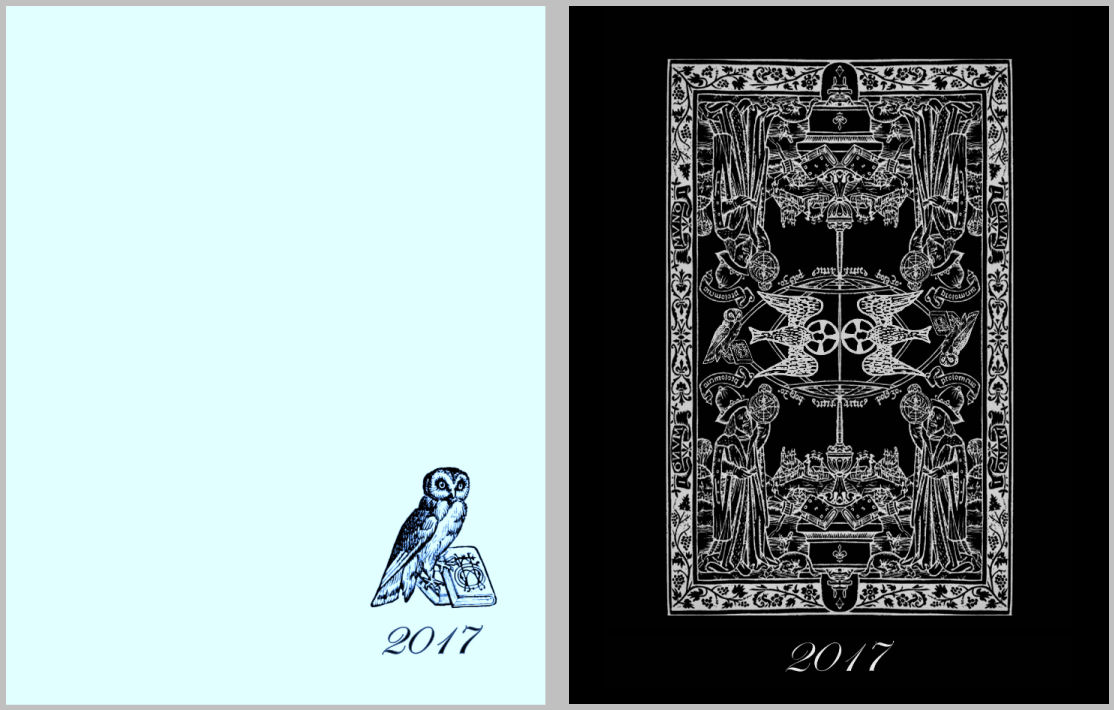
With a day planner, of course. There is a set way I organize and format my personal day planner to cover everything I do. And now I’d like to share it with you. I’ve put together a 2017 day planner and organizer for the metaphysician.
It’s part day planner–annual, quarterly, monthly, and daily. And it’s part grimoire.Carrying around metaphysical correspondences and quick reference sheets helps immensely with memory retention. It’s my approach to broadening and deepening my esoteric knowledge.
Out on the market right now you’ll see a ton of beautiful, vibrant, inspiring, mind-body-spirit-based day planners and calendars rolling out for sale now.
Mine is none of that.
So if you’re looking for something with lots of pastel colors, inspirational quotes, affirmations, and space for you to jot down your secret desires, then this is not it.
Rather, this is a glimpse into how I organize my life and how I balance professional and personal accomplishment with esoteric studies. I don’t spend three hours filling in blank workbook prompts on what I love about myself. I don’t need “go get ’em, tiger” quotes in sans serif font printed in glittery hues across my planner cover. Instead, my planner is about optimizing the hours of my day and getting stuff done. I need a day organizer that helps me get stuff done. I don’t want color, because color ink is expensive. I want substance and I want economy.
That’s what my day planner is all about. And I’d like to show it to you. I made one up for my sister Cindy, so you’re going to see screenshots of hers for illustration.
The first hour will be a talk on Taoist cosmology, the history of Fu talismans, the 13 principles of craft as derived from the Yellow Emperor’s Classics of the Esoteric Talisman, intersections of science and magic, and how practitioners use divination to know and then craft to change.
The second hour will be a hands-on workshop where you will use tarot divination to help you design and craft a Fu sigil, working with Chinese oracle bone script. Fu sigil paper consecrated on 11/11, cut and prepared at 11:11 am, and then consecrated at 11:11 pm will be provided for your use. You can take some home with you to craft the sigil. It is recommended that the final sigil be crafted on the day after the workshop, on the full moon.
I’ll bring my Jiao Bei divination moon blocks and set them out on the table top for anyone who seeks to use them for a personal divination. Free for your use at any time during the event. Please handle respectfully.
All attendees will also go home with a consecrated and blessed pocket gemstone, with the hopes that it helps you along in all your magical endeavors.
For more detailed metaphysical correspondences of the gemstones per my perspective, check out this previously uploaded PDF for a glossary of gemstone correspondences. Find the entry for the stone you picked (or the stone that picked you…) in the PDF if the one-two word correspondence on the yellow card wasn’t clear.
I often get asked how I would teach tarot to a beginner, what Lesson 1 would be, and also how to learn tarot if you are a beginner with no past exposure to tarot.
Recently I had an encounter where I gave my version of Lesson 1 of beginner tarot and I’ve been granted permission to share a transcript of it. Of course, this is paraphrased, but my memory for details is pretty good. I dare say this is a pretty accurate representation of the conversation and discourse that took place. I taught by the Socratic Method, though I wonder if she realized that.
The cards drawn and as identified are the actual cards from the Lesson 1 reading experience. For those who are more familiar with tarot techniques, basically what I did was first have her select her significator card, perform the Opening of the Four Worlds from the First Operation of the Opening of the Key, and then from the card pile she found her significator, draw three cards at random and perform a three-card past, present, and future reading.
If you’re at all curious how I might teach Lesson 1 of Beginner Tarot, here it is, as a downloadable PDF.
Brigit’s BiddyTarot is one of the most popular (I even dare say the most popular) tarot spot on the web. And it’s for good reason, too. She sustains the site with incredible content. Brigit is compiling a free e-book, Real Life Lessons from the Major Arcana, a collection of 22 essays by 22 tarot authors, each writer covering one Major Arcanum.
I chose Key VII: The Chariot for personal and sentimental reasons. Click on the above banner to go straight to my article over at Biddy. Also, be sure to download the entire e-book for FREE (how cool is that!) by clicking on the below banner or going here.
Whether you’re a tarot beginner (in which case may I suggest you check out “Introduction to Intuitive Tarot,” “Tarot and Pop Culture,” or “Unlocking the Major Arcana through Yoga”), proficient with tarot but looking to take your practice to the next level (ooh–check out my class on “Learning the Opening of the Key” *tooting my own horn*) or you’re aspiring to become a professional tarot reader (check out “Party Readings for Tarot Professionals” or “Tarot, from Hobby to Profession”), the first ever Tarot Summer School is a magnificent trove of tarot studies. A complete list of all course offerings is here, via this link. I’ll be a student, just like you, sitting in on all the courses. So many of them are getting me super excited!
There will also be campfire Q&A sessions where all enrolled students can come together (over the Internet; I don’t know how it works; it’s magic; you’ll have to ask headmistress Ethony) and I will try very hard to make it to one of those campfire sessions so if you want to chat with me, ask me your tarot questions, or whatever, you’ll want to enroll and gain access to the campfire Q&A.
Check out the below link to read all the course listings, meet the faculty, and watch everybody’s course introduction videos. It’s a really diverse group of tarot personalities.
And to give prospective students a free preview of my course, “Learning the Opening of the Key,” I’ve uploaded and made available the first video installment of the lecture series, the Introduction. Check it out:
If that sneak peek into my full course piqued your interest, then enroll today! It’s only $24 USD per course. Or get the lifetime access season’s pass for $199, which gets you all the courses this semester.
And if I did not manage to pique your interest, then… *shrug* doh. I did my best.
But do check out everybody else’s course offerings even if mine isn’t your cup of tea. I know at least one of those master classes is making you go “ooh!!” Embrace that “ooh!!” and your woo, and we the instructors at Tarot Readers Academy will see you at Tarot School this summer.
Or father. I’ve been hearing a lot about parenting for pagans and wanted to add my own thoughts. However, I won’t be talking about it from the perspective of the parent. I want to talk about it from the perspective of the child.
Now, my parents are not pagan, mostly because that word is not in their vocabulary. They’re Taiwanese immigrants. However, my mother is a metaphysical practitioner, though she wouldn’t see it that way. What she thinks she does is as natural as cooking, praying, dreaming, meditating, and just using what you have within reach to manifest what you want.
I think that is an important point. Growing up, I never saw what she did as “occult,” though living in the Western society has made me realize that Westernerswould define what she does as totally occult. Paying attention to equinoxes and solstices, knowing when the veil was thinnest, when to honor the dead, what to do when there was heightened spirit activity, calling upon the elements of nature and combining it with recitations to make things happen, understanding the phases of the moon– these weren’t seen as pagan.
“After their deaths, in my dreams I went down to the realm your late auntie and uncle were trapped in and it was so cold and dark. They told me they were hungry. So we burned offerings and chanted prayers for them and then many nights later I visited them again. I saw that they were now in a different, better realm, very happy and at peace.” (Mom, paraphrased)
I’ve come to understand that in the Western society, that is absolutely bonkers, but in Mom’s world, that was perfectly normal. And accepted at face value. After a death in the family, she’d relay her dreams and all the relatives would just nod. Yeah, that makes sense, they’d confirm. Okay, let’s burn offerings and chant prayers. And then they’d all wait for Mom’s post-dream-shamanic-travels to verify that the offerings and chanting worked. Mom always said that dead people liked to call to her from the post-mortem realms they were in, and so she’d go to them in her dream state to bring back messages for the living. God, growing up when that happened, I’d cover my ears and run out of the room and make it clear to all who’d listen that I thought all of this was batshit crazy.












 benebell wen