Learning the Opening of the Key (OOTK) – Course is Now Free

Opening of the Four Worlds

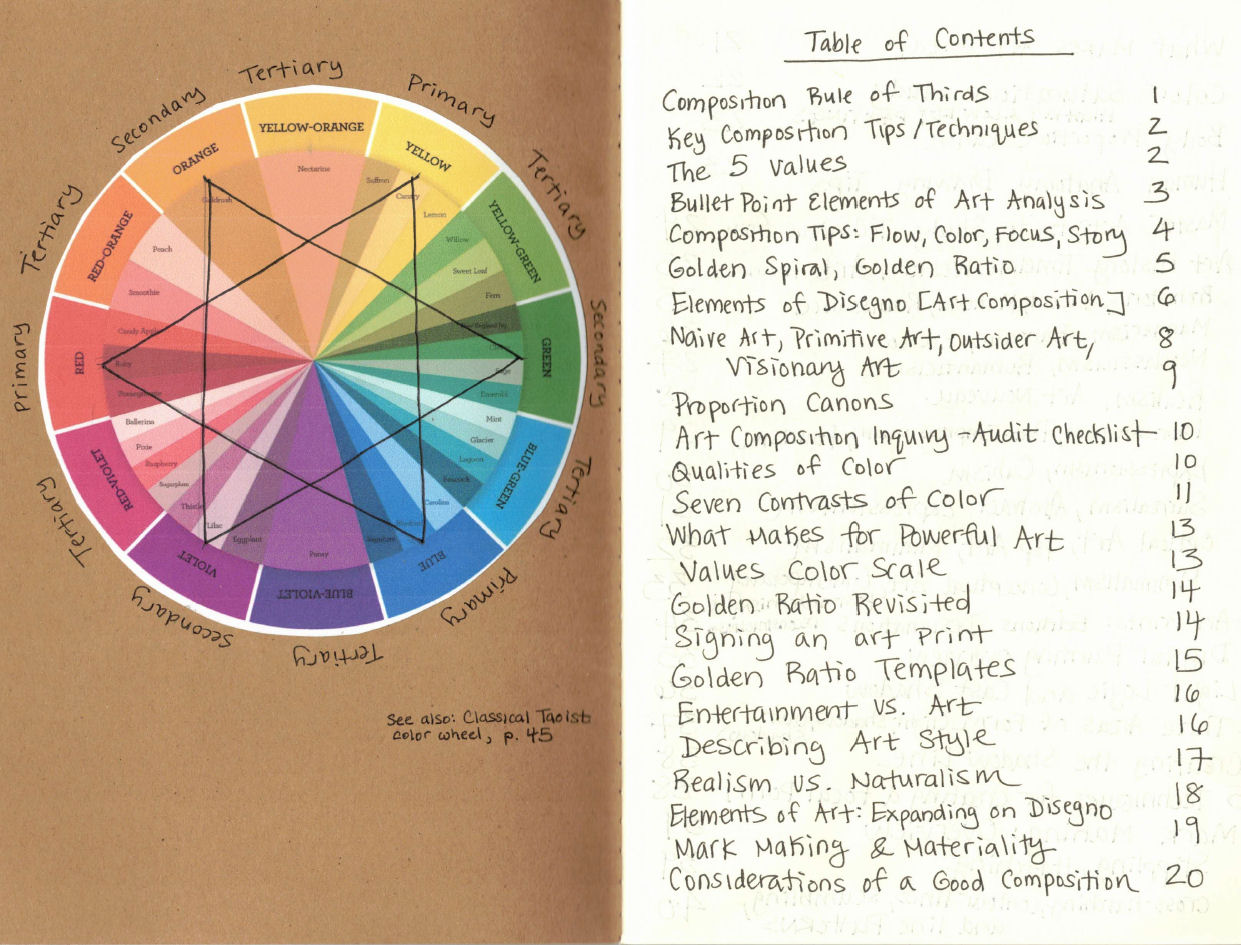
Just a note for those who might be interested: the “Learning the Opening of the Key” video and workbook course from 9 years ago is now freely available.

You’ll first want to click onto the below hyperlinked page to download the workbook PDF and all supplemental materials:

Learning the Opening of the Key (Online Course)

Continue reading “Learning the Opening of the Key (OOTK) – Course is Now Free”

The Tyrant Embodied in The Chariot Card (Etteilla Tarot Key 21)

This Chariot card took me 11 months to complete. Well no that’s not a fair representation. What I mean is I started the first draft of this card almost a year ago, and then just… stalled. (Funny enough, for a Chariot card…)

It’s still not done done, but it is a complete first draft. For every single card, I think I’m done, and then a few days later, sometimes weeks later, I happen to glance at it and suddenly spot egregious problems I need to fix.

“Le Despote Africain.” Upright, the keyword is Dissension, or Discord, and in reverse, it’s Arrogance.

Grimaud’s Etteilla III associates Card 21 with Rehoboam, the legendary 10th century BCE son of King Solomon who divided the previously united Kingdom of Israel into the northern kingdom of Israel and the southern kingdom of Judah, and who imposed harsh policies and burdens on the people.

Kinda fun to see the two Chariot cards side by side for comparison. On the left is from my Spirit Keeper’s Tarot deck, Revelation Edition. It’s philosophically fascinating how the slightest little change makes the biggest difference.

In the SKT, the line drawing pre-color is in black, thickness 7. For the Etteilla, line drawings are done in brown or midnight blue, thickness 4 or 5. Look at the dramatic difference just that one little change makes.

Continue reading “The Tyrant Embodied in The Chariot Card (Etteilla Tarot Key 21)”

Why the Tarot Community is Facing a Cultural Reckoning

Random photos of my Spirit Keeper’s Tarot deck, Revelation Edition, because I didn’t know what else to use as images for this blogged reflection…

I think it was in 2022 that I first realized what it is I was witnessing: the tarot community as I’ve come to know it was dying, though it was also making way for the rise of something else.

Archangel of Mysteries, Key 13: The Reaper, and The Defector (Eight of Chalices) from the Spirit Keeper’s Tarot, Revelation Edition

The “Dying Internet” Theory

First, tarot trends don’t happen in a vacuum, immune to sociopolitical movements. In fact, we can often tie tarot trends to exactly what’s happening in the global mainstream society. Which is why we’ll start by laying the foundation and address the trending theory of a “dying internet.”

There’s this speculative idea that’s been whispered (or maybe more than whispered as of late) in tech circles here in Silicon Valley about how an organic, people-driven internet that echoes physical society is being replaced by manufactured template content and occupied by bots, more and more being generated by AI rather than written from scratch by a human, resulting in decaying authenticity and homogenization. As they put it, “the internet is dying.” It’s a slow, systemic collapse of feral, original human-authored (can’t even believe we now have to clarify) content being outrun by outsourced content mills, ad-driven clickbait drowning out the authentic individualized voices, monoculture, fake engagement, faked popularity, and more and more paywalls.

The theory isn’t so much saying the internet is dying dying, but rather, the internet as Gen Xers and Millennials have become familiar with is quietly fading away and morphing into something that will be unrecognizable to us. What was refreshingly democratizing about the world wide web is what’s dying.

A “Dying” Niche Tarot Community

I think I need to explain myself here. It’s not that I think the tarot, as a niche interest and esoteric study, is dying or will ever die. That will always reinvent itself and persist. It’s the form of the niche tarot community as those of my generation have known it that’s dying and soon to reincarnate into something we may find unrecognizable.

When the tarot first went online (at least as I recall and per my personal participation) back in the 90s, it was almost entirely conversational. We were discussing tarot, and often in a very nerdy, niche way. We were engaging in dialogue, debating, debunking, sharing, and not merely broadcasting canned information about it.

I feel like discourse used to be more in-depth, whereas now, online content about tarot is keyed to quick consumer consumption, because if you don’t, then your content doesn’t generate high engagement, whereas when you do play the SEO game, your content rises to the top. We’re rewarding homogenization.

And again, this isn’t something that shifted overnight. Any of us who’ve been here a bit have watched it happen right under our noses. Many have griped about it, especially back when the online tarot community was still more conversational. Nowadays there’s no more griping or controversial “drama,” no more raw TMI personal ramblings, because it’s all highly-edited strategically produced vanilla content keyed to generate ad revenue, rather than for sincere interpersonal discourse. The disintegration and morphing into the (to me) unrecognizable didn’t happen like a Tower moment; oh no, it’s been slow, gradual, in a normal wear-and-tear sort of way.

Continue reading “Why the Tarot Community is Facing a Cultural Reckoning”

The Great Nine-Day Matsu Pilgrimage

This video does a remarkable job illuminating one of the most important community (island-wide, and so national) celebrations in Taiwan. You follow a group of first-time participants on the pilgrimage and learn about the festival’s history, the lore and mythology of Mazu (older generations spell it Matsu), and her spiritual, communal, and political significance.

It’s from one of my favorite YouTube channels @TaiwanExplained, produced by TaiwanPlus, an English-language news and entertainment platform educating the international community on all things Taiwan.

The video covers a nine-day pilgrimage, though some devotees do a seven-day pilgrimage. It starts with three statues featuring the triple aspects of the goddess Matsu 三媽, carried in a traditional sedan chair, from the Matsu Temple in Taichung, to go on a 60-mile pilgrimage by foot toward the Fongtian Temple in Chiayi. Devotees stop at many temples along the way, and join in various types of local festivities at each stop.

For the mystic-oriented, it’s a week of sleep deprivation, overload to your physical senses, just walking through a constant haze of incense smoke, firecrackers, a lot of dancing and celebration, drinking, and socializing with complete strangers that, within a very short period of time become like family. It also, in effect, becomes one of the largest outdoor gatherings of spirit-mediums, diviners, psychics, and channelers you’ll experience.

Continue reading “The Great Nine-Day Matsu Pilgrimage”

Strategic Communications and People Skills Workbook

Master strategic communication, executive presence, and people skills with "Speak with Power, Lead with Trust." This powerful workbook offers tactical drills, emotional intelligence training, and leadership communication strategies to help you build trust, influence, and authority in any professional environment.
Master strategic communication, executive presence, and people skills with “Speak with Power, Lead with Trust.” This powerful workbook offers tactical drills, emotional intelligence training, and leadership communication strategies to help you build trust, influence, and authority in any professional environment.

I would rather not share this publicly, except geez do I wish someone had spared me so many failures and missteps simply by sharing something like this with me earlier, back when I was just starting out in my career, and life.

When you come from an immigrant family…

From a lower socioeconomic background and then suddenly for your career leap into an environment where everyone comes from so much more privilege and status than you ever knew…

When you’re a person of color and what goes for communication and people skills in your culture is not at all the same as what goes for communication and people skills in this society…

When you’re the only woman in a male-dominated industry…

When you’re neurodivergent and an introvert…

…when any of these situations are familiar to you, often a big obstacle that holds you back from the level of success you would otherwise enjoy is this: you’re terrible at corporate-friendly communication and people skills.

I know I am.

In my head I think I’m smiling, warm, affable, speaking clearly, slowly, and concisely, in a structured organized manner…

…in reality I’m looking nervous, shifty, I’m rambling off on tangents, I’m info-dumping on you, and I can’t seem to get to the point.

Improving Emotional Intelligence (EQ). What is Strategic Empathy.

Because I never had a workbook like this, my growth and improvement rate was slooooow. Like how many times did many, many people have to tell me I speak way too fast and am rambling and info-dumping before I made any effort to speak slower and enunciate better. How often did I cross my arms and slouch and avoid eye contact at important social gatherings and as a result made terrible first impressions with a load of very important people. Either I over-share or I under-share, and can never seem to “strategically share to present micro-vulnerability as a signal of authenticity.” (Like, did you even know that is a thing someone has methodically and intentionally thought through??)

Speech Cadence Skills

This is a free downloadable workbook based on strategic communication skills development and pattern-rewiring for executive leadership presence, with pretty easy-to-follow actionable techniques, skill development, and practice exercises to improve your people skills, your “executive presence,” and just all around be better at communicating to others.

Continue reading “Strategic Communications and People Skills Workbook”

MBTi Archetypes for Tarot and Animal Lovers: The Oneful Tarot by Maggie Man Sin Lee, Ph.D.

The Oneful Tarot is inspired by MBTI (Myers-Briggs Type Indicator) personality archetypes and using the tarot to recognize our personality patterns. It was created by Dr. Maggie Man Sin Lee, a Hong Kong-based academic researcher, caregiver advocate, naturopath, and corporate wellness consultant, and brought vividly to life by illustrator Chinkal Pareek.

NOTE: If you’d like to download my personal notes on the MBTi personality profiles for the tarot court cards, which I use as reference in tandem when working with the Oneful Tarot, scroll down to the end of the deck review.

Continue reading “MBTi Archetypes for Tarot and Animal Lovers: The Oneful Tarot by Maggie Man Sin Lee, Ph.D.”

Asking Smarter Questions in Divination

Botanical Dreams Oracle by Lynn Araujo and Catrin Welz-Stein

I partook in this thought leadership workshop and learned about the five categories of questions to ask for more effective, strategic decision-making. Being me and having the interests I do, of course I immediately connected these learnings to tarot, I Ching, and in general divinatory readings.

Teachers in nearly every divinatory tradition or system talk at length about the importance of how you ask and frame questions for divination. The quality of answers you receive — be that in strategic leadership, personal development, or divination – is directly influenced by the clarity, precision, and intention behind the questions you’re asking.

Apothecary Spirits Oracle by Eric Maille, Michael Anthony, and Thomas Witholt

A well-framed question acts like a lens. It brings your focus to what truly matters, and in the case of readings, hones the focus narrowly on what it is you most want or need to know. The better your question, the more noise will get filtered out of the reading result, enhancing meaningful insight.

Thinking about how to frame questions through the principles of these five categories is really helpful, I think. Hence, this share.

Continue reading “Asking Smarter Questions in Divination”

Building Your Identity Capital: Personal Spirituality Edition

In an executive leadership workshop I attended, I learned about identity capital and how people leaders need to help their teams cultivate identity capital. It’s a concept popularized in The Defining Decade by Meg Jay, which in short summary is the collection of professional and personal assets that define why you’re great. This is subdivided into four categories: (1) skills and credentials, (2) social networks, (3) life experiences, and (4) personal qualities.

Identity capital is what sets you apart in your marketplace or industry. It attracts more opportunities, builds your credibility, and empowers you to be more persuasive. Even when headhunters don’t consciously realize it, they’re looking for candidates with identity capital in abundance. Those who stand out in competitive environments are the ones who are rich with these assets.

I found the workshop useful, so I want to share what I learned. And of course I thought, how fun would it be to combine those professional development learnings with divination as a tool for self-reflection.

Below is a free downloadable Identity Capital Workbook.

Continue reading “Building Your Identity Capital: Personal Spirituality Edition”

On Preventive [Spiritual] Care: Nine Precepts of the Healer

There’s this section in Chapter 9 of The Spiritual Axis (Ling Shu) from the classical medical treatise Inner Canons of the Yellow Emperor (Huangdi Neijing), which in canonical versions is often designated as Verse 27 that I love for many reasons.

Nine universally applicable precepts of healing can be extracted from Verse 27. The way they’re worded, you can interpret them through different lenses and they still hold true. The verse functions as axiomatic to acupuncture, and to both the ancient and the modern healthcare provider.

You can read it through the lens of how to ensure physical health, and also how to ensure mental, emotional health, and — as to the primary scope of work I operate in — to spiritual health.

If you’re looking at it as a road map for your own healing journey, it works. If you’re a healer of any stripe, these are nine clinical axioms for guiding patient care. You can look at these nine precepts as applied medical wisdom, or heuristics for clinical decision-making. They work as key tenets for helping a practitioner refine their diagnostic and therapeutic approaches.

And finally, in my view, these nine precepts can be instrumental to helping anyone set the foundation of their personal spiritual practice. It’s designed in such a way that you can account simultaneously for mundane physical health and hygiene tenets and for basic considerations in ritual or ceremonial magic.

Continue reading “On Preventive [Spiritual] Care: Nine Precepts of the Healer”

Chinese Shamanism Meets Taoism: The Hidden Link in 3,000 Years of Magic and Mysticism

Course Description

Let’s time travel and step into the mystical lineage of the Neolithic Wu 巫 shamans that laid the foundation for Taoist mysticism. This free public video lecture explores the birth of Taoist magic and the enduring legacy of Wu shamanism. We’ll decode Taoist occultism as it is practiced today to reveal the hidden history of how shamanism shaped the mystical practices of East Asia, preserving and refining early shamanistic techniques into a structured magical system, giving rise to Taoist mysticism.

Taoism is the enduring legacy of the Wu 巫, and how their oft-forgotten roots and history have shaped the modern practices of spirit mediums, Asian modalities of witchcraft, and Taoist ritual magic today. We’ll bridge the gap between the ancient traditions we’ve inherited from the Yellow River cradle of civilization and modern mystical practices, presented in a way rarely explored in the English language.

This is Taoist witchcraft decoded, in reclamation of the Wu 巫’s shamanic practices of the Tao 道.

Continue reading “Chinese Shamanism Meets Taoism: The Hidden Link in 3,000 Years of Magic and Mysticism”