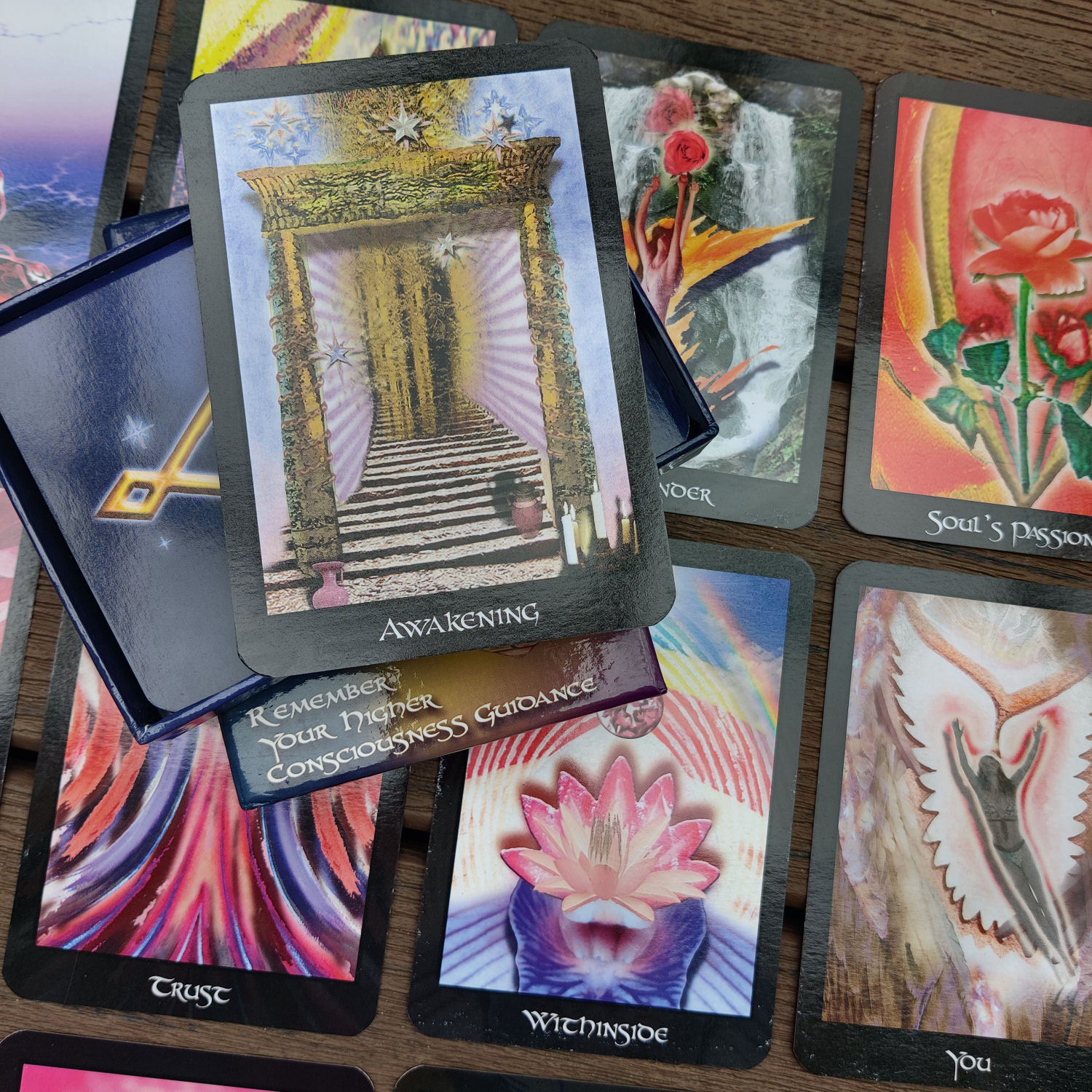
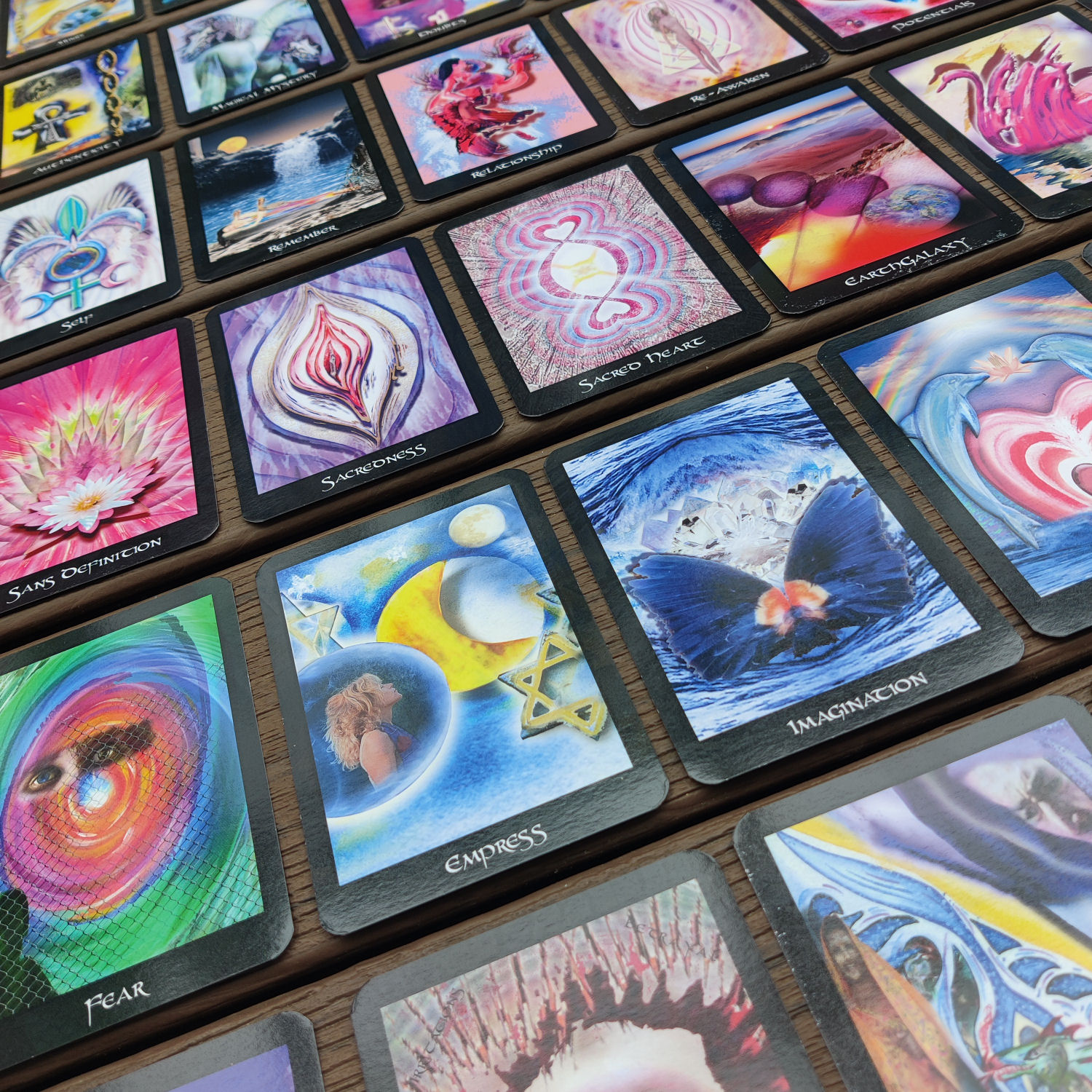
The Sacred Awakening Lemurian Temple Oracle Cards, created by Sa’arah Esther Felix, was first published back in 2013. The artwork created from original paintings by Sa’arah melted with photo-collage.
Production wise, the cardstock is very thin and high gloss. While my copy seems to have sustained quite a bit of wear and tear over the last decade, as you can see from the photographs, they’ve still held up to the test of time.
Each card is intended to be a vessel for an ancient mystery, invoking the divine sciences. Working with the deck helps to activate your higher consciousness and connection to the ascended masters.
The images are designed to hold healing power and the ability to transmit encoded information from the Lemurian Temple.
This is a look-through of Casey Zabala’s Wanderer’s Tarot. It’s a black and white tarot deck published in 2021 by Weiser Books billed as a feminist tarot deck for modern witches.
In terms of production, it comes in a fold-out matte finish box while the cards have a semi-gloss finish with metallic silver edging. The size is more oracle than your typical tarot standard, which elevates the presentation aesthetics when you use these cards on clients for professional readings.
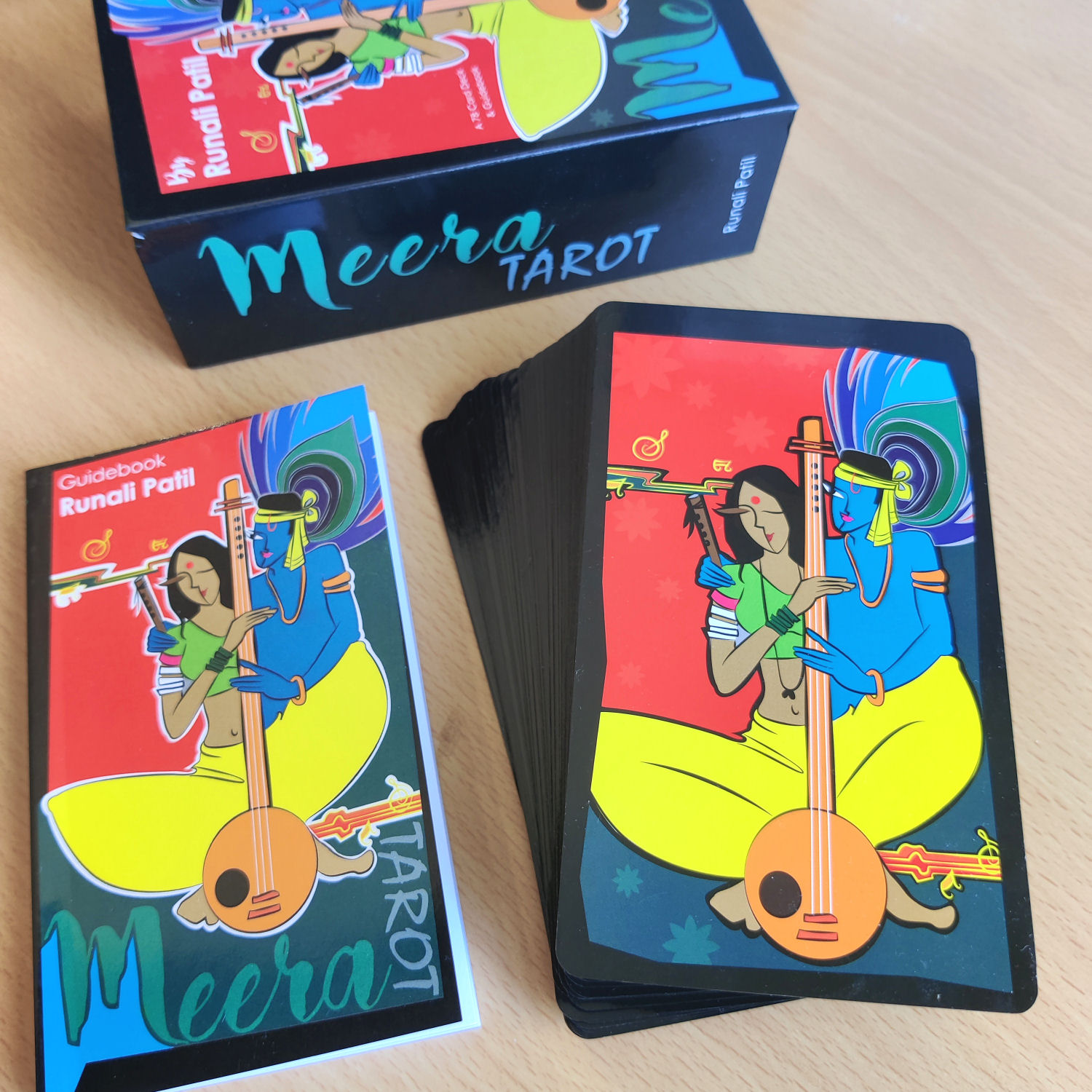
Meera Tarot immediately stands out from the crowd, and as soon as I saw it, I realized I had nothing quite like it in my current collection. The art has postmodern avant-garde somewhat Cubist take on medieval Hinduism, rendered with bold, vivid colors and emotive geometric forms.
The deck’s namesake “Meera” means prosperous, virtuous, and fearless, in disregard of social conventions; it can reference a devotee of Krishna, one who is a mystic and a creative.
From the suit of Cups. Per the companion guidebook, this is the realm of feeling. People connected to this suit tend to be artistically gifted and imaginative. Reversed, the suit of Cups can express emotional blocks and repression.
A compelling thesis of this deck is the binate feminine and masculine within each one of us, and that dichotomy’s ever shifting balance. How do you become self-aware of that internal exchange and how does one integrate the two toward self-actualization? The narratives within these cards express the Twin Flame Journey not as one soul in two bodies, but two souls within one body–thus you’ll see the recurring symbolism of the yin and yang.
Envision yourself walking with lantern in hand, braving forward through a dense fog and following a forest trail. You stop at a pile of dried brushwood and see that buried underneath it is a small treasure box. It’s a treasure box that had been buried long ago, and somehow now unearthed just as you make your way along this pensive path. You open the box and contained within it is this set of tarot cards.
That is Reese Marren’s starting premise for the Pensive Path Tarot. The packaging itself facilitates this imaginative premise. It’s a tuck box, but unique, opening just as a wooden treasure box might. I’m also loving the smooth buttery finish on these cards (printed on black core 320 gsm embossed linen cardstock). The cards shuffle and fan beautifully.
The Pensive Path Tarot is a fine art deck somewhat reminiscent of the Tarot of Delphi or Victorian Romantic Tarot, showcasing late 19th and early 20th century classical paintings. Fine art decks are one of my favorites, and I think that holds true for a lot of us readers. In Pensive Path, Marren takes it to the next level by not re-hashing the same set of well-known paintings you often see on repeat among fine art tarot decks.
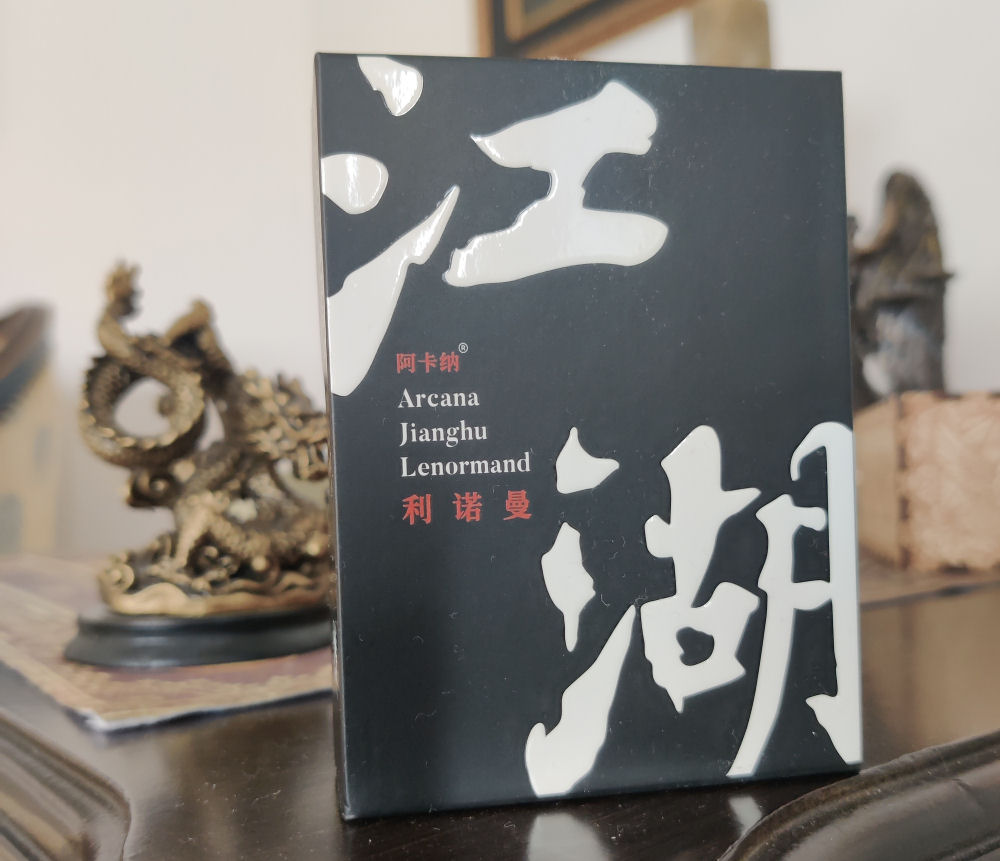
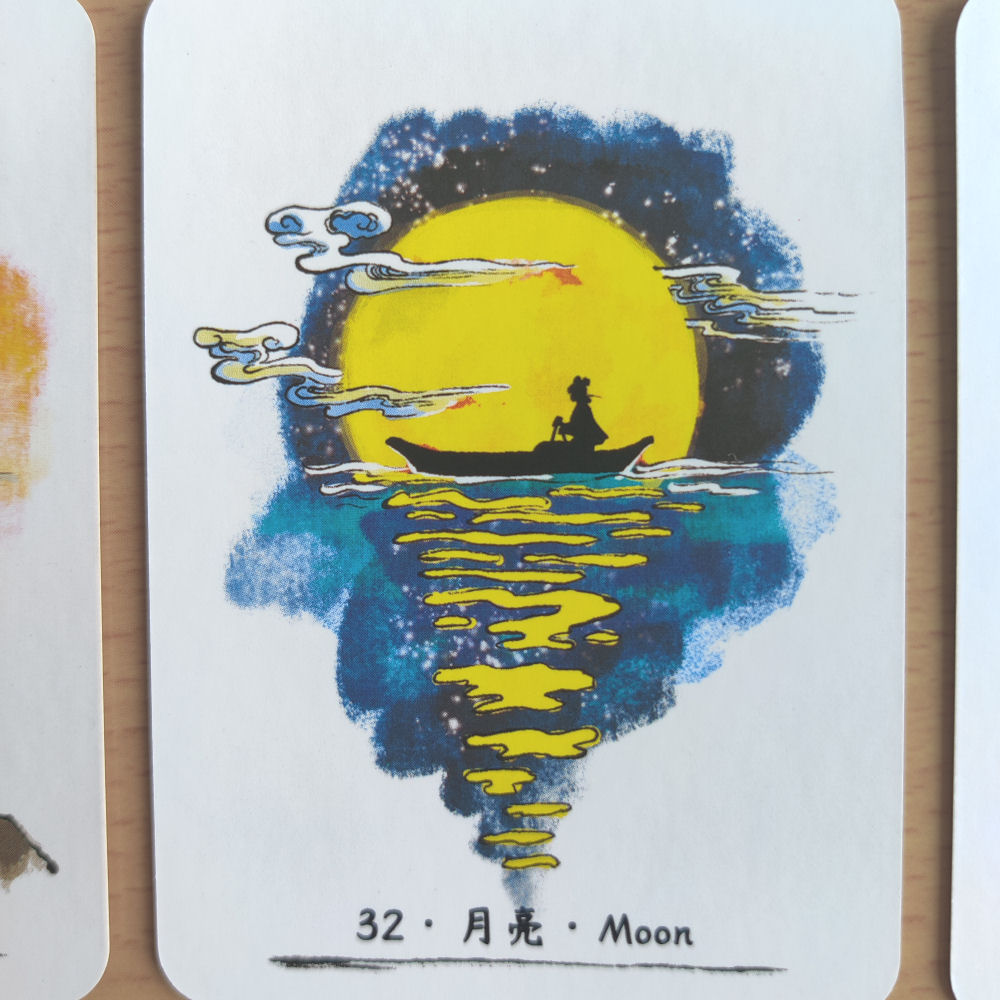
Jianghu 江湖 is the code of honor and fundamental values of Wuxia, a longstanding genre of Chinese martial arts literature. Jianghu translates literally to “Rivers and Lakes,” though those terms are used metaphorically here, covering multiple layers of meaning.
[Compare, for instance, how Feng Shui translates literally to “Wind and Water,” but it’s in reference to how the energies of people, places, and things harmonize with one another.]
In story writing, Jianghu is part of the setting that the author develops for a Wuxia novel. It is world-building. It’s the structure of social order, the class system, the magical system, the various martial arts factions or lineages, the government, the peasants, and everyone in between.
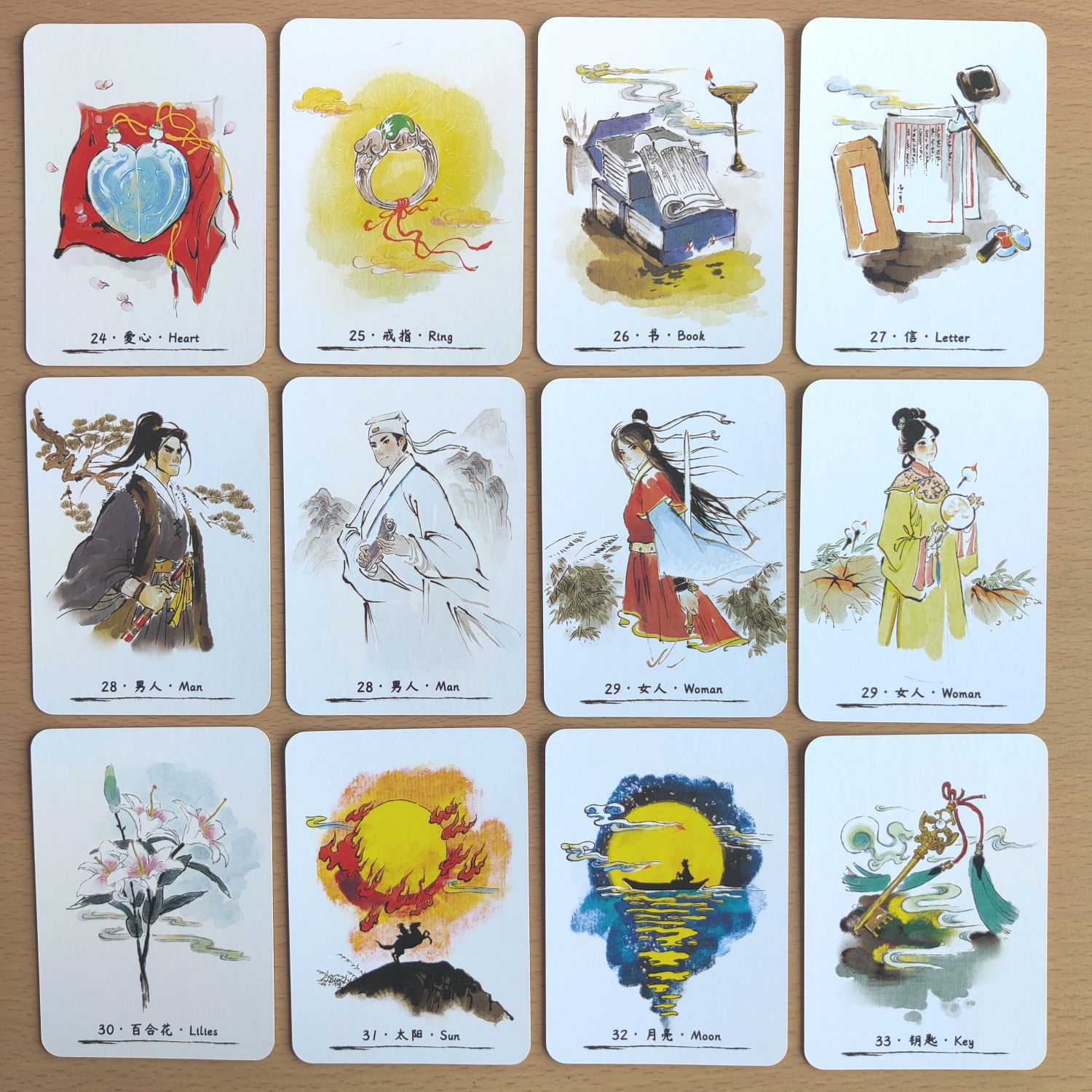
Lenormand, Cards 24 through 33
Jianghu expresses the cast of heroes and villains, the power structure of the world the Wuxia author has built. In this Lenormand deck, there are two versions for the Man and Woman cards (see above) — for the Man, the versions are Swordsman and Scholar; for the Woman, the versions are Swordswoman and Maiden.
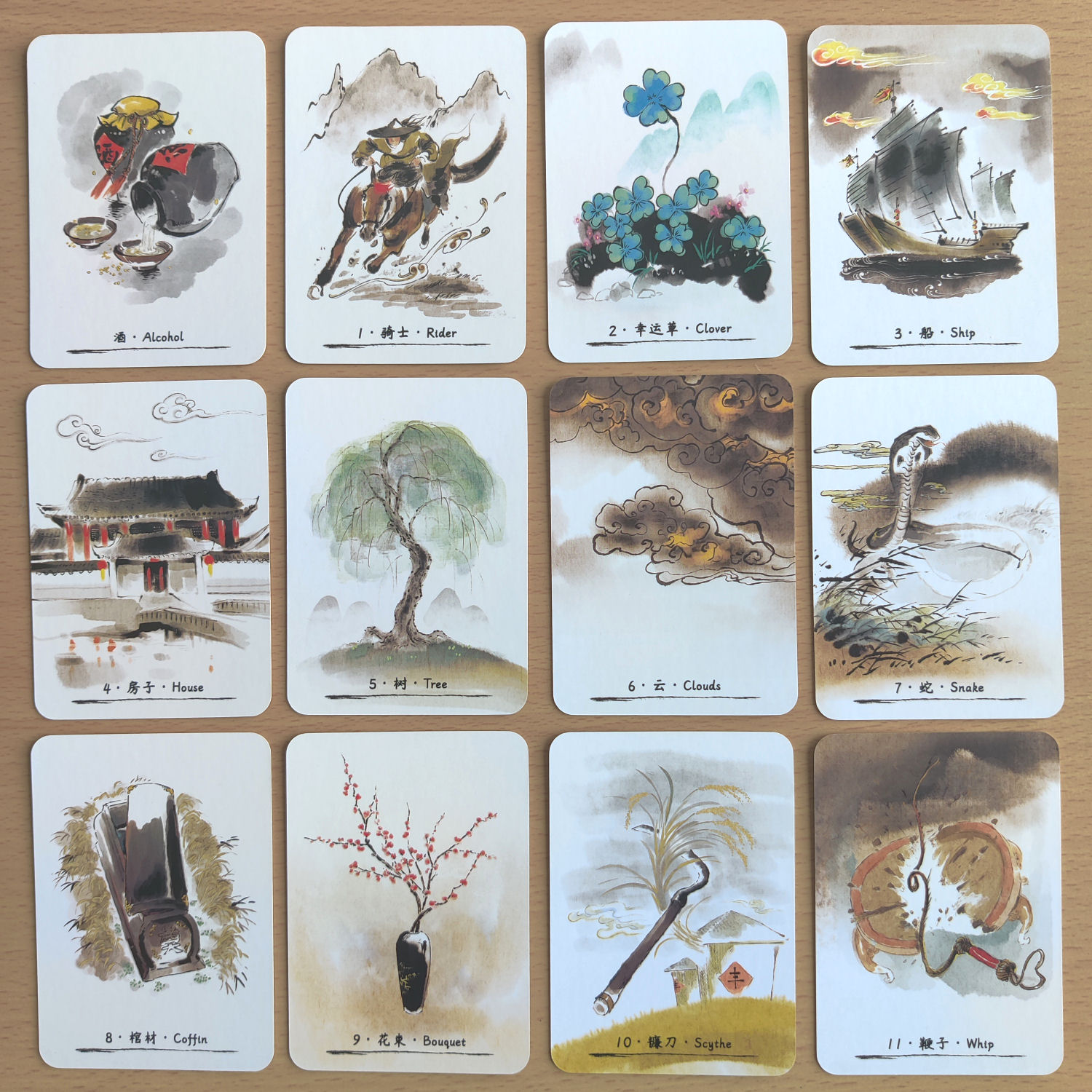
Lenormand, Cards 1 through 11, plus a bonus Special Card, Alcohol
Jianghu is also the landscape of sacred mountains and mystical forests. It’s the many regions of the kingdom the cast of characters travel to on their adventure to obtaining magical relics.
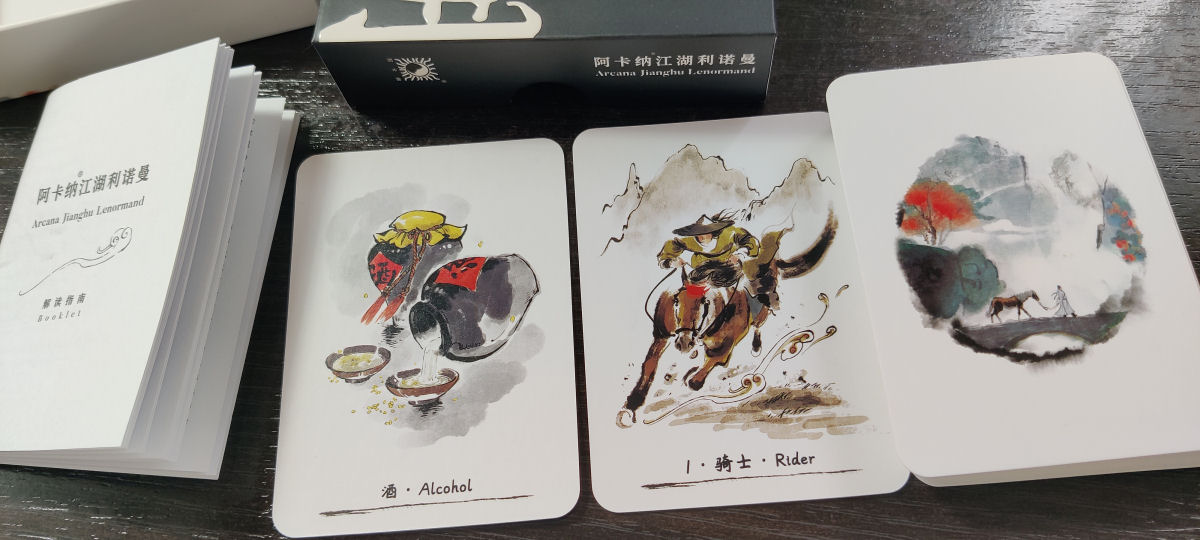
I love the extra Special Card, as it’s called, in this deck– Alcohol. Per the explanation in the little white booklet:
“As a cultural artifact, alcohol connects our lives, emotions and spirits. In Jianghu, heroes drink to meet friends, writers and poets drink away their bitter sorrow alone. People drink by the red wedding candles to celebrate happiness, and drink in front of tombs to bid farewell to the dead on Tomb Sweeping Day.”
Just a side FYI — red is the color predominantly used in Chinese weddings. So “red wedding” has a very different connotation to the culturally Chinese than what you might be thinking right now, post-Game of Thrones…
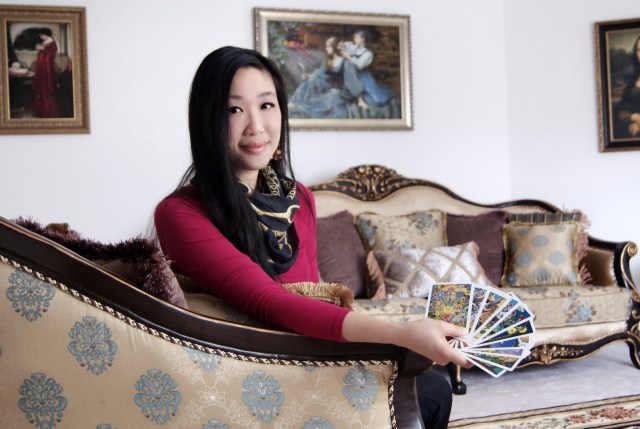
Random old photo to accompany the commentary. I’m holding the Tarot of the Holy Light by Christine Payne-Towler, which at some point long, long ago I received for free. Do I need to disclose that?
Psst… I have a “TL;DR Short Summary for the Not-Readers” that summarizes this otherwise very long blog post. So if you don’t have the time or you’re only a little bit interested and not that interested, then scroll all the way down to the end for the TL;DR Short Summary.
I’m reviving and sharing a blog post I drafted in 2019 that has sat in my WordPress saved file for the last 3+ years. It’s about FTC-issued disclosure guidelines (“Rules”) for social media influencers, and key takeaways to glean from the Rules if you’re creating content in the Mind, Body, Spirit spheres. I never got around to finishing and posting that 2019 draft, back when the FTC disclosure guidelines first gained traction, but I think now is a good time to reopen the discussion.
What’s of note to me is how the legal minds who are often the ones drafting these Rules seem to be people who have no personal experiences or insights into the communities they’re drafting the guidelines for. Even when they employ subject matter experts, those SMEs tend to be biased, or come from a very particularized segment of the community, and therefore do not fairly represent all interested parties.
There’s consumer protection, which nobody’s against. But then there’s untenable rules of compliance that aren’t clear enough for practical application by the people the rules are demanding compliance from.
By the way, none of this is my legal opinion, and do not rely on it as such. All of this is personal commentary in reaction to the FTC disclosure guidelines as someone who considers herself a deck reviewer but who could potentially be categorized as an “influencer.”
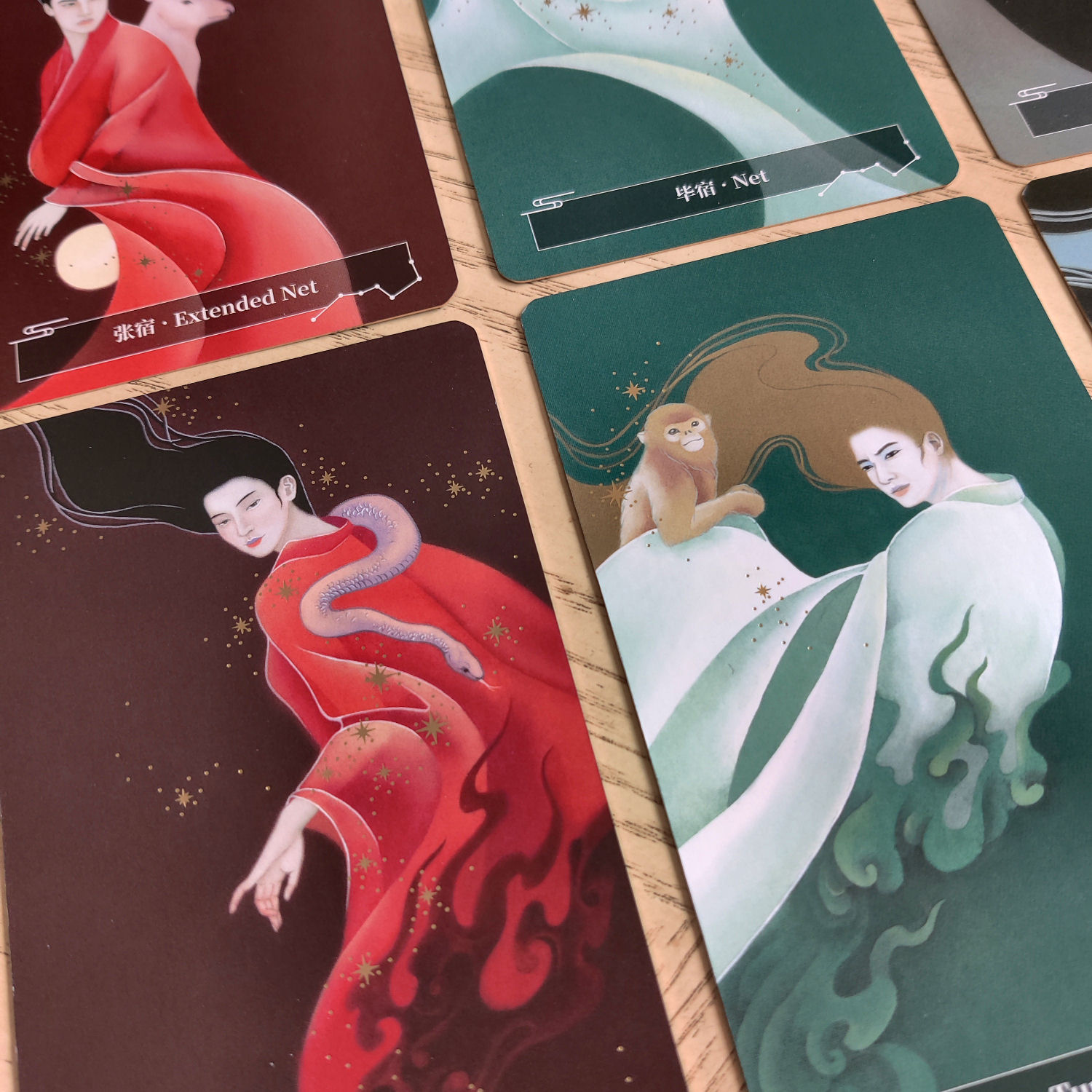
The Chinese Lunar Mansions Oracle by Zhong Ling and Wu Xue might be the first of its kind. And with its companion guidebook that details the classical attributions for the 28 lunar mansions, the deck is a great beginner step for learning about this system of Eastern astrology.
This will be both a review of Chengdu Arcana’s Lunar Mansions Oracle and an introductory overview of Chinese lunar mansions astrology.
If you’d like a quick reference handout to download, click here:
The Oracle is a set of 28 cards in a standard finish, typical of mass market decks, though longer and wider than standard tarot card size. The card back design features the four directional animals that are the basis of lunar mansions astrology.
Eastern Ink Tarot was conceptualized by Zhong Ling, a Chinese tarot reader and founder of the Chengdu Arcana Culture Communication Company, the publisher of this deck. She’s also the founder of a tarot school in China, established in partnership with Lo Scarabeo.
Zhong Ling teamed up with award-winning artist Zi Kang, who studied under renowned Chinese masters and trained in traditional Chinese painting styles. For the paintings you see in Eastern Ink Tarot, he sourced his inspiration from ancient books, traditional Chinese culture, and philosophy, specifically the yin-yang school of Eastern philosophy.
Both Zhong Ling and Zi Kang are seasoned tarot scholars, and that’s something I really appreciate from deck creators. They’re passionate and learned about the tarot, and then decided to create a deck. In Eastern Ink, you can see that knowledge come through in which RWS symbols they preserve and where in the art they take creative liberties.
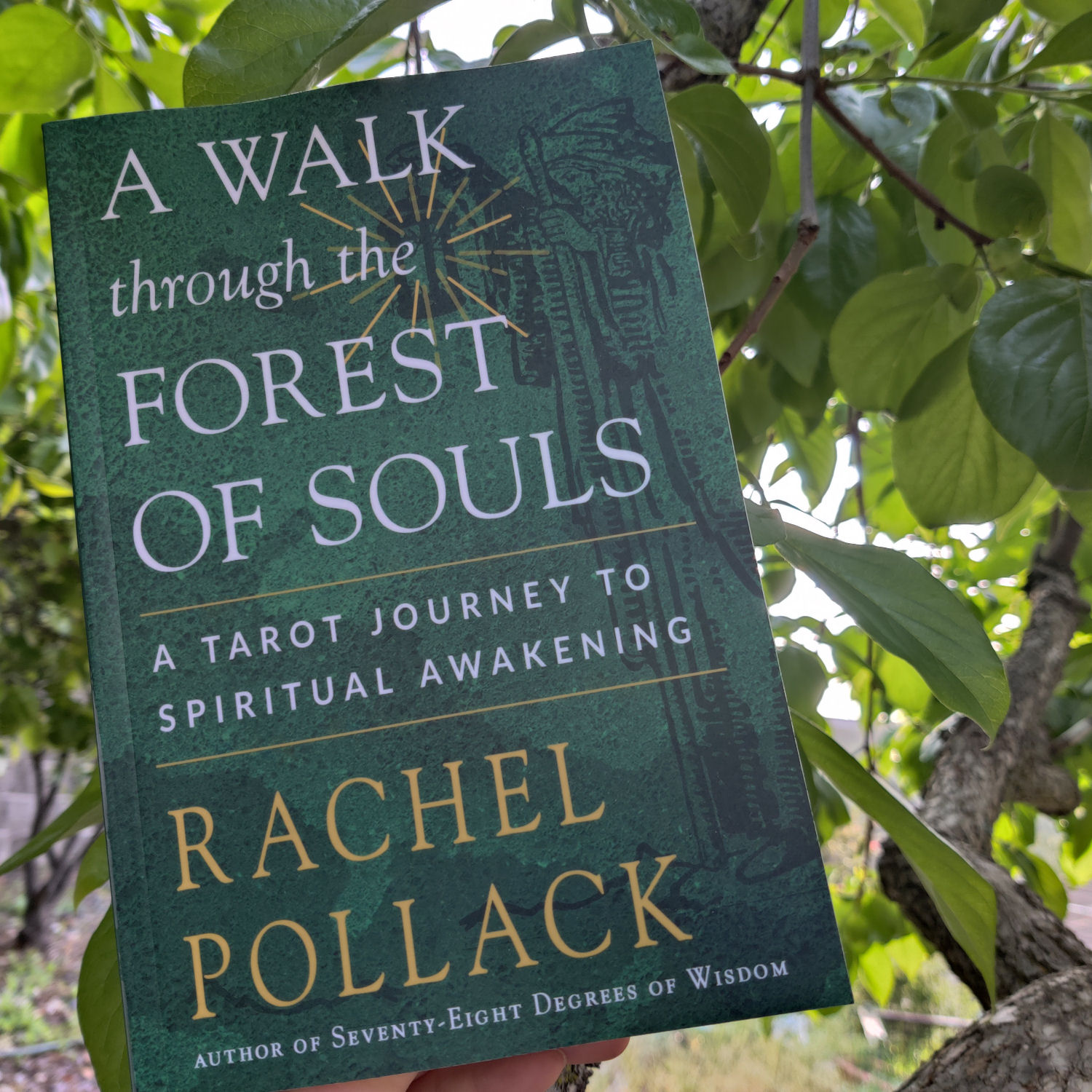
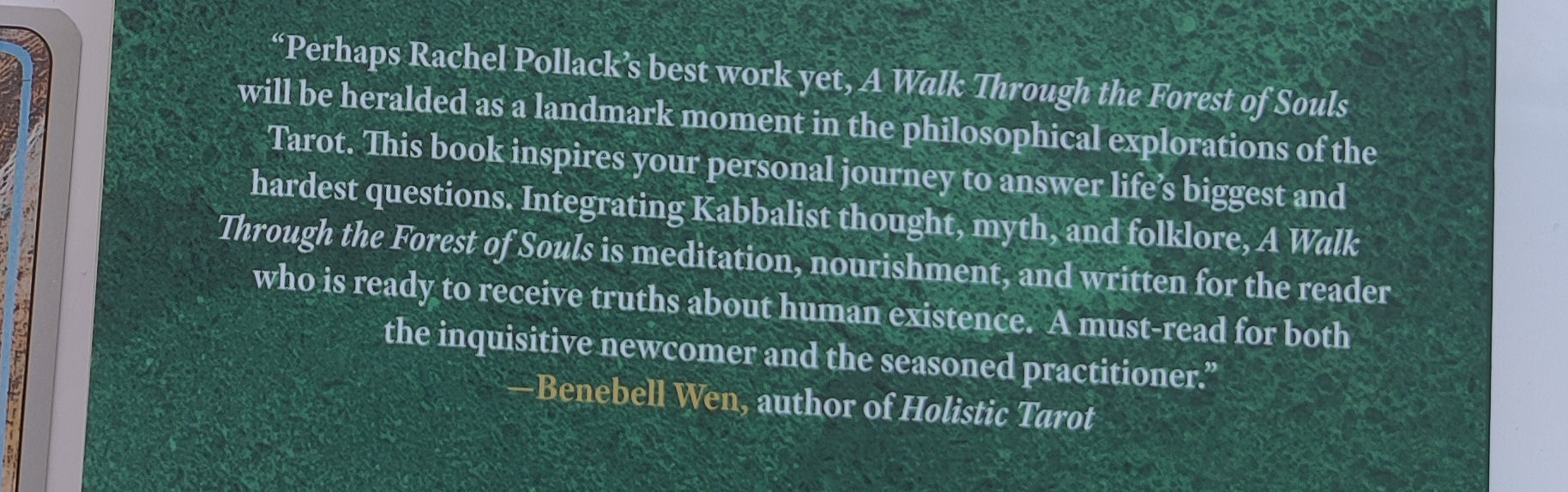
Carolyn Cushing and Jenna Matlin, in collaboration with Weiser Books, are hosting a series of content to celebrate the late Rachel Pollack’s re-release of A Walk Through the Forest of Souls. This is a day-long event for the tarot community, and you’ll find many contributors to this celebration.
My interest in this particular consideration piqued earlier in 2023 when I noticed a sharp change in the gender demographics of who views my Yutube channel, which appears to have shifted just as the subject matter of my channel’s content shifted, from being tarot dominant to more I Ching.
Though I don’t have any screenshots to show, back in 2018 and well into 2019, the gender demographics for my Youtube channel was something closer to 20% Male and 80% Female, and that checks out for most of Tarot Tube and witchy content creators, especially among witchy content creators who present as female. I did notice that after 2019 when I started making more Taoist occultism content on the channel, the demographics shifted slightly to 30% Male and 70% Female.
(For clarification, when we say Male or Female, these are per the identifications opted in by the users.)
I didn’t follow the analytics too closely, so I can’t pinpoint exactly when the shift happened, but in early 2023, per the screenshot image above, I noticed suddenly that the demographics were closer to 50/50, which is in fact strange for the tarot and witchy communities and stranger yet for female-presenting content creators like me. You don’t typically see 50/50 demographics for viewership when it comes to tarot and witchy content. There’s typically an underrepresentation of men.










 benebell wen