
THE CELESTIAL BODIES
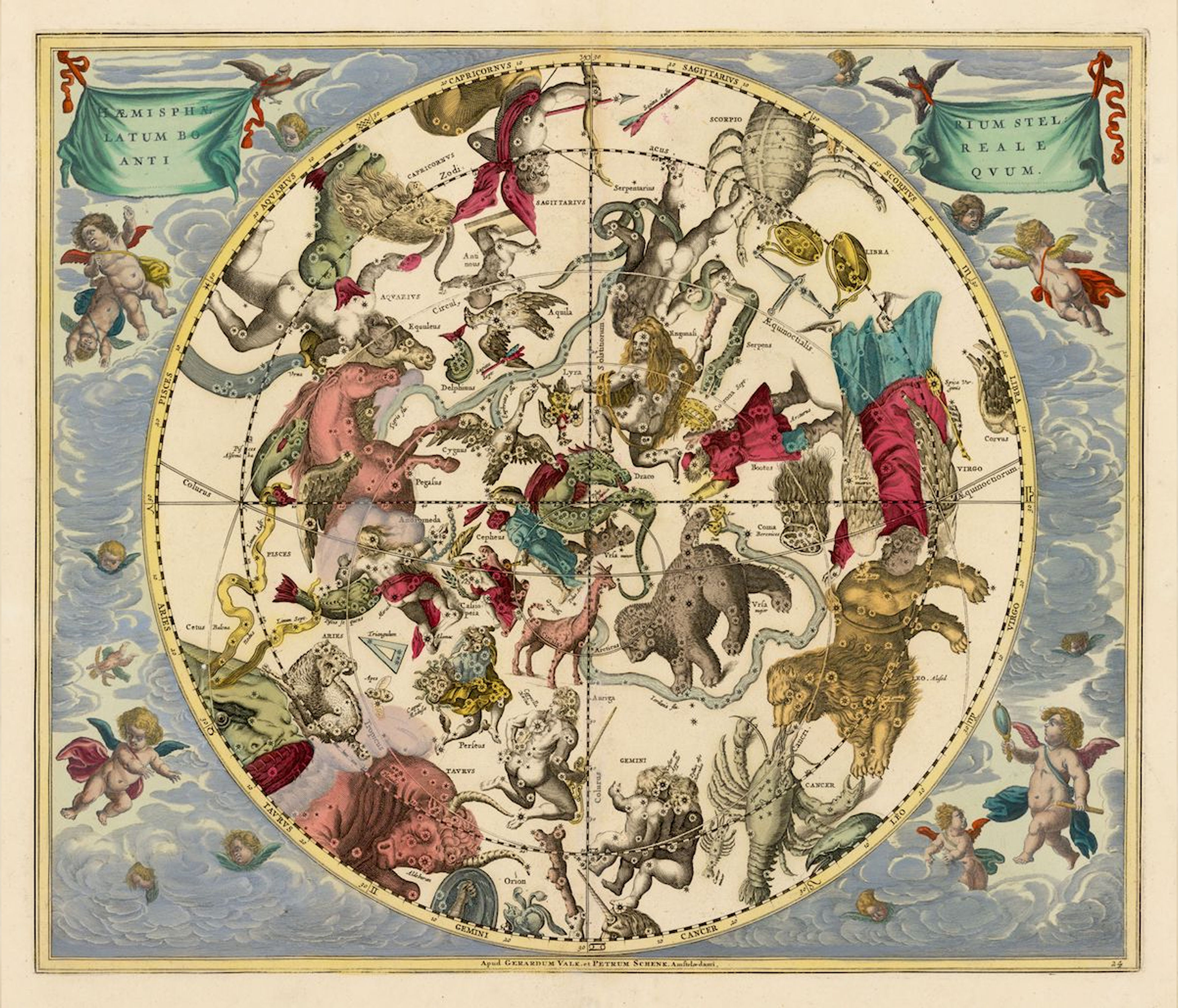
The Traditional Seven Sacred Celestial Bodies
Since the times of Claudius Ptolemy, astrology was founded on the principle of seven sacred celestial bodies: the Sun, Moon, Mercury, Venus, Mars, Jupiter, and Saturn. Astrologers who follow the traditional approach will focus their interpretations on these celestial bodies only and apply traditional rulerships. The modern approach will take into account Uranus, Neptune, and Pluto, observing modern rulerships. Generally, astrologers will take from both and formulate a personal hybrid approach of both traditional and modern principles.
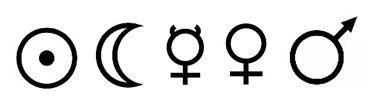
Personal Planets
In addition to the Sun and Moon (discussed on the previous page), there’s Mercury, Venus, and Mars. These are considered the five personal planets. Personal planets denote your personality and personal development. The Sun can tell us about the influence from your father, the Moon, your mother. The Sun can give a sense of your childhood development, while the Moon, your adulthood.
Mercury
MERCURY governs your intellectual or thought plane. “As above, so below,” the mantra of Key 1: The Magician in tarot, resonates with Mercury, which also happens to be the assigned rulership over the card. As Mercury moves above us, so below is governed the way we think, our path of logical reasoning, our ideas, the way we communicate, and our societal influence. Mercury offers insight into our mental plane and our rhetoric. It tells how you communicate your ideas to others and the way you think. The planet changes signs every 7 to 8 days.
Note the astrological house your natal Mercury resides in. Those are the subject areas that tend to occupy your mind the most. Likewise, the house of your transiting Mercury (such as in a solar returns chart) reveals what will be at the forefront of your mind during that period.
In general terms, your Mercury sign expresses how you think, how you process information, your reasoning approach, and how you communicate. It’s how you learn and how you make decisions.
Mercury is domiciled in Gemini and Virgo where it endows the native with a quick, agile mind, a strong curiosity for learning, and strong verbal skills all-around. Mercury in Virgo will be more organized, logical, methodical, and perfectionist with the details, while Mercury in Gemini is more persuasive, a better multi-tasker, and better at networking.
In astrology, Mercury is the planet of writers, lecturers, researchers, scholars, and teachers. Mercury is the planet of intellectualism, thought, philosophy, science, and mental agility.
However, Mercury in Sagittarius is in detriment, causing the native to be very “big picture” without a whole lot of execution or follow-through on the details of a plan. They’re the CEOs who tell a great story, visionary and borderline idealistic, but have no concrete actionable strategy for achieving the lofty goal. They can also be overly blunt with their communication style, often inadvertently rubbing people the wrong way.
Mercury in Pisces is also a challenging placement, making emotion-driven decisions rather than being logical, and trusting their intuition over proven facts, which can lead them to believe in illusions. They’re beautifully creative, soulful, and artistic, but need to exert greater efforts to cultivate the skills needed for execution.
In Taurus, your Mercury sign will be slower to react, because you’re methodical and thoughtful. You will think it through carefully. This is also the sign of one with a great memory. A natal Mercury in Cancer, like Pisces but to a lesser extent, is intuition and emotion driven. In Leo, Mercury brings drama, charisma, but also one who will have a harder time accepting other people’s ideas over your own; an area for growth is learning how to be more receptive to other people’s perspectives.
A natal Mercury in Libra brings tactful communication skills, diplomacy, and the talents of a mediator. They also tend to be “Middle Path.” In Scorpio, Mercury endows the native with strong investigative skills, who can mentally process complex, esoteric, and obscure subjects. They’re great strategic thinkers.
Mercury in Capricorn endows the native with a more practical and disciplined thought process, goal-oriented results-driven decision-making, and efficiency, while Mercury in Aquarius is highly intellectual, and also, they think outside the box, which is why they tend to be innovators; they are not afraid of unconventional thinking.
A strongly placed Mercury in a chart shows someone likely to manifest these pursuits and traits. Mercury is the ruling planet of Gemini and Virgo, so when it is domiciled in these signs, it’s said to be strongly placed. Mercury traits are going to be more prominent in the native.
A weakened Mercury shows someone who might not be as communicative, or who may prefer to experience life through the physical, emotional, or even spiritual senses rather than cerebral. Sagittarius is the polarity of Gemini, so when Mercury is in Sagittarius, it is in Detriment, resulting in a mind that leans toward the humanities, philosophy, and cultural arts, rather than the logic and science-oriented Mercury in Gemini.
In the Traditional classification of planets, Mercury is considered androgynous, which is to say it is both dry and moist. Between the dichotomy of barren vs. fruitful, Mercury is the only one that is a bit of both, thus typed “moderately fruitful.” Likewise, whether it is beneficent or malefic depends on its aspects. Whereas the Sun, Mars, Jupiter, and Saturn are considered masculine, while the Moon and Venus are considered feminine, Mercury is neither.
Venus
VENUS corresponds with our emotional plane, what we desire emotionally, and offers insight into our sense of style and aesthetics. In our solar system, Venus is the second planet from the sun. After the moon, it is also visible as the second brightest celestial object in our night sky. In astronomy, Venus is considered Earth’s sister planet because of its many similarities to Earth. Venus changes signs every 18 to 19 days, or has a planetary year of 225 days.
In astrology, Venus attracts. Venus is beauty. It is the planet of love, magnetism, charisma, beauty, art, culture, and humanism. It’s considered a beneficent planet and fruitful (as opposed to barren), which is to say it bestows favors and blessings. A strong Venus in a chart shows someone who emanates with beauty and charisma, who is often viewed by others as being physically attractive. A strong Venus, such as in Taurus or Libra, shows refined taste and a love for arts and culture. Those with Venus in Scorpio value more that which is deeper than the superficial; this native loves once, and loves hard. A weak Venus, such as placement in Aries or Virgo, shows one who is more practical, pragmatic, and isn’t one to indulge in cosmetic beauty, frills, adornments, or hedonism. A Venus in Leo tends to attract more admirers, whereas a Venus in Cancer wants a love that is stable and true.
Placement of Venus in a chart can also portend events during that transitional growing pains period between puberty and adulthood. Venus in Aries could indicate a loner kid during adolescence, while Venus in Taurus, Libra, or Pisces predicts a likeable character who tends to be popular and charismatic, given the Dignities of Venus in these signs.
Per the law of attraction, our approach to love and relationships, our style and aesthetics subconsciously attracts certain types of admirers. The placement of your natal Venus can offer insights into who is romantically drawn to you. Earlier in the Elemental Analysis section, we talked about the element governing the sign in your seventh house, which notes what type of person you’re drawn to. Venus shows who is drawn to you.
Venus is also about the favors bestowed upon you, so the house your natal Venus occupies reveals what blessings you were born with, while the house that a transiting Venus occupies reveals the advantages in your favor during that time.
In Traditional astrology, Venus is considered a beneficent or benefic planet, bringing harmony and beauty to the house it is domiciled in. Venus shows us where we most feel joie de vivre. It is domiciled in Taurus and Libra, so the house this Venus sign occupies is where it will bring great pleasures and prosperity to the native, blessing you with material comforts and a sense of fulfillment. It is exalted in Pisces, where it endows the native with an idealistic, deeply spiritual nature, who has a natural ability to show unconditional love, mercy, and compassion.
However, Venus in Aries or Scorpio is in detriment, which brings challenges and obstacles (but also, opportunities for growth and learning karmic lessons) to the house that Venus is domiciled in, due to the native’s unproductive or self-sabotaging personality traits. To overcome these challenges presented by Venus in detriment, adjust those unproductive or self-sabotaging personality traits. Likewise, Venus in Virgo is in fall, which may cause one to be more reserved in love, and to be more hypercritical of their loved ones; this then can bring challenges to intimacy and relationships.
Mars
MARS is passion, ambition, what we seek to conquer or acquire, and how we assert our social position. It is also about the survival instinct in every one of us. Mars denotes how we utilize our inner fire, our sexual energy, our determination, and our aggressions. Mars will have an impact on the climax of our life and part of the denouement.
Mars is the fourth planet from the sun (with Earth being the third). The planet changes signs every 57 to 58 days, with a planetary year of 687 days. It is called the Red Planet because the iron oxides on its surface gives it a reddish appearance. Mars is the second smallest planet in our solar system, after Mercury.
Mars represents ingenuity, conquest, and the iron will for success. Mars is your inner warrior spirit, though there is also the uneasy potential for savagery when we talk about Mars. As much as it represents human ingenuity and conquest, it also represents destruction and indulging the animal instincts within us. The Roman God Mars was also associated with agriculture, so Mars in your natal chart points to what it is you want to till.
Traditionally, Mars denotes strife, and so the house that Mars occupies will denote areas of life subject to discord, struggle, or conflict. On the positive side, it is the planet of action, courage, and audacity; on the negative, it can come across as aggression, strife, and conflict or competition.
If your natal Mars sign is Capricorn, Mars is in exaltation in your chart, and so its influence will help you to be more focused, driven, disciplined, and goal-oriented; you’re more likely to achieve your long-term ambitions. Where Mars is domiciled in Aries or Scorpio, these Mars signs are endowed with great powers of force. If your natal Mars sign is in Cancer, where Mars is in fall, it could bring emotional volatility, moodiness, and being more prone to anxiety and stress.
Mars in Leo means very time you encounter a new hobby or interest, you unlock another ambition for glory and mastery. Mars in Scorpio means you investigate deep, until you uncover the darkest of depths. Mars is tempered in Pisces, however, creating a paradoxical inner solvent of ambition and compassion.
Mars placement in a chart also forecasts facets of the native’s life likely to occur between the ages of 40 and 60. Your Mars sign expresses prevailing traits in you and the persona you exhibit during that maturing period of your life. A Mars in Aries might indicate one who becomes a self-made small business owner after 40. A Mars in Leo might indicate a renewed passion or hobby you pick up after 40; a Mars in Virgo emphasizes Virgo-esque pursuits during this period.
In the Traditional classification of planets, Mars is considered barren and malefic, which is not to be interpreted as negative or unfortunate, but simply to say that it “does not play well with others.” A dominant Mars placement can cause a native to be more belligerent, demanding, critical of others, quarrelsome or contentious, with a less people-pleasing temperament.
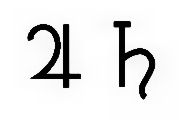
Social Planets
Jupiter and Saturn are the two social planets. They place the Self within a certain context and environment and denote the influences of that environment on the Self, whether the context we have been placed in is supportive of success or whether the Acts of God tend to throw us curveballs and present hurdles for us to overcome. The social planets show us where we are positioned within the collective whole. Together, they represent our social experience.
Jupiter
JUPITER, a gas giant, is by far the largest planet in our solar system, at two and a half times the size of all the other planets in our solar system…combined. In the astrology of many cultures and traditions, the planet Jupiter has the biggest metaphysical impact on us earthlings. Jupiter changes signs about every 361 days, with a planetary year of about 12 years.
Jupiter is the planet of luck, prosperity, fortune, success, and popularity. It’s considered a beneficent planet, which is to say it bestows favors and blessings. This is divine favor. In more mundane terms, it can predict your potential for growth and career development, your innate luck in terms of encountering opportunities for success, and matters relating to social status.
Saturn
SATURN is the second largest planet in our solar system after Jupiter, and like Jupiter, it is a gas giant. If you’ll note the astrological glyph symbolizing Saturn, it looks like a sickle. There are many cross-associations between Saturn and Mars, so the two are often read together to determine a native’s inner drive and motivation for success, and how hard someone is willing to work toward achievement of goals.
In the Traditional classification of planets, Saturn is considered barren and malefic, which is not to be interpreted as negative or unfortunate, but simply to say that it “does not play well with others.” A dominant Saturn placement can cause a native to be more introverted, a hermit, more cynical and skeptical of others, with a less people-pleasing temperament. The adjective “saturnine” comes straight from astrological history, which is to say that someone has a dour, sullen, and gloomy personality, someone severe and stern.
Saturn reveals our limitations, our boundaries, and the social structure we operate by. It denotes the responsibilities we assume and our moral obligations. It shows toil, reminiscent of toiling the land, hardship, obstacles, inner conflicts, and our personal battles. Saturn is our metaphorical sickle, and where it is positioned denotes how we use that sickle to toil our resources and make something of ourselves.
The house that a natal Saturn is domiciled in may tend to experience more challenges, difficulty in cultivating success or progress in those areas of life, an experience of barrenness, infertility, or having to climb the rocky road. If, however, Saturn in a chart is “cushioned” by other planets, the presence of the other planets, especially if they are beneficent or fruitful, will neutralize the effects of Saturn.
The planet changes signs every two and a half years (with a planetary year of approximately 30 years), so the sign placement of Saturn isn’t necessarily specific to just you, but to those born in your year.
Medieval Medical Astrology

In medieval horary astrology, where an astrological chart was cast for divining on a certain inquiry, the sacred seven correspond with certain parts of the physical body. Thus, for example, after casting a chart for a horary reading on a health matter, look at the dignities of the sacred seven placements in the chart to reveal, via medieval medical astrology, what might be the concern.

Transpersonal Planets
The transpersonal planets, Uranus, Neptune, and Pluto, pave the pathway for us to our higher consciousness. They express how our personal unconscious connects to the collective unconscious, or the collective cosmic Qi of the universe. If I wasn’t getting spiritual and metaphysical enough for you before, I sure am now. It is said that these celestial bodies vibrate at higher frequencies, though their effects on our daily lives are not immediately apparent, but rather are revealed over time. Uranus illuminates that path to self-awareness; Neptune to our intuitions and clairvoyance; and Pluto to self-metamorphosis.
URANUS shows us areas of your creativity, the ways you are different from others. A strong Uranus presence in a chart often denotes someone who is eccentric, unconventional, an individualist, and who is born with innate gifts in the arts and literature. A leading or prominent Uranus in the chart can indicate an unconventional life, someone who is going to be an anomaly, an outlier.
Uranus is the seventh planet from the sun and is considered an ice giant. It is a cold planet, with a very complex layered cloud structure on its surface. Likewise, astrologically, Uranus brings complexity. Uranus shows us areas of your creativity, the ways you are different from others. A strong Uranus presence in a chart often denotes someone who is eccentric, unconventional, and an individualist.
Unless Uranus leads in your chart, I don’t go in-depth with my treatment of Uranus. The planet changes signs every 7 years, and so its influence is often generational.
NEPTUNE brings gifts of intuition, clairvoyance, and psychic dreams. It is the dreamer’s planet, and a strong Neptune presence will show a strong imagination. Neptune also brings compassion and sensitivity. It can also bring innate gifts of music and poetry.
Neptune is the farthest planet known to us from the sun, and of all the gas giants, is the densest. As far away as it is, Neptune has visible weather patterns, and appears changeable. That factors in astrologically, as Neptune can bring a wishy-washiness to a personality.
Astrologically, Neptune brings gifts of poetry, music, intuition, clairvoyance, and psychic dreams. It is the dreamer’s planet, and a strong Neptune presence will show a strong imagination. Neptune also brings compassion and sensitivity. It can also bring innate gifts of music and poetry.
Unless Neptune leads in your chart and thus the Neptunian influence would be strong in your life, I don’t go in-depth with my treatment of Neptune. The planet changes signs every 14 years, and so its influence is often generational.
PLUTO is a dwarf planet in the Kuiper Belt, a region of our solar system beyond Neptune that is icy, first discovered in 1930. It has a highly elliptical orbit and takes 248 Earth years to complete one trip around the Sun. Pluto is a wild card in your natal chart. It is associated with power, transformation, and how well you bounce back after failure. How well do you reinvent yourself? That’s what’s indicated by your Pluto placement. It can also reveal secrets otherwise unlocked in the unconscious mind.
A strong Pluto placement in a chart will give the native an intense personality. A weaker Pluto placement will give the native a more accommodating, pleasant personality. Pluto is in Domicile in Scorpio, where it rules. It is in Exaltation in either Aries or Pisces. Pluto is in Detriment in Taurus, and considered in Fall under Virgo. However, because Pluto wasn’t discovered until centuries and therefore lacks the consensus from authoritative medieval and Hellenistic texts, there’s much disagreement among modern astrologers on Pluto’s dignities and debilities.
Pluto in a natal chart also signifies generational influences, since it spends about 12 to 32 years in each sign. For instance, from 1939 to 1957 Pluto was in Leo. Those born with Pluto in Leo lived in a generation that focused on themes of power and world leadership. Individuals from that generation were working through issues of power, both using it constructively and destructively. World power, leadership, and who would rule who and what were the prevailing questions for that generation. Pluto was in Virgo from 1957 to 1972. That generation was all about transforming the way we think about health. Medical research, world-wide diseases, medical discoveries, and the links between mind and body were the main focus points for that generation.
My generation, when Pluto was in Libra, 1972 to 1984, focused on themes of justice and how to transform human relations on the global scale. The popular boundary line between Gen X and Gen Y cuts through this period, and yet most of us have found that artificial division line between the two generations to not fit so well for those born between 1972 and 1984. Often those born between 1981-1984, who are by most accounts “Gen Y,” are going to have more in common with the 1972-1980 Gen X folk than the Gen Y after 1984 because of Pluto in Libra.
From 1984 to 2000, Pluto was in Scorpio, producing a generation all about change, instigating change, reform, global activism, and progress. They say that many indigo children were born during this period. Environmentalism and multi-national conflicts will also be issues this generation will grapple with, given the Pluto in Scorpio energies.
As for the Pluto in Sagittarius generation, 2000 to 2008, they will experience an urgent need to transform religious views and will have to find ways to reconcile disparate philosophies, religions, and cultural ideologies.
Pluto moved into Capricorn in November, 2008 and is going to reside there until 2023. Thus, it would seem like the very backbone, foundation, and structure of society as we know it will be transformed dramatically during this time. Power and control issues tied inextricably with money and commerce will be what shakes our global foundation to its core.
The three transpersonal planets (we’re going to refer to Pluto as a planet here) have a subtle, deeper influence over a native and, read in conjunction with the personal planets that denote the disposition, can reveal whether one is more attuned and aligned with the physical world we live in or more aligned to something beyond, vibrating at a higher frequency, and thus while aligned with that higher frequency, may be in quite a clash with normal society, the physical world.
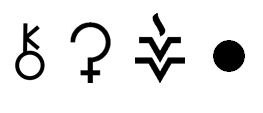
Modern Considerations
CHIRON refers to the minor planet 2060-Chiron, which is a bit farther out in our solar system. Chiron signifies the wounded healer and represents our deepest wounds. Like the shaman, what wounds us also becomes our greatest strength, and thus also signify areas where we have skills in healing. Chiron can stay in a Sign anywhere from 2 to 8 years.
ERIS or 136199, is smaller than our moon, and has an orbital period of about 558 years, so it stays within the same zodiac sign for about 46 to 47 years. In modern astrology, Eris is interpreted as our psychological projections and specifically, the ways we sow discord in ourselves and perhaps subconsciously in the world around us, as a projection of our own malcontent.
CERES is one of the largest celestial bodies in the asteroid belt, between Mars and Jupiter. Ceres, which changes Signs every 3 to 4 months, indicates the resources a native will have available to him in his environment, and can show whether or not the native has the resources needed for success. Its positioning compared to Jupiter in a natal chart can prove quite informative about the native’s lot in life.
JUNO is an asteroid in the main asteroid belt between Mars and Jupiter, and is one of the largest asteroids in our solar system, discovered in 1804. In astrology, it denotes your one true love, soul mate, Great Love, and that one who completes you to make you whole. Whereas Venus is about attraction and harmony, Juno is about the stable, long-term relationship that you’re connected to at a soul level, and is therefore significant in past life astrology readings.
VESTA was so massive that initially it was categorized as a dwarf planet. It is the brightest asteroid visible from Earth, and in certain conditions, can be seen in our skies without a telescope. It has some of the most massive craters in our solar system, known to date. Many vestoids, smaller asteroids that have been found here on Earth, are believed to have originated from Vesta.
In modern astrology, it denotes the spectrum of sexuality and chastity and what it is we consciously choose to dedicate our service to. The house placement of your natal Vesta sign tells you which areas of life that inner flame burns the strongest for. Someone with a Vesta in Virgo will be detail-oriented, dedicated to research, perfecting what is flawed, or health care and healing. Vesta in Leo could indicate one dedicated to creative expression and validated through public visibility. Vesta in Libra is one motivated by finding balance, harmony, and beauty.
Find Vesta in your birth chart and the house it is domiciled in indicates the areas of life and subject matter you are most dedicated to, that you tend to value highest; your Vesta sign expresses the nature of your focus and dedication, how you commit your energy and sacred fire.
PALLAS is in the main asteroid belt between Mars and Jupiter, discovered right before Juno, in 1802. It is also considered a protoplanet, representing an early stage of planetary formation. Pallas relates to the cerebral nature, high intelligence, a native’s relationship with his or her father, the art of war, strategic planning, balance and restorative justice, great personal power, and the power of survival. The house that Pallas occupies indicates the area of life that the native will bear extraordinary gifts, innate talent, and personal power in, often gifts and talent inherited from the father’s side of the family.
Pallas Athena is the Greek goddess of wisdom, strategy, warfare, and craftsmanship, and is home in Virgo, a sign ruled by intellectual Mercury, and which aligns with Athena’s associations with wisdom and craftsmanship. Pallas is also empowered under the sigh Libra, amplifying justice and diplomacy in the native, and in Sagittarius and Aquarius, amplifying the native’s acumen for strategic thinking, truth-seeking, and pursuit of higher knowledge. Pallas in Aquarius will amplify the Aquarian’s humanitarian yet emotionally distant approach to problem-solving.
HYGEIA, an asteroid known as 10 Hygiea, is the fourth largest asteroid we know of at present in our solar system, and it is comprised primarily of carbon. The asteroid is named after Hygeia, the Greco-Roman goddess of good health, hygiene, and cleanliness. The asteroid Hygeia in your health sheds light on how we can prevent ailments and maintain our health and wellness. As the goddess that is the asteroid’s namesake is about the art and science of healing, your Hygeia placement can be an indicator of your immune system, and also, your innate, independent ability to ward off illness and malice.
LILITH, also known as the Black Moon, is the point of greatest distance between the moon and Earth in the moon’s elliptical orbit. So it’s not actually a celestial body, but rather a sensitive point, like the Nodes, that is believed to hold interpretive significance in astrology. Lilith symbolizes female empowerment. It can show an area of subversion, a part of the unconscious that remains undeveloped within the native, and express the shadow Self. In essence, what Lilith represents in a natal chart is what the native should consider developing and honing further for penultimate greatness and accomplishment. Lilith is that which the native likely has left latent, but if manifested, could completely change the game, so to speak, and alter the native’s life path.
The Twelve Houses

INTRODUCTION | READING YOUR NATAL CHART | THE CELESTIAL BODIES | THE TWELVE HOUSES | THE TWELVE SIGNS | ESSENTIAL DIGNITIES | HERMETIC LOTS | SUN SIGN ASTROLOGY | PAST LIFE ASTROLOGY | FREE ASTROLOGY DOWNLOADS
 benebell wen
Pingback: To the New Seeker: Advice for Beginners – benebell wen
Pingback: Tarot & Astrology: Know Thyself Workshop with the SKT – benebell wen
I hope this E-mail finds you in good spirits….
I’m very interested in the Understanding or insight you mentioned about, lillith (The Black Moon), The concept I have is more of a creation/ Origin understanding of a Manifested female Ego/ thought cycle or body of energy. Anything in depth you would be able to share in confidence would be greatly appreciated. I always interested in building on understandings i have a foundation on. Many Blessings.
Sincerely,
Derick. K. Broderick
B.K.A
Divine Hotep Ali Allah
LikeLike
Broderick,
B.K.A.
Yes. This is part of her energy.
Her energy is part of the undertow psyche. Her presence indicates a more beastly side of the human delivered for and protected by her. She is safety in substances. It has to do with the divine aspect speaking to us about what they have protected us with.
Ian Blumer
LikeLike
Pingback: Learn more about me and my ways of introducing myself. You can also find me on Instagram @bellwen and YouTube as Benebell Wen (oh yeah, I have a YouTube channel) and Twitter - Professional
very very interesting knowledge shared, i have truly appreciated every bit of it much thanks
LikeLike
Pingback: Unleash The Power of Love and Fate: About Asteroid 3811 Karma in Astrology - Leading Light Astrology
Pingback: Embracing Celestial Wisdom for Spiritual Connection – Your Sacred Prayers