A Tarot Reading for the Alameda County Real Estate Market

photo 4

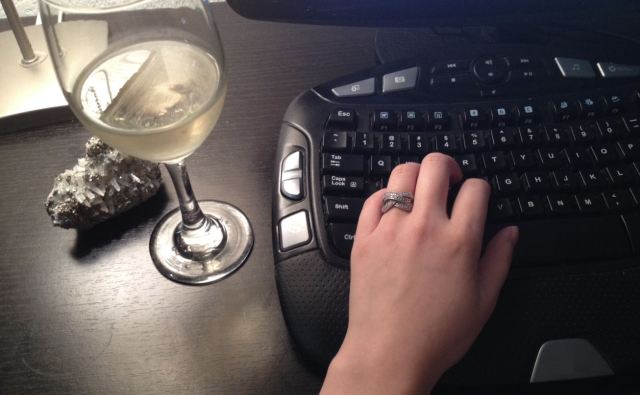
Two glasses of Riesling in and I started thinking psh!— why the heck not? Hubby and I have been house hunting for some time now and we know nothing– nothing— about the real estate market. We both consider ourselves newbies to the Bay Area, California, and for the last few months, shot out offers here and there without knowing a thing about what we were doing. Being the diligent OCD types that we are, we’ve spoken to countless so-called real estate experts, agents, gurus, read all the projections, forecasts, and journals. And none of it is helping or assuaging any of our fears.

Hubby, completely joking, says, “Why don’t you do a tarot reading for the real estate market?”

“Really?” I ask, brightening.

“No,” he says back immediately.

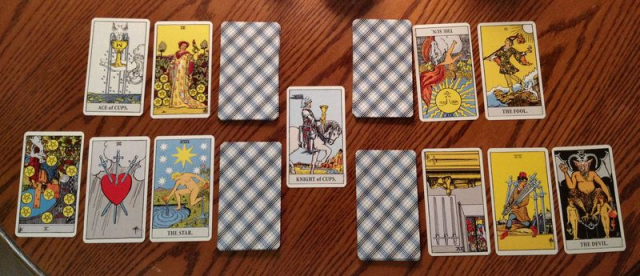
Too late. He planted the idea. I went a little more specific, though. I honed in on the Alameda County real estate market, since that’s where we’re looking to buy.

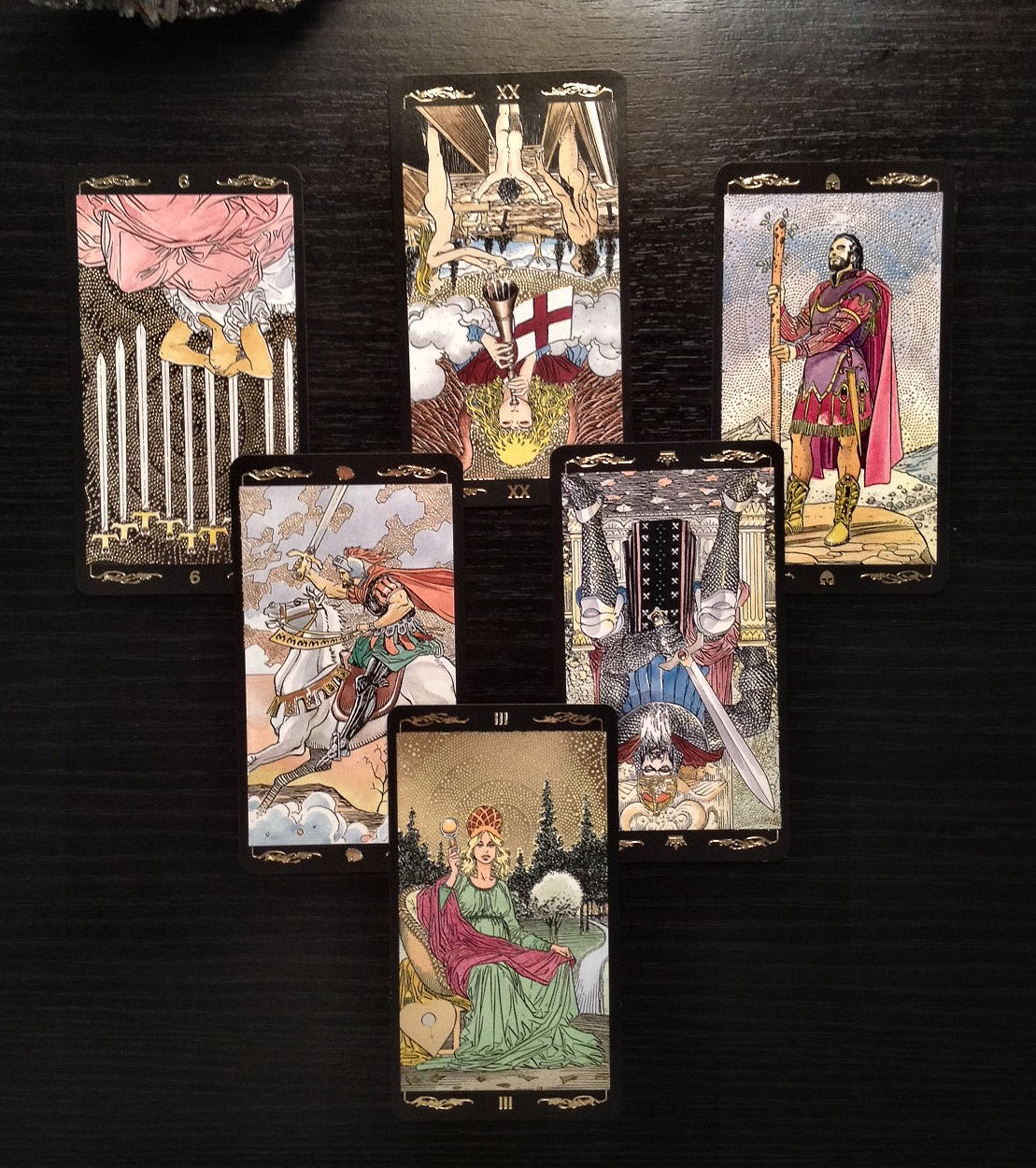
photo 3

Continue reading “A Tarot Reading for the Alameda County Real Estate Market”

A Heartwarming Response Piece to a Tarot Reading

trt

Here’s how it went down. Stacey H., an editor over at Best American Poetry asked if I’d like to guest-write for a week. Insecure about having nothing of note to write about, I brainstormed weeks in advance, and only got up to 4 pieces. A week is 5. Argh. I posed the question to myself: As a writer/poet who might be convinced to be interested in tarot if given a compelling enough reason, what topic at the intersection of writing and tarot might interest me? Well, duh. How do I use tarot to help along my writing? I figured I’d try to write about that. Finally. 5 pieces.

Tons have been written about using tarot cards as writing prompts, but that doesn’t interest me too much as a writer/poet. Now… reading tarot for my writing specifically… that concept is intriguing.

Then I had to put the hat of the tarot practitioner back on. Can I do it? Is reading tarot for what amounts to a manuscript (more often than not an incomplete unfinished manuscript no less) being the querent-client something that can even be done? I read for people, don’t I, and in every instance, people who are more or less incomplete, unfinished manuscripts. So why not a book? Oh, for sure, after this endeavor I can no longer laugh at practitioners who read tarot for cats and dogs…

I spent some time thinking about how it could be done, my approach, crafting the techniques to be employed, and how I’d even go about selecting a signifier card for a manuscript, and then reached out to my arm’s length network. Stacey H., the editor, was the first to reply and asked if she could help spread the word by re-posting my call. Go for it! I still kept one eye on my own circle. Then she said she found someone. Oh dear. A complete stranger.

Heck, why not. That is how I “met” Amy G. From our initial terse e-mail exchanges, I couldn’t get a sense of who she was and truly, as she says in her response piece, which I will link later, I didn’t read her manuscript and knew very little about her poetry. In fact, prior to reading tarot for her, I swear I have never read any of her poetry, or writings of any kind for that matter, other than the e-mail exchanges. This exercise was as much for me as it was for her, to see if it could be done, and so I didn’t want anything to cause any sort of bias at all. I wanted to know as little about her and her work as possible.

First, the signifier. Intuitively without even looking at the cards, just going through the archive of memories of the cards in my mind, I gravitated toward the Knight of Cups, but then the Rational Side of me said, “No, that’s not an appropriate signifier. She’s female. The knight is a boy.” However, it just felt right and the more I pressured myself to seek out another signifier, the more wrong every other card felt. So, I surrendered. Knight of Cups it is. Whatever. If she ends up thinking it is ridiculous, so be it.

Once I set my mind and heart to it, though, without direct interaction with her, when the cards were set down, I have to say, I really felt like I was getting to know her. It’s a funny thing to say, especially to the skeptic, but it’s my best way of articulating what happened. I felt her poetry, if that makes any sense, and it was really, really freakin’ beautiful poetry. I made a mental note to myself to look up her work after the tarot reading, because it just felt it would be aligned with what I love to read.

Here’s the tarot reading for her book (plus a how-to on using tarot to read about writing): http://blog.bestamericanpoetry.com/the_best_american_poetry/2014/02/reading-tarot-for-writing.html

It was well after the tarot reading that I got to know Amy’s writing and my feelings were right on. I really do love her poetry and even her casual blog posts at Best American Poetry, posts that are always filled with fire, spirit, humor, truth.

She wrote a response to give feedback on my tarot reading, here: http://blog.bestamericanpoetry.com/the_best_american_poetry/2014/02/the-tarot-master-read-my-book-now-i-just-need-to-write-it-by-amy-glynn.html

The universe has a lovely, balanced way of always making sure we’re “compensated.” Now that I’ve been reading some of Amy’s poetry, I get why there was this meeting of the spirits. Her poetry helps to express and validate some of what I’ve been going through in my personal life, and does so in ways I couldn’t have done for myself. Had this whole situation, any part of it really, never taken place, I’m honestly not sure I would have ever had the pleasure of coming across Amy’s work. That was the bargained-for exchange that I didn’t even know I bargained for.

A Tarot Reader Guest Blogs at Best American Poetry

bap

I am the guest blogger this week over at Best American Poetry and am feeling a bit like a fraud since I’m not a poet, at least not since the angry-histrionic adolescent years of poems about boys who won’t give me the time of day, printed in font size 14 in comic sans or some other curly girly font and center-aligned down the page. Hm, actually in college there was a brief period of doing slam poetry on themes of an Asian Diaspora ravaged by post-colonial ambivalence and cultural imperialism but that period is really best left forgotten too. I am, however, an avid consumer of poetry and have bookshelves at home filled with poetry collections and chapbooks, half of poets you’ve all heard of and half of poets you’ve probably never heard of.

I’m trying to think of when I first learned about the Best American Poetry series, and it turns out I can’t seem to remember a time when I was aware of literature and not aware of BAP. I read it in high school, college, and even recall sending a letter to David Lehman directly one time about a decade ago telling him I felt the BAP series didn’t include a fair representation of Asian American poets. The current series has been much better, I think, about diverse representation.

This week BAP is letting a tarot reader (me) run loose on their blog (http://blog.bestamericanpoetry.com/) and here’s what’s going to happen:

Continue reading “A Tarot Reader Guest Blogs at Best American Poetry”

A Review of Palmer’s Tarot: Voice of the Inner Light, a Reference Manual

palmer-tarot

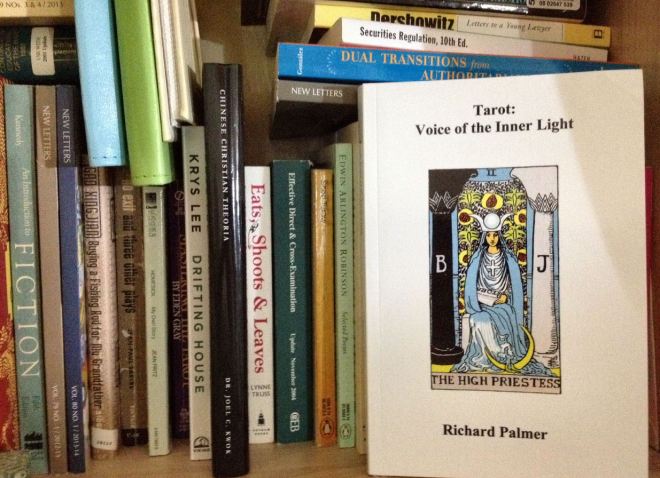
I’ve got a new amazing addition to my personal library: Richard Palmer’s Tarot: Voice of the Inner Light (Custom Book Publishing, 2008). If this book had existed in the 90s, I would have advanced in my tarot practice so much faster. When I started out in tarot, there weren’t limitless online references and glossaries on card meanings, which by the way I still do not find all that useful, as much of it is the blind leading the blind, with no indication of the source of the card meanings provided or no identification of the tradition used.

(Oh and please do not mind the unorganized bookshelf. Hubby and I are preparing to move to a new house, so I figured I’d wait until we settled in to organize a library. Right now I have literary fiction next to books on law next to classical poetry next to Christian theology next to Buddhist philosophy next to my little collection of stuff on the esoteric and the occult. Anyway.)

The first lines of the Introduction tells you exactly what you’ll get: “There are many complex and profound books written on the subject of the Tarot. This isn’t one of them. The aim of this work is to bring the practical knowledge of how to use the Tarot into the life of anyone who is willing to put forth the minimum effort necessary to understand this remarkable gift.” Voice of the Inner Light is give or take a 240 page reference book, about 60,000 words if I had to guestimate. In essentially 10 pages upfront, the book teaches you how to begin using your tarot deck. There is no longwinded research on history, origins, philosophy, or theosophy. I understand that most advanced practitioners are looking for theory, but this book is not targeted at that kind of reader. This book is targeted at that starting practitioner who may have read 1 or 2 more comprehensive books on tarot and is now looking for a go-to reference manual to keep on the desk for readings.

Per my own analysis of Palmer’s book, his card meaning interpretations are based heavily on Hermetic Qabalah. Palmer is also a renowned astrologer, and so Voice of the Inner Light is going to be indispensable to tarot practitioners who integrate Western astrology with tarot.

Each card is covered in 2-3 pages. A card description and key symbolism is provided, then the card’s astrological association, and then the practical application of the card when upright and when reversed. Then a concluding remark is offered on Qabalistic correspondences. Such concise coverage of card meanings is the primary purpose of the book. Other than how to read a single card or perform a simple 3-card reading, Voice of the Inner Light is not for teaching spreads or how to intuitively read multi-card spreads. The book’s purpose is for the foundational understanding of each and every card.

Thus, I consider it an intermediate reference manual. If you have read a few beginner books on tarot, this book is a useful supplemental next step. However, for advanced practitioners who want to begin building a repertoire of spreads and how to use the tarot in complex reading techniques, this won’t be the right book for that. Voice of the Inner Light will be an integral supplement to such goals. As you learn complex reading techniques, you will need a book that provides in-depth interpretation of each card, in which case Voice is one of the best. Also, those with a particular leaning for the GD interpretive method, Voice will be highly appealing as opposed to the more what I call New-Agey-keyed reference manuals.

Do-It-Yourself Tarot Bag

Sew Your Own Tarot Bag

Now my sewing “skills” leave a lot to be desired, for sure, but it means something to me to use tarot bags I’ve made myself. I hand-stitched these without a sewing machine and during that time I spent sewing my tarot bag, I burned sage, concentrated my intentions into the process, and I believe the end result is something special, even if it’s quite imperfect and ugly to the lay observer.

image

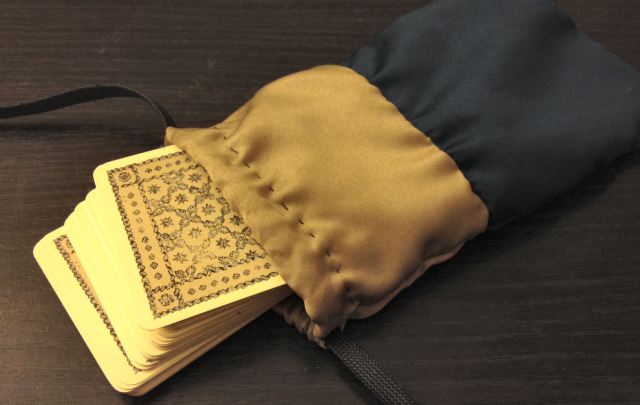
Recently I acquired the Medieval Scapini tarot deck (don’t let the name fool you; the aesthetic is medieval art but this deck was created in the 80s) and decided I really wanted to become fluent in reading with this particular deck, so I promoted it temporarily to my primary reading deck du jour. However, that didn’t mean I was ready to displace my normal reading decks from their pretty little bags, and the number of pretty little bags I have are limited. I decided to make a bag just for the Scapini.

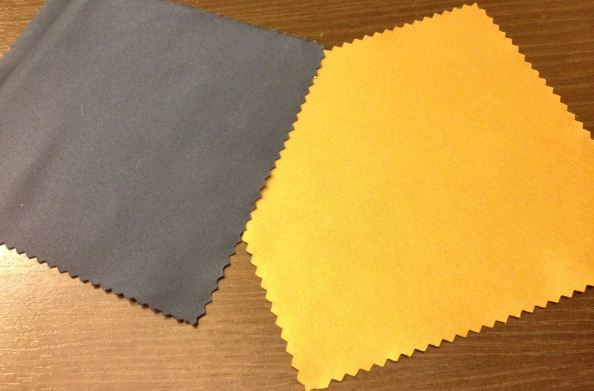
I didn’t have any nice fabric at home, but I did have a bunch of microfiber glass wipes. Don’t ask. Long story. I’m near-sighted (horribly so) and bulk ordered glass wipes for my glasses because I thought I was saving money. Anyway. Glass wipes. Great quality for making a tarot bag with, but each piece was definitely too small. I had to sew them together, which ended up having a nice duotone effect. I might just do this on purpose next time.

image_1

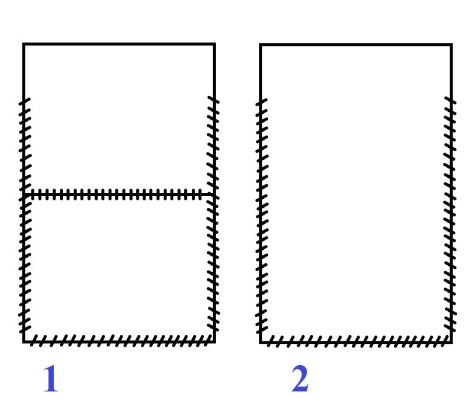
These are simple to make. I promise. We’ll be sewing these by hand, so you don’t even need to know how to use one of those damn sewing contraptions. Needle and thread will suffice. It’d be ideal to match the thread color to your fabric color or choose a complementary color, but if you’re scrappy like me, that’s just a luxury. I scrounged for old spools of thread and used whatever I had around the house.diagram1

The above Diagram 1 shows what I had to do since I was sewing two pieces together for each side of the bag (four separate pieces total). If you’re using one fabric only, then each side of your bag pattern will look like Diagram 2. Layer up if you want an interior lining for your bag. I did.

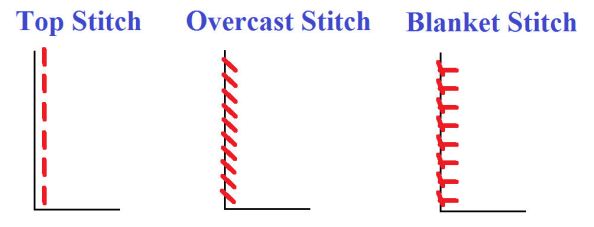
Here are the stitches you should know:

stitches

Either the overcast stitch or the blanket stitch will work for the edges of the bag. When you go to create the drawstring part (more on that later), you’ll use the top stitch.

diagram2

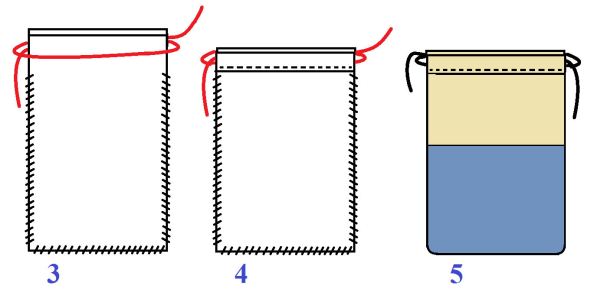
Remember you’re sewing these inside out first. Diagram 3 above shows what it should look like after you’ve stitched together 3 sides of the bag with either the overcast stitch or the blanket stitch. The red string represents the chord or ribbon you’ll be using. I used an old black shoelace I found. I snipped off the gross plastic edges and then dipped the edges in melted wax to seal them. (if you’re really going to make a whole ritual out of this, dip in purple wax for intuitive support, white for spirituality and clairvoyance, or black for power; and while you’re at it, do it during a full moon). Be sure to wrap the cord around the top two pieces as illustrated.

Diagram 4 shows the top flaps folded down. Stitch along that edge to close the loop. Be careful not to sew the two flaps together, or else you’ll have sewn your tarot bag shut. Diagram 5 shows the final product. Once you reverse it, gently straighten out the edges. They’ll still be slightly curved, however.

image_3

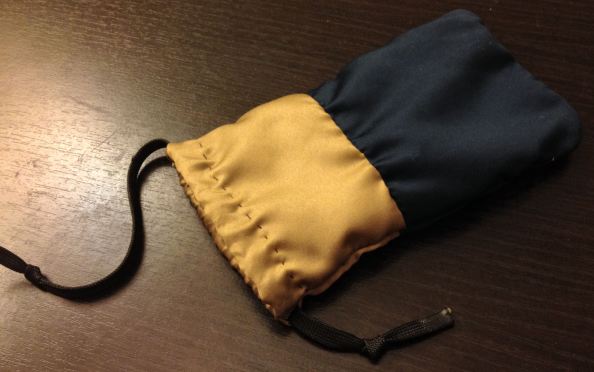
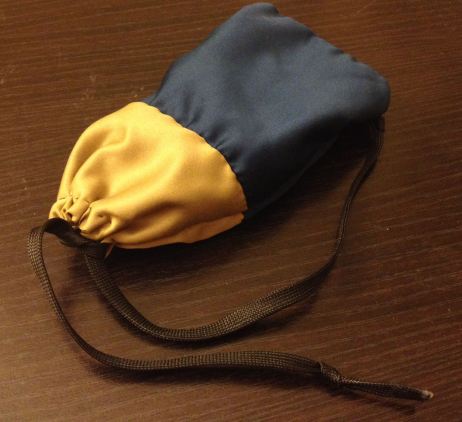
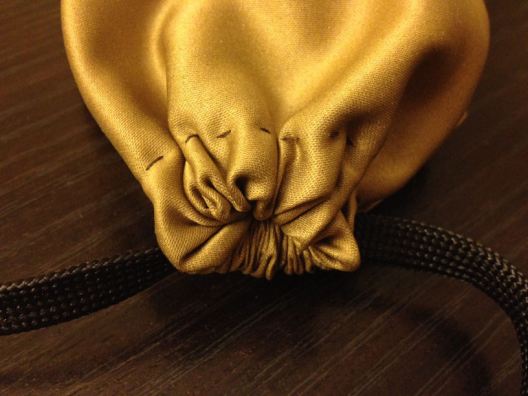
I also tie a knot on the ends of each cord. Now you have a drawstring tarot bag. Below you can see up close just how imperfect my stitches are. Well I didn’t say I was going to try and sell these. They’re special to me and that’s what matters.

image_4

If you’re a tarot enthusiast, do save your money and try making a tarot bag or two yourself. Even by hand, the whole ordeal takes less than an hour. Use decent fabric and be sure to line the interior by doubling up on said fabric and you’ll have some durable, long-lasting drawstring bags to store your tarot cards in. My stitches are ugly, I won’t deny, but the quality amazes me. I pull and tug at these things willy nilly and they just last and last nevertheless.

Cleansing a Tarot Deck

Image1

Many traditional Asian societies follow the lunar calendar (I once litigated a case involving an elder Taiwanese woman and all the document evidence she had was dated per the lunar calendar, which completely tripped us lawyers up and a lot of conversion work had to be done, but that is neither here nor there; just mentioning it to affirm that it really is still used today) and the super-traditional even believe that certain energies are more dominant during certain phases of the moon. Not kidding: they’d schedule major surgeries around certain phases of the moon because they believe they’ll bleed less and chances of success will be higher. They consult the Chinese almanac, which is based around the lunar calendar, for everything, from when to launch a business or throw a wedding ceremony to the optimal time for a funeral.

I’ll say that I haven’t lived or observed the universe long enough to confirm whether there is any validity to following moon phases, but if it worked for my ancestors and there is no actual adverse effects from continuing the tradition and it makes me personally feel closer to my heritage, then why the heck not. My mom was adamant about calibrating Hubby’s and my engagement and marriage to moon phases. Did it work? So far so good I’d say.

Anyway, that was a long tangent of an introduction. Sorry. This post is about cleansing a tarot deck.

1 cleansing tarot deck

To demonstrate, I’m using the DruidCraft Tarot deck by Philip and Stephanie Carr-Gomm and Will Worthington (a highly recommended deck, by the way; though there is a great bit of nudity in the illustrations, which I understand why would be featured in a Wiccan-Druid-based deck, but just does not resonate well with me).

Continue reading “Cleansing a Tarot Deck”

The Unindemnified Cost of Tarot Reading

tarotspi

I am preaching to the choir when I write this to an audience of tarot practitioners: If your personal energy could be quantified like battery life, then reading tarot for others will drain it like streaming a movie on your smartphone over 4G connection. Reading tarot depletes me in a way I cannot fully convey. Sometimes I get the sense that non-tarot practitioners who request tarot readings from me don’t have any idea.

On its face, a tarot reading seems to be an effortless dealing of a deck of cards, and then blurting phrases based in some part on the card imagery. What could be so hard about that?

Tarot is a tool, a metaphysical one if you will, that connects two individuals’ energetic fields together for the duration of a reading. The nature of the relationship between practitioner and seeker is that of give and take, respectively. A practitioner feels his or her energy draining out and going into the cards to provide the reading that the seeker is receiving. Seekers often talk about readings being rejuvenating, cathartic, an enriching experience. They’re picking up on that channeling effect. In contrast, tarot readers talk about feeling exhausted, needing to recharge.

Very few tarot readers make enough cash from their readings to compensate for their time spent. That, though, we will chalk up to simple economics and just acknowledge that at least from a free market standpoint, that part is fair.

I draft business contracts for a living and almost every one of them contains an indemnification clause. Indemnification is often one of the main points of negotiation and contention between the parties. In the course of a commercial dealing, some poo always makes its way to the fan– costs of damage resulting from the initial transaction that weren’t accounted for in the contract price– and everybody needs to figure out who owes what to who and how much to compensate for the loss. That’s indemnification.

When I make reference to the unindemnified price of tarot readings, I’m talking about that energetic loss that tarot practitioners sustain but no one accounts for, or heck, even acknowledge. Some seekers can be borderline parasitic, though I believe never intentionally so. Most tarot practitioners are by nature empaths and so of course their first inclination will be to yield and give and feel.

As an empath with a law degree, when I first started my legal career, I felt every client’s problem and took home a briefcase of emotional baggage every night. I’d think about their issues in the shower, while brushing my teeth, before I fell asleep, the first thing when I woke up, while I made my coffee… Yet senior partners at the firm seemed to master such control. They compartmentalized. One might be tempted to say they were apathetic, that they were desensitized, or they did not care. That is not true at all. They cared and they cared deeply about their clients. But they have been at this a long time and they know that to truly be in a position to help as many as possible, they needed to take care of themselves first. Selfishness is a form of selflessness. They knew exactly when it was time to step away from a case, recharge themselves, and live their own lives for a change, instead of living for others, which is exactly what lawyers do, though they rarely get seen by that side of them.

Tarot practitioners must take a cue from these partners. Newbies rarely possess the prudence to know when they must step away and focus on themselves. They get caught up in the exhilaration of uplifting others–an admirable trait–but ironically (since we are tarot readers…) fail to foresee the pending crash. That is why burn-out is such a problem among startup tarot practitioners.

There is no indemnification for that spiritual energy drain that is part of the tarot reader’s work. Thus we are the ones who must keep ourselves in check. Always take time to recharge and learn to say “no.”

Tarot or Psychic Scams: Why Tarot Practice Should Be Regulated

The above video is old, uploaded several years back, but I came across it yesterday and the news is certainly relevant to this day: alleged psychics who use tarot and other arts to scam people of money. This news broadcast is about scams near my neck of the woods, the Bay Area in California.

When driving downtown, you do see many glass window neon sign “psychic” fortune-telling shops like the ones depicted in the broadcast. People like the alleged psychic tarot reader interviewed in the broadcast cause me to shudder with disgust.

In every professional field, there are the scam artists, the cons, the good-for-nothing bottom-feeding scum of the profession that will rob you of your money and not provide any quality services in return. Lawyers (we definitely get a bad rep for that), doctors even, plastic surgeons especially, accountants, every profession. However, such professionals are still taken quite seriously by the public at large because of overall strict regulation and licensure requirements. At the end of the day, as long as you the consumer do your due diligence, the likelihood of getting scammed by one of these professionals can be diminished greatly. In tarot reading, not so much, because there are no regulatory or licensing requirements, no schooling minimums you’re expected to meet before you can hang out a neon sign and call yourself a Tarot Reader.

To start, I cannot believe the scam-artist Tarot Reader in the broadcast declared that he was 99.99% accurate. Who does that? Ethical lawyers, no matter how skilled or experienced, would never tell you that you are 99.99% likely to win (or lose). They may say you have a strong, compelling case, but then will always follow that up with a caveat: prepare a contingency for the ever fickle winds of change. The strongest cases can fall apart at the eleventh hour, and the weakest cases with no rational chance of victory can prevail. Tarot readers could do well to give such advice to their clients, especially since such a philosophy couldn’t apply more pertinently to an art like tarot reading.

Next, according to the broadcast, the decoy asked about her husband’s colon cancer. Per the American Tarot Association’s guidelines, there are two red flags right there. First, do not do readings to diagnose a health condition. You can read about how one might go about coping with what’s happening, but do not diagnose. Second, do not read for third parties. The practitioner can rephrase the question for the decoy and have her ask about her role in supporting her husband right now, but she shouldn’t be asking on behalf of the husband, not unless he’s present and consenting.

Then, as a tarot practitioner who also uses the Rider-Waite-Smith system, the next part interested me greatly. I will say that chances are the producers, who probably don’t know much about tarot, reenacted the tarot reading being referenced just for cool footage, but if it is based on the actual reading the scam-artist Tarot Reader gave to the decoy, it will make any RWS reader scratch his or her head.

Continue reading “Tarot or Psychic Scams: Why Tarot Practice Should Be Regulated”

Minchiate Cards for Divination: My Review

minchiate

It is said that like tarot, the origins of the minchiate are not verifiable, but was probably a card game played in the late medieval period. The version I have at home is a reproduction of the Etruria deck from 18th century Florence. Like tarot, the imagery on the cards and scope of the depictions seem extraordinarily well suited for spiritual, metaphysical, or divination work and in many ways, the minchiate even more so than tarot.

There are 97 cards in total, consisting of trumps like tarot, 22 with the addition of 4 cards representing the theological virtues, 4 cards representing the elements, and 12 cards representing the zodiac signs. That’s 41 trumps and 56 numbered cards, with the numbered cards similar to tarot: 4 suits, Ace through Ten, and then 4 court cards.

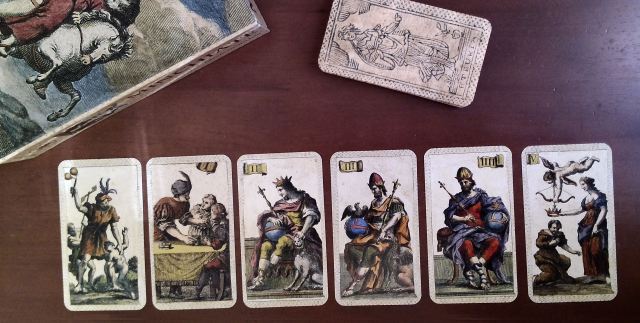
The photograph below shows the unnumbered Madman (corresponding with tarot’s The Fool) and Keys I, II, III, IIII (IV), and V. Key I is the Performer, which corresponds with tarot’s The Magician. Keys II, III, and IIII (IV) in the minchiate are the Grand Duke, the Western Emperor, and the Eastern Emperor, which some say correspond with tarot’s Empress, Emperor, and Hierophant respectively. Key V is Love, corresponding with tarot’s Key VI, The Lovers.

The numbering of the keys in the Minchiate is significantly different from the tarot. For example, in minchiate the Temperance card is Key VI while in tarot it is Key XIV. There is no Hermit card per se, but there is Father Time, which is said to correspond with the Hermit. Most notably, the final card of the Trumps is not The World as in tarot, but rather the Trumpets, corresponding with the tarot Judgement card.
Minchiate_Trumps0to5

After the minchiate Key XV The Tower, there are the four theological virtues: Key XVI, Hope; Key XVII, Prudence; Key XVIII, Faith, and Key XIX, Charity. See below.

Minchiate_4Virtues

Although there is no direct correspondent in minchiate to the tarot High Priestess card, some speculate that the Faith card corresponds with the High Priestess. For me, in the Etruria deck, the illustrations are confusing. The picture on the first card above calls to mind Faith for me, but it’s the Hope card. The second card (left to right) reminds me of vanity for some reason, rather than a virtue, and yet it’s Prudence. The third card shows a woman, likely from the laboring class, looking at or reading something. It only somewhat fits my conception of Faith. The last card, Charity– either you know the meaning or you don’t. Little about the card’s imagery strikes me as denoting charity. But hey, this is all just me.
Michiate_4Elements

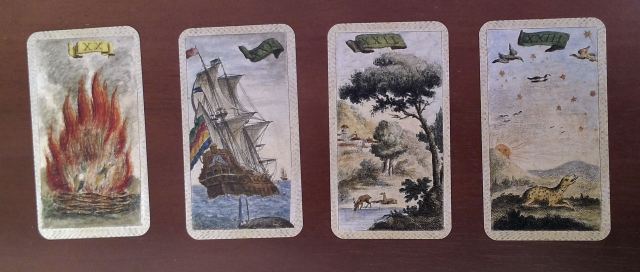
Following the four theological virtues are the four classical elements in the following order: Fire, Water, Earth, and Air. (Compare that to the order of the elements per the contemporary majority view in tarot practice: Fire, Water, Air, and Earth.) When the Fire card appears in a reading, it suggests the relevance of innovation, passion, ambition, and leadership. The Water card denotes alliances, intuition, and compassion. The Earth card, stability, conservatism, conviction, and resourcefulness. Air, idealism, intellectualism, communication, and also ambition, though the Fire-based ambition usually relates to progress while the Air-based ambition relates to conquest.

Minchiate_12ZodiacSigns

In the minchiate there are also cards for the 12 signs of the zodiac. Pictured above in the numerical order they appear in the trumps:

Top Row (L to R): Libra, Virgo, Scorpio, Aries, Capricorn, Sagittarius

Bottom Row (L to R): Cancer, Pisces, Aquarius, Leo, Taurus, Gemini

After the Trumps, the 56 numbered cards in the minchiate are similar to the tarot. There are four suits and their correspondences are as follows: Wands for work or career; Chalices (Cups) for emotions and relationships; Pentacles for money matters; and Swords for the abstract and philosophical. Among the court cards, Knaves (or Pages) denote education and learning; Knights about courage, action, and choice; Queens about a relationship; and Kings about decision-making and authority. Note further that the minchiate correspondents to the Pages are specifically 2 Knaves for the active suits (Fire and Air) and 2 Maids for the passive suits (Water and Earth).

Continue reading “Minchiate Cards for Divination: My Review”

What Is Tarot Reading? (The Hocus Pocus Version)

I came across a Howcast production on “What Is Tarot Reading?”–

The host of the Howcast, Paula Roberts declares with dogmatic conviction that “No real psychic reads for themselves.” The rationale, claims Roberts, has to do with the issue of objectivity. One cannot objectively read for oneself.

There is nothing objective about tarot readings, however. In fact, she starts off by saying there are different ways to read tarot, one being the mechanical approach where you assign a set meaning to each card and then apply those meanings objectively. What an interesting thing for her to say, considering that would be the only time tarot readings are objective, which she agrees with and yet contradicts when she says a psychic cannot read for herself due to the lack of objectivity. Um… what?

A good tarot reading isn’t a trial where a verdict has to be rendered. Of course if a tarot reading was like a trial, then I’d agree with Roberts and say you cannot render your own verdict. But tarot isn’t about objectivity at all. It is the unabashed embrace of the subjective. When you read for yourself, it is about what the signs and symbols of tarot mean to you and the significance of those meanings to you. Whether you are reading for others or for yourself, the interpretive process is wholly subjective, completely within the confines of the mind, though therein lies its power.

A tarot reading, at least a good one, has a way of triggering the mind into action and that action then becomes externalized, objective. The whole objective part happens much later in time, however, after the tarot practitioner and Seeker have parted ways.

If we want to take this one step further into the beyond, let’s say there is a universal life force that connects us all, that unifies the space-time continuum into one unit. I’ve heard it referred to as the Akashic records by some, especially psychics. Psychics contend that they have a stronger connection to the Akashic records than others and that is how they retrieve psychic knowledge that seem to defy the space-time continuum, i.e., they can see the future, the far past, talk to dead people, know what’s going on someplace far away, blah blah.

Let’s diagram this. We’ll illustrate the Akashic records or universal qi/life force as a unit circle.

psychiccircle

In theory, a psychic can connect to any point on the unit circle (aka the Akashic records aka the universal life force that connects us all and defies the space-time continuum) and see into certain information for a particular person, place, or event. If so, then why can’t a psychic read for him or herself? Is it because the psychic’s own consciousness is so opaque when it comes to the self that the psychic can’t reach past it to access the Akashic records?

I’m not claiming I have any idea. I’m just saying that you can read tarot for yourself and to say that no real psychic, whatever the hell that means, does it is just Roberts’ way of imposing her position onto others. There is no concrete limitation like that applied uniformly across the board. Maybe she cannot use the tarot for divination purposes for herself, but that for sure doesn’t mean others cannot do so effectively.

True, there are many ways to read tarot, as Roberts mentioned, and I refer to this so-called “psychic” approach to tarot reading as the hocus pocus version because that’s what it reminds me of: birthday party magicians who are able to wow the naïve but there is nothing special, gifted, or magical about what they do; it’s a mechanical application that anyone can learn. Likewise, tarot requires your intuition, but it’s something we all have and like our muscles, it’s something that can be developed and enhanced with training.

No “psychic” will read tarot for him or herself. Pah, I say. Psychics can. Most simply choose not to for philosophical reasons.

Like my application of tarot, predictive readings and fortunetelling do more harm than good. It takes wisdom to distinguish between what you should know and what level of your brain you should know it at (conscious, subconscious, unconscious…). Those with wisdom and strong intuitive abilities will opt not to bring to their conscious certain information from their unconscious because through their wisdom, they understand that knowing such information about themselves won’t be beneficial.

However, for some of these psychics, this is only a self-imposed philosophy. They understand that everyone is different and if someone feels he or she could be helped by knowing and the psychic can help tap into that knowledge, then the psychic will. In that case, the psychic has opted– out of voluntary will– not to read for herself, but to remain open to reading for others. It has nothing to do with whether she can or cannot read for herself. It’s about imposing one personal moral philosophy on the self but not imposing the same on others.