First Pentacle of Mercury: My Own Version

In this post I’m going to share how I modify the instructions from the Key of Solomon for the First Pentacle of Mercury and adapt the core principles from Key to make it my own.

If you want to read the original instructions, you’ll find it in this 560-page e-book (physical copy of the text is pictured above) by downloading it from here.

The more common representation of the First Pentacle is what you’ll see above, where the Hebrew letters for the angelic spirit name AGIEL (אגיאל) are inscribed around the pentagram counter-clockwise and then around the outer ring clockwise.

Above, in the carved wood disc on the left page spread, you can compare it to the original instructions and see how I’ve changed it up so it’s more “me.”

I was working with birch wood for the wood’s protective qualities (metaphysical correspondences) and carved the design into the wood with a wood-burner (pyrography– writing with fire! ooh, how fun!). My pentacles are also two-sided. I’ll talk about what I did with the back side of the pentacle later in this walk-through.

Left: Features Phoenician alphabet letters, heavily stylized; Right: Features the Celestial Alphabet from Agrippa (1533)

I made two different versions, which you’ll see above. The left one is a stylized version of the Phoenician alphabet equivalent, and the right one above is in the Celestial Alphabet.

Worth noting here that practitioners will hold very different and conflicting perspectives on just how much you can embellish or modify the original seals. I think, like any other science, it depends on how you’ve modified the original seal.

Working with the doctrine of analogies, it really is just like cooking. You can swap in different ingredients, but exactly what ingredients you’re swapping with will affect the taste of the resulting dish. Some ingredients are enough like the original that you probably can’t taste a difference, though there will still be subtle undertones you can pick up on; and with others, you’re probably basically creating a totally new dish.

Continue reading “First Pentacle of Mercury: My Own Version”

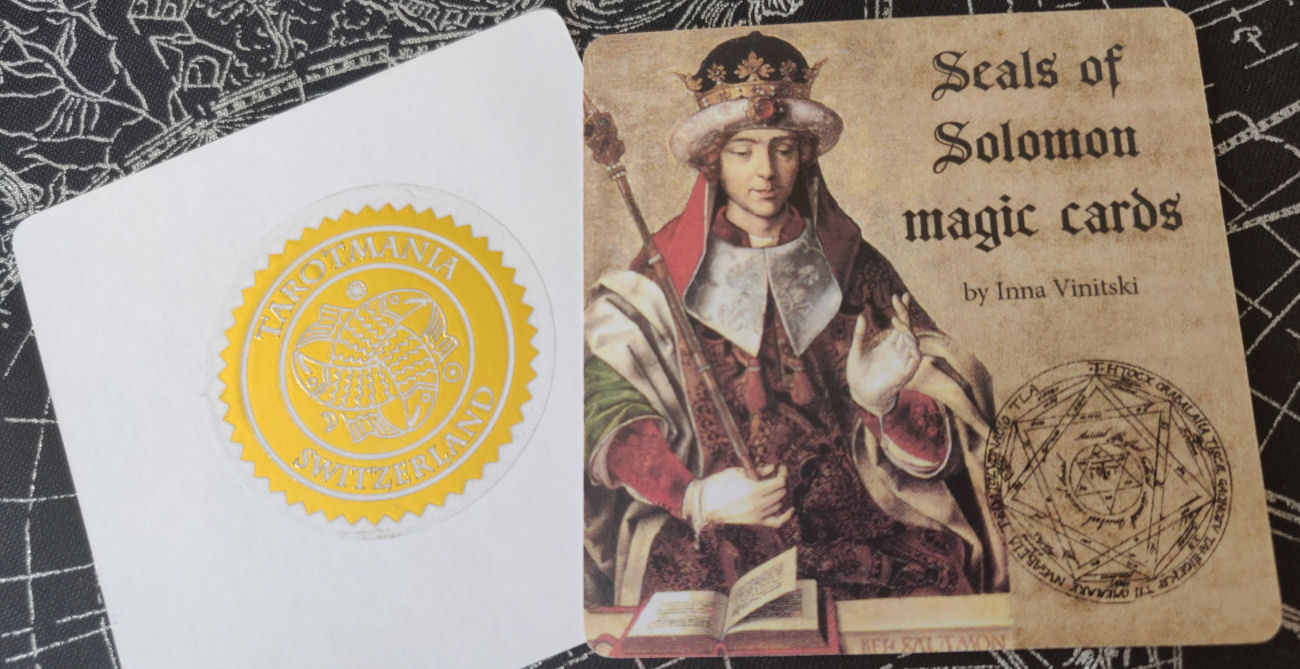
Seals of Solomon Magic Cards by Inna Vinitski

Inna Vinitski’s Seals of Solomon Magic Cards are the perfect companion tool to go along with your copy of the Key of Solomon, or Clavicula Salmonis, which I offer a free download of here. So although this deck does not come with a guidebook, everything you need to know about these seals and now to work with them can be found in that free download. I’m going to be making page references to that free download pdf of Key of Solomon.

I think the single most compelling reason to acquire this deck for your toolkit is to use them as easy, go-to charging plates for your charms, talismans, gemstones, crystals, and other metaphysical knick-knacks. Here, Inna Vinitski has already done the work for you. Once you get these cards, consecrate them and voila! Incredible! A set of tools for planetary magic at your fingertips!

This post will both showcase the Seals of Solomon cards, which I urge you to get if you want to deep-dive into working with the Key of Solomon, and also get into what the Key says about these seals, or pentacles.

To start, let’s try a little something, shall we? Below in the photo of the three magic cards, take a moment to gaze at each one, connecting your third eye (that space just between your brows) with the eye depicted on the card back. For one of these three cards, the tug at that space between your brows will feel stronger, more intense than for the others. Note which of the three cards gives you the strongest intuitive sensation.

Remember it, because we’ll be returning to your card selection later.

Continue reading “Seals of Solomon Magic Cards by Inna Vinitski”

The Keys of Solomonic Magic and Spirit Conjures

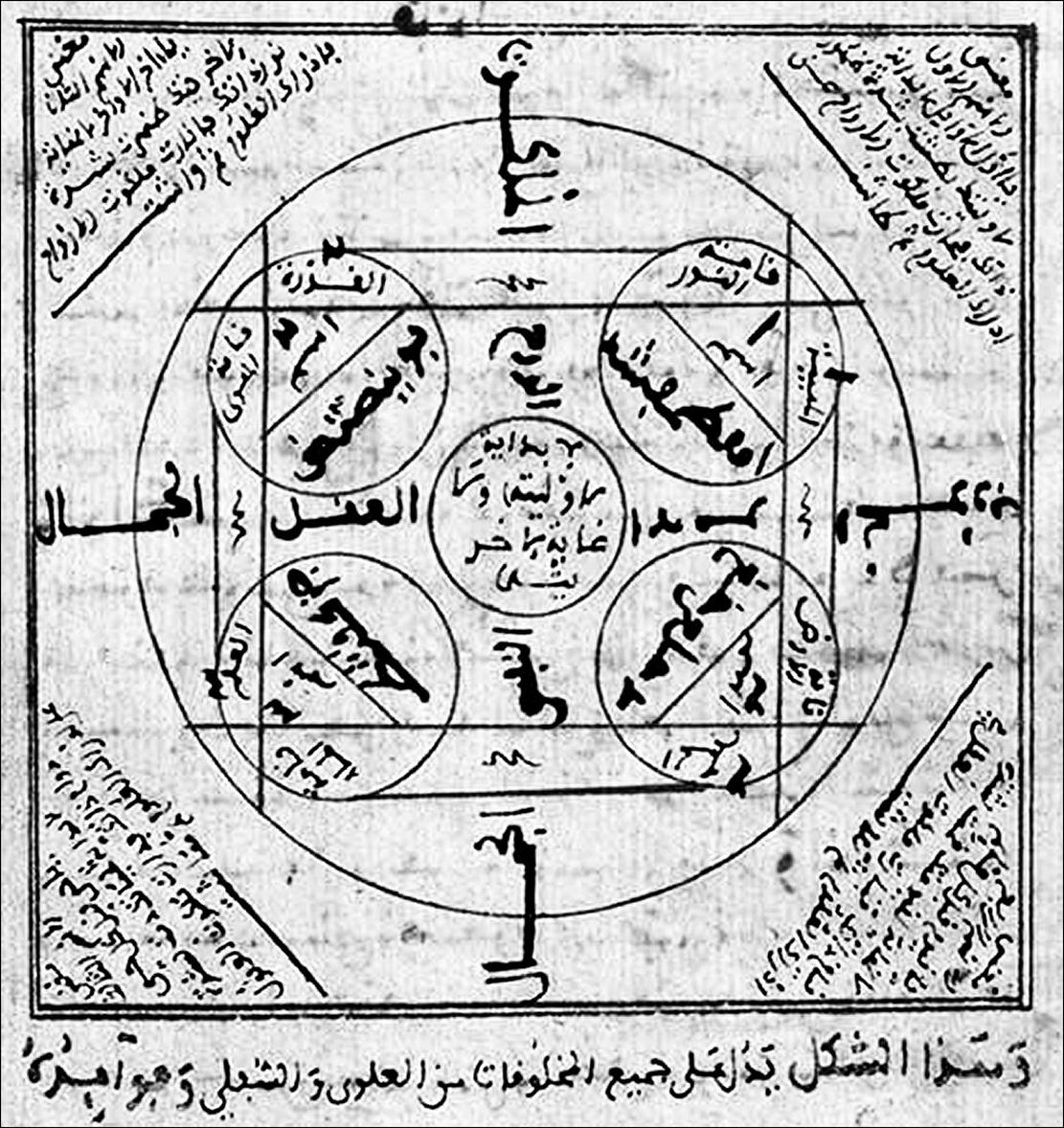
Clavicula Salomonis, grimoire in Arabic

Solomonic magic is pretty much the foundation of occultism, modern witchcraft, and ceremonial magic west of India and China, encompassing Europe, the Middle East, and now the Americas.

What you will discover within the pages of this book I’m sharing, you’re going to find to be the keystones of Persian magic and witchcraft, the magical practices of Muslim-influenced Southeast Asian countries, the Golden Dawn (though many of their correspondences differ), hoodoo, Wicca, and maybe even the traditions you’ve inherited and have been wondering where those traditions might have come from.

If you’re serious about your occult studies, then I hope you’ll add this text to your library and read through it cover to cover at least once.

From my vantage point, this book is essential reading, even if for no other reason than to take it apart to realize once and for all this is not for you. That, too, is invaluable. Whether you want to strengthen the connection to these roots or you want to sever ties with the roots altogether and grow anew, either choice calls for an examination of this text.

The images from historically significant grimoires, the essence of the ritual instructions provided, and the methodology behind the crafting of seals, devising the magical scripts, and even how to prepare for ritual can help to inspire your own creativity, offering sparks and revelations for how to do Craft your way.

From the Tractatis de Nigromatia (16th century), A grimoire on necromancy

If you’re a total beginner, then please do not try out any of these rituals or operations on your own. Plus, the instructions are pretty clear that most of these conjurations should never be performed solitary.

At the beginner and intermediate level, a light read of this text is going to be the best introduction to ceremonial magic, witchcraft, and occultism west of the Indies you can get.

This should be your orientation manual into the Craft and the beginner steps for realizing your Great Work. Levi even says as much, which is why in a course I was putting together focused on Levi, I ended up having to back-track and start first with the Key of Solomon.

Continue reading “The Keys of Solomonic Magic and Spirit Conjures”