Chinese Shamanism Meets Taoism: The Hidden Link in 3,000 Years of Magic and Mysticism

Course Description

Let’s time travel and step into the mystical lineage of the Neolithic Wu 巫 shamans that laid the foundation for Taoist mysticism. This free public video lecture explores the birth of Taoist magic and the enduring legacy of Wu shamanism. We’ll decode Taoist occultism as it is practiced today to reveal the hidden history of how shamanism shaped the mystical practices of East Asia, preserving and refining early shamanistic techniques into a structured magical system, giving rise to Taoist mysticism.

Taoism is the enduring legacy of the Wu 巫, and how their oft-forgotten roots and history have shaped the modern practices of spirit mediums, Asian modalities of witchcraft, and Taoist ritual magic today. We’ll bridge the gap between the ancient traditions we’ve inherited from the Yellow River cradle of civilization and modern mystical practices, presented in a way rarely explored in the English language.

This is Taoist witchcraft decoded, in reclamation of the Wu 巫’s shamanic practices of the Tao 道.

Continue reading “Chinese Shamanism Meets Taoism: The Hidden Link in 3,000 Years of Magic and Mysticism”

How Do We Reclaim Space? Challenging the Disproportionate Visibility of White Male Scholars in Indigenous Spiritual Practices

Whew that was kind of a long blog post title.

So here’s my conundrum. Recently I came across a highly visible, highly platformed video on Korean shamanism, by a white male academic. Don’t get me wrong– he did a fantastic job. It’s just that… a part of me does ask the question — why isn’t it an actual Korean shaman or mudang‘s video getting that level of visibility and exposure? Why is it when native practitioners talk about their traditions, their visibility and popularity is a small fraction of the view count that the white male academic gets?

Same goes for YouTube content on Taoism, inner alchemy, or esoteric Buddhism — the channels of white men garner the most visibility and occupy the top-ranking spaces. When it comes to educational content on Taoism and Buddhism, Western scholars overshadow the contributions of indigenous practitioners and Asian scholars. The imbalance has the impact of erasing lived experiences and native expertise, and all insights valued as authoritative are inevitably filtered through a white Western lens.

Worse yet, click into any of the lower-ranking videos on these subjects by native practitioners and skim through the comments section — you’ll find white men correcting the alleged inaccuracies of the native practitioners. Also, funny point — POCs can always spot the white dude in the comments section, irrespective of what profile photo or handle they use.

I call this a conundrum because I don’t have a clear solution — it’s a tension between inclusivity (welcoming all voices and perspectives on my lived tradition) and protecting marginalized voices (when the white male voice and perspective talks over the voice and perspective of the lived tradition). Notice how it’s always a white guy who says he knows the most authentic version of the tradition that is not even his to be authenticating, or how his interpretation of a sacred text that he’s appropriating is more accurate. He hijacks the culture and then positions himself as the expert.

At best, a POC is given secondary, lower-level credit for the purpose of validating the expertise of the white guy standing center stage. Not to mention, a POC voice is only platformed if they agree with the Eurocentric point of view. If a POC expert dare challenge established Western expertise — just watch what happens next.

Continue reading “How Do We Reclaim Space? Challenging the Disproportionate Visibility of White Male Scholars in Indigenous Spiritual Practices”

Is AI Validating Psychic Ability?

This is here because blog posts need to be accompanied by images, as you very well know. I typed into ChatGPT the following prompt: “Create an image that is an artistic expression of the [__one-word summary of main occupation, e.g., author, attorney, artist, etc.__] [__name__] based on the published works they’re most known for, public persona and platform, and publicly accessible information about this individual.” This prompt might generate text only, in which case your next prompt will be “Create an image that is an artistic expression of [__name__] based on the foregoing analysis and assessment.” Left image is what ChatGPT produced when I used my legal name and profession of attorney; right image is what it produced for the author Benebell Wen.

Long before AI came on the scene, I had already been wondering if maybe psychic ability in humans wasn’t as woo as we thought, and really, it’s just a rare few people’s brains being able to process “big data” they were somehow downloading from a collective unconscious, spot patterns, and synthesize that data in a way that now appears to the average person as predictive or supernatural.

These algorithms that seem to know exactly what we want to see, who we are, our preferences, core identity, innermost wants and values mirror what people often say about psychics and mediums– “She [the psychic] knows me better than I know myself!”

I believe clairvoyance, clairsentience, and claircognizance are simply functions we have yet to fully understand in a clear, practical way. But really at the heart of it, it’s just cognitive science and pattern recognition, much like what powers AI.

Continue reading “Is AI Validating Psychic Ability?”

An Overview of the Taoist Grimoire Baopuzi

The Baopuzi 抱樸子 (circa 300 – 343 AD) by the celebrated alchemist and polymath Ge Hong 葛洪 is a Taoist grimoire that I would posit to be the most if not one of the most influential and impactful texts on Taoist mysticism.

Scans of the text you see in this video are from here [四部備要], this copy of it archived between 1924 and 1931 as part of a national effort to preserve essential ancient Chinese texts. You can also access a digitized version of it via the Chinese Text Project, ctext.org here.

This write-up is the companion blog post to the video to provide some additional notes on the Liu Jia Secret Mantra and other fun (to me) tidbits from the Baopuzi.

Continue reading “An Overview of the Taoist Grimoire Baopuzi”

Witches Among Us by Thorn Mooney – Contemporary Witchcraft and Wicca

I’m a huge Thorn Mooney fan. I’ve been following her work since, gosh, over a decade ago when people were still uploading grainy YouTube videos of late-night ramblings about the Craft. Witches Among Us: Understanding Contemporary Witchcraft and Wicca (Llewellyn Books, Oct. 2024) is her third book.

In writing Witches Among Us, Mooney wears dual hats: that of the religious studies scholar and that of a longtime practitioner with experience in multiple traditions. In reviewing Witches Among Us, I’m wearing the hat of someone who is witch-adjacent. I do believe I am within the target readership because I am not part of the in-group of contemporary witchcraft or Wicca, and therefore I am reading this book to learn more about that group.

Continue reading “Witches Among Us by Thorn Mooney – Contemporary Witchcraft and Wicca”

The Semantics of Devil, Demon, and Ghost: 鬼 Guǐ

I stumbled upon an online discussion criticizing Fabrizio Pregadio’s translation of gui 鬼 to “demon, devil” [in Encyclopedia of Taoism (2008)], calling this translation inaccurate and problematic. The commenters in that discussion thread preferred the translation of gui to “ghost,” emphatically declaring that gui as ghost is the right approach, and that equating gui to demon or devil is wrong.

The rationale was that demon and devil have a connotation of evil in the West, which the term gui does not have. The term “ghost” is a bit more neutral – they say – and so gui as ghost is the better translation.

Continue reading “The Semantics of Devil, Demon, and Ghost: 鬼 Guǐ”

Secret Book of the Three Sovereigns

Also known as the: 三皇文 (sān huáng wén); 三皇經 (sān huáng jīng); 三皇内文 (sān huáng nèi wén); Version transmitted to Ge Hong: 小有三皇文 (xiao you sān huáng wén)

Is the Seal of the Nine Immortal Realms 九老仙部印圖 from the Secret Book of the Three Sovereigns 三皇內文遺秘, which is now canonized in the Daozang, or Taoist Canons, part of the lost, legendary grimoire, the Book of the Three Sovereigns 三皇文?

According to lore, during the Three Kingdoms Era (220 – 280 AD), the Taoist mystic and later an ascended master Bó Hé 帛和 finds this text buried inside a stone wall atop Mount Xīchéng 西城山. From Bó Hé’s teachings arose of the earliest traditions of Taoist magic: the School of Bó Taoism 帛家道 (bó jiā dào), or The Way of Bó. Popular among the upper class during the Jin (266 – 420 AD) and Wei (386 – 534 AD) dynasties in the northern central plains of China, the tradition focused on study of the Book of Three Emperors and formulated their own approach to talismanic magic, invocation of gods, and alchemy.

Then, around 300 AD, atop Mount Songshan 嵩山, the Taoist occultist Bao Liang 鲍靓 receives this text painted on silk, as transmitted to Bó Hé. Bao Liang was a renowned master of various occult practices, from astrology and alchemy to necromancy. He married his daughter Bao Gu to the alchemist Ge Hong.

Continue reading “Secret Book of the Three Sovereigns”

Social Media Witchcraft: Grifters, Aesthetics, Consumerism, Gatekeeping | #Occultea

Random photo inserted here because pretty. Don’t hate the player hate the game.

I’m looking forward to many and different voices adding to the discussion “Social Media Witchcraft: A Community Conversation About the Things That Divide Us” via the hashtag #OcculTea. The hosts are kickstarting the conversation off with these videos from Ella Harrison, Polish Folk Witch, and The Redheaded Witch.

“All members of the occult & witchcraft community – not just content creators or big names, but everybody” is invited to participate in this discussion, with the hope that the hosts might later facilitate a live community panel.

It’s a bit of an unanticipated synchronism that just yesterday I posted my commentary on personal branding pressures on authors and social media, and then today I am posting this. Collective thoughts around the same theme often surface at the same time within a community, and I think that’s what’s happening here. Ivy The Occultist had posted “Are Modern Witchcraft Books Failing Modern Witches?” on Feb. 12 and this #Occultea open invite on Social Media Witchcraft went out on Feb. 21. I thought that was kind of cool timing.

Introduce Yourself

If you’re reading my blog in the year 2024, then you probably already know a thing or two about me. But in case you’re new here by way of the hashtag, hi! I’m the author of three books: I Ching, The OracleThe Tao of Craft; and Holistic Tarot. You’ll often find me as a keynote at various tarot and witchy conferences.

By day I am a practicing attorney and my career obligations occupy most of my time. Writing and creating educational videos on topics I’m passionate about and reviewing books and decks to help promote artists and creatives are my hobbies.

I was born and raised in the cultural traditions of both Buddhism and Taoism. I trained in Buddhism, spent nearly every summer month from early childhood until young adulthood at monasteries sweeping floors, doing shaolin (badly), and meditating. There’s this joke among us Asians that you know an Asian kid grew up in Buddhism when they don’t know any of their masters’ names. Because they were all just shi fu to us. =)

Now let’s get started on the prompts.

Continue reading “Social Media Witchcraft: Grifters, Aesthetics, Consumerism, Gatekeeping | #Occultea”

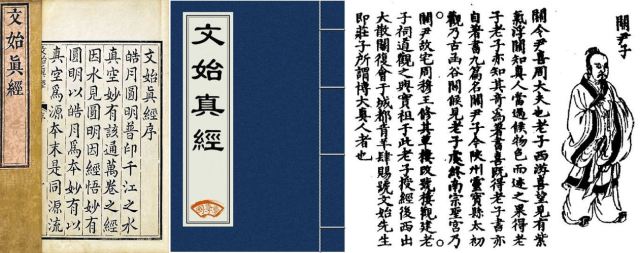
The Guan Yinzi

also known as the Wen Shi Zhen Jing: Sutra of Magical Spells and Aphorisms for Attaining Primordial Truth

The more recognized naming convention for the sutra is the Guan Yinzi (闕尹子) or Wen Shi Zhen Jing (文始真經) attributed to the gatekeeper who Laozi encountered.

The Guan Yinzi (or Wen Shi Zhen Jing)

According to lore, the gatekeeper at the Western Pass, named Yinxi 尹喜, later given the name Wenshi (文始), transcribed the teachings of Laozi and that text became the Tao Te Ching (道德經). Alternate tellings have Laozi writing the teachings down into two books himself, which the gatekeeper then receives.

Continue reading “The Guan Yinzi”

Dragon Gods, Land Spirits; the Hakka

I’m compounding several different topics into one video and probably should have done separate videos for each topic, but for me, they’re all related to each other, and so I guess from that personal perspective, it makes sense for me to be presenting them in one bundle.

Upfront, let’s clarify: I’m not teaching, I’m sharing. I wanted to learn more, went out and attempted to learn more, and this video and companion blog post is just me passing on to you what I’ve learned.

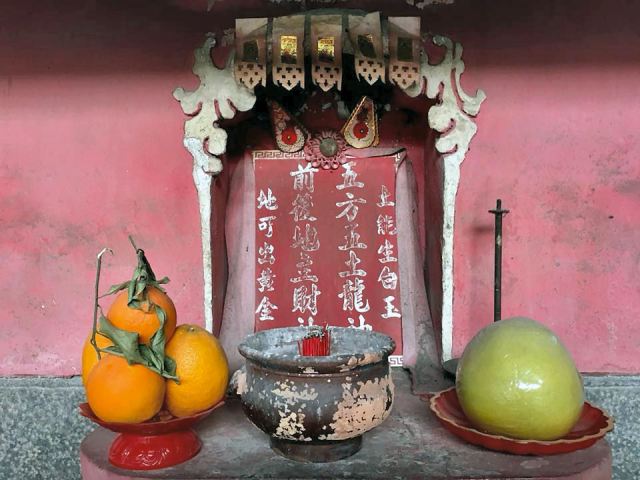
Dragon Gods of the Earth 土地龍神

Image Source: 香港古蹟行腳

Dragon god(s) (土地龍神, tǔ dì lóong shén ) are personifications of the land, where mountains and rivers meet, and thus from a feng shui perspective, reveal dragon veins (龍脈, lóong mài).

Rituals (such as 化胎, Huàtāi; in Hakka, it’s pronounced Fā Tói) can be performed to harness the qi or powerful essence from these dragon veins to bless a home and bless lands that the Hakka now occupy to ensure good harvests, prosperity, safety, protection, and good health.

What’s distinct about Hakka dragon spirits veneration is its association with the earth rather than water. Traditionally in Chinese lore, dragon spirits/gods 龍神 and the Dragon King 龍王 are associated with the temperaments of the seas.

Continue reading “Dragon Gods, Land Spirits; the Hakka”