Building Your Identity Capital: Personal Spirituality Edition

In an executive leadership workshop I attended, I learned about identity capital and how people leaders need to help their teams cultivate identity capital. It’s a concept popularized in The Defining Decade by Meg Jay, which in short summary is the collection of professional and personal assets that define why you’re great. This is subdivided into four categories: (1) skills and credentials, (2) social networks, (3) life experiences, and (4) personal qualities.

Identity capital is what sets you apart in your marketplace or industry. It attracts more opportunities, builds your credibility, and empowers you to be more persuasive. Even when headhunters don’t consciously realize it, they’re looking for candidates with identity capital in abundance. Those who stand out in competitive environments are the ones who are rich with these assets.

I found the workshop useful, so I want to share what I learned. And of course I thought, how fun would it be to combine those professional development learnings with divination as a tool for self-reflection.

Below is a free downloadable Identity Capital Workbook.

Continue reading “Building Your Identity Capital: Personal Spirituality Edition”

On Preventive [Spiritual] Care: Nine Precepts of the Healer

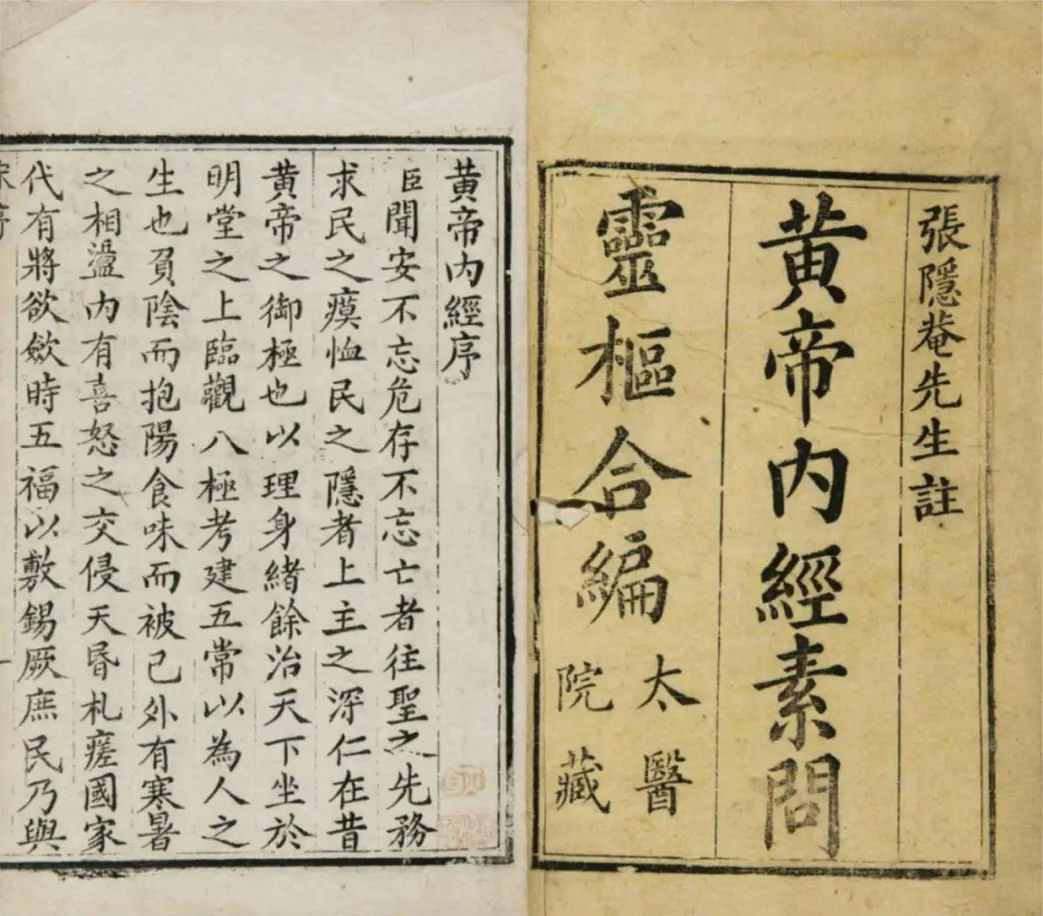
There’s this section in Chapter 9 of The Spiritual Axis (Ling Shu) from the classical medical treatise Inner Canons of the Yellow Emperor (Huangdi Neijing), which in canonical versions is often designated as Verse 27 that I love for many reasons.

Nine universally applicable precepts of healing can be extracted from Verse 27. The way they’re worded, you can interpret them through different lenses and they still hold true. The verse functions as axiomatic to acupuncture, and to both the ancient and the modern healthcare provider.

You can read it through the lens of how to ensure physical health, and also how to ensure mental, emotional health, and — as to the primary scope of work I operate in — to spiritual health.

If you’re looking at it as a road map for your own healing journey, it works. If you’re a healer of any stripe, these are nine clinical axioms for guiding patient care. You can look at these nine precepts as applied medical wisdom, or heuristics for clinical decision-making. They work as key tenets for helping a practitioner refine their diagnostic and therapeutic approaches.

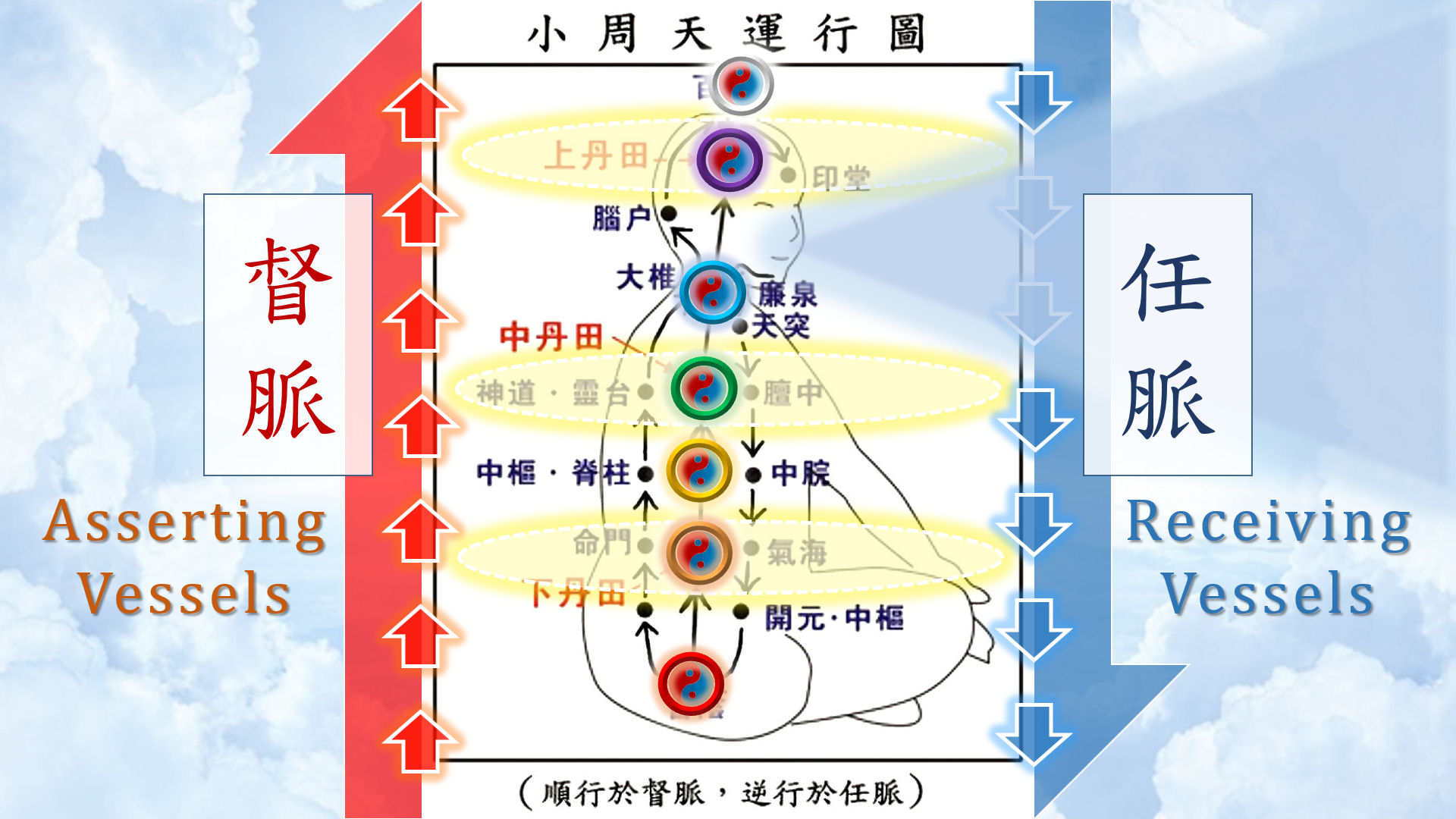
And finally, in my view, these nine precepts can be instrumental to helping anyone set the foundation of their personal spiritual practice. It’s designed in such a way that you can account simultaneously for mundane physical health and hygiene tenets and for basic considerations in ritual or ceremonial magic.

Continue reading “On Preventive [Spiritual] Care: Nine Precepts of the Healer”

Chinese Shamanism Meets Taoism: The Hidden Link in 3,000 Years of Magic and Mysticism

Course Description

Let’s time travel and step into the mystical lineage of the Neolithic Wu 巫 shamans that laid the foundation for Taoist mysticism. This free public video lecture explores the birth of Taoist magic and the enduring legacy of Wu shamanism. We’ll decode Taoist occultism as it is practiced today to reveal the hidden history of how shamanism shaped the mystical practices of East Asia, preserving and refining early shamanistic techniques into a structured magical system, giving rise to Taoist mysticism.

Taoism is the enduring legacy of the Wu 巫, and how their oft-forgotten roots and history have shaped the modern practices of spirit mediums, Asian modalities of witchcraft, and Taoist ritual magic today. We’ll bridge the gap between the ancient traditions we’ve inherited from the Yellow River cradle of civilization and modern mystical practices, presented in a way rarely explored in the English language.

This is Taoist witchcraft decoded, in reclamation of the Wu 巫’s shamanic practices of the Tao 道.

Continue reading “Chinese Shamanism Meets Taoism: The Hidden Link in 3,000 Years of Magic and Mysticism”

Is AI Validating Psychic Ability?

This is here because blog posts need to be accompanied by images, as you very well know. I typed into ChatGPT the following prompt: “Create an image that is an artistic expression of the [__one-word summary of main occupation, e.g., author, attorney, artist, etc.__] [__name__] based on the published works they’re most known for, public persona and platform, and publicly accessible information about this individual.” This prompt might generate text only, in which case your next prompt will be “Create an image that is an artistic expression of [__name__] based on the foregoing analysis and assessment.” Left image is what ChatGPT produced when I used my legal name and profession of attorney; right image is what it produced for the author Benebell Wen.

Long before AI came on the scene, I had already been wondering if maybe psychic ability in humans wasn’t as woo as we thought, and really, it’s just a rare few people’s brains being able to process “big data” they were somehow downloading from a collective unconscious, spot patterns, and synthesize that data in a way that now appears to the average person as predictive or supernatural.

These algorithms that seem to know exactly what we want to see, who we are, our preferences, core identity, innermost wants and values mirror what people often say about psychics and mediums– “She [the psychic] knows me better than I know myself!”

I believe clairvoyance, clairsentience, and claircognizance are simply functions we have yet to fully understand in a clear, practical way. But really at the heart of it, it’s just cognitive science and pattern recognition, much like what powers AI.

Continue reading “Is AI Validating Psychic Ability?”

2025 Forecasts; Navigating Uncertainty & Reclaiming Power

[This is a cross-post adapted from my latest newsletter share, which you can find here.]

2025 is poised to bring rapid technological advancements with artificial intelligence, an increasing need for global response to climate change, continued escalation of geopolitical conflicts, and deepening societal faultlines, with much of that all but written in the stars.

Let’s talk about general global forecasts for the year to come. We’ll cover the following:

  • Planetary Year of Saturn, then Jupiter
  • Year of Hexagram 44: Improper Meeting
  • Jupiter in Gemini & Cancer
  • Start of a New Age: Pluto in Aquarius
  • 2025 Tarot Triumph of the Year
  • Navigating Financial Uncertainty
  • Reclaiming Personal Power in Difficult Times

Continue reading “2025 Forecasts; Navigating Uncertainty & Reclaiming Power”

An Overview of the Taoist Grimoire Baopuzi

The Baopuzi 抱樸子 (circa 300 – 343 AD) by the celebrated alchemist and polymath Ge Hong 葛洪 is a Taoist grimoire that I would posit to be the most if not one of the most influential and impactful texts on Taoist mysticism.

Scans of the text you see in this video are from here [四部備要], this copy of it archived between 1924 and 1931 as part of a national effort to preserve essential ancient Chinese texts. You can also access a digitized version of it via the Chinese Text Project, ctext.org here.

This write-up is the companion blog post to the video to provide some additional notes on the Liu Jia Secret Mantra and other fun (to me) tidbits from the Baopuzi.

Continue reading “An Overview of the Taoist Grimoire Baopuzi”

The Semantics of Devil, Demon, and Ghost: 鬼 Guǐ

I stumbled upon an online discussion criticizing Fabrizio Pregadio’s translation of gui 鬼 to “demon, devil” [in Encyclopedia of Taoism (2008)], calling this translation inaccurate and problematic. The commenters in that discussion thread preferred the translation of gui to “ghost,” emphatically declaring that gui as ghost is the right approach, and that equating gui to demon or devil is wrong.

The rationale was that demon and devil have a connotation of evil in the West, which the term gui does not have. The term “ghost” is a bit more neutral – they say – and so gui as ghost is the better translation.

Continue reading “The Semantics of Devil, Demon, and Ghost: 鬼 Guǐ”

The Guan Yinzi

also known as the Wen Shi Zhen Jing: Sutra of Magical Spells and Aphorisms for Attaining Primordial Truth

The more recognized naming convention for the sutra is the Guan Yinzi (闕尹子) or Wen Shi Zhen Jing (文始真經) attributed to the gatekeeper who Laozi encountered.

The Guan Yinzi (or Wen Shi Zhen Jing)

According to lore, the gatekeeper at the Western Pass, named Yinxi 尹喜, later given the name Wenshi (文始), transcribed the teachings of Laozi and that text became the Tao Te Ching (道德經). Alternate tellings have Laozi writing the teachings down into two books himself, which the gatekeeper then receives.

Continue reading “The Guan Yinzi”

Frater Setnakh’s 72 Angels Talisman Coins and Cards

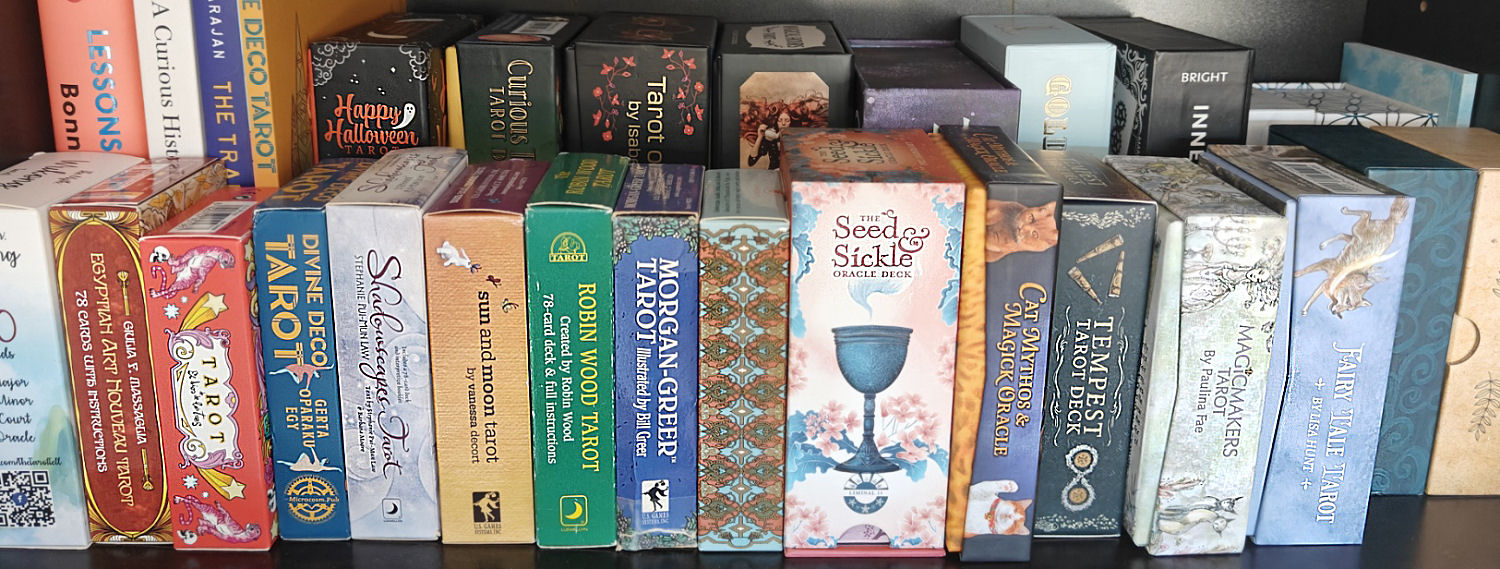
I previously showed the above in a #54321tarot tag. Whether you get the coins or cards, if you’re interested in the 72 angels correspondences, there’s a free download from me at the very end of this walk-through.

The download is so you can do a direct comparison between the 72 angels and tarot correspondences per Christine Payne-Towler’s Tarot of the Holy Light and the tarot correspondences per Frater Setnakh.

This post is a photographic walk-through of the 72 Angels Talisman Coins and Cards created by Frater Setnakh.

Continue reading “Frater Setnakh’s 72 Angels Talisman Coins and Cards”

Dragon Gods, Land Spirits; the Hakka

I’m compounding several different topics into one video and probably should have done separate videos for each topic, but for me, they’re all related to each other, and so I guess from that personal perspective, it makes sense for me to be presenting them in one bundle.

Upfront, let’s clarify: I’m not teaching, I’m sharing. I wanted to learn more, went out and attempted to learn more, and this video and companion blog post is just me passing on to you what I’ve learned.

Dragon Gods of the Earth 土地龍神

Image Source: 香港古蹟行腳

Dragon god(s) (土地龍神, tǔ dì lóong shén ) are personifications of the land, where mountains and rivers meet, and thus from a feng shui perspective, reveal dragon veins (龍脈, lóong mài).

Rituals (such as 化胎, Huàtāi; in Hakka, it’s pronounced Fā Tói) can be performed to harness the qi or powerful essence from these dragon veins to bless a home and bless lands that the Hakka now occupy to ensure good harvests, prosperity, safety, protection, and good health.

What’s distinct about Hakka dragon spirits veneration is its association with the earth rather than water. Traditionally in Chinese lore, dragon spirits/gods 龍神 and the Dragon King 龍王 are associated with the temperaments of the seas.

Continue reading “Dragon Gods, Land Spirits; the Hakka”