Frater Setnakh’s Tarot Coins and Archangels Set

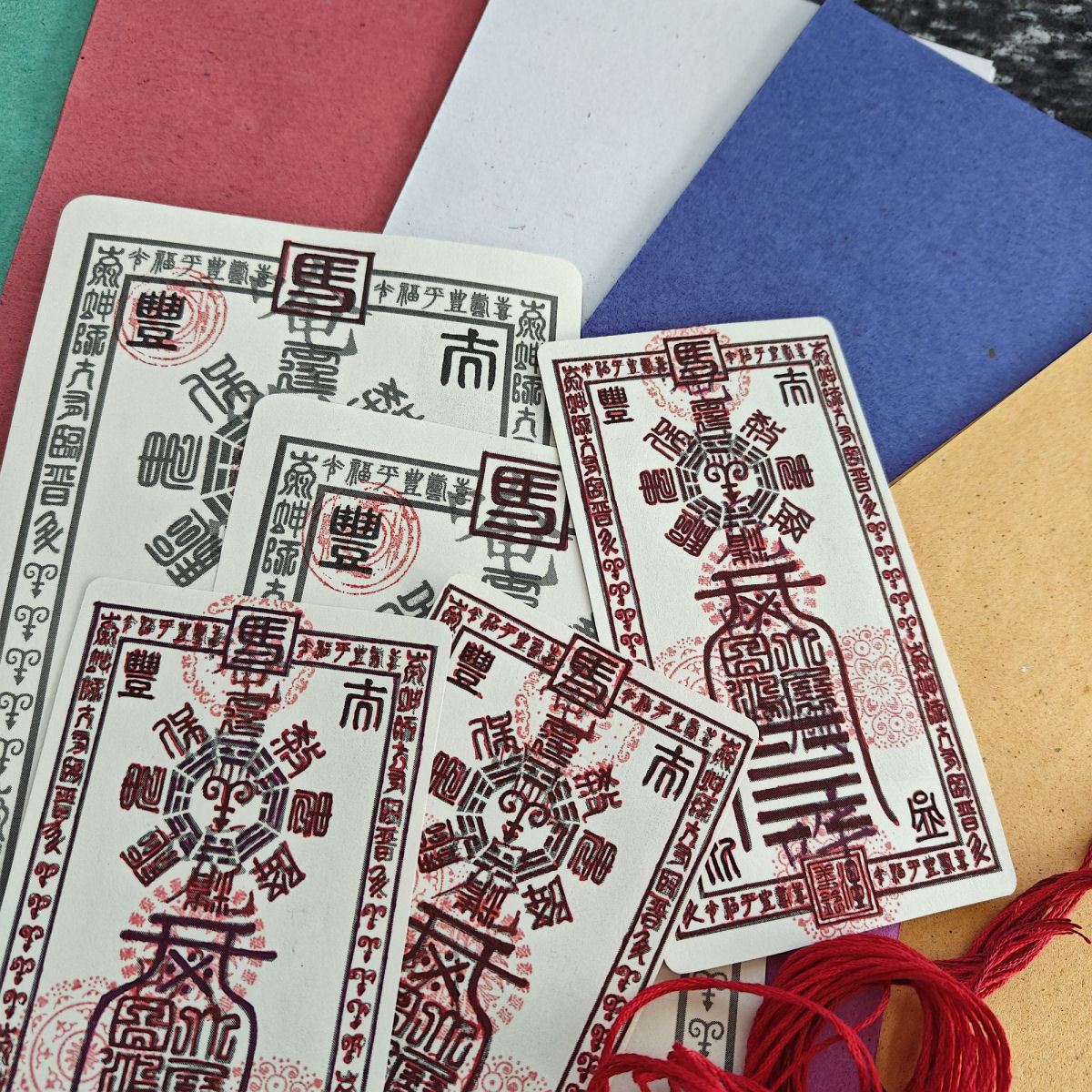
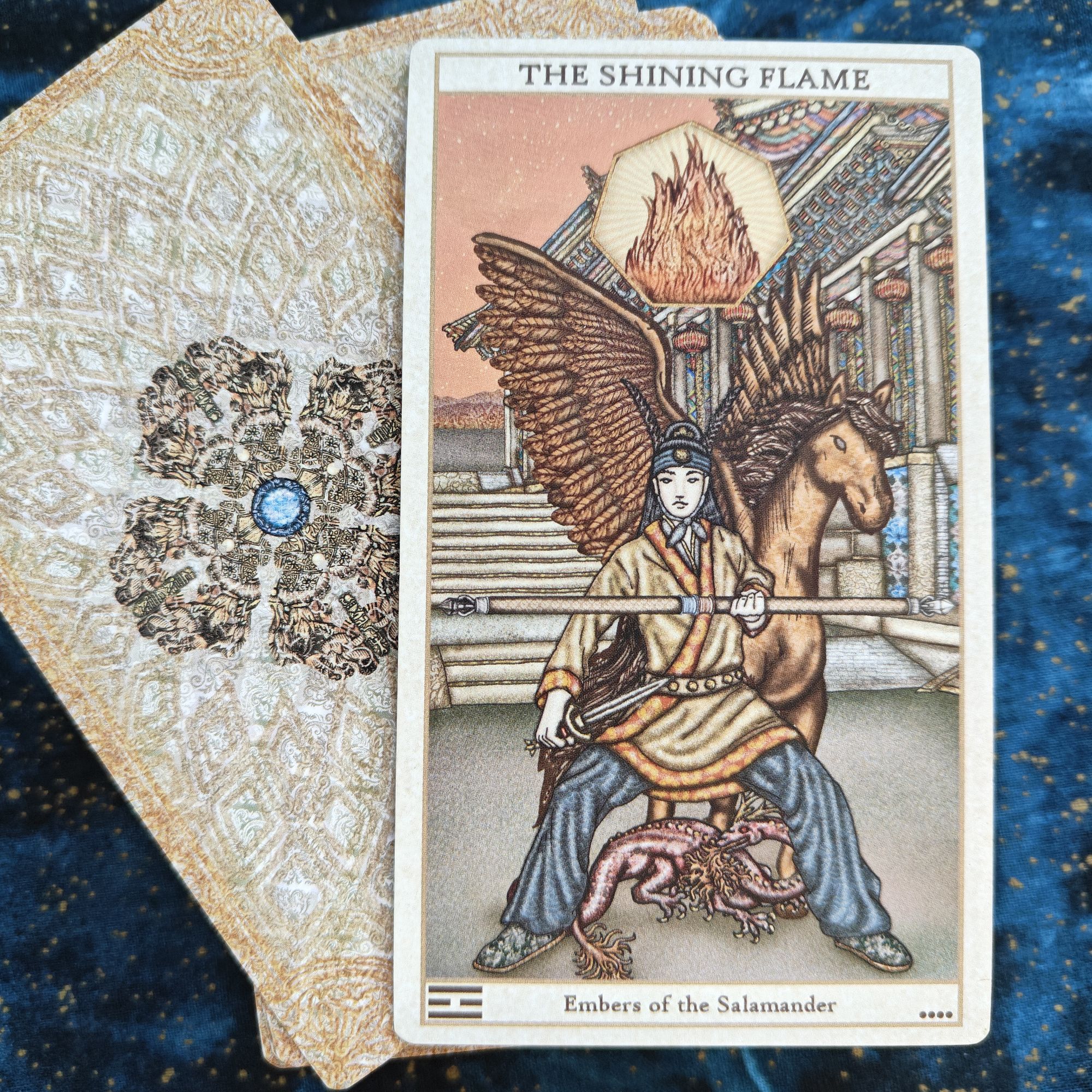
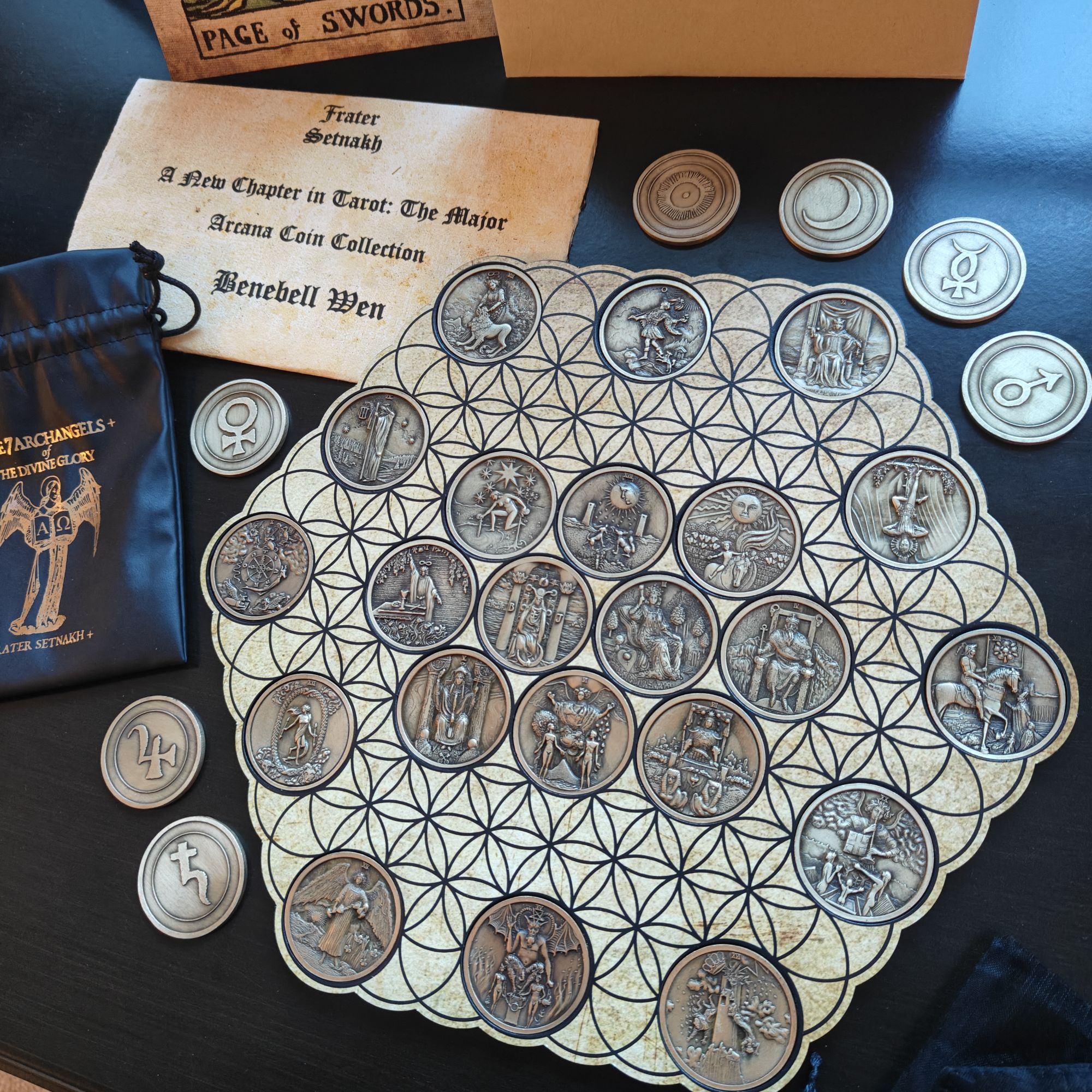
Frater Setnakh is one of the most incredible, detail-oriented artisans of ritual artifacts I’ve come across. I’ve previously reviewed the 72 Angels Talisman Coins and Cards he sent me, which I keep on display in my sitting room. Here I’ll be showcasing his latest offering, Tarot Coins, along with the Guardian Angel Coins, or Seven Archangels.

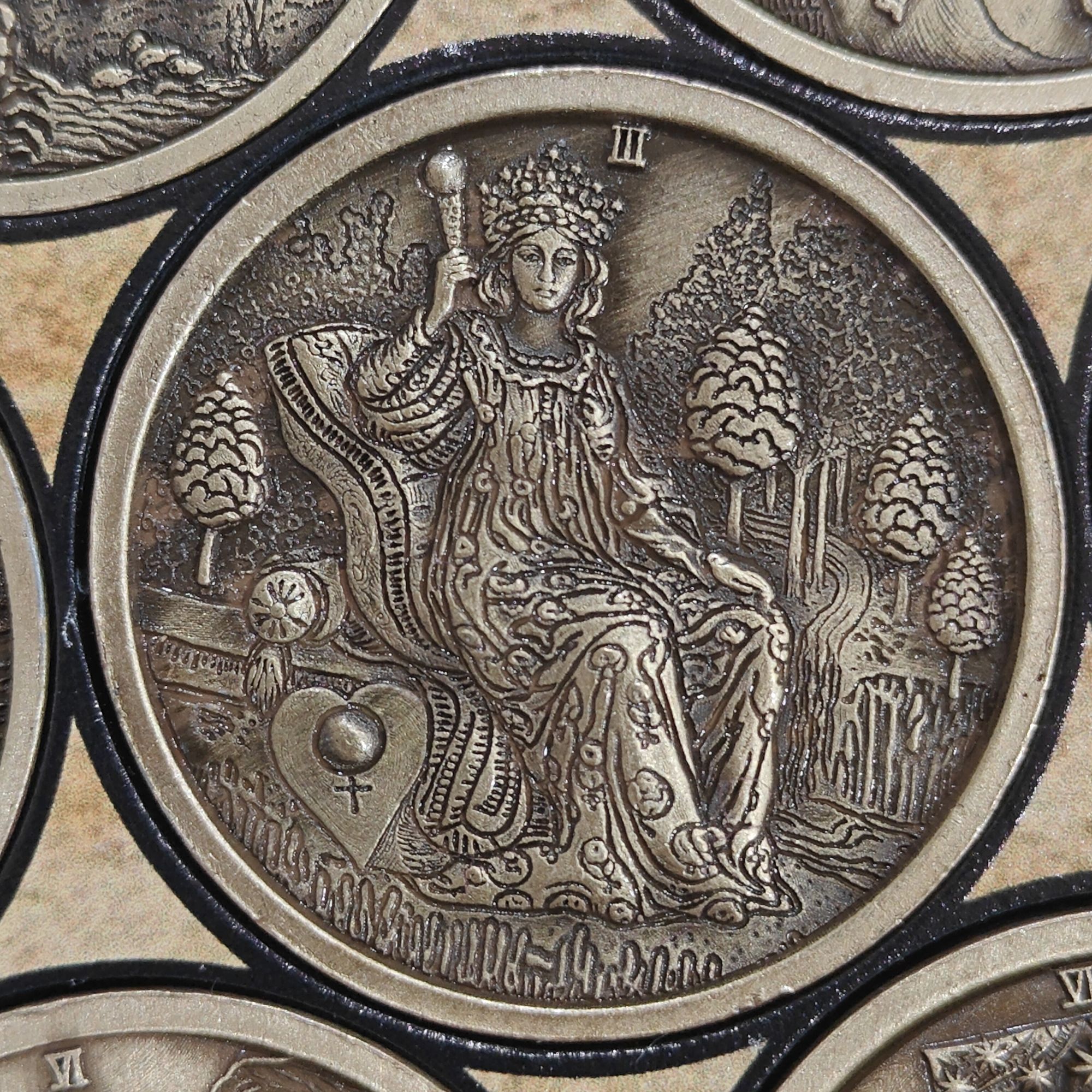
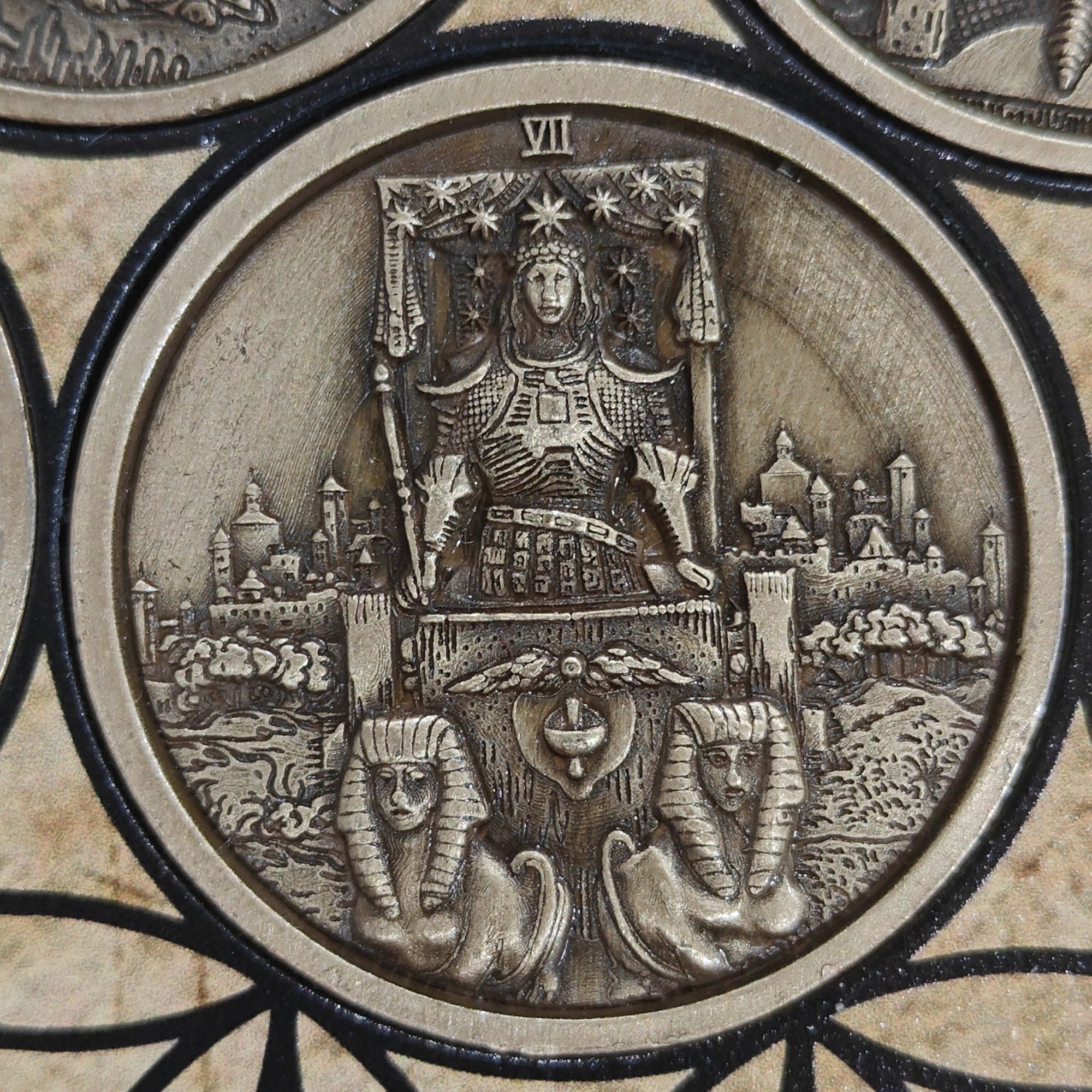
The detailing on these coins is incredible, so I’ll also be showing a zoomed-in view of several of the coins, photo essay style. You can click on any of the images and magnify the photo to see just how fine the craftsmanship is here and each coin’s delicate engraving.

Per the ritual artifact description, this is the “world’s very first collection of tarot coins inspired by the Rider-Waite deck.” And personally I have yet to see tarot coins crafted at this level of detail and intricacy. They’re simply exquisite.

Continue reading “Frater Setnakh’s Tarot Coins and Archangels Set”

Advanced Introduction to Taoist Alchemy

  1. Lesser Mandala of Heaven: A Taoist Secret to Cultivating Personal Power
  2. Greater Mandala of Heaven: Advanced Introduction to Taoist Alchemy

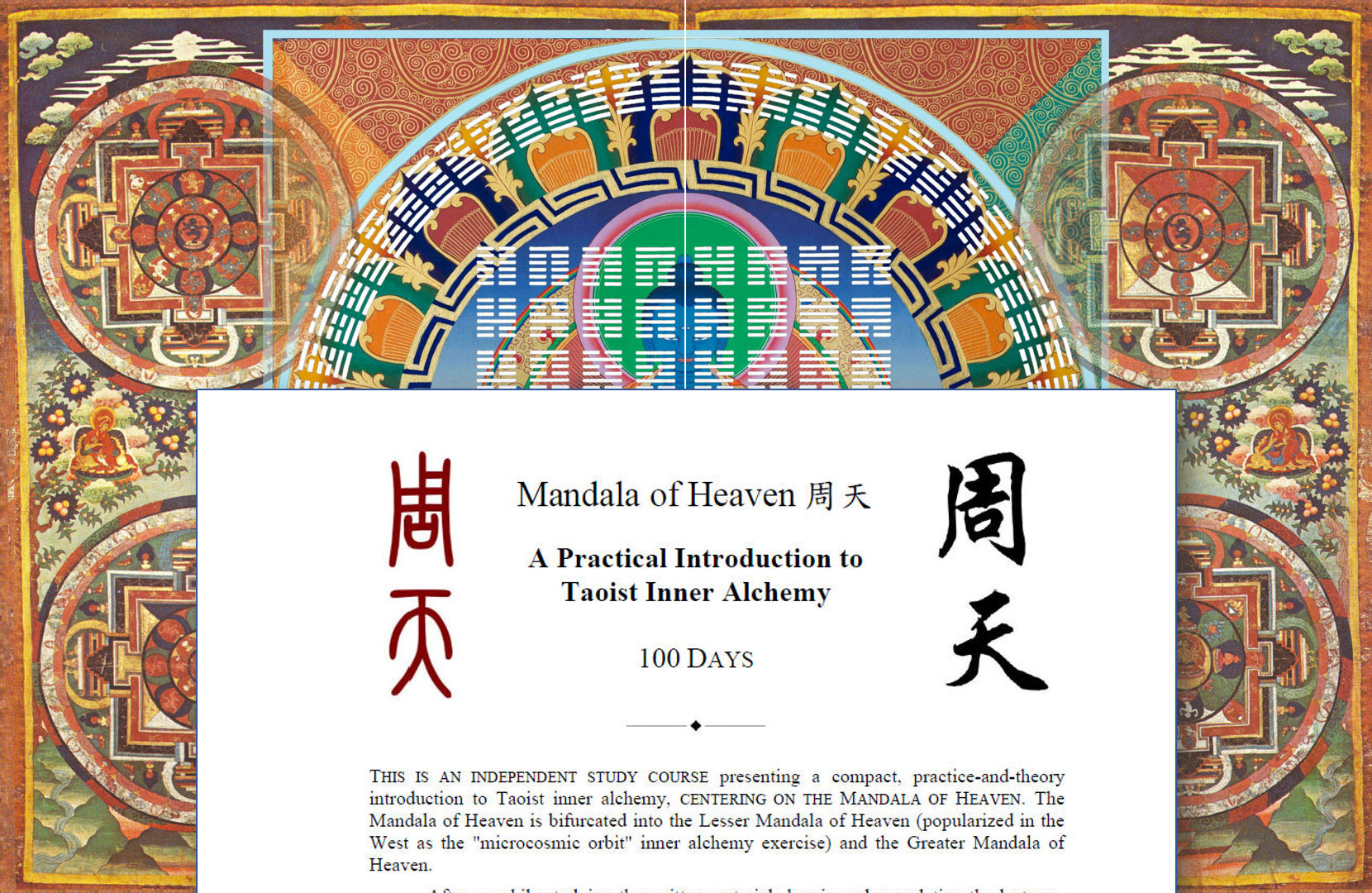
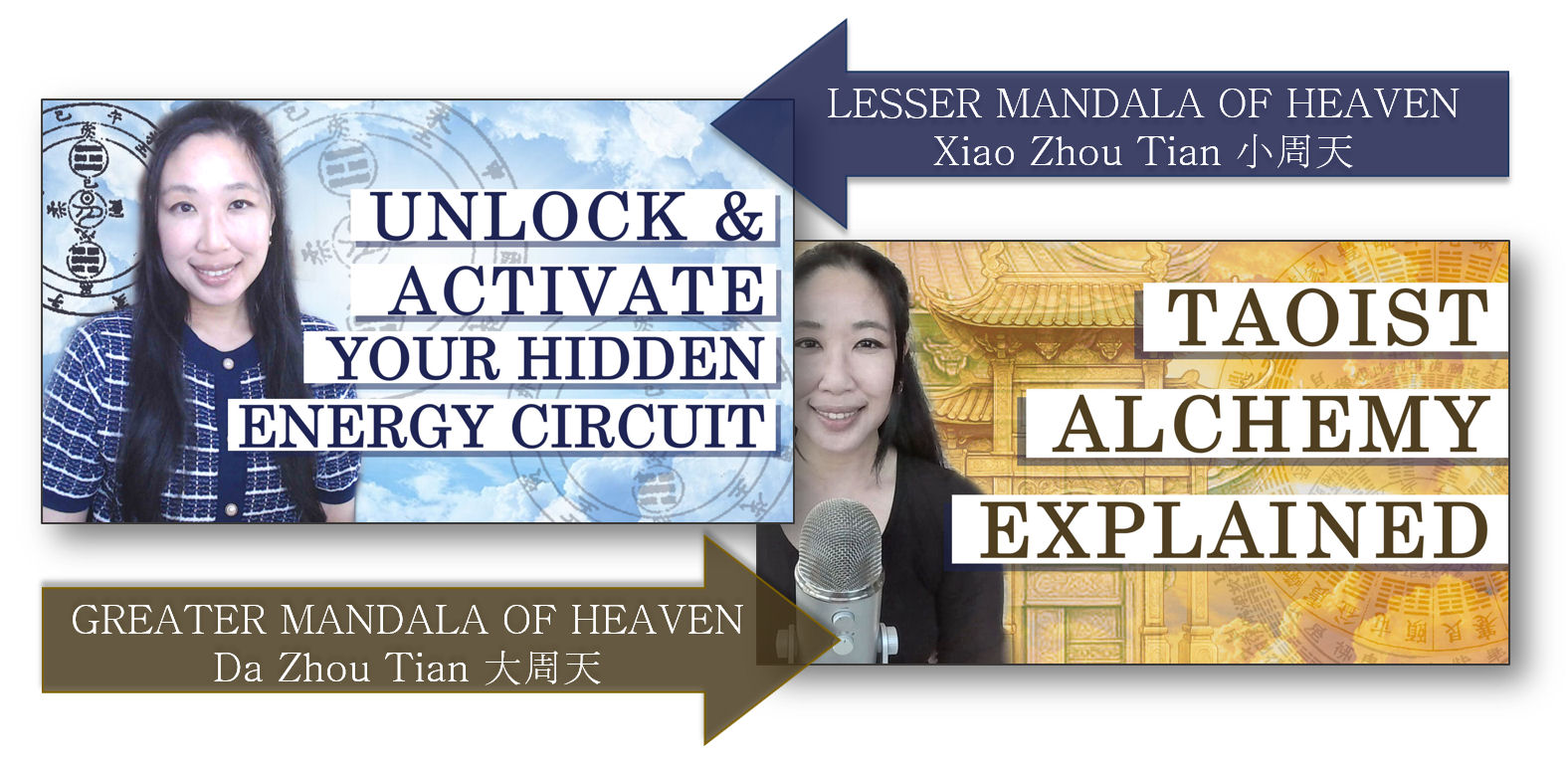
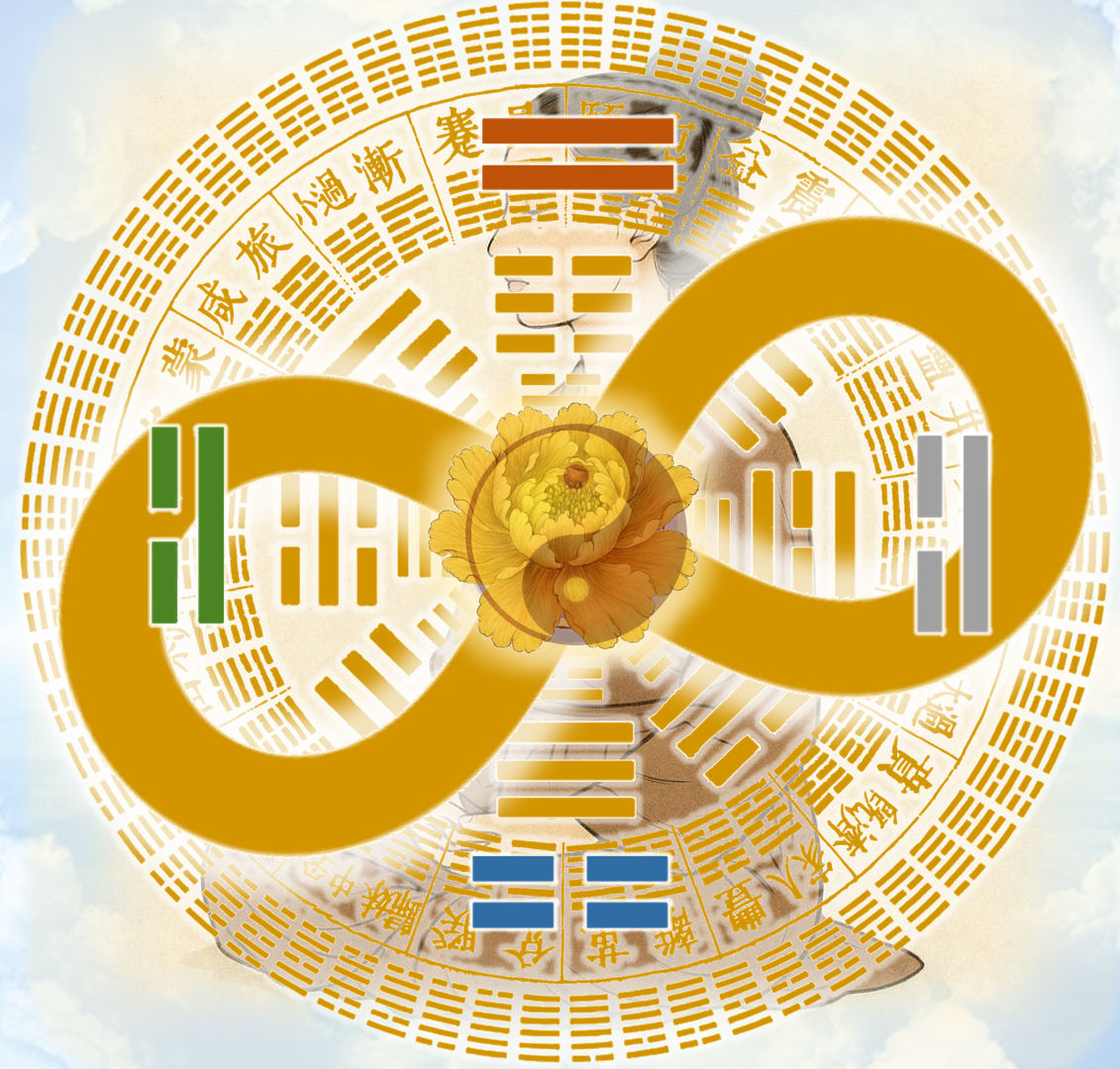
This is Part II of what we started in Part I on the Lesser Mandala of Heaven. Part II covers the Greater Mandala of Heaven, and in doing so, provides an advanced introduction to Taoist alchemy.

We are continuing from Part I, so I’ll presume you’re already familiar with what we covered there. If you haven’t watched that video lecture “A Taoist Secret to Cultivating Personal Power: Inner Alchemy Basics,” please do before proceeding.

In this introduction, I want to explore the inner logic that underlies one of the world’s most sophisticated (in my opinion) systems of spiritual cultivation. I intend for this intro to be a deep-dive into the heart of Taoist alchemy by delineating the Greater Mandala of Heaven.

The ultimate goal of Taoist alchemy is to transform the finite into the infinite, matter into spirit, and limitation into transcendence. We cover this ground by first understanding the distinction made between inner alchemy and outer alchemy.

Philosophically, this is a system and tradition that presents a compelling perspective on how Change happens.

Historical Textual References

In addition to the two texts mentioned in Part I, these are some of the oft-cited sources of insight on the Greater Mandala of Heaven 大周天. The titles are hyperlinked to the full texts over at ctext.org (the Chinese Text Project). While CTP as a site has its limitations, it’s one of the best free, accessible, and online databases for primary sources of pre-modern Chinese texts, so it’s the most user-friendly for folks like you and me.

Continue reading “Advanced Introduction to Taoist Alchemy”

About the 2026 Metaphysician’s Day Planner

This is a walk-through of the 2026 Metaphysician’s Day Planner (MDP), highlighting new changes and edits from previous years’ MDPs and how I use my MDP. Just a reminder: If you’d like to order your 2026 MDP, go HERE.

But also, I’ve provided all the digital MS Word templates that I use to create the MDPs year to year so that you don’t even have to buy mine, but can build your own. You can download all the digital templates HERE.

My favorite part about the MDP offering is you choose your own cover art design. On THIS PAGE where you can find the template downloads, you’ll also find Dropbox links to download various cover art design options, or take the specs (you’ll find this in the MDP General Guide PDF) to design your own from scratch.

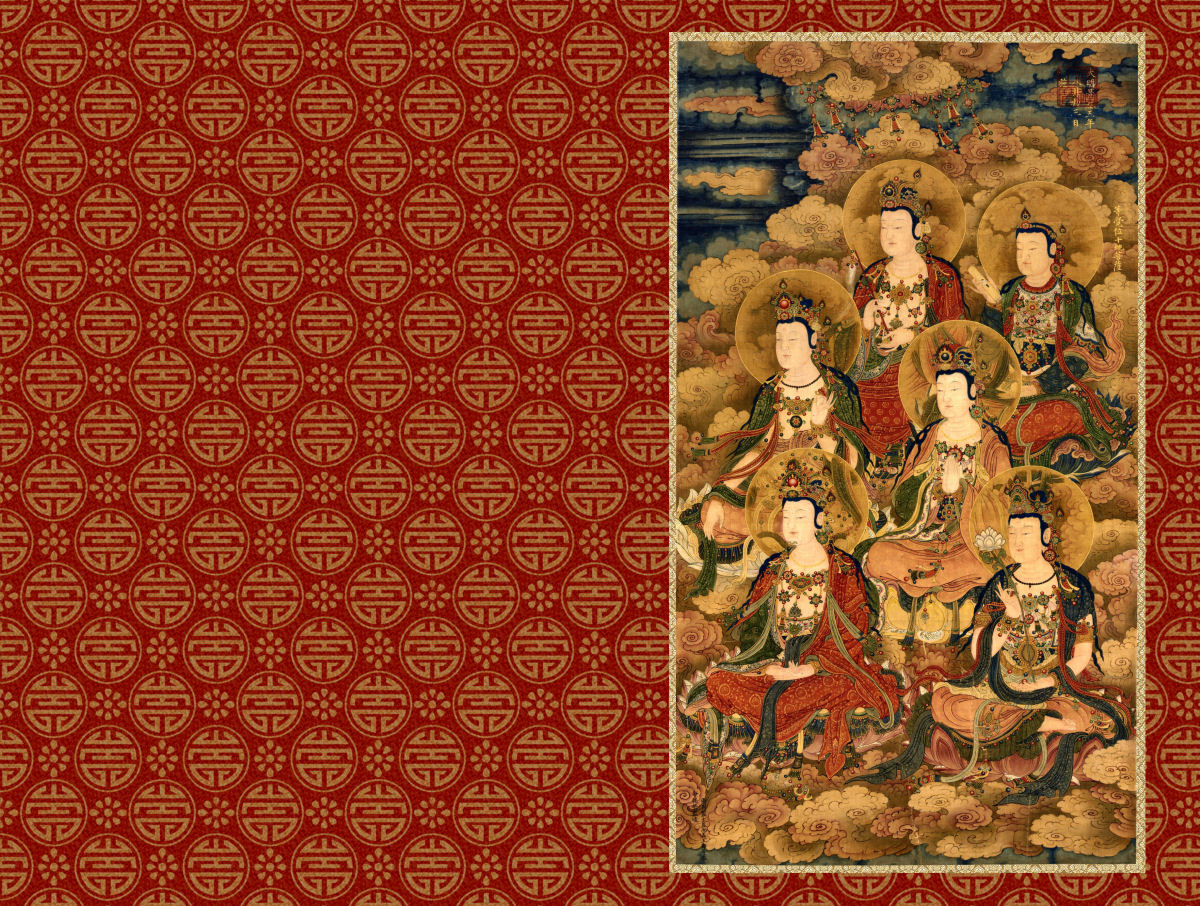
For my 2026 MDP, I’m going with this 15th century ink scroll Buddhist art of the Six Paramitas, which in Mahayana Buddhism often gets associated with the Six Bodhisattvas. This then inspired one of the journaling self-reflection page spreads that I added to this year’s MPD.

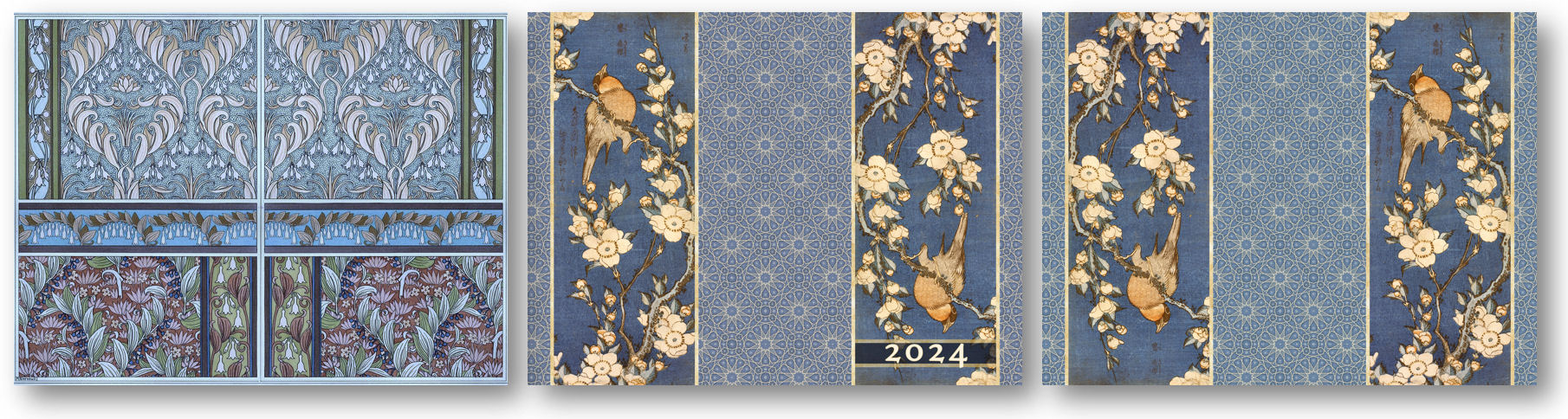
I would consider the very red cover design out of character for me. For the last three years I went with very blue choices, and heck, didn’t even get all that creative this year for my 2025 cover. I just thought, hey, this worked for 2024, I’m just going to re-use it for 2025.

Continue reading “About the 2026 Metaphysician’s Day Planner”

2026 Metaphysician’s Day Planner $17

NOTE: we will be out of the country and without access to our email from November 22nd to December 10th. We will process any orders received during this time by December 12th. Thank you for your understanding and patience. Apologies for any inconvenience.

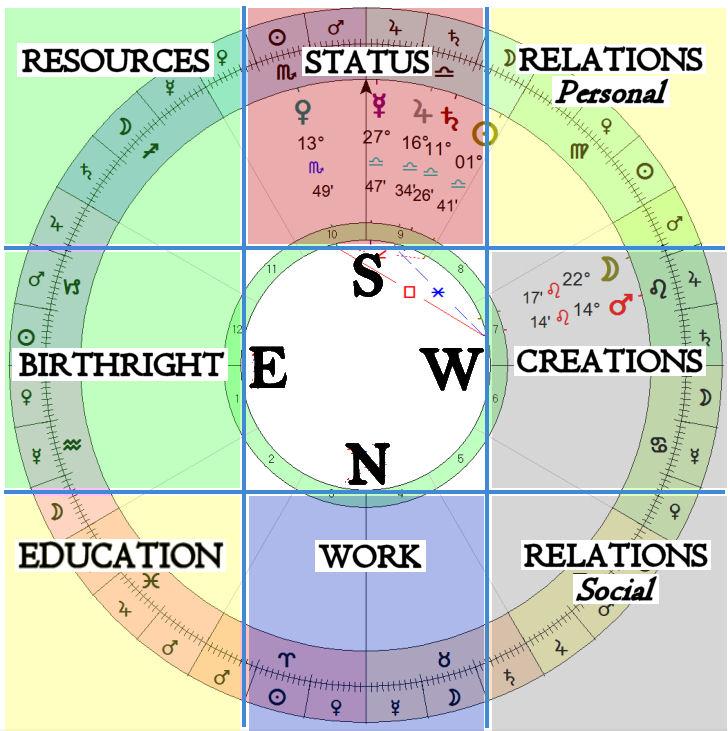
The Metaphysician’s Day Planner (MDP) is going to continue, at least for another year, though for 2026, as a “Lite” scaled back offering. It’s $17 for the personalized day planner customized with your natal chart and 2026 solar returns chart, e-delivered to your e-mail address as a digital file (PDF). We recommend using Lulu.com (not sponsored) a third-party print-on-demand site to print the physical spiral-bound copy of your MDP.

For a section by section, feature by feature walk-through of the 2026 MDP, CLICK HERE.

Continue reading “2026 Metaphysician’s Day Planner $17”

A Taoist Secret to Cultivating Personal Power

  1. Lesser Mandala of Heaven: A Taoist Secret to Cultivating Personal Power
  2. Greater Mandala of Heaven: Advanced Introduction to Taoist Alchemy

This video introduces a Taoist secret breathwork practice known as the Lesser Mandala of Heaven, or Xiao Zhou Tian 小周天. Rooted in classic Taoist inner alchemy (內丹, neidan), it teaches you to unlock a hidden energy circuit that runs through your body, up the spinal Du 督 meridian and down the frontal Ren 任 meridian, forming a continuous loop of vitality.

By circulating breath and intention along this hidden energy path, you harmonize the body’s three dantian 丹田, or energy centers, with the three realms and cycles of the universe. Taoist masters believe this alignment refines your essence, restores internal balance, and elevates your personal power.

This orbit is set up to attune with the cyclical convection current of nature: heat rises and expands, as it rises, it then cools, contracts, becomes denser, and so the denser, cooler flow sinks down, contracting.

The video is timestamped, and you’ll find a step-by-step guided practice on how to direct breath up and down this internal orbit, transforming your body into a living mandala and tuning it to the rhythmic cycles of nature.

This practice is more typically transmitted from teacher to disciple, but here, let’s see if we can offer a more direct and more easily accessible method.

Whether your goal is improved health, increasing your energy reservoir so you can get more done in a day, or to unlock your mystical potential, this is a cultivation technique worth your while to learn.

Continue reading “A Taoist Secret to Cultivating Personal Power”

Essential Oils: My (Hopefully) Holistic Perspective

Two of my current go-to blends. “Anti-Itch Oil” consisting of tea tree oil, eucalyptus, and lavender really does (at least for hubby and me, and all the friends and family I give this to) alleviate minor itching and bug bites. It also clears my sinuses, and helps with congestion. The blend of frankincense, rosemary, and peppermint smells like petrichor! That after-rain scent! This one’s a great massage oil to soothe tense muscles, carpal tunnel, and I also use it as a hair and scalp treatment oil.

Essential oils get a really bad rep these days, and for good reason. Beyond the scams and pyramid schemes, its contemporary New Age associations with “this can cure cancer” claims and people replacing evidence-based healthcare with fragrance blends is why people are – and should be – skeptical.

Not only is there insufficient scientific and medical research to conclusively make claims, but often it’s misused, or people are uninformed about how to use plant extract essences. They definitely can cause skin irritation, allergic reactions, and in extreme cases of misuse, adversely interfere with your body’s regular functions (this is why those who are pregnant, trying to get pregnant, and young developing children need to heighten their discernment around use of essential oils). Some concentrated plant essences can also interact adversely with prescription medications.

Then of course there are the sweeping claims in the realm of magical thinking. This oil blend will bring you luck in love and romance, or this will exorcise demons, or this will help you to manifest wealth. This oil is for glamour magic. That oil is a cure-all.

The historical origins of the term “snake oil” is synchronistically telling here, actually. When Chinese laborers immigrated to the United States to work on the Transcontinental Railroad in the 1800s, they used a traditional Chinese medicine containing actual snake oil. Per TCM, fat extracted from non-venomous water snakes rendered into an oil, mixed with ginger and camphor extracts was a legitimate medicinal remedy for joint pain and muscle inflammation, which the railroad workers would use. Americans then capitalized on that idea by selling fake snake oil as a magical, mystical ancient Chinese remedy for all ailments. Hence the term “snake oil” came to mean a fraudulent health hype, when actually, the original source material wasn’t fraudulent at all.

Similarly, there are bona fide legitimate uses for essential oils, but capitalistic bad faith sellers of fake stuff give essential oils a bad name. Sadly.

Continue reading “Essential Oils: My (Hopefully) Holistic Perspective”

Overview of Western Art Movements: Art History Timeline (Handout Download)

Back in 2021 after completing SKT the Third, I shared a scan of my personal art study notes here, “Download My Art Study Journal.”

I converted the handwritten notes from pages 25 – 33, and integrating notes from other pages in that notebook into the following cleaned-up and expanded handout:

Download Handout

Art History Timeline

PDF

DOCX

The PDF file will be easier to work with. However, for those who want to cut and paste or edit the contents in the handout to create something more custom-tailored to your own needs and purposes, feel free to do so from the DOCX file.

Continue reading “Overview of Western Art Movements: Art History Timeline (Handout Download)”

Critiquing Your Own Art (Handbook)

I’ve written about my self-taught art journey during the pandemic here. I found a bunch of MFA art program syllabuses online and aggregated them together into my own curriculum, then scoured the interwebs for online courses, video lectures, tutorials, books, blogs, anything and everything I could get my hands on to learn composition and the core principles of art making.

You can also download my art study journal here, which is what this handbook, a free download, is based on.

Critiquing Your Own Art

PDF Download

It reads as if after you’ve produced a work of art, you’re supposed to run through the checklist of items for review page after page in this handbook and self-audit how well you did in each of the categories. Yes and no.

It’s funny, whenever I endeavor to unpack something into its parts to analyze, people accuse me of being too analytical at the cost of creativity and intuition.

But if you observe me in the everyday, you’d think me a hypocrite, because in life, I very much operate off intuition rather than pure, cold logic. I go off my feelings way more than I go off rational deduction.

Yet rational analysis is the necessary checks and balances to your supposed intuition. Your intuition can get tainted by bias. So you have to be hyper self-aware and mindful.

While I would be the first to agree that you do not need a checklist to determine and define what is or is not great art, there is some value to deconstructing why we consider certain pieces “great art” and others not.

And if you can deconstruct that, can you then use it as elements to construct “great art”? I don’t know, but why not try? Even if you fail, you’re going to learn valuable lessons from that failure, so I welcome it, don’t you?

If anything, this sort of guided checklist helps you to more likely spot areas for improvement in your craft.

Anyway, that’s how this handbook got started, and you’ll see that the contents are extracted from that art study journal from 2021, which I kept as reference throughout 2020 while I was working on the Spirit Keeper’s Tarot. I converted the content into, well, a bunch of concrete, tangible points for consideration when critiquing your own art.

It’s not like every single one of the points in this handbook will be 100% applicable to you. It’s more about using it as a general reference, to help you navigate self-assessment of your craft.

Here’s the MS Word doc version for those who want to cut and paste around, and change it up to make it personalized:

Critiquing Your Own Art

DOCX Download

The content within this handbook is free for you to use, share, adapt, and build upon in any way that serves you, be that for personal or commercial purposes. Whether you distribute the PDF or DOCX as-is, remix it into your own content, my goal is for this to reach those who will benefit from it. So do whatever you Will with it.

Monetizing Mysticism (Here We Go Again?)

I’ll be sharing random snapshots of my witchy bookshelves just because.

I was listening to the podcast (a great one, by the way) Occultish Behavior: The Unholy Hour with Ivy Corvus and Justin Bennett, Episode 4: The Monetization of Magic where Ivy and Justin share their thoughts on paid endorsements, paywalls, charging for online courses, and so much more. They explore a spectrum of opinions, which I think so many of us can resonate with. These are observations I myself have been grappling with, so it was really fruitful to hear their perspectives.

Tangentially related are other recent thought pieces I’ve been enjoying: Thorn Mooney’s “Reflections on Community” and Kelly-Ann Maddox speaking on “Buying the Witchcraft Aesthetic.”

As a collective we cycle back to this subject for conversation every few years. A year ago that #Occultea tag had lots of pagan and witchy content creators addressing social media witchcraft, grifters, aesthetics, consumerism, and gatekeeping. Consumerism in spirituality comes up frequently in the tarot community, which I’ve previously chimed in on here (Tarot Tube and Classism) two years ago, touching on many of the topics Ivy and Justin cover in this podcast episode, specific to tarot social media spaces, rather than the broader witchy/pagan space.

When we monetize the teaching of sacred knowledge, we complicate and maybe even risk committing sacrilege. But if we don’t meet humans where they are and provide monetary compensation, they’re not going to share their work.

For many holding sincere religious beliefs around how they’ve divinely received the sacred knowledge, trying to put a dollar and cents price tag on the value of that knowledge is intuitively icky. And yet if we don’t value that knowledge — and we demonstrate value by paying for it — then these sacred cultural traditions risk going extinct.

It seems like the majority agree that people should be adequately compensated for their work, but also we judge that at some point it’s just greedy, gross, and profane. We don’t want you to starve, but if you get too popular and start selling your stuff for too much, we’ll knock you off your high horse.

It’s funny how an oft-repeated tenet in the artist/creator community is “charge what you’re worth,” except when you do, you get vilified. If you charge a “grotesque” amount of money for your work, you’re perceived as having an inflated ego, and you’ll get accusingly asked, “What makes you think your work is worth so much.” Which also is a silly question to ask, because if the creator is doing business right, then the clear answer is the marketplace. The marketplace has accepted that their work is worth that much. It’s not ego. It’s capitalism. Okay maybe it’s both.

We all agree that some sort of balanced approach is best, but we disagree on what “balanced approach” means. Where do you draw the line and why do you draw the line there? Is charging $30 for an online course on planetary ritual magic okay? What about charging $300? $3,000? You say it depends on the content of that course, but how do we even apply an objective standard for review?

As an author and educational content creator of topics in mysticism, I struggle a lot with what a “balanced approach” means to me. I want to produce diligently researched, comprehensive, substantive educational videos on YouTube, but it’s a lot of work. It’s time-consuming, and at this point in my life, time is very precious. So if I’m going to invest my time and energy into making free educational videos to increase equitable accessibility to sacred knowledge, then I want to be compensated for that work, but how? Do I want money? Initially I think, no, I don’t need money for it. I just need something in exchange to feel like it’s fair, to feel like my investment sacrifice of time was worth it. But what?

Continue reading “Monetizing Mysticism (Here We Go Again?)”

The Great Nine-Day Matsu Pilgrimage

This video does a remarkable job illuminating one of the most important community (island-wide, and so national) celebrations in Taiwan. You follow a group of first-time participants on the pilgrimage and learn about the festival’s history, the lore and mythology of Mazu (older generations spell it Matsu), and her spiritual, communal, and political significance.

It’s from one of my favorite YouTube channels @TaiwanExplained, produced by TaiwanPlus, an English-language news and entertainment platform educating the international community on all things Taiwan.

The video covers a nine-day pilgrimage, though some devotees do a seven-day pilgrimage. It starts with three statues featuring the triple aspects of the goddess Matsu 三媽, carried in a traditional sedan chair, from the Matsu Temple in Taichung, to go on a 60-mile pilgrimage by foot toward the Fongtian Temple in Chiayi. Devotees stop at many temples along the way, and join in various types of local festivities at each stop.

For the mystic-oriented, it’s a week of sleep deprivation, overload to your physical senses, just walking through a constant haze of incense smoke, firecrackers, a lot of dancing and celebration, drinking, and socializing with complete strangers that, within a very short period of time become like family. It also, in effect, becomes one of the largest outdoor gatherings of spirit-mediums, diviners, psychics, and channelers you’ll experience.

Continue reading “The Great Nine-Day Matsu Pilgrimage”