Taoist Mysteries of the Six Holy Kings

In my video “Taoism: A Decolonized Introduction,” I made a passing reference to the Six Ancestral Sage Kings (or Six Holy Kings) and their significance in Taoism, promising that I’d dedicate a standalone video on the subject, so here we are.

Everything you need to learn about the Tao can be learned from the Six Holy Kings – or so goes an axiom credited to Confucius.

He isn’t the only one to uphold the Six Kings as the paragon of aspirational virtue and wisdom. Even Confucianism’s rival school of thought, the Mohists, would name-drop the Six Kings, 堯舜禹湯文武.

Cultural references to the importance of the Six Holy Kings continues well into the modern era with the founding of the Republic of China. Sun Yat-sen cited the importance of the new Republic upholding the tradition and values of the Six Holy Kings (“中國有一個道統,堯、舜、禹、湯、周文王、周武王、周公”).

Chinese historian and philosopher Li Zehou 李泽厚 notes that the Six Holy Kings are shamanic rulers, 巫, and that their divine right to sovereignty comes from their alignment with Heaven, which is received on the basis of their abilities to commune with Heaven. The shamanistic-historical traditions of the Chinese civilization comes straight from the Six Holy Kings. (You can read more about this in Chapter 10 of I Ching, The Oracle.)

Continue reading “Taoist Mysteries of the Six Holy Kings”

I Ching Oracle Cards (Free Printables)

Download the digital files to a text-driven 64-card I Ching oracle deck for a free companion tool to my book, I Ching, The Oracle (North Atlantic Books, 2023).

This is a serviceable everyday personal divination deck that also doubles as an easy, accessible introduction to the I Ching.

It makes for a great study tool as flash cards and for learning the Ba Gua trigram and Wu Xing alchemical phase correspondences.

For your convenience, I’ve also uploaded the files onto makeplayingcards.com. External link and info below.

The listing is $23.20.

  • $22.95 of it goes to makeplayingcards.com, not me.
  • Only $0.25 of it goes to me.

Yes, that’s right. A quarter.

But if you are on a tight budget, you can download the printables file and crafty craft your own DIY copy of the deck.

Apart from the six-line hexagram images, the card faces are text only. No one is trying to wow you with artistry here. =P

This deck is intended to be a functional beginner’s tool for learning the I Ching, to be used in tandem with the book, I Ching, The Oracle.

Continue reading “I Ching Oracle Cards (Free Printables)”

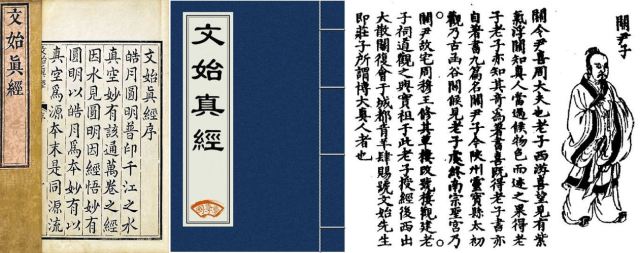
The Guan Yinzi

also known as the Wen Shi Zhen Jing: Sutra of Magical Spells and Aphorisms for Attaining Primordial Truth

The more recognized naming convention for the sutra is the Guan Yinzi (闕尹子) or Wen Shi Zhen Jing (文始真經) attributed to the gatekeeper who Laozi encountered.

The Guan Yinzi (or Wen Shi Zhen Jing)

According to lore, the gatekeeper at the Western Pass, named Yinxi 尹喜, later given the name Wenshi (文始), transcribed the teachings of Laozi and that text became the Tao Te Ching (道德經). Alternate tellings have Laozi writing the teachings down into two books himself, which the gatekeeper then receives.

Continue reading “The Guan Yinzi”

I Ching and the 60-Year Lunar-Solar Calendar Cycle

My Instagram post from five days ago noted that 2024 (or more accurately, year of the Wood Dragon) corresponds with hexagram 43. Some have been describing it as a forecast or prediction. That’s not entirely accurate, so I thought I’d clarify.

It’s not so much a forecast as it is an application of I Ching theory.

Continue reading “I Ching and the 60-Year Lunar-Solar Calendar Cycle”

Why is the word “feminist” triggering? Disappointing realizations.

So I posted this video yesterday:

When I made this video, I genuinely did not think there’d be anything controversial about it. I will even continue the assumption now and say that if you actually watch it in the entirety, you, too, would not reach the conclusion that it’s trying to be anti-male. Nor will you find it laced with any ulterior motive of gender politics.

Heck, now in retrospect, I probably could have titled the video “Tao Te Ching & the Divine Feminine.” Right? It’s just that I have a complicated relationship with the concept of “divine feminine” hence I went with “feminist metaphysics.”

Within hours of its posting, I received the following comments:

This blog post starts with my reaction to the above responses, but then I’ll go off on a tangent to share some unfiltered ramblings with respect to Eurocentric Taoism and cultural appropriation.

Continue reading “Why is the word “feminist” triggering? Disappointing realizations.”

I Ching Divination with Moon Blocks

I’ve covered moon block (Jiao Bei, 筊杯) divination before here in a past Tinkering Bell video. And this downloadable PDF linked here is a quick reference sheet for using moon blocks.

When you walk into a Buddhist or Taoist temple anywhere in the southern regions of the Mainland, Taiwan, Singapore, Malaysia, heck– just in general the East Asian cultural sphere– you are going to see moon blocks. Baskets full of moon blocks. It’s so you can ask your question of the patron divinity or spirit, then toss the moon blocks and receive an answer from beyond.

Moon blocks can also be used for divination with the Zhouyi (I Ching).

Continue reading “I Ching Divination with Moon Blocks”

Lady of the Nine Heavens and the I Ching

This video is part of a companion course series leading up to the release of my third book, I Ching, The Oracle. I’ve covered this topic previously here, “Mysterious Lady of the Ninth Heaven (Jiu Tian Xuan Nü, 九天玄女).” However, given the personal relevance, we’re revisiting the Lady of the Nine Heavens, now within the context of my Purpose for publishing this new translation of the Book of Changes.

Continue reading “Lady of the Nine Heavens and the I Ching”

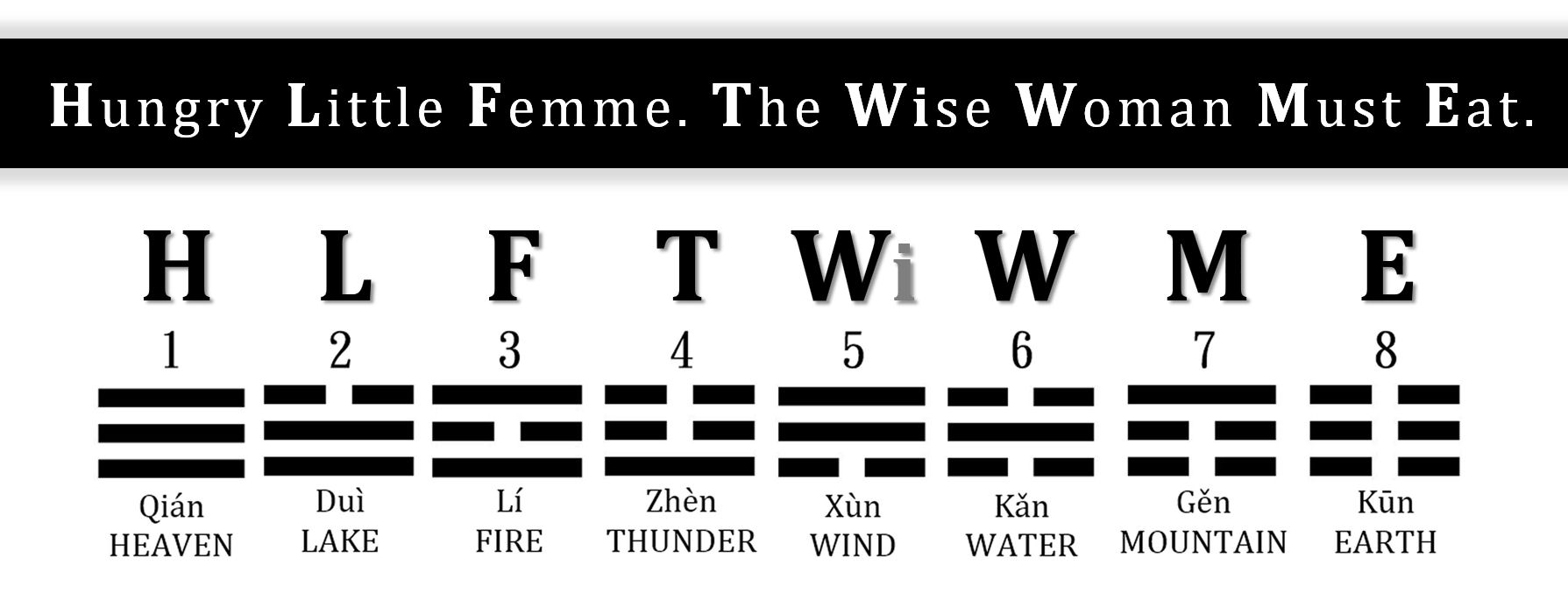
Ba Gua: The Eight Trigrams

This video lecture course is an overview of the eight trigrams (八卦, Bā Guà). It is part of a companion course series leading up to the release of my third book, I Ching, The Oracle.

Ba Gua Correspondences Table

My goofy mnemonic for remembering the order of the trigrams

Timestamps provided in the video description box (you’ll have to watch on the YouTube platform). Apologies, the editing and audio are a bit choppy. The timing of the slides and voiceover narration are off in a few places.

Continue reading “Ba Gua: The Eight Trigrams”

Wu Xing: Five Movements 五行 · 오행

This is a crash course on the Wu Xing 五行, Five Dynamic Movements, though you’ll often see it called the Five Elements of East Asian metaphysics. These are five alchemical agents of change to describe how yin and yang qi create, destroy, and thus transform the physical world.

Download PDF
The Five Changing Phases and Their Correspondences
Download DOCX
The Five Changing Phases and Their Correspondences

1/30/2023 Erratum Update: A few of the correspondence rows in the Metal and Earth columns got flip-flopped in the subsequent reference chart. If you downloaded the table before 1/30/2023, please delete it and re-download the rectified version. ❤

I say “East Asian” here because it’s not limited to any one culture, ethnic group, or nationality, not to mention the concept itself is much older than modern-day borders.

Continue reading “Wu Xing: Five Movements 五行 · 오행”

List of the Most Auspicious I Ching Hexagrams

I’ll start by saying it’s gimmicky to claim a list of “the most auspicious” hexagrams in the I Ching. The Book of Changes doesn’t work like that. Not to mention as the sequential lines move through the Changes, line 1 up to line 6, different points of that movement of change can indicate different turns and degrees of auspices.

And so while I Ching practitioners wouldn’t necessarily say there are “good” vs. “bad” hexagrams, in moments of fun, sure, everybody’s got their own shortlist of favorite hexagrams.

Here are my top six.

Continue reading “List of the Most Auspicious I Ching Hexagrams”