Tarot Mucha Deck Review

Tarot Mucha 01 Box

I kept dragging my feet on whether to join the Tarot Mucha bandwagon, but here it is, and sometimes you just have to give in to the tarot reader majority when they’re all gushing over a certain deck, because they tend to be right. There are so many reasons to get this deck that I don’t even know how to process my thoughts and begin this review.

I’m loving it so much and will probably find myself using it in professional reading settings. It’s also a fantastic starter deck for a beginner reader who wants to commence study with the RWS tradition but may be having a hard time connecting artistically to the original Rider-Waite-Smith deck.

Continue reading “Tarot Mucha Deck Review”

My Review of the Starchild Tarot

Starchild Tarot - Box Set

The Starchild Tarot is a self-published deck by the Canadian-based Danielle Noel, with the first printing released in 2014. The artwork for the deck is photography and digital collage with some illustration in a light, muted color palette. It’s surreal, symbolist, and yet blends those artistlc styles with portrait photography.

The deck is pastel in hues, dominating mostly in light blue, pinks, and purples. The style of the art and how Noel has pieced this deck together conveys the sense that each card is a gateway to an other-worldly dimension. Use of this deck for meditation or pathworking would be ideal.

The cards are a beautiful matte finish (love!!), thick, sturdy, larger in size that typical tarot decks, i.e., 3.375″ x 5.0″, and have white borders that I think work very well for the deck. I really love the font that Noel used for the card titles!

Starchild Tarot -All Cards Splayed

The deck is inspired by the New Age concept of star people, or star seeds. Brad Steiger, a paranormal author, introduced the idea of star people, humans who have extraterrestrial genes in them (maybe? I might be butchering this idea, in which case my apologies) and are an alien race born into human bodies to serve humanity through a higher spiritual purpose. Under Steiger’s concept, star seeds are more psychic or intuitive than ordinary humans. That’s as much as I’ve read on the topic and I don’t even know if it’s accurate. But it’s an interesting spiritual theory and I began my thoughts on the Starchild Tarot within the star people/star seed context.

Continue reading “My Review of the Starchild Tarot”

Kabbalistic Visions: The Marini-Scapini Tarot

Author: Marco Marini
Artist: Luigi Scapini
Publisher: Schiffer Publishing
Pub. Date: 2014
ISBN #: 978-0-7643-4662-0

First published in The Cartomancer, 2015

Kabbalistic Visions: The Marini-Scapini Tarot (Schiffer Publishing, 2014) is a box set with a tarot deck and perfect-bound companion book. The deck presents a Kabbalistic leitmotif throughout the Marseille or Continental tarot architecture, i.e., the esoteric deck style pre-dating both Waite’s Rider-Waite-Smith and Crowley’s Thoth. Marco Marini is the intellectual and scholarly engine behind the deck’s genesis while Luigi Scapini is the artist who brings Kabbalistic Visions to life.

Luigi Scapini is a well-known name in the tarot world. He came out with the popular Medieval Scapini Tarot back in 1988, the Shakespeare Tarot in 1996, and has recreated several editions of the historic Cary-Yale Visconti Tarocchi, among other notable tarot projects. Scapini has a background in both architecture and esoteric studies. He is a professor of art history and considered an academic expert in 15th century Italian art. Seeing his hand influence a Kabbalah-based tarot deck is an incredible treat and Marini could not have found a better artist for the project.

Per the Marseille or Continental structure, the deck features Justice for Key VIII and Force (also known in other decks as Strength) for Key XI with the four Minor suits being Wands, Cups, Swords, and Coins. There is silver gilding along the edges of the deck and a semi-glossy finish. The cardstock is thick and sturdy, and at 3.25” x 5.375” dimensions, are larger than typical tarot cards. The card backs are reversible and feature Scapini’s vibrant illustration of the seven heavens per Kabbalistic Jewish mysticism.

Each card face depicts an open scroll with the tarot card illustration on the scroll. Behind the scroll is a solid black background that takes up roughly a quarter of the surface area of each card. I don’t like how much passive space there is on each card. I would have preferred less black border and a more attentive focus on Scapini’s scroll illustrations.

The art for the deck is entirely hand-drawn. Even the card titles and numbering are rendered by hand, which I love. The medium here appears to be mixed, using pencil, ink, and watercolor, which give the illustrations a bold, vibrant aesthetic. Scapini utilizes an ornate, two-dimensional artistic style iconic of 15th century medieval art and illustration. Most of the drawings are done in single-point perspective.

The Marini-Scapini Tarot reinterprets the 78 cards of tarot through a Kabbalistic framework, expressing the cards through the Tree of Life and the 22 letters of the Hebrew alphabet. More than its Kabbalistic foundations, however, the Marini-Scapini Tarot brings much of the two creators’ gnostic point of view to the deck. In Key II: The Popess, we see the Venus of Willendorf representing that high priestess energy. Key VI: The Lovers features the sun and moon binary. Key XII: The Hanged Man calls to mind the story of Jonah from the Abrahamic religions. There seems to be a reference to the story “The Lady, or the Tiger?” in Key XVIII: The Moon.

Key XX: Judgement (spelled Judgment in the book, but Judgement on the card) reminded me of imagery more typically iconic of The Devil in tarot, though Marini’s card description in the companion book explains the intellection for the art. The figure is female and three-headed, symbolizing the Supernal Triad. Boxed and confined beneath her is the Vitruvian Man, a reference to a 1490 sketch by Leonardo da Vinci, in the cage of Malkuth, the lowest sephirah on the Tree of Life. And yet it is here, from this position that the Vitruvian Man possesses the potential to reach the highest sephirah, toward the revelation of IHVH.

While earlier I noted the influence of medieval art in Scapini’s work, here we also see many Eastern mystic and religious references. In the Two of Wands, there is a reference to Kali and her outstretched tongue, a symbol of power and even bloodlust. Per Marini’s companion book, the Two of Wands represents the devouring aspect of Chokmah, which can lead to indescribable power and domination. The Taj Mahal and white lotus blossom are pictured in the Princess of Cups and the seven chakras of Hindu and yogic traditions are embedded into the Princess of Coins.

A meditating Buddha exemplifies the deck’s Seven of Wands. The Buddha has his right hand formed into the jnana mudra, which represents the dharma wheel, or wheel of the law. Incidentally, the meditating Buddha suspends a set of balancing scales from the hand mudra. The companion book notes that the Seven of Wands shows the Buddha suspended in the Yetziratic dimension, maintaining balance in the world of Formation. The two pants of air coming from the nostrils are symbolic of the power of breath. Thus, the card means clarity in judgment, the ability to make a constructive decision, and as symbolized by the two pants of air, great inner energy or verve.

Some of the cards feature English Golden Dawn adopted astrological decan correspondences, such as the Two of Swords, which integrates the moon and Libra glyphs into the art. Some of the illustrations are mid-century modern, such as the Four of Wands, Four of Cups, Eight of Cups, Nine of Coins, or Ten of Wands. The Six of Wands represents victory and success, but per the companion book, is also indicative of possible health matters, as illustrated with a 21st century relay race.

The standout feature of this deck set is the companion book by Marco Marini. Marco Marini is a researcher and academic in the Kabbalistic discipline, in archetypal symbology, and other esoteric studies. He has taught the Kabbalah for over 15 years in Italy and England and has been widely published on topics relating to the Kabbalah, numerology, and the Hebrew culture.

The companion book is 252 pages in length, and 5.5” x 7.5” in dimension. The book and deck come in a beautifully prepared high-gloss magnetic top flap box. At a retail price of $45.00, the set is an investment, but well worth it if you’re interested in the intersection between tarot and the Kabbalah. The set also comes with a high-gloss 14” x 20” poster print illustration by Scapini of the Tree of Life.

The companion book opens with an in-depth explanation of the Tree of Life and its structure, and a full-page essay on each sephirah. We get into the Four Worlds (IHVH; Atziluth, Briah, Yetzirah, and Assiah) and then the Three Ways (Way of the Body, of the Soul, and of the Spirit), upon which the foundations of the Three Septenaries in esoteric tarot are based. Building on that, Marini then explains the letters of the Torah, the three mother letters, seven double letters, and twelve simple letters per the Sepher Yetzirah.

Great attention is then devoted to each of the Major Arcana cards, tying in traditionally established tarot meanings with Kabbalistic principles. The Fool, for instance, depicts the 22 letters around him, symbolic of the Creator guiding the fool’s conscience through the journey of acquiring knowledge of the Creator’s universe.  Each card illustrated by Scapini is steeped in Kabbalistic principles and deeply symbolic. The companion book does an extraordinary job of explaining each of those principles and the significance of the symbolism.

After a description of the card and its essential themes, Marini offers a more practical application of the card with a subsequent section on divinatory meanings, i.e., the application of that card if it appears in the past, present, future, obstacle, or final result positions in a spread. Likewise, the Minor Arcana follow the same structure, beginning with essential themes and followed by practical divinatory meanings.

The Minor Arcana are subdivided into one chapter focused on the court cards (King, Queen, Knight, and Princess) and another on the decans, or pips (Aces through Tens). Finally, the book is rounded out at the end with four amazing reading systems, or spreads, such as the Kabbalistic Cross, a six card spread that resembles the central cross layout from the Celtic Cross.

The tarot is “the most ancient system of communication used by men” and is a language that can be “universally understood and accepted by humanity,” asserts Marini. Marco Marini and Luigi Scapini have come together to produce a monumental work for both the study of the Kabbalah and the study of tarot. I have not seen a more in-depth study of the Kabbalah and tarot than the Marini-Scapini.

While the publisher’s deck description notes that the cards can be used by both novice and experienced readers, the novice will only be able to work proficiently with the deck if he or she comes with a background in the Kabbalah. I would approach Kabbalistic Visions as an advanced study deck for readers who want to deepen their understanding of mystical esoteric and Kabbalistic traditions. Kabbalistic Visions is a marvelous showcase of Scapini’s art that transcends time-space with its blending of medieval style illustration, Eastern esotericism, contemporary narrative scenes, and fine detailing work that animates Marini’s staggering knowledge of the Kabbalah. I highly recommend.

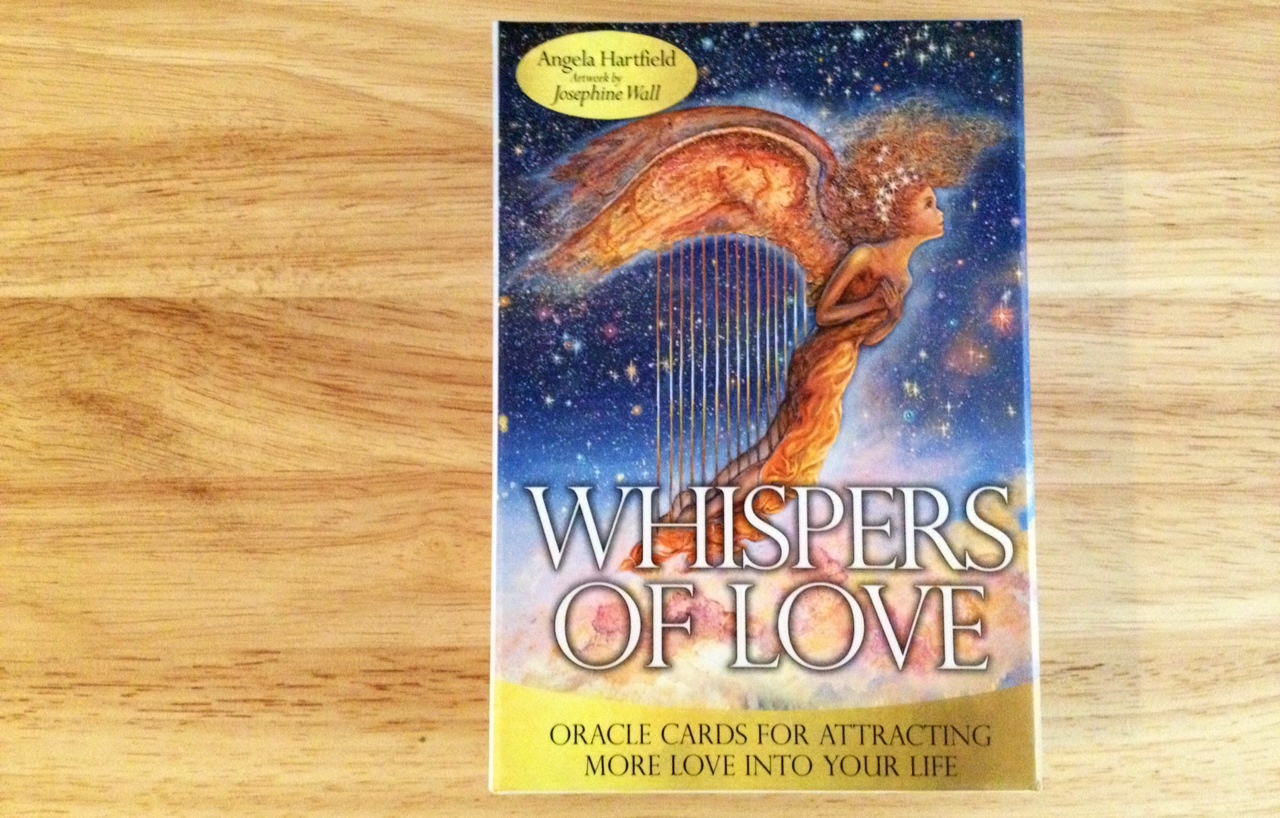
Whispers of Love Oracle Cards Deck Review

Whispers of Love - 3 Box Set

Whispers of Love is my first Blue Angel oracle deck that comes with a matte finish instead of the usual high gloss and I am loving it. I hope they stay with this finish and subsequent decks are printed in matte. The feel to the touch is fantastic; shuffling is fantastic; I love the swishy sound these matte finished cards make compared to the tacky-sticky glossed ones; and they photograph beautifully, with no glare. Here is one high-quality deck and I am thrilled.

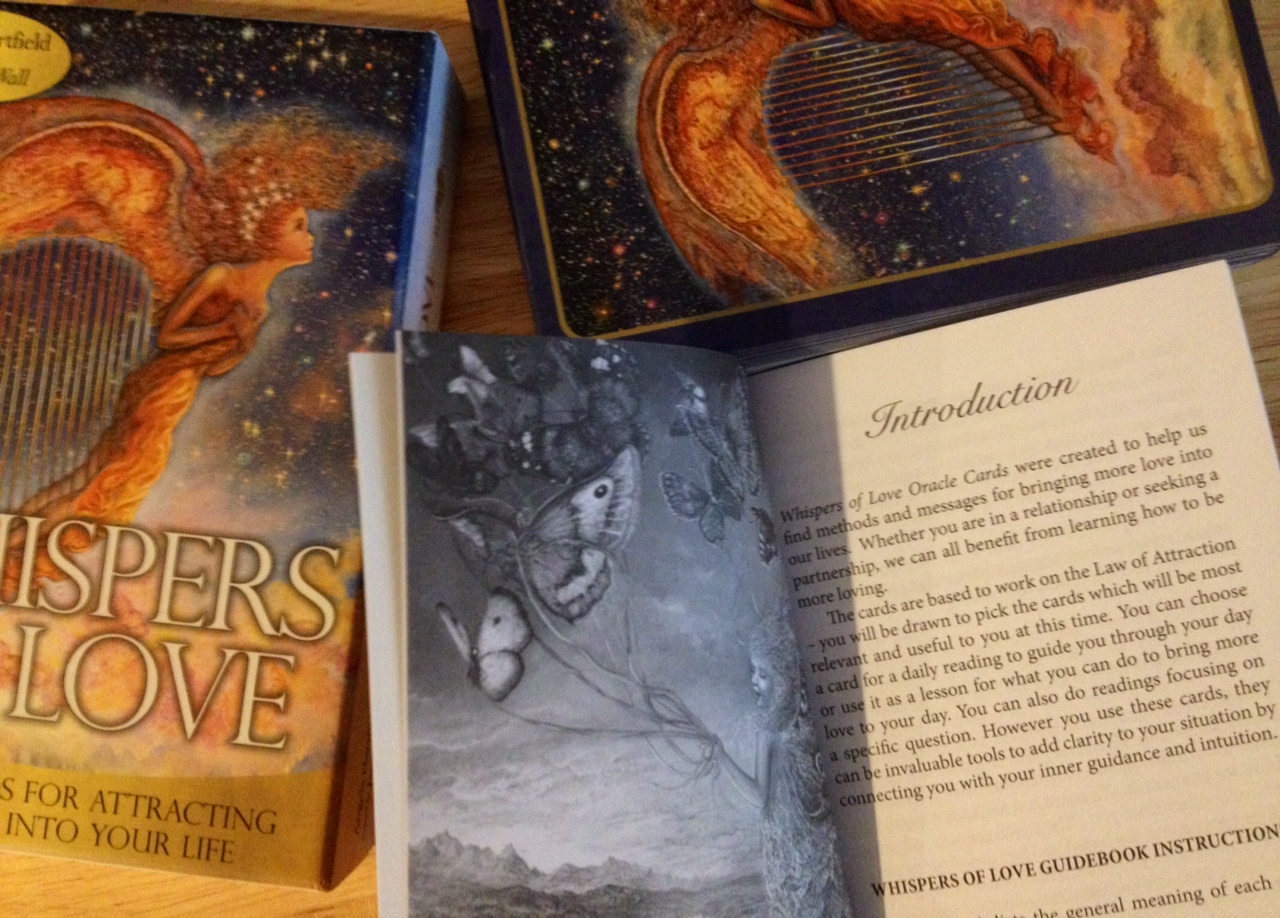
Whispers of Love - 2 Box Only

The Whispers of Love oracle cards were conceived by Angela Hartfield, an ascribed angel channeler, psychic medium, and intuitive healer. Per the biography on Hartfield’s website, “Her angelic assistance focuses on the empowerment technique of helping individuals learn how to get help and guidance from the angels, spirit guide, Archangels, departed loved ones and Ascended Masters.”

Whispers of Love - 4 LWB and Set

Hartfield created Whispers of Love to bring insights and messages for building stronger interpersonal relationships. This is a deck about relationships, though not necessarily romantic. If you’re trying to make sense of your relations with a colleague at the office, why your boss is acting the way she’s acting, or how to handle a minor dispute with your neighbor, this would be a great deck to reach for. Of course, if you’re seeking guidance on a romantic relationship, then this would be your deck.

Continue reading “Whispers of Love Oracle Cards Deck Review”

Mahjong Divination

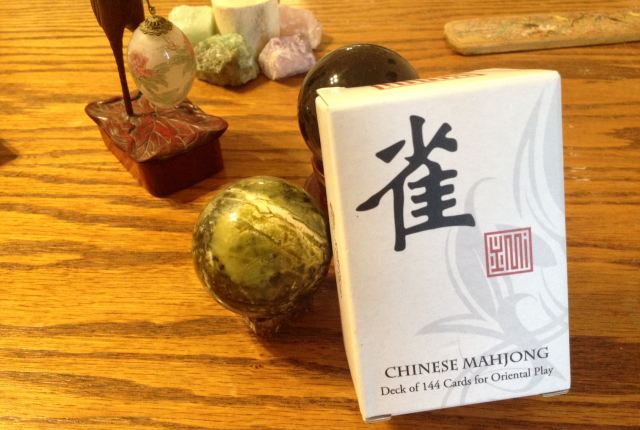
Mah Jong - Box 2

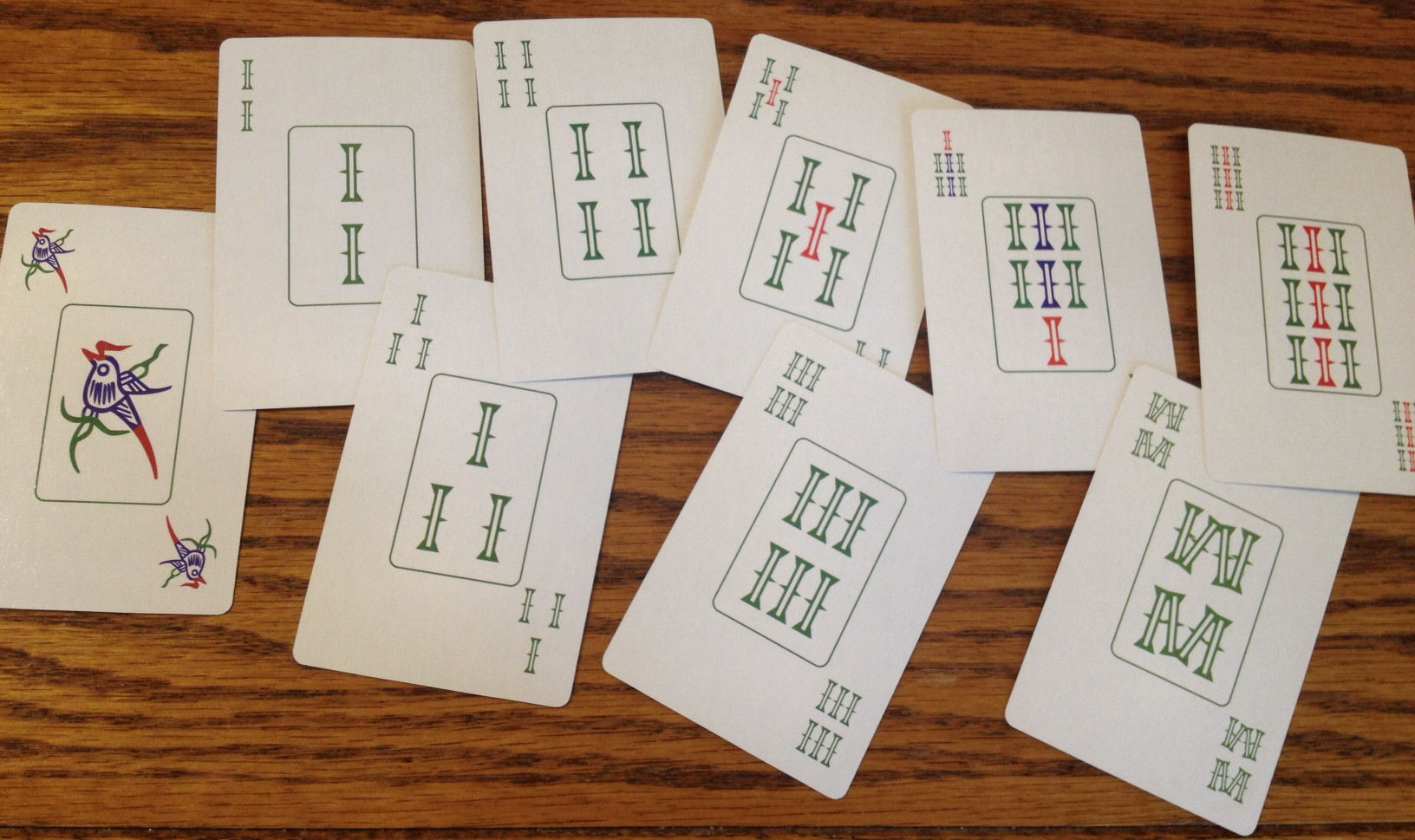
While there is no historical verification that tarot descended from mahjong, their striking similarity in structure and the cosmological or philosophical correspondences associated with the playing pieces is still worth noting. Both seem to be subdivided into Trump cards and Minors, and within the Minors, further subdivisions into suits, with each suit numbered into pip cards or tiles. Both were intended for games, but both are also used for divination.

Recently I’ve been inspired to hunt down my own mahjong set, but there is a reason Chinese people get special tables for mahjong– the darn thing takes up a lot of space. There’s just a crap ton of tiles that make annoying clicking sounds when you shuffle, and the tiles remind me of Joy Luck Club or something, I don’t know. I knew I wouldn’t be using my set for games, and it’d be strictly for divination study. Intuitively, a whole set of mahjong tiles (the standard click-clack ones Chinese folk play with) didn’t feel right in my reading room, my personal sacred space. So. I opted for a more discrete alternative– mahjong in the form of cards. They have that now! It’s awesome. It’s a deck of 144 cards.

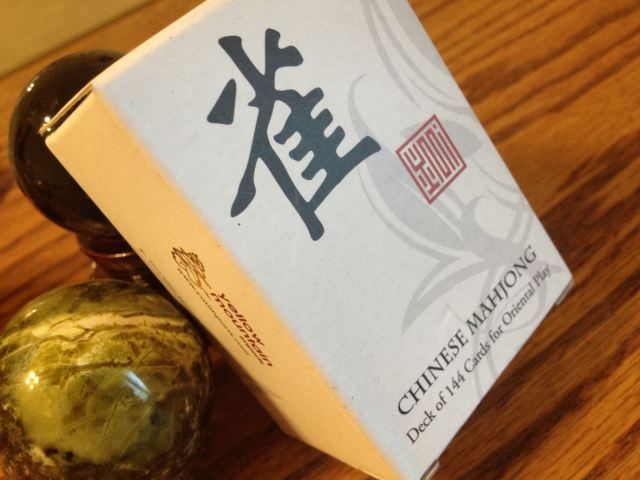
Mah Jong - Box 1

I’m using a cute little deck referred to simply as “Chinese Mahjong: Deck of 144 Cards for Oriental Play” published by Yellow Mountain Imports. You can get it off Amazon for all of five bucks. It’s great. The card quality is kind of meh. They didn’t produce this particular deck with esoteric or spiritual work in mind, that’s for sure. There’s a tacky high-gloss laminate and as you can see from the photos, it’s very, very basic in card imagery.

Mah Jong "Minors," Suit of Wheels
Mah Jong “Minors,” Suit of Wheels
Mah Jong "Minors," Suit of Bamboo
Mah Jong “Minors,” Suit of Bamboo
Mah Jong "Minors," Suit of Characters
Mah Jong “Minors,” Suit of Characters

Mahjong consists of 3 suits: Wheels, Bamboo, and Characters. The 3 suits are correspondent with Heaven, Earth, and Man, after the Chinese cosmological concept of the Trinity of Lucks.

Heaven Luck represents circumstances you’re born into, beyond your control, like the social class of your parents or innate talents and physical attributes, i.e. nature. Heaven Luck is believed to be pre-ordained.

Earth Luck is your geographical location, and how where you are affects what you do or who you become, i.e., nurture. Earth Luck is your environment and how your environment helps or hinders your success.

Man Luck is free will, what you do with yourself, the choices you make, your education, your actions, behavior, attitude, etc.

Additionally, Wheels often indicate life circumstances, events, conditions, or things that “happen” to you, things beyond your control that you’re just going to have to figure out how to deal with, the cards you’ll get dealt; Bamboo will talk about wealth, finances, money matters, security; Characters talk about career, education.

Super-traditionally here, marriage was seen as orchestrated by the fates, and so might get expressed in a reading through the Wheels, or if some important things were about to go down, with the Honors or Supreme Honors (more on that later). So it wasn’t like in tarot divination where you might have a whole suit (i.e., Cups) associated with love, relationships, and our emotional plane. The emotional plane wasn’t really seen as this whole separate matter that might require its own suit. So there wasn’t a suit for it. Interesting cultural differences here, me thinks.

Continue reading “Mahjong Divination”

My Review of the Haindl Tarot

Haindl Tarot - 01 Box Package

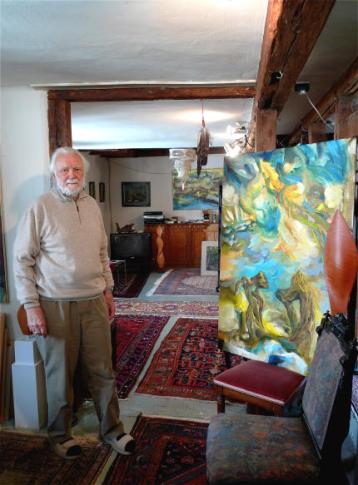
I heard about the Haindl Tarot not too long ago through the grapevine of tarot readers I know. Yet this deck was first published back in 1990. Hermann Haindl (1927-2013) is a German artist known for his surreal art and incorporation of mythology.

Hermann Haindl in his home, 2009. © Hermann Haindl. Image Source: http://erhard-metz.de/2009/03/22/portraets-hermann-haindl/

Rachel Pollack has penned companion books for this deck that come highly, highly recommended by pretty much every tarot practitioner I know. I haven’t dived into them yet, but will. At this stage, I’m interested in connecting with the deck directly to see what I can glean, and then I’ll be consulting Pollack’s books on the Haindl.

Haindl Tarot - 02 Box and Deck

The Haindl Tarot is a truly remarkable deck for any tarot enthusiast to work with.

For the Majors, each card corresponds with a letter in the Hebrew alphabet per Qabalistic tradition, from The Fool as Aleph, Key 1: The Magician as Beth, Key 2: The High Priestess as Gimel, and so on. Each card also corresponds with an Anglo-Saxon rune. At this point in my personal tarot practice, I don’t work much with Hebrew alphabet or rune correspondences in tarot, but the astrological correspondences on the bottom right corners of the cards excite me.

Preview of Select Majors. Click on photo to enlarge.

The paintings are surreal with subdued, subtle coloring. I’ve filtered these photographs to add greater contrast for clarity purposes, but in hindsight I wish I hadn’t. Now you can’t see the light, ethereal quality of the original coloring. In person, the art is not quite as bold as they seem to appear in these photos. The art seems to mirror the stream of consciousness of our minds, which results in an incredibly powerful and evocative tarot deck to work with.

Continue reading “My Review of the Haindl Tarot”

The Tarot of Loka Deck Review (for Divination)

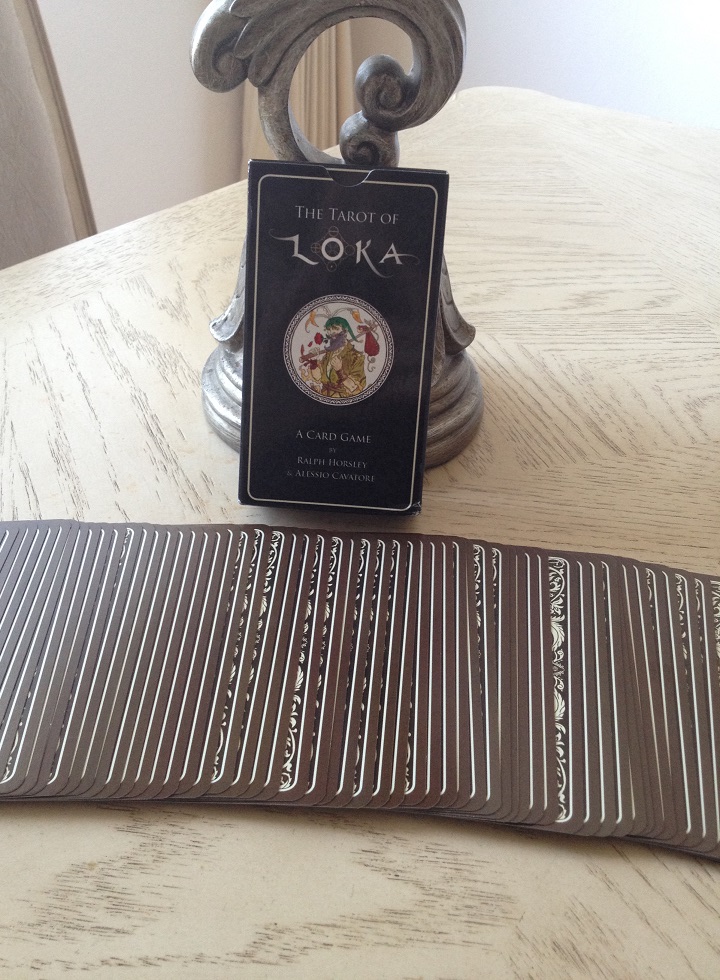
Tarot Loka 01 Box and Cards Fanned

The Tarot of Loka is designed for game playing, not divination, and that intent is made clear in the companion LWB (little white booklet). However, I hope no one will mind too much if I focus my deck review on using the Tarot of Loka for divinatory purposes, since that is my area of interest.

Inspiration for the deck comes from the fantasy world of Loka, which you can see in another game, Loka: The World of Fantasy Chess. Warriors in four armies, the armies that correspond with the four suits, Fire, Earth, Water, and Air, are at battle, though two suit armies are in alliance versus the other two suit armies. In some ways, the tarot game for Loka as instructed in the LWB reflects that premise.

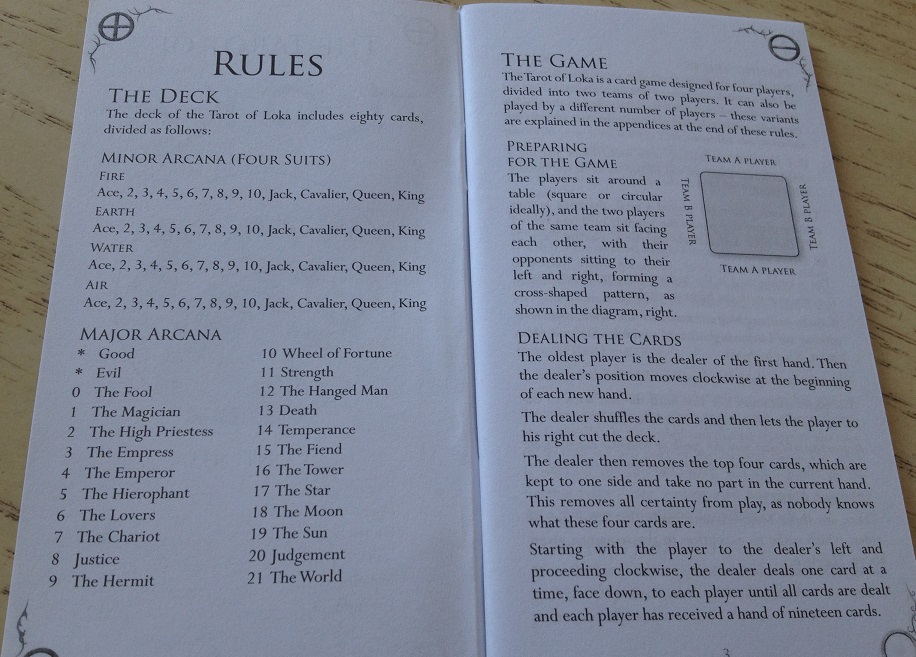
Tarot Loka 07 LWB Game Rules

The original intent for the Tarot of Loka is a family-oriented card game, for four players. The LWB provides the rules for the game. I’ve found a number of reviews online for Tarot of Loka as a card game, so if that’s what you’re looking for, I’m afraid you have come to the wrong place and I apologize for the inconvenience. Some great reviews of the deck as a game can be found here and here, among others. My review, however, is going to look at the viability of the deck as a divination tool.

I won’t be using this deck for game playing for a silly superstition-sourced reason: I never use a deck, any card deck, for both game playing and divination. It’s one or the other. I can’t remember who “taught” me that, but that was one of the first and earliest “rules” I learned about cartomancy. Is it a silly “rule”? Yes, of course it is. However, call me a closed-minded fool, but I can’t pull myself out of that habit. So, because I do want to be able to use this deck for divinatory purposes, I won’t be playing games with it. So again, my review is focusing on the Tarot of Loka as a divinatory tool, which is not the deck’s intended purpose.

The Tarot of Loka is designed by Alessio Cavatore, an Italian game designer, and illustrated by Ralph Horsley, who does some really incredible medieval style art. The Tarot of Loka began as a Kickstarter campaign and was first published by River Horse Press, though later came to be distributed through Llewellyn.

Tarot Loka 10 Card Samples

The card dimensions are a typical Lo Scarabeo size, about 2.5″ x 4.6″, and as you can see in the above photo, symmetrical along the vertical side, which eliminates reading reversals or having to look at a card “upside down” when it comes up in a reading. They’re bordered dark brown, which looks great on these cards.

Tarot Loka 03 Card Backs

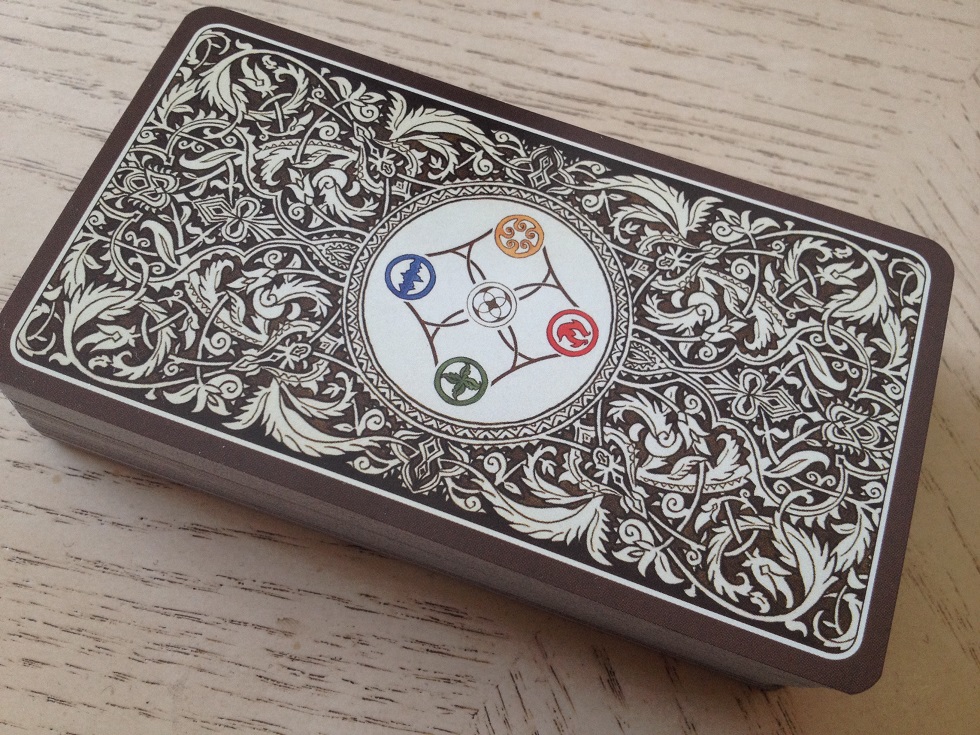
The card backs are not reversible, but it’s a very subtle difference, so not really significant. There are beautiful, ornate medieval-inspired designs with a center medallion that shows the symbols for the four suits of the Minor Arcana connected with the central symbol for the Major Arcana, or trumps. I love the card backs. These backs are exquisitely designed.

Continue reading “The Tarot of Loka Deck Review (for Divination)”

Prisma Visions Tarot: A Deck Review

01 Prisma Visions Tarot - Box Set

Oh gawd I love this deck…!!

When I first saw the Prisma Visions tarot by James R. Eads, I knew I wanted it. Then after I learned more about it, the continuing narrative of the Minor Arcana cards forming four long, exquisite landscapes, and the bold symbolist-surrealist imagery in the Major Arcana, I knew I had to have it.

02 Prisma Visions Tarot - Majors I

I love the bordered Majors juxtaposed with the borderless Minors (shown later). Eads’ art here is a contemporary tribute to French Impressionism and Post-Impressionism, calling to mind Monet, Renoir, Van Gogh, and even some Degas. You can view all the images on the Prisma Visions website, here, though I’ll provide some samples in this review.

03 Prisma Visions Tarot - Box and Cards

I love the flip top box and pretty much the design for every part of this deck and its packaging.

04 Prisma Visions Tarot - Card Back

You have a modernized all-seeing eye on the card backs, and while the card backs are not reversible, I still read with reversals when using this deck.

05 Prisma Visions Tarot - Silver Gilded Edges

The gilded silver edges are an exquisite detail. You’ve got a thick, heavy, and durable cardstock here, so the cards are thicker than traditionally published tarot decks. I do love the thicker cardstock. There is a semi-gloss finish to the cards. It’s not the full on glossy of, say, typical Hay House oracle decks, and it isn’t the papery matte finish that I tend to prefer.

06 Prisma Visions Tarot - Majors II

Continue reading “Prisma Visions Tarot: A Deck Review”

The Llewellyn Tarot: A Classic, Versatile RWS Deck

LlewellynTarot_0BoxSet

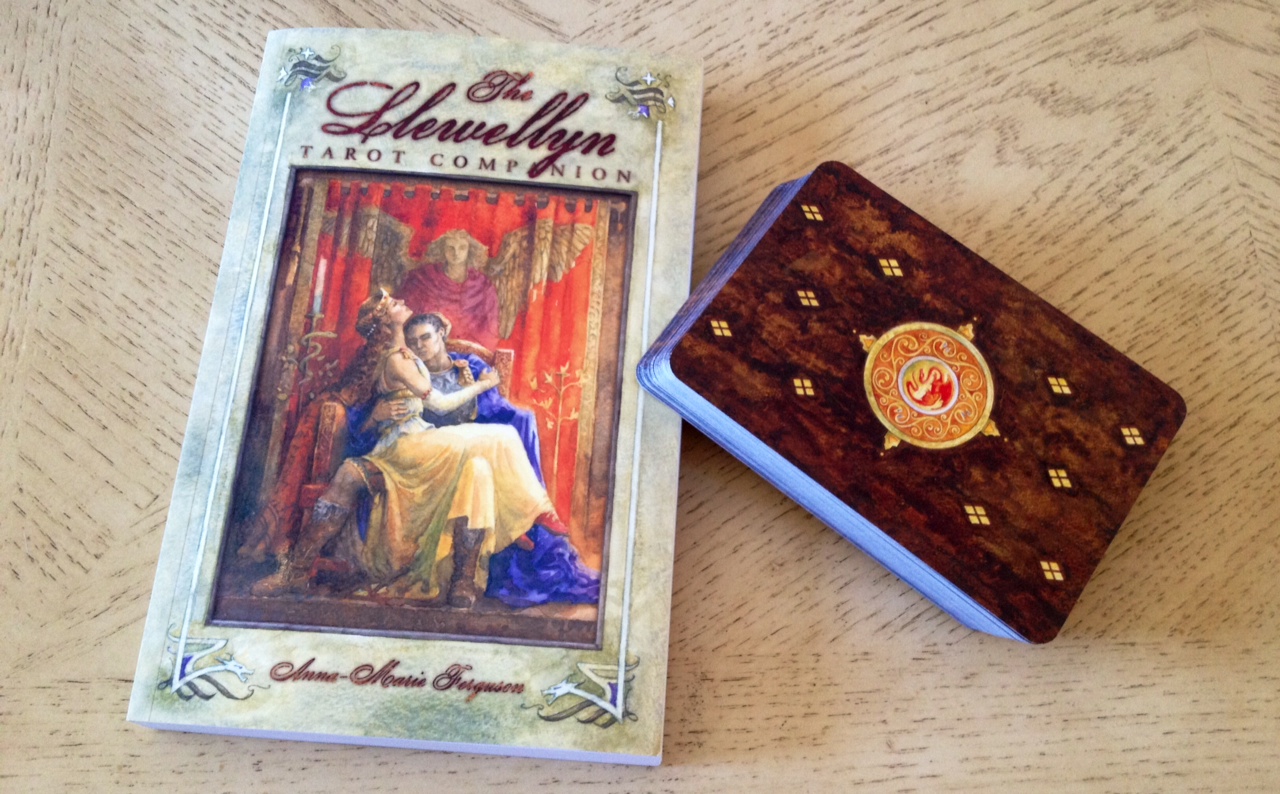
I’m always looking for RWS-based tarot decks that I can recommend for beginners who aren’t visually ready for the original RWS, and I’ve found one: the Llewellyn Tarot by Anna-Marie Ferguson and published by Llewellyn Worldwide. This deck has climbed up to my top five recommended beginner tarot decks or, heck, anyone interested in the Wales and Welsh culture of the Middle Ages.

LlewellynTarot_2DeckandBook

The deck comes with a really comprehensive 5″ x 8″ guidebook that does a good job introducing tarot to the beginner but also has so much traditional Welsh folklore and mythology that I found it to be an incredible read, and should be equally enlightening to any seasoned tarotist. The cards themselves are 3.125″ x 4.5″, with thick borders all around. I’ve seen many tarot readers trim their copy of this deck and I’ve got to say, it looks a lot better trimmed.
LlewellynTarot_3CardsCloseup

The soft watercolor paintings by Ferguson (of the Arthurian Tarot fame) transport the Rider-Waite-Smith imagery to medieval Wales, bringing to life Celtic legends, deities, and mythic figures. Although it is a distinctly different style from Kris Waldherr‘s art, something about Ferguson’s work here reminded me of the Goddess Tarot.

Continue reading “The Llewellyn Tarot: A Classic, Versatile RWS Deck”

A Review of the Resonance Oracle Cards

Resonance Oracle - 01 Box Cover

The Resonance Oracle by Dara Caplan is a deck of 40 cards, 40 exquisite works of art with accompanying messages that were said to have been channeled through the deck’s creator, Ms. Caplan. The deck is “created with the magic and energy of intent,” or as the book also describes it, the power of attraction.

Resonance Oracle - 02 Box Open

Lately I’ve been curious about channeling, so I am intrigued by the premise of this deck. The cards come in a high-gloss, sturdy box with a magnetic top flap. I’m surprised at how few Schiffer decks I have, so it’s nice to get to work with this one. The deck set is made in China, though overall I have few complaints about the quality.

Resonance Oracle - 06 Card Backs

The card backs are not reversible with a naturalist feel to the art, and based on the Guidebook, it doesn’t appear to be a deck intended for reading with reversals, though one card in the deck got me scratching my head about the reversals. We’ll get to that later on.

Resonance Oracle - 09 Scatter of Cards

One really neat attribute to this deck you’ll notice right away is that all the cards are horizontal, in landscape, and not the typical vertical setting we’re used to. I really like that. I also like the modern sensitivity, for example in the “Communication” card, seeing the Blackberry.

I can’t tell if it’s the printing quality or if it’s the artwork itself, but this is a very dark deck, as in very dark, saturated colors in the paintings and dark borders on the cards. The art is done on black backgrounds, and so given the style of art, as a publisher I might have opted for a matte finish, instead of the super-high-glossy finish that this deck comes in. These cards are so shiny, I had trouble taking photos. There was a glare in every pictures and you could see the reflection of my camera on the cards.

* Note: I looked up Caplan’s artwork online and it really is the print quality. Her art has a much more balanced quality between light and dark when you see the works on a computer screen, but in these cards, all the colors muddle together a bit and look dark. However, the dark muddle look ultimately works for the deck’s purposes, so I like it. It really sets the right mood.

Let’s try something a bit different from my usual deck reviews. Here’s a one minute video offering you a substantial sampling of the card images. Set to public domain Edvard Grieg’s Sonata in A Minor for Cello, Opus 36, the second movement. Something about the vibe of this deck just said Grieg to me. So here we go (promise it’s short–just 1 minute!):

Continue reading “A Review of the Resonance Oracle Cards”