Okay, so it looks more like straightforward cartomancy than it does tarot, but still. Also, it looks like I have to own up to a guilty pleasure before proceeding: yes, that’s right, I’ve been watching BravoTV’s Shahs of Sunset, a reality show that follows a cast of socialite Persian Americans in Beverly Hills. In Season 2, Episode 2, two of the main cast members, Asa and Reza consult with a Persian psychic, Shohreh.
Sitting in a Los Angeles cafe, Habibi Cafe to be exact, Shohreh uses a deck of oversize cards to read about Reza. From what I could see, there are pip cards, as opposed to the pictured suits of the RWS, Thoth, or other contemporary decks.
Also, whatever it was the psychic told Reza, he seemed thoroughly impressed. And where did she get that oversize deck? I want one.
Yes, this was a meaningless post. Just happy to see cartomancy get some air time.
People of color, especially Asians, form associations around their race for every topic– blogging, voting, golfing, farming, realtors, lawyers, doctors, chess players, musicians, journalists, kidney donors, Republicans, Democrats, pole dancing, basketball, you name it, there is probably a group of Asians who have formed an association. Yet there are no Asian American tarot associations, no gatherings of Diasporic Asians who are interested in tarot. Why not?
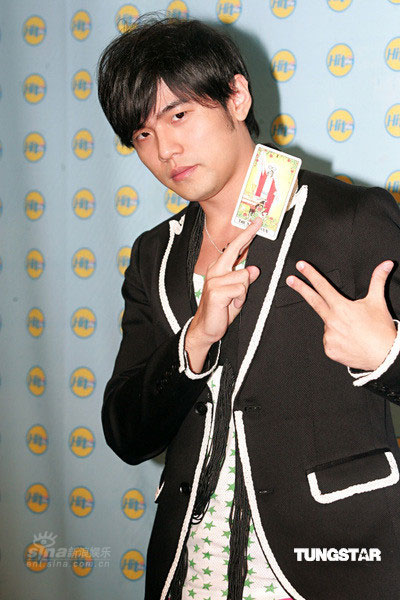
I was surprised to find that tarot is more common in Asia than I first expected. For those not in the know, the above photo is of a Taiwanese celebrity, Jay Chou, a music, singer-songwriter, and actor. He was in the 2011 film Green Hornet. Chou purportedly consulted the tarot to ask about the success of his forthcoming music albums. Link: http://jaychoustudio.com/archives/jay-chous-career-and-love-told-through-tarot-cards-deeply-influenced-by-rumours/900 (last visited 4/30/2013).
Jolin Tsai, another Taiwanese pop sensation, features tarot divination in one of her music videos. Seems like it isn’t quite as taboo for mainstream public figures in East Asia to associate themselves with tarot as it seems to be here in the U.S. We seem to be irrevocably Puritan when it comes to our open-mindedness to such practices.
I ended the article with this, and a silly quoted statement from my friend:
[Asian tarot readers] see no problems with the few individual Asian tarot readers who exist to assimilate into the greater tarot associations at large rather than group-identifying with Asians only.
“That’s because only white-washed Asians do tarot,” said one of my friends. “Asian Americans who are anchored solidly in the Asian American community aren’t into that kind of stuff. If they were, there’d be an Asian American tarot group like the one you’re asking about. The absence of such an Asian American tarot group is your proof that activist Asian Americans aren’t into it.”
. . . Have you had any experiences with the tarot? With Asians who practice tarot? And why the heck isn’t there an Asian American tarot association?
In spite of how common and acceptable tarot practice is in East Asia and its seeming endorsement from Asian celebrities, in the States, Asian Americans consider tarot to be “white-washed,” meaning Asians who reject their ethnic heritage to act as whitebread as possible are the ones who are thought to be tarot practitioners. Interesting juxtaposition there.
One of the commenters below the post, Jonathan V, an Asian American male tarot reader, pointed out an authenticity and exotification issue that I immediately related to, since I also practice both tarot and I Ching. There tends to be doubt about the “authenticity” of my tarot readings, but then non-Asians seem to love it when I use I Ching. I’m suddenly an “authentic” I Ching divination practitioner simply because of how I look. I look the part, i.e., I’m Asian. Nevermind that I was born and raised here and just as competent and just as inept as the next John or Jane Doe I Ching student over.
In any event, I hope that article expands the dialogue of Asian American tarot practitioners and the correlation of tarot to race and culture.
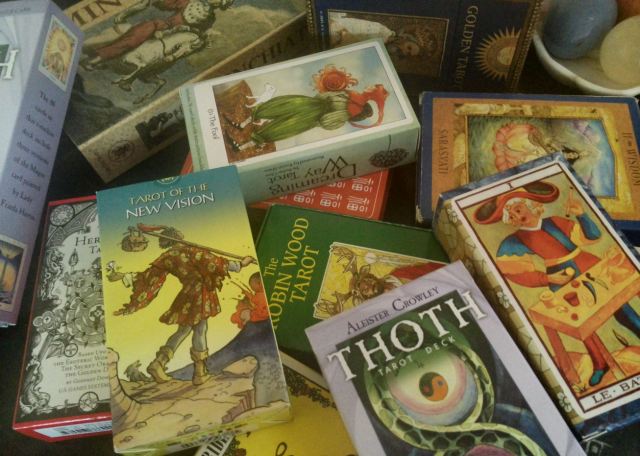
I will start by saying that you only need one tarot deck to be a practitioner. Every deck over one is excess. That being said, if you’re a tarot enthusiast, there will be no convincing you to stop hoarding tarot decks. I mean, you probably only need one pair of shoes, and yet I have fifty. I like to collect. So if you, too, must collect, then at least try to keep your collecting focused. This post will offer tips on building a tarot deck library.
I read tarot privately for 15 years before I heard about certification through the Tarot Certification Board of America (TCBA). In November 2012, just for the experience, because after I learned it existed, tarot certification made it on my bucket list, I applied for the first level of certification and over the next few months, made my way to the level of certified tarot master.
The folks behind the TCBA are fantastic people. I have had an incredible, pleasurable, rewarding experience with every one I interacted with, from the examiners to the mentors to the board directors. I literally have not one negative thing to say about them. And yet I want to proceed with my account of the certification experience objectively and critically. So here you go. I warn you this is going to be a long posting. I’ve tried to compensate for the verbosity by including cartoon caricatures of my certification journey, comics I’ve created with the help of bitstrips.com.
26. Have you ever regretted a particular reading, either for yourself or another?
No. I have no regrets for how I have conducted myself in all my past readings because I always give my best, but after the reading, I have on a few occasions regretted reading for that particular person.
27. Do you have a special time and/or place that you use your Tarot?
I like to read in the mornings. I can read anywhere, so long as it’s quiet, secluded, and I’ve got a few comfort crystals around me. I refuse to read at parties, cafes, conventions, or anywhere that people are bustling about.
28. Does anyone you know not agree with your Tarot practices?
Yes. My husband, for starters. Well, it’s not that he’s against it vehemently, but he does roll his eyes and walk away when he sees me dabbling. Also, I don’t openly advertise my tarot practice, so I’m sure if everyone in my life knew of it, there would be much greater backlash against it. Right now, only those I trust or complete strangers know of my tarot work.
29. Do you have a Tarot mentor?
Not really. Yes and no. There have been seasoned tarot practitioners who have taught me particular aspects of the practice, but no mentor per se.
30. Do you practice any other forms of divination? If so, what is it, and do you use them alongside the Tarot as to gain more insight or as something separate entirely?
I Ching. The Four Pillars analysis using Chinese astrology. The Lo Shu square. I like to combine tarot and the I Ching for a fusion practice.
* * * * * * * * * * *
Read the engaging and thought-provoking responses to the challenge from others in the tarot blogosphere:
I try to feel the energies surrounding the client. It’s important to be open and empathic during a reading so that I can best serve the seeker.
22. Do you charge money or ask for other types of compensation for your readings/services?
Right now I don’t charge money. I ask for donations, token gifts to my loved ones on my behalf (hehe), or I agree to exchanges. I’ve been known to work for food. Boy do I love them cupcakes, especially the ones with buttercream. One client made me macaroons! ::heart:: I looove French macaroons.
23. What question do you most often ask the deck (or, ask on behalf of another)?
For myself I ask questions such as “how do I” or “what do I need to know about” that pertain to specific creative projects or ventures. That’s it. When I am reading for others, I can offer you statistics. About 51% of the questions clients ask are love related. 15% to 20% are work related. Now see the below bar graph for the frequency of question topics that clients ask me to read for.
24. How accurate do you believe your readings are (or, do they accurately convey messages from spirits/deity)?
Quite unremarkably, it depends. When I’m “in the zone,” I would like to say I am really accurate and can connect deeply to what’s going on in the client’s life. When I’m not in the zone, bleh. I go a-fishing. Or really, I just stop the reading and say, “hey, look, we’ve got to continue this some other time.”
25. What was the most dramatic/meaningful reading you ever did? (Not necessarily the most accurate.)
My answer will sound like a cop-out but it isn’t intended to be. Every reading I have ever done has been meaningful. The free one-card readings I do through FTN are meaningful in the moment. Otherwise, I wouldn’t bother doing them. Every full reading session I have done has been memorable. I can remember specific cards drawn for people who were complete strangers in readings done years ago. Some readings were dramatic because it touched the client to such a degree that tears were shed on sight. Others were meaningful because of how eerily accurate they were. All readings for myself are meaningful because I don’t even bother consulting the tarot unless it’s something important.
If I had to choose one, I would say the reading I did for an established writer. The writer was struggling with a sophomore novel after the debut book received immense critical acclaim. There was a great deal of pressure to deliver the same success that the first book enjoyed. Writer’s block was setting in hard. The reading I did helped that writer move past the writer’s block and, in the end, published a second book that has been much talked about and praised in literary circles. That was cool.
It is now Day 4 of the meme, yet I’m two thirds of my way through the challenge since I’ve decided to tackle the 30 questions in 6 days rather than the full 30 days.
16. Do you ever use the Major Arcana without the Minor Arcana or vice versa?
Yes. I might use only the Major Arcana if I am interested in understanding the archetypes at play in a particular matter. If I have a question that is focused in one particular area, such as a work/career question, I may shuffle only the Wands and draw a single Wands card for insight, or if I have a love/relationships question, I will draw a single card from the Cups, etc.
17. Do you do readings using reversals? Why or why not?
Yes. Every detail and nuance matters. When a card appears in reverse, it indicates a different shade of the meaning associated with that particular card from the color it would otherwise take on upright. How a card in reverse interacts with the other cards in a spread landscape is also relevant, very relevant in fact. I can’t imagine myself not reading with reversals, though I do know many amazing professionals who don’t observe them.
18. Do you feel a “connection” to your cards?
Yes. What’s interesting is I have that old ass deck of Marseille I was talking about in Day 1 and a 20-ish year old Rider-Waite. For some time I thought I liked those particular tarot systems because they were more accurate for me than the others, but one day I picked up a brand new deck of the Tarot de Marseille and a brand new Rider-Waite and they just didn’t do it for me. I realized it isn’t the tarot systems that I was connected to; it was those two particular tarot decks that I have handled for so many years. I’ve “connected” to those cards deeply and it had little to do with the tarot systems they represented, but it was that particular deck that worked well in my hands.
19. Do you feel/think the cards “think” or have their own consciousness? What do you believe makes the cards “tick”?
No. The cards are just objects. We make them “tick.” We’re using our inner qi to will the cards into a cohesive pattern that will make sense to us and help us make sense of our lives.
20. Do you read for yourself and/or for others? Why or why not?
Yes, I do read for myself, though less frequently these days. These days I primarily read for others.
I’m having fun with an internet meme that’s been circulating among tarot bloggers, and that is the 30 Day Tarot Challenge, though I’m blazing through it in 6 days, 5 questions each day. Perhaps that is defeating the original purpose of the meme, which is to ponder thoughtfully on each inquiry. I’ve adjusted that purpose a bit.
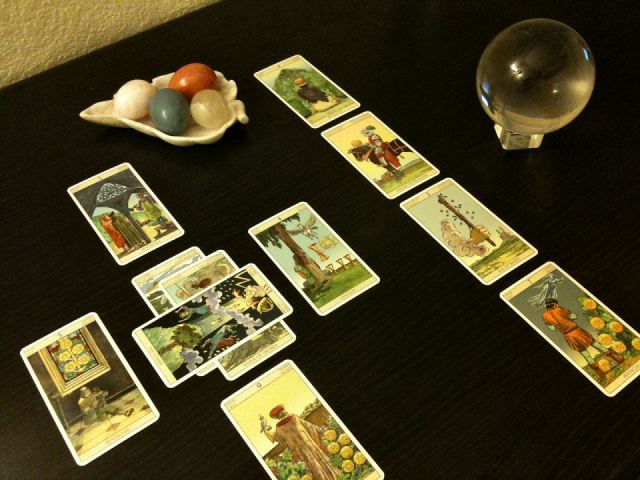
The Celtic Cross. For many years, it was the only spread I used. That was the old school way of teaching beginners. Thankfully, tarot tutelage has changed these last few decades and students are now beginning with a more manageable number of cards.
7. What is your favorite card (both in terms of deck’s artwork and divinatory meaning)?
Ace of Cups. Upright, that is.
8. Which card do you dread pulling the most?
I’ve reached a point where I don’t dread any of the cards, but that comes with acquiring wrinkles and lines on your face, in other words age. After a while, life simply stops unnerving you. Tragedy and comedy will come as they come. You learn to roll with the punches, as they say. However, when reading for people who are not familiar with tarot, I dread pulling the Death card, because I have to be really artful about explaining the card to them and calming them down.
9. What card do you pull the most often? Why do you think that is the case?
Two of Pentacles or Ten of Wands, with seemingly equal frequency. It is the way of our modern world, I suppose. Everyone’s busy. Everyone is overburdened and juggling a bunch of responsibilities at once.
10. What card best represents your personality (or, is most often pulled to represent you in a spread)?
I first came across this meme by way of Calamity’s Child on her blog post here, “30-day Tarot Challenge.” The meme seems to have originated with 78 Keys (link here), but just google “30 Day Tarot Challenge” and you’ll pull up many tarot bloggers who’ve taken on the challenge. Fascinating reads, so I suggest you read all of them. I’m a little late to the game, but the questions intrigue me and I would like to explore my answers via this blog, 5 questions at a time.
Instead of 30 days, I’ll wing them in 6 days. So here’s #1-5.
1. What introduced you/got you involved in Tarot?
A deck was given to me from a friend as a gift, which is what first sparked my interest. I floundered with it for a bit, until I met a seasoned tarot reader who taught me the basics. From there my interest developed into a serious study of the art.
2. What was your first deck and why/how did you get it?
Technically my very first deck was a used Marseille deck obtained at a garage sale when I was a kid, but I didn’t know what it was. I thought it was a deck of playing cards (well, which it is, but you know what I mean) with random extra cards. I just didnt think much of it, probably because I was 9. In junior high a friend gave me the Tarot Nova. That’s when I began to learn about tarot and nurtured my interest. Later on I realized that the old deck of “extra cards” I had stashed in my family basement was the Tarot de Marseille.
3. Do you have more than one deck that you use and if so do you have a favorite? If not, why do you like the deck you have chosen?
When reading for others, I use the Rider-Waite, the Robin Wood, or the Goddess Tarot, selecting the deck based on the seeker’s particular inquiry. I may also from time to time use either the Marseille or the Thoth, usually upon request. When reading for myself, I gravitate toward the Marseille. Also, who am I kidding, I’m an avid deck collector and love to play around with the deck du jour, so at any given time I am probably fascinated with a different deck based on what I recently got my hands on.
4. How long have you been reading the Tarot?
About 15 years.
5. When and where did you give your first reading?
My first reading for someone else wasn’t until very late in my practice, and it was kind of an accident. I was meeting a sorority sister and her new boyfriend at her place, and then we were all headed out somewhere. When I arrived, she wasn’t ready yet, so she asked me to sit in the living room with her boyfriend. The two of us sat there awkwardly waiting for her. To break the silence, I asked him if he’d like a tarot reading, since I happened to have a deck in my knapsack. He said sure. The reading turned out to be eerily accurate, to the point where he thought my sorority sister and I were a fraud, and that she had previously told me all his deep family secrets (which she hadn’t!) and I was using the info to prank him into believing I was psychic (which I’m not!). Actually, in retrospect, it was pretty funny and the accuracy of that first reading definitely gave me pause.
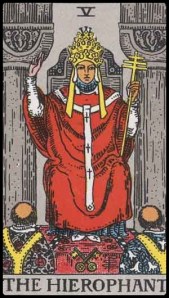
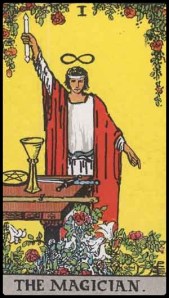
I am grateful that I did not access the Internet during my formative years of learning tarot. Communities of self-proclaimed advanced tarot practitioners have brought into being the supercilious notion that the Rider-Waite or Rider Waite Smith (RWS) tarot deck is a “beginner’s deck” and that a high level practitioner will have moved beyond the RWS into another more specialized deck.
What hooey.
These practitioners need to revisit the RWS and re-evaluate for themselves how well they truly understand the RWS. Are they really using the symbology contained in the deck to its full extent? Do they understand the elemental influences, astronomical, seasonal, and the nuances of every last bird in the sky, leaf, and blade of grass?
As I have said, as of the present there are three prevailing tarot deck systems. The Marseille with the pip cards, the RWS, and the Thoth. The three are very different from one another and every practitioner should be fluent with reading all three. From there, you will find that you gravitate more toward one of those three. That will most likely become your primary reading deck.
The three systems have inspired numerous contemporary derivative decks. These decks are generally based on one of the foregoing three systems, or are a hybrid. Most of these derivative decks are created to reconcile an omission in one of the three main systems. A basic example of that are the fancy, beautifully illustrated RWS decks that are aesthetically more pleasing to the eye than the original RWS. There are decks that attempt to better flesh out the interpretive methods of the Golden Dawn. Others fuse the foundation of the tarot with imagery that is more specific to a particular faith, philosophy, or culture. All of these decks are legitimate reading decks and if you find yourself connecting to one more so than the RWS, then that’s really great for you.
However, it does not mean you’re now more advanced. People start with the RWS not because it’s a beginner’s deck, but because it is a traditional system. The Marseille is another traditional system, but not everyone has developed and honed their intuitive abilities to a point where they can read pip cards meaningfully. The RWS is like Tchaikovsky’s Violin Concerto in D Major while the Thoth is like Stravinsky and the classical musician will have attempted to master both, but neither one is hardly considered “beginner” stuff. Playing Vyacheslav Artyomov or Gheorghi Arnaoudov doesn’t make you more advanced than the fellow working on the Tchaikovsky piece.
So please do not listen to the snobbery, my dear RWS reader. If that was your first reading deck and still remains your only reading deck, then that is what works for you. That shouldn’t even be said in a patronizing way. Seriously. RWS is an incredibly complex deck and anyone who thinks it’s the training wheels of tarot is someone who still has a beginner, rudimentary understanding of the study.




 Day 5 of the challenge. 5 more questions.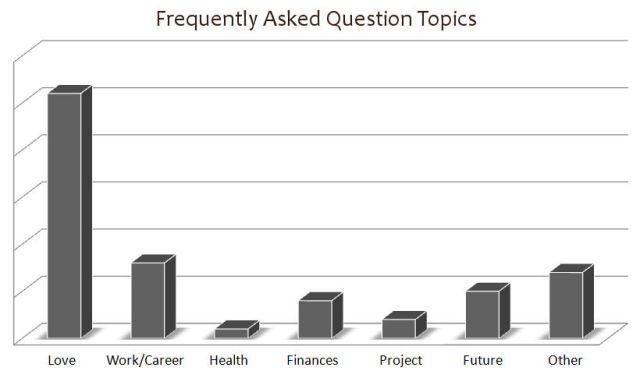

 1. What introduced you/got you involved in Tarot?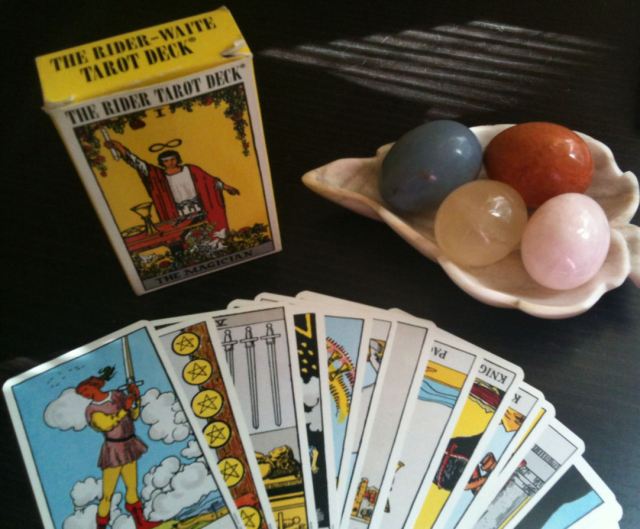
 benebell wen