2026 Year of the Fire Horse 丙午

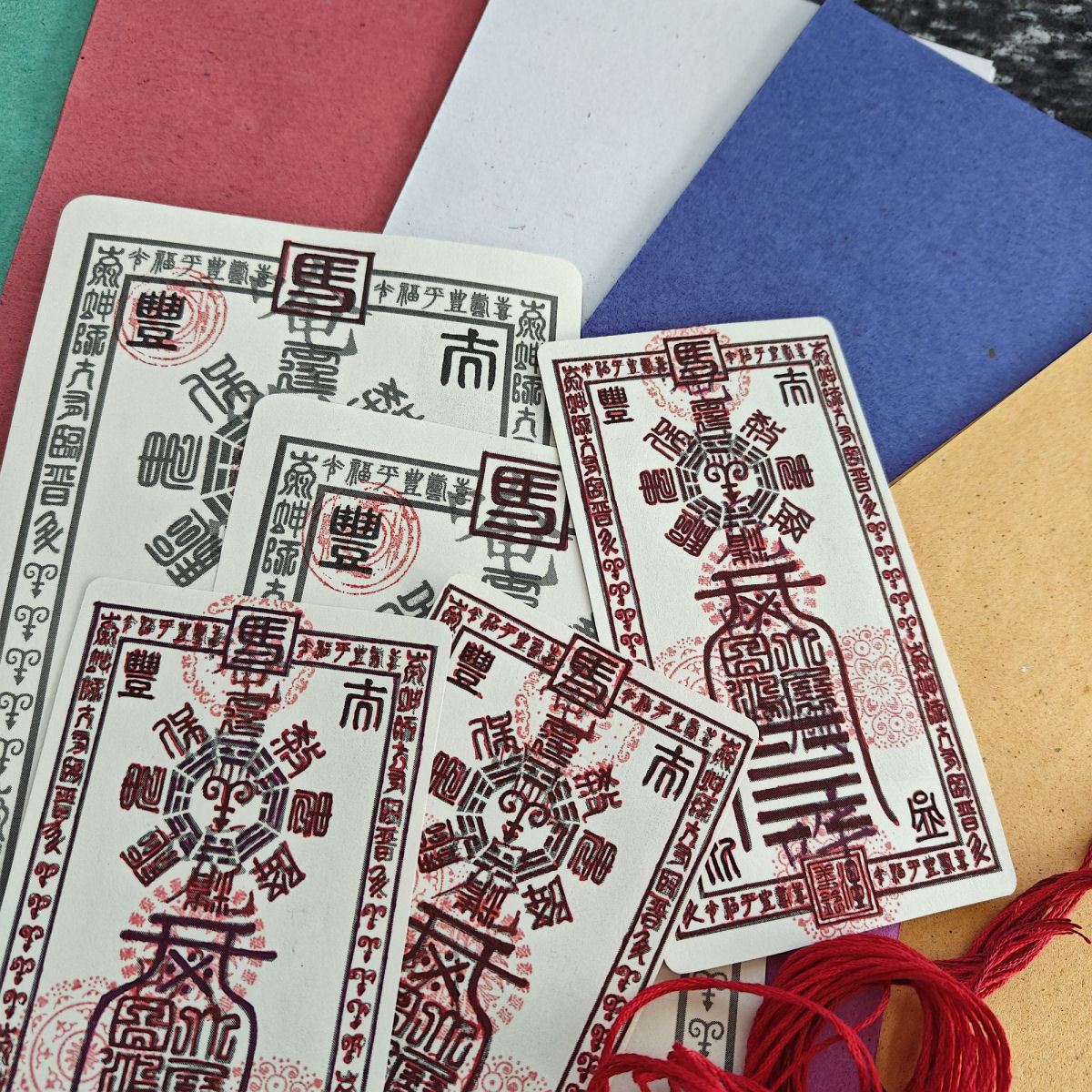
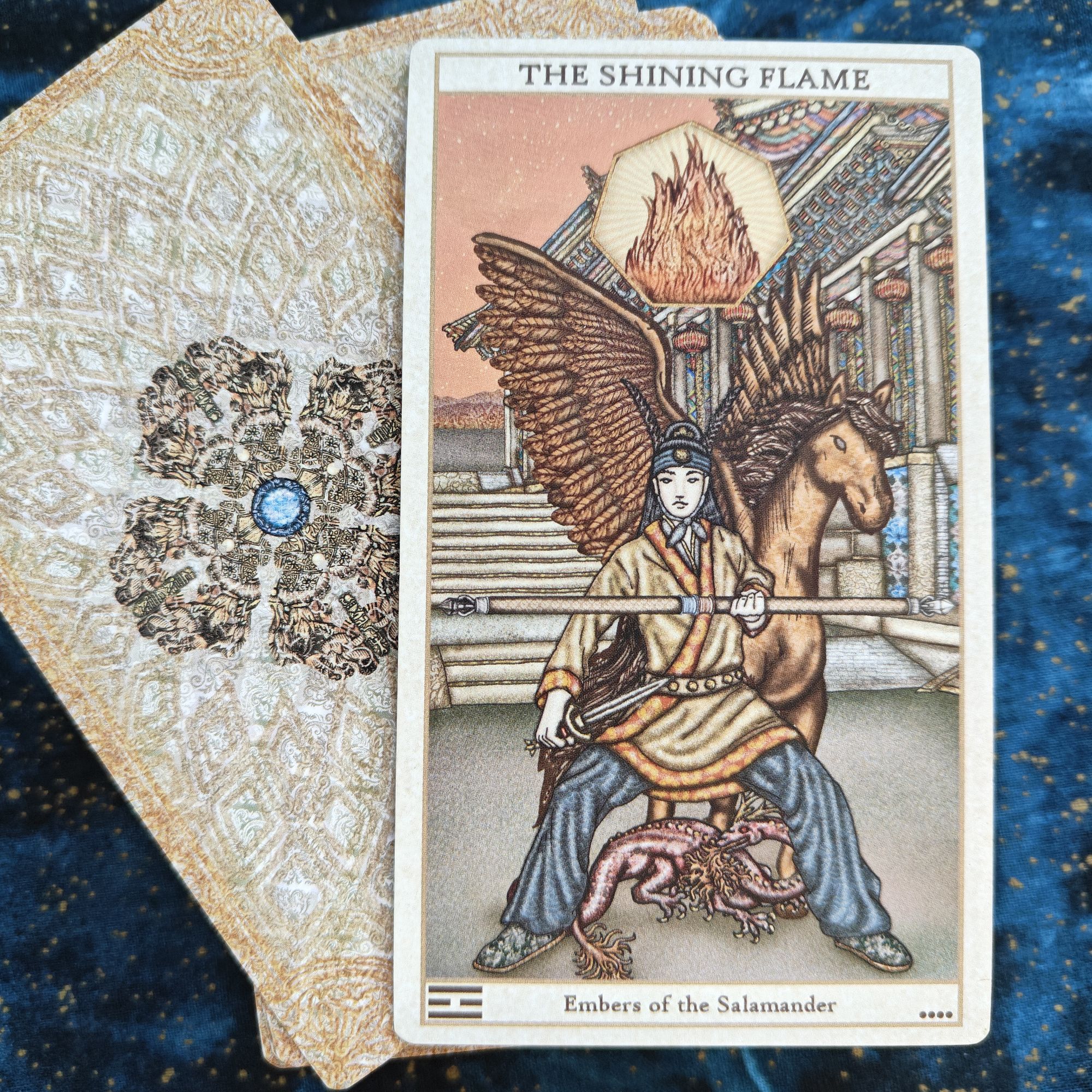
February 17, 2026 through February 5, 2027 is the lunar year of the Fire Horse. The heavenly stem “丙” corresponds with the sun, and thus emanates with a bold radiance. Paired with the earthly branch “午” for Horse, corresponding with yang Fire and the zenith of solar energy, there’s a great deal of scorching, volatility, restlessness, but also, wild and free liberation.

The is the sign of the stampeding horse, fast and unrestrained, independent, fierce, but magnificent to behold. Fire Horse years are years of radical change, upheaval, transformative events that were a “long time coming,” which is to say earlier events in the years leading up to this moment set the stage for this blaze.

The last time we had a Fire Horse year was 1966, the launch of China’s Cultural Revolution. That was the last time in most of our collective lifetimes that we had a Fire Horse year. Before that, 1906 was a Fire Horse year, the year of a Persian revolution, the Russian Peasants’ Uprising, and a year of radical political reform in terms of gender and democracy.

Fire forces are at their peak this lunar year, which amplifies all the corresponding aspects we associate with Fire: expansion, asserting, the Mars force, heat, seeing red, passion, ambition, youthful energies and their ideologies dominating, innovation, technology, theater, politics, strength of the military (compared to, say, if it were a Wood year, it’d be agriculture, or in a Metal year, education, in a Water year, law and policy, etc.)

Also, crazy that I’ve been blogging here for now well over 12 years that I have a blog post on natal years from the last Year of the Horse in 2014, here.

Continue reading “2026 Year of the Fire Horse 丙午”

Chinese Astrology circa 246 BC: Wuxian Five Star Divination

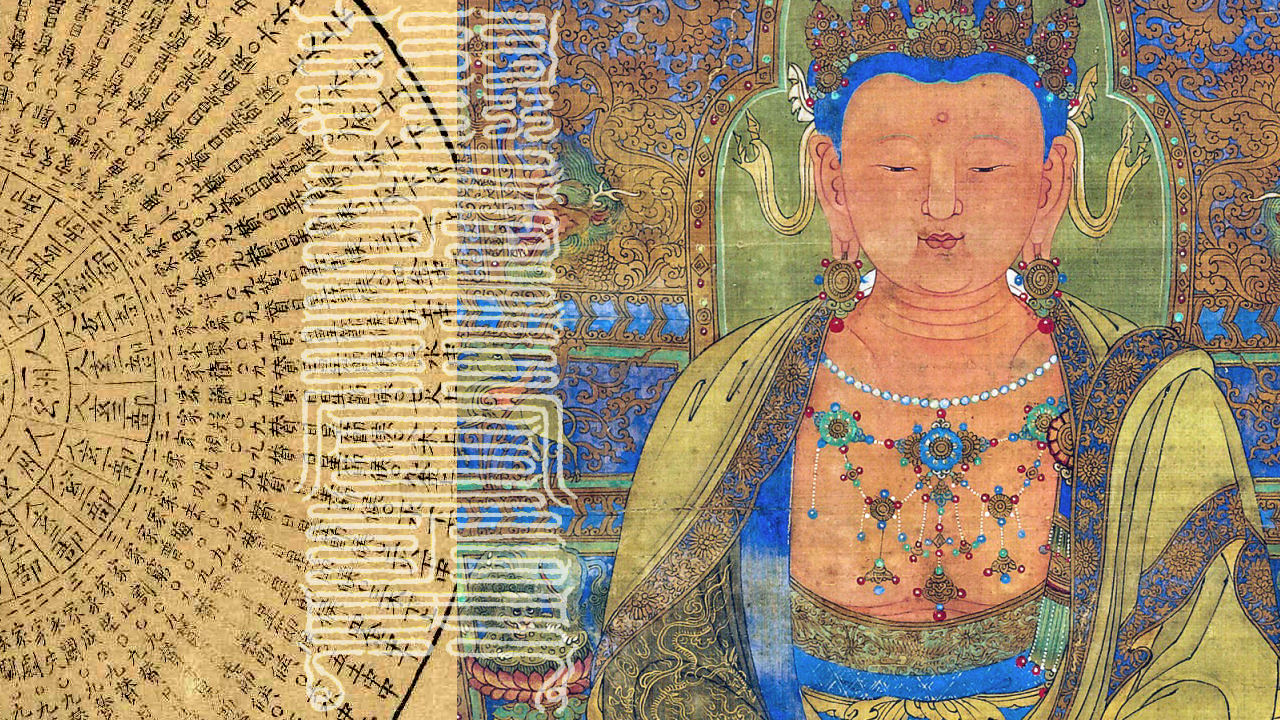
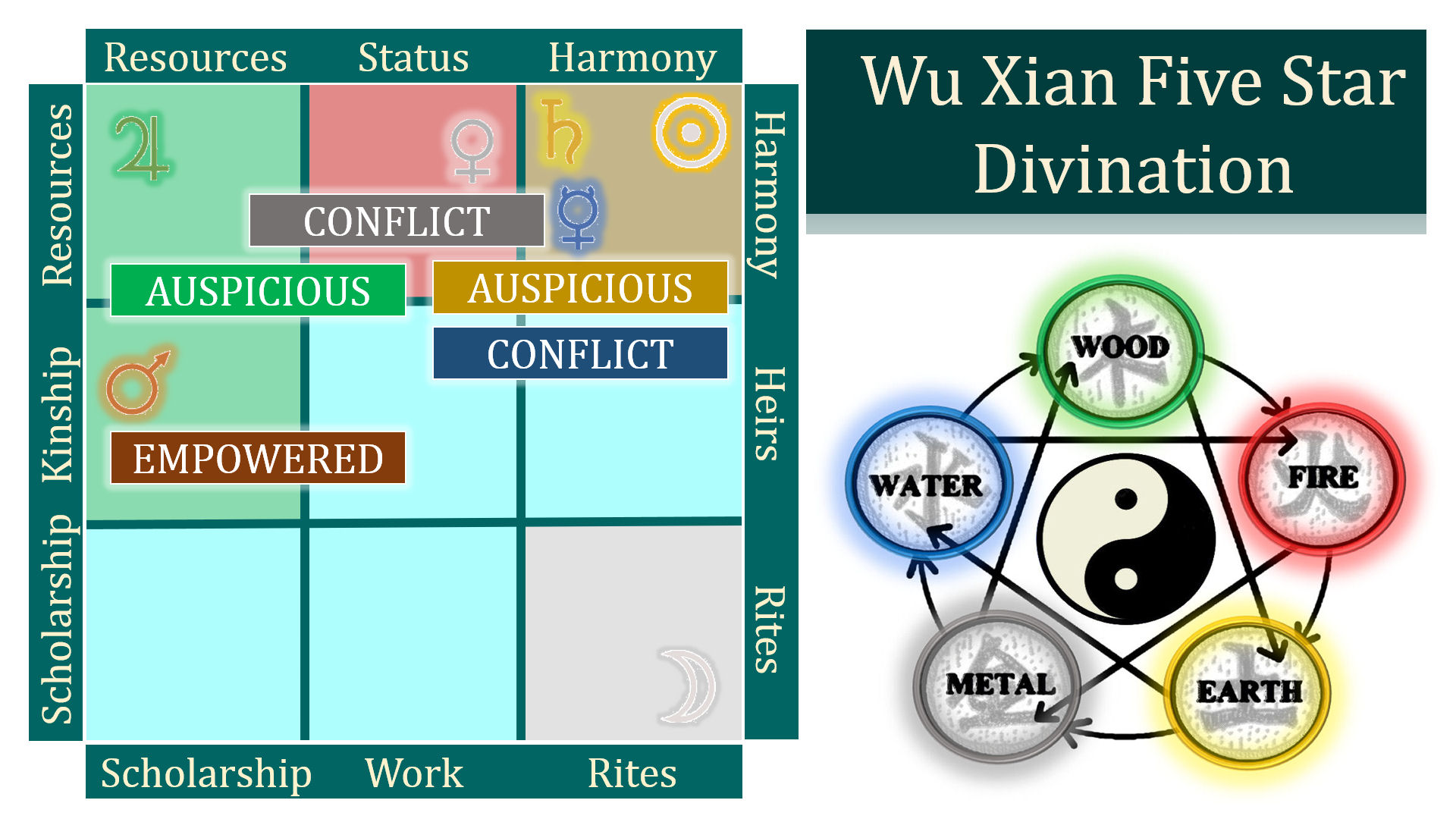
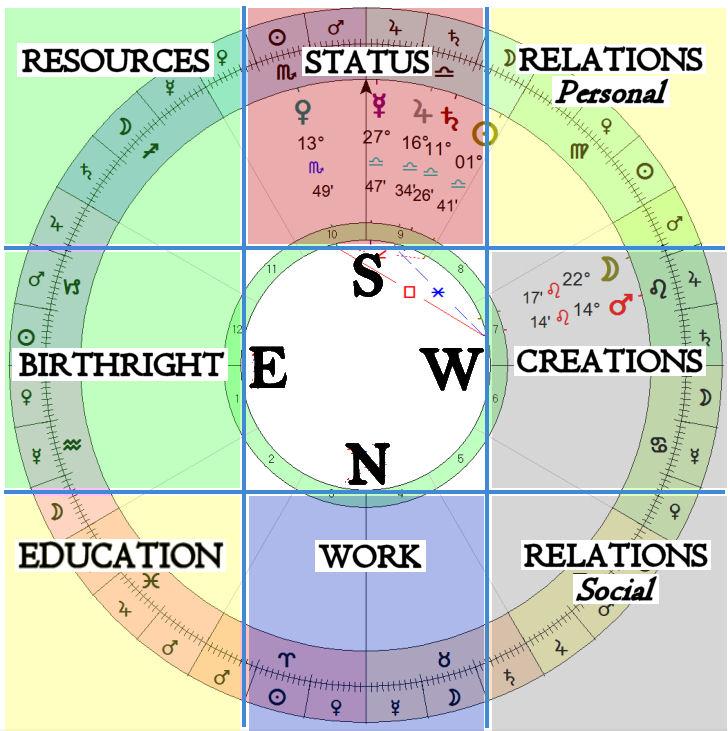
Wuxian’s Five Star Divination 巫咸五星占 is a system of astrology that dates back to the Qin dynasty, around 246 BC during Qin Shihuang’s reign, documented in a manuscript from that era titled Five Star Divination 五星占, the “five stars” being Mercury (Water), Venus (Metal), Mars (Fire), Jupiter (Wood), and Saturn (Earth). The astrological text is attributed to Wuxian 巫咸, and so this system of astrology became known as Wuxian’s Five Star Divination.

Wuxian 巫咸 (also referred to as Xian Wu, 咸巫) is the ancestor god and ascended master of the Wu 巫 shamans. Venerated as the first and most masterful Wu 巫 and thus every Wu 巫’s primordial ancestor, he may or may not have been an actual historical figure; either way, Wuxian is a fixture in Chinese lore and deified as a patron god to shamans, healers, and, in particular, diviners and astrologers. In this video lecture, “Shamanism Meets Taoism: The Hidden Link in 3,000 Years of Magic and Mysticism,” we talk about Wuxian 巫咸, the primordial ancestor of all Wu 巫 shamans, at timestamp 12:35.

Continue reading “Chinese Astrology circa 246 BC: Wuxian Five Star Divination”

Is magic and mysticism a replacement for trauma therapy?

This commentary sums up my responsive thoughts to a certain heated, well, highly-engaged – we’ll call it – provocative discussion that was going on in my social network. The assertion presented was: Magick is not a replacement for therapy and definitely not a form of trauma therapy. By extension, anyone making such claims is unethical, misleading, and hurting vulnerable populations.

Just for the full context so you can catch me if I’m off, the quote was:

“Guys, Magick IS NOT a replacement for therapy and it’s DEFINITELY NOT a form of trauma therapy. Please do not listen to anyone who tells you differently. Such a claim is unethical, misleading; and even worse, hurtful to vulnerable people who seek healing. I am a licensed therapist with 20 years of mental health experience and an occultist. I hope this means something. . . . Jessica says magicians posing as ‘magick healers’ are no different than evangelical faith healers who prey on the vulnerable. She say the key is EMDR, not LBRP.”

I want to start by saying there is nothing there that I disagree with. In principle, the author of this original post is right. And also, this is the right messaging.

“Magick,” beyond Aleister Crowley’s definition of “the science and art of causing change to occur in conformity with will,” is use of ceremonial rituals, sigils, visualization meditations, meditations in general maybe, mantra work maybe and so by extension, affirmations (?), herbalism to an extent, and various other “woo-woo” practices like candle magic, spell jars, spellwork, trying to time certain forms of workings to seasons, lunar phases, or planetary movements, and/or using divination as a form of diagnostics tool.

So what do I really think? Can such modalities that we categorize under “magick” replace trauma therapy administered by a licensed, qualified healthcare provider?

Continue reading “Is magic and mysticism a replacement for trauma therapy?”

2025 Year in Review and Reflection

Random photos of my 2025 sights and experiences interspersed throughout this post…

Oopsie doopsie, this “2025 Year in Review” is coming so, so late. A bit emblematic of my 2025, though, which is anything online-related gets relegated to lowest priority. Eeps. It’s because this past year I’ve kept my work more local community oriented, and my focus more family oriented.

I find that too much gets lots in translation when it’s via social media. I notice how in person, we assume the best in people, but online, we assume the worst. In person, we delight in how similar we actually are; but social media would have you think we can never get along.

2025 has been a year that demanded discernment. Can you discern truth from falsity, what’s natural and what’s edited, what is authenticated and what is entirely AI generated. Economic fissures between the have’s and the have-not’s are widening, which in turn is stoking civil unrest, all while we ravage our environment.

Continue reading “2025 Year in Review and Reflection”

Tarot and I Ching Correspondences (Reference)

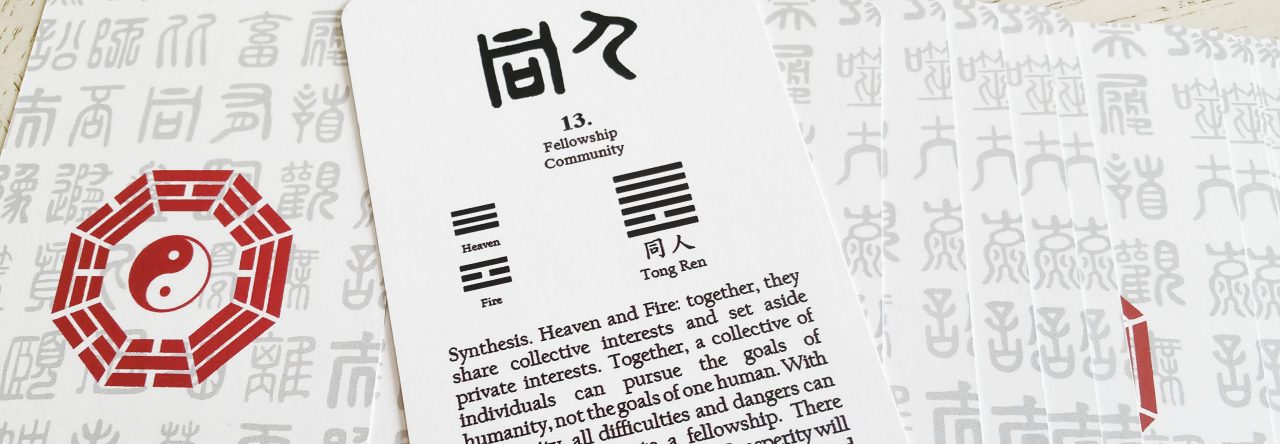
I’m an I Ching aficionado and also a tarot aficionado, wrote chonky books on both subjects, so naturally I’ve thought long and hard about how the two systems reconcile. This page is a download of a tarot and I Ching correspondence table for your easy go-to referencing.

PDF

DOCX

Continue reading “Tarot and I Ching Correspondences (Reference)”

Seeing Auras; Ascribing Meaning: Sensory Experience vs. Moral Evaluation

Cross-posted from my newly minted Substack

I see auras. And also, I pay no attention to them. For most of my life I presumed it was a defect with my eyesight or brain or both — which by the way, that’s most likely it.

That said, medical explanations don’t take away from the spiritual implications, at least not for me. Ocular migraines and severe astigmatism are both known to cause a person to see a halo-like glow around people. Chronic dry eyes and corneal irregularities compounding ocular migraines and astigmatism can then make the glow appear to bear color.

Synesthesia can also be another culprit for what we think of as seeing auras. Your senses get cross-wired, so you see color when you hear sounds, hear musical notes when you see colors, and feel notes and numbers on a musical scale in different bones; likewise, someone’s presence — which we can all sense, it’s the “vibes” you get off a person — can get color-coded, and that’s the aura color a synthesthete might see.

Having not just one or some but all of the aforementioned conditions is probably why, medically speaking, this is what I see when I look at people:

Trying to use colored pencils to show what auras look like to me…

Continue reading “Seeing Auras; Ascribing Meaning: Sensory Experience vs. Moral Evaluation”

When People Call My Work “New Age,” What They Really Mean

Note: I wrote this after two generous glasses of port on an empty stomach…

Every so often, someone calls my translation of the I Ching or my work-in-progress on the Tao Te Ching “New Age.” They’ll say it dismissively, as if they’ve discredited the authenticity of my work, and the legitimacy of my scholarship. Funnier yet, not one has been able to competently articulate how and why my work is more “New Age” than its counterparts. For some reason, my interpretation is automatically assumed to be wrong if it departs from what some old white guy from the 50s wrote about these Chinese texts, and we give the old white guy, taking a Christianized outsider perspective, miles and miles of grace.

When pressed, their explanation collapses onto itself in circular reasoning. “It just sounds New Agey.” Or “Well it’s because she’s an occultist so she can’t possibly be unbiased, neutral, objective, and scholarly.” They’ll say it doesn’t sound like “ancient Chinese wisdom.” And that expectation is problematic.

Continue reading “When People Call My Work “New Age,” What They Really Mean”

Frater Setnakh’s Tarot Coins and Archangels Set

Frater Setnakh is one of the most incredible, detail-oriented artisans of ritual artifacts I’ve come across. I’ve previously reviewed the 72 Angels Talisman Coins and Cards he sent me, which I keep on display in my sitting room. Here I’ll be showcasing his latest offering, Tarot Coins, along with the Guardian Angel Coins, or Seven Archangels.

The detailing on these coins is incredible, so I’ll also be showing a zoomed-in view of several of the coins, photo essay style. You can click on any of the images and magnify the photo to see just how fine the craftsmanship is here and each coin’s delicate engraving.

Per the ritual artifact description, this is the “world’s very first collection of tarot coins inspired by the Rider-Waite deck.” And personally I have yet to see tarot coins crafted at this level of detail and intricacy. They’re simply exquisite.

Continue reading “Frater Setnakh’s Tarot Coins and Archangels Set”

Are Authors and Content Creators Obligated to Engage?

Recently I came across this video essay by a fellow community content creator on YouTube who had some candid critiques of authors, influencers, and content creators from our mutual community. She shared frustrations about seeing a growing disconnect between those who create content and those who consume content, i.e., the audience that supports an author or content creator.

She had a lot of very legit criticism of the present day online creator ecosystem. Bots and AI-generated responses, monetizing parasocial relationships in a way that feels exploitative, the end of peer to peer communications and the rise of transactional relationships, alienating many socioeconomic classes with paywalls, and having assistants manage community spaces rather than the big-name content creator themselves engaging in those community spaces — I hear you. All valid points speaking truth to power. Also, her concerns speak to something deeper– the loneliness and disconnection many of us feel online these days. Where has that sense of fellowship gone?

Though as someone who also writes, publishes, and maintains an online presence, I have some strong feelings about these points, particularly around community engagement and the unrealistic expectations that get imposed on authors and content creators.

I’d like to unpack some of those critiques, not just from that one YouTuber or from that particular video essay, but because what she said reflects a majority view currently held against content creators when they’re not being responsive in their comments section. I want to offer my perspective. But this isn’t a response to that video, no. These are just my reflections on the realities of engagement, from a content creator’s perspective, inspired by the points she raised in that video.

Continue reading “Are Authors and Content Creators Obligated to Engage?”

Mindscapes Tarot by John A. Rice

Cardback illustration titled “Leaving Safe Harbor”

The Mindscapes Tarot by Jon A. Rice reimagines the seventy-eight archetypes of the tarot as genii locorum, spirits of place. Each card becomes a landscape imbued with its own consciousness, where the environment itself embodies the message. Rather than relying on human figures, Rice lets terrain, light, atmosphere, and color palette serve as the language of the archetype. The result is a meditative exploration of how spirit expresses through land, with each card a window into an immersive world.

Like many tarot decks conceived in recent years, Mindscapes Tarot was birthed during the pandemic. It feels especially poignant that a deck devoted to landscapes and many worlds was born during a time when we were all sheltered-in-place. When travel was restricted and the physical world felt distant and uncertain, the artist turned inward, journeying through imagination rather than geography. The resulting images captures a longing for openness and connection.

Continue reading “Mindscapes Tarot by John A. Rice”