A Tarot Reader Guest Blogs at Best American Poetry

bap

I am the guest blogger this week over at Best American Poetry and am feeling a bit like a fraud since I’m not a poet, at least not since the angry-histrionic adolescent years of poems about boys who won’t give me the time of day, printed in font size 14 in comic sans or some other curly girly font and center-aligned down the page. Hm, actually in college there was a brief period of doing slam poetry on themes of an Asian Diaspora ravaged by post-colonial ambivalence and cultural imperialism but that period is really best left forgotten too. I am, however, an avid consumer of poetry and have bookshelves at home filled with poetry collections and chapbooks, half of poets you’ve all heard of and half of poets you’ve probably never heard of.

I’m trying to think of when I first learned about the Best American Poetry series, and it turns out I can’t seem to remember a time when I was aware of literature and not aware of BAP. I read it in high school, college, and even recall sending a letter to David Lehman directly one time about a decade ago telling him I felt the BAP series didn’t include a fair representation of Asian American poets. The current series has been much better, I think, about diverse representation.

This week BAP is letting a tarot reader (me) run loose on their blog (http://blog.bestamericanpoetry.com/) and here’s what’s going to happen:

Continue reading “A Tarot Reader Guest Blogs at Best American Poetry”

2014: The Year of the Horse Flux

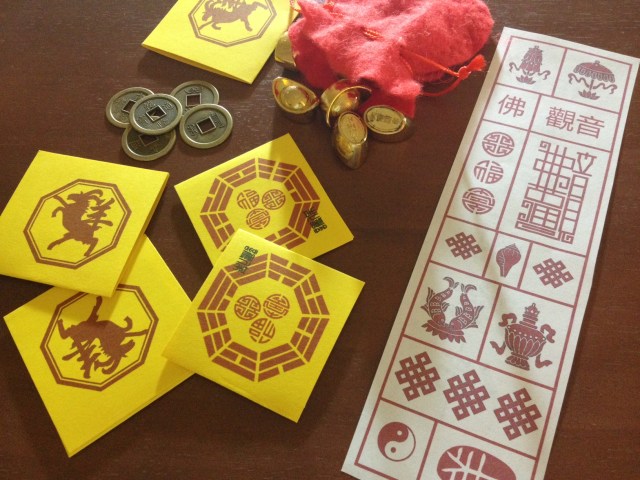
Horse Year Protection - 1

Hubby is the Year of the Horse, which means this year, 2014, is going to be a year of major changes and flux in his life. At least that’s what the Chinese believe. It’s called your Ben Ming Nian. Every lunar year is governed by a zodiac house and there are 12 of them. When a lunar year is your zodiac house of birth, you will be experiencing a great deal of flux that year, which can be great if you’re careful and proactive, but can quickly become misfortune if left unchecked (chaos theory? entropy?).

Growing up I’d hear about the Grand Duke Tai Sui. Every 12 years the Grand Duke reigns over a different zodiac house and when he’s in your house, you better move out or risk offending him. Move out, good luck. Stay put, bad luck.

Turns out he’s Jupiter. Sorta. Jupiter’s shadow.

Jupiter’s orbital period is 12 years and each year it appears to be in a different cardinal direction in the sky at particular degrees, and that corresponds with one of the 12 zodiac houses of the lunar calendar. Since it’s also the largest planet in the solar system and bright enough to cast shadows on earth, it is believed that the energies of Jupiter can greatly affect the personal energies of those on earth. It can exert interfering energetic waves on the earth’s magnetic fields and thus affect our personal Qi. It most affects the personal Qi (energy) of those born in a year corresponding with the zodiac house that Jupiter is in that year.

As Jupiter, up in the sky, is observed rotating in its 12-year cycle, it casts a spiritual shadow on earth, creating a terrestrial counterpart, or court martial that governs the mandates of Jupiter up in the sky. That terrestrial counterpart is Tai Sui. It’s the authority who speaks on behalf of Jupiter.

So while Tai Sui isn’t exactly per se Jupiter, Tai Sui is like the earthly counterpart to the celestial embodiment of Jupiter. Tai Sui is the spiritual shadow on earth that Jupiter from up high casts. Tai Sui is Jupiter’s spokesperson on Earth.

Astronomically (and astrologically), Tai Sui is positioned in opposition to the placement of Jupiter. Tai Sui is the Earthly Branch of the corresponding Jupiterian year. Thus, for example, in a Year of the Horse, Tai Sui resides in the Horse position.

Jupiter

When Grand Duke Tai Sui is seated in your house, your personal Qi will be thrown for a ride, which can be a really good thing if you know how to keep it in check, but can be an awful thing if you don’t. Enter fun Chinese superstitions. They’ve got all sorts of talismans, rituals, and other incredible ways to “please the Grand Duke” and avoid “offending him.” Basically, know that your personal Qi will be in flux and be aware and conscious of how to navigate that Qi in flux so that it doesn’t afflict you but rather, supports you.

Now my Hubby is an interesting character. He is a full on skeptic… until shit hits the fan. His year went off on a rocky start and he’s worried about his Ben Ming Nian. Ben Ming Nian just means it’s the year of the zodiac house that you were born in. He was born in the year of the Horse and now it is the year of the Horse. It’s his Ben Ming Nian, you would say.

You would be surprised, floored really, how many perfectly intelligent and rational Chinese people flock to temples and energetic practitioners to try to get their good mojo on for their Ben Ming Nian. Hubby knows that a few years ago it was my little sister’s Ben Ming Nian and her year, too, started off hellish. I assembled some happy charms and sent them to her. By that year’s end, she met a wonderful guy who is still the love of her life right now (they’re making plans to marry soon) and she got an offer to work at the biggest law firm in the country, in the city she loves, Manhattan. So this year, 2014, Hubby nagged me to do the same for him.

Continue reading “2014: The Year of the Horse Flux”

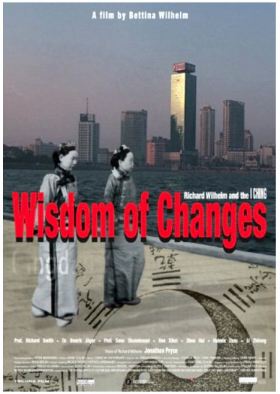
A Review of Wisdom of Changes: Richard Wilhelm & The I Ching (Documentary)

wisdom_of_changes_documentary

Bettina Wilhelm, the granddaughter of Richard Wilhelm (the man needs no introduction for any Westerner who has dabbled with the I Ching) directed a poignant, artistic, and sentimental documentary on the man who was her grandfather and who is credited with introducing the West to the I Ching. I selected the foregoing three adjectives with great care. The documentary through and through was poignant, artistic, and sentimental.

I admit not knowing much about the man prior to watching this documentary and walked away with great admiration for his pioneering spirit and independent mind. I admire his compassion and the contribution to and what seems to be genuine concern and respect for the welfare of the Chinese people while he was in China. I appreciate that he did not go there to baptize people and preach, but rather, simply practiced the teachings of Christianity with the hope that his actions would speak louder than words, which they did. The film is an incredible tribute to Richard Wilhelm and provides a great deal of historic context for the China he was living in and experiencing.

What made both Hubby and me uncomfortable, however, was the narrative arc of the documentary: white people shit on other culture and deem them heathens, abuse, torment, and treat them worse than dogs, and then lone white hero comes in, defies his own race, comes to admire the “simple” beauty of the “heathens” and, oh, saves them all. Statues are then built in his honor in said foreign land.

Don’t get me wrong it was not intentional and not for a second do I think that arc was intended by the director, but it is almost inevitable. I should even note that when Hubby was setting up the DVD for me, we had some technical difficulties, and while he was working on it, he skipped through sections of it while I wasn’t there. He told me he did so and I asked, “So what is your first impression of the documentary?” Said Hubby deadpan: “White people destroy China. One white guy doesn’t join in the destruction, however, and for not destroying someone else’s land and culture, he is venerated as a hero.”

Oh dear.

Continue reading “A Review of Wisdom of Changes: Richard Wilhelm & The I Ching (Documentary)”

What Buddhism Says About Magic

I met the Venerable Sheng-Yen, a Buddhist monk, teacher, and scholar, when I was too young and too immature to have appreciated the encounter. For that I will always be regretful for not being more open and receptive when I had the chance. Here, though, the Internet is a wonderful thing. Apparently, many of Ven. Sheng-Yen’s lectures have been recorded and posted onto YouTube. The lectures are in Mandarin Chinese, but there’s English subtitles. The one of highest interest to those in tarot practice might be what the Shi Fu had to say about magic, the supernatural, and psychic workings.

I highly recommend watching the video in the entirety, but if you can’t I’ll summarize.

A question is presented to the Shi Fu (Shi Fu is the honorific we use to refer to any master teacher): What are his thoughts on supernatural powers (in other words, magical practice or working with spiritual energies) and does he think it really exists?

Continue reading “What Buddhism Says About Magic”

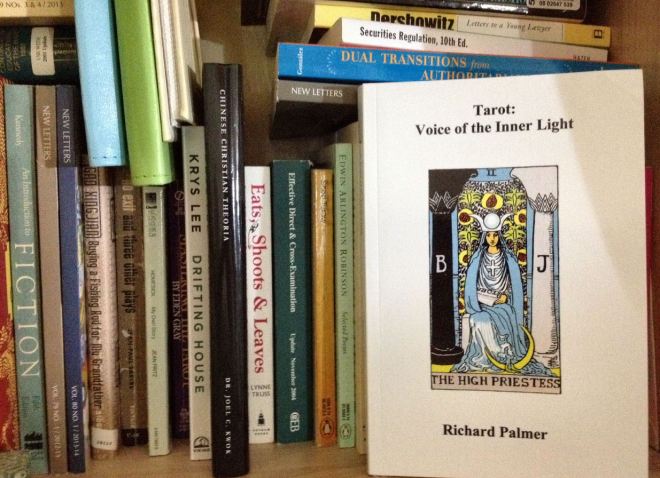
A Review of Palmer’s Tarot: Voice of the Inner Light, a Reference Manual

palmer-tarot

I’ve got a new amazing addition to my personal library: Richard Palmer’s Tarot: Voice of the Inner Light (Custom Book Publishing, 2008). If this book had existed in the 90s, I would have advanced in my tarot practice so much faster. When I started out in tarot, there weren’t limitless online references and glossaries on card meanings, which by the way I still do not find all that useful, as much of it is the blind leading the blind, with no indication of the source of the card meanings provided or no identification of the tradition used.

(Oh and please do not mind the unorganized bookshelf. Hubby and I are preparing to move to a new house, so I figured I’d wait until we settled in to organize a library. Right now I have literary fiction next to books on law next to classical poetry next to Christian theology next to Buddhist philosophy next to my little collection of stuff on the esoteric and the occult. Anyway.)

The first lines of the Introduction tells you exactly what you’ll get: “There are many complex and profound books written on the subject of the Tarot. This isn’t one of them. The aim of this work is to bring the practical knowledge of how to use the Tarot into the life of anyone who is willing to put forth the minimum effort necessary to understand this remarkable gift.” Voice of the Inner Light is give or take a 240 page reference book, about 60,000 words if I had to guestimate. In essentially 10 pages upfront, the book teaches you how to begin using your tarot deck. There is no longwinded research on history, origins, philosophy, or theosophy. I understand that most advanced practitioners are looking for theory, but this book is not targeted at that kind of reader. This book is targeted at that starting practitioner who may have read 1 or 2 more comprehensive books on tarot and is now looking for a go-to reference manual to keep on the desk for readings.

Per my own analysis of Palmer’s book, his card meaning interpretations are based heavily on Hermetic Qabalah. Palmer is also a renowned astrologer, and so Voice of the Inner Light is going to be indispensable to tarot practitioners who integrate Western astrology with tarot.

Each card is covered in 2-3 pages. A card description and key symbolism is provided, then the card’s astrological association, and then the practical application of the card when upright and when reversed. Then a concluding remark is offered on Qabalistic correspondences. Such concise coverage of card meanings is the primary purpose of the book. Other than how to read a single card or perform a simple 3-card reading, Voice of the Inner Light is not for teaching spreads or how to intuitively read multi-card spreads. The book’s purpose is for the foundational understanding of each and every card.

Thus, I consider it an intermediate reference manual. If you have read a few beginner books on tarot, this book is a useful supplemental next step. However, for advanced practitioners who want to begin building a repertoire of spreads and how to use the tarot in complex reading techniques, this won’t be the right book for that. Voice of the Inner Light will be an integral supplement to such goals. As you learn complex reading techniques, you will need a book that provides in-depth interpretation of each card, in which case Voice is one of the best. Also, those with a particular leaning for the GD interpretive method, Voice will be highly appealing as opposed to the more what I call New-Agey-keyed reference manuals.

The Enduring Fascination for Sigils

sigil_CNtradtional

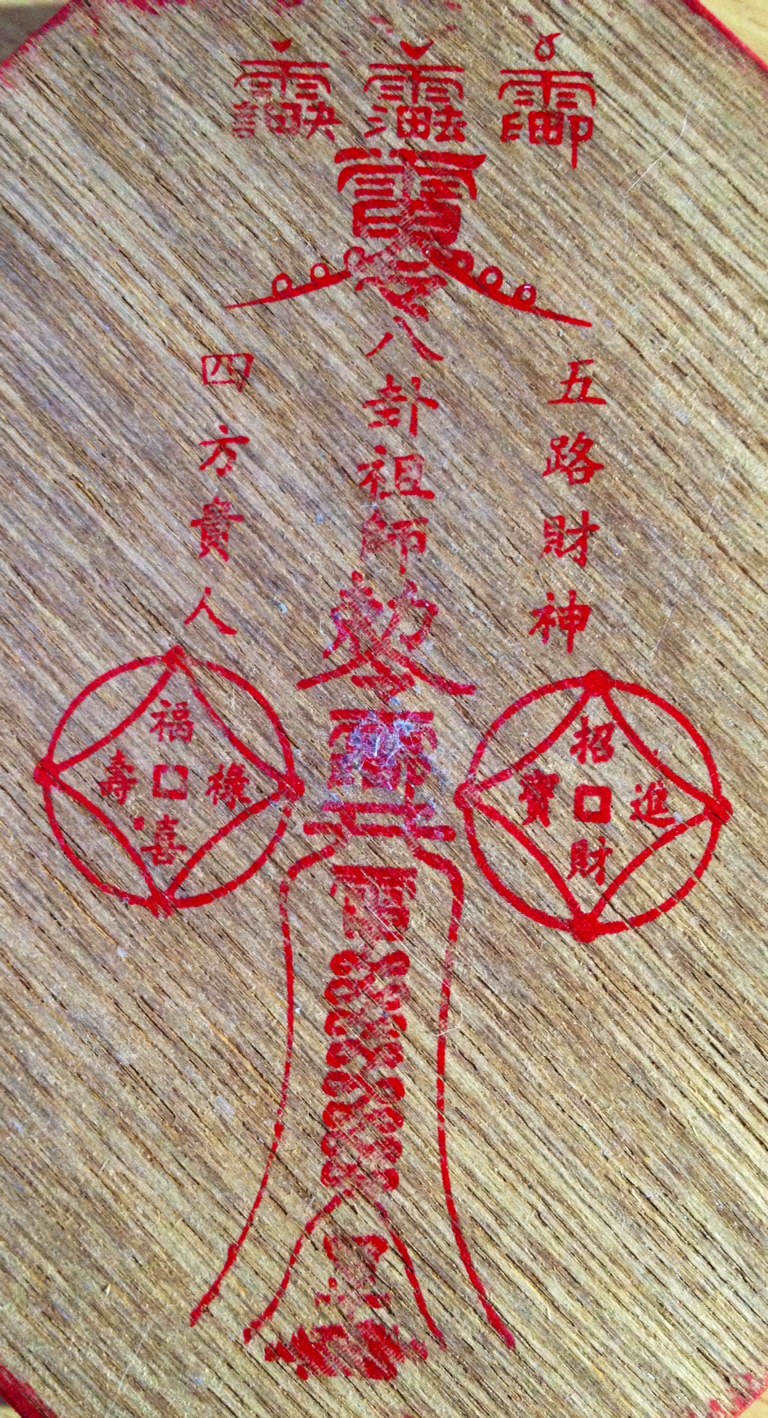
While reorganizing a closet that contained boxes of things I hadn’t touched in years, I came across some of my grandmother’s personal effects and found a trinket box with the above sigil painted underneath, on the bottom of the box. It’s a feng shui talisman of some sort, that much I know.

According to my mother and those who are in the know, it’s “a spell.” Their words, not mine. A blessing spell meant to guard and protect.

sigil_4directions

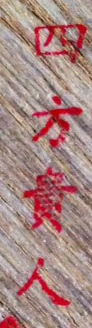
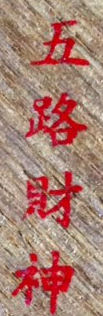
The left-most column of text calls upon the guardians of the four cardinal directions, which in feng shui theory are the Red Phoenix in the South, the Black Tortoise in the North, the Blue Dragon in the East, and the White Tiger in the West.

sigil_5directions

The right-most column of text calls upon the spirit guardians of the five relative directions, or Up, Down, Left, Right, and Center.

sigil_baguasaintthing

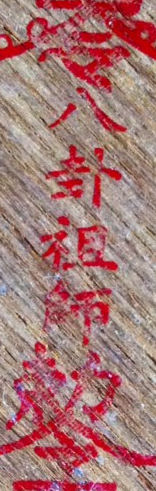
The center column is about the founder of the Ba Gua, or eight trigrams, and calling upon that energetic legacy for protection. I might liken that to praying to a venerated saint and hoping that the saint will come and bail you out of trouble.

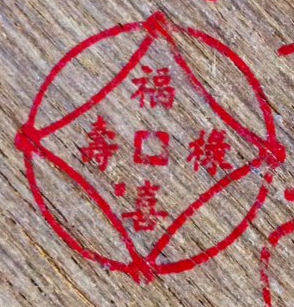
Meanwhile the guardians of the four cardinal directions are about the universal, collective Qi energy while the guardians of the five relative directions are about the personal Qi, like a call for summoning up your own inner strength. Then the characters inscribed in the circles with the little squares at the center are just various characters for good luck and fortune, like happiness, prosperity, yada yada.

sigil_circleandsquare

The square within the circle is symbolic of the harmony between heaven and earth. It’s basically a pictorial expression of “heaven is on my side.” The diamond thing forming the four points are representative of the four gates of…something. It’s a mandala thing.

sigil_thelemniscates

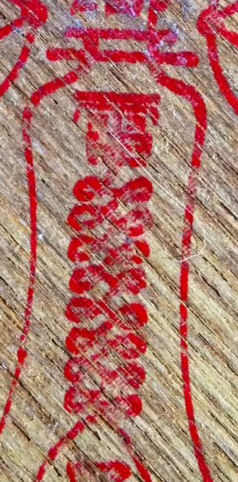
The chain of lemniscates or infinity symbols reinforce the intensity of power or the efficacy of the spell. It’s the insurance policy. I suppose it’s like adding a string of exclamation marks behind a statement to show you really mean what you’re saying!!!!!!!!!!!!!!

Then you have the overall form or structure of the painted sigil, which is meant to represent a bell or wind chime, which is superstitiously believed to ward off evil spirits. Allegedly, evil spirits are afraid of the sound of bells, which is a pretty interesting belief if you consider the cross-cultural employ of bells in religious services. A less abracadabra way of phrasing it (though no more scientific) is to say that the sound of bells or wind chimes can scatter malignant energies or bad Qi.

Continue reading “The Enduring Fascination for Sigils”

The Parable Sutra: Nihilist Twist on Noah’s Ark?

parable_sutra

Sutras are Buddhist texts that memorialize a particular teaching, not unlike Sunday school parables (which I got big doses of as a kid: Bible Study classes in some offshoot wing of a church, playing tag or hide-and-seek in said church, and daring one another to utter H-E-double-hockey-sticks in God’s house will forever be ingrained in my memory). Recently I got into reading sutras and came across one that I felt compelled to illustrate. In jest, I tell people this is the kind of bedtime story I’d tell my kid if I had one. Here’s how it goes:

Continue reading “The Parable Sutra: Nihilist Twist on Noah’s Ark?”

Do-It-Yourself Tarot Bag

Sew Your Own Tarot Bag

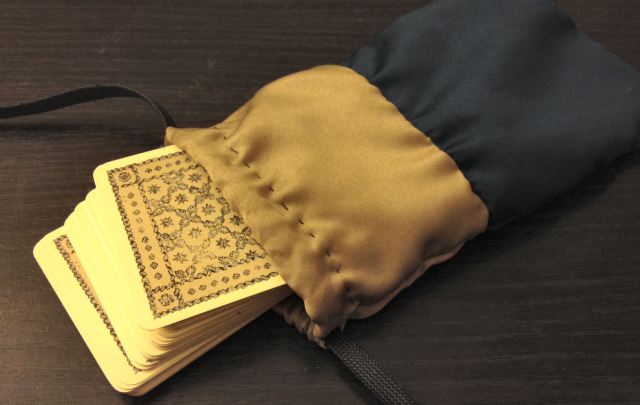
Now my sewing “skills” leave a lot to be desired, for sure, but it means something to me to use tarot bags I’ve made myself. I hand-stitched these without a sewing machine and during that time I spent sewing my tarot bag, I burned sage, concentrated my intentions into the process, and I believe the end result is something special, even if it’s quite imperfect and ugly to the lay observer.

image

Recently I acquired the Medieval Scapini tarot deck (don’t let the name fool you; the aesthetic is medieval art but this deck was created in the 80s) and decided I really wanted to become fluent in reading with this particular deck, so I promoted it temporarily to my primary reading deck du jour. However, that didn’t mean I was ready to displace my normal reading decks from their pretty little bags, and the number of pretty little bags I have are limited. I decided to make a bag just for the Scapini.

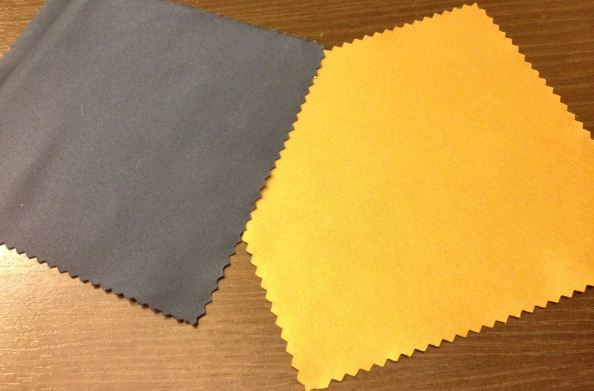
I didn’t have any nice fabric at home, but I did have a bunch of microfiber glass wipes. Don’t ask. Long story. I’m near-sighted (horribly so) and bulk ordered glass wipes for my glasses because I thought I was saving money. Anyway. Glass wipes. Great quality for making a tarot bag with, but each piece was definitely too small. I had to sew them together, which ended up having a nice duotone effect. I might just do this on purpose next time.

image_1

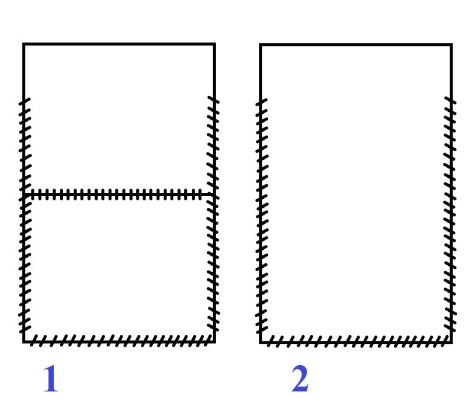
These are simple to make. I promise. We’ll be sewing these by hand, so you don’t even need to know how to use one of those damn sewing contraptions. Needle and thread will suffice. It’d be ideal to match the thread color to your fabric color or choose a complementary color, but if you’re scrappy like me, that’s just a luxury. I scrounged for old spools of thread and used whatever I had around the house.diagram1

The above Diagram 1 shows what I had to do since I was sewing two pieces together for each side of the bag (four separate pieces total). If you’re using one fabric only, then each side of your bag pattern will look like Diagram 2. Layer up if you want an interior lining for your bag. I did.

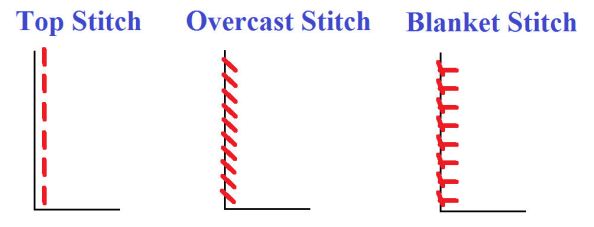
Here are the stitches you should know:

stitches

Either the overcast stitch or the blanket stitch will work for the edges of the bag. When you go to create the drawstring part (more on that later), you’ll use the top stitch.

diagram2

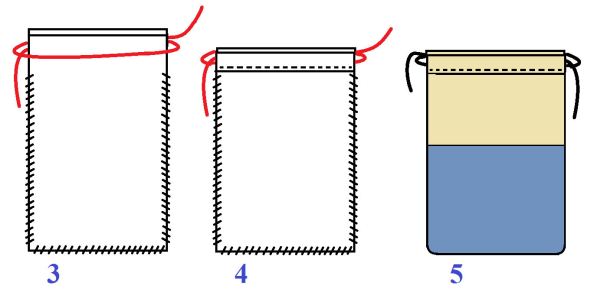
Remember you’re sewing these inside out first. Diagram 3 above shows what it should look like after you’ve stitched together 3 sides of the bag with either the overcast stitch or the blanket stitch. The red string represents the chord or ribbon you’ll be using. I used an old black shoelace I found. I snipped off the gross plastic edges and then dipped the edges in melted wax to seal them. (if you’re really going to make a whole ritual out of this, dip in purple wax for intuitive support, white for spirituality and clairvoyance, or black for power; and while you’re at it, do it during a full moon). Be sure to wrap the cord around the top two pieces as illustrated.

Diagram 4 shows the top flaps folded down. Stitch along that edge to close the loop. Be careful not to sew the two flaps together, or else you’ll have sewn your tarot bag shut. Diagram 5 shows the final product. Once you reverse it, gently straighten out the edges. They’ll still be slightly curved, however.

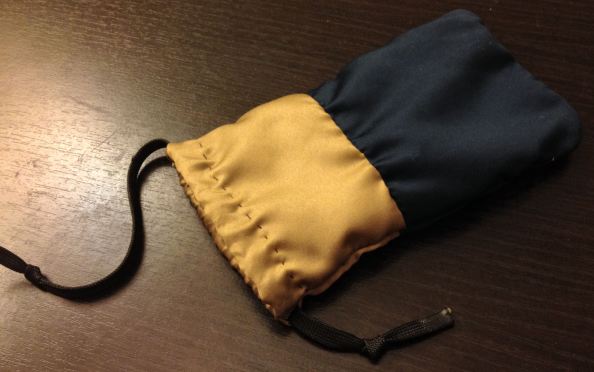
image_3

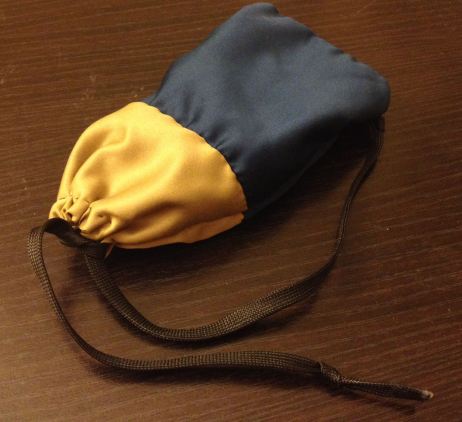
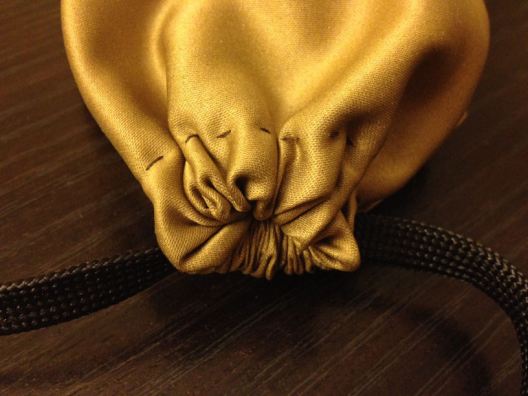
I also tie a knot on the ends of each cord. Now you have a drawstring tarot bag. Below you can see up close just how imperfect my stitches are. Well I didn’t say I was going to try and sell these. They’re special to me and that’s what matters.

image_4

If you’re a tarot enthusiast, do save your money and try making a tarot bag or two yourself. Even by hand, the whole ordeal takes less than an hour. Use decent fabric and be sure to line the interior by doubling up on said fabric and you’ll have some durable, long-lasting drawstring bags to store your tarot cards in. My stitches are ugly, I won’t deny, but the quality amazes me. I pull and tug at these things willy nilly and they just last and last nevertheless.

Cleansing a Tarot Deck

Image1

Many traditional Asian societies follow the lunar calendar (I once litigated a case involving an elder Taiwanese woman and all the document evidence she had was dated per the lunar calendar, which completely tripped us lawyers up and a lot of conversion work had to be done, but that is neither here nor there; just mentioning it to affirm that it really is still used today) and the super-traditional even believe that certain energies are more dominant during certain phases of the moon. Not kidding: they’d schedule major surgeries around certain phases of the moon because they believe they’ll bleed less and chances of success will be higher. They consult the Chinese almanac, which is based around the lunar calendar, for everything, from when to launch a business or throw a wedding ceremony to the optimal time for a funeral.

I’ll say that I haven’t lived or observed the universe long enough to confirm whether there is any validity to following moon phases, but if it worked for my ancestors and there is no actual adverse effects from continuing the tradition and it makes me personally feel closer to my heritage, then why the heck not. My mom was adamant about calibrating Hubby’s and my engagement and marriage to moon phases. Did it work? So far so good I’d say.

Anyway, that was a long tangent of an introduction. Sorry. This post is about cleansing a tarot deck.

1 cleansing tarot deck

To demonstrate, I’m using the DruidCraft Tarot deck by Philip and Stephanie Carr-Gomm and Will Worthington (a highly recommended deck, by the way; though there is a great bit of nudity in the illustrations, which I understand why would be featured in a Wiccan-Druid-based deck, but just does not resonate well with me).

Continue reading “Cleansing a Tarot Deck”

Self-Guided Intermediate Tarot Course: Integrating the Five Components of Circumstance

screenshot

DOWNLOAD COURSE PRESENTATION

(Note: Must watch in Slide Show format, due to layered animations.)

I’ve created a self-guided intermediate tarot course on a cross-cultural interpretive framework for reading tarot that I have not seen anyone present before. The Five Components of Circumstance is a cosmological theory based on the Chinese maxim that one’s fortune is based on five factors: 1) fate, 2) luck, 3) feng shui, 4) karma, and 5) education. That theory is a cornerstone in Chinese metaphysics and is used to diagnose an individual’s personal formula for success.

By integrating Five Components analysis with tarot reading, the tarot practitioner will have a new set of vocabulary for interpreting a spread, any spread in fact, and can more precisely pinpoint the strengths and weaknesses in a querent and what adjustments need to be made to expedite the querent’s goals.

Continue reading “Self-Guided Intermediate Tarot Course: Integrating the Five Components of Circumstance”