
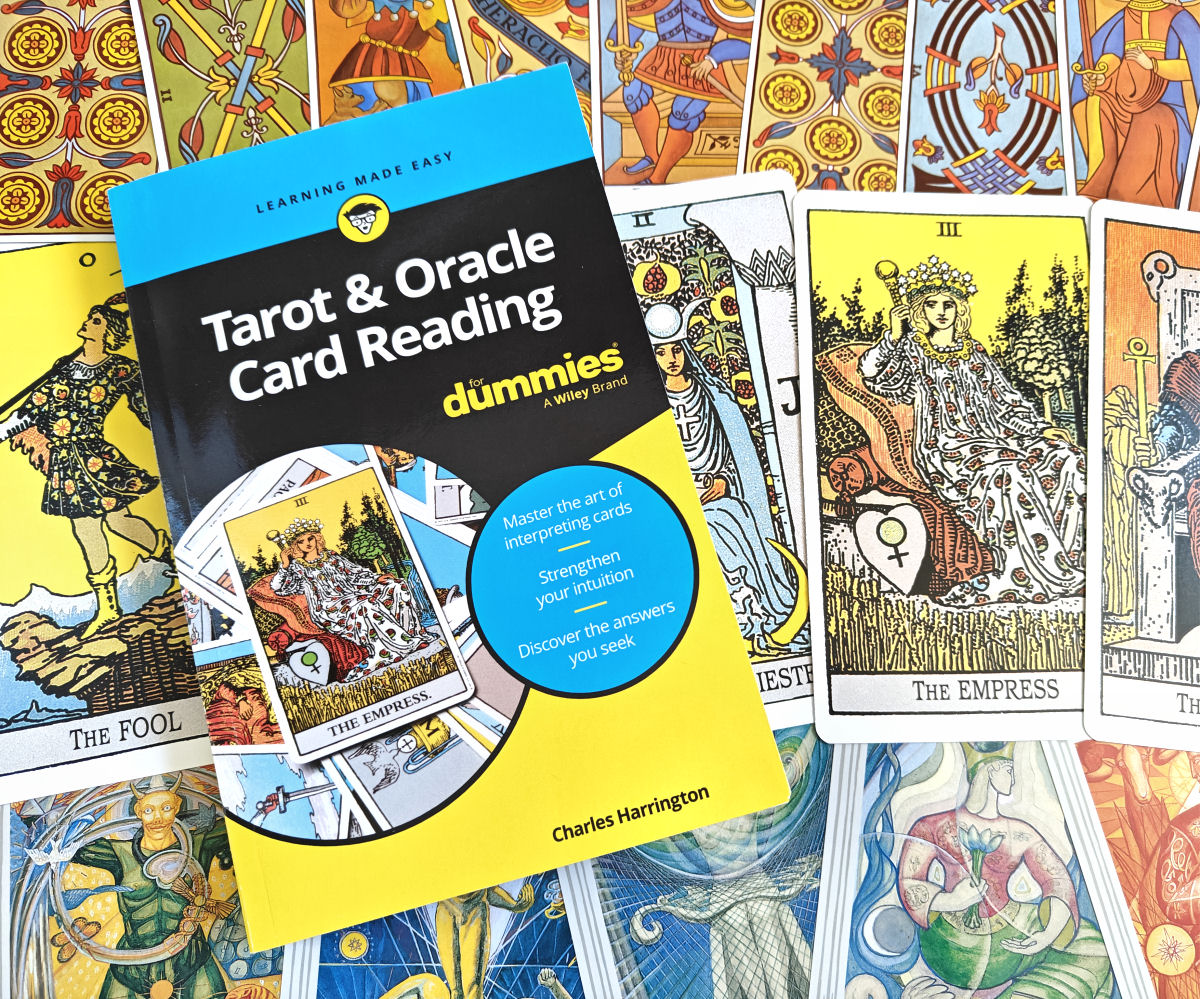
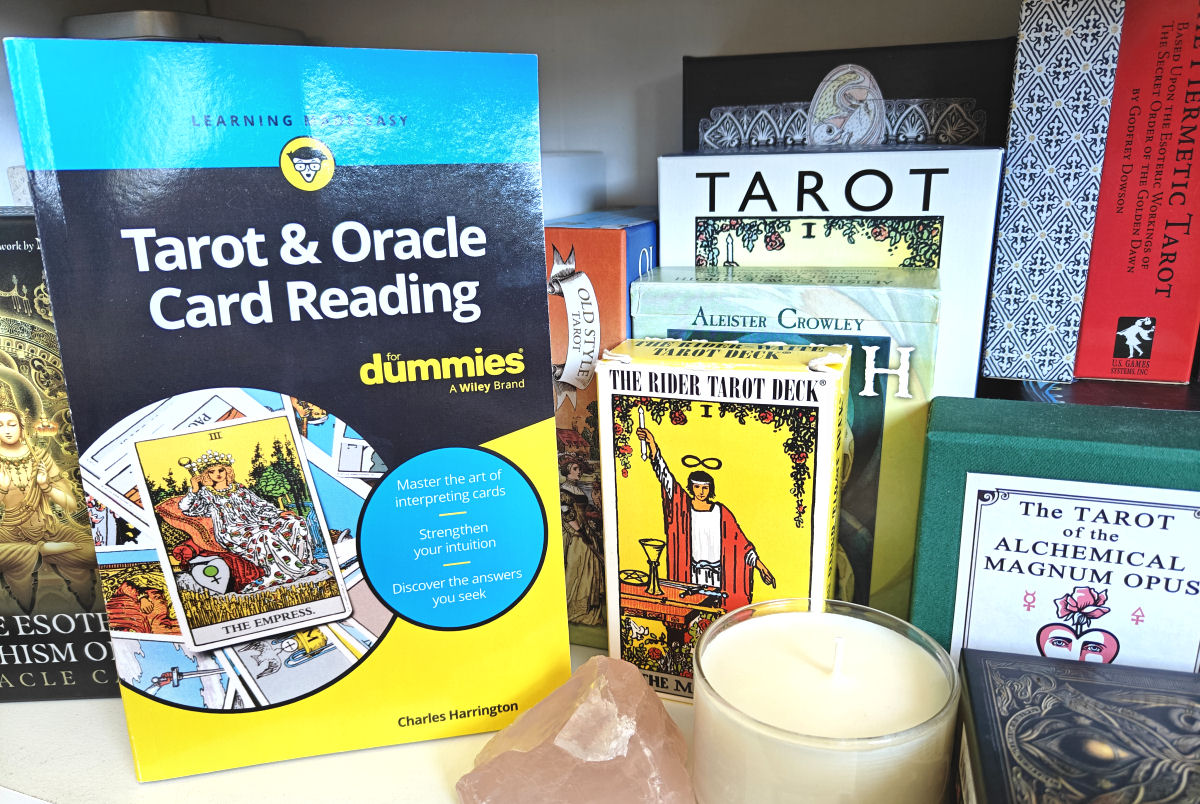
You’re probably quite familiar with the “For Dummies” learning series that were popularized in the 90s. The book series published by Wiley & Sons de-mystifies difficult subjects and is known for accessible, easy-to-understand, plainspoken writing. Wiley could not have chosen a better author for the task than my dear friend Charles Harrington.
Although the “For Dummies” series catches a kitschy rep, this is in all seriousness a legit, no-nonsense, superb beginner’s book on tarot and oracle decks — and I love the dual coverage this compact yet comprehensive book packs for you.
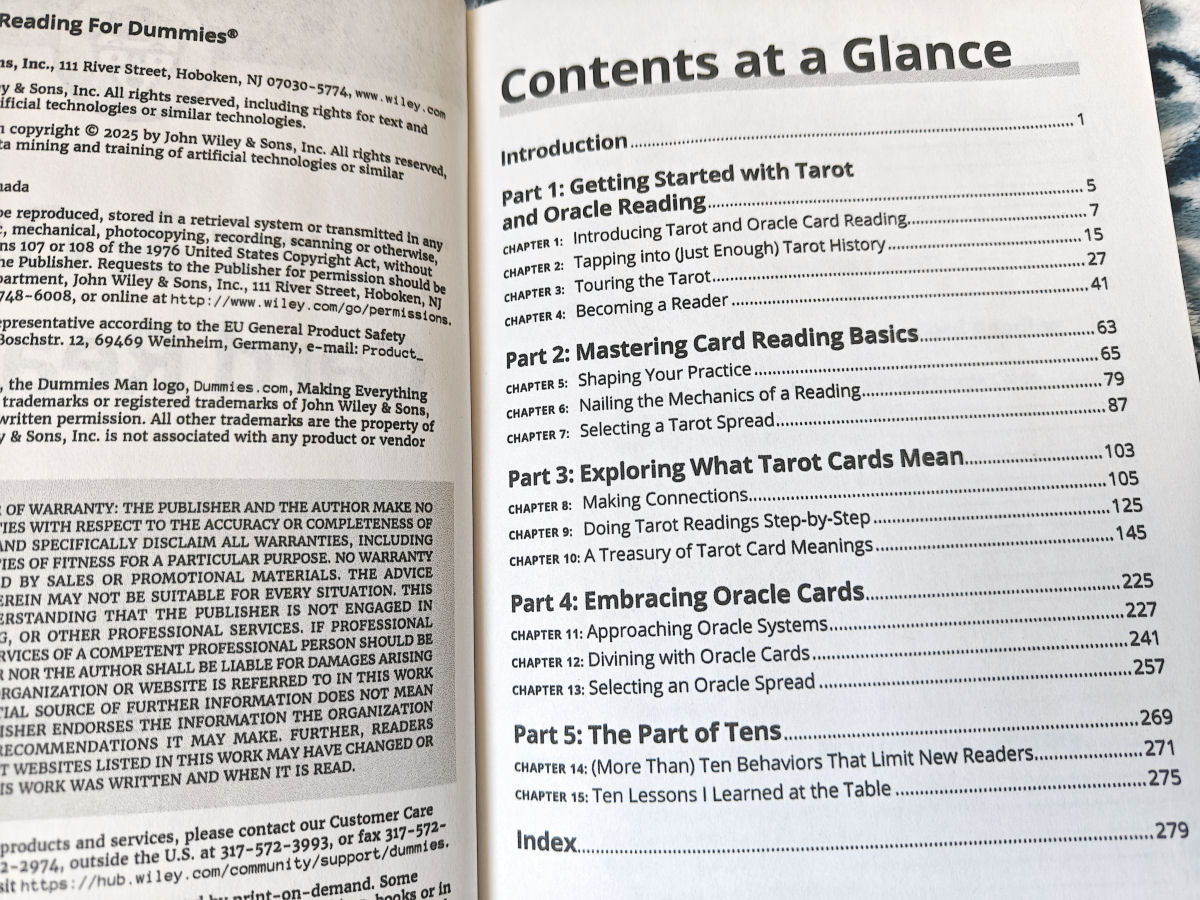
The book is subdivided into five parts (plus a very useful index at the end), and is actually a genius way to organize a beginner cartomancy how-to book:
- Part 1 (Getting Started with Tarot and Oracle Reading)
- Part 2 (Mastering Card Reading Basics)
- Part 3 (Exploring What Tarot Cards Mean)
- Part 4 (Embracing Oracle Cards)
- Part 5 (The Part of Tens)
Part 1 (Getting Started with Tarot and Oracle Reading) draws you in immediately, inviting you to pull cards and kickstart your imagination to tell a story based on the pictures you see on the cards. Harrington covers the diverse spectrum of definitions of divination and fortune-telling.
Why are we chronically fascinated with predicting outcomes, i.e., fortune-telling? Because uncertainty is stressful, decision-making can be crippling, but also, the authority we assign to fortune-telling is also what fuels a lot of the fear around tarot. We’re afraid that bad news in the cards means it’ll come true. The introductory chapters help to dispel those fears and provide a more grounded and level-headed mindset for approaching cartomancy.
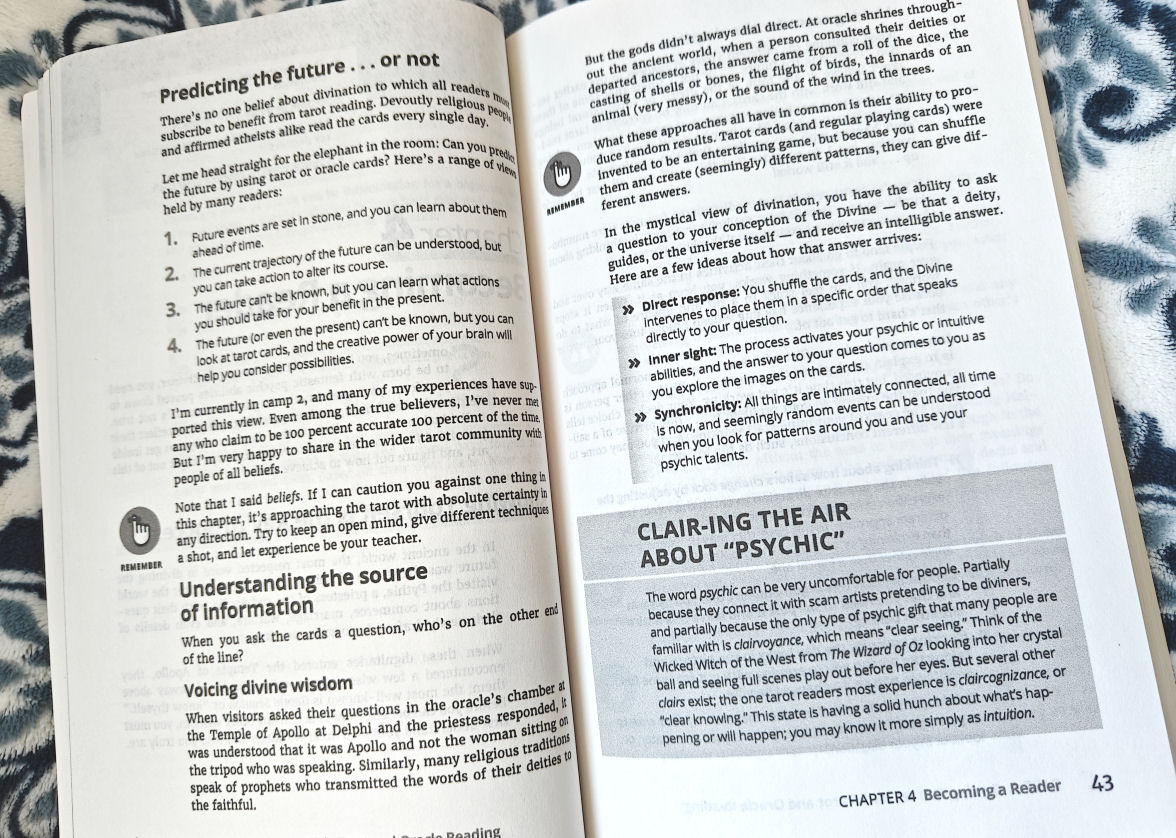
I love the many depths to tarot Harrington offers, from predictive tarot, exploring your psyche, brainstorming sessions with the cards, to using them for pondering the greater mysteries, like answering the questions, “What is the soul” and “What is the purpose of life?” but ends with the note, “To be clear: This method is intended to explore your answers to these questions and not to imagine you’ve uncovered the answers to them.”
Part 1 is about 62 pages and perfectly covered, in just the right portions, tarot history, myths, deck systems, and gracefully addressed guardrails to be mindful of, from mental health to reading ethics, dealing with divinatory ambiguity, and how to frame your tarot studies and learning cartomancy.
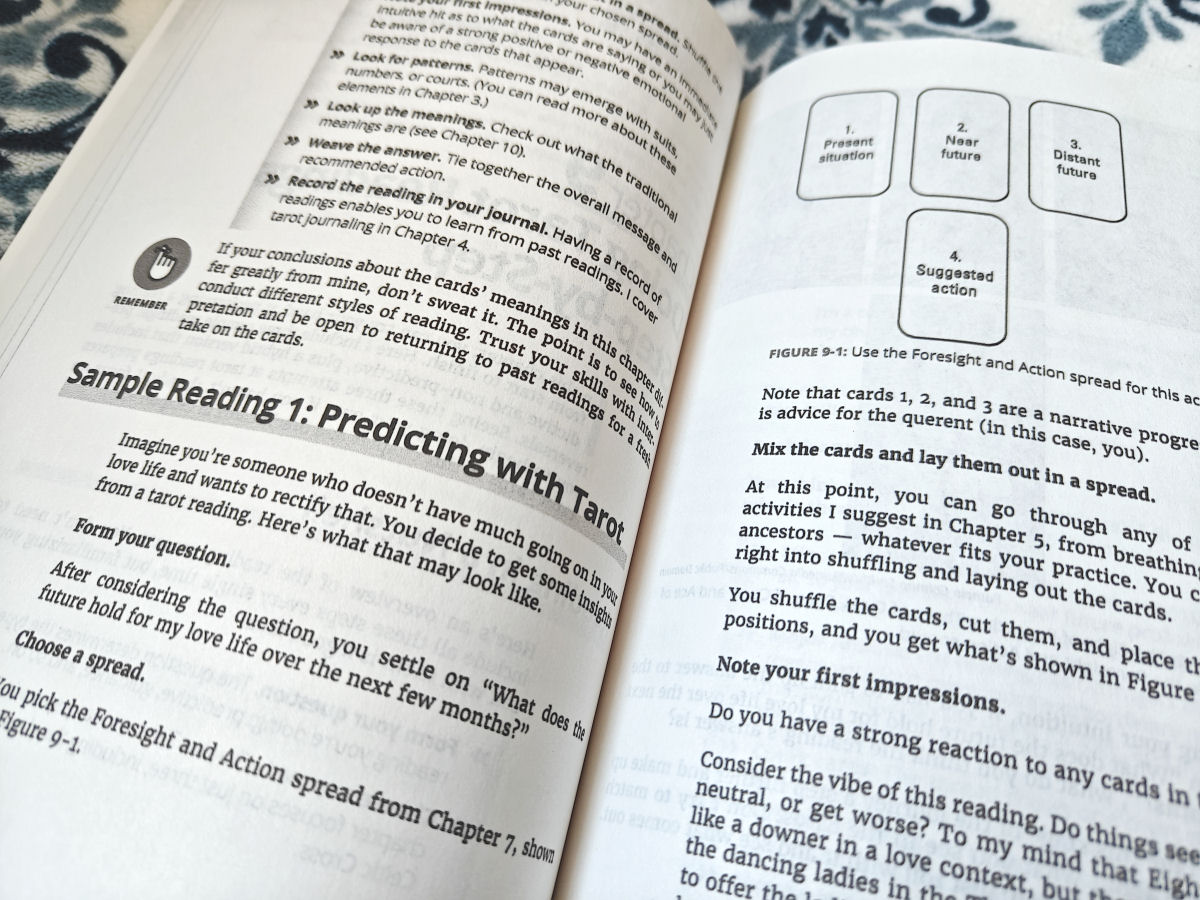
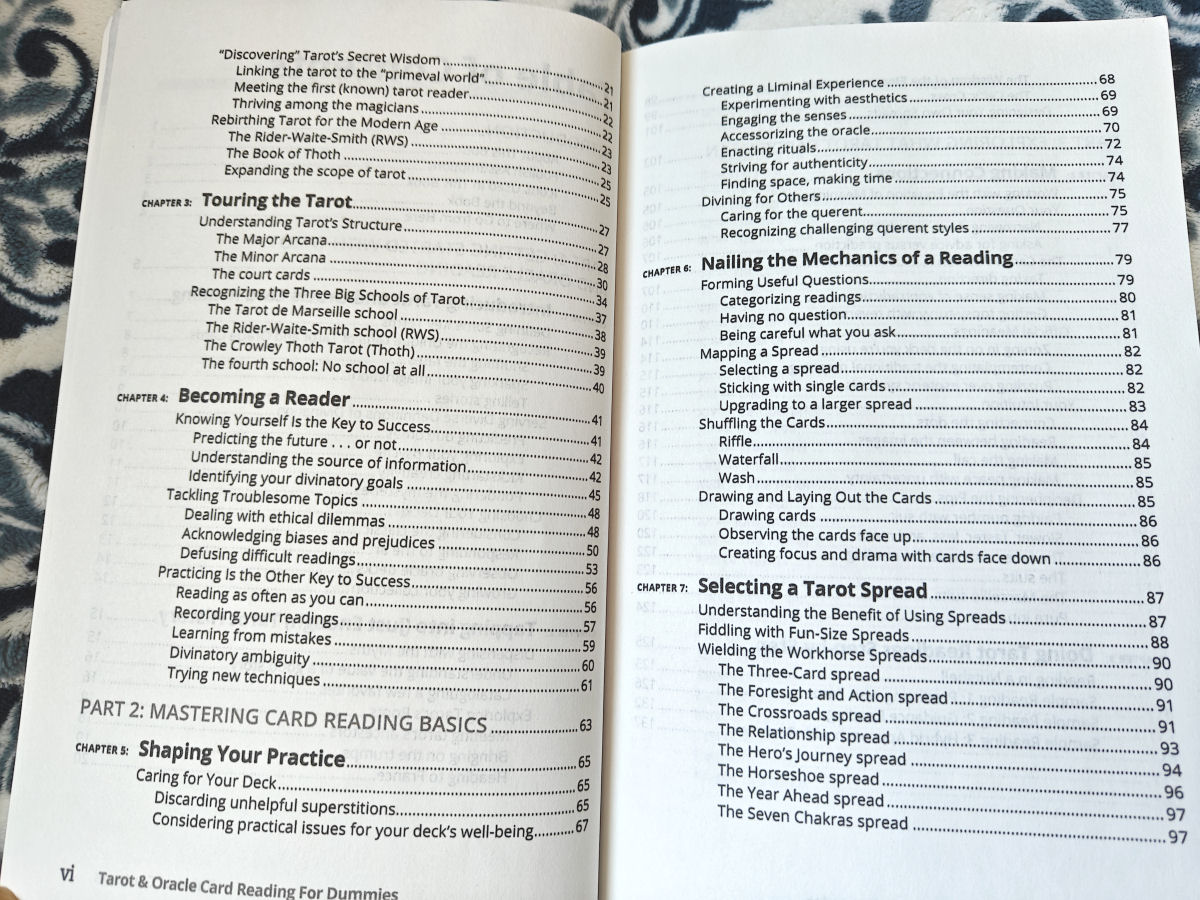
Part 2 (Mastering Card Reading Basics) was the perfect balance of addressing how to set the scene for a tarot reading that can best empower a liminal experience and what it means to create a liminal experience. I really appreciate the compassion and empathy rooted sections inviting readers to come from a place of service when reading for others.
Something I haven’t seen in the literally hundreds of tarot books I’ve read and reviewed over the decades that you’ll find in Harrington’s book is a dossier of “challenging querent” profiles. What do you do when you, dear card reader, encounter the stone-faced silent querent and suddenly you feel like you’re reading for a wall? The table in this section of the book gives you strategies for dealing with such querents. Same goes for the mythbusting skeptic who thinks you’re full of shit, and tarot is full of shit. How do you read for this type of querent?
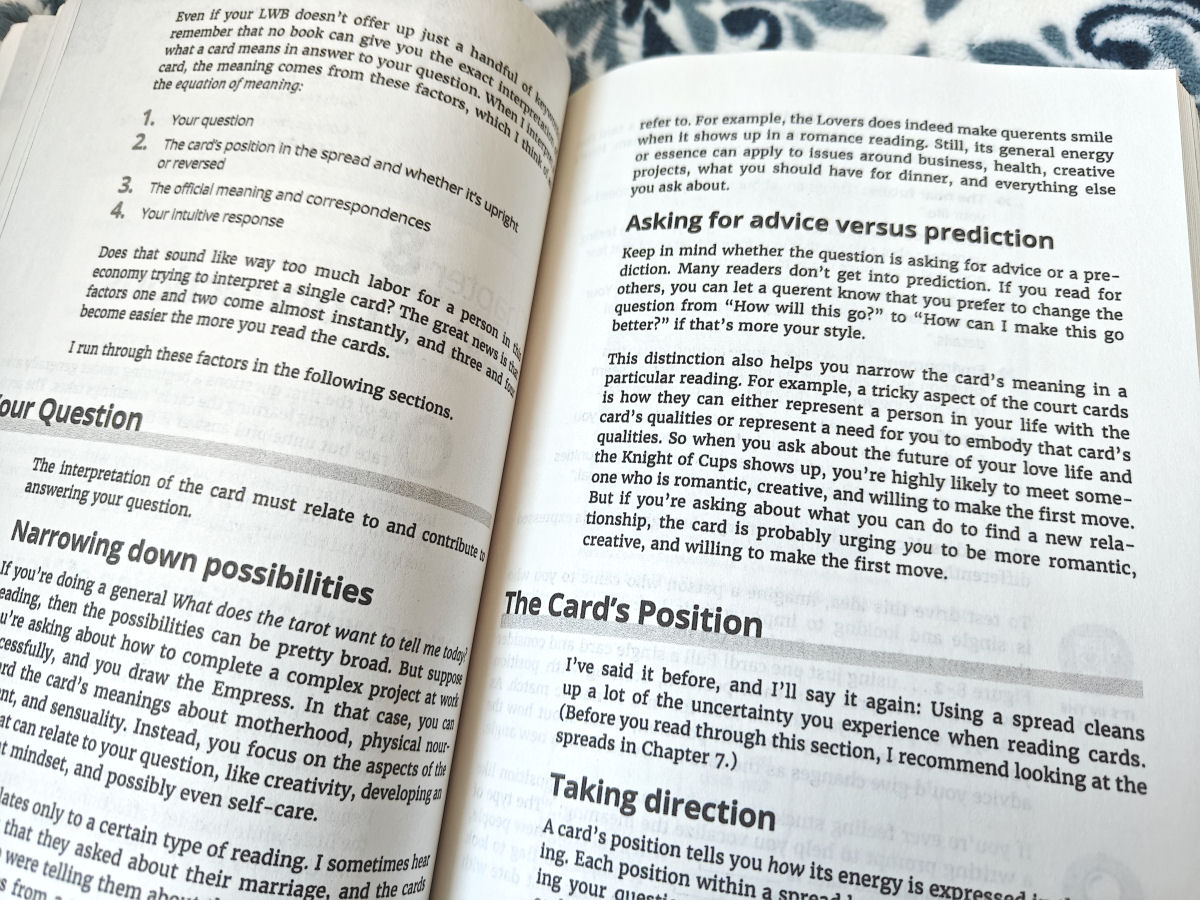
Great strategies are provided, which could have only come from someone with as much experience reading for the public as Harrington has. Likewise, encountering the I’m-a-better-tarot-reader-than-you-are tarot-splainer querent, or the chatterbox querent who is talking over you while you try to give the reading, but also, how to compassionately deal with the querent looking for confirmation (they just want you to use the cards to tell them yes, they’re right).
I also loves how this section breaks down card spreads into three categories: esoteric operations, workhorse spreads, and fun-size spreads.

Part 3 (Exploring What Tarot Cards Mean) is on how to interpret the cards, and where you’ll find a treasury of traditional card meanings. But what I want to talk about is how this part of the book opens.
Young Charles is in high school and has just come home with his first tarot deck. He shuffles the cards, pulls the Three of Wands, and looks up the card meaning in the little white booklet: “Fruitful collaboration in business; also signifies enterprise… and commerce.”
“Say what? What does that mean? I’m 15, and the deck wants me to launch a business?”

That sets up the objective of Part 3, which is to help you interpret the meaning of cards in a way that makes sense to the querent and is relevant to the question being asked. This section also addresses pip cards, i.e., how to read a Tarot de Marseille deck, or “pip decks” where the Minor Arcana Aces through Tens show a number of suit symbols rather than narrative scenes.
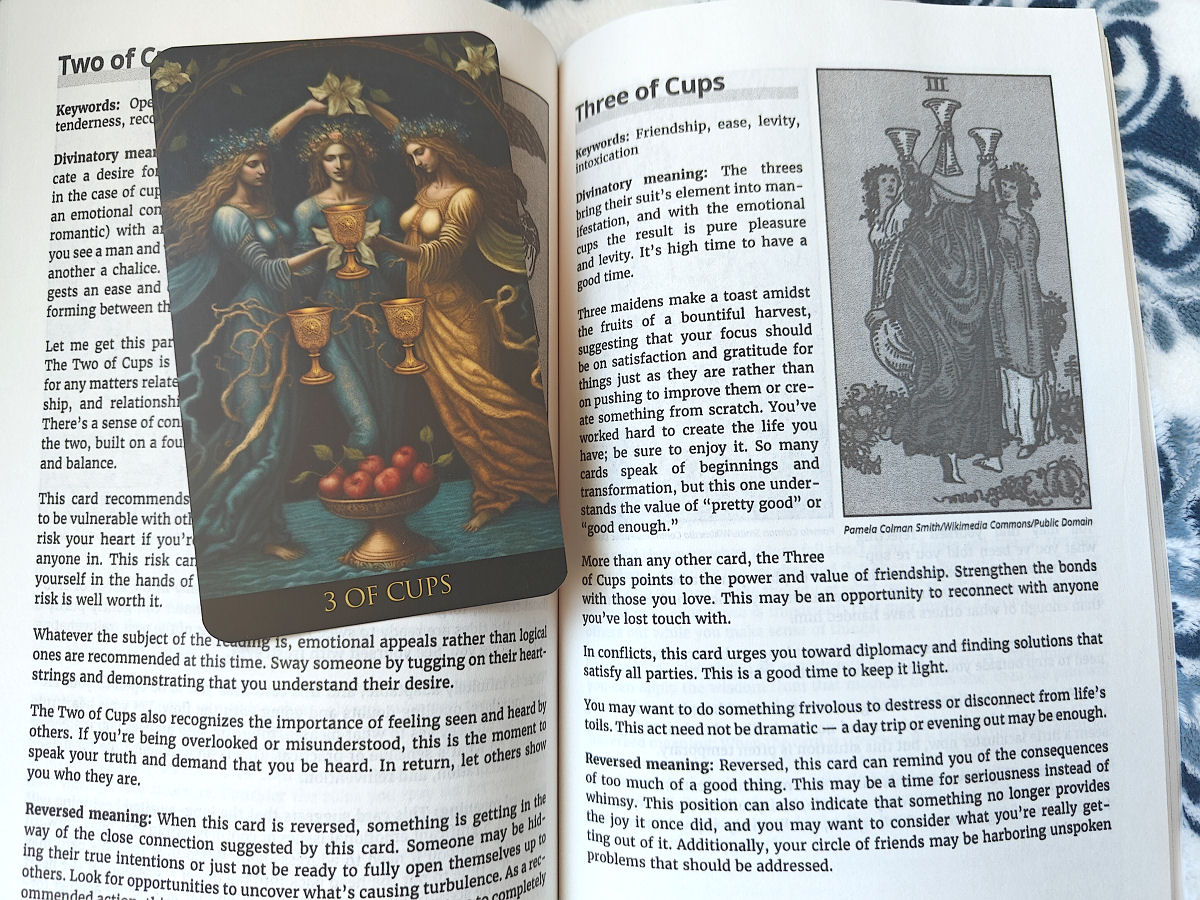
The treasury of card meanings is top notch. In the Majors, you get a description of each card’s visual. For the Strength card, for example, “A lovely maiden closes the hungry jaws of a ferocious lion. Her touch is gentle, and the chains she has to leash the beast are blooming flowers.” The ensuing explanation of the card is a balance between traditional attributions for the RWS and how a modern reader might approach this card. You also get a paragraph on the card’s implications when reversed. For the Minors, you get a brief overview of the numerology, e.g., “The threes bring their suit’s elements into manifestation, and with the emotional cups the result is pure pleasure and levity. It’s high time to have a good time” for the Three of Cups.
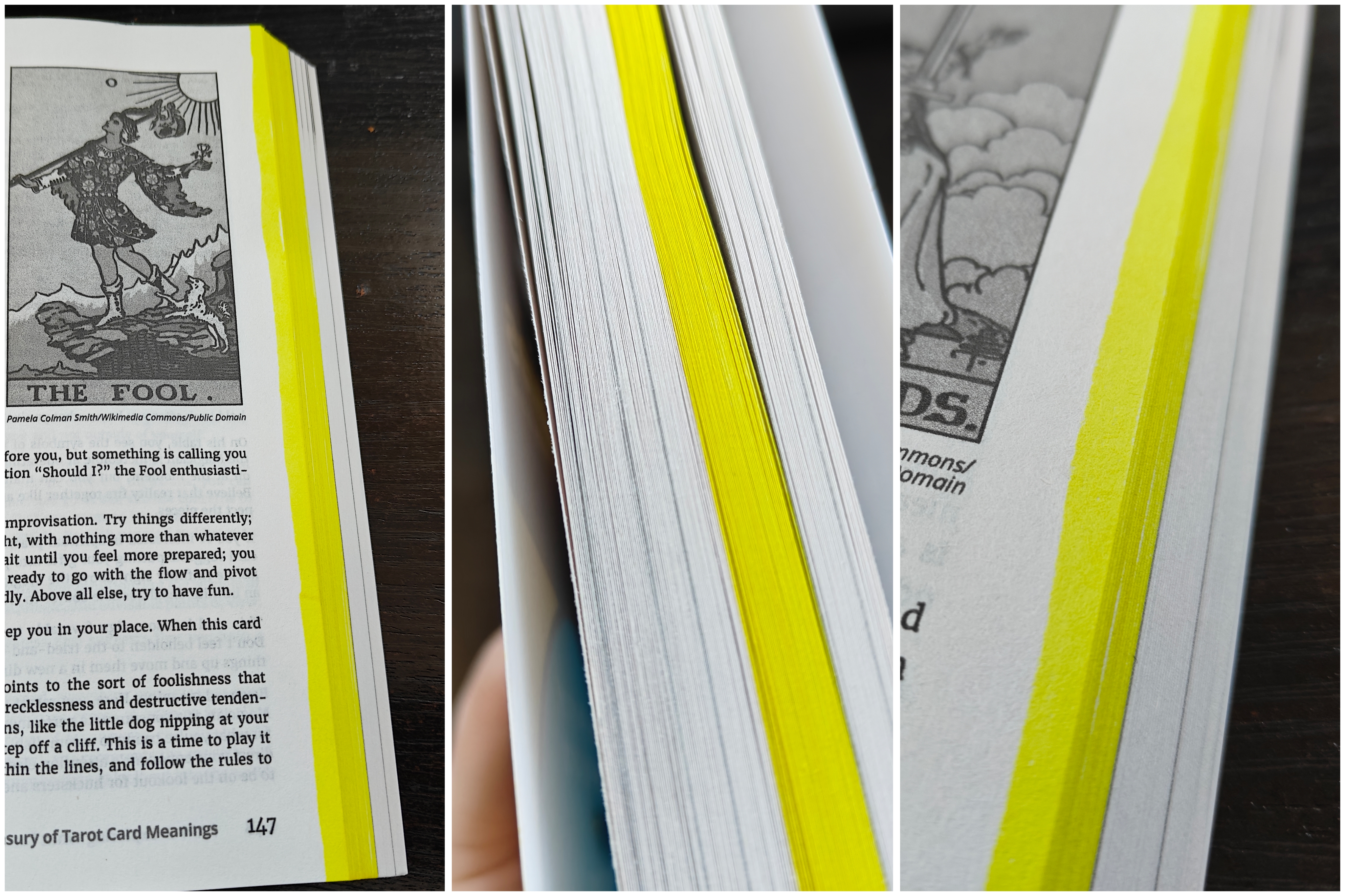
By the way, highlight the edges of just the section of the book on card meanings, pages 147 through 224. Now it’s much easier for the beginner student to turn straight to the card meanings section and reference this text for those initial open-book card readings you’ll be doing.
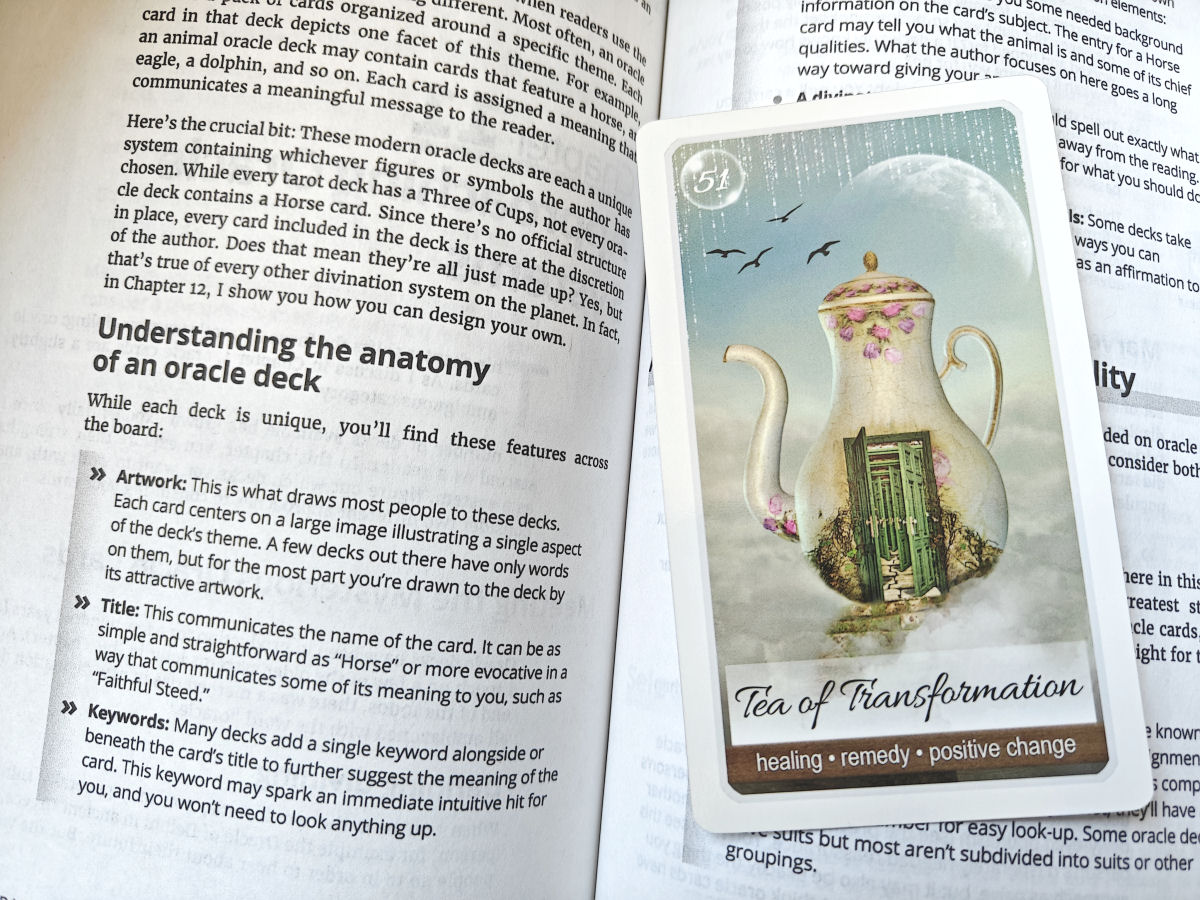
Part 4 (Embracing Oracle Cards) deconstructs oracle cards, systems of cartomancy related to the tarot. The deck collector is going to appreciate the section “Creating an Oracle Card Library” where you start with categories you want, e.g., seasonal decks (decks with a spring vibe, winter or summer vibe, or based on pagan holidays, etc.), love-themed decks specifically targeting love and romance readings, spooky decks for their witchy aesthetics, decks for spiritual and emotional healing, or heartwarming decks — I believe this last category has been called “hug decks” in the tarot community. There’s even a section here on how to design and even print your own oracle cards.
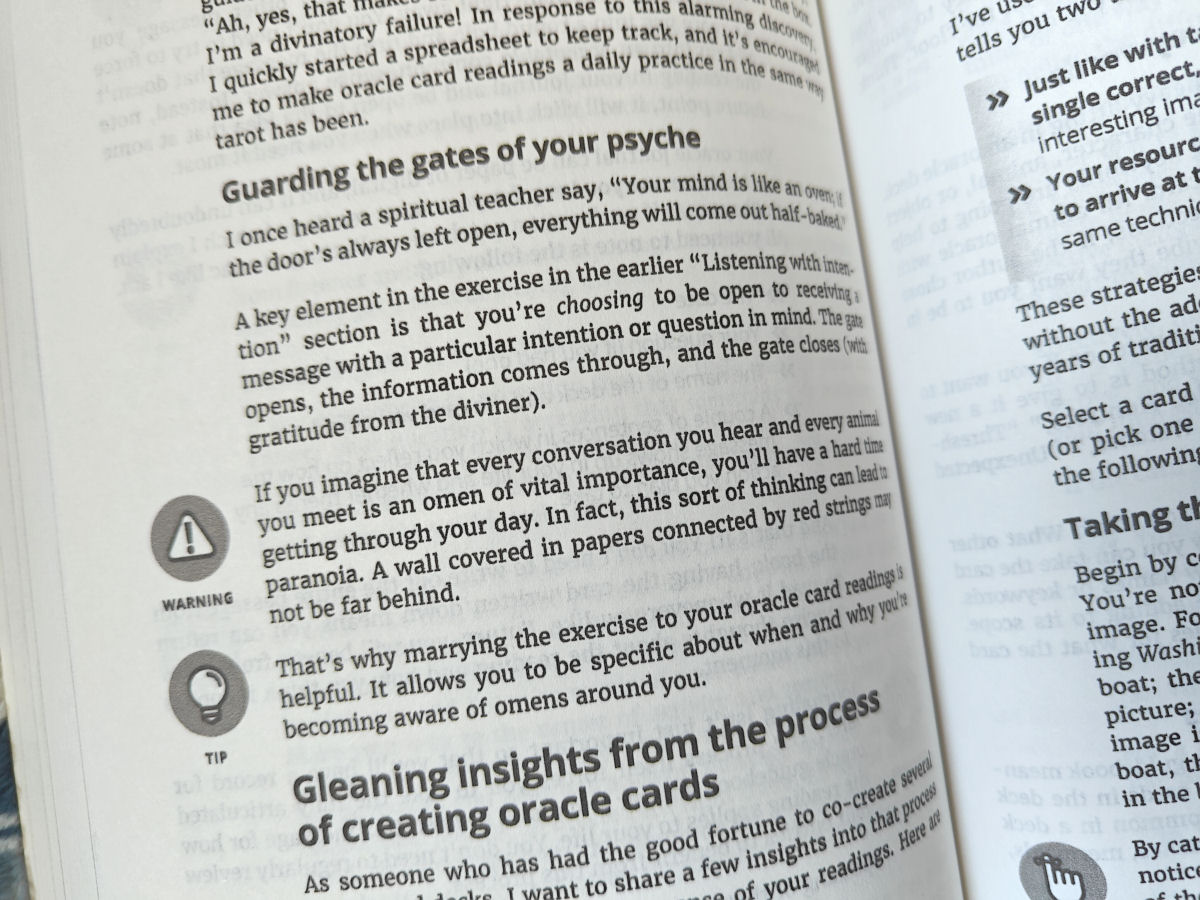
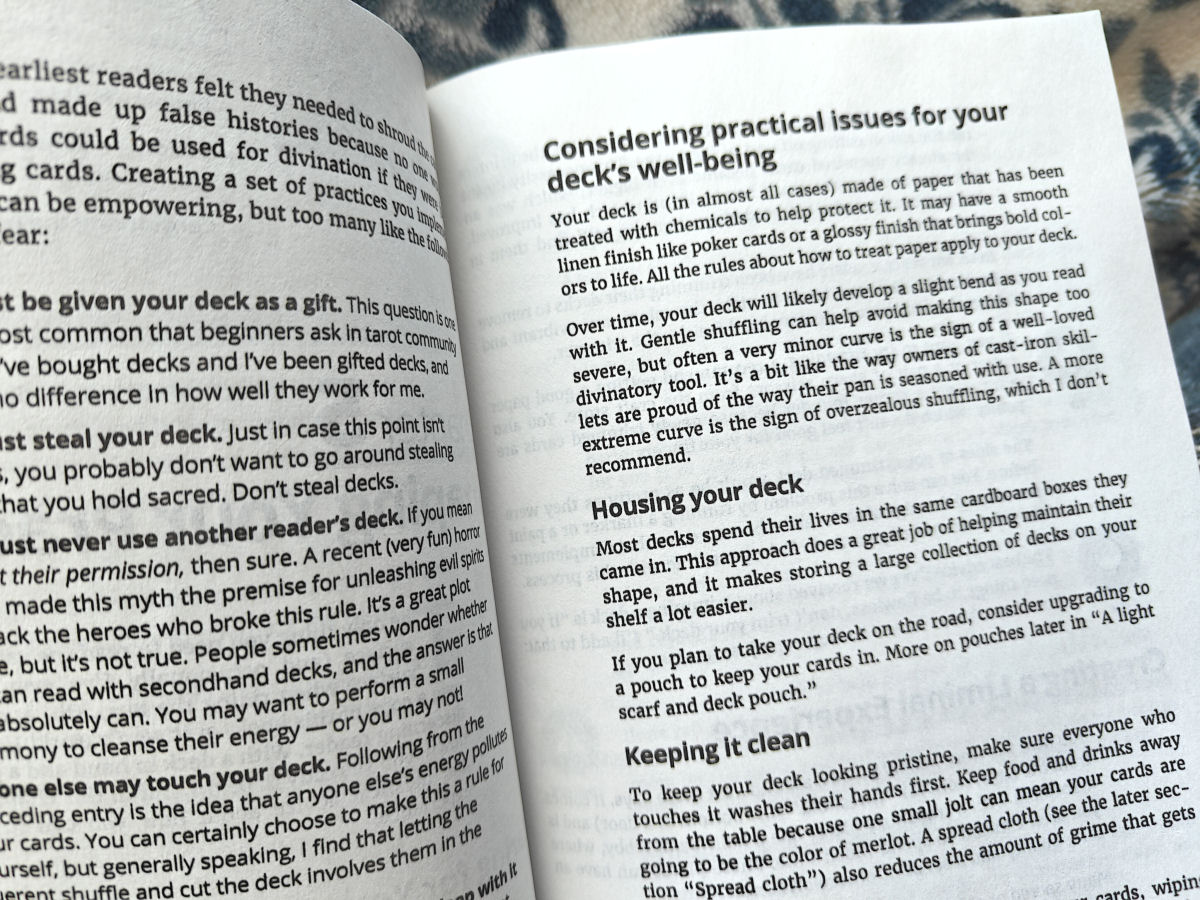
The final Part 5 (The Part of Tens) is the perfect conclusion to this book, to any how-to text on cartomancy. There’s a list here that ensure that the tarot beginner doesn’t inadvertently stunt their own growth with self-limiting beliefs, and traps or red flags to be wary of. I love the “Ten Lessons I Learned at the Table,” which is a comforting, inspirational, invaluable reminder for any seasoned or professional card reader as well as powerful level-setting for the total beginner.
“Card reading can make you popular at parties, but sometimes the universe (or whoever) puts you where someone needs you to be. Your words can help people heal their wounds, lift themselves up, and navigate their way out of dark places. . . . From the days of the Oracle of Delphi all the way down to you at this moment, divination is about being of service and finding the necessary answers.” These parting words that Harrington leaves you with fully sum up what it means to be a card reader. And then in true Charles Harrington style: “Just don’t let it get to your head.”
This content-rich yet easy-to-read, digestible how-to book on the tarot is down-to-earth but not shallow. It truly is one of my favorite beginner tarot books. The tone is that of a warm and wise mentor, precise without fluff or jargon, and impressively well-structured. The content follows a logical progression with no unnecessary bulk. There is something really important about the art of tarot and oracles to learn from every single sentence. I don’t know how he did it, but he did it. Charles Harrington has low key produced the perfect beginner’s tarot how-to manual.

FTC Disclosure: In accordance with Title 16 of the U.S. Code of Federal Regulations Part 255, “Guides Concerning Use of Endorsements and Testimonials in Advertising,” I was gifted this book by the author, who is a dear friend of mine. Notwithstanding, everything I’ve said here is sincere and accurately reflects my opinion of the book.
 benebell wen
I would not have purchased this book had it not been for your endorsement Benebell. I have C Harrington decks and I appreciate his works. I will purchase this as well.
LikeLike