

The Oneful Tarot is inspired by MBTI (Myers-Briggs Type Indicator) personality archetypes and using the tarot to recognize our personality patterns. It was created by Dr. Maggie Man Sin Lee, a Hong Kong-based academic researcher, caregiver advocate, naturopath, and corporate wellness consultant, and brought vividly to life by illustrator Chinkal Pareek.

NOTE: If you’d like to download my personal notes on the MBTi personality profiles for the tarot court cards, which I use as reference in tandem when working with the Oneful Tarot, scroll down to the end of the deck review.
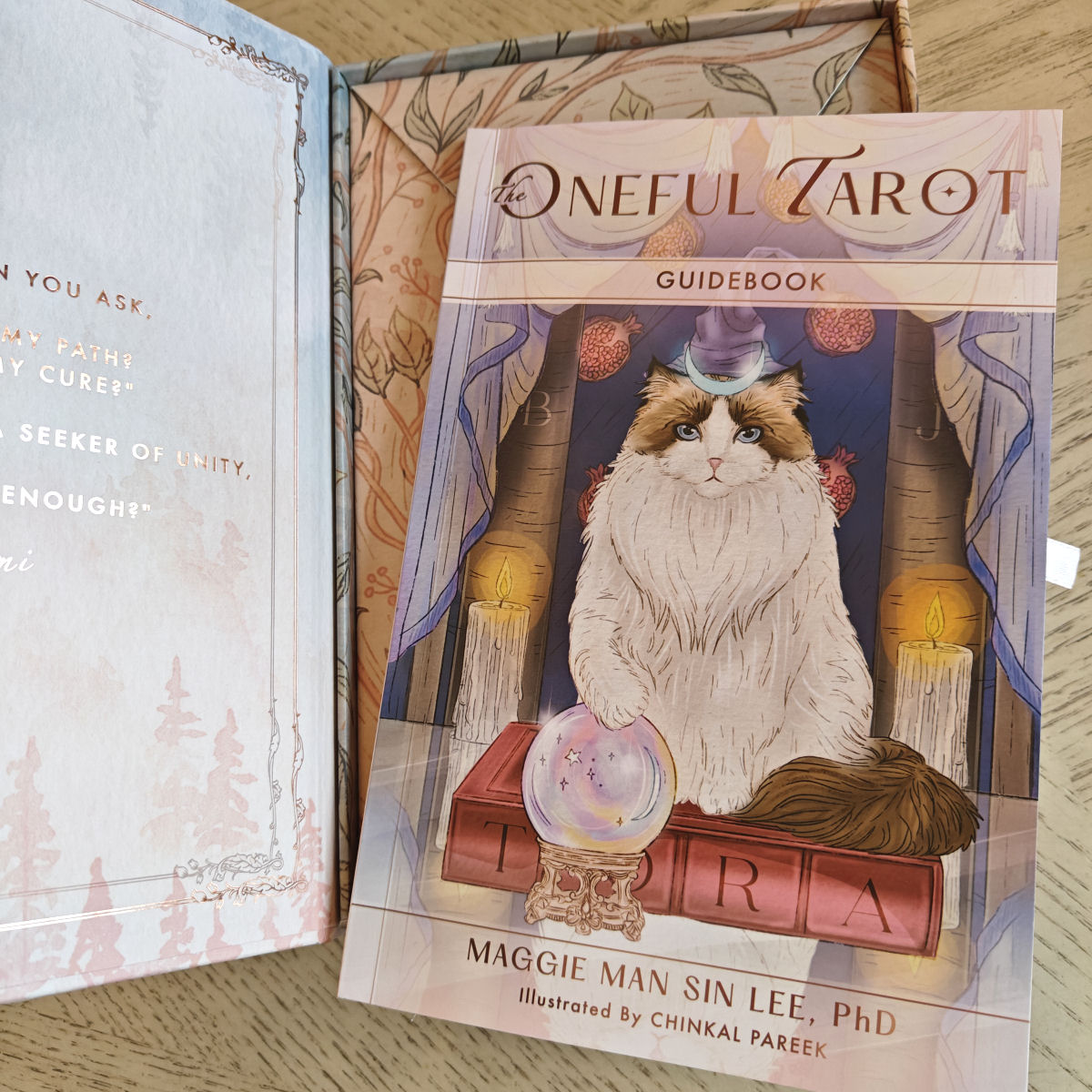
The name “Oneful” is a fusion of “oneness” and “mindful,” and the cards carry this ethos through every detail. It’s not just a tarot deck — it’s a portable mindfulness tool.
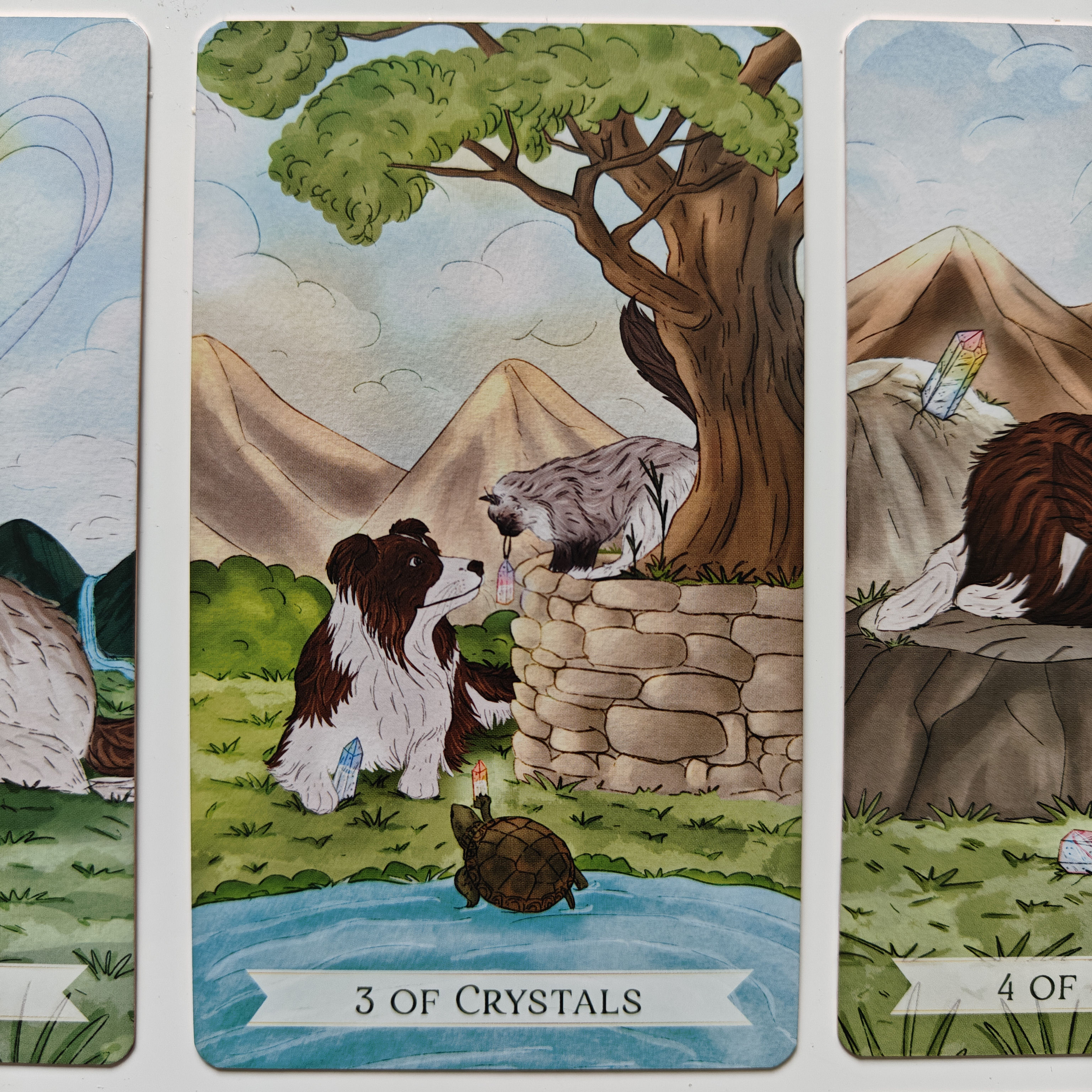
Dr. Lee’s life and work — as a scholar, a yoga teacher, and NGO founder working to support caregiver-employees of older adults — imbues this deck with a subtle but powerful humanitarian thread. You can see how her academic and mission-driven background offers a unique layer of analytical plus compassionate depth.
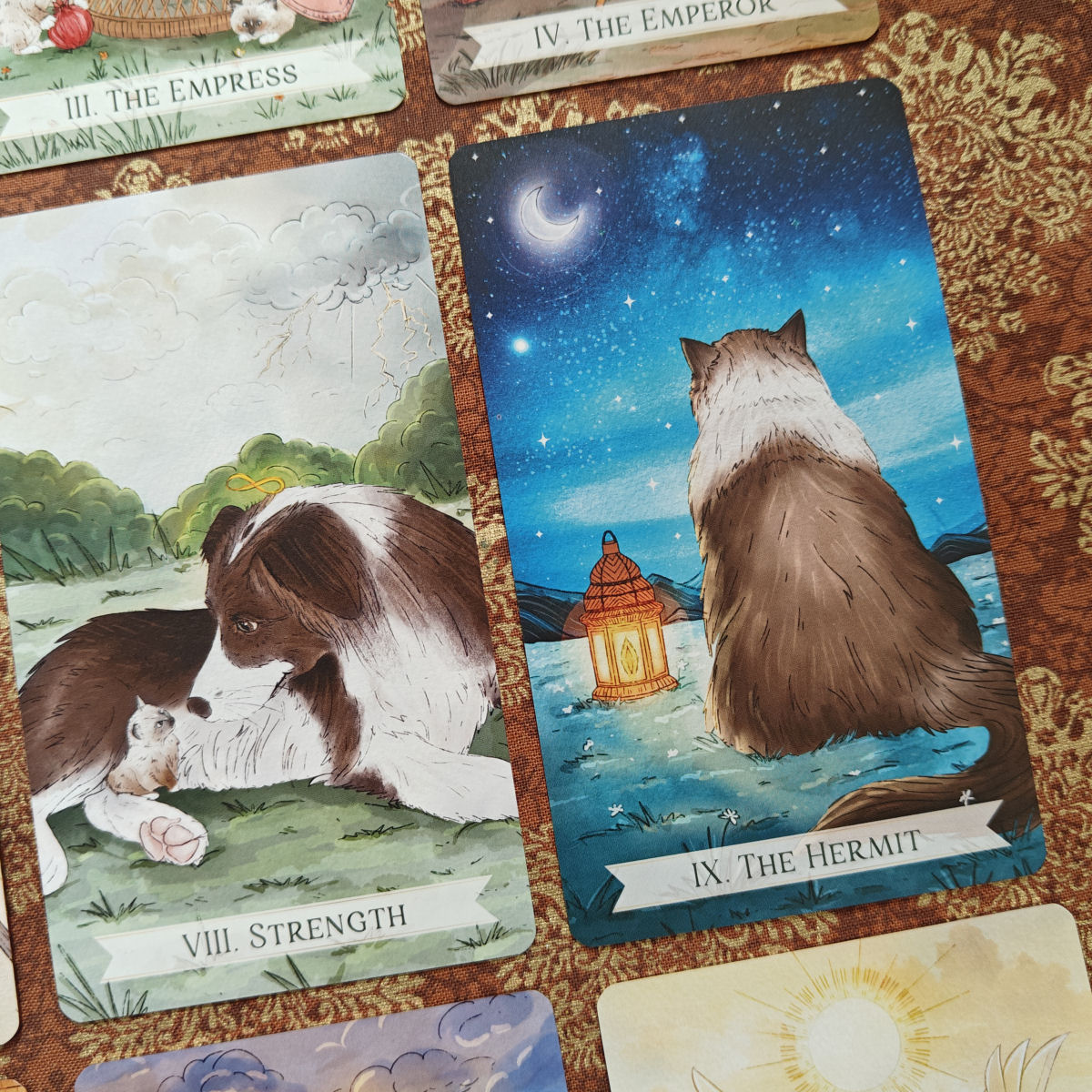
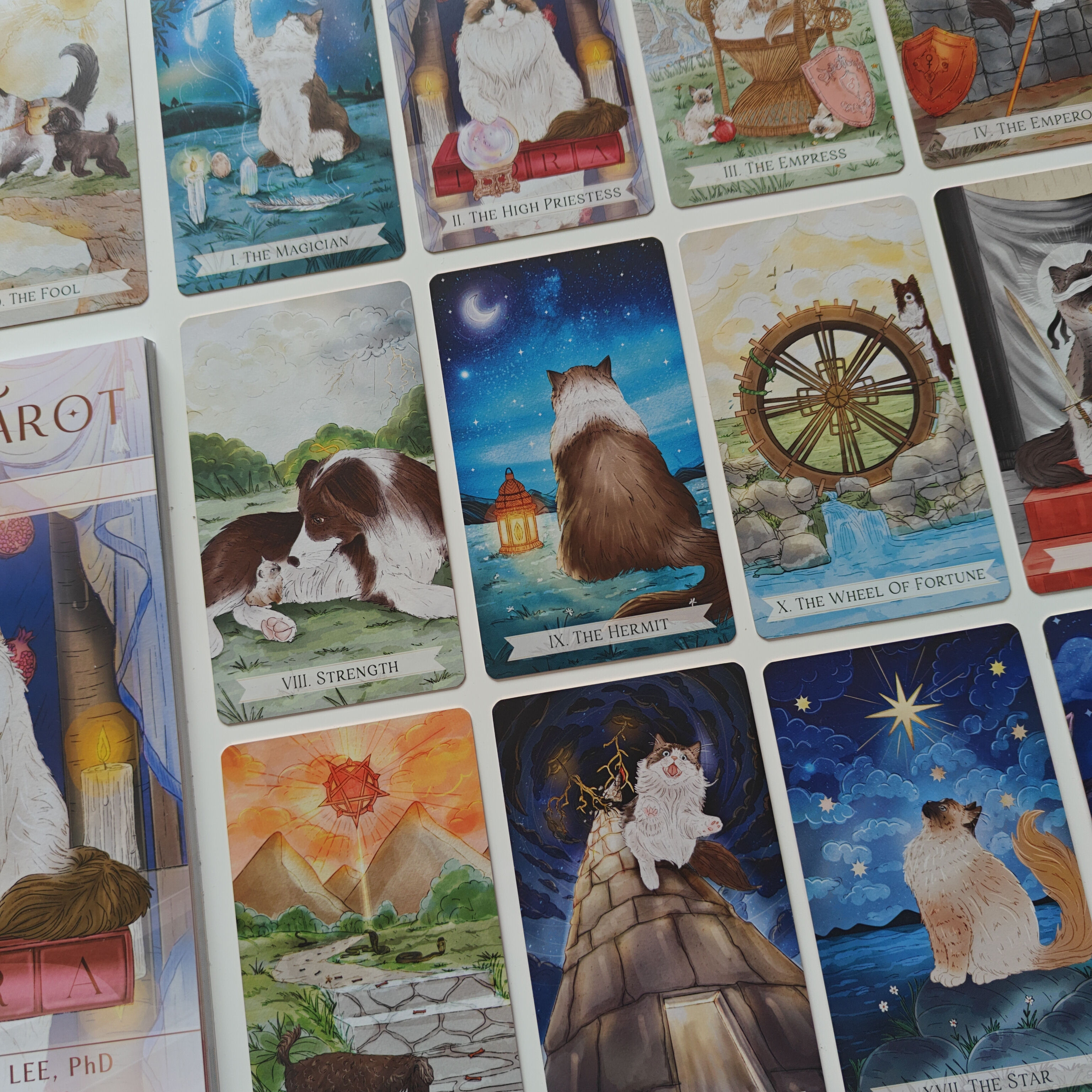
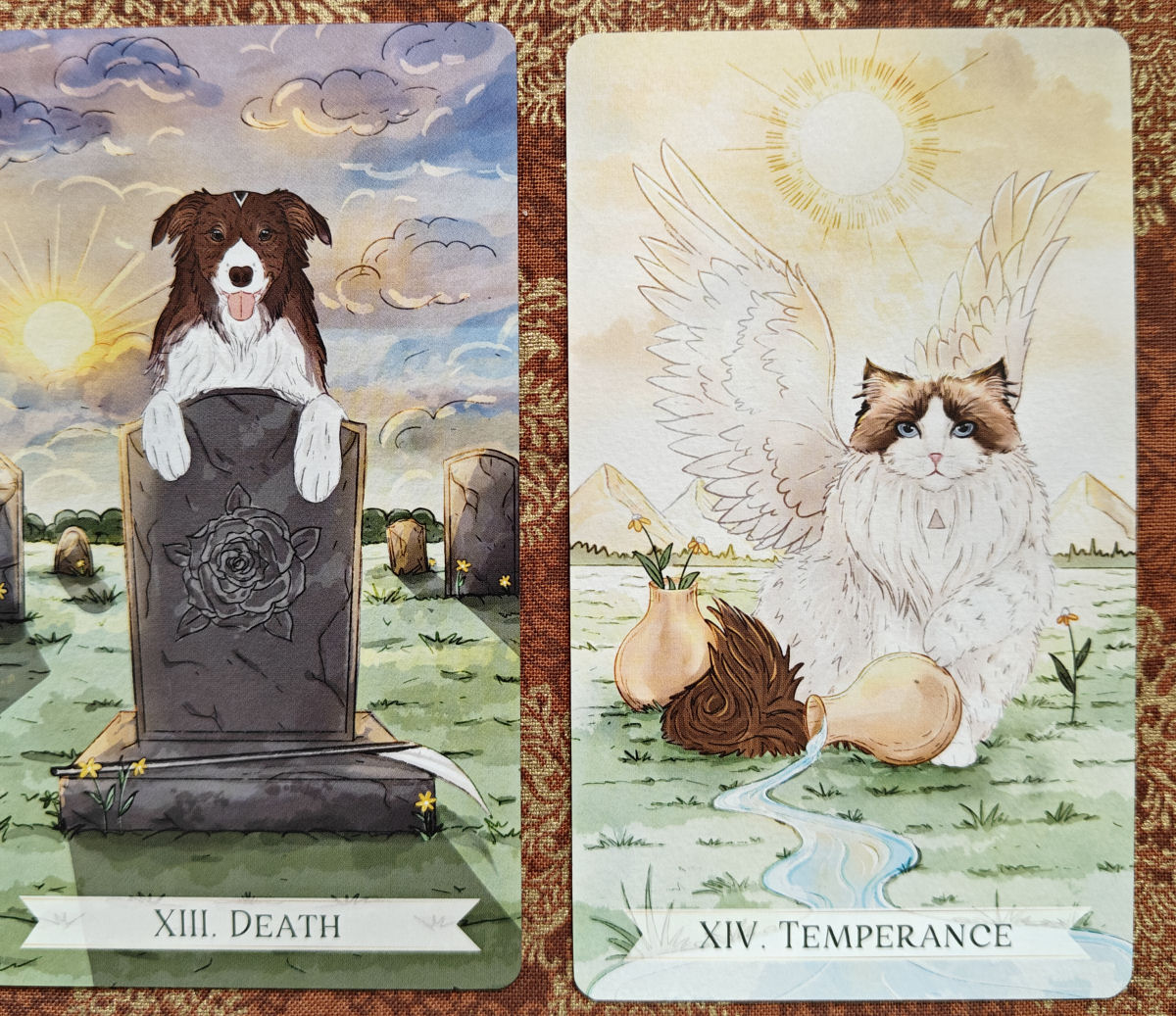
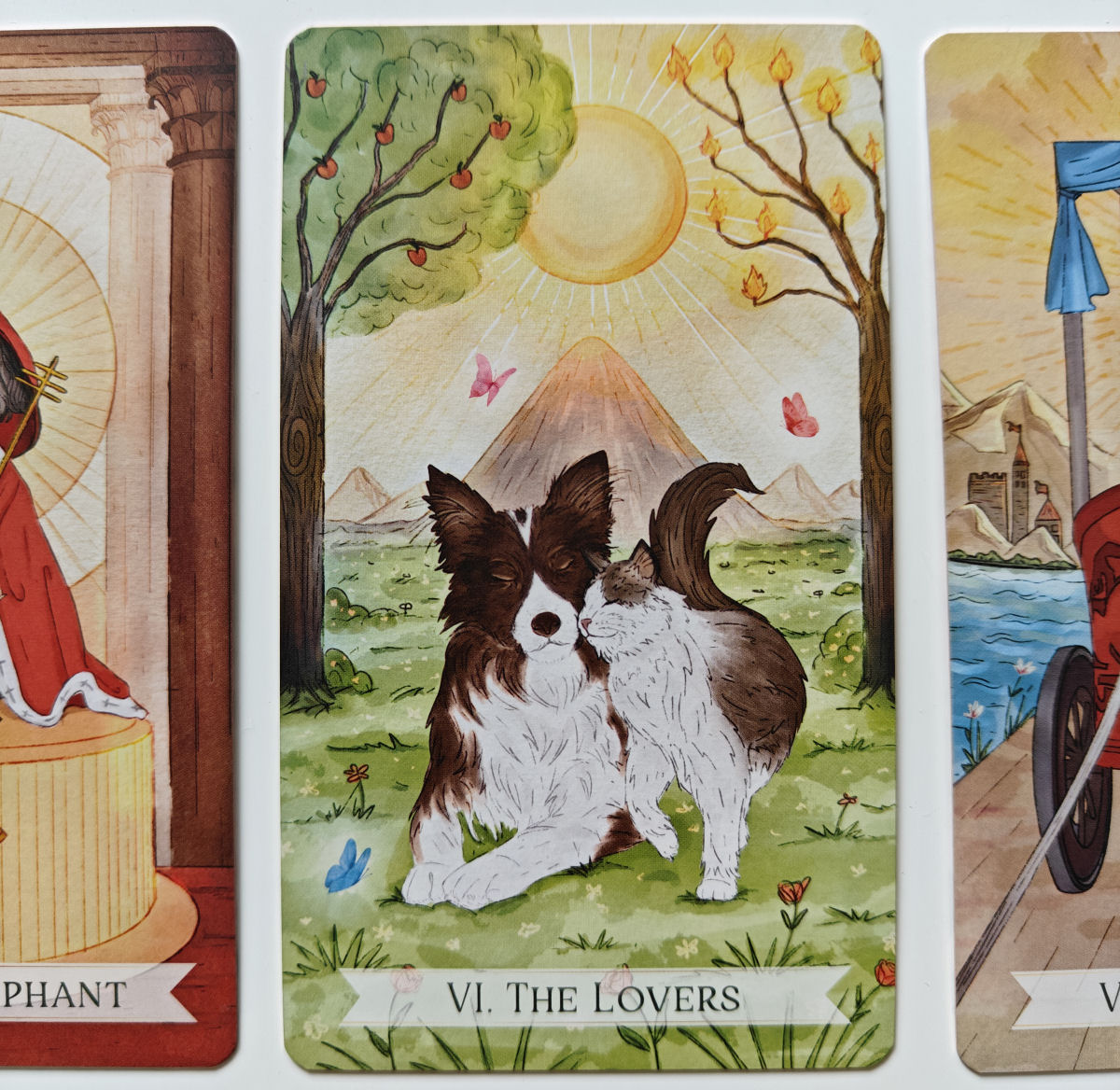
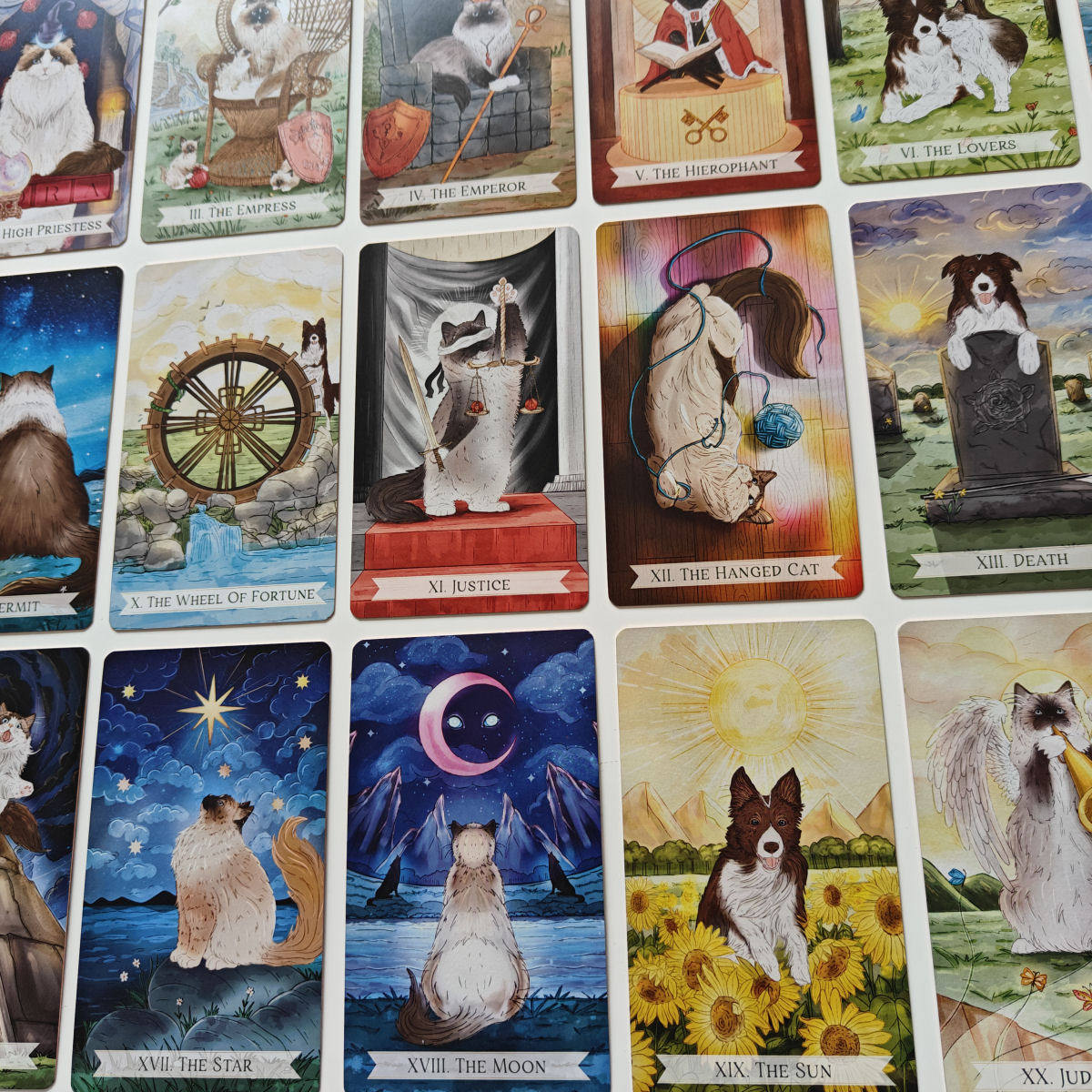
The animal-friend illustrations in this deck evoke calm, warmth, and I swear gives you a serious boost of oxytocin. I love how the artwork has a way of helping you with stress reduction, emotional connection, and giving you that happy fuzzy feeling.
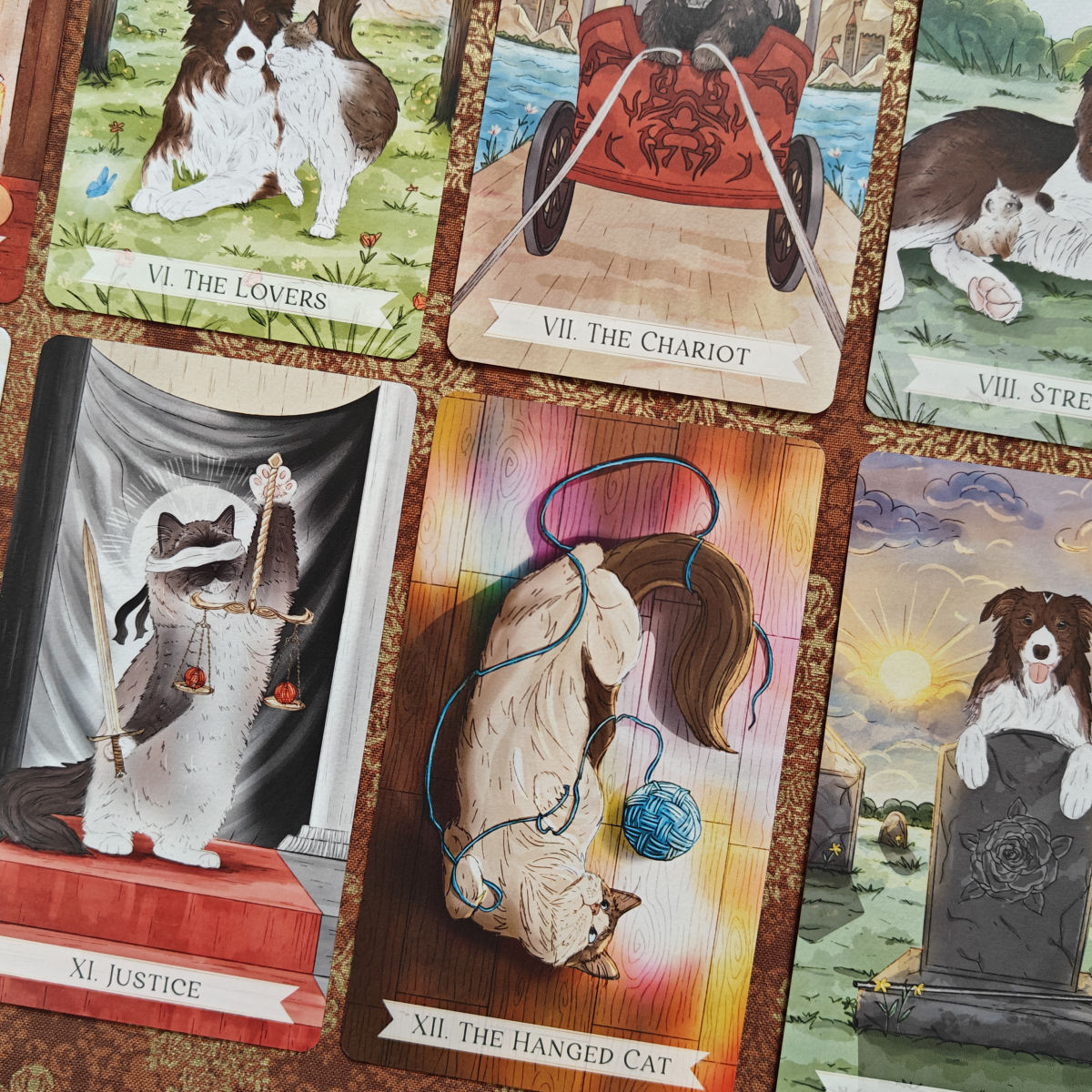
Meanwhile Chinkal Pareek’s artwork is luminous, with a spiritual softness and lightness of touch that gives the illustrations a certain buoyancy. I love how simple, everyday scenes of the animals we coexist with manage to hold rich layers of meaning. The color palette is calming but never dull.
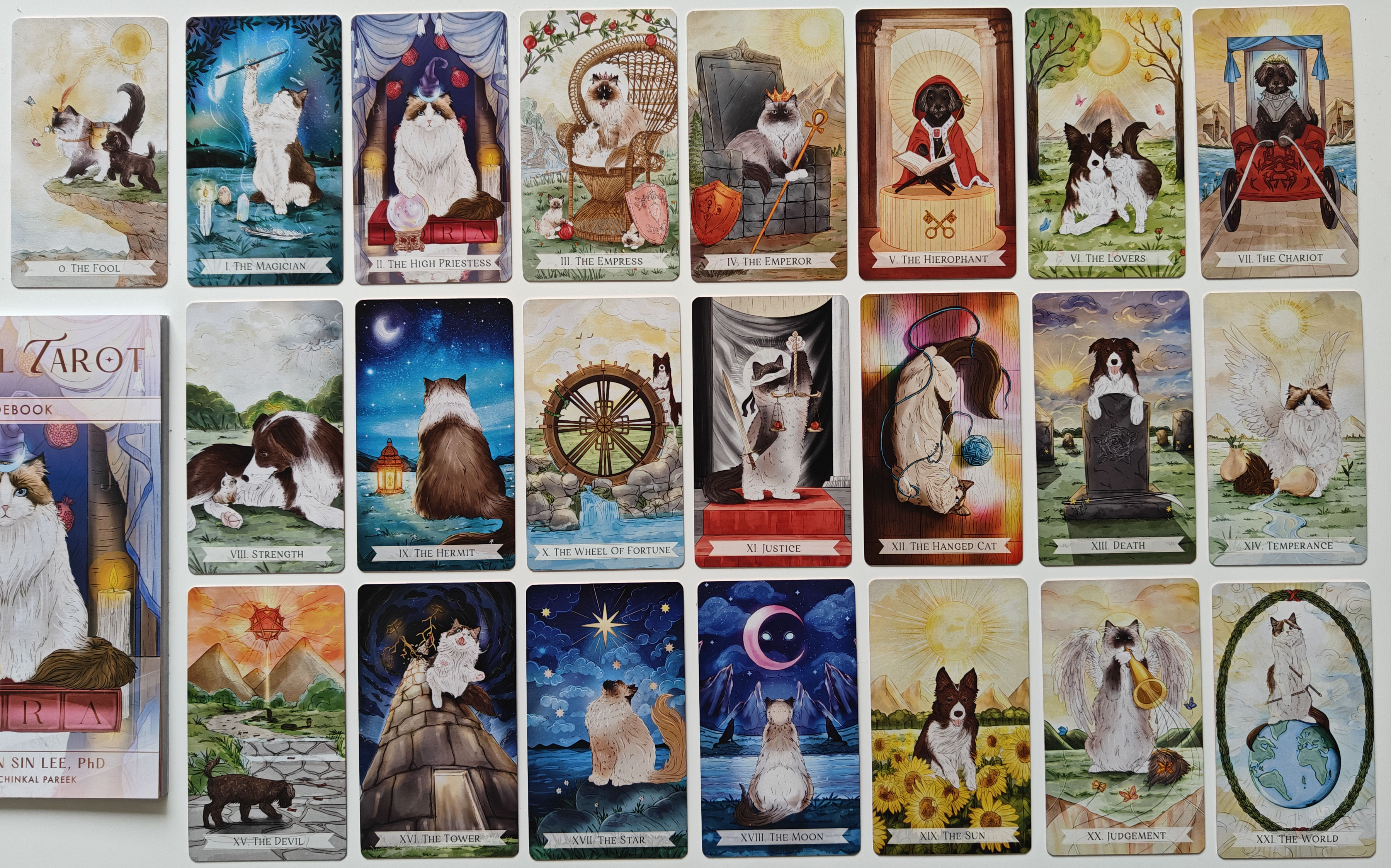
Major and Minor Arcana alike are treated with equal care, with a strong visual coherence that makes the deck approachable for beginners while still offering enough symbolic nuance to satisfy seasoned readers.
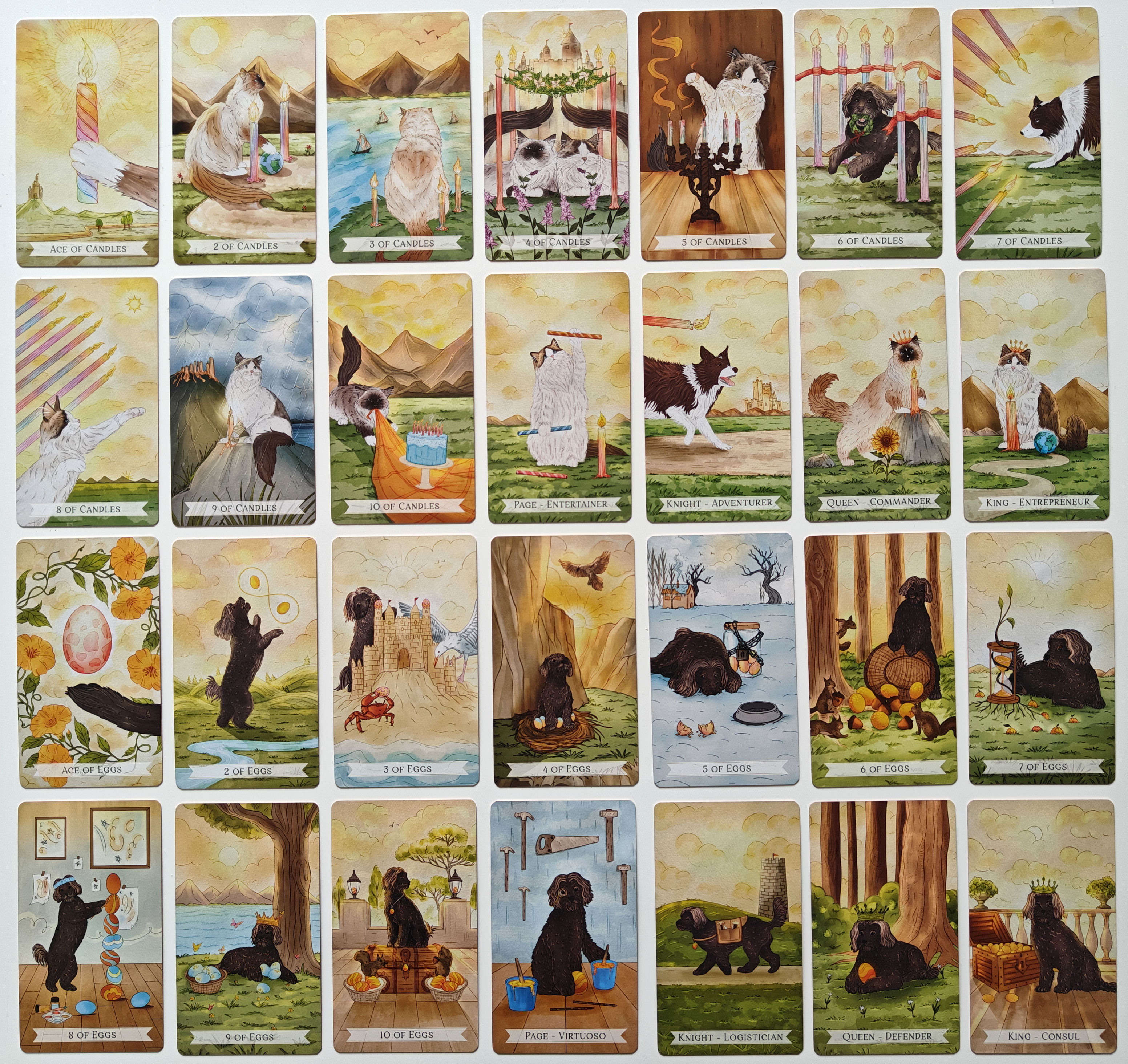
The Oneful Tarot follows a traditional 78-card RWS-based tarot structure while introducing fresh interpretive angles drawn from Lee’s educational background in public health and mindful caregiving. I love that all of this is rendered through an animal-themed tarot deck, with artwork that awakens our inner child, gives us the warm and fuzzies, and puts us immediately at ease.
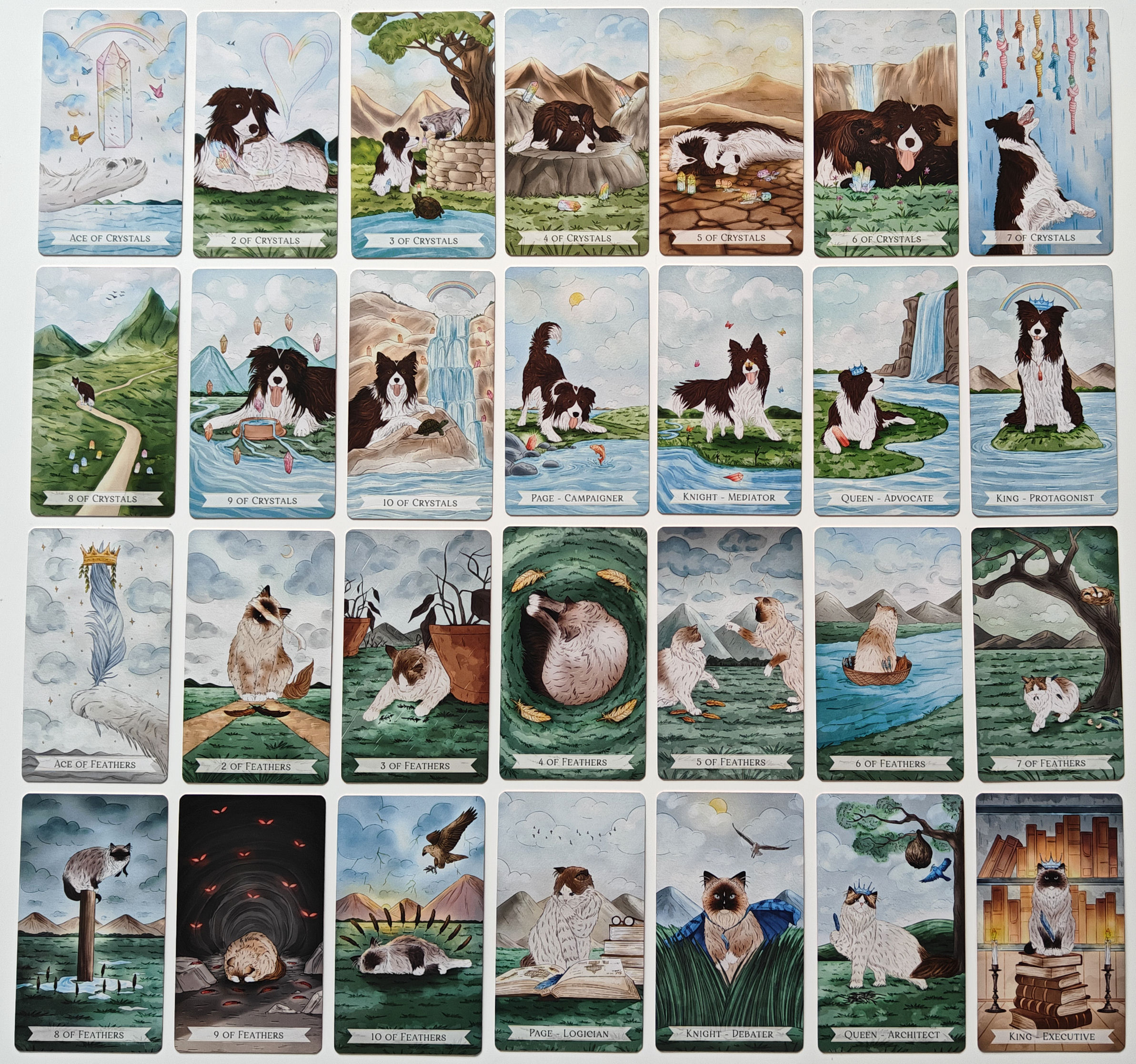
The court cards are particularly noteworthy—renamed and reframed to reflect archetypes that are less hierarchical and more collaborative, in line with Lee’s advocacy for care-based economies and cooperative well-being.
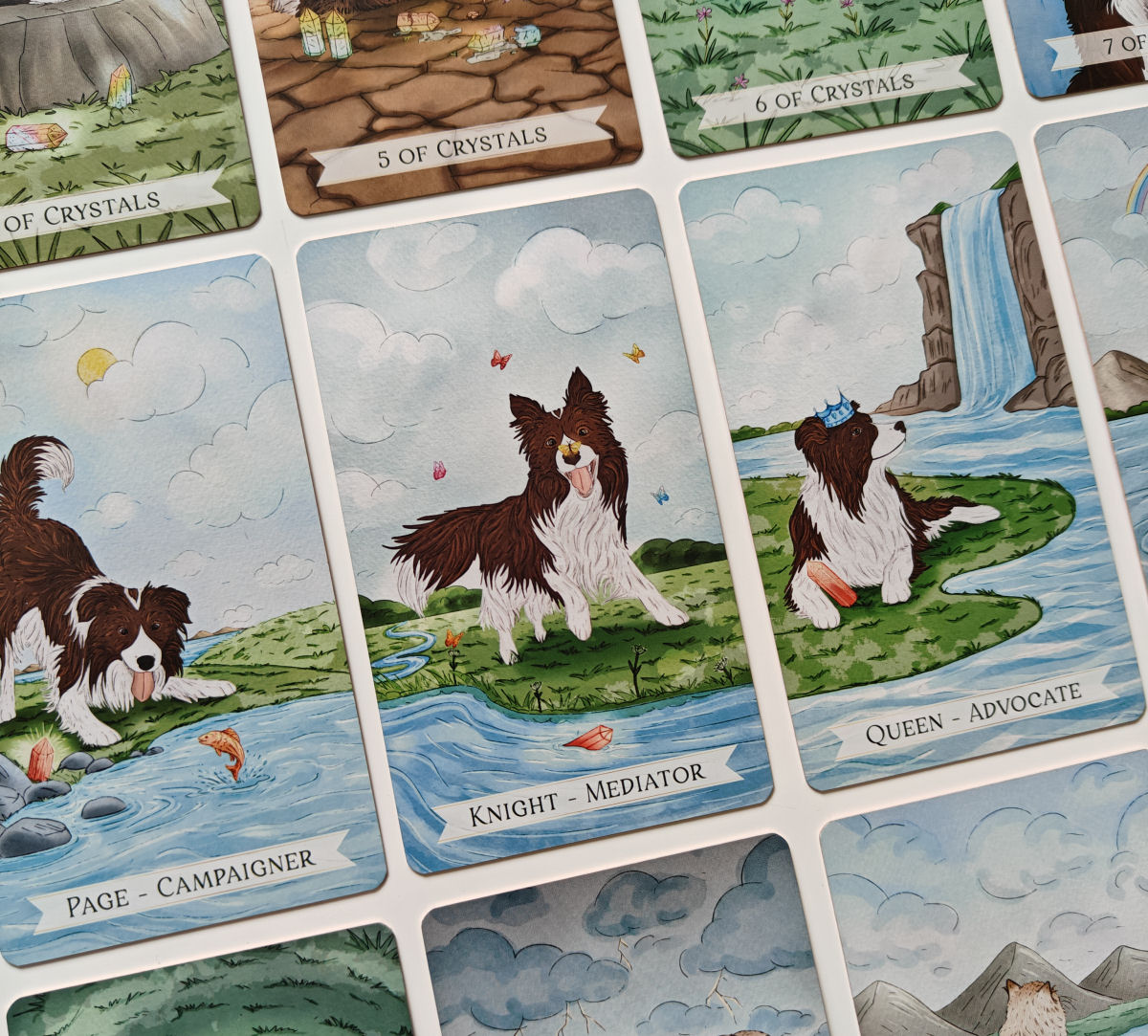
Now, as for why this deck, particularly its court cards, sings so effectively as a mindfulness tool: the MBTI archetypes system that the Oneful Tarot is built upon. To start, the four court titles — Page, Knight, Queen, and King — in the four respective suits — Wands, Cups, Swords, and Pentacles — corresponds with the four pairs of preferences in the MBTI personality type categorization system:
- Extraversion (E) vs. Introversion (I), which denotes where you focus your attention, or ENERGY,
- Sensing(S) or Observant vs. Intuition (N), which is how you ingest and process information; this characterizes your MIND,
- Thinking (T) vs. Feeling (F), which is your naturally inclined decision-making strategies, i.e., your inner NATURE, and
- Judging (J) vs. Perceiving (P), which is how you organize and present your externalized life, i.e., your TACTICS.
Then there’s a fifth pairing, an Identity Modifier to your MBTI archetype, that Dr. Lee talks about, integrated into this deck’s psychology-based system:
5. Assertive (-A) vs. Turbulent (-T), which denotes your sense of self-confidence, emotional regulation, and the ways you respond to stress and self-doubt, often called the IDENTITY aspect.
Those who lean (-A) tend to be more confident, stable, resistant to stress, and are self-assured, believing themselves to be pretty darn good already. They can be a bit too detached, too stubborn with their perspectives.
Those who lean (-T) tend to be more self-conscious, are sensitive to stress, plagued by perfectionism, and are driven by self-improvement, which also means they’re more adaptive. Generally they tend to be more reactive and anxious.
Understanding your core personality energy and character profile through MBTI archetypes helps you to better customize your personal operating system, which is to say helps you to optimize your strengths, support and hone your weaknesses, and work in alignment with who you are rather than work against. And then in doing so, become more productive, more effective, and also feel more fulfilled, authentically “yourself.”
Here is how Dr. Lee attributes the court cards and MBTI archetypes (you can click on the table to zoom in):

- The Explorers (SP Types) are action-oriented and adaptable, thrive on spontaneity, lean toward hands-on experiences for learning, and live in the moment.
- The Analysts (NT Types) are strategic, independent thinkers, excel at problem-solving, are innovative, and lean toward long-term visions.
- The Diplomats (NF Types) are empathic, idealistic, are guided by values, emotional intelligence, and seek to inspire change.
- The Sentinels (SJ Types) are dependable, tradition-focused, bring structure, responsibility, and stability to all that they do.
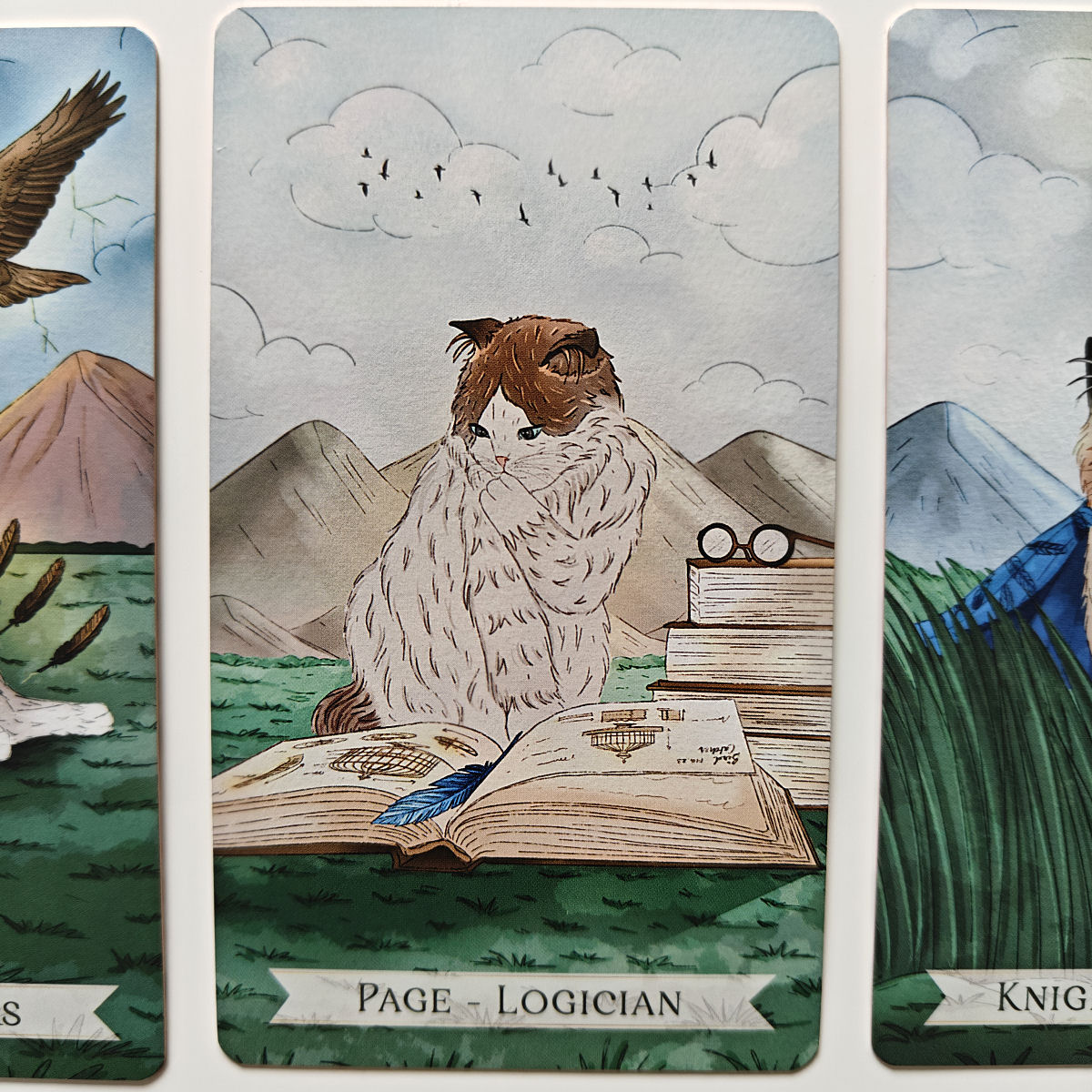
The Logician INTP (Page of Swords in the Oneful Tarot) and the Logistician ISTJ (Knight of Pentacles) are both rational-analytical, but that core is channeled differently.
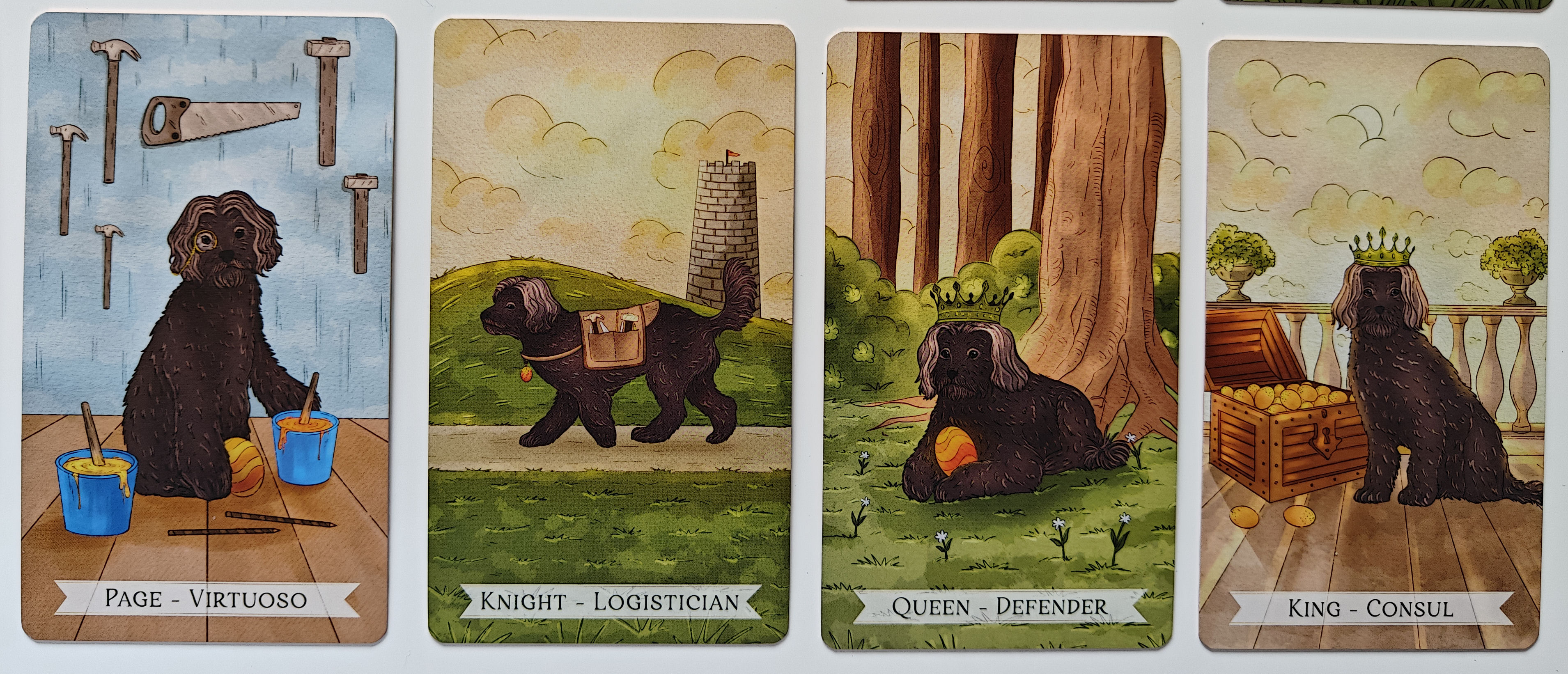
The Page of Swords is a curious intellectual, whereas the Knight of Pentacles executes deliberately and with reliability on that rational-analytical core. The former tries to understand systems, the latter maintains systems.
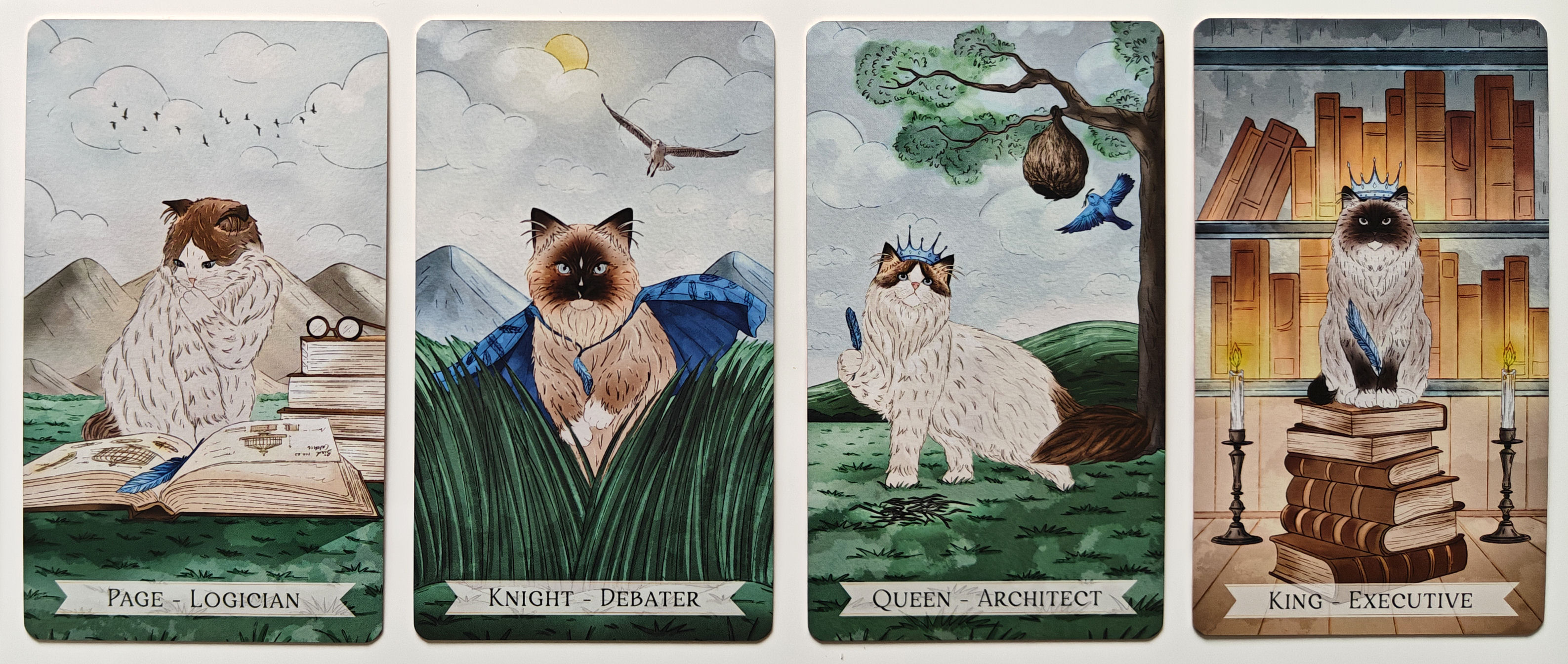
The Page of Swords (INTP Logician) is very much about what could be, whereas the Knight of Pentacles (ISTJ Logistician) focuses on what works now. Logicians are experimental and explorative, whereas Logisticians are risk-averse (because they’re chronically calculating and assess risk) and more structured.
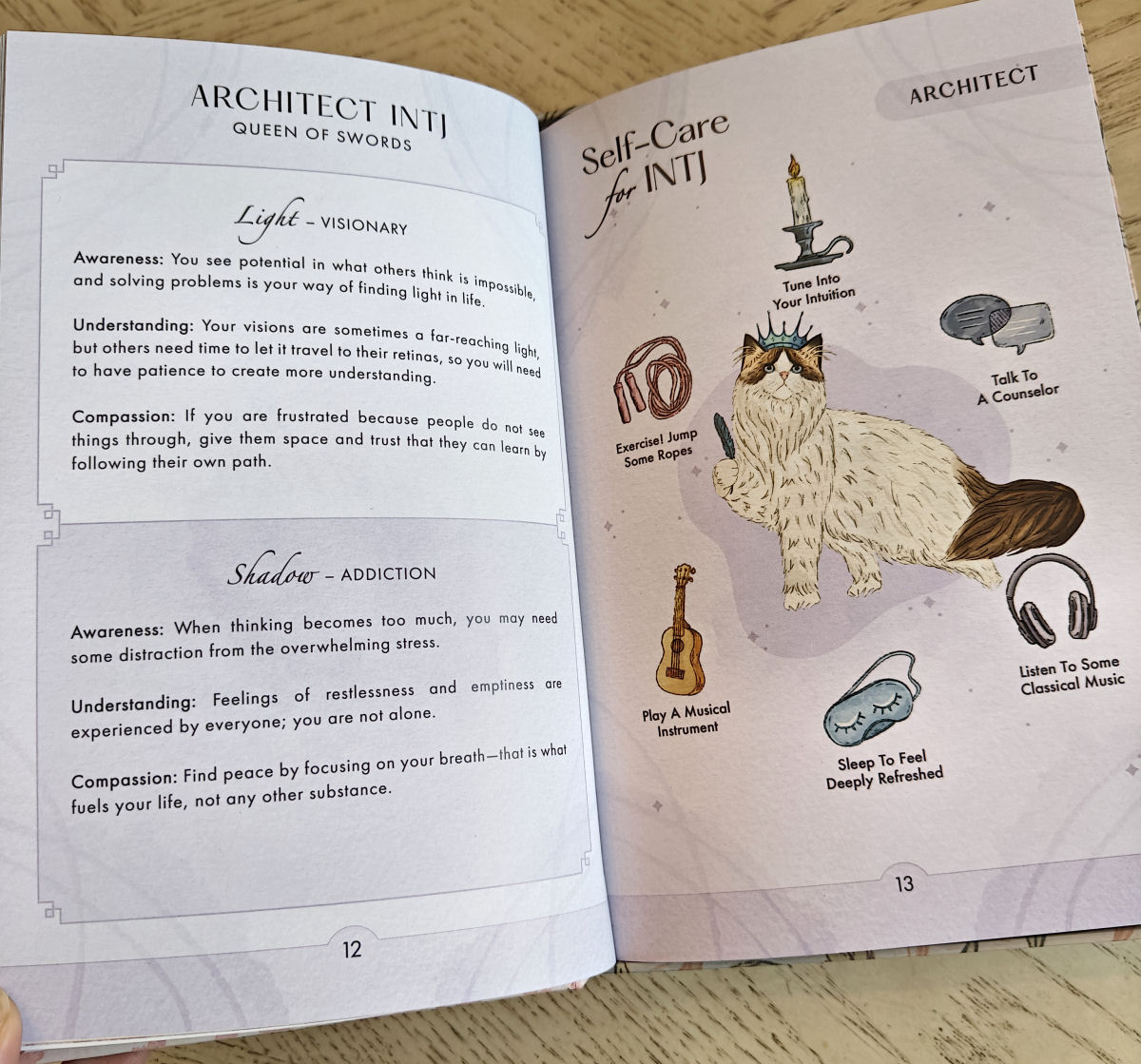
The companion guidebook to the deck then delves into the Light and Shadow aspects of each of the MBTI archetypes, plus self-care tips for each archetype.
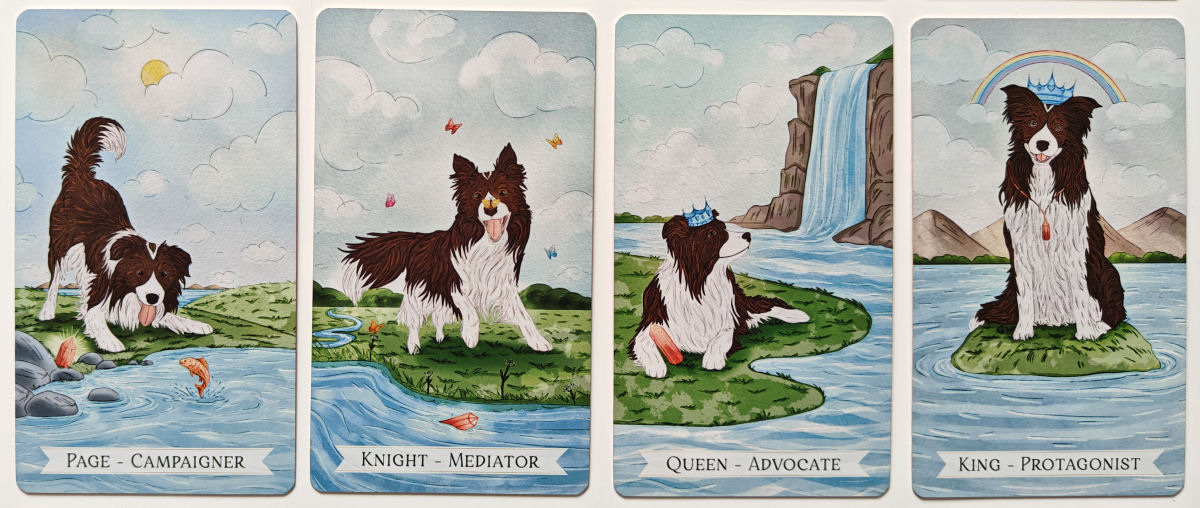
For example, The Advocate INFJ, corresponding with the Queen of Cups, tends to be an idealist when it comes to her perception of the world, but her world is too impressionistic and abstract, and not always grounded in reality; she also tends to be a perfectionist, wanting the world around her to match that idealistic view of what it should be. Self-care tips for the Advocate INFJ include photography as a way to capture the beauty you see around you, physical activity and exercise, or listening to classical music, among others.
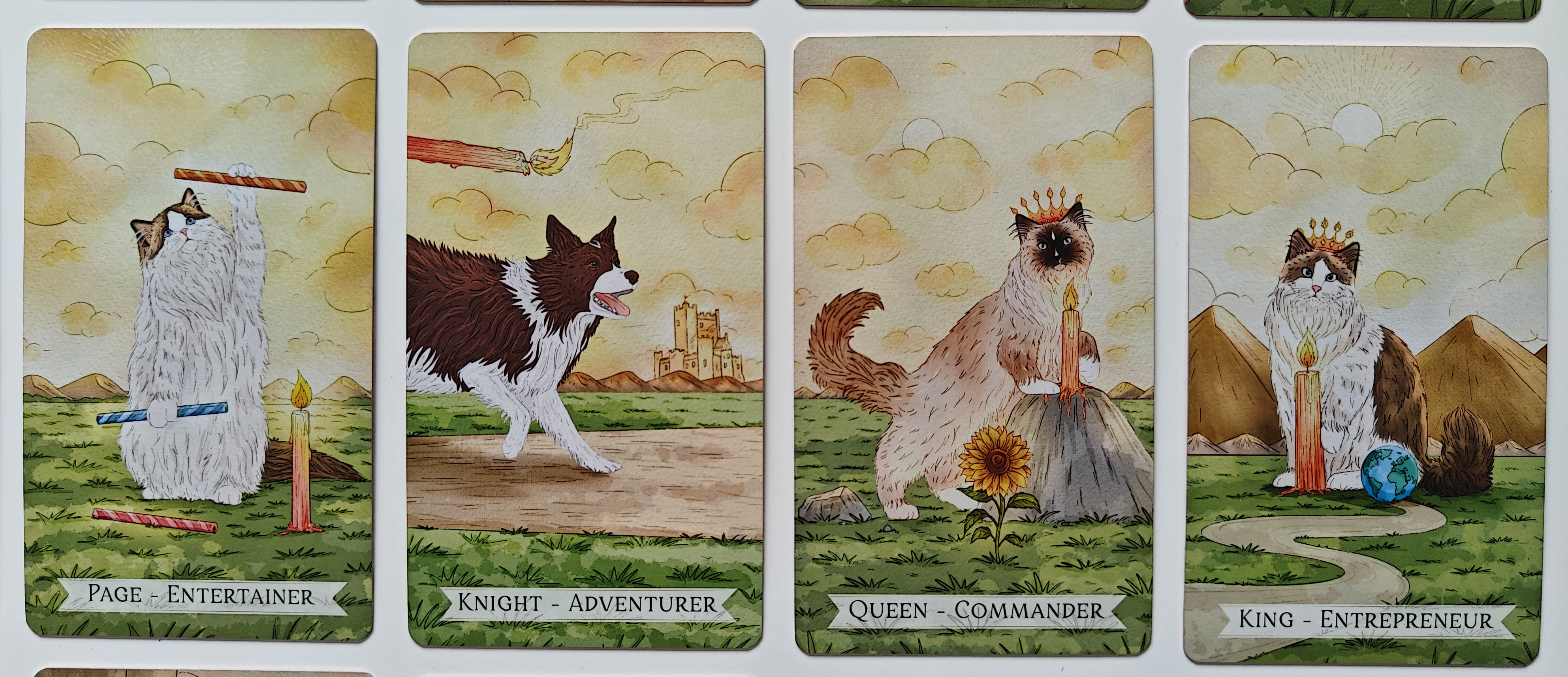
My way of working with the Oneful Tarot has been to use the court card corresponding with your MBTI type as a significator card, and then create a tarot spread that replicates a mind map around your significator card, which you then interpret filtered through the MBTI temperament (i.e., SP Explorer, NT Analyst, NF Diplomat, or SJ Sentinel).
According to MBTI assessments, I’m an INFJ-AT (hybrid), meaning I’m firmly ancored as an INFJ, and then equal parts -A and -T, or an -AT blend. Dr. Lee corresponds INFJ with the Queen of Cups, so I’ll pull out the Queen of Cups card from the deck to be my significator card.
I like the number eight, so let’s go with an eight-card spread design: The Core Self in Eight Functions, where eight cards encircling my significator represent my cognitive stack:
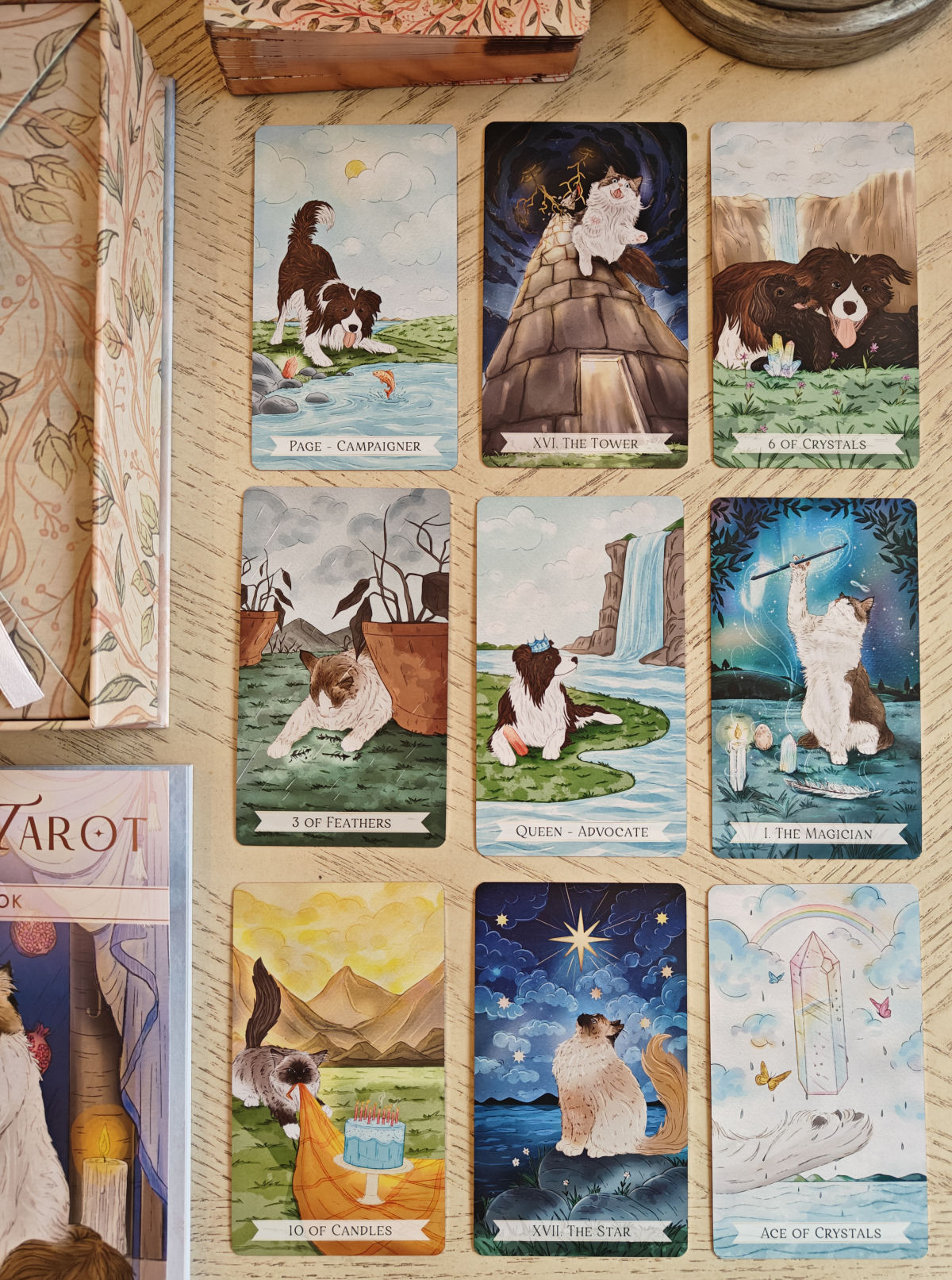
The center card is my significator (Queen of Cups: The Advocate). Then I draw eight cards to form the spread you see above.
- Top Row of 3 Cards: Conscious Functions. This is what the querent (represented by the MBTI significator card) leads with.
- Left: Hidden Potential (or) Blind Spot. Currently a weak point, and where I hold greatest transformative power and potential.
- Center: Dominant Function, Core Self. How I primarily engage with the world.
- Right: Supportive Skills. Here are the skills I’ve nurtured the best so far, that support my conscious functions.
- Center Row Left and Right Cards: Assign one of these cards as your Anima and the other as your Animus.
- Here, what we’re going to do is interpret the Anima card as your feminine soul-energy and the Animus card as your masculine soul-energy.
- Feminine soul-energy is how the self wants to connect and feel authentically. This is your intuition, imagination, feeling and receptivity. It’s dreams, spiritual longing, and art. In what ways does this aspect of your inner self aspire toward Sophia (divine wisdom)?
- Masculine soul-energy is how your self wants to exert willpower to manifest, it’s strategic decision-making, it’s how you want to focus. This is discipline, leadership, and also your protective instincts. It’s a sense of drive and purpose. In what ways does this aspect of your inner self aspire toward Hermes (divine mediation)?
- Bottom Row of 3 Cards: Subconscious Functions.
- Left: Defense Mechanism. This is how the querent defends against challenges to the ego.
- Center: Inner Critic. This is how I judge myself, and therefore what amplifies my fears and insecurities.
- Right: Shadow Aspect. This is what I must transmute, what needs to be integrated, whereas right now it is being suppressed. This is what the querent least wants to face or own up to about the self.
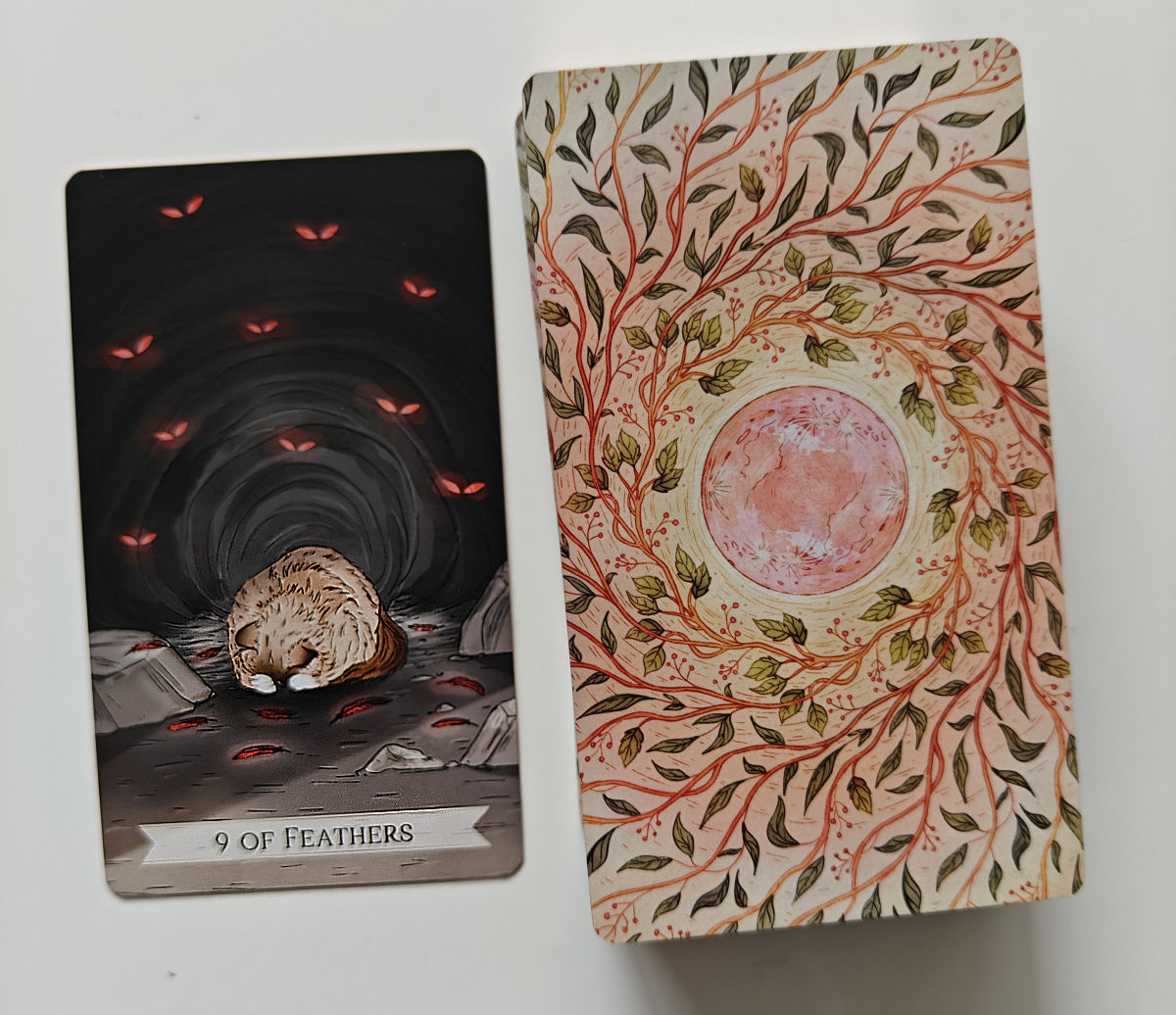
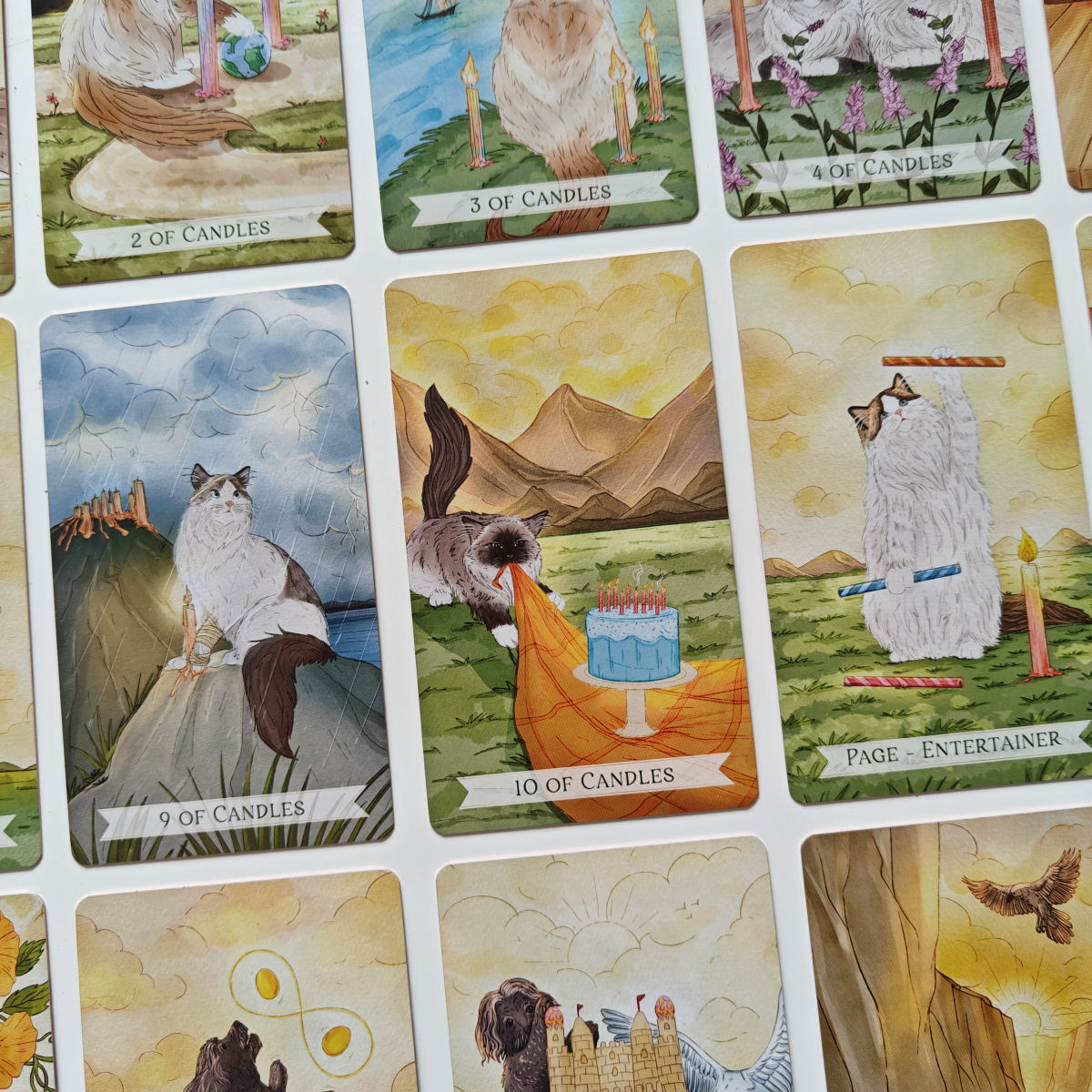
I love the rose quartz orb on the card back design, emblematic of health and wellness, and the flora evocative of nature, life, and vitality. And that Nine of Swords card (!!) I mean so many of the illustrations are just the most touching and memorable way to depict those card meanings.
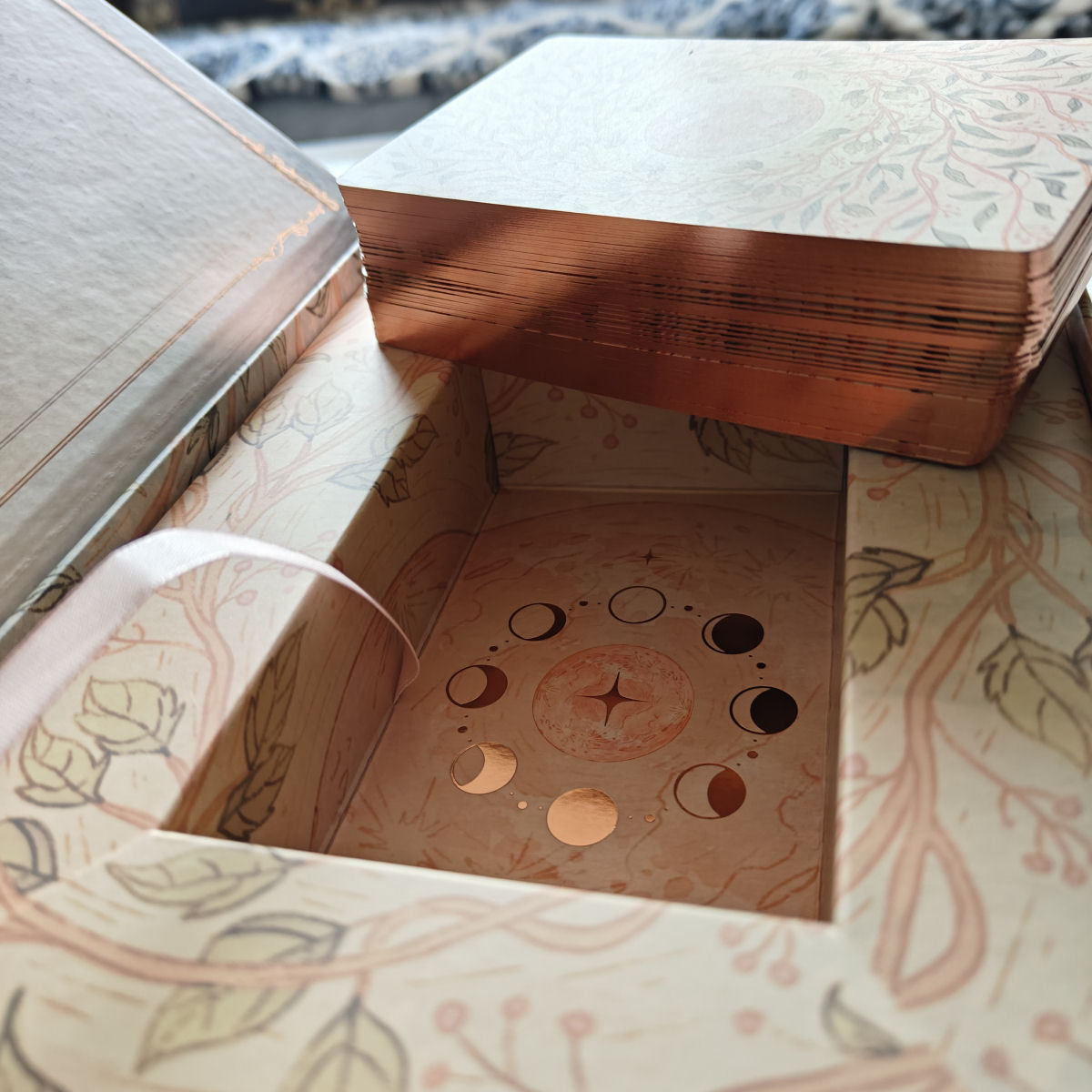
I love the rose gold foil accents on the packaging, and the rose gold edging. Everything about the design and aesthetics of this deck set is elegant, refined, and an immersive experience.
The Oneful Tarot arrives at a moment of growing visibility for tarot creators in Hong Kong and across East Asia. Not only has tarot been gaining exponentially in popularity all across Asia, but now you’re seeing more deck creators from Asia gaining global recognition. While Asian spiritual traditions have long influenced Western esotericism, it’s kinda fun now to watch Western spiritual traditions influencing Eastern esotericism.
The Hong Kong tarot scene, in particular, is quietly blossoming, with more practitioners and artists stepping into the spotlight. Dr. Lee’s background in non-profit organizational leadership adds a distinct voice to this movement. It is rare to see someone so steeped in both empirical research, public health, and spiritual practice—rarer still for them to synthesize that into a beautifully made deck that feels both accessible and multilayered.
The Oneful Tarot is a deck of quiet power—unassuming but resonant, and an especially poignant choice for tarot readers interested in social healing, caregiving, or mindfulness practices.
Whether you’re pulling a card during a lunch break at the office or laying out a full spread for a friend in transition, this deck meets you where you are and invites you inward with gentle clarity.
This deck is perfect for tarot readers who are also animal lovers, wellness practitioners, social workers, caregivers, or anyone looking for a tarot deck that bridges psychology-based principles with intuitive work expressed in an accessible yet elegant style.
MBTI COURT CARD REFERENCE DOWNLOAD: I created a reference sheet for my own personal work with the Oneful Tarot. If you’d like a copy, click on the links below to download. Feel free to use in any way you like, commercial or non-commercial purposes. Note: There are additional, expanded, more detailed descriptions of Light and Shadow aspects for each of the court cards and MBTi archetypes in Dr. Lee’s book that accompanies the deck. I did not include any of her work in this reference, but this reference is very obviously based on her guidebook and my work with the Oneful Tarot courts. If you’d like more detailed personality profiles, especially as to Light and Dark aspects, and Self-Care Tips, get this deck and book set!
PDF | DOCX
No need to credit me, and the notes themselves are free for you to use, copy, make your own versions of, integrate, edit and revise, change up, etc. However, please do credit Dr. Maggie Man Sin Lee for the tarot court card to MBTi correspondences, as that system of correspondences is her work.


FTC Disclosure: In accordance with Title 16 of the U.S. Code of Federal Regulations Part 255, “Guides Concerning Use of Endorsements and Testimonials in Advertising,” I received this deck and book set from the deck creator for prospective review. Everything I’ve said here is sincere and accurately reflects my opinion of the deck.
 benebell wen
Wonderful cat and dog pictures, I saw the deck on kickstarters but unless I’ve misunderstood it only seemed to be available to funders or those who made a pledge.
LikeLike
I am curious as to the designations in the Pages and Knights; I normally designate Introversion to the Pages and Extroversion to the Knights. Swapping the two changes the perception I have of either type of court card. Let me think about this one…
LikeLike