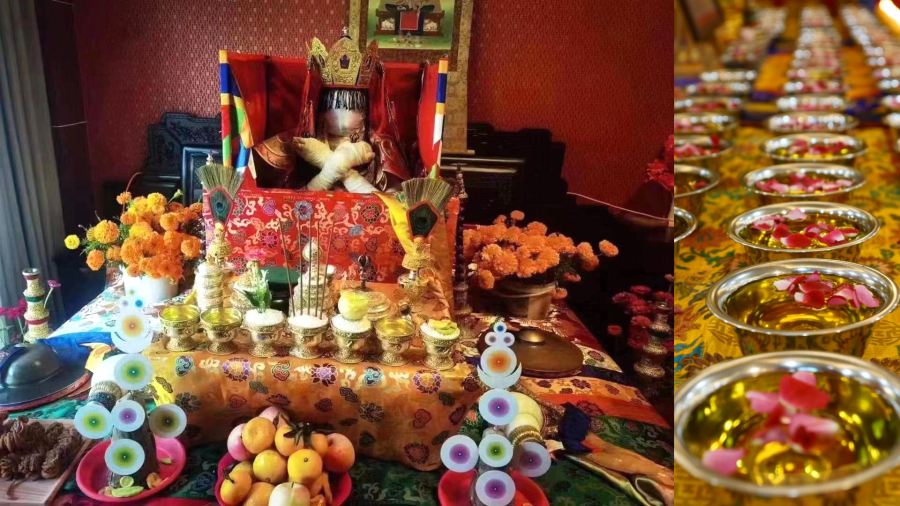
The above video commentary is a short introduction to esoteric Buddhism, covering the distinctions between sutra-based Buddhism and tantric Buddhism. As noted at the end of the video, this write-up will give instructions to the “homework assignments,” practica [I don’t know why I’m such a nerd and called these “homework assignments”] intended to give you a firsthand experience with Buddhist folk magic.

Timestamp 11:39 Addendum: Oops, I cut out too much of the raw video chat and omitted the part where I talked about where I was going with this. =) So if you were left confused, it’s not you, it’s me. =) Continuing from what I am saying at this timestamp, if tantric esoteric Buddhist cultivation is characterized as a “shortcut” to the destination but one that’s far more dangerous and riskier terrain, then endeavoring to take this route all but requires a highly skilled guide to help you navigate the tougher terrain. It’s not a route you’d want to go at on your own or, worse yet, with a guide falsely self-proclaimed as a lama or spiritual leader who will lead you astray, or who isn’t equipped to help you deal with mara. Thus, the framing of the question shouldn’t be “is it open or closed,” but rather as “what, really, would be the most assured path for you?” Can you fully trust someone else’s claim of endowing you with the empowerment you’re seeking?
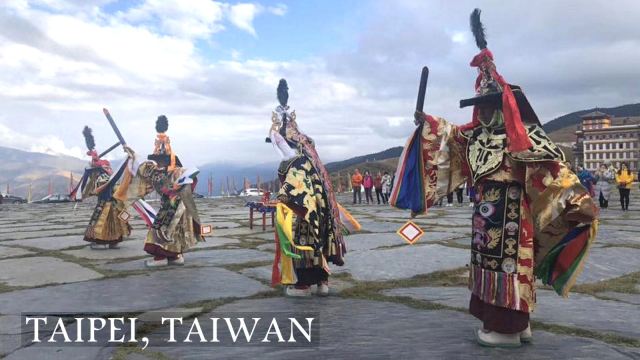
As a beginner-level introduction, these practices are intended to be general enough for all, so you’ll be encouraged to piecemeal neutral elements often found in esoteric Buddhism and graft it onto your preexisting practice, and most importantly of all, your local environment.

Just like esoteric Buddhism takes on the indigenous practices and magical systems from the land it touches, be that Bön folk magic syncretized with Buddhism in Tibet, Taoist mysticism with Buddhism in China, Shinto in Japan, or tantric Buddhism melded with Tai and Hmong shamanic practices in Southeast Asia, you’ll be working with features of esoteric Buddhism syncretized with what’s native to you.

#1. Your Mandala
Design and craft a mandala. You can start by defining a specific purpose for your mandala, approach it as religious art that will be a devotional to a particular Buddha or bodhisattva, or none of the above — go at it as an empty vessel, clean slate, and let your intuition guide you.
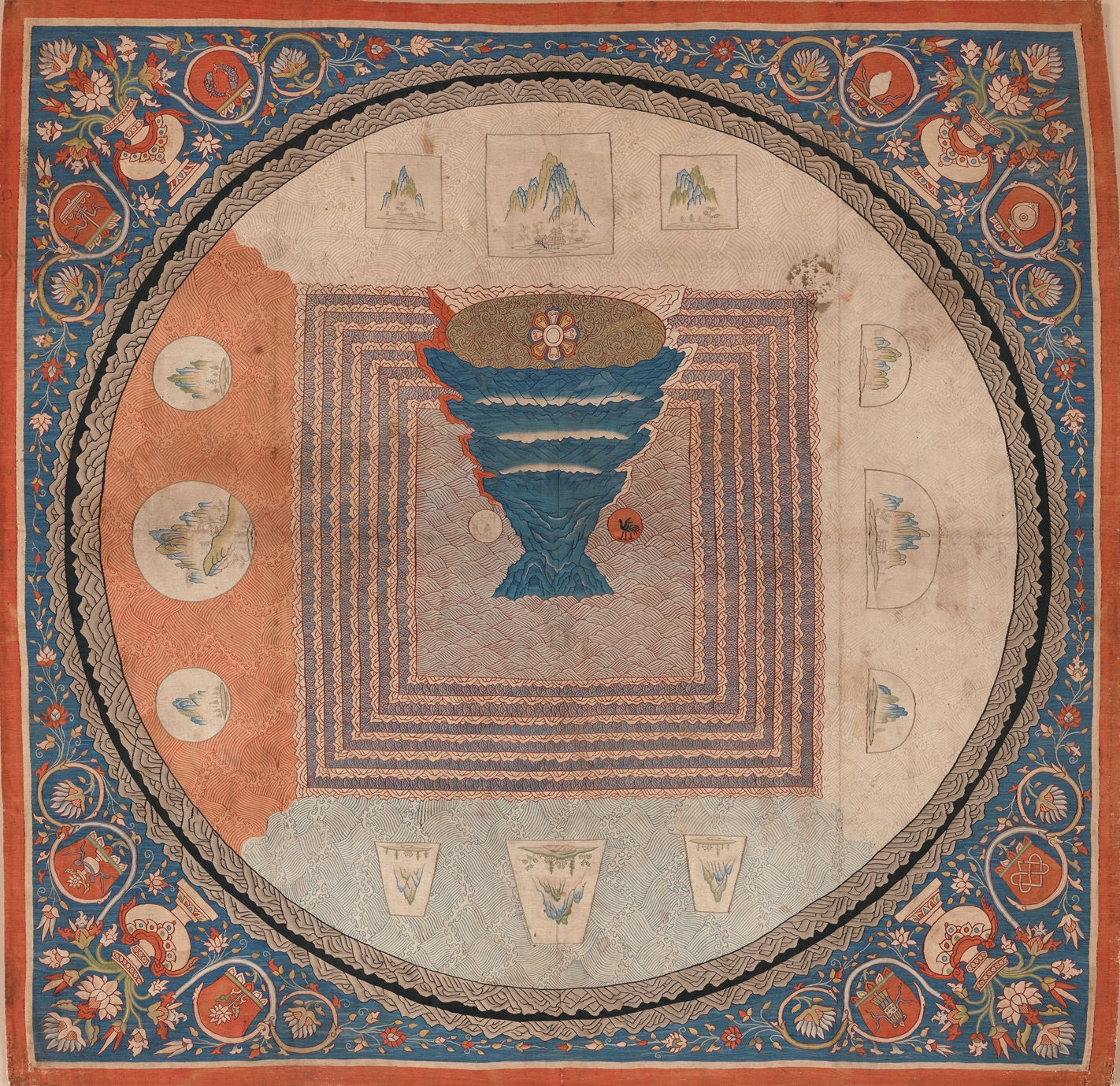
Mandalas are a form of altar, and there are many different types of mandalas that serve different purposes. A mandala can be a two-dimensional work of art or it can be a three-dimensional casting of an actual circle, whether you’re drawing various symbols on the ground with sand, or ash, or stones.
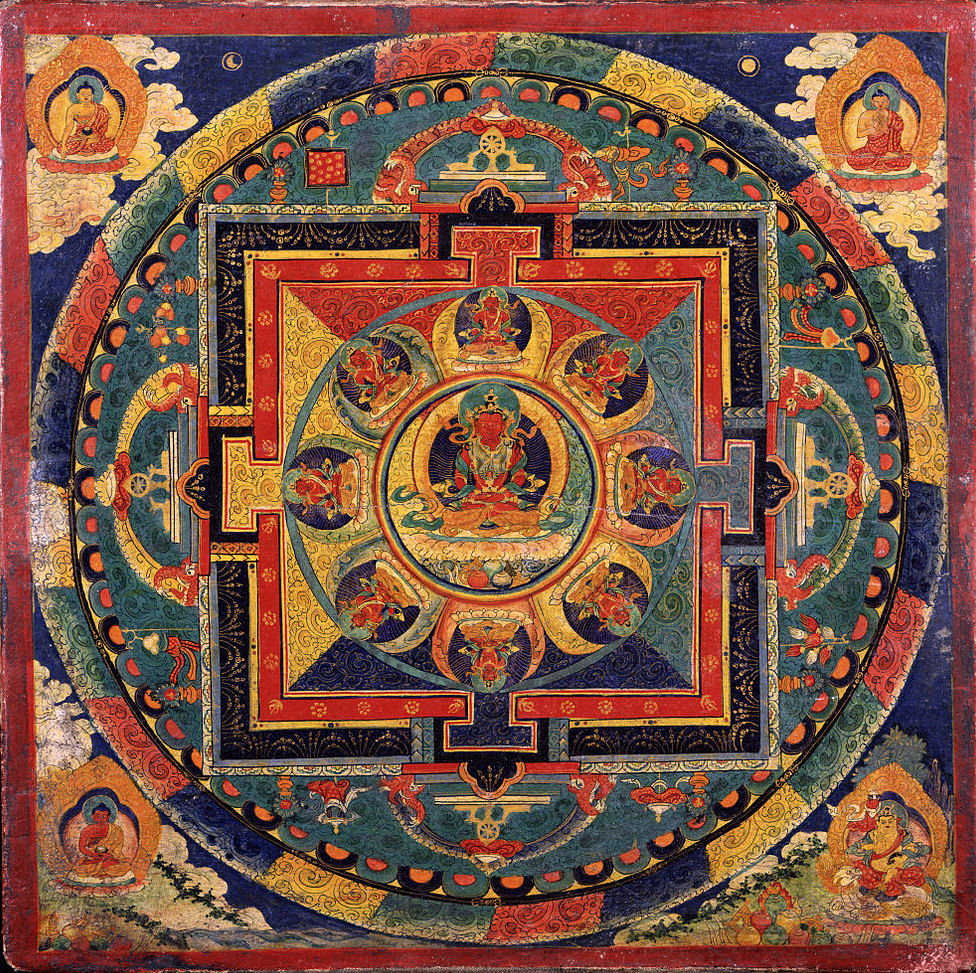
Structurally, a mandala is a circle with four gates along the four compass directions. It’s squaring the circle. It casts a sacred circle and it facilitates spiritual journeying.
A mandala, from a Chinese occult perspective, is a spirit map (Líng Tú 靈圖). It is a nexus and telecommunications tool through which humans commune with bodhisattvas. You’ll often find mandalas depicted as a “gathering of divinities.”
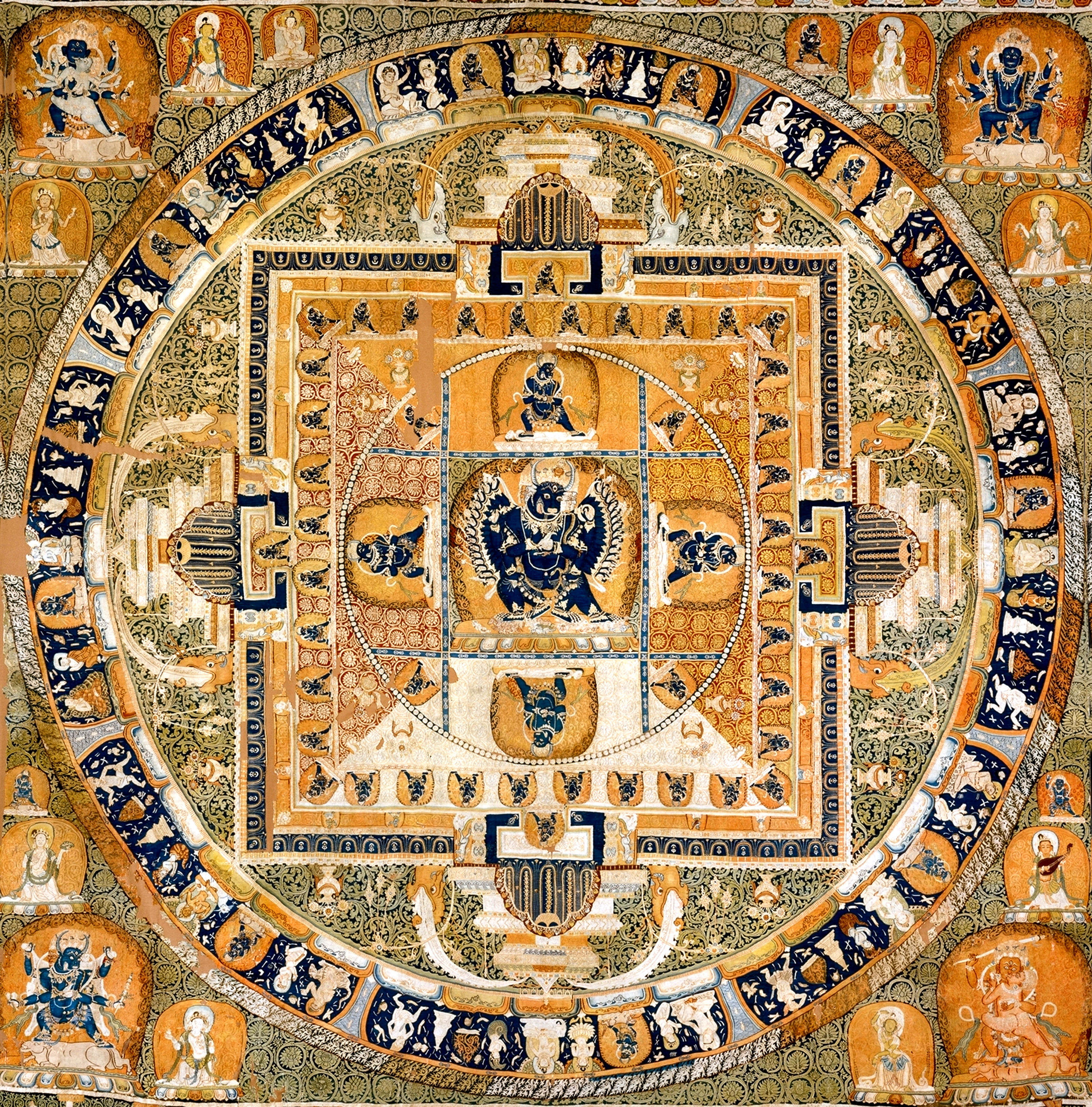
Really devote your time to the art and craft of your mandala. It’s totally okay – and in fact encouraged – to study traditional references before you get started. Consider sacred geometry, symbols and sigils that mean something significant to you, and vibrant color symbolism. Oh yeah– this should totally be in full-color. So if you don’t have them already, you’ll need to get yourself some colored markers, colored pencils, or paints.
You don’t have to be artistic. And don’t even with that whole “I’m not artistic” excuse! It’s okay to trace for this homework assignment. Use rulers, set squares, protractors, and not everything needs to be pre-planned with intention. Follow your hunches step by step. Let it flow. As you design the mandala, something in your unconscious mind will “take over” the driver seat and steer your art.
Once it’s complete, display it somewhere in your home living space, somewhere special or meaningful to you.
And that’s it. You’re done with homework assignment (you know what, let’s call these practicum) #1. The magically charged mandala will do its thing.
I strongly recommend that you invest in a square picture frame for displaying and safeguarding your mandala art. If it’s protected behind glass, you can also use this framed mandala as an altar top for magical workings and spell-crafting, which is exactly what you’ll be doing in practicum #2.
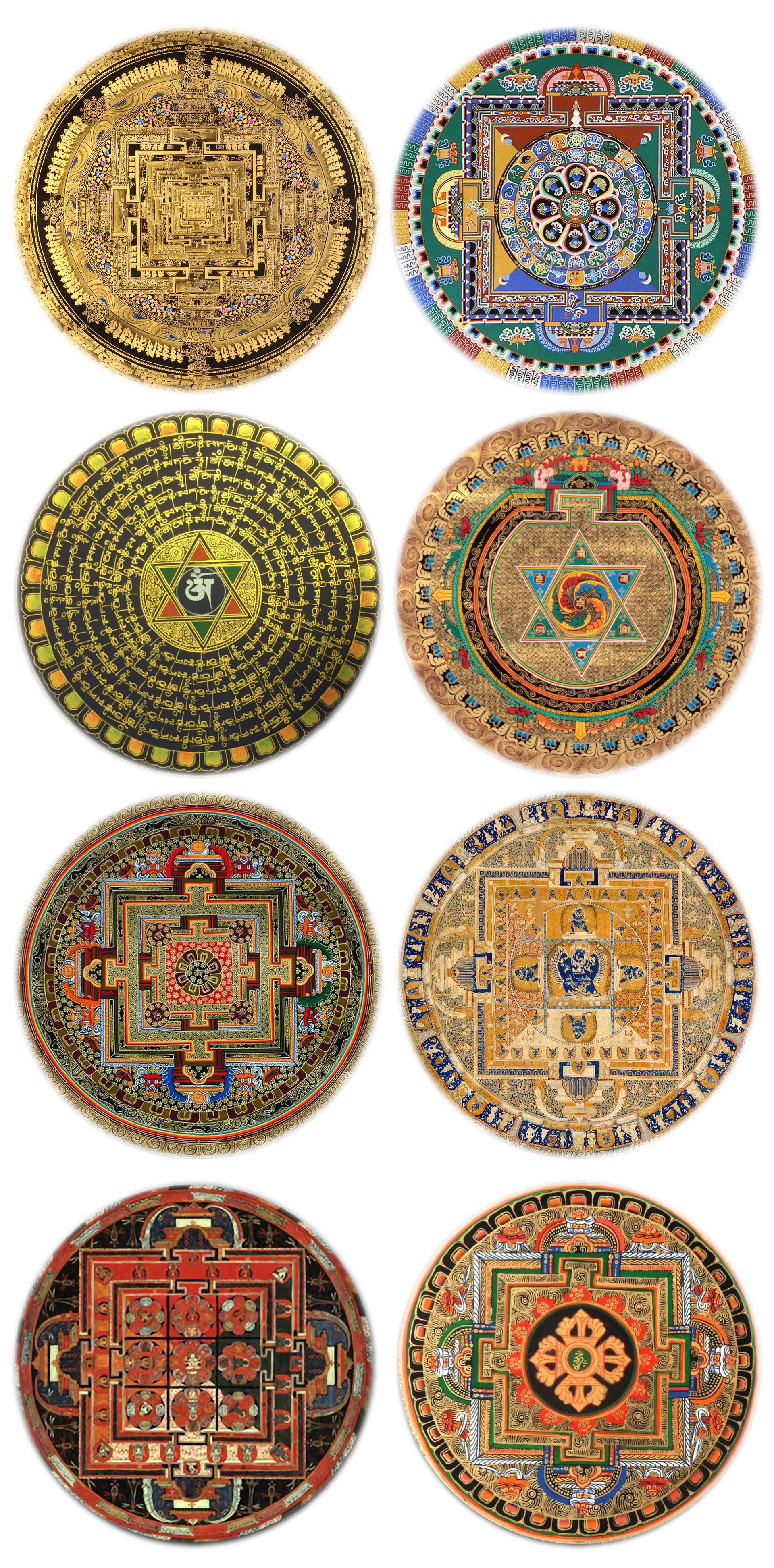
To help with inspiration, here are a few mandala references to get you started:
#2. Smoke Offering Ritual 煙供儀軌
You will need to have completed practicum #1 before proceeding with practicum #2, because you will be needing your crafted mandala. I’d say a “prerequisite” will also be that you’ve set your mandala art into a square glass-encased frame. You’ll see why.
A Smoke Offering Ritual (煙供儀軌, yān gōng yí guǐ) is a common ceremonial practice in esoteric Buddhism. It involves burning cone or stick incense and a long series of sutra recitations to placate demons, ghosts, hungry ghosts, and restless land or nature spirits.
We’re going to do a variation on the traditional Smoke Offering Ritual. This version will consecrate healing water for placating restlessness, toxic attachments, and negativity within, which in turn will purify your mind, body, and spirit.
You’ll need incense, whatever form you love most. And you’ll want to burn this incense outdoors in a sturdy incense burner, preferably metal—brass, bronze, or cast iron.
And yes, you will need to perform this version of a solitary Smoke Offering Ritual outdoors. Be thoughtful in selecting where outdoors you’ll be doing this. It should be someplace where you can be alone, with peace and quiet, and you won’t be interrupted. Flora should be flourishing in this area, or alternatively, it’s breathtakingly beautiful landscape, like by the beach, etc.
Second, light a candle, saffron yellow, red, or white.
If your mandala art features human-esque figures of deities, then you’ll want to prop up your framed mandala, position your candle about a foot in front of the propped framed mandala, and then the burning incense in front of the candle.
If your mandala art only features sacred geometry and/or sigils, then it’s okay to lay it flat as a work surface, then place the candle at the center of the glass (framed mandala underneath), and then the incense burner off the frame in front of you.
Fill an altar bowl, chalice, or simply your most cherished cup with clean drinking water. Sit or stand comfortably in front of your setup. I like to place the ritual cup on top of the mandala altar.
Traditionally you would recite the Vairocanābhisaṃbodhi Sūtra 大日經 (click on the hyperlink for a free e-book download of the full text). Since that might be a bit too intense for the beginner, we’re going to work with a significantly truncated version:
The All Good Samantabhadra leads the bodhisattvas, and the Lord of Mysteries leads the Vajradhara, the primordial Adi-Buddha, by the empowerment of the Tathāgata Vairocana, and now swiftly have they manifested the inexhaustible Treasury of Adornments, purifying my body, speech, and mind.
Invoking Vairocana, by proclamation of these pure words, may I advance my cultivation of the wisdom and knowledge of the Lord of Mysteries. May I attain the bodhi mind– to know my mind as it really is, anut tarā samyak saṃ bodhi — unsurpassed, perfect, and fully awakened, and there not be the slightest remnant of fear.
Here and now the inexhaustible multitudes of holy divinities and thrice having blessed this water, I take drink in order to purify my body, mind, and to heal my wounds, to remove all poisons, and to thrive in a state of truth and wisdom, faith and understanding.
Your hands will be in prayer mudra while reciting the above. When complete, drink the blessed water.
Remove any residual un-burned stick or cone from your incense bowl so that all there is left is the ash. From the outdoor area you performed the solitary Smoke Offering Ritual, collect a small handful of dirt, dust, or sand. You will be needing this for the next practicum.
#3. Vairocanā Blessed Sand 金剛沙 or 金光明沙
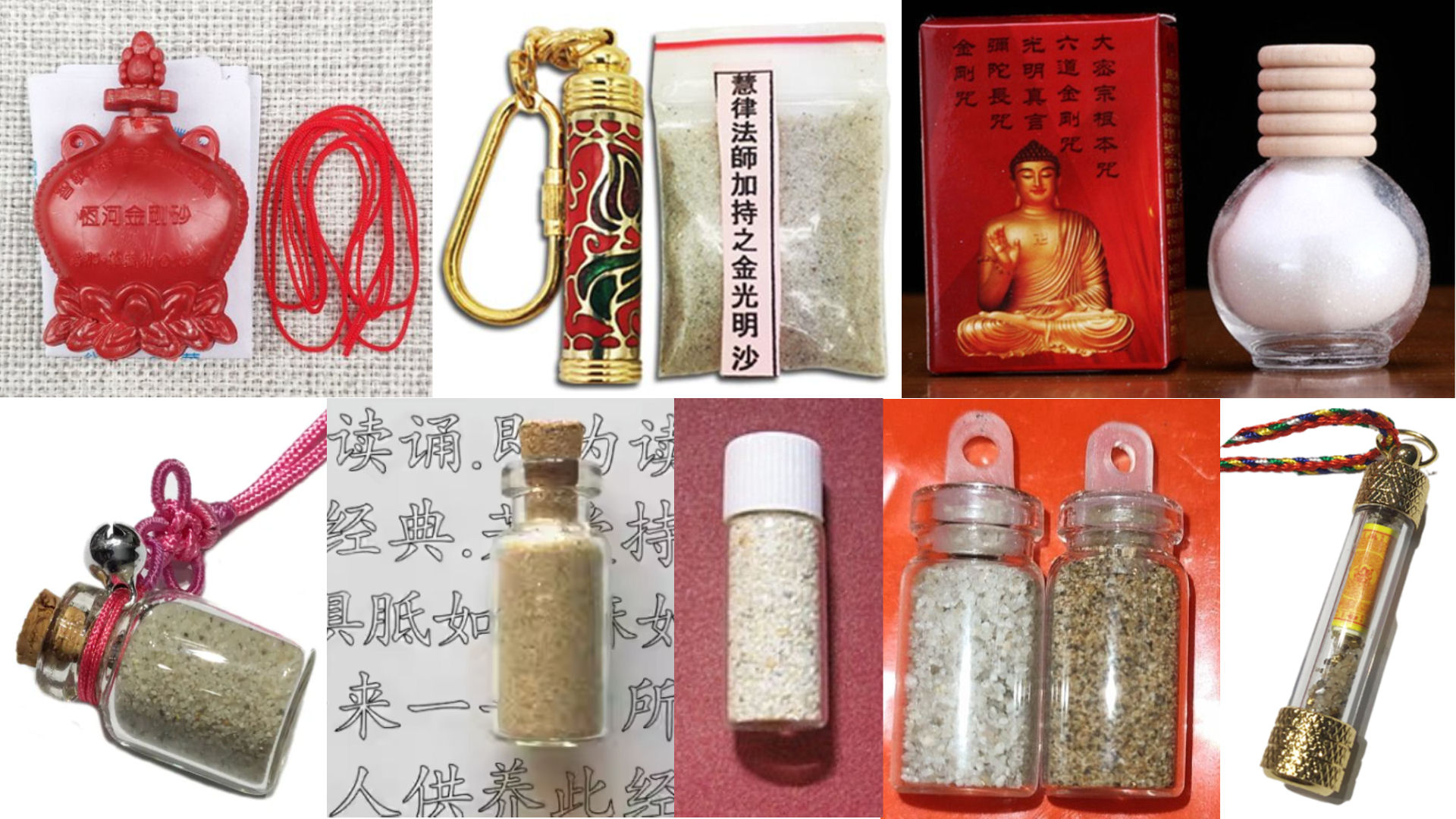
I’ve made a variation of the blessed sand before, which I talk about here. Reading that, plus this practicum, plus any further reading or research you’d like to do into this practice will inspire you to come up with your own personalized and more empowered approach to this talisman crafting.
Directly translated, this talisman from Tang dynasty esoteric Buddhist traditions is called Luminescent Golden Light Sand. Or Golden Light Manifestation Sand. “沙” is of the earth, so it can be soil, dust, sand, any granular mineral particles or material that is natural from the earth. It can be finely crushed crystals or minerals.
You may recall from the video that the traditional consecration ritual for this is 108 consecutive recitations of the Vairocanābhisaṃbodhi Sūtra. These modified instructions will help make the practicum more generally accessible.
Three days in advance of the ritual, “eat clean.” I’ll leave it up to you as to what that means. Do this in good faith, however. Don’t try to cheat yourself. “Eat clean” per the most sincere definition of that you can uphold. If you’re feeling ambitious and you know that vegetarianism is okay for your specific body constitution, then perhaps try to go vegetarian for these three days.
Also, for these three days, refrain from negative speech. Do your best to not speak ill of others and also not speak ill of yourself! No negative self-talk! =) Regulating your thoughts can be hard, but try. Try to refrain from negative thoughts as well, and when a negative thought pops into your mind, acknowledge it for what it is, and then neutralize it with a positive, optimistic thought.
In other words, be mindful of your body, speech, and thoughts for three days. Scheduling this ritual astrologically or per moon phase is a bonus. I’d recommend it, but it’s not a requirement.
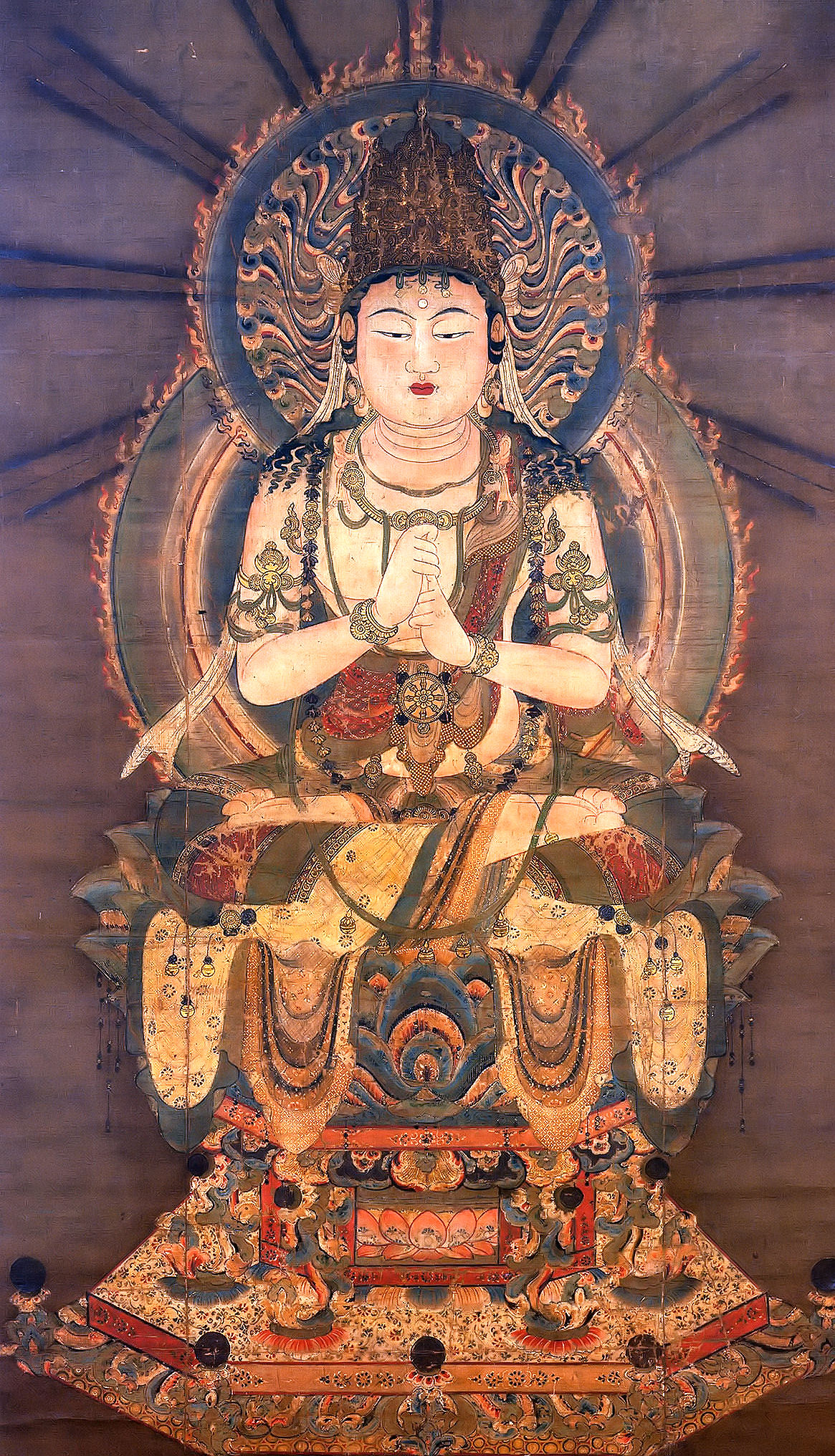
Recite the Vairocana mantra with only its seed syllables 108 times:
oṃ vairocana hūṃ
You may want to use a set of 108 mala prayer beads to help you keep count. I like to hover my dominant “giving” hand over the sand, dust, or soil to be blessed while the receiving hand thumbs the prayer beads.
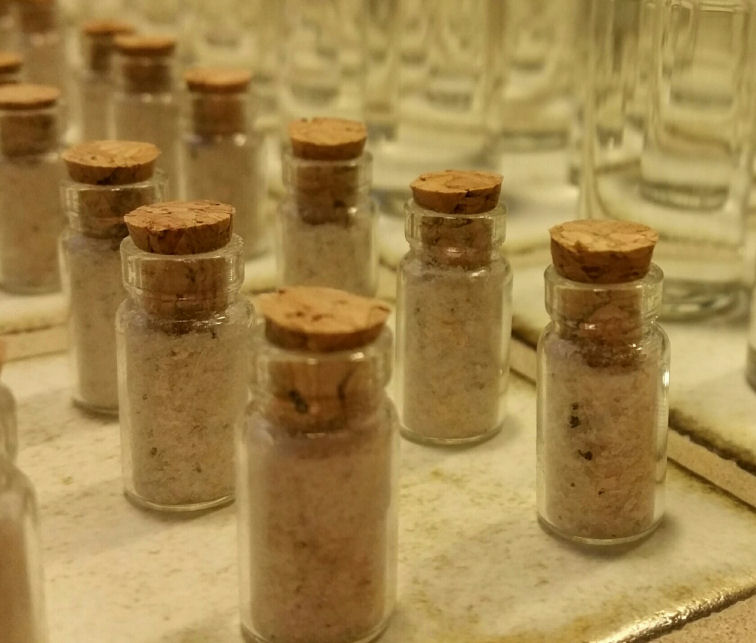
When complete, fill a small glass and cork vial with the consecrated sand. You can dress up the vial in any way you like, such as with red knotted cord, or augment it with a Fu talisman. Add consecrated charms that mean something to you, such as an evil eye or dzi bead. Your creativity is your only limit.
You’ve now crafted a protection talisman that wards off evil and scatters any toxic psychic forces from your vicinity. When I travel, I’ll make a point of keeping one of these in my backpack or handbag. You can tuck one into the top drawer of your work desk to help keep your space clear of any unwanted energy. Or gift one to a friend who is in need of just such a thing.
Self-Assessment
After having completed the three practica, take time and effort to self-reflect on your experience. Did you learn any crafting techniques that you can integrate into your current practice? Would you add these techniques or your variation on them to your portfolio of craft? And how might you modify the methodology so that you preserve the core principles but adapt those principles to your belief system?

Your Grimoire (or Book of Methods)
If you keep a personal grimoire, your write-up of these three crafting methods would be a great add. You may also want to do additional reading on Vairocanā, the Akashic Buddha of the numinous void and include an informational summary on the Vairocanābhisaṃbodhi Sūtra.
Further Reading:
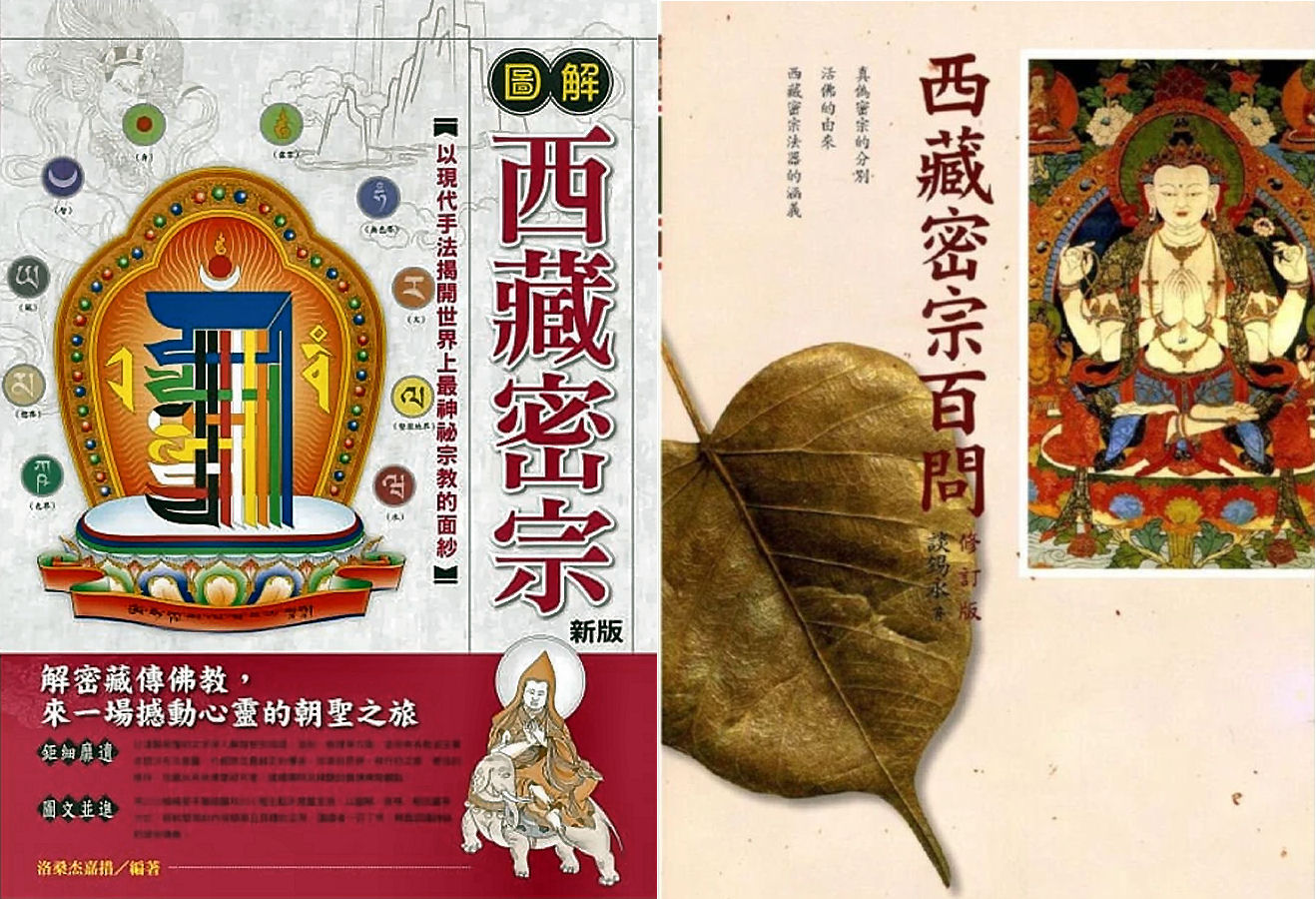
For the book pictured above to the left, 洛桑杰嘉措 is a Calcutta-based Tibetan lama who comes with a trail of controversy, but as an informational, the book’s pretty good. The second above to the right is by a Sino-Tibetan Buddhist scholar from Guangdong.
 benebell wen
This is so exciting! These practica/homework assignments are going to be so much fun. ✨ I can already tell I will be able to add them to my own system. Thanks, Benebell. Your generosity is very appreciated 💖
LikeLiked by 1 person
https://www.mdpi.com/2227-9717/8/1/115/htm
What or how can the perfect frequency be attained in tarot?
LikeLike
https://mychartguide.com/smith-chart/
Does BW have any direct experience with the source, explain . . .
LikeLike
Pingback: Taoist Magic for Beginners: How to Get Started – benebell wen
Thank You ❤
LikeLike
Pingback: Buddhist Perspective on Death and Rebirth – benebell wen