Chinese Shamanism Meets Taoism: The Hidden Link in 3,000 Years of Magic and Mysticism

Course Description

Let’s time travel and step into the mystical lineage of the Neolithic Wu 巫 shamans that laid the foundation for Taoist mysticism. This free public video lecture explores the birth of Taoist magic and the enduring legacy of Wu shamanism. We’ll decode Taoist occultism as it is practiced today to reveal the hidden history of how shamanism shaped the mystical practices of East Asia, preserving and refining early shamanistic techniques into a structured magical system, giving rise to Taoist mysticism.

Taoism is the enduring legacy of the Wu 巫, and how their oft-forgotten roots and history have shaped the modern practices of spirit mediums, Asian modalities of witchcraft, and Taoist ritual magic today. We’ll bridge the gap between the ancient traditions we’ve inherited from the Yellow River cradle of civilization and modern mystical practices, presented in a way rarely explored in the English language.

This is Taoist witchcraft decoded, in reclamation of the Wu 巫’s shamanic practices of the Tao 道.

Continue reading “Chinese Shamanism Meets Taoism: The Hidden Link in 3,000 Years of Magic and Mysticism”

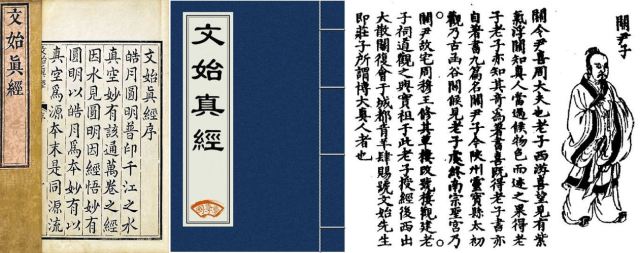
The Guan Yinzi

also known as the Wen Shi Zhen Jing: Sutra of Magical Spells and Aphorisms for Attaining Primordial Truth

The more recognized naming convention for the sutra is the Guan Yinzi (闕尹子) or Wen Shi Zhen Jing (文始真經) attributed to the gatekeeper who Laozi encountered.

The Guan Yinzi (or Wen Shi Zhen Jing)

According to lore, the gatekeeper at the Western Pass, named Yinxi 尹喜, later given the name Wenshi (文始), transcribed the teachings of Laozi and that text became the Tao Te Ching (道德經). Alternate tellings have Laozi writing the teachings down into two books himself, which the gatekeeper then receives.

Continue reading “The Guan Yinzi”

History of Taoist and Buddhist Mysticism in China

This is the continuation of a six-part video series I’m doing on Taoist and Buddhist Mysticism as it has been practiced historically and culturally among the Han. Video 1 released earlier was the Introduction to Buddhist-Taoist Esotericism. We are now on to Video 2.

2. History of Taoist and Buddhist Mysticism in China

In this video lecture, we are going to cover over 4,000 years of history, going through the dynasties, beginning with the Xia, Shang, and Zhou, until we reach modern China. Our coverage will span beyond 4,000 years, preceding the Xia, to talk about shamanism in the Neolithic Era.

Works cited for everything covered in this lecture are in the end notes of The Tao of Craft (North Atlantic Books, 2016).

Next Lecture: Taoist Sorcery and Its Cultural Practice

All videos in this series are closed-captioned for the deaf, hard of hearing, or those whose native tongue isn’t English. I’ve also made my best attempt at accommodating for the blind. If there is room for improvement in these regards, I’m open to friendly critique. Thank you!

For the full playlist, go here:

tinyurl.com/chineseoccultism

Continue reading “History of Taoist and Buddhist Mysticism in China”

Introduction to Buddhist-Taoist Esotericism

Taoism is a nature-based religion, philosophy, and a 2,000 year old tradition of sorcery native to China since the Zhou Dynasty. In that same time, Buddhism enters China and a modality of it–esoteric Buddhism–is blended in with Taoist magic. Yet the roots of Taoist magic trace back even further than the dynasties of antiquity, back to Neolithic shamanism.

This introductory six-video lecture series will cover the ontology, theory, history, and cultural practice of sorcery at the intersection of esoteric Buddhism and Taoism. You’re on Video #1: Introduction to Buddhist-Taoist Esotericism.

1: Introduction to Buddhist-Taoist Esotericism

2: History of Taoist and Buddhist Mysticism in China

3: Taoist Sorcery and Its Cultural Practice

4: Taoist Metaphysics

5: Chinese Occultism as a Syncretic Practice

6: Taoist Magic in Contemporary Times

I’m creating this lecture series as an invitation to you to learn more about the occult traditions I practice. I hope you find within these offerings bits of insight, knowledge, and methods that you can integrate, syncretize, adopt into your own Path.

For the full playlist, go here:

tinyurl.com/chineseoccultism

Continue reading “Introduction to Buddhist-Taoist Esotericism”

Introduction to Chinese Esotericism

Taoism is a nature-based religion, philosophy, and a 2,000 year old tradition of sorcery native to China since the Zhou Dynasty. In that same time, Buddhism enters China and a modality of it–esoteric Buddhism–is blended in with Taoist magic. Yet the roots of Taoist magic trace back even further than the dynasties of antiquity, back to Neolithic shamanism. This introductory six-video lecture series will delve in to Chinese occult practices that syncretize Buddhism and Taoism.

Video 1 is an introduction to the course and the distinction between exoteric and esoteric Taoist/Buddhist practices. Video 2 covers the history of Taoist and Buddhist mysticism in China. Video 3 gets into the cultural practice of Taoist sorcery while Video 4 gives you a crash course into Eastern metaphysics. Finally, Videos 5 and 6 will give a primer on practicing or integrating Taoist magic and esoteric Buddhism into your path.

1: Introduction to Buddhist-Taoist Esotericism

2: History of Taoist and Buddhist Mysticism in China

3: Taoist Sorcery and Its Cultural Practice

4: Taoist Metaphysics

5: A Thought Tour of the Chinese Occult

6: Taoist Magic in Contemporary Times

I’m creating this lecture series as an invitation to you to learn more about the occult traditions I practice. I hope you find within these offerings bits of insight, knowledge, and methods that you can integrate, syncretize, or adapt for yourself.

For the full playlist, go here:

tinyurl.com/chineseoccultism

Continue reading “Introduction to Chinese Esotericism”

Magical Parenting: The Metaphysician Mother

mom-young

Or father. I’ve been hearing a lot about parenting for pagans and wanted to add my own thoughts. However, I won’t be talking about it from the perspective of the parent. I want to talk about it from the perspective of the child.

Now, my parents are not pagan, mostly because that word is not in their vocabulary. They’re Taiwanese immigrants. However, my mother is a metaphysical practitioner, though she wouldn’t see it that way. What she thinks she does is as natural as cooking, praying, dreaming, meditating, and just using what you have within reach to manifest what you want.

I think that is an important point. Growing up, I never saw what she did as “occult,” though living in the Western society has made me realize that Westerners would define what she does as totally occult. Paying attention to equinoxes and solstices, knowing when the veil was thinnest, when to honor the dead, what to do when there was heightened spirit activity, calling upon the elements of nature and combining it with recitations to make things happen, understanding the phases of the moon– these weren’t seen as pagan.

“After their deaths, in my dreams I went down to the realm your late auntie and uncle were trapped in and it was so cold and dark. They told me they were hungry. So we burned offerings and chanted prayers for them and then many nights later I visited them again. I saw that they were now in a different, better realm, very happy and at peace.” (Mom, paraphrased)

I’ve come to understand that in the Western society, that is absolutely bonkers, but in Mom’s world, that was perfectly normal. And accepted at face value. After a death in the family, she’d relay her dreams and all the relatives would just nod. Yeah, that makes sense, they’d confirm. Okay, let’s burn offerings and chant prayers. And then they’d all wait for Mom’s post-dream-shamanic-travels to verify that the offerings and chanting worked. Mom always said that dead people liked to call to her from the post-mortem realms they were in, and so she’d go to them in her dream state to bring back messages for the living. God, growing up when that happened, I’d cover my ears and run out of the room and make it clear to all who’d listen that I thought all of this was batshit crazy.

Continue reading “Magical Parenting: The Metaphysician Mother”