Among Western mystery traditions, you often hear about eclectic witchcraft, can even loop chaos magic into the scope of this topic, and those who observe esoteric practices in a way that blends different cultures and religions. Taoist religious scholars refer to this particular way of practicing religion as syncretism. I say Taoist here because Taoism, as a religion, tends to be syncretic.
In Bell Chimes In #4, I make a case for syncretic religious practice. Today very few of us stay sequestered within a homogenous framework. Not only do we travel physically to interact with different cultures, become geographical and cultural transplants ourselves, but with the Internet at our fingertips and our own curiosities to navigate that web, we have access to a diversity of religious ideas in a way our ancestors did not.
As we engage with different faces of the Holy Spirit, we’re able to discover and formulate our own unique Key of access to that Holy Spirit, or connection to Shen (I talk about this in the video), that fits our physiology, karma, life experiences, and psychic imprint. To not reach out and seize upon such opportunities is what I’d describe as rejecting authenticity. Following one fixed religious doctrine from its Point A to its Point Z that conforms to what a textbook says is historical is not “authenticity.” Authenticity, I argue, is about following what’s in your bones and in ways that maybe no one else will ever truly understand. And what’s being guided by your bones may appear to be eclectic.
2025 June 15: Please note that the following course content was produced nearly a decade ago and may reflect the production standards and media quality that were even low for that time, so may foreseeably prove to be challenging for the present day user. We appreciate your understanding and grace as you engage with these materials.
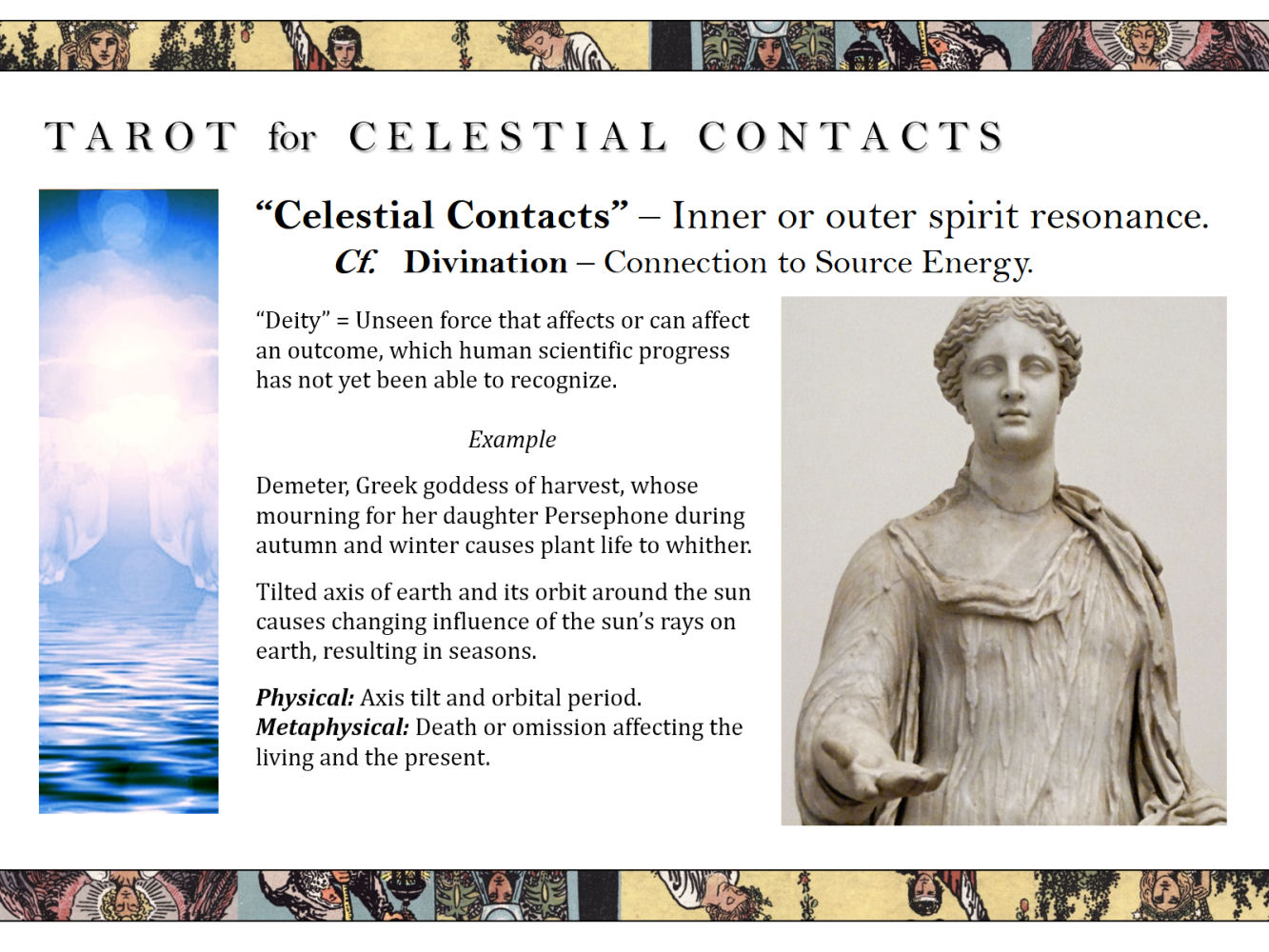
Video Lecture Screenshot
Tarot as a Tool for Craft is a FREE DOWNLOADABLE guided workbook course that teaches practitioners how to elevate tarot from a system of divination into a powerful tool for spellcraft, ritual, and magical workings. Rooted in Western esotericism and enriched by practical hands-on exercises, the course blends tarot theory, ceremonial ritual, sigil work, talismanic crafting, and energy channeling to help the student activate the cards as magical instruments. Through progressive lessons and experiential assignments, learners will explore how to work with tarot archetypes, construct effective magical workings, and cultivate a deeply personal practice integrating both high and low magic traditions.
An expansion on the talk I presented in 2016 at the Theosophical Society of the East Bay, this course covers how a practitioner of craft might use tarot, from triggering intuitive creativity for self-empowerment, divination, and amplifying psychic ability to communion with celestial contacts, mediumship, and summonings. This is an intermediate course that presumes proficiency with tarot. Subject matter also runs into esoteric and mystical applications of the tarot, so the tone of the course might not be right for everyone.
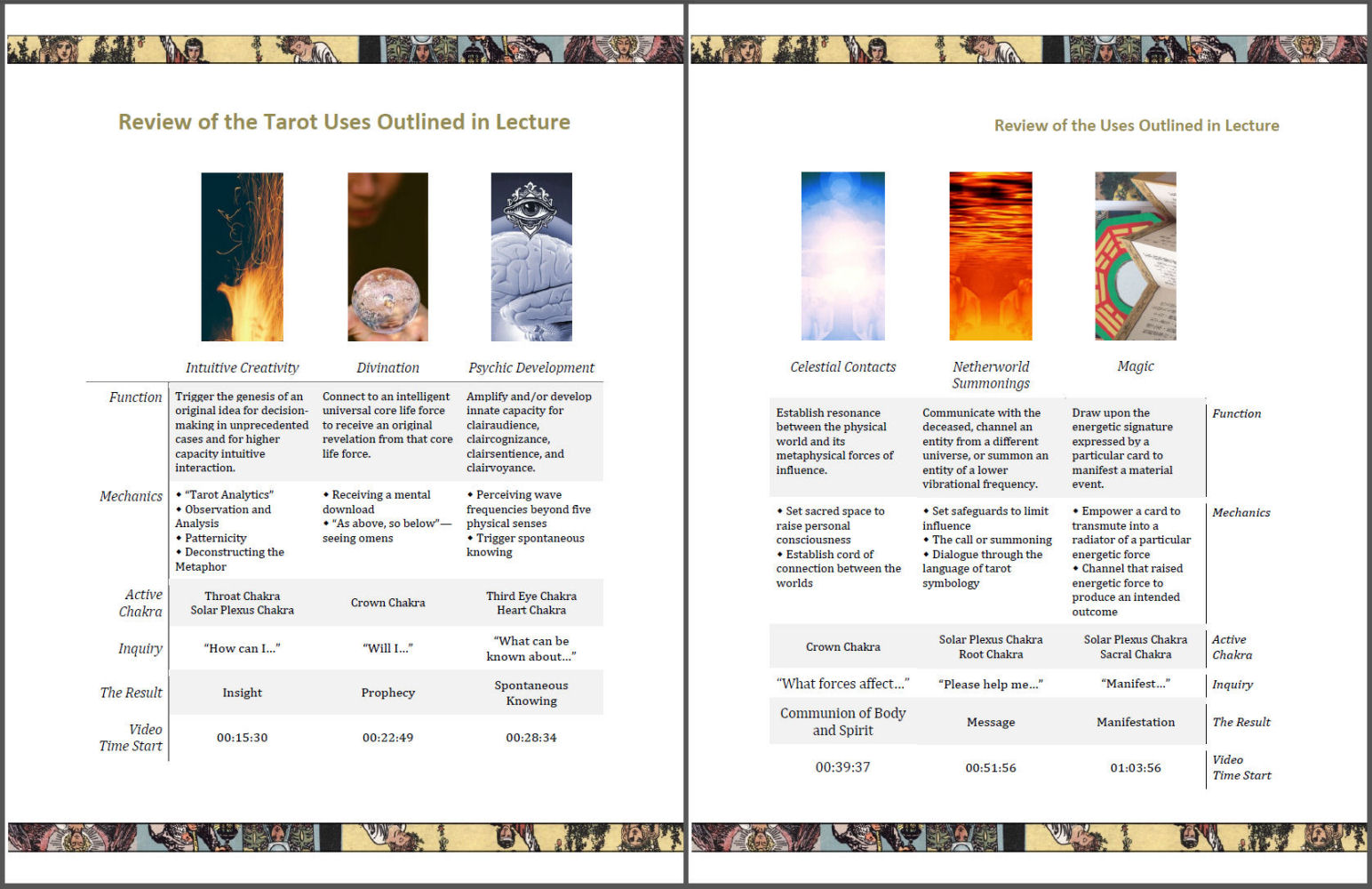
Workbook Page Spread Preview
Course Objectives
After completing this workbook course, you will:
Understand how to transform tarot cards from passive symbols into active magical tools.
Learn how to design and execute ritual spells using the tarot as both focus and channel.
Practice creating and charging talismans using tarot correspondences, sigils, and planetary hours.
Develop a personalized system of magical correspondences rooted in tarot structure.
Cultivate the mindset and discipline of a ceremonial magician working through a tarot framework.
Strengthen intuitive and psychic faculties through ritualized work with tarot archetypes and energies
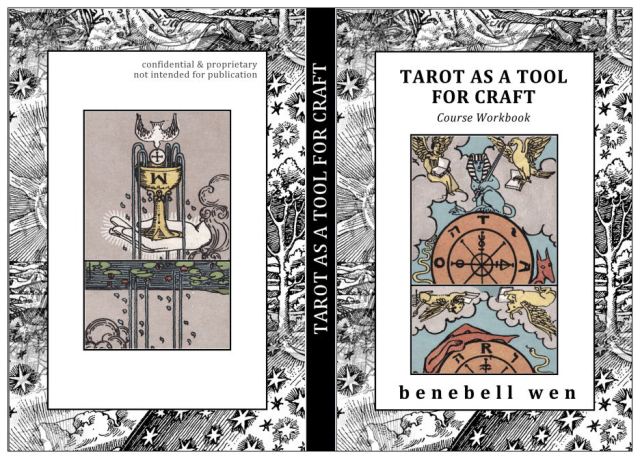
Click image file to download the Workbook pdf
What my 2015 book Holistic Tarot taught was the first of the five pillars that are discussed in this course. This course deconstructs the form and mechanics of using tarot for:
Intuitive Creativity to achieve self-empowerment;
Divination to connect to what Paul Foster Case called the Cause of Causes—the Universal Intelligent Life Energy;
Psychic Readings both to amplify your innate psychic ability and to use tarot as a training tool for strengthening your psychic ability;
Celestial Contacts to connect with deities, angels, ascended masters, devas, or the metaphysical force affecting physical conditions; and
Netherworld Contacts and using tarot for mediumship, ancestral connections, or connecting to entities of nether-worlds and other-worlds.
Workbook Page Spread Preview
A workbook with exercises to help you learn and master the mechanics of such tarot operations will also be provided to supplement the video lecture.
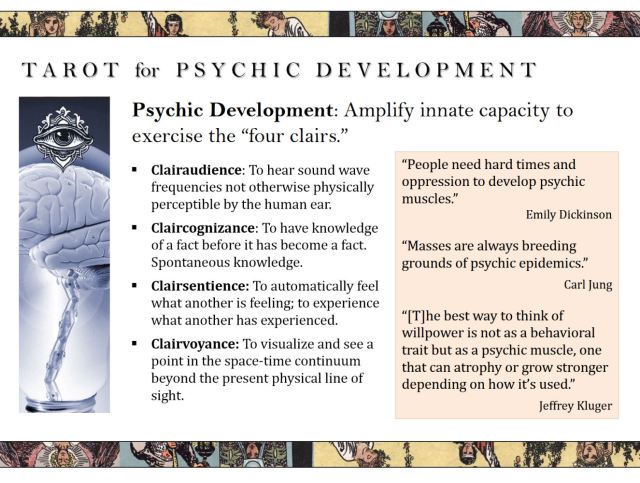
Video Lecture Screenshot
Also, this is not a video lecture that you watch just one time. I propose that the video lecture and the workbook should be revisited routinely. Print out the workbook multiple times and routinely work through the exercises prompted in the workbook to help you advance and further develop the skills taught in the video lecture.
As it tends to be when you’re working with me, the workbook is the most important part of this course. The 49-page workbook is intended for use and re-use. Print it out many times throughout your development to work through the training exercises.
As it tends to be when you’re working with me, the workbook is the most important part of this course. The 49-page workbook is intended for use and re-use. Print it out many times throughout your development to work through the training exercises.
Workbook Page Spread Preview
The training exercises begin basic and analytical, compelling you to work with numerology, astrology, Kabbalistic references, and other forms of symbolism and system correspondences to broaden your working and experiential knowledge of the tarot.
Then the course deep-dives into training exercises for mediumship, using tarot for celestial contacts, using tarot in shamanic journeying, using tarot as talismans, and so much more. I hope you will be as thrilled and enthusiastic about this workbook as I felt when I went through the exercises for myself.
Workbook Page Spread Preview
I hope this workbook will be a game changer for you in terms of your relationship with tarot as your divinatory tool, especially if you’re looking to hone your psychic abilities, intuition, and experience various forms of mystical training. As I tend to do, I fuse together eastern and western esoteric principles.
Although this course presumes intermediate proficiency with the tarot prior to commencing, it is a beginner-level introduction to using the cards as living, breathing instruments of ritual magic and mysticism.
Your Course Instructor
Hi! I’m Benebell Wen, the author of Holistic Tarot (North Atlantic Books, 2015) and The Tao of Craft: Fu Sigils and Casting Talismans in the Eastern Esoteric Traditions (NAB, 2016). My background is in both law and classical studies, and so I strive to bring a synthesis of analytics-based scholarship, a practical teaching style, and yet also a deep initiatic understanding of occult systems.
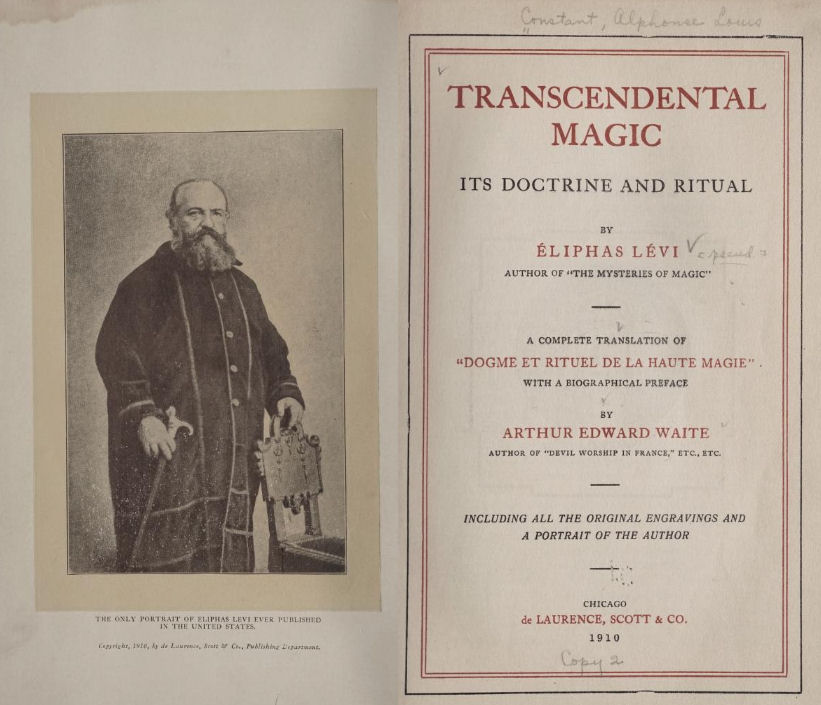
WESTERN WITCHCRAFT I: This course is a 13-module immersive study of the first 12 chapters in Eliphas Levi’s Doctrine, Part I, of the greater collected work Transcendental Magic. There are 18 video lectures with a total run time of 9 hours along with a 363-page textbook/workbook. In addition, you’ll be getting a set of guided focused meditation for the magus videos. My recommendation is to work through the materials over a 13-week period. Both theory and practicum are covered. This course is structured after a one semester 400-level university elective.
This class is structured after a graduate-level course with a series of lectures plus guided tarot readings ritualized and crafted to show rather than tell you about tarot in witchcraft.
The lecture portion covers a comparative analysis of exoteric, psychology-based tarot reading vs. an esoteric, psychic-based tarot reading, and also tarot as a witch’s tool. We’ll cover the history and legacy of tarot in Western occultism, focusing in on applying Hermetic principles to the tarot. Then we’ll consider the role of tarot and witchcraft in the modern era.
Note: “Tarot, Occultism, and Modern Witchcraft” was first offered during Tarot Summer School 2018 at the Tarot Readers Academy.
Photograph that is unrelated to the topic at hand but posting here for the visual effect notwithstanding because your eyeballs need there to be a photo here and I couldn’t source one that would be related.
First off, naturally I will be speaking in generalizations.
People my age are sandwiched somewhere in between the Old Guard and the Millennial Readers.
Although my mother is not a tarot reader, she’s a metaphysical reader/practitioner of sorts and I’m super sure that had tarot been accessible to her as a young one, she would have totally become a tarot reader. Instead, she reads other stuff. Like your face. No, I kid, but oh no, I don’t. She really does.
I can see her attitude reflected in many of the Old Guard tarot readers. “I’m not normal. Tarot is not normal. Damn straight this is fringe. Deal with it.”
There’s an unabashed embrace of marginalized culture. There’s no embarrassment with dressing woo-woo as you walk among normal society. You can almost see traces of a hedge witch mentality.
Although she has never come outright to say so, I get the distinct sense that she doesn’t want everyone and the mainstream to become diviners, mediums, shamans, and practitioners of craft. There is a tacit yet clear exclusionary attitude. Or at least that’s always been the impression I got. She doesn’t want (let alone buy in to the ideas of) Mediumship 101, “everybody’s psychic,” or “pay me $300 and I will certify you as a bona fide tarot master.” (Hi. Certified tarot master here.)
Meanwhile millennial readers apply general business and marketing tactics to tarot–e.g., general PR and marketing principles to tarot business, coaching anyone and everyone to become diviners, mediums, shamans, and practitioners of craft, if you so choose. There are efforts to establish tarot into mainstream culture.
There is a pop psychology approach to tarot (which I have been pegged and critiqued as adopting, so apparently I’m in this camp) that strives to normalize divination practices or astrology, and to talk about spell-crafting as the law of attraction and “yay for positive thinking.”
However, at the heart of the millennial approach is the notion of accessibility, a socialist attitude toward the metaphysics. We can all have equal access to the Divine, to metaphysical energy work. (I confess, that is the attitude I adopt. That line sums up my opinion.) Metaphysics is for everyone. This is not paranormal, it’s normal. You don’t need anybody else to help you connect to the Divine. You only need you.
Okay, so as circumstances would have it, I’m now only a couple paragraphs in and I’ve already changed my mind.
Maybe I haven’t changed my mind exactly, but it is for sure vacillating. Is it really a generational thing? Or is it just a two-different-schools-of-thought thing? Is my personal anecdotal evidence and direct observations even reliable?
I’m in effect just looking around me, only to the point I am able to physically see, and making gross generalizations about what else is out there based on only what I see. Is what I happen to see an accurate microcosmic sampling of the macro? I don’t know. I really don’t.
However, there is for sure a determined voice among the occultists and metaphysicians who say that “occult” means concealed, and we are not to remove the veil for all. Only those who choose the path should or even can go beyond that veil to see for themselves what is there, and then come back with divinatory or revelatory information as needed, like an appointed messenger.
Is that way of thinking a bit reminiscent of limiting literacy to the elite so that the proletariat must rely on figures of authority (like a priest or priestess) for Divine insights? That was the way of institutionalized Western religion for ages. Is it hypocritical when metaphysicians repudiate that kind of authoritarian approach to religion, pursue occultism because they’re anti-authoritarian and want the answers for themselves, but then once they’ve found those answers, act in the same exclusionary manner?
I’ve observed that the Old Guard, Mom inclusive, have this sense that what they do “isn’t for everyone.” She would probably opine that not anyone can just pick up a grimoire, follow something in there, and yield results. Only certain people can do that. As I said, there’s a staunch exclusionary attitude. I’m also sure if I introduced her to the 21st century spiritual coaching power of manifestation business model, she’d find it absurd.
Actually, she wouldn’t. She’s pretty open-minded. She’d be surprised at first, but then come around. “Okay, all right, I get it. I wouldn’t have thought of that but I get it.” For instance, it might take her some time to grasp the idea that, say, I’m holding an online webinar course on Learning the Opening of the Key for Tarot Summer School and teaching occult theories to a whole bunch of people I’ve never even met, all at once. Perhaps in her view, spirituality, divination, and woo-based teaching is done one pupil at a time, a single teacher to pupil relationship that is honed over several years, not in 60 minutes.
Whereas maybe I do have a more “free love” attitude here. We’re entering a social era where notions once reserved in the New Age or even occult category run as an undercurrent through mainstream society. Corporate offices pay for yoga classes and meditation retreats for their employees. Businesses far from the woo will consider feng shui tips and tricks. Law firms invite in tarot and palm readers for their company Christmas party. Silicon Valley high-tech companies will hire a witch to cast a circle of protection around their computers, protecting them from hackers. All true stories here. I doubt any of this would have happened even 20 years ago. Things are changing.
As woo practitioners such as tarot readers converge more with the corporate and mainstream worlds, they adopt corporate and mainstream commercial strategies to advance their tarot business. Corporate and mainstream businesses converge more with woo practitioners and adopt woo into their environments because hey, “anything to help us earn more money. If that’s a spell or feng shui, then let’s do it.”
So admittedly, there was no point or core thesis to this post. I just thought I’d ramble on some thoughts of late.
Or father. I’ve been hearing a lot about parenting for pagans and wanted to add my own thoughts. However, I won’t be talking about it from the perspective of the parent. I want to talk about it from the perspective of the child.
Now, my parents are not pagan, mostly because that word is not in their vocabulary. They’re Taiwanese immigrants. However, my mother is a metaphysical practitioner, though she wouldn’t see it that way. What she thinks she does is as natural as cooking, praying, dreaming, meditating, and just using what you have within reach to manifest what you want.
I think that is an important point. Growing up, I never saw what she did as “occult,” though living in the Western society has made me realize that Westernerswould define what she does as totally occult. Paying attention to equinoxes and solstices, knowing when the veil was thinnest, when to honor the dead, what to do when there was heightened spirit activity, calling upon the elements of nature and combining it with recitations to make things happen, understanding the phases of the moon– these weren’t seen as pagan.
“After their deaths, in my dreams I went down to the realm your late auntie and uncle were trapped in and it was so cold and dark. They told me they were hungry. So we burned offerings and chanted prayers for them and then many nights later I visited them again. I saw that they were now in a different, better realm, very happy and at peace.” (Mom, paraphrased)
I’ve come to understand that in the Western society, that is absolutely bonkers, but in Mom’s world, that was perfectly normal. And accepted at face value. After a death in the family, she’d relay her dreams and all the relatives would just nod. Yeah, that makes sense, they’d confirm. Okay, let’s burn offerings and chant prayers. And then they’d all wait for Mom’s post-dream-shamanic-travels to verify that the offerings and chanting worked. Mom always said that dead people liked to call to her from the post-mortem realms they were in, and so she’d go to them in her dream state to bring back messages for the living. God, growing up when that happened, I’d cover my ears and run out of the room and make it clear to all who’d listen that I thought all of this was batshit crazy.
I love bone soup. Beef shank (that is mostly bone), a lineup of dried Chinese medicinal herbs, shallots, and carrots go into a big pot with water and is simmered for a whole weekend. The broth that results is magical. Serious! With the end result, we used everything but the bone. The fat skimmed off would be saved in the fridge and over the course of the week, used for stir-frying vegetable dishes. All the goopy herby junk would go to compost. And, well of course, the broth would be used for the most amazing soups and noodle soups you’ve ever had.
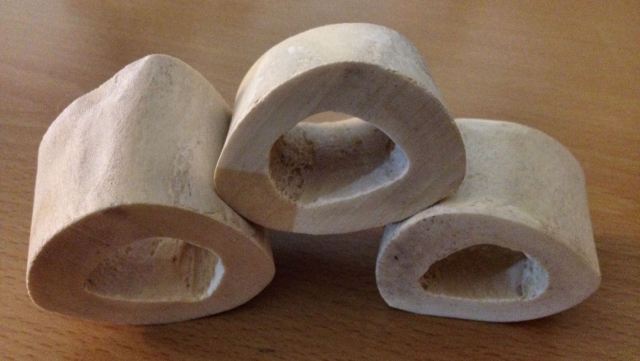
But those bones. What to do with the bones? Finally found a use.
In the past month, I opted to time my broth making to the lunar phases, once over the first quarter, a waxing moon, again through the full moon, and a final time through the waning moon, for a total of three cleaned shank bones. I noted how after the long, arduous cooking time for the broth, the shank bones pretty much could be pulled out of the pot clean, just as you see it above. I then rinsed them in rain water (the rainfall being perfectly timed where I live, if I might add, so that I could do that) and then buried the bones in sandalwood and sage ash, which I’ve collected over who knows how many times of burning sandalwood or sage here around the house, plus a quartz crystal for good amplifying measure.
The bones will then go through a few more processes this Friday through the new moon, which coincides with the first day of spring. So not only is the bone broth that I’ve made good for my health, but I’ll be able to put these bones to use, too.
Thorn Mooney recently shared her thoughts in her vlog, “Paganism, Tarot, and Class.” You really should watch her video first before reading onward, but to give background for my thoughts here, I’ll try to recap.
Mooney talks about witchcraft as a practice occurring lower down on Maslow’s hierarchy of needs, a practice that is more concerned with practical applications, like talking to the dead, love spells, money spells, or getting jobs. She uses the phrase “real world, tactile, necessary things.”
Those who endeavor into the esoteric or metaphysical, she says, are more concerned with self-actualization, per Maslow’s hierarchy, which is at the top of the pyramid. They’re working through long-term emotional or spiritual concerns, striving to be their best selves, and can endeavor with these concerns because their basic physiological needs have been met.
She then talks about how all that translates in her professional tarot readings. She has found, per her own experiences, that those who request readings from her online tend to ask about issues relating to purpose in life, spiritual direction, meaning, connection to deity or deities, which she acknowledges are very “important,” but “not critically important in the sense that, oh, ‘I might be evicted from my home tomorrow'” important.
::nods:: I get that.
In contrast, reading requests she gets from the shop she works at (i.e., in-person readings, I presume), clients are asking questions like “I don’t have any money to afford a lawyer and my ex-husband has filed for full custody of my kids and the court hearing is tomorrow. What is going to happen? Am I going to lose my kids?” or “My child is physically ill and we can’t afford healthcare. What do you see happening to us?”
“I am obviously not qualified to offer legal or medical advice,” Mooney remarks, “and yet I am repeatedly put in the position where I am asked to provide input, and technically [that input] is not from me, it’s from the cards, but that’s a really blurry line.”
Mooney continues, describing the nature of these lower-level-per-Maslow’s-hierarchy questions as “gritty,” noting that it’s rare for someone in that context to be asking her about finding higher meaning in the world.
And Mooney hypothesizes that it’s tied to socioeconomic class.
I recount this as calmly as possible. That is said more for my frame of mind than yours.
I had stumbled upon a fortune teller in Chinatown sitting at a makeshift tabletop. The chairs were miniature and when sitting, your knees would be up next to your ears. What had intrigued me to stop and listen in was her method of fortune telling: the tarot. You don’t see tarot divination that often among the Chinese, so of course I had to observe. A young woman about 20-ish years of age and her friend sat across from the fortuneteller. From what I overheard, the question was about love.
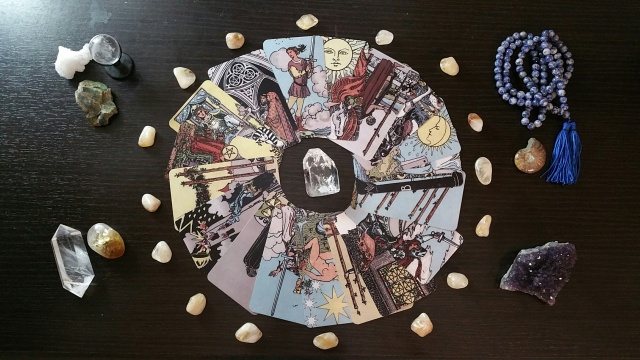
The fortune teller used what appeared to be a Marseille-based deck. I couldn’t figure out a discrete way to take photographs, so let’s assume my memory is good and go with the below reenactment, using the CBD Tarot de Marseille.
I don’t have educational degrees that would qualify me to write about any of this, so please understand that I am writing my observations within that non-expert context. Lately I’ve been fascinated with pagan and neopagan belief systems, mostly for how strikingly similar paganism is to Chinese Taoist-based folk religion.
Here’s how I understand paganism in context: Back in the day across Europe, Abrahamic religions rose to dominance, became institutionalized, and began setting up centralized bodies of authority that often started in the cities and spread its influence from there. At the fringes of the countryside, however, pagan faiths endured among the minority. These pagan faiths were polytheistic, though pantheist, strongly nature-based, and because they believed that everything was connected, it was thought that certain herbs, incantations of words, ritualistic conduct, and representations of elements could be harnessed to manifest intentions–in other words, magic exists.
Replace a few specifics from the previous paragraph and you could apply it to the relationship between Confucianism (and to a great extent Buddhism) and Chinese folk religions. These folk religions were looked upon in the same way pagan faiths were looked upon by the Christians. Those who practice pagan/neo-pagan religions (like Wicca, Druidism, Heathenry, or some form of pagan reconstructionism) tend to keep their faiths concealed or strictly private. That’s less of an issue among those who practice Chinese folk religions, and so you’ll see altars set up in Chinese businesses that still pay homage to the faiths of their [often agricultural] ancestors. However, like what pagans experience, those who still practice Chinese folk religions are considered fringe.
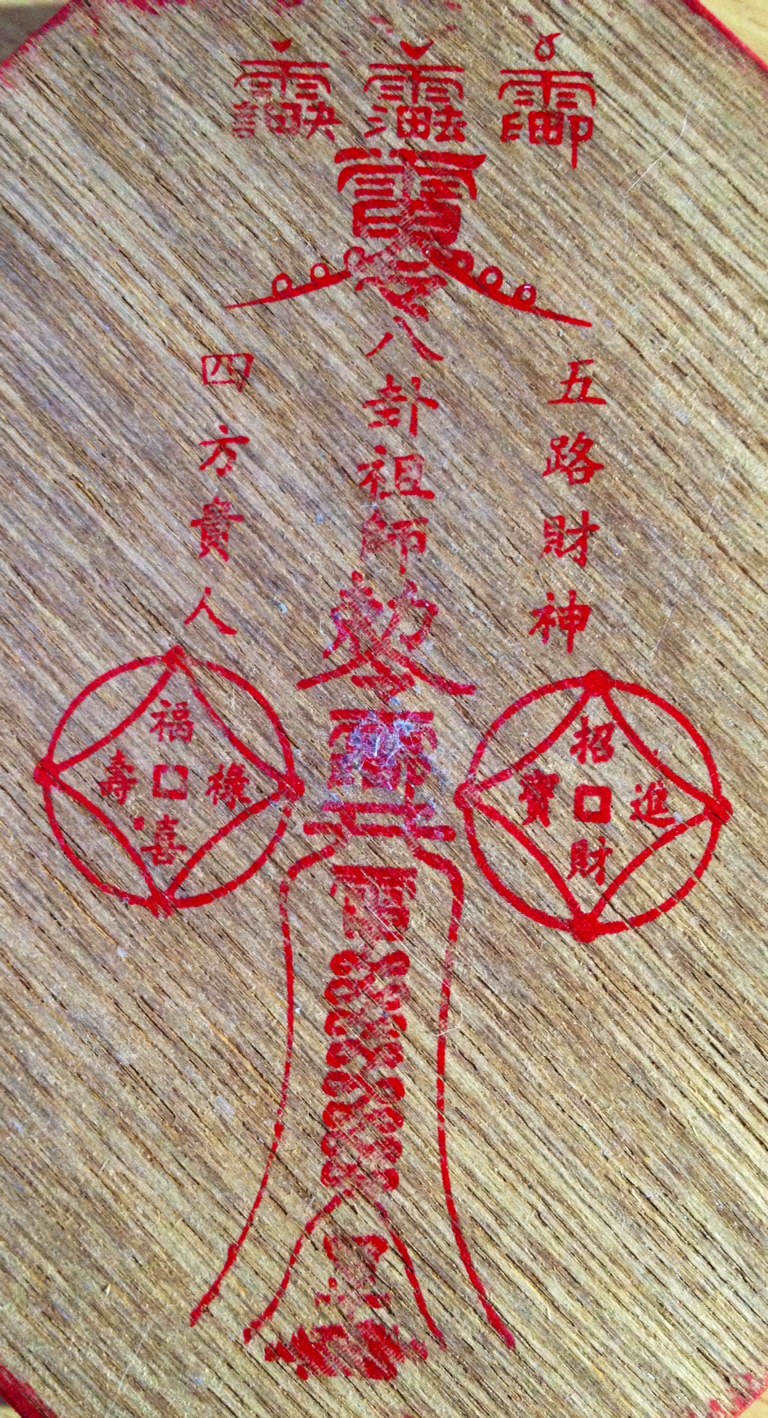
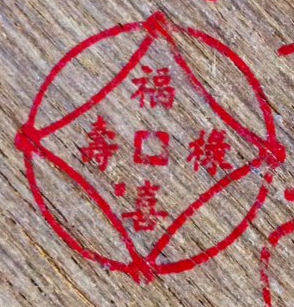
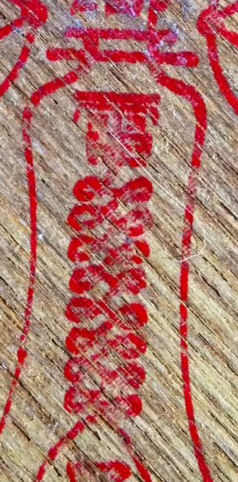
While reorganizing a closet that contained boxes of things I hadn’t touched in years, I came across some of my grandmother’s personal effects and found a trinket box with the above sigil painted underneath, on the bottom of the box. It’s a feng shui talisman of some sort, that much I know.
According to my mother and those who are in the know, it’s “a spell.” Their words, not mine. A blessing spell meant to guard and protect.
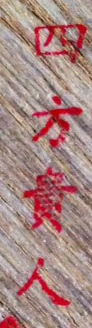
The left-most column of text calls upon the guardians of the four cardinal directions, which in feng shui theory are the Red Phoenix in the South, the Black Tortoise in the North, the Blue Dragon in the East, and the White Tiger in the West.
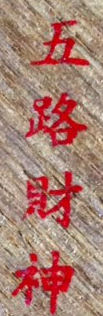
The right-most column of text calls upon the spirit guardians of the five relative directions, or Up, Down, Left, Right, and Center.
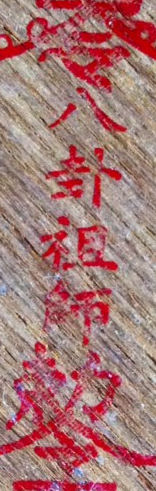
The center column is about the founder of the Ba Gua, or eight trigrams, and calling upon that energetic legacy for protection. I might liken that to praying to a venerated saint and hoping that the saint will come and bail you out of trouble.
Meanwhile the guardians of the four cardinal directions are about the universal, collective Qi energy while the guardians of the five relative directions are about the personal Qi, like a call for summoning up your own inner strength. Then the characters inscribed in the circles with the little squares at the center are just various characters for good luck and fortune, like happiness, prosperity, yada yada.
The square within the circle is symbolic of the harmony between heaven and earth. It’s basically a pictorial expression of “heaven is on my side.” The diamond thing forming the four points are representative of the four gates of…something. It’s a mandala thing.
The chain of lemniscates or infinity symbols reinforce the intensity of power or the efficacy of the spell. It’s the insurance policy. I suppose it’s like adding a string of exclamation marks behind a statement to show you really mean what you’re saying!!!!!!!!!!!!!!
Then you have the overall form or structure of the painted sigil, which is meant to represent a bell or wind chime, which is superstitiously believed to ward off evil spirits. Allegedly, evil spirits are afraid of the sound of bells, which is a pretty interesting belief if you consider the cross-cultural employ of bells in religious services. A less abracadabra way of phrasing it (though no more scientific) is to say that the sound of bells or wind chimes can scatter malignant energies or bad Qi.










 benebell wen