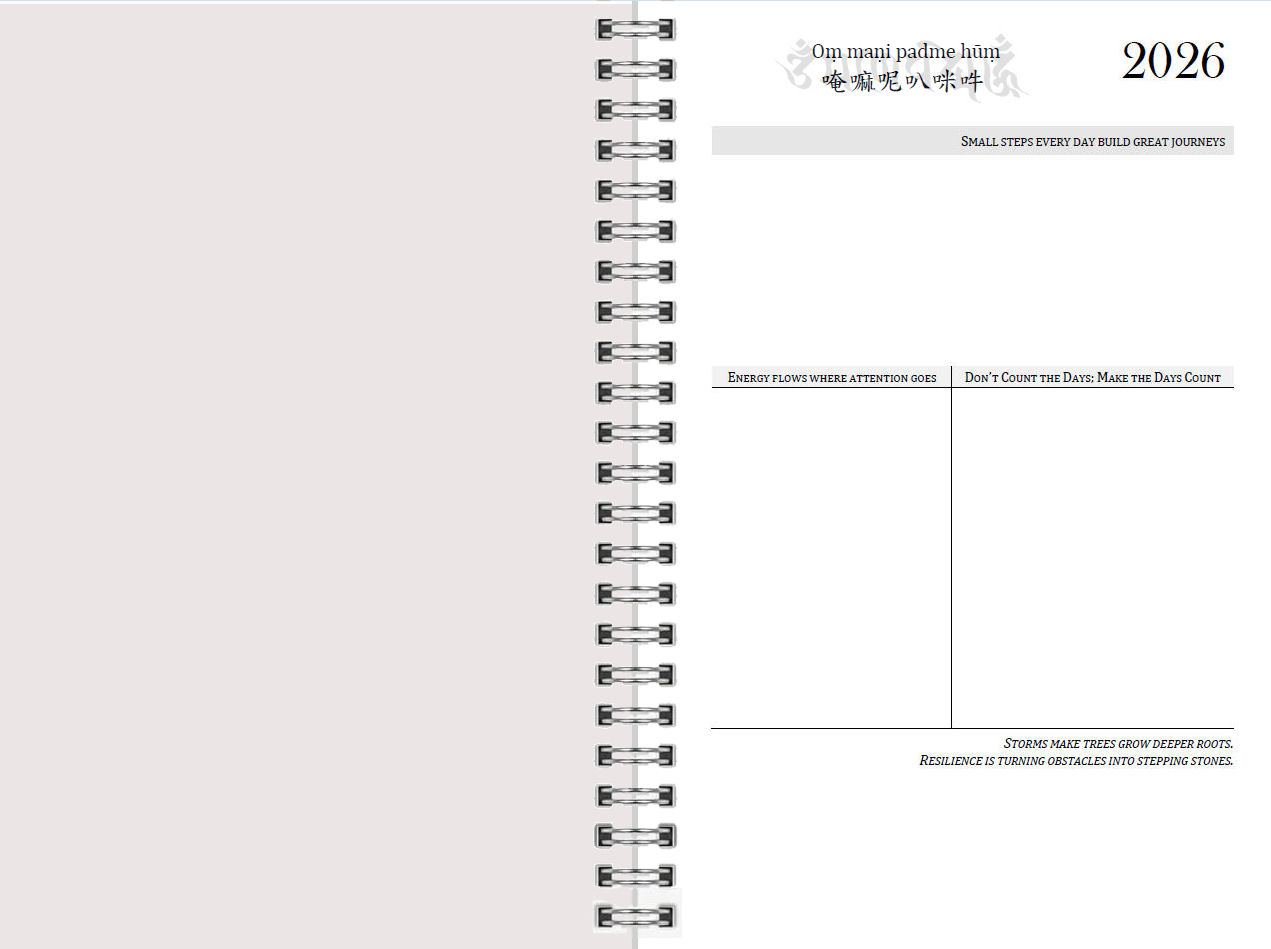
This is a walk-through of the 2026 Metaphysician’s Day Planner (MDP), highlighting new changes and edits from previous years’ MDPs and how I use my MDP. Just a reminder: If you’d like to order your 2026 MDP, go HERE.
But also, I’ve provided all the digital MS Word templates that I use to create the MDPs year to year so that you don’t even have to buy mine, but can build your own. You can download all the digital templates HERE.
My favorite part about the MDP offering is you choose your own cover art design. On THIS PAGE where you can find the template downloads, you’ll also find Dropbox links to download various cover art design options, or take the specs (you’ll find this in the MDP General Guide PDF) to design your own from scratch.
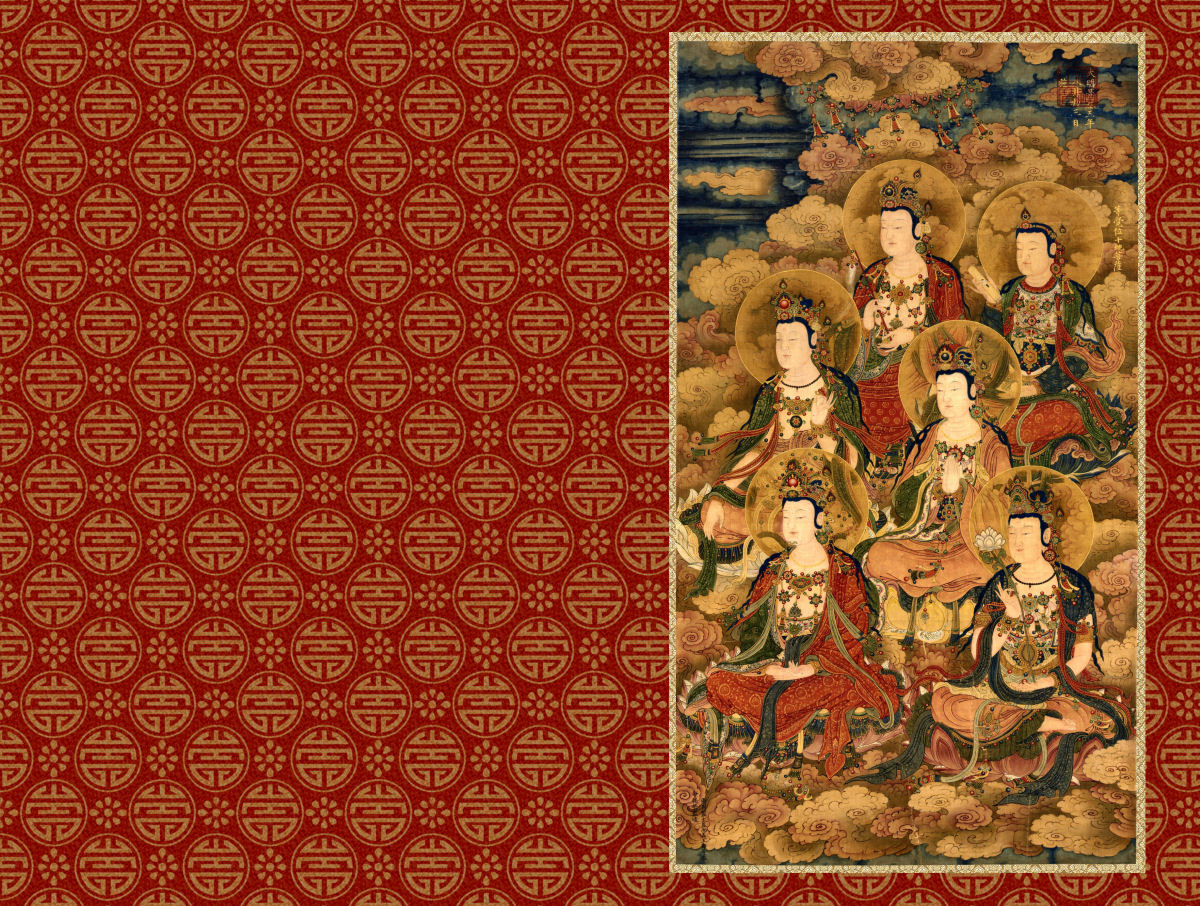
For my 2026 MDP, I’m going with this 15th century ink scroll Buddhist art of the Six Paramitas, which in Mahayana Buddhism often gets associated with the Six Bodhisattvas. This then inspired one of the journaling self-reflection page spreads that I added to this year’s MPD.
I would consider the very red cover design out of character for me. For the last three years I went with very blue choices, and heck, didn’t even get all that creative this year for my 2025 cover. I just thought, hey, this worked for 2024, I’m just going to re-use it for 2025.
The Metaphysician’s Day Planner (MDP) is going to continue, at least for another year, though for 2026, as a “Lite” scaled back offering. It’s $17 for the personalized day planner customized with your natal chart and 2026 solar returns chart, e-delivered to your e-mail address as a digital file (PDF). We recommend using Lulu.com (not sponsored) a third-party print-on-demand site to print the physical spiral-bound copy of your MDP.
A few weeks ago I announced that we were retiring the annual Metaphysician’s Day Planner offering, after nine consecutive years of making them, each one custom-made to order with your birth chart and that year’s solar return chart. Plus the companion Metaphysician’s Guide that comes with the year ahead’s astrological forecasts, auspicious dates, inauspicious dates, and the dates to notable astrological or astronomical events.
Although we won’t be selling and making them anymore, we also didn’t want to leave you in a lurch, especially since we acknowledge that many of you have come to rely on it year after year. First, thank you so, so very much for your support over so many years. That’s amazing! Second, thank you for your understanding, patience, and sympathies that it’s just no longer feasible for us to be doing this, as our process is entirely manual and “old school” in this new world of everything getting generated instantly by digital automation.
I had such a great experience recording the first chapter of my audiobook that I had to share, and memorialize in a blog post. My publisher North Atlantic Books arranged for me to record at Live Oak Studio in Berkeley, a truly fantastic place. This is for the third book, I Ching, The Oracle.
To be standing where music legends and NYT bestselling authors once stood! ::faints::
Now I kinda wish I had the backbone to ask if I could take some photos of the engineer’s setup, you know, that station in front of the glassed-in studio space with all the colorful levers and buttons. =) But it seemed like his space and I didn’t want to intrude. So, womp, womp, sad face, no impressive sound-engineer’s-giant-keyboard pics for my social media. (Do blogs even count as social media anymore?)
This was my first time in a recording studio,* and certainly my first time recording my voice narrating my own book. I left the experience with a lot of admiration for professional voice actors and audiobook narrators. Like the voice actor we chose for narrating the I Ching audiobook — he sounds like one of those National Geographic or History channel voiceover guys! It’s a skill, and maybe dare say even a talent.
*Technically, I’ve been in a recording studio before, with an entire symphony, as one violinist in a sea of violinists in the violin section of said symphony. But for sure this was my first time in a recording studio for totally-me reasons.
Just because you wrote the Thing doesn’t mean you can competently read the Thing aloud, especially since I would not call my writing style “conversational.” So when you read it aloud and your writing style departs from your personal “conversational” style of speaking, it comes across as awkward.
Fortunately, the sound engineer was fantastic. He coached me really well, telling me when I was speaking 10% too fast and needed to slow down, when my energy wasn’t matching my last paragraph, and flagging words that had just the most subtle stumble, or even when I was getting a bit too loud with my breathing (lol). I have confirmed that audiobook narration is not necessarily the best profession for you if you have asthma (I have asthma).
This audiobook recording experience left me with the unequivocal acknowledgement that I write very long run-on sentences. The sound engineer had to stop and teach me how to breathe. If you come to a really long sentence, even if it doesn’t have punctuation, put in breath marks as if it did have periods, otherwise you’ll run out of breath, as I did when I was reading my own damn book.
More fun tips I’ve learned: Apparently, eat a crisp apple before you start recording voice narration. I don’t know if that’s just folklore or if it’s scientifically legit, but a lot of voice actors swear by it, and believe it’s a thing. It’s supposed to help your voice be at its tip-top condition.
And don’t wear “loud” clothes while you’re recording. So for instance James was wearing a nylon jacket and sporty pants or something that goes swish swish every time he moved even a little, so he wasn’t allowed in the recording booth. Fortunately I’m a nerd who reads all the homework assignment materials ahead of time, so I knew to wear “soft, quiet” clothes.
To be a competent voice actor, you almost have to over enunciate words. So many of us lay people don’t realize that we mumble when we speak. There were several instances when the sound engineer stopped me and offered guidance on how to over-enunciate, because I was jumbling my words and it wasn’t as crisp as it could or should be.
For I Ching, The Oracle, I’ll be doing the voice narration for Chapter 1, the Introduction only. A pro audiobook narrator, Wyntner Woody, will be narrating the rest of it, speaking both the classical Chinese text of the Zhouyi and the English translation and annotations.
The Hubby (a native Beijingnese speaker) and I listened and re-listened– and re-listened– to the finalist list of audition reels. We debated, we re-listened, we looked up each one of their bios… which is to say we put a lot of heavy thought into who to choose. There were many different and competing factors for consideration, hence the debating and long deliberation time as we wracked our brains over who to go with.
For the audition, each voice actor recorded about a page or two from one of the introductory expository chapters and then recorded Hexagram 1, both the classical Chinese and the English. We (and particularly Hubby, because he’s the native standard Chinese speaker; the Mandarin I speak is not standard) ultimately went with Wyntner because of his more precise standard Chinese pronunciation.
Why didn’t I want to narrate the entirety of my own book? This is the analogy I give. Since I grew up listening to southern Taiwanese people (deep south) whose primary tongue is Minnan/Hokkien speaking Mandarin Chinese, my Mandarin pronunciation is not “standard Chinese.” If I had narrated my own I Ching book, it would be akin to listening to someone narrate Shakespeare with a heavy southern drawl. If you’re looking to voice Shakespeare, you’re looking for a particular way of pronunciation, right? Same here.
That and time constraints. I think the total was going to be something like 20 hours of straight narration, which means lord knows how many hours buffered around those core 20 to get those final 20 hours right.
Due to my full-time job, I would only be able to work weekends, and then you would have to coordinate with the studio’s schedule and available time slots. So ultimately it did not make sense for me to narrate my own book, and for the publisher to hire a pro.
Oh by the way, I learned that reading aloud 9,000 words equals about 1 hour of studio time. So the way they estimate how much studio time to book is based on word count. It’s not an exact accurate science, but ballpark more or less, 9,000 words is 1 hour of recorded audio.
Hubby, wearing “loud” clothes, and therefore banned from the recording booth.
Plus, James (the hubby) is more of an audiobook listener than I am, and he says that any time he sees that the book is narrated by the author, he skips it and won’t listen, because it has been his experience, as a consumer of audiobooks, that the author’s narration tends to be a bit too amateur to listen comfortably to for dozens of hours on end, and that you really do need a pro to do it. Voice acting is totally a skill. Not just anybody can or should be narrating audiobooks.
There are other interesting issues that come up with bilingual (even multilingual) narration. So, for example, Wyntner pronounces “I Ching” as you would in Mandarin Chinese, per pin yin, even when it’s in the context of an English sentence, whereas when the context is English, I just pronounce “I Ching” and even “yin and yang” the way a typical American would pronounce those words.
But then in other instances, mid-sentence while speaking English I’ll hop over and pronounce it as you would in Chinese. Wyntner is super consistent with his stylistic approach, whereas I, a lay speaker, am very inconsistent. Sometimes I pronounce “Tao Te Ching” the way you would in Chinese, per pin yin, and then other times, without explanation or rationale, I’ll pronounce it the way average Americans might pronounce it.
It’s a phenomenon you’ll observe — native Chinese speakers and non-Chinese expat/foreign speakers speaking Chinese will switch pronunciation midstream in English, and try to pronounce Chinese words as you would per pin yin, but Asian Americans do not. Asian Americans pronounce in the Chinese way when speaking Chinese, and then pronounce it the white people way when speaking English.
For example, when James pronounces his own Chinese surname in English, he’ll kind of give it a proper Chinese pronunciation to it. Whereas when I pronounce my own Chinese surname in English, I’ll just pronounce it the way white people might pronounce it, and don’t bother giving the proper pronunciation. But obv. will pronounce it the “right” way when I’m speaking Chinese. Or how you’ll hear Wyntner pronounce yang as “yahng,” with the soft-A like “ah,” which is correct, whereas I just go with the Americanized hard-A “yayng,” like “yay,” which is incorrect but has become normalized.
In any case, Hubby and I are both super glad we went with Wyntner, and we cannot wait for the final result to be out in the world!
James is currently proofing Wyntner’s narrations, listening to the entire audiobook, and he reports that my book is actually very, very interesting! =) Yay! James says that my I Ching book is so interesting to listen to that he even paused between sections to go look stuff up and read more on the history! I’ve earned myself a new fan, in the form of Hubby! =D [I mean, it’s not like he read a single page of Holistic Tarot or The Tao of Craft, so this is ah-mazing!]
As for the I Ching audiobook, it is going to be significantly different from the printed book, for many reasons. One, the audiobook omits all the exercises (basically the whole “grimoire” part of the book), the entire divination how-to section (so the audiobook has nothing in there that teaches you how to do the divination procedure, whereas the printed book dedicates a big whopping chapter to all the ways), and any passages that reference tables, charts, or images had to go, or be rewritten so that you’re not making references to phantom visuals.
The I Ching audiobook’s purpose, as I see it, is to hear the classical Chinese recitations of the hexagram verses side by side with the English translation and then my annotations. The chapters that cover the history, mythology, and cultural lore of the I Ching also makes sense as an audiobook. But the more practical hands-on elements, I feel, need to be either in printed book form, with the written instructions plus illustrative images, or as a video tutorial.
Also, the audiobook does not include any of the end notes. In a few select instances, Wyntner recommended that he include a few additional statements to integrate some of what I wrote in the end notes, as he felt the explanatory material in the end notes would help provide clarity to the text, and we agreed.
I rewrote a lot of the annotations and commentaries to the Zhouyi translations (the actual I Ching text) so it would read better as an audiobook. Also, I totally rewrote the Introduction that I narrated. About half of it stayed the same as the printed version of the Intro, but then about half of it is net new. Even two hours before heading to the recording studio I was still on my computer rewriting passages!
In any event, unlike the challenges, obstacles, and frustrations I encountered during the publisher-author collaboration phase of the print book for I Ching, I really, genuinely enjoyed my experience during the publisher-author collaboration phase for the audio book version.
This is an independent study course that delves into reading a birth chart for past life and karmic insights, to explore soul patterns through natal astrology.
For more than a decade I have had on my back burner of book manuscripts a multi-volume encyclopedia on astrology, where I want to cover both Western and Eastern modalities of astrology, through the Ages.
One of those volumes was or would have been on past life astrology, but then after more thinking, that particular subject isn’t something I want traditionally published as a book. It’s not something I want to become “known” for. That meant I now had hundreds of pages of astrological reference material that I didn’t know what to do with.
So I created this handbook to be packaged into an online independent study course.
One recommended prerequisite: You have intermediate proficiency with Western astrology. The course material starts off with the assumption you can already read a birth chart through one of the established Western astrological systems (e.g., Placidus or Whole Signs), and understand house, sign, and aspects analysis.
What this course does is give you a new, additional lens for interpreting a birth chart, that additional lens being a past life reading for the native.
It’s that time of the year again, for the Metaphysician’s Day Planner. You get the day planner customized with your birth chart, solar returns chart (note specific casting method), and what you’d like printed on the interior first page.
Quarterly planning page spread sample
For 2025, the optional add-on is a Past Life Astrology Course, which comes with a hefty Handbook.
I previously showed the above in a #54321tarot tag. Whether you get the coins or cards, if you’re interested in the 72 angels correspondences, there’s a free download from me at the very end of this walk-through.
The download is so you can do a direct comparison between the 72 angels and tarot correspondences per Christine Payne-Towler’s Tarot of the Holy Light and the tarot correspondences per Frater Setnakh.
The selfie function is hard. I never know where to look…
This is a TarotTube tag started by @Kelly Bear but I’ll be participating via blog post. =) I was tagged by the lovely and precocious @JessReadsCards. The prompt is to share 5 tarot decks, 4 tarot books, 3 tarot spreads, 2 tarot reader habits or tarot reading paraphernalia, and 1 piece of advice (or alternatively, 1 tarot card you’d like to embody).
Ack. You can see my Invisalign attachments in the above photo. And of course now that I called it out, it went from 50% chance you’d see it to 100% chance you’ll see it. Also, shameless off-topic plug for my new book, I Ching, The Oracle. The first few months after an author has released a book, you’re just gonna have to brace yourself for a lot of promo. =D
It’s that time of the year again, for the Metaphysician’s Day Planner. You get the day planner customized with your birth chart, solar returns chart (note specific casting method), and what you’d like printed on the interior first page.
There’s also a 2024 guidebook with astrological forecasts for the year plus other useful charts and references. The front chapters are in the form of a workbook, guiding you step by step through how to use the birth chart and solar returns chart to write in your own individualized forecasts for the year.
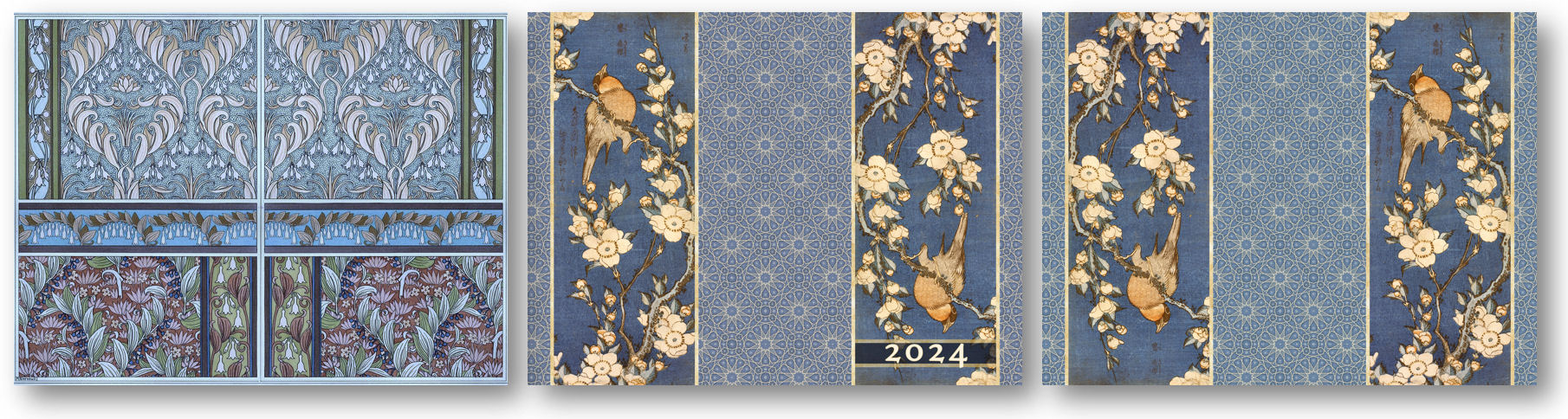
A blank journal is also included. If you like to get matching sets, the above shows what I chose for the standardized cover design for all three books, but of course, as always, you will get many cover art options to choose from and you can totally customize your own.
New to the MDP? CLICK HERE for a walk-through of its contents. In short summary, it’s customized with your birth chart, 2024 solar returns chart (though I calibrate to the day adjusted to the time zone of your 2024 place of residence rather than to the sun’s degree), and the text you’d like on the interior first page. (Most people will customize their name here, a power word for the year, or a brief phrase.) This name or text is in Prompt #3 from the Order Form below.




 benebell wen