Secret Book of the Three Sovereigns

Also known as the: 三皇文 (sān huáng wén); 三皇經 (sān huáng jīng); 三皇内文 (sān huáng nèi wén); Version transmitted to Ge Hong: 小有三皇文 (xiao you sān huáng wén)

Is the Seal of the Nine Immortal Realms 九老仙部印圖 from the Secret Book of the Three Sovereigns 三皇內文遺秘, which is now canonized in the Daozang, or Taoist Canons, part of the lost, legendary grimoire, the Book of the Three Sovereigns 三皇文?

According to lore, during the Three Kingdoms Era (220 – 280 AD), the Taoist mystic and later an ascended master Bó Hé 帛和 finds this text buried inside a stone wall atop Mount Xīchéng 西城山. From Bó Hé’s teachings arose of the earliest traditions of Taoist magic: the School of Bó Taoism 帛家道 (bó jiā dào), or The Way of Bó. Popular among the upper class during the Jin (266 – 420 AD) and Wei (386 – 534 AD) dynasties in the northern central plains of China, the tradition focused on study of the Book of Three Emperors and formulated their own approach to talismanic magic, invocation of gods, and alchemy.

Then, around 300 AD, atop Mount Songshan 嵩山, the Taoist occultist Bao Liang 鲍靓 receives this text painted on silk, as transmitted to Bó Hé. Bao Liang was a renowned master of various occult practices, from astrology and alchemy to necromancy. He married his daughter Bao Gu to the alchemist Ge Hong.

Continue reading “Secret Book of the Three Sovereigns”

Social Media Witchcraft: Grifters, Aesthetics, Consumerism, Gatekeeping | #Occultea

Random photo inserted here because pretty. Don’t hate the player hate the game.

I’m looking forward to many and different voices adding to the discussion “Social Media Witchcraft: A Community Conversation About the Things That Divide Us” via the hashtag #OcculTea. The hosts are kickstarting the conversation off with these videos from Ella Harrison, Polish Folk Witch, and The Redheaded Witch.

“All members of the occult & witchcraft community – not just content creators or big names, but everybody” is invited to participate in this discussion, with the hope that the hosts might later facilitate a live community panel.

It’s a bit of an unanticipated synchronism that just yesterday I posted my commentary on personal branding pressures on authors and social media, and then today I am posting this. Collective thoughts around the same theme often surface at the same time within a community, and I think that’s what’s happening here. Ivy The Occultist had posted “Are Modern Witchcraft Books Failing Modern Witches?” on Feb. 12 and this #Occultea open invite on Social Media Witchcraft went out on Feb. 21. I thought that was kind of cool timing.

Introduce Yourself

If you’re reading my blog in the year 2024, then you probably already know a thing or two about me. But in case you’re new here by way of the hashtag, hi! I’m the author of three books: I Ching, The OracleThe Tao of Craft; and Holistic Tarot. You’ll often find me as a keynote at various tarot and witchy conferences.

By day I am a practicing attorney and my career obligations occupy most of my time. Writing and creating educational videos on topics I’m passionate about and reviewing books and decks to help promote artists and creatives are my hobbies.

I was born and raised in the cultural traditions of both Buddhism and Taoism. I trained in Buddhism, spent nearly every summer month from early childhood until young adulthood at monasteries sweeping floors, doing shaolin (badly), and meditating. There’s this joke among us Asians that you know an Asian kid grew up in Buddhism when they don’t know any of their masters’ names. Because they were all just shi fu to us. =)

Now let’s get started on the prompts.

Continue reading “Social Media Witchcraft: Grifters, Aesthetics, Consumerism, Gatekeeping | #Occultea”

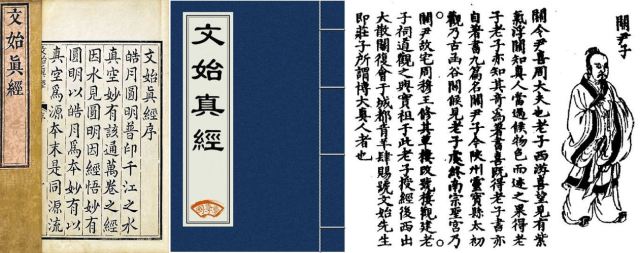
The Guan Yinzi

also known as the Wen Shi Zhen Jing: Sutra of Magical Spells and Aphorisms for Attaining Primordial Truth

The more recognized naming convention for the sutra is the Guan Yinzi (闕尹子) or Wen Shi Zhen Jing (文始真經) attributed to the gatekeeper who Laozi encountered.

The Guan Yinzi (or Wen Shi Zhen Jing)

According to lore, the gatekeeper at the Western Pass, named Yinxi 尹喜, later given the name Wenshi (文始), transcribed the teachings of Laozi and that text became the Tao Te Ching (道德經). Alternate tellings have Laozi writing the teachings down into two books himself, which the gatekeeper then receives.

Continue reading “The Guan Yinzi”

Frater Setnakh’s 72 Angels Talisman Coins and Cards

I previously showed the above in a #54321tarot tag. Whether you get the coins or cards, if you’re interested in the 72 angels correspondences, there’s a free download from me at the very end of this walk-through.

The download is so you can do a direct comparison between the 72 angels and tarot correspondences per Christine Payne-Towler’s Tarot of the Holy Light and the tarot correspondences per Frater Setnakh.

This post is a photographic walk-through of the 72 Angels Talisman Coins and Cards created by Frater Setnakh.

Continue reading “Frater Setnakh’s 72 Angels Talisman Coins and Cards”

Dragon Gods, Land Spirits; the Hakka

I’m compounding several different topics into one video and probably should have done separate videos for each topic, but for me, they’re all related to each other, and so I guess from that personal perspective, it makes sense for me to be presenting them in one bundle.

Upfront, let’s clarify: I’m not teaching, I’m sharing. I wanted to learn more, went out and attempted to learn more, and this video and companion blog post is just me passing on to you what I’ve learned.

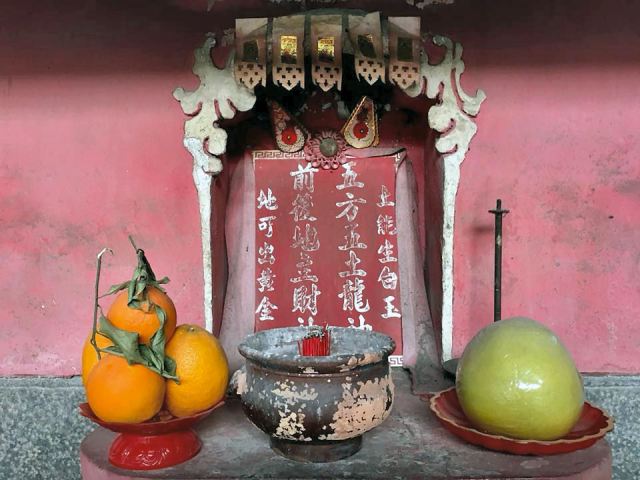
Dragon Gods of the Earth 土地龍神

Image Source: 香港古蹟行腳

Dragon god(s) (土地龍神, tǔ dì lóong shén ) are personifications of the land, where mountains and rivers meet, and thus from a feng shui perspective, reveal dragon veins (龍脈, lóong mài).

Rituals (such as 化胎, Huàtāi; in Hakka, it’s pronounced Fā Tói) can be performed to harness the qi or powerful essence from these dragon veins to bless a home and bless lands that the Hakka now occupy to ensure good harvests, prosperity, safety, protection, and good health.

What’s distinct about Hakka dragon spirits veneration is its association with the earth rather than water. Traditionally in Chinese lore, dragon spirits/gods 龍神 and the Dragon King 龍王 are associated with the temperaments of the seas.

Continue reading “Dragon Gods, Land Spirits; the Hakka”

Your Inner Palace 元辰宮 and the Akashic Records

This blog post is an addendum and continuation after what I discuss in the video linked above.

The Akashic Records is very much a Western conception, right? The Theosophists of the 19th century formulated a mash-up of Eastern and Western esoteric traditions and from that mash-up came its most popular legacy– the Akashic Records.

Most of us get that the “Akashic” part was inspired by the akasha, a fifth element or essence found in various Asian traditions, associated with the sky, space, aether, and in Buddhism, even a state of mind. But what about the “Records” part?

But first, I’d like to start with the discussion on akasha and godhead.

Continue reading “Your Inner Palace 元辰宮 and the Akashic Records”

The Esoteric Buddhism of Japan Oracle Cards (Yuzui Kotaki and Miki Okuda)

The Esoteric Buddhism of Japan Oracle Cards is so beautiful, so awe-inspiring that I treat it as I would a sutra — all the Buddhist etiquette applied to sacred texts I apply to how I handle this deck.

Acharya Yuzui Kotaki is a Shingon Buddhist teacher and a vice-chief priest of the Maginosan Ren-join Temple in Kanagawa, Japan. Miki Okuda is a painter, both in traditional and digital media who specializes in Buddhist religious art. The deck was first released in 2021, and I don’t know how it flew so under the radar in the tarot community.

Continue reading “The Esoteric Buddhism of Japan Oracle Cards (Yuzui Kotaki and Miki Okuda)”

Descent into the Underworld: Guan Luo Yin, a Wu shamanistic practice

Guan Luo Yin 觀落陰 is a practice of wu shamanism 巫術 found primarily in the South Pacific. While methodologies will differ, one approach is as an astral journey to the underworld to see the spirits of those who have passed on; another is as a method of “remote viewing.”

Some traditions conceptualize the descent as beginning from the entrance to a cave at the base of a mountain (associated with the Kunlun Mountain). Others conceptualize it as a palace with many floors descending (as opposed to ascending the way floors of a building are constructed in the physical earthly world).

This video serves as an introduction to the practice.

See also:

#54321Tarot

The selfie function is hard. I never know where to look…

This is a TarotTube tag started by @Kelly Bear but I’ll be participating via blog post. =) I was tagged by the lovely and precocious @JessReadsCards. The prompt is to share 5 tarot decks, 4 tarot books, 3 tarot spreads, 2 tarot reader habits or tarot reading paraphernalia, and 1 piece of advice (or alternatively, 1 tarot card you’d like to embody).

Ack. You can see my Invisalign attachments in the above photo. And of course now that I called it out, it went from 50% chance you’d see it to 100% chance you’ll see it. Also, shameless off-topic plug for my new book, I Ching, The Oracle. The first few months after an author has released a book, you’re just gonna have to brace yourself for a lot of promo. =D

Continue reading “#54321Tarot”

Changes to the YouTube Channel and Access to Past Videos

In an effort to curate the publicly visible videos on the Benebell Wen YouTube channel, many past videos are now unlisted but still publicly available via the Playlists tab.

For a ballpark sense of how many videos are now unlisted, as of this posting only 129 of 405 total videos are publicly visible in the general Videos tab and thus only those 129 videos are searchable on the YouTube platform.

Continue reading “Changes to the YouTube Channel and Access to Past Videos”