2025 is poised to bring rapid technological advancements with artificial intelligence, an increasing need for global response to climate change, continued escalation of geopolitical conflicts, and deepening societal faultlines, with much of that all but written in the stars.
Let’s talk about general global forecasts for the year to come. We’ll cover the following:
Anyone else notice the intensity of recent conversations swirling around so-called girl bosses and trad wives?
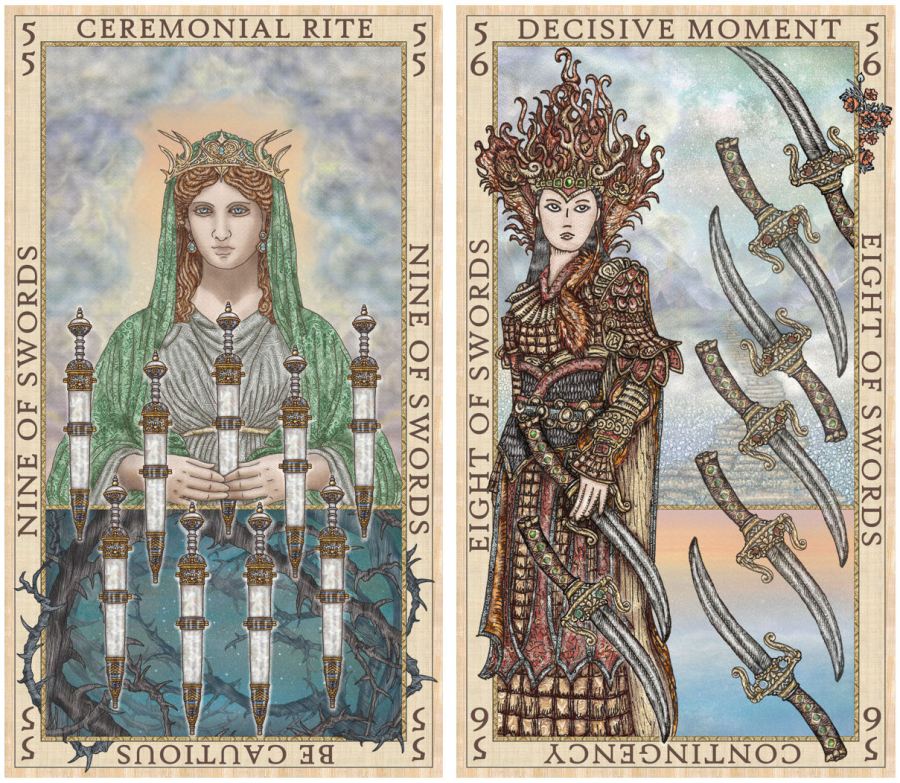
Funny enough, as I nosily listen in on video essays, podcasts, and commentaries, I’ve been sketching the Eight and Nine of Swords from my Etteilla deck.
Now you’re like, wait what does the Eight and Nine of Swords in the tarot have to do with girl bosses and trad wives?
I thought nothing. But the illustrations I seem to have subconsciously done at this time sure are amusing.
Chronologically I worked on Card 56, the Eight of Swords first, which appears to give off girl boss energy, then moved on to Card 55, the Nine of Swords, which one might identify with trad wife.
This blog post is another installment of my Etteilla Tarot art project status updates.
At the same time I thought it’d be fun to pepper in some rambling on this whole trad wives, girl bosses conversation du jour.
I kind of feel bleh for talking about AI so much, but everyone in every nook and corner of my life, personal and professional, is talking about it, so it’s hard to avoid wanting to chime in.
When you’ve got multiple thumbs in varying (and very different) pies, you’re exposed to a diversity of opinions, and wow is it diverse. If you’re only mingling in liberal arts circles, then you’re not hearing, truly hearing, the discussions about AI happening in the scientific circles, and if you’re only mingling in scientific circles, then you’re not hearing, truly hearing, the discussions about AI happening in the liberal arts circles. And so it’s been interesting hopping from one camp over to the other and back to witness the contrast.
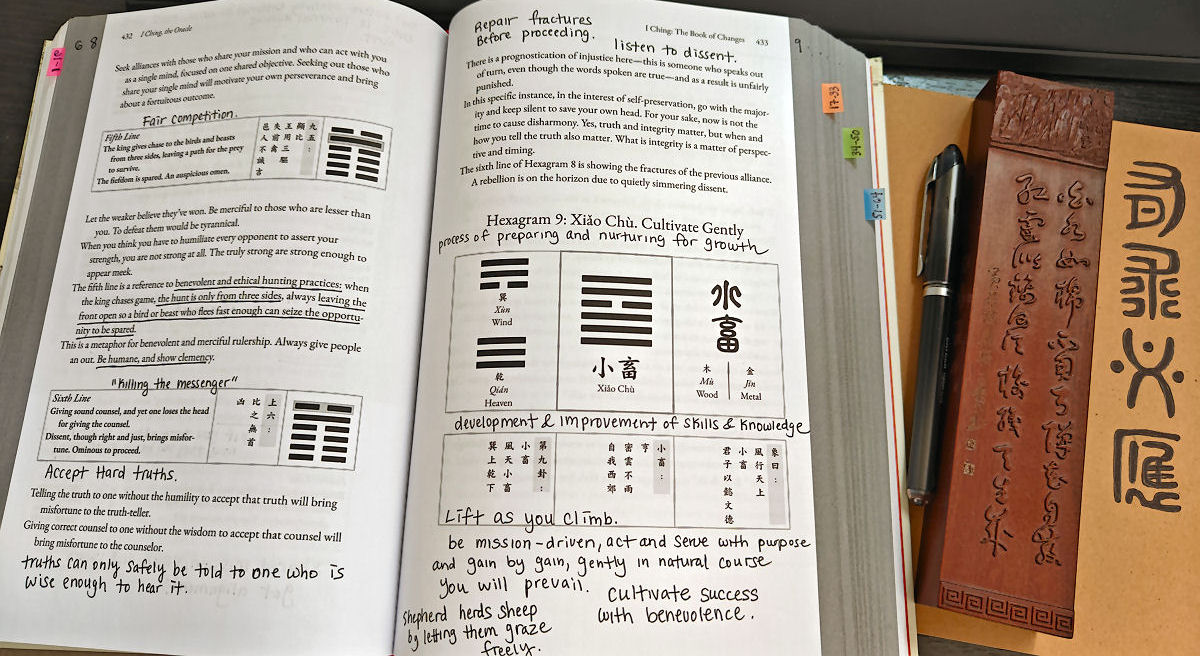
Just thought it’d be fun to share some snapshots of how I mark up my copy of I Ching, The Oracle with notes.
Every facet of my disposition – even fate, the cards I’ve been dealt in life – seems to be on a cusp. Astrologically by both Eastern and Western charts I’m a cusp baby. Cultural identity wise, mine is the hyphenated experience. I’m agnostic when it comes to party lines, but you’ll certainly hear the far right calling me too woke, and the far left calling me too trad.
I’m often too structured and austere for the creative arts community and too sensitive, too mystical-leaning for the corporate world. I like agendas, strategic plans, and realistic goal-setting; I value efficiency, utility, and productivity, all attributes that do not go over well with the creative arts community. I also account for unseen influences, trust my psychic impulses, and value empathy, compassion, mercy, softness, vulnerability, and kindness, attributes heavily frowned upon in the corporate world.
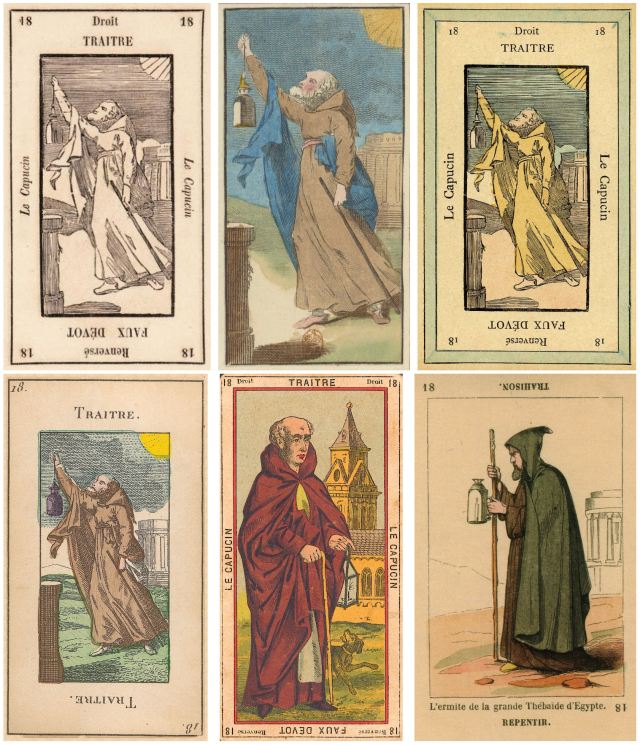
It’s been a while since I gave an Etteilla deck-in-progress update. I finished working on Card 18, The Hermit, oft named The Capuchin (an order of Franciscan friars) or simply titled with the keyword “Traitor.”
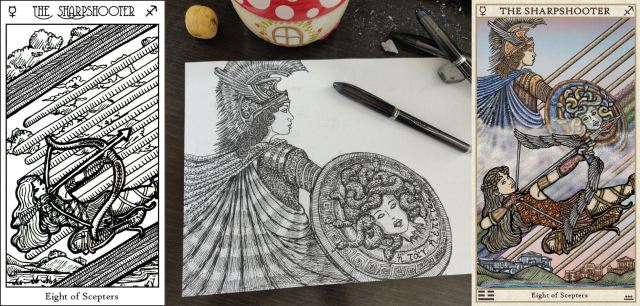
As I was drawing, I got to thinking about the qi in works of art, per the qi of their artists. That in turn got me thinking about the qi of AI and AI-generated images.
Just so we’re clear, no part of my art process includes AI, AI generated images, just– any of that stuff. The most high-tech we get is the capabilities of a 2004 digital painting software that has since gone defunct, so this software program no longer even exists.
But back to the point of this rumination…
If we are to believe in the principle of qi as a force imbued in all things that are sentient or created by sentient beings, then works of art have qi.
In fact, that has always been one of the fundamental factors of valuing art from a Taoist perspective — assessing the qi of the artist’s hand apparent in the art.
Random photo inserted here because pretty. Don’t hate the player hate the game.
I’m looking forward to many and different voices adding to the discussion “Social Media Witchcraft: A Community Conversation About the Things That Divide Us” via the hashtag #OcculTea. The hosts are kickstarting the conversation off with these videos from Ella Harrison, Polish Folk Witch, and The Redheaded Witch.
“All members of the occult & witchcraft community – not just content creators or big names, but everybody” is invited to participate in this discussion, with the hope that the hosts might later facilitate a live community panel.
If you’re reading my blog in the year 2024, then you probably already know a thing or two about me. But in case you’re new here by way of the hashtag, hi! I’m the author of three books: I Ching, The Oracle; The Tao of Craft; and Holistic Tarot. You’ll often find me as a keynote at various tarot and witchy conferences.
By day I am a practicing attorney and my career obligations occupy most of my time. Writing and creating educational videos on topics I’m passionate about and reviewing books and decks to help promote artists and creatives are my hobbies.
I was born and raised in the cultural traditions of both Buddhism and Taoism. I trained in Buddhism, spent nearly every summer month from early childhood until young adulthood at monasteries sweeping floors, doing shaolin (badly), and meditating. There’s this joke among us Asians that you know an Asian kid grew up in Buddhism when they don’t know any of their masters’ names. Because they were all just shi fu to us. =)
As a tarot deck creator, it’s not enough to just do the art; you have to create social media content with your works-in-progress to keep up engagement….. Otherwise, how will you get people to buy your deck once you’re done with it?….
I saw an editor friend’s repost of this Vox article, “Everyone’s a sellout now: So you want to be an artist. Do you have to start a TikTok?” by Rebecca Jennings. It’s about the pressure on authors today to have a preexisting popular platform before publishing a book, or any creative work product for that matter. How well a book sells is determined by how well the author self-promotes. Pertinent to the circles I run in, let’s talk about tarot and witchy books.
Social media influencers have democratized culture, but perhaps have also diluted specialty creative industries. Instead of an experienced, established industry expert who is the gatekeeper of what ought to get published, the consuming public is now collectively the “gatekeeper” determining who The Algorithm will favor. Publishers are yielding to the consumer public opinion, via numbers, on who ought to be published.
Top selling books are not necessarily by the most knowledgeable virtuoso in that field but rather, are by whichever charismatic personality has the most followers on YouTube and TikTok. Therefore, to be a top selling author, you need to cater to that consuming public. It’s not about your resume, curriculum vitae, or credentials; it’s about your personal brand.
Inspired by that article, I thought I’d share my experiences on having to navigate social media, personal branding, and platform building as an author.
I first intuited what felt like a waning phase in terms of activity and creativity in the tarot industry in 2022. But, you know, maybe it was just me. So I dismissed the thought.
Earlier this year, I started seeing comments in discussion forums from people in our community that were echoing those same thoughts. Apparently it’s not just me! I think people are really feeling it.
So I wanted to talk about my observations of the state of the tarot union as it stands now, at the close of 2023.
By “questionable” I mean authors whose morality, political beliefs, sociopolitical affiliations, or credibility have been put under compelling scrutiny.
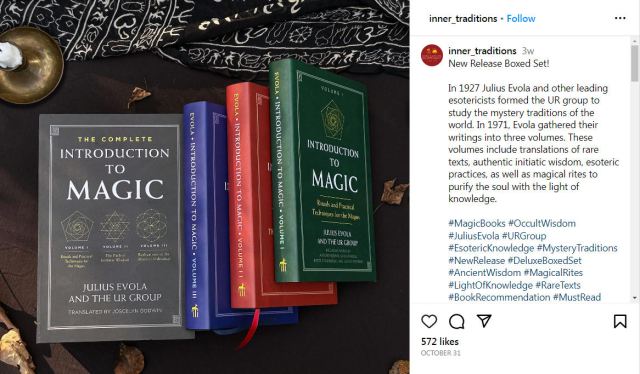
Perhaps more so than any other subject area of interest, when you navigate religious, spiritual, and occult spaces, you have to conscientiously assess and process where you stand on this point. While the issue of where you stand on condoning the reading or the publishing of works by questionable authors is ever present, it floated to the top of my thoughts recently with this announcement by the publishing house Inner Traditions:
Instagram: @inner_traditions
To explore this case study, I recommend clicking on the above IG posting and reading the comments, because I’m not going to re-post the nutty alt-right supporters who resorted to name-calling, homophobia, misogyny, and mocking people’s pronouns. There are also a few very long and thorough comments, too long to fit in a single screenshot, so I won’t be re-posting those either, though they’re worth a read.
Challenge of the announcement with all of the above aforementioned was predictable. What kind of took me by surprise was the strength and volume of voices who were saying, “This is totally fine. Hey liberals, stop being such babies.”
When I made this video, I genuinely did not think there’d be anything controversial about it. I will even continue the assumption now and say that if you actually watch it in the entirety, you, too, would not reach the conclusion that it’s trying to be anti-male. Nor will you find it laced with any ulterior motive of gender politics.
Heck, now in retrospect, I probably could have titled the video “Tao Te Ching & the Divine Feminine.” Right? It’s just that I have a complicated relationship with the concept of “divine feminine” hence I went with “feminist metaphysics.”
Within hours of its posting, I received the following comments:
This blog post starts with my reaction to the above responses, but then I’ll go off on a tangent to share some unfiltered ramblings with respect to Eurocentric Taoism and cultural appropriation.








 benebell wen