My 30 Days on the Ketogenic Diet

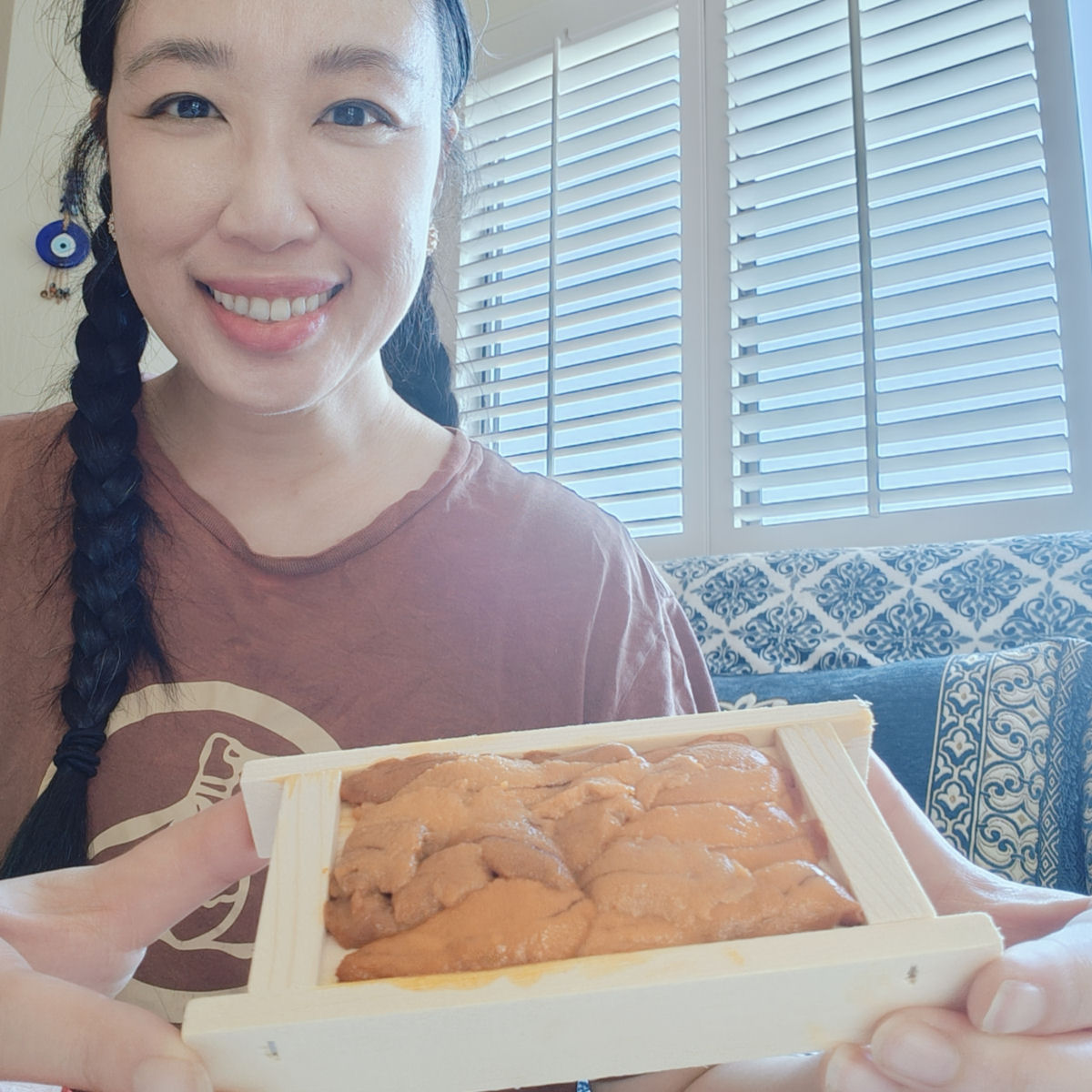
Thank goodness uni (sea urchin) is keto-friendly!

I guess I’ll start with the ending spoiler: this was not for me. Yet if keto was a cult (sometimes I think it is), the Hubby says he’d join in a heartbeat (he jokes, but you get what he’s saying). The Hubby now swears by keto.

Everything about having to be on a ketogenic diet fundamentally runs against my impulses, inclinations, my intuition, my preferred lifestyle, my joie de vivre, like this was 30 days of stripping away the meaning of life from me.

Also, at the tail end of this blog post I’ll share some woo thoughts on keto, and what I felt like was the impact of a ketogenic diet on those who are psychic or hyper-intuitive.
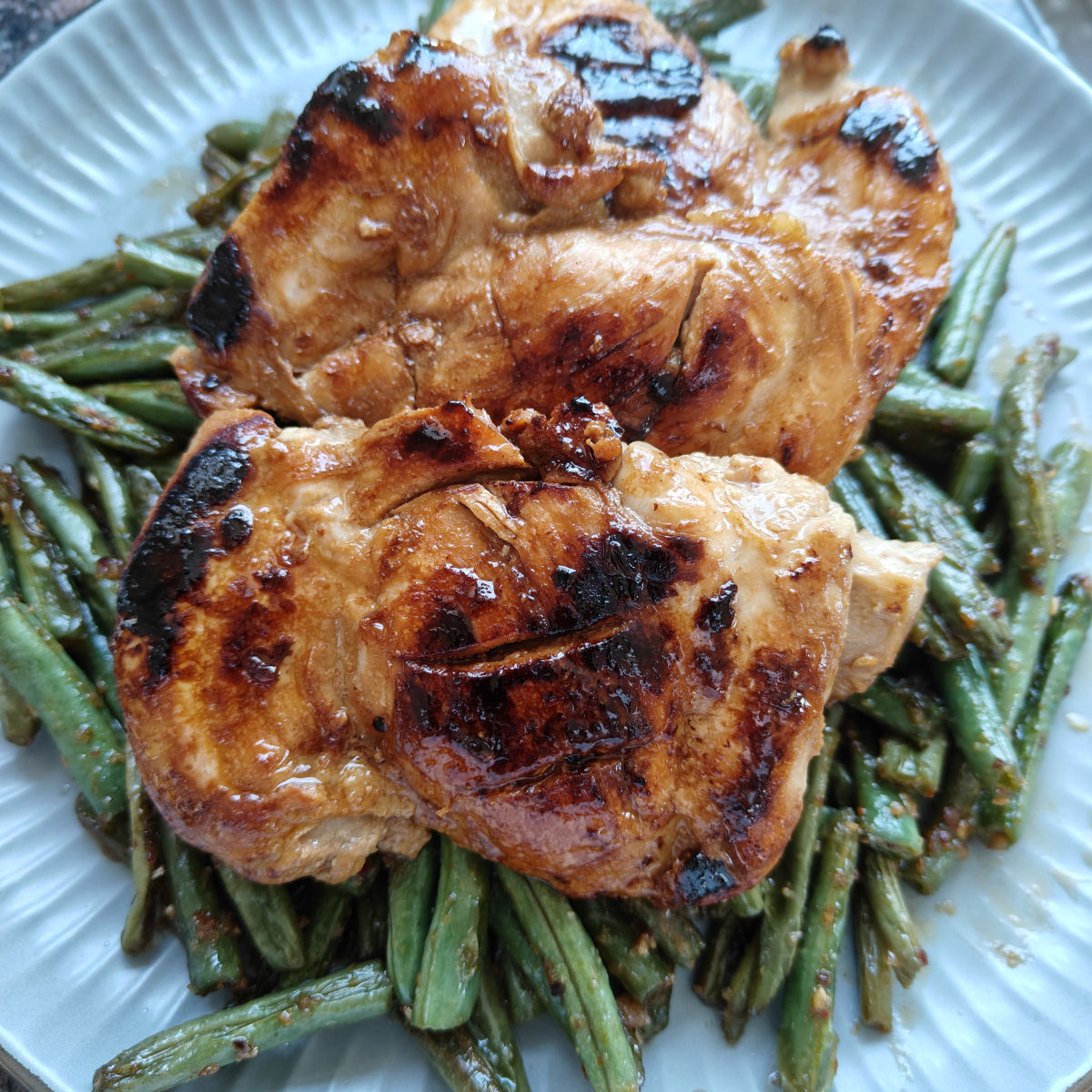
Keto-Compliant Huli Huli Chicken over Green Beans in Garlic Sauce

Balancing out the text reviewing my 30 days of keto will be keto food pics. I’ll also share a pdf download of 30 days of keto dinners. On weekends I meal-prepped for weekday breakfasts and lunches, i.e., fridge fully stocked with soft-boiled eggs, various seasoned ingredients to easily build salads, foods cut and at the ready for easy charcuterie boards.

30 Days Keto: Meal Plan Print-Out

In case you’re curious, here’s a print-out of what we ate for 30 days:

Click here for the PDF

To any keto purists reading this, yes, our meal planning included several vegetables considered “not keto-friendly,” but are nutrient-packed. I found that I had to integrate “not keto-friendly” vegetables into our meal planning to avoid vitamin deficiencies.

The problem with the keto diet (if I may…) is the high risk of nutrient deficiencies, and if you eat “dirty keto” (more on that later), then you’re probably taking in way too much sodium, way too much bad fats, etc. If you aren’t hyper-aware of what exactly you’re eating just to stay keto, you’re putting yourself at a much higher risk for elevated cholesterol, liver stress, kidney stones, and if you already have digestive issues and lack of gut microbiome diversity, you’re gonna exacerbate those conditions if you’re not super-careful on keto.

Before we continue, in case it’s not overtly obvious to you already, I’m not a nutrition scientist, I’m not an anything at all that would remotely qualify me to talk about dieting or ketogenesis. This is just a lay person cooking food in a lay people kinda way and sharing my lay person opinions on something I know nothing about (but experienced for 30 days).
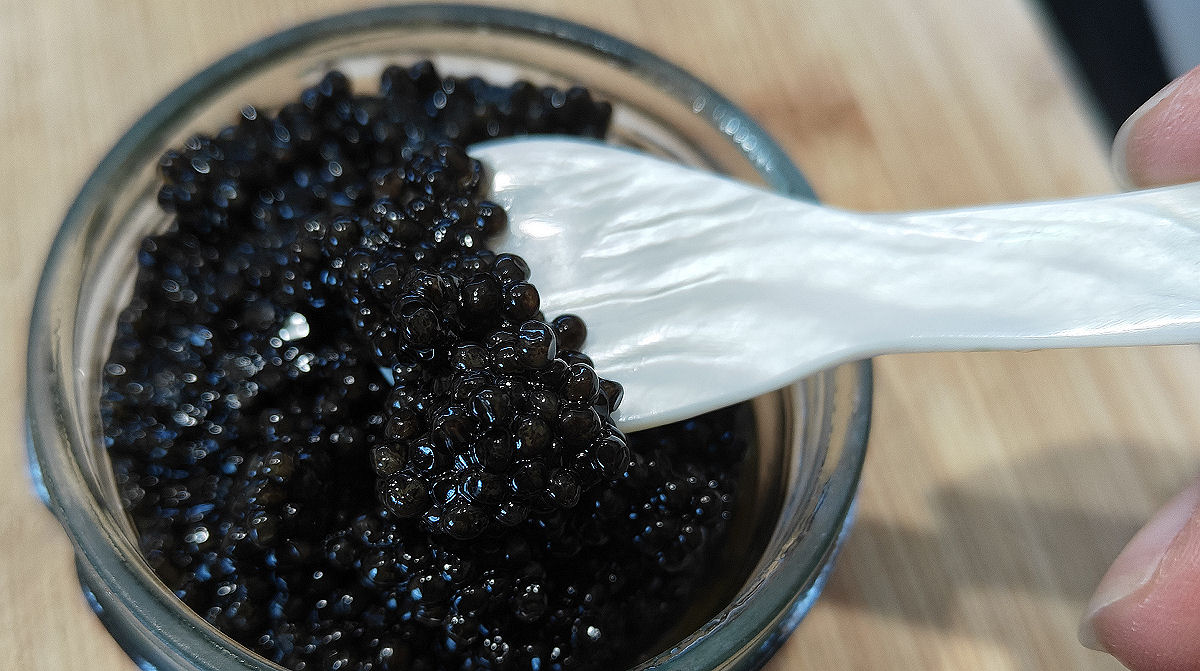
Local Northern California white surgeon roe (aka cheap caviar)

Oh, and one more thing about that print-out of meal prep. Cuisine-wise, it’s primarily East Asian, but California (specifically Bay Area) influenced, as “farm to table” as practicable, local and seasonal. If that’s not your palate, then the print-out is going to be quite useless to you. =P
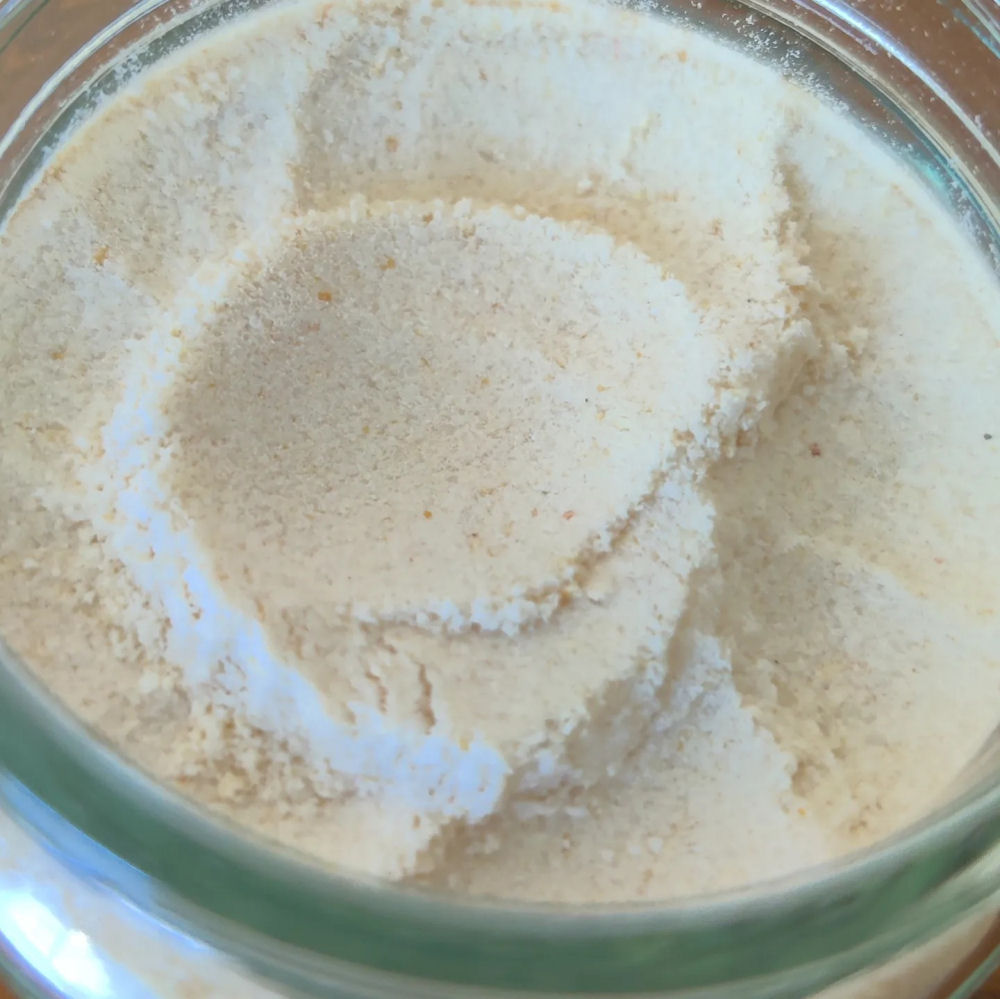
Continue reading “My 30 Days on the Ketogenic Diet”

Orange Peel and Rice Powder DIY to Treat Hyperpigmentation

I wanted to put this out there in hopes that someone googling for this info will find my post. So yes, topically it’s a bit outside my beaten path here on this blog.

I made my own citrus peel powder + rice grains powder face treatment to deal with hyperpigmentation and texture concerns, applied it twice daily for 100 consecutive days, and am now sharing my thoughts.

Continue reading “Orange Peel and Rice Powder DIY to Treat Hyperpigmentation”

How a Parent Makes or Breaks a Child’s Dream

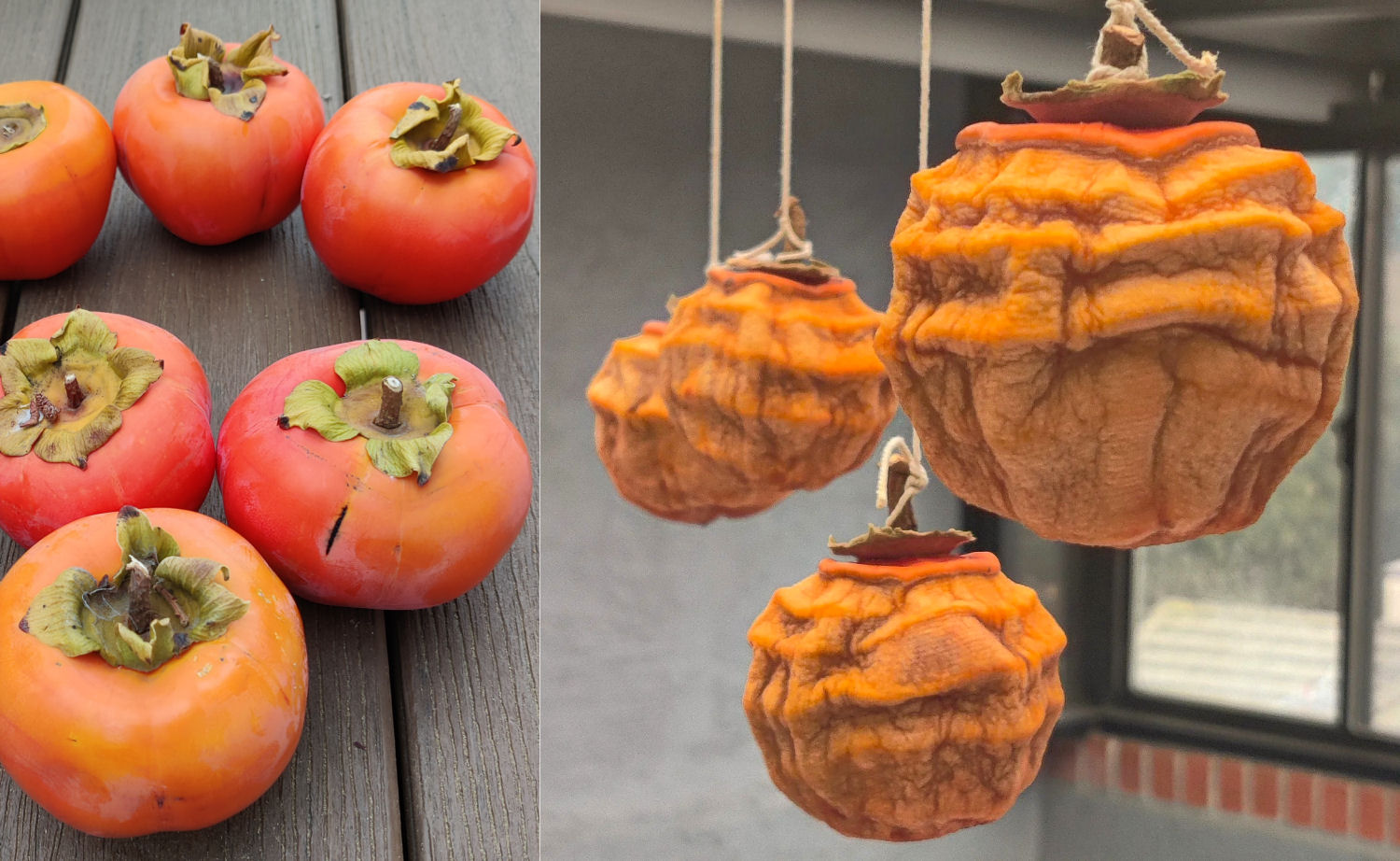
We have an abundance of persimmons this year and I remarked to the father-in-law about how I wanted to make hoshigaki, using the traditional method.

Crystallized sugars coming to the surface of the dried persimmons

Hoshigaki are peeled persimmons that you hang up to sun-dry for four to seven weeks (depending on climate/weather), and then you have to massage every persimmon weekly so it ferments evenly and the natural sugars get coaxed up to the surface of the fruit, forming this light dusting of finely crystallized sugar dust.

Sliced hoshigaki, final result

Is it magic or chemistry? I’m not quite sure. =) Meanwhile the fruit becomes deliciously gummy, like chewy candy. It is one of the sweetest and most delectable desserts you can have.

Final stage of hoshigaki — when it gets that natural crystallized sugar coating on the surface!

Immediately, before I could even complete my explanation of the process, the father-in-law shot the idea down, listing out all the ways this could go wrong, all the reasons this is not worth the trouble, just one negative statement after another.

This is his personality, his habit. He’s been doing this to James since hubby was a boy. If you’re sparked by an idea that’s just slightly more labor-intensive or slightly more aspirational than ordinary, the father-in-law’s immediate response is to shoot down the idea and be really negative about all the ways this is stupid.

Oh and if you haven’t guessed already, this is a personal blog post. Not in any way tarot, esoterica, or “in line with my branding” related. Just me sharing what’s actually been on my mind as of late, and ranting. Continue reading “How a Parent Makes or Breaks a Child’s Dream”

Cultivate Qi and How to Strengthen Your Life Force: Essential Guide to All Metaphysicians

This is the supplemental post for Bell Chimes In #39, which you’ll find on my YouTube channel. Check out all previous Bell Chimes In episodes here.

Most Eastern esoteric paths espouse that a practitioner of any esoteric art should proactively cultivate and strengthen the personal Qi, or life force, because when you do any form of intense metaphysical work, you’re drawing from that pool of personal Qi. If you’re not mindful of replenishing that Qi, then the constant weakening of your life force from the occult work that you do (this includes divination) can cause physical and mental health concerns. So to maintain optimal wellbeing–and that’s physical, mental, and psychic-spiritual wellbeing–cultivation practices are necessary.

Image source: pxhere.com

The Metaphysician’s Qi

Divination, ceremonial ritual, mediumship, channeling, pathworking, spell-crafting, astral journeying—these practices are believed to exhaust a lot of your personal life force, and so as a metaphysician, you want to establish a routine practice of cultivating and strengthening your Qi, or life force, to maintain your wellbeing. Otherwise, you can become more susceptible to illness, both of the physical and mental variety.

Taking measures to cultivate and strengthen personal Qi is a practice everyone and anyone can benefit from, much like how everyone and anyone should be mindful of nutrition and physical exercise. However, the nutritional needs of your everyday office worker is very different from the nutritional needs of an Olympic swimmer. So we can make the comparison here of an occultist to the Olympic swimmer, because it’s considered an out-of-the-ordinary lifestyle, and so your nutritional needs– in this case psychic-spiritual nutritional needs– will be different from the average person.

Let’s cover six ways a metaphysician can cultivate Qi:

  1. Qi Gong
  2. Basic Meditation
  3. Diet, Herbology, and Traditional Chinese Medicine
  4. Warding Your Living Space
  5. Ancestor Veneration
  6. Beneficence

Continue reading “Cultivate Qi and How to Strengthen Your Life Force: Essential Guide to All Metaphysicians”

Tarot BlogHop: Tarot and a Seven Course Brunch

PREVIOUS BLOG | MASTER LIST | NEXT BLOG

food-and-tarot

I’m thrilled to be participating in the “Foodies Guide to the Tarot” BlogHop hosted by our co-wranglers Jay Cassels and Arwen Lynch Poe. The topic was left wide open for us bloggers to go in any direction of our pleasure, as long as it had to do with tarot and it had to do with food. I’m thinking I’ve done just that.

The Major Arcana of the tarot deck can be subdivided into Three Septenaries. The First Septenary of the Major Arcana is about the primal dramas of the ego, expressed by the first seven Keys of the Majors: Keys I through VII. You can read more about the Three Septenaries here.

Menu Planning with Tarot?

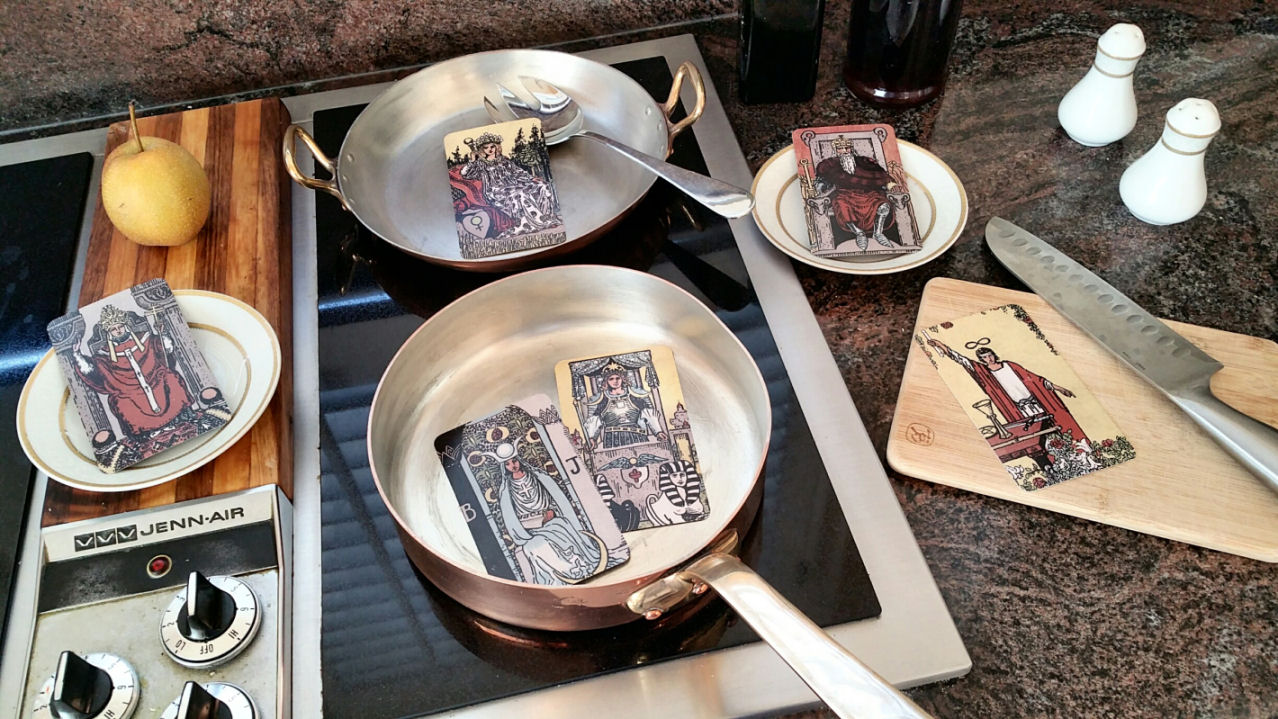
Inspired by the First Septenary, I will be preparing a seven course brunch for Hubby and me. (Jay and Arwen: the hubby thanks you for your BlogHop topic idea). Here we go.

Continue reading “Tarot BlogHop: Tarot and a Seven Course Brunch”

Review of Healing with Whole Foods by Paul Pitchford

Healing_with_Whole_Foods_by_Paul_Pitchford

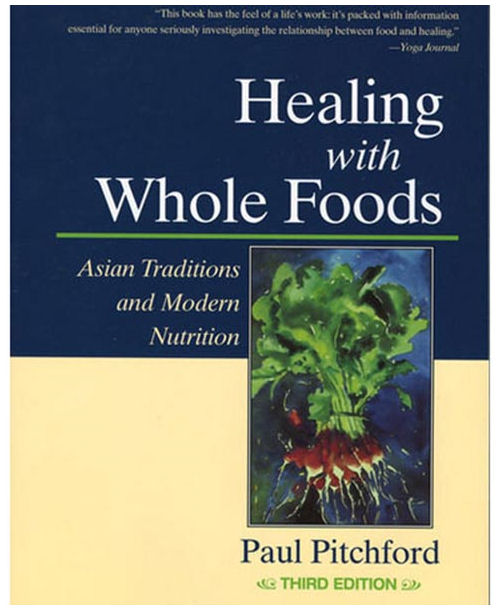
Healing with Whole Foods: Asian Traditions and Modern Nutrition by Paul Pitchford (North Atlantic Books) is one of those reference tomes every holistic healing practitioner will want to have in the personal library. I’ll be reviewing the Third Edition published in 2002. It was first released in 1993 and since then, over 500,000 copies have been sold and no wonder.

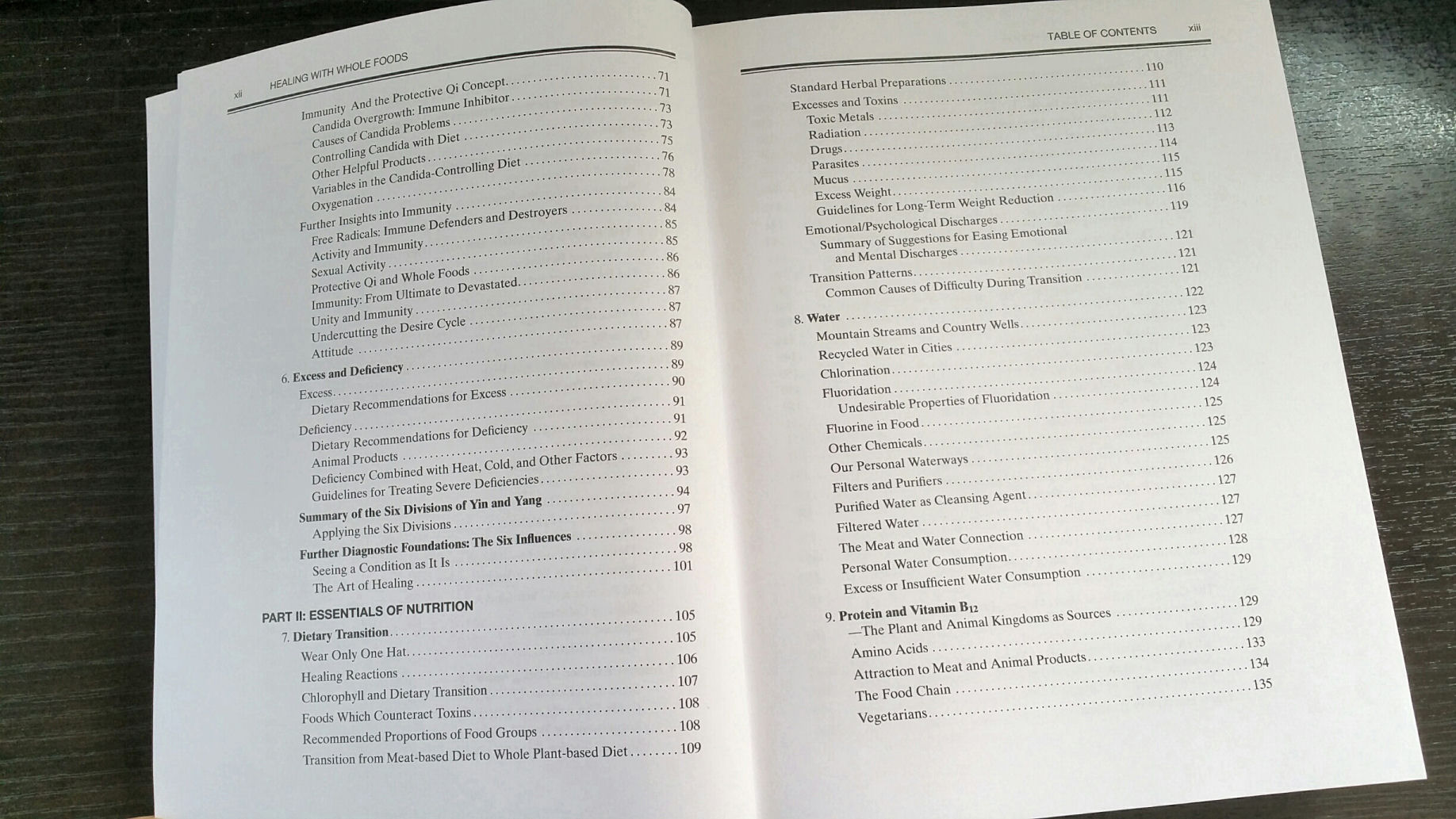
Click image to enlarge.

Healing is well-organized, which is a prerequisite for any reference book. He begins where every holistic healer using traditional Chinese medicine would begin: covering Qi vitality and the binary of yin and yang, which he then expands on to cover hot/cold temperaments; interior/exterior physical conditions; and diagnosing for excess versus deficiency.

Continue reading “Review of Healing with Whole Foods by Paul Pitchford”

Edible Rune Divination: Black Sesame Shortbread Rune Cookies

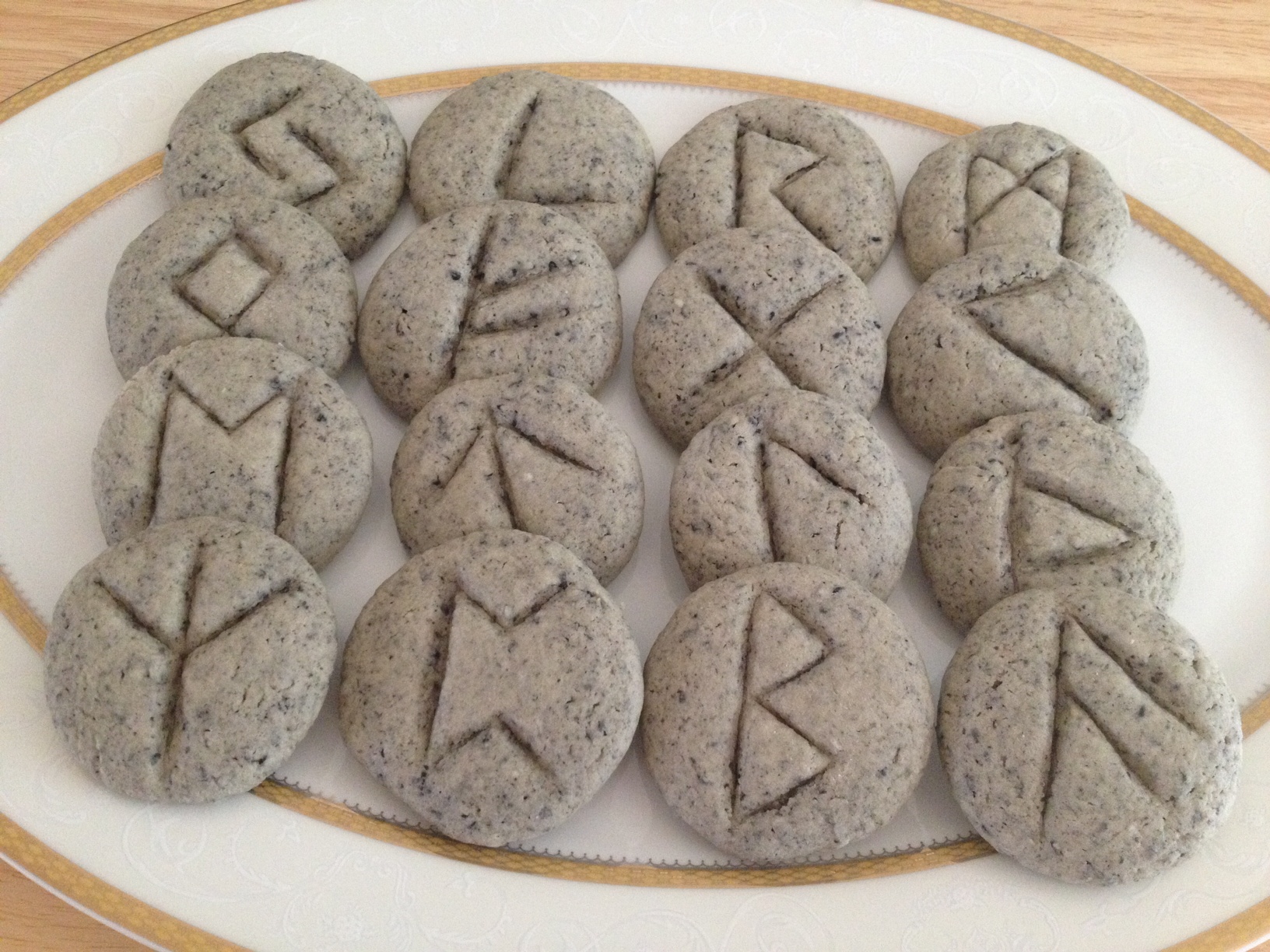
Rune Cookies 01

These black sesame shortbread rune cookies look like beautiful stone runes but are also absolutely delicious to eat. I am so excited to be sharing this recipe, which comes from a book I’ve been loving, Kyotofu: Uniquely Delicious Japanese Desserts by Nicole Bermensolo and Elizabeth Gunnison Dunn. It’s published by Running Press.

The recipe in Kyotofu is just for straightforward black sesame shortbread cookies, a fantastic recipe, and then I took it a step further and turned these cookies into runes. Now, I don’t know much about runes or rune divination, so bear with me here and I welcome any corrections in the comments section.

Continue reading “Edible Rune Divination: Black Sesame Shortbread Rune Cookies”

Jujubes: Traditional Chinese Medicine That Tastes Good

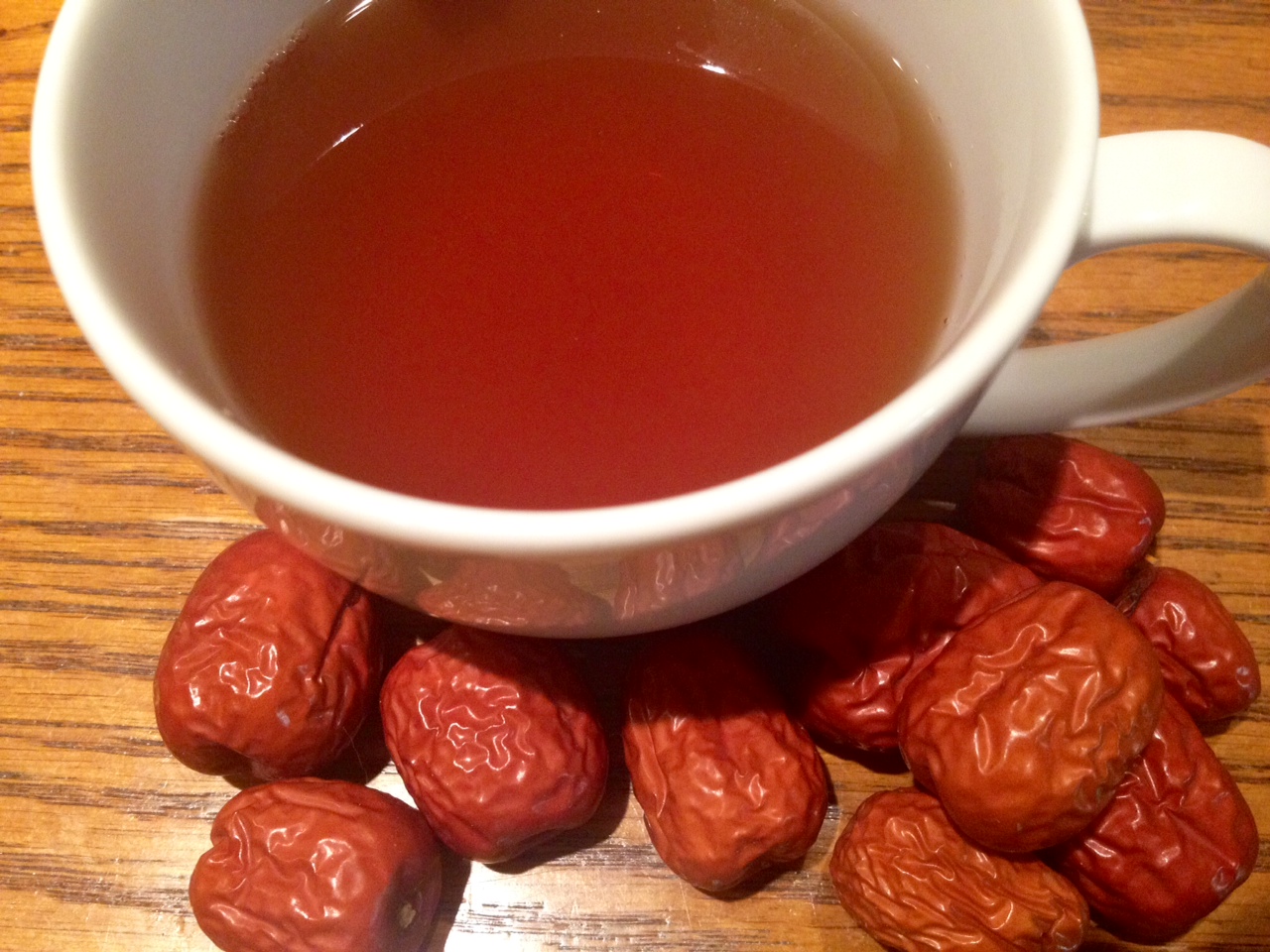
Jujubes 5

I’ve been told that jujubes have been used as part of traditional Chinese medicine for at least 2,500 years, and that they’re great for those with weaker constitutions or frailer health. Drinking jujube tea regularly is supposed to be a great health tonic, and can improve your blood circulation and immune system. Even jujube pits are made into a medicine to heal wounds and treat abdominal pain; the leaves are supposed to help with fevers; and the fruit great for overall physical well-being. Jujube wood is also made into mala prayer beads for meditation, and the metaphysical properties for jujube wood is believed to facilitate spiritual healing.

For women who care about beauty, jujube juice helps improve skintone and complexion, and is supposed to help with beauty. Hey. I’m sold. Pour me some of that jujube juice! It’s also my understanding that they’re “warm,” and so great for those with “cooler” constitutions, like me. So I’ve been trying to improve my health (and hey, I’ll admit it, beauty) with regular dosages of jujube tea. Fortunately, we have a jujube tree in our front yard.

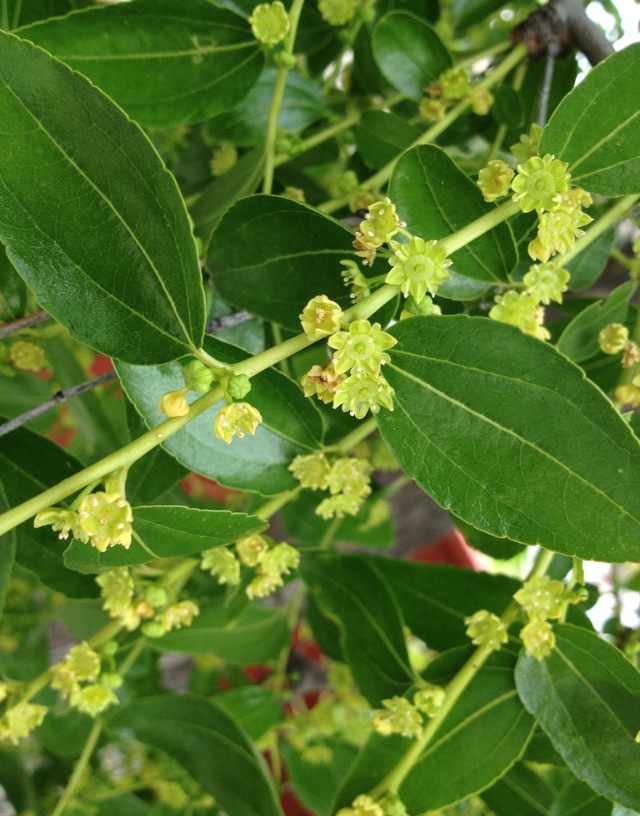
Our jujube tree in the spring.

In the spring and early summer, the jujube tree blooms these delicate white and fragrant blossoms. In the above photo, they haven’t reached their full whiteness yet. I took this pic last spring. Jujube blossoms symbolize love and romance in Eastern cultures, an association likely to have come from the fragrant scent of these flowers.

Continue reading “Jujubes: Traditional Chinese Medicine That Tastes Good”

Bones For Your Health: Metaphysical Energy Work with Bone

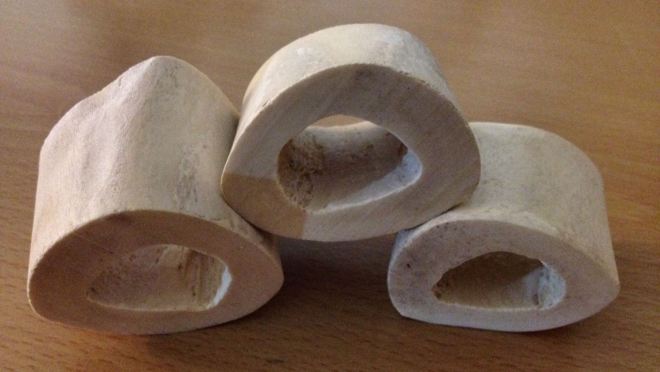
Shank Bone 1

I love bone soup. Beef shank (that is mostly bone), a lineup of dried Chinese medicinal herbs, shallots, and carrots go into a big pot with water and is simmered for a whole weekend. The broth that results is magical. Serious! With the end result, we used everything but the bone. The fat skimmed off would be saved in the fridge and over the course of the week, used for stir-frying vegetable dishes. All the goopy herby junk would go to compost. And, well of course, the broth would be used for the most amazing soups and noodle soups you’ve ever had.

But those bones. What to do with the bones? Finally found a use.

In the past month, I opted to time my broth making to the lunar phases, once over the first quarter, a waxing moon, again through the full moon, and a final time through the waning moon, for a total of three cleaned shank bones. I noted how after the long, arduous cooking time for the broth, the shank bones pretty much could be pulled out of the pot clean, just as you see it above. I then rinsed them in rain water (the rainfall being perfectly timed where I live, if I might add, so that I could do that) and then buried the bones in sandalwood and sage ash, which I’ve collected over who knows how many times of burning sandalwood or sage here around the house, plus a quartz crystal for good amplifying measure.

The bones will then go through a few more processes this Friday through the new moon, which coincides with the first day of spring. So not only is the bone broth that I’ve made good for my health, but I’ll be able to put these bones to use, too.

Continue reading “Bones For Your Health: Metaphysical Energy Work with Bone”

Candied Kumquats for Soothing Sore Throats and Coughs

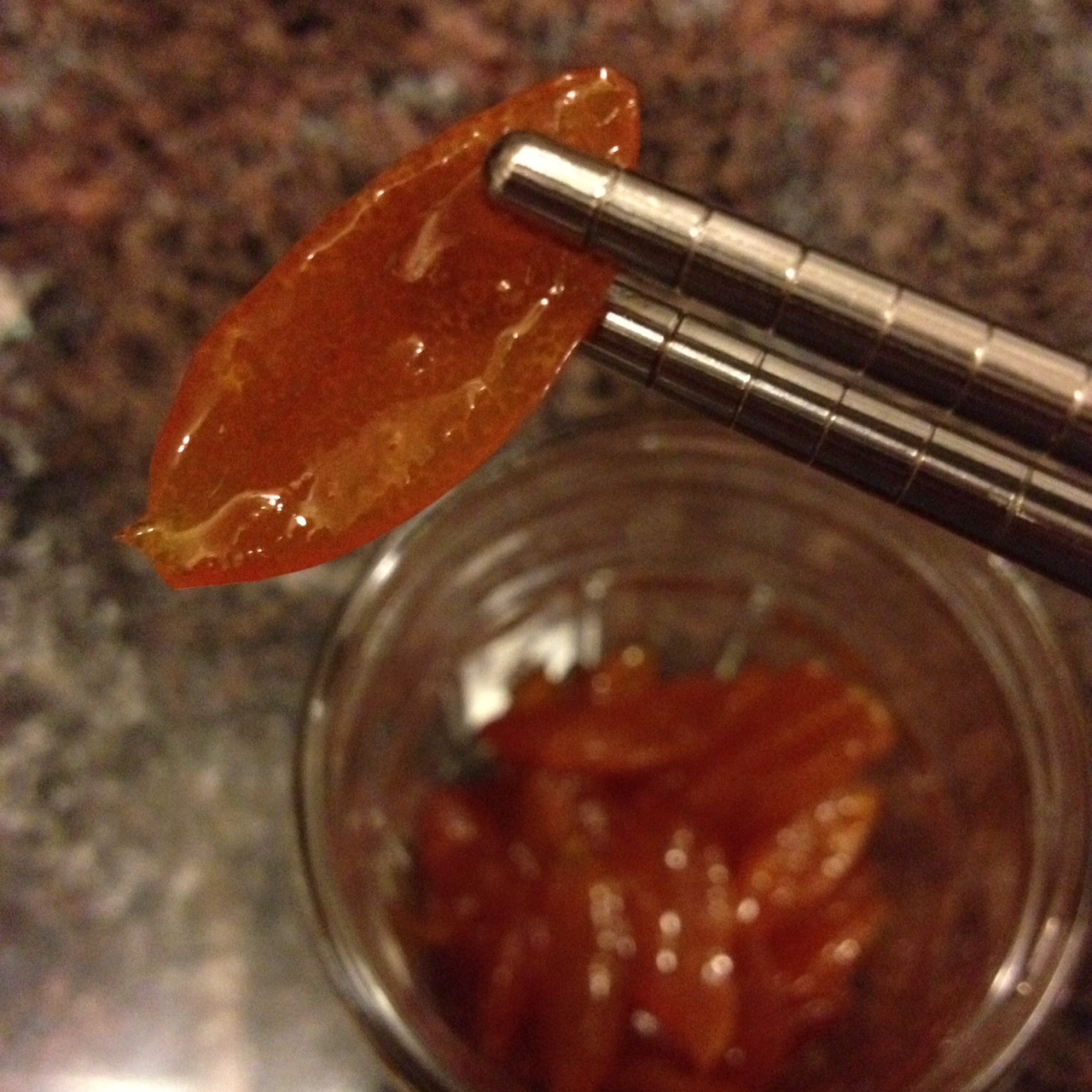
CandiedKumquats_10

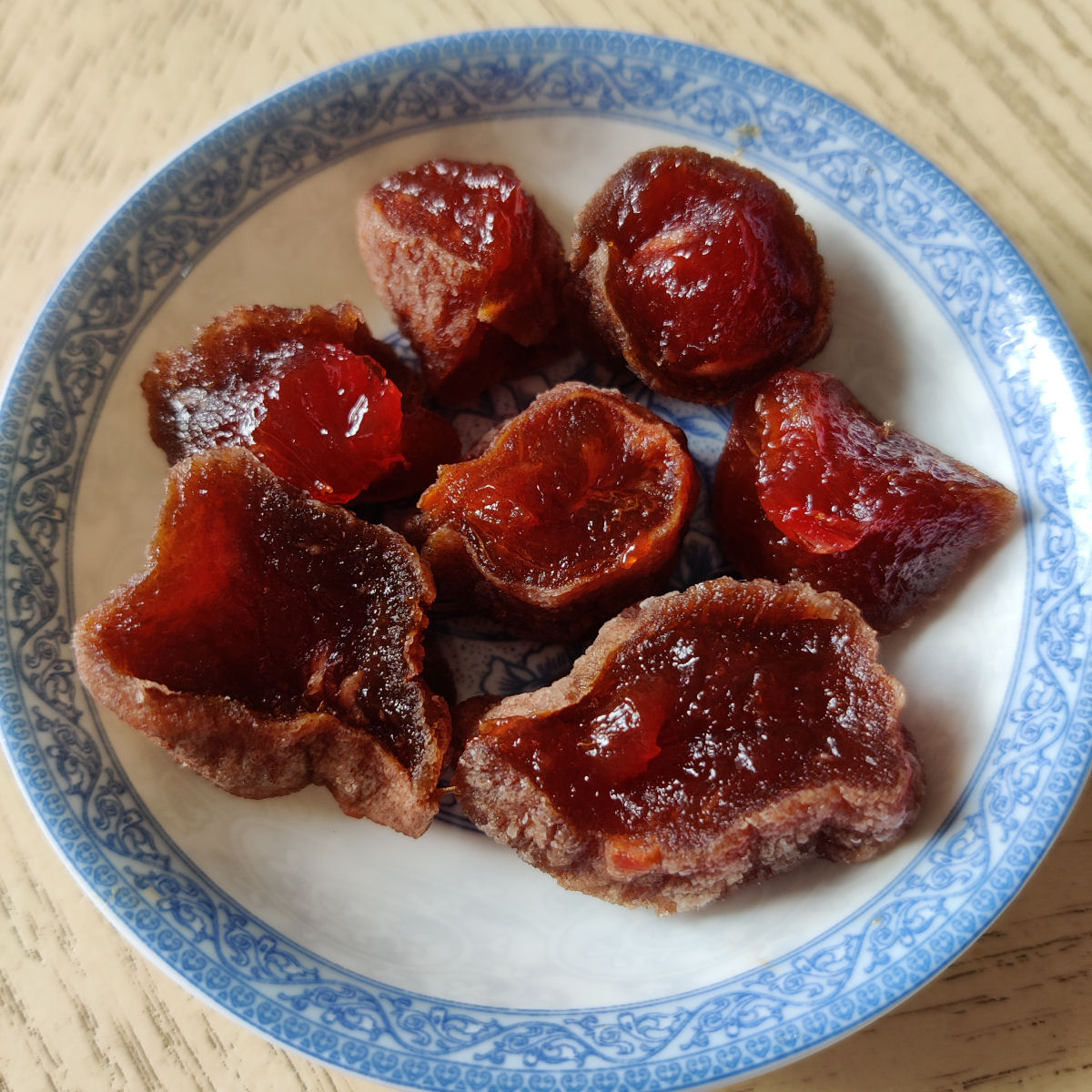
Kumquat tea is the best for sore throats and coughs. You make that by first drying out fresh kumquats in the sun for a few days, then storing in an air-tight glass jar filled with sea salt. Let that sit in your basement for at least a month. When you want to make the tea, you remove a couple of the dried, preserved kumquats from the jar (that has been sitting in your basement for a month), steep it with boiling water, and add a few spoonfuls of honey for a great home remedy to cure sore throats and coughs. I’m not a big fan of kumquat tea or jars of salted fruit that’s been sitting in my basement. So I present to you candied kumquats, a great alternative. It still works and in fact helped soothe my sore throat and dry cough that I came down with over the weekend.

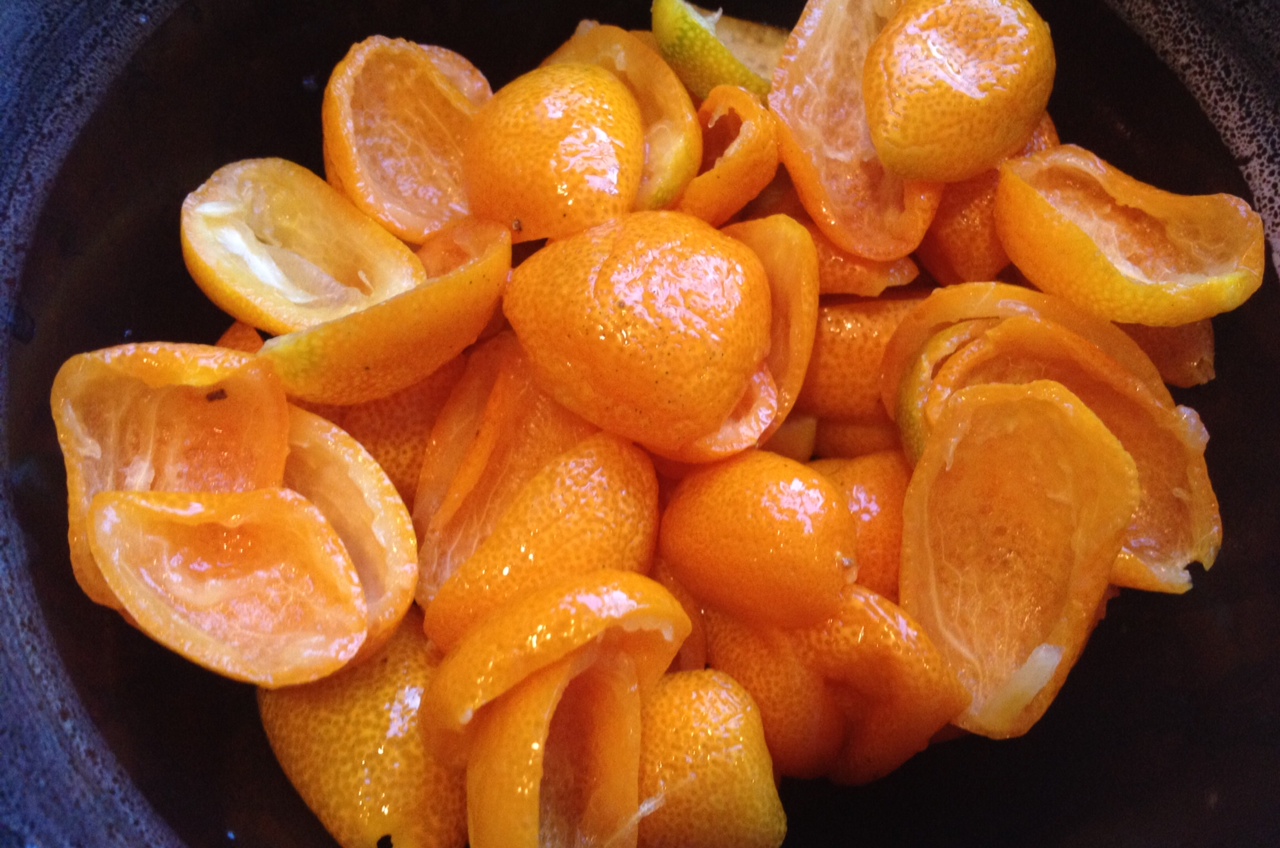
CandiedKumquats_1 Peeled and Chopped

The fruits from our kumquat tree are pretty small, so I halved them only. If your kumquats are larger or like the store-bought ones, then you may want to quarter them. I pulled out all of the interior, which can be reserved for making tea or tossing with dark green leafy salads (either kale or baby spinach salads).  The skin is the sweetest part, so I only make this candy with the skins. Continue reading “Candied Kumquats for Soothing Sore Throats and Coughs”