Continuing from what I said in the video chat, if this is something you seriously want to do, then start by getting that three-ring binder. Though I think organizing it into eleven sections is sufficient, I noticed you can’t buy packs of just eleven binder dividers. They come in sets of 12, so that’s fine. Having a final “Miscellany” tab is always a good idea anyway.
The above video commentary is a short introduction to esoteric Buddhism, covering the distinctions between sutra-based Buddhism and tantric Buddhism. As noted at the end of the video, this write-up will give instructions to the “homework assignments,” practica[I don’t know why I’m such a nerd and called these “homework assignments”] intended to give you a firsthand experience with Buddhist folk magic.
Timestamp 11:39 Addendum: Oops, I cut out too much of the raw video chat and omitted the part where I talked about where I was going with this. =) So if you were left confused, it’s not you, it’s me. =) Continuing from what I am saying at this timestamp, if tantric esoteric Buddhist cultivation is characterized as a “shortcut” to the destination but one that’s far more dangerous and riskier terrain, then endeavoring to take this route all but requires a highly skilled guide to help you navigate the tougher terrain. It’s not a route you’d want to go at on your own or, worse yet, with a guide falsely self-proclaimed as a lama or spiritual leader who will lead you astray, or who isn’t equipped to help you deal with mara. Thus, the framing of the question shouldn’t be “is it open or closed,” but rather as “what, really, would be the most assured path for you?” Can you fully trust someone else’s claim of endowing you with the empowerment you’re seeking?
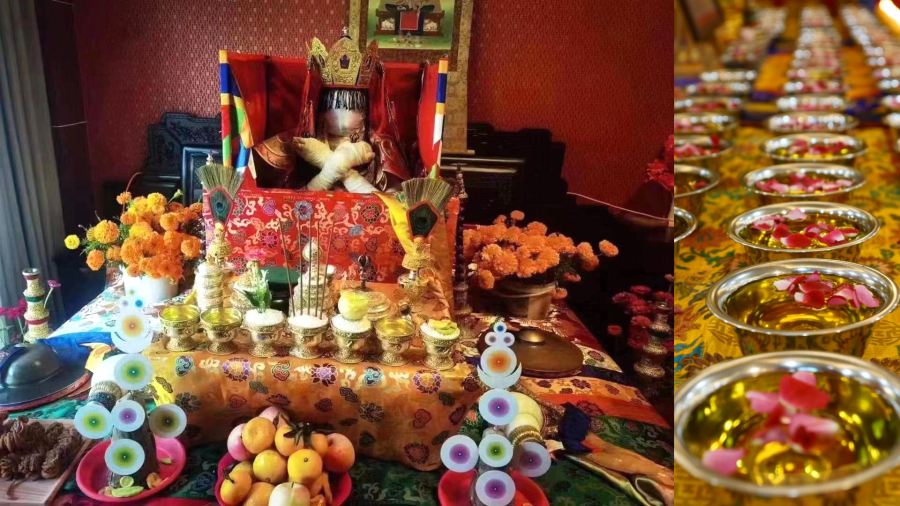
Taipei Katok Ten Directions Buddhist Association
As a beginner-level introduction, these practices are intended to be general enough for all, so you’ll be encouraged to piecemeal neutral elements often found in esoteric Buddhism and graft it onto your preexisting practice, and most importantly of all, your local environment.
Taipei Katok Ten Directions Buddhist Association
Just like esoteric Buddhism takes on the indigenous practices and magical systems from the land it touches, be that Bön folk magic syncretized with Buddhism in Tibet, Taoist mysticism with Buddhism in China, Shinto in Japan, or tantric Buddhism melded with Tai and Hmong shamanic practices in Southeast Asia, you’ll be working with features of esoteric Buddhism syncretized with what’s native to you.
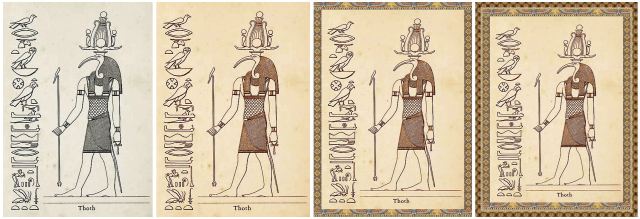
These twelve images are sourced from an 1870 publication, Bilder-Atlas – Ikonographische Encyklopädie, a multi-volume compendium of reference books in German. The images are formatted to print at 5.0” x 7.0”, but the resolution isn’t the sharpest. Nonetheless, they still printed okay.
Oops! Please ignore the typo.
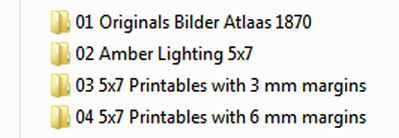
After you unzip the file, you’ll see four folders for four different versions of the twelve images. I’ve included the originals, a version where I converted the images to a warmer sepia tone, then two versions with borders for printing.
I’m sharing the files here for those who are fascinated by these sorts of finds.
If you want about 3 mm of patterned border to show and you’re using makeplayingcards.com to print your deck, then go with the 6 mm margin files.
Consider these eight solar terms, their dates based on solar longitude (the path of the sun) and how they compare to close equivalents in the pagan Wheel of the Year:
The Four Beginnings 四立
1. 立春 Start of Spring Feb. 3–5
2. 立夏 Start of Summer May 5–7
3. 立秋 Start of Autumn Aug. 7–9
4. 立冬 Start of Winter Nov. 7–8
I apologize in advance if my mode of presentation here is going to be a bit overwhelming. In retrospect, I should have taken more time thinking on pedagogy and how best to organize this material so it’s less everything-all-at-once. =)
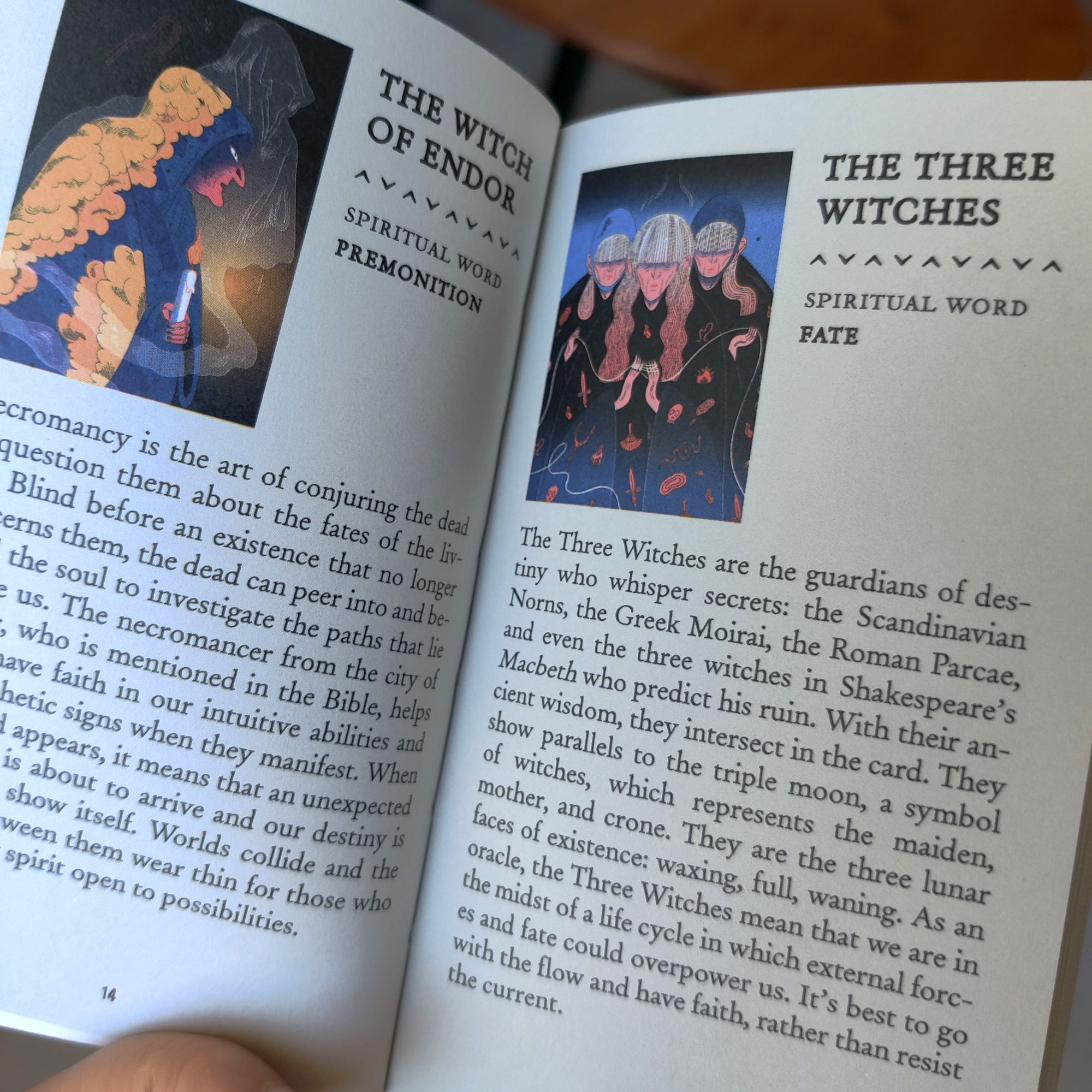
Oracle of Novice Witches is a 50-card deck featuring 24 witches and wizards from history and folklore, 13 tools of the craft, and 13 animal familiars. The deck was created by Francesca Matteoni and with art by Elisa Macellari.
The full-color guidebook accompanying the cards features a profile summary of every witch and wizard depicted. Entries for the tools of craft define each tool’s purpose and how it’s generally used. For the familiars, animal symbolism and correspondences are provided.
I’m currently reconstructing an Etteilla tarot deck, and as part of my process, I’m deep-diving into the Divine Pymander (one version of the Corpus Hermeticum) because Etteilla was reportedly obsessed with the Pymander and gave that text a great deal of sacred authority.
And so to do a proper Etteilla deck, I thought I had better get myself familiarized with this text that he personally placed so much importance on.
(Kinda like how, in order to get into Eliphas Levi, I had to first get into the Key of Solomon– hyperlinked Key of Solomon will take you to a free text download)
So I compiled the 1650 Everard translation of the Divine Pymander and the 1906 Mead translation of the Corpus Hermeticum tractates together into a book for convenient referencing. These texts date back to the 2nd century AD, if not earlier, and are discourses in the form of Socratic dialogues on the nature of God (divinity), humanity, the mind, alchemy, and astrology. You’ll also find a lot of crossover with Gnostic doctrine.
As far as I can gather, the Pymander and the body of texts referred to as the Corpus Hermeticum are the same, except there are more tractates, or books, in the Pymander than there are in Mead’s 1906 translation of the Corpus Hermeticum. Since both are included in this compiled book, you can do your own due diligence. In this text download, I’ve also included a few inserts from the Nag Hammadi discovered in 1945 and now added to the Hermetic corpus.
So if you saw me share this video earlier but it was the same video as the one on the Day Planner pre-order page about how to upload to Lulu, then you saw the wrong video. I took that down and re-uploaded with the correct video. Serves me right for naming both video files “2022 day planner how-to.” Totally confused me this morning when I went to upload to YouTube.
THIS video walks you through how I’m filling in the different page sections of the day planner. Sorry, it’s been one of those weeks. I’m frazzled and fried. Going to go take a nap now. Thanks.
Sorting through the mess of files I have on my computer drives and found this. I think I shared these in a past Bell’s Newsletter. It’s excerpted from the textbook for the Western Witchcraft I: The Fundamentals course. References in this free handout to other chapters, etc. are because this is just an excerpt from that textbook.
72 Shem Angels, Tarot Correspondences & the Tetragram of the Zohar
I kinda didn’t wanna share this because it’s so, ew, a hot mess, disorganized, and you can even witness my mood changes as my handwriting teeters from neat and meticulous to hasty and illegible.
These hand-painted engravings of healing herbs and garden vegetables are a delight, and I’m sure at least one creative person seeing this will get ideas, download, and do something lovely with these illustrations, so here you go.
They’re from Elizabeth Blackwell’s A Curious Herbal (1737). Below you’ll find a zip file you can download of high-res images from the book. Or view it in the entirety, courtesy of The British Library, Catalogues & Collections.
Elizabeth Blackwell’s A Curious Herbal is notable both for its beautiful illustrations of medicinal plants and for the unusual circumstances of its creation.
[It] contains illustrations and descriptions of plants, their medicinal preparations, and the ailments for which they are used.
The first herbal was written by the Greek physician Dioscorides in the first century AD.
Elizabeth Blackwell was born in Aberdeen in about 1700, but moved to London after she married. She undertook this ambitious project to raise money to pay her husband’s debts and release him from debtors’ prison.
Blackwell’s Herbal was an unprecedented artistic, scientific and commercial enterprise for a woman of her time.
She drew, engraved and coloured the illustrations herself, mostly using plant specimens from the Chelsea Physic Garden.
It was highly praised by leading physicians and apothecaries (makers and sellers of medicines), and made enough money to secure her husband’s freedom, although she later had to sell the copyright as well.
This finely-bound copy of A Curious Herbal is from the collection of King George III, held in the British Library.