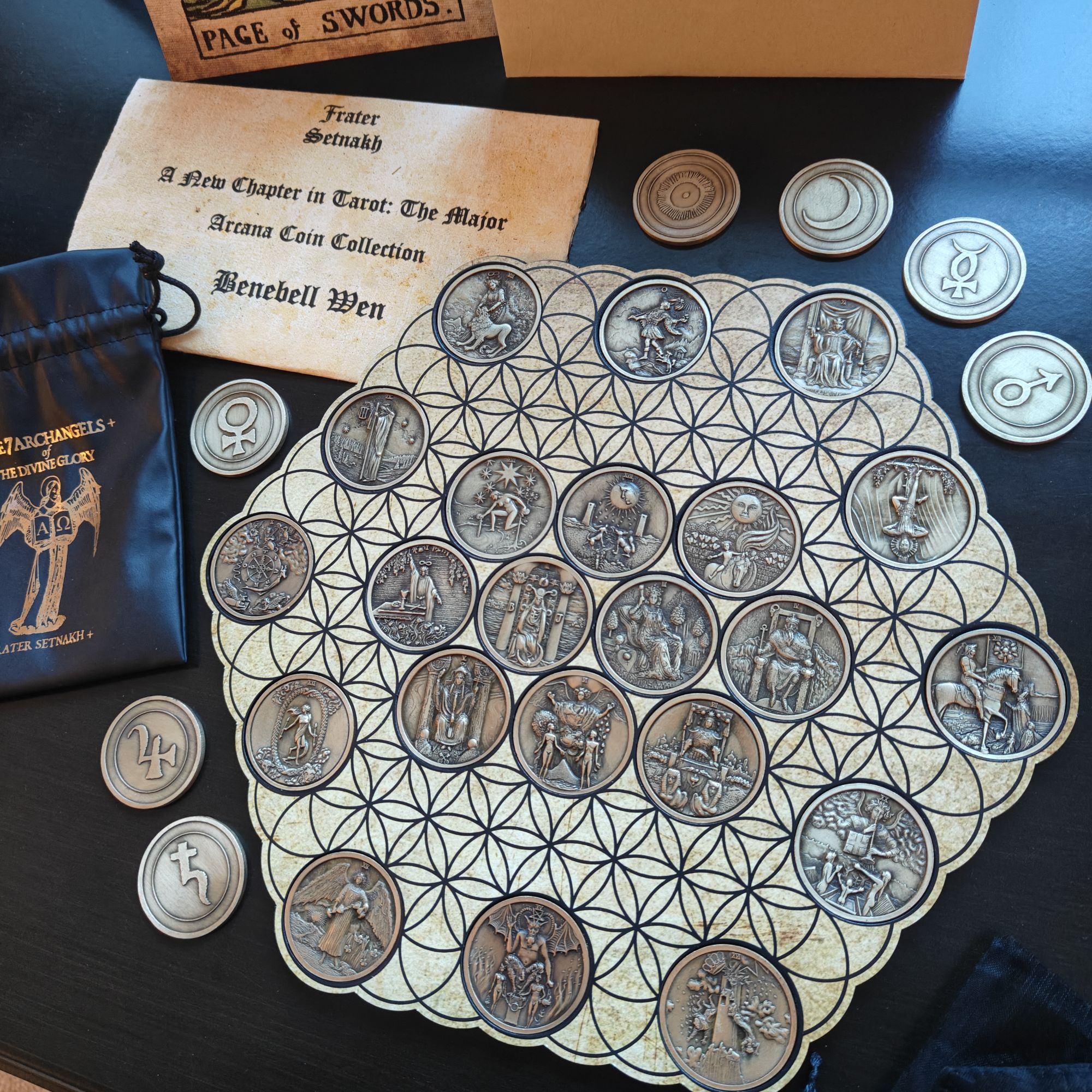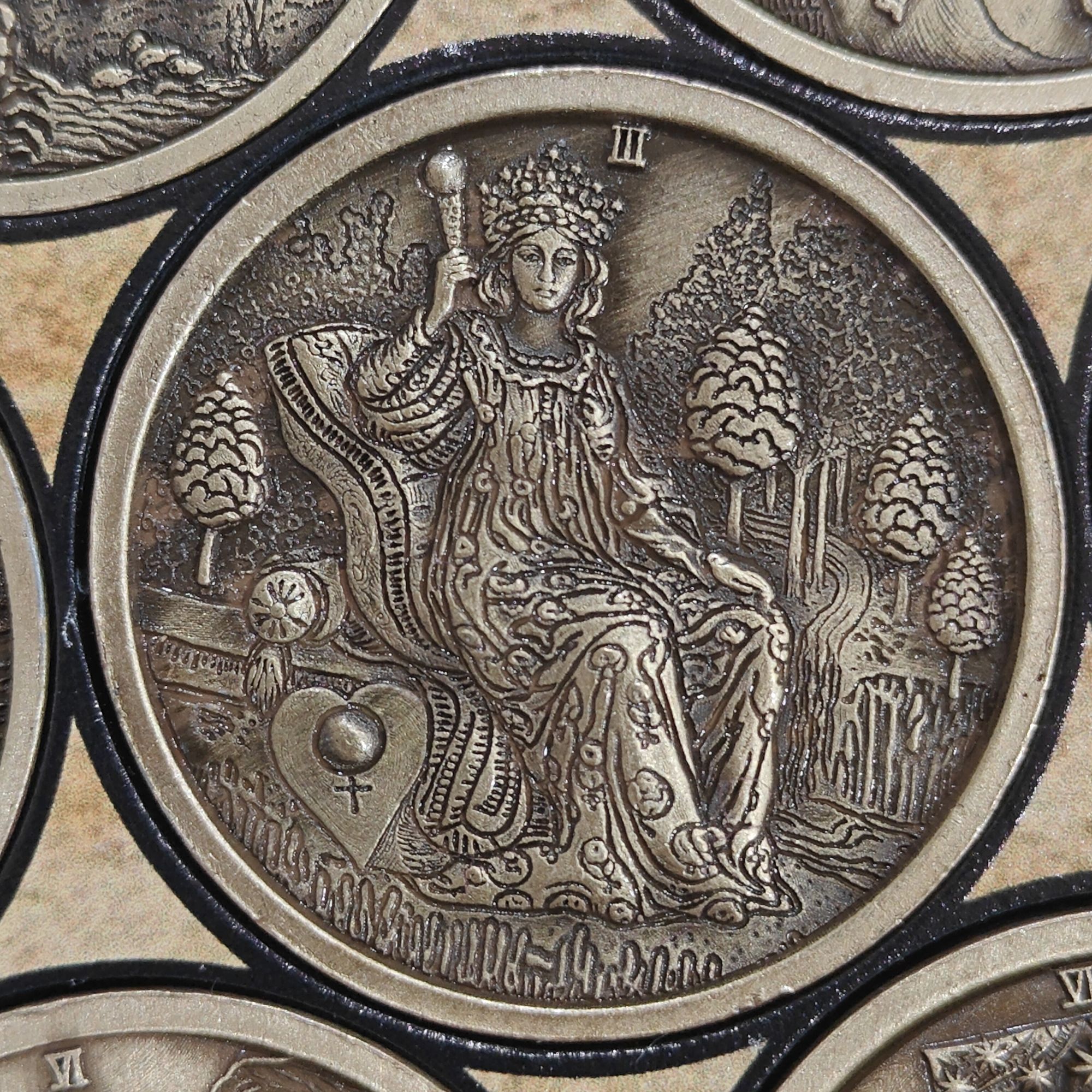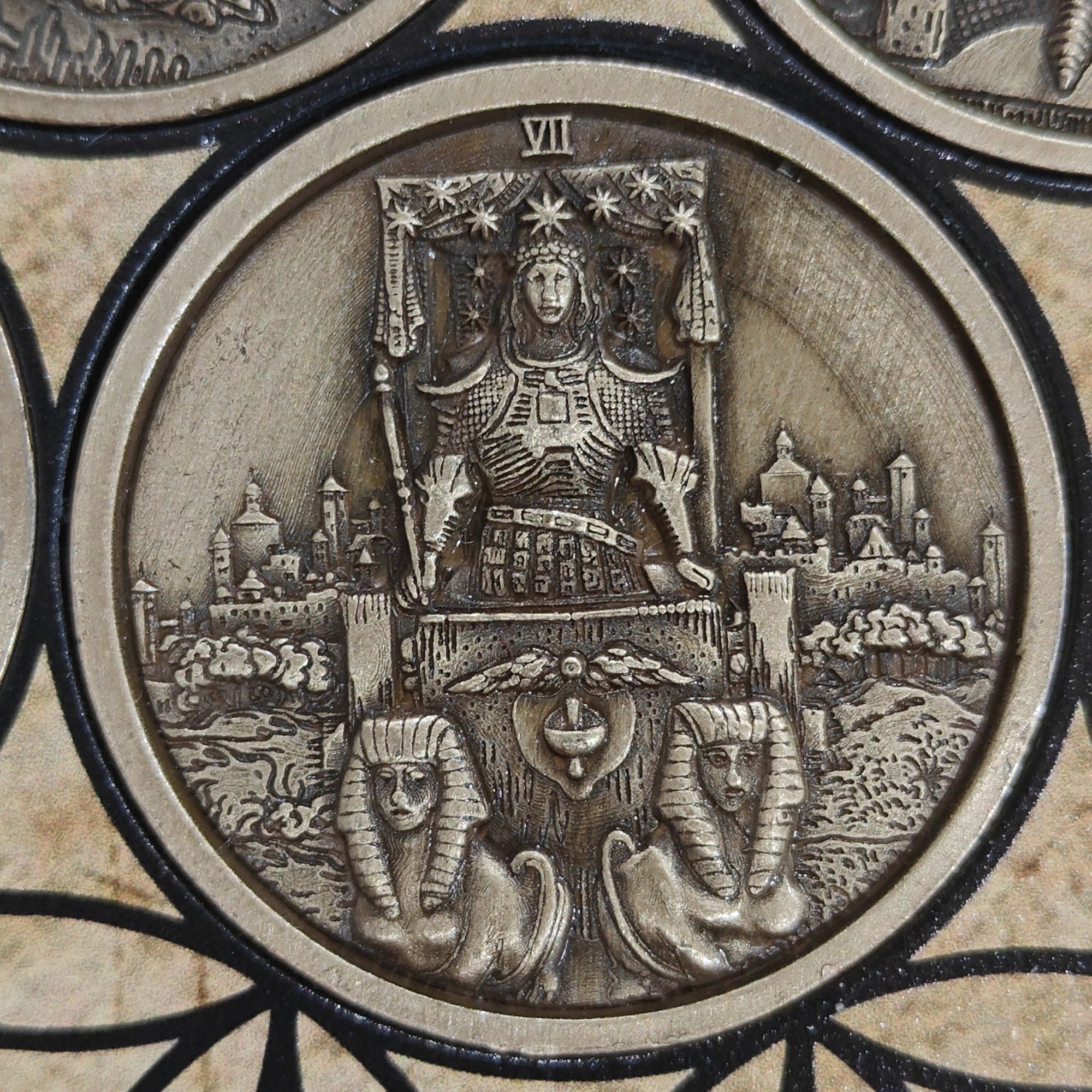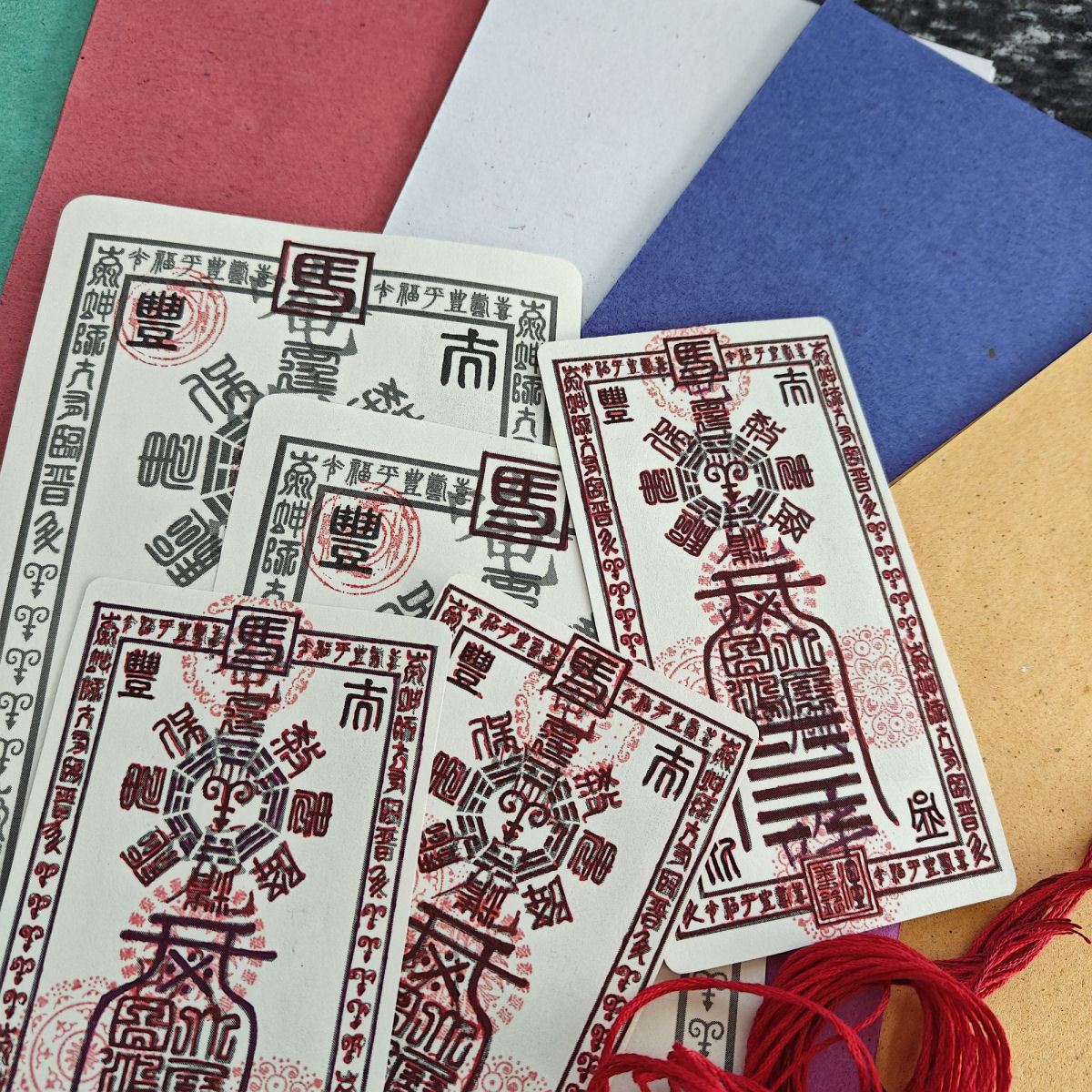
Frater Setnakh is one of the most incredible, detail-oriented artisans of ritual artifacts I’ve come across. I’ve previously reviewed the 72 Angels Talisman Coins and Cards he sent me, which I keep on display in my sitting room. Here I’ll be showcasing his latest offering, Tarot Coins, along with the Guardian Angel Coins, or Seven Archangels.
The detailing on these coins is incredible, so I’ll also be showing a zoomed-in view of several of the coins, photo essay style. You can click on any of the images and magnify the photo to see just how fine the craftsmanship is here and each coin’s delicate engraving.
Per the ritual artifact description, this is the “world’s very first collection of tarot coins inspired by the Rider-Waite deck.” And personally I have yet to see tarot coins crafted at this level of detail and intricacy. They’re simply exquisite.
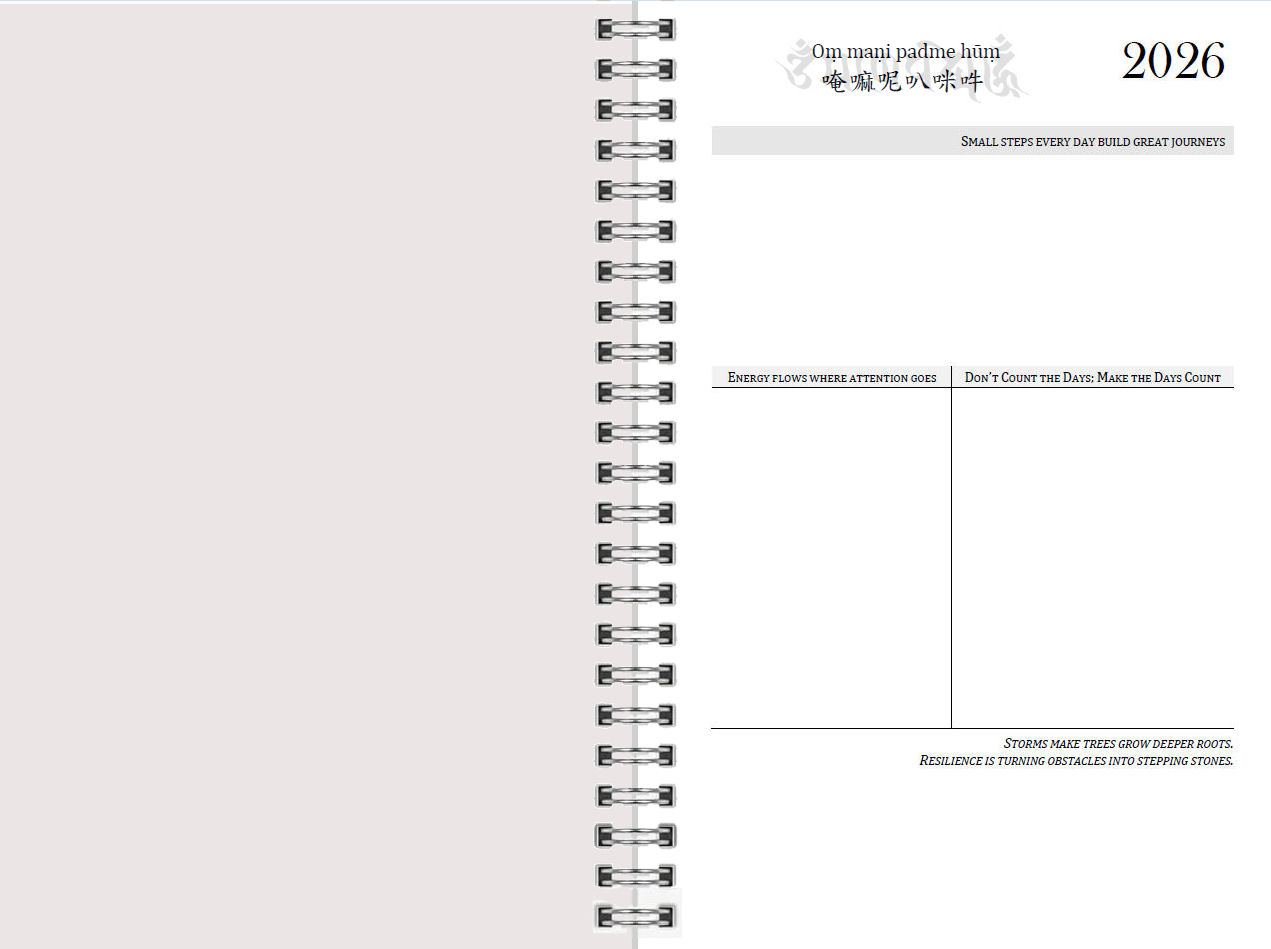
This is a walk-through of the 2026 Metaphysician’s Day Planner (MDP), highlighting new changes and edits from previous years’ MDPs and how I use my MDP. Just a reminder: If you’d like to order your 2026 MDP, go HERE.
But also, I’ve provided all the digital MS Word templates that I use to create the MDPs year to year so that you don’t even have to buy mine, but can build your own. You can download all the digital templates HERE.
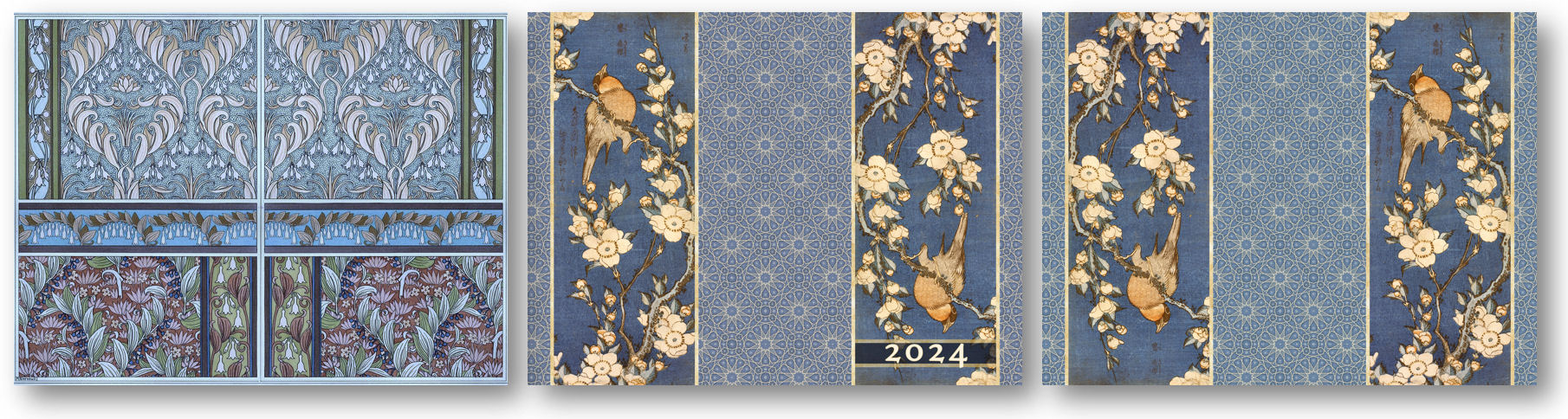
My favorite part about the MDP offering is you choose your own cover art design. On THIS PAGE where you can find the template downloads, you’ll also find Dropbox links to download various cover art design options, or take the specs (you’ll find this in the MDP General Guide PDF) to design your own from scratch.
For my 2026 MDP, I’m going with this 15th century ink scroll Buddhist art of the Six Paramitas, which in Mahayana Buddhism often gets associated with the Six Bodhisattvas. This then inspired one of the journaling self-reflection page spreads that I added to this year’s MPD.
I would consider the very red cover design out of character for me. For the last three years I went with very blue choices, and heck, didn’t even get all that creative this year for my 2025 cover. I just thought, hey, this worked for 2024, I’m just going to re-use it for 2025.
NOTE: we will be out of the country and without access to our email from November 22nd to December 10th. We will process any orders received during this time by December 12th. Thank you for your understanding and patience. Apologies for any inconvenience.
The Metaphysician’s Day Planner (MDP) is going to continue, at least for another year, though for 2026, as a “Lite” scaled back offering. It’s $17 for the personalized day planner customized with your natal chart and 2026 solar returns chart, e-delivered to your e-mail address as a digital file (PDF). We recommend using Lulu.com (not sponsored) a third-party print-on-demand site to print the physical spiral-bound copy of your MDP.
A few weeks ago I announced that we were retiring the annual Metaphysician’s Day Planner offering, after nine consecutive years of making them, each one custom-made to order with your birth chart and that year’s solar return chart. Plus the companion Metaphysician’s Guide that comes with the year ahead’s astrological forecasts, auspicious dates, inauspicious dates, and the dates to notable astrological or astronomical events.
Although we won’t be selling and making them anymore, we also didn’t want to leave you in a lurch, especially since we acknowledge that many of you have come to rely on it year after year. First, thank you so, so very much for your support over so many years. That’s amazing! Second, thank you for your understanding, patience, and sympathies that it’s just no longer feasible for us to be doing this, as our process is entirely manual and “old school” in this new world of everything getting generated instantly by digital automation.
2025 is poised to bring rapid technological advancements with artificial intelligence, an increasing need for global response to climate change, continued escalation of geopolitical conflicts, and deepening societal faultlines, with much of that all but written in the stars.
Let’s talk about general global forecasts for the year to come. We’ll cover the following:
This is an independent study course that delves into reading a birth chart for past life and karmic insights, to explore soul patterns through natal astrology.
For more than a decade I have had on my back burner of book manuscripts a multi-volume encyclopedia on astrology, where I want to cover both Western and Eastern modalities of astrology, through the Ages.
One of those volumes was or would have been on past life astrology, but then after more thinking, that particular subject isn’t something I want traditionally published as a book. It’s not something I want to become “known” for. That meant I now had hundreds of pages of astrological reference material that I didn’t know what to do with.
So I created this handbook to be packaged into an online independent study course.
One recommended prerequisite: You have intermediate proficiency with Western astrology. The course material starts off with the assumption you can already read a birth chart through one of the established Western astrological systems (e.g., Placidus or Whole Signs), and understand house, sign, and aspects analysis.
What this course does is give you a new, additional lens for interpreting a birth chart, that additional lens being a past life reading for the native.
It’s that time of the year again, for the Metaphysician’s Day Planner. You get the day planner customized with your birth chart, solar returns chart (note specific casting method), and what you’d like printed on the interior first page.
Quarterly planning page spread sample
For 2025, the optional add-on is a Past Life Astrology Course, which comes with a hefty Handbook.
This article is for one who has already built a solid foundation at reading astrological birth charts and is now interested in giving professional chart readings to the public. Having done professional chart readings for the public for the last 12 years, I’ve learned a great deal from my experiences and have tweaked, refined, and streamlined an effective approach, which I’m now sharing with you.
General Overview vs. Addressing a Specific Subject
First, make sure both you and the client are clear on what type of birth chart reading the client wants.
Are they new to natal astrology and want a general overview of their chart’s key highlights, in which case you will be touching in on all the major topics, i.e., personality profile, strengths, weaknesses, career, love, money, health?
Or does the client want you to assess their birth chart and deep-dive into one specific area, i.e., analyze their chart for career metrics, analyze their chart for prosperity metrics, or tell them about their black moon Lilith placement and how Lilith impacts other natal placements?
I had set the timing to 30 minutes for a reason. It’s a digestible amount of time for both astrologer and client. However, it also means you need to manage that time. As you probably know already, a birth chart can take you down any myriad number of immersive rabbit holes, which just does not make sense to go down in a 30 minute reading.
Personally, even for a general reading, I like to get a sense for what my client wants to know about, or which placements they’re already familiar with and not so familiar with, that way I can make the best use of our time together. If they’re an intermediate astrologer themselves, then I’m not going to spend much time explaining their sun, moon, and rising, and instead get into some of the more obscure placements. If they hardly know what their sun sign is and didn’t even know the ascendant was a thing, then yes, we’re gonna begin with sun, moon, rising.
Preparation
I do think you need to prepare in advance of the actual delivery of insights. Or, if it’s a situation where you get the chart and then need to start interpreting it right away, before you begin, give yourself a few minutes to study the chart and jot down key notes. Why?
A birth chart itself covers so much ground and has so much to say on every facet of the native’s life path, that if I don’t jot down key notes to anchor myself, I can get lost in the weeds. At least for me, if I don’t take a minute of quiet study to outline main talking points, I’ll end up rambling about all sorts of tangential “fun, nerdy” features in the chart that may or may not interest the querent, and also, if you ramble on too many tangents, it’s going to make it harder for the querent to connect the dots and leave with any cohesive takeaway points.
Your preparedness essentially determines how productive and cohesive the client’s reading experience from you will be.
Level-Setting at the Start
These are going to be prepared, even canned remarks that you always make at the start of a reading session, unless it’s a repeat client who is already familiar with your style and approach.
Mine are along the lines of, hi, I’m going to be reading your chart in Whole Signs Tropical. I’ve learned to do this preemptively because sometimes clients who have previously seen their charts but in Placidus only will freak out.
Then you cover your personal philosophical approach as an astrologer. I think this is important because astrologers vary. This level-sets with your client. So, for instance, I’ll say something to the effect of my approach to birth charts is as a divine strategic plan mapped out for you at the moment of birth, but you choose your own path, and when all is said and done, you make your own fortune. That’s because challenges you were born with can be overcome, and blessings you were born with can be lost.
By the way, this is something you can get out of the way before a session, at the time a session is booked. My preference is to get all this preliminary level-setting to a client way in advance of a booking.
Open with a Sound Bite
Begin the 30-minute reading by stating your thesis, or what stood out to you the most about the native’s chart. Be able to summarize it in a few sentences, something that will be a memorable takeaway for the client.
Admittedly, this seemingly no-brainer lesson took me a long time to learn. Astrology can be overwhelming, and as an astrologer you’ve already devoted so much of your learning to the technical elements of astrology that it doesn’t even feel technical to you anymore. You can just rattle off what you’re seeing in the chart, one thing after another, and get excited, but from the client’s perspective, you’ve covered way too much, and now they’re overwhelmed. They recall that you said a lot, but can’t pin down anything too specific.
So beginning with that “best of” in a sound bite is going to help frame the reading session.
House & Sign Approach vs. Subject by Subject
When I say “House & Sign,” I mean that your approach to interpreting a birth chart for a client is to, say, start with the ascendant and talk about the implications of what’s happening in their House 1 and the zodiac sign ruling it, then move on to House 2, then House 3, all the way around the wheel.
The “Subject by Subject” approach is to have a set skeleton outlining the topics you will be covering and then just interpreting the key placements addressing taht topic. For example, you start with personality and disposition, so cover the sun, moon, and rising, and then generally gloss over any of the personal planets and key sensitive points that go toward personality profile. Then you talk about love and romance, and explain what the chart has to say about that, then career metrics, health, personal spirituality, early childhood, adulthood, fears, hopes, etc.
Which approach an astrologer prefers is a matter of subjective opinion and style, I think. Personally, I will choose which approach best suits the type of astrological reading that is being requested, and maybe even choose which approach based on what I intuit the client wants from me.
If you are a pro astrologer who will be offering written readings, I would recommend drafting a boilerplate template for both approaches, then selecting which template to start with based on the client’s specific needs.
House & Sign Approach
For the House & Sign Approach, I would just go in sequential order starting from House 1. Start by explaining what House 1 in a birth chart reveals about the native. Example: House 1 in your chart typically represents selfhood, your destiny in the making, capacity for self-development, and even physique.
Then identify the zodiac sign ruling the native’s first house, what that generally tells us about the native, and then get into the planetary occupants, plus any key personal sensitive points. For the ascendant house specifically, I’d also mention chart ruler and then quickly cross-reference to talk about that planet. Close with any notable angular aspects that the planets or sensitive points in that house are tethered to.
Pros: This approach gives the client a very comprehensive map of their birth chart and what every horoscopic piece of the sky pie says about them.
Cons: For a client who is not very familiar with astrology in general, the house & sign approach can be overwhelming. Also, depending on how much you want to cover about each house, 30 minutes might not be enough.
For a chart reading on a narrowly-tailored specific subject, such as the client wants a deep-dive into what their chart says about life purpose, in the House & Sign Approach, you would simply filter the assessment of each house through that specific lens.
Subject by Subject Approach
For the Subject by Subject Approach, have a prepared outline template. For example, (1) Personality Profile (focusing on a reconciliation of the sun, moon, and rising, and perhaps Mercury implications on their way of thinking), (2) Prosperity metrics (focusing on the second house, Jupiter, Lot of Fortune, and eighth house), (3) Career Potential and Social Status, (4) Love and Romance; Compatibility, (5) Pursuit of Happiness (fifth house, to address their personal approach to creativity), (6) Inner Shadow, Weaknesses to Work On, Areas for Personal Development, and any other specific areas you as an astrologer like to focus on.
Pros: Let’s be candid with each other here, this approach hits directly into what the client wants to know, and is structured in a digestible format.
Cons: It is my opinion that this approach is less conducive for the client learning any core astrology basics. This approach feeds them the most immediately relevant information about their life path that they would want to know, but they won’t come away with any astrology 101 know-how with respect to what each house in the chart says about them.
For a chart reading on a narrowly-tailored specific subject, then in applying the Subject by Subject Approach, the outline of what to cover would be sub-topics within the specific subject.
Uncommon Placements
As a seasoned astrologer, you’re going to immediately spot the uncommon features in a natal chart. When you scan the chart holistically, what stands out the most? A grand trine? Stellium? Grand cross? All the planets congregate on just one hemisphere? A whole lotta retrogrades going on? [And before an astrologer slides into the comments to say, “Well actually,” yes, sure, what constitutes “uncommon” is quite the range.]
When to address uncommon placements is probably going to depend on how the reading is going, and what your preferences are as an astrologer. Maybe you start with these observations before getting into the House & Sign or Subject by Subject approach. Maybe it’s something you bring up mid-stream when it’s relevant. Maybe you close with it. Or more likely, it varies from reading to reading.
I just bring this up because at some point during the 30-minute session, I think it’s useful (and entertaining) to directly address uncommon placements and talk about its implications. Everyone wants to know what’s uncommon about their birth chart, what makes them unique. So I would say it’s an important point to highlight.
How Much Astro Lingo to Use
This is, of course, an ever challenging balance to strike. A stereotype that astrologers get is using too much technical astrology jargon. Sometimes, a client just wants to know who they’re most compatible with or what their chart says about optimal career paths.
Maybe they’re not interested in you rattling off all their angular aspects, implications of decan rulership, or that their natal Mercury cazimi in Virgo.
Or…maybe they are. Because unique and uncommon astrological features are going to be of interest to a client, because we all want to know the ways we are extraordinary. 😉 And some clients are extra nerdy and want to know all the technical things.
So I don’t necessarily have any one-size-fits-all tips or advice here, except to say that as a pro astrologer, be ever mindful of striking this balance.
The Conclusion, or Closing Remarks
I find it helpful to close by reiterating that opening sound bite you gave, recapping the three most notable points you covered during the reading, and if it wasn’t covered already, a summary note on dominant modality, elemental balancing, and chart shape.
Also, leave a few minutes at the end for follow-up questions. Then, the final imprint you leave the client with should be something that feels like an affirmation, is positively validating, or an empowering, motivational takeaway message.
Although I am not of the mind that one should be nice-washing and being superficially positive, the style of your delivery of the information should be empowering, not disempowering. You can deliver bad news but still do it in a way that preserves the querent’s sense of control and fuels their willpower. If a chart reading does not do that for the client, then in my opinion, there is no reason to be giving a chart reading. A chart reading is purposeless without imparting upon the client an actionable plan.
Difference Between a 30-Minute and Hour-Long Reading
I mean, it basically comes down to scope. A 30-minute reading means you’re going to give just the highlights reel. An hour-long reading is when you can dig a little deeper and also include more angular aspects, or go beyond the standard roster of planets and talk about asteroids.
My reason for bringing this up is to remind you of how you want to approach time constraints. You don’t want to approach a 30-minute reading the same way you would approach a 60-minute reading, because if you do, you will run out of time during the 30-minute reading, and become repetitive and run out of things to say during the 60-minute reading. So be ever aware of the time constraints.
I also find that, incidentally, there’s a bit more education involved during the hour-long session, where the querent will also receive the bonus of actually learning a thing or two about astrology basics. Whereas I don’t think that inclusion of material belongs in a shorter form reading.
The author, Argus Kaldea, is an astrologer and tarot reader based out of Greece. You might have heard of him or seen his popular videos on TikTok as @MoonPriest.
Not only will you learn the astrological correlations connected to all 78 cards in the tarot, but also how to integrate these two tools– tarot and astrology– together. The tarot reader will learn astrology, and the astrologer will learn about the tarot.