
Essential oils get a really bad rep these days, and for good reason. Beyond the scams and pyramid schemes, its contemporary New Age associations with “this can cure cancer” claims and people replacing evidence-based healthcare with fragrance blends is why people are – and should be – skeptical.
Not only is there insufficient scientific and medical research to conclusively make claims, but often it’s misused, or people are uninformed about how to use plant extract essences. They definitely can cause skin irritation, allergic reactions, and in extreme cases of misuse, adversely interfere with your body’s regular functions (this is why those who are pregnant, trying to get pregnant, and young developing children need to heighten their discernment around use of essential oils). Some concentrated plant essences can also interact adversely with prescription medications.
Then of course there are the sweeping claims in the realm of magical thinking. This oil blend will bring you luck in love and romance, or this will exorcise demons, or this will help you to manifest wealth. This oil is for glamour magic. That oil is a cure-all.
The historical origins of the term “snake oil” is synchronistically telling here, actually. When Chinese laborers immigrated to the United States to work on the Transcontinental Railroad in the 1800s, they used a traditional Chinese medicine containing actual snake oil. Per TCM, fat extracted from non-venomous water snakes rendered into an oil, mixed with ginger and camphor extracts was a legitimate medicinal remedy for joint pain and muscle inflammation, which the railroad workers would use. Americans then capitalized on that idea by selling fake snake oil as a magical, mystical ancient Chinese remedy for all ailments. Hence the term “snake oil” came to mean a fraudulent health hype, when actually, the original source material wasn’t fraudulent at all.
Similarly, there are bona fide legitimate uses for essential oils, but capitalistic bad faith sellers of fake stuff give essential oils a bad name. Sadly.

There is strong anecdotal testimonies that certain formulas of essential oils can help with headaches, tension, nausea, respiratory support, or a highly effective way to cure minor skin concerns (when you properly dilute certain types of essences). Though by the same token, certain strong scents can be a sensory overload for some, causing headaches and airway irritation.
Essential oils can also be a great alternative to store-bought far-more-toxic pesticides to help if your home has a small pest problem. However, just as they repel unwanted pests, they can be toxic to our loved pets, or for those of us with gardens, end up repelling desired beneficial insects.
Which is all to say we just need to be measured and balanced with how we assess essential oils.
Many of the ancient practices of plant extract essences used in folk magic for warding off baneful spirits or for spiritual protection and purification turn out to be antimicrobial, antibacterial, antiviral, antiseptic, and funny enough, are often the same essential oils recommended for pesticides and helping with cold and flu symptoms. Think: clove oil, oregano, thyme, rosemary, lavender, sage, cinnamon, peppermint, or lemon. Some combination of these oils, from a folk magic perspective, can be used to ward off negative energies, but also, they’ve got antimicrobial potency with broad-spectrum efficacy to ward against bacteria, fungi, and some viruses thanks to their bioactive compounds.
Likewise, essences like ylang ylang, rose, jasmine, vanilla, musk, lavender, or lily often associated with love and romance magic resemble certain human pheromones that signal romantic attraction, or facilitate relaxation and calm, and so the scents signal your brain to evoke certain emotions, fond memories, or even positive behavior. What induces attraction is also highly culture-specific, so what might trigger positive responses from individuals of one particular culture might not have any response from individuals of a different culture. I mean, perfumery is a whole science and industry.
Scents send specific signals to your brain, triggering emotional reactions and memories that then influence behavior. Scents can influence whether you feel attracted or repelled, can influence your perception or mood. It can also signal status and social cues. Like how agarwood, sandalwood, rose, or jasmine signal luxury and high social status (I’d also list ambergris but realistically who is using ambergris nowadays). Funny enough, in Asian traditions agarwood is often used in prosperity magic. Lavender or lemon, purportedly, signal the common class, or lower social rank.

So what are essential oils? It’s a concentrated extract from a plant. You can extract via steam distillation, which is when steam pulls the oils out of the plant, and after the steam cools to liquid, the oil separates from the water. Or you extract via cold pressing, like mechanically squeezing orange and lemon peels until the oil comes out. With flower petals or tree resins, you do solvent extraction, soaking in ethanol (like a 95%+ grain liquor) and sealing it in a jar, left in a cold, dark place for 30 days or more, then straining. The third, solvent extraction, is what I do at home to make my own essential oils.
The other big issue with essential oils is quality control, especially since the whole industry is unregulated. I don’t love most of the commercial essential oil brands, and the ones that are good can get quite pricey (for good reason). If you have the equipment and access to the fresh plant material, resins, or flowers, then they’re fairly easy to make at home — it just takes a lot of patience. When I buy essential oils, I prefer to import from Japan, and look specifically for 100% pure, undiluted essential oils made in Japan that fully disclose country of origin for the ingredients. Never buy fragrance oils or blends. (Rather, I buy the pure essential oil and create my own blends.)
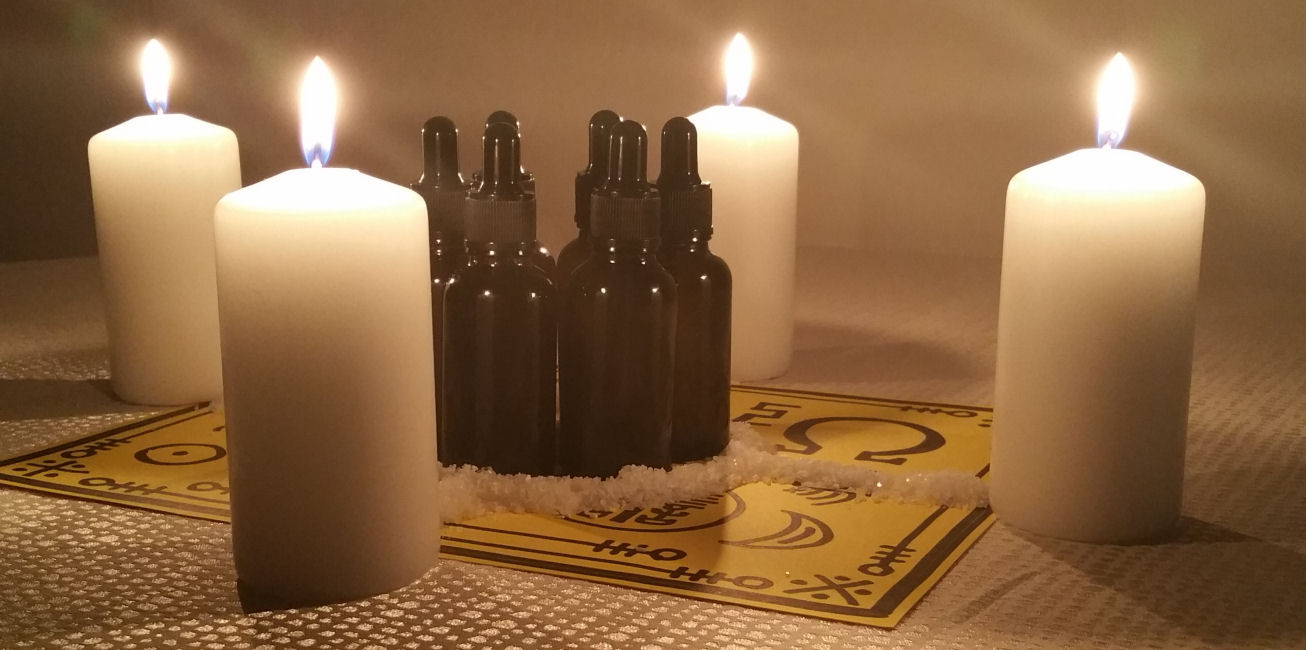
Given our evidence-based understanding of essential oils and how olfactory (scent) triggers influence behavior, I don’t think it’s unreasonable to presume that there are corresponding spiritual and psychic influences. A particular formula of scent can send a particular signal to your brain linked to a particular state of consciousness, which can be super helpful in ceremonial and ritual magic.
Like if we aggregate our key takeaways from the Orphic Hymns, Greek Magical Papyri, and Hesiod’s Theogony, plus cultural/historical traditions associated with Hekate, a blend of myrrh, cypress, frankincense, mugwort, and juniper could credibly induce a state of transcendent consciousness that invokes Hekate. Which is just to say maybe that blend of essential oils will get you feeling powerfully witchy. 😉 Or lotus, jasmine, agarwood, sandalwood, and oil extracted from oolong tea leaves for Kuan Yin consciousness.
Hubby is naturally a skeptic, and will only follow science. He rolls his eyes at the mention of essential oils and the types of people typically associated with essential oils. But when we had an ant problem, he called out, “Honey? You need to make more of that peppermint oil!” (It’s a combo of oils, not just peppermint, FYI. Also has clove, cinnamon, lemongrass, etc.)
A friend of mine remarked on how she gets car sick and sea sick. I gave her two different bottles of oil blends to try sniffing. The first was ginger and camphor. The second was cinnamon, myrrh, frankincense, and lemongrass. For some, the first works better; for others, the latter works better. She loved them so much that she’s currently trying to convince me to sell my oils. (Psst… You can also sun dry a boatload of ginger root, submerged in a clear hard liquor, and leave it in a dark cold place for 2 months. This results in a medicinal ginger tincture for colds, flu, nausea, and fatigue.)
I like sandalwood as a hair treatment oil. Tea tree oil, peppermint, eucalyptus, lavender, rosemary oils have completely rid me of dandruff. I opt for jasmine to anoint my Buddhist altars. Lemongrass and camphor in a salve form helps me with cramps, eases bloating sensations, and indigestion. I like anointing myself with myrrh as a form of ritual purification for meditation and ritual purposes.
Essential oils are not miracle cures, but much like the original “snake oil,” a term now synonymous with fraud, they were originally based on treatments that were legitimate, potent, and proven effective. For the modern-day practitioner, plant extract potions should be approached as a supplement, as part of a coordinated, evidence-based care plan that’s truly holistic. Aromatherapy is effective. Scents help us to regulate emotion and thought, which can then trigger immediate responses in terms of heart rate, blood pressure, stress relief, and behavior. That modified behavior is the truer and more direct cause of us getting the outcome we wanted.
Plants, herbs, roots, resins, leaves, and bulbs can be medicinal, and concentrating their properties into an extract or tincture is how you optimize their medicinal properties. Just like prescription drugs, you need to be highly informed and understand dosage. Used thoughtfully and with knowledge, they’re really powerful, be that from a health healing perspective or a magical-mystical perspective.
 benebell wen
Dear Benebell,
I first learned to make a plant infusion also infused with intention from reading your work, some many years ago now. After much additional reading on the subject, my garden and spice cabinet have been transformed to provide ingredients for the infusions I typically prepare over the long winter months. EOs are calming and meditative. A few years ago, when I learned my sister was entering hospice, I made an infusion with frankincense, other EOs, dried plant materials, love and intention. Over her last few days I asked her if she wanted this oil rubbed on her feet and hands. This may all sound weird, but it was wonderful for both of us. I felt helpful. She was calm. Her room smelled nice. We shared this beautiful good-bye ritual to help propel her on her journey.
LikeLike
Since when are you working for FDA !
LikeLike
What I do with roses is soak the petals in normal vodka (40-45%) for a month, strain the liquid (which is usually down to 20%), then distil it back to a higher ABV. Seems to work alright.
I’d be keen to know the recipe for dealing with ants.
LikeLike
Thanks for this! I’m gonna try your anti-itch oil. I’m working on a deep woods repellent for ticks and chiggers. So far, my research indicates that clove and lemongrass are the top choices when blended into a carrier oil.
Although not an essential oil, black castor looks promising for hair growth and skin detoxing. https://www.youtube.com/watch?v=0BSNb-qT4YE
LikeLike
Been Using White Flower since I discovered it in a Chinese Merchant’s shop in Honiara, Solomon Islands in 1980. I think it’s 100percent Eucalyptus oil.
I have been doing some research on what oils actually penetrate the deepest and whish herbs are best known for inflammation, not just relieve but helping the the body do the job since it’s what is really taking on the chore.
Yea the market is full of lots of hype…
AI gives a whole new meaning to Snake Oil Salesman.;) Thanks and all the best.
LikeLike
1*759*754*0
LikeLike
1+764-759-5
LikeLike
1*197*192*0
LikeLike
1+202-197-5
LikeLike
1*339*334*0
LikeLike
1+344-339-5
LikeLike
1*834*829*0
LikeLike
1+839-834-5
LikeLike
-1 OR 5*5=25 —
LikeLike
-1 OR 5*5=26 —
LikeLike
-1 OR 5*5=25
LikeLike
-1 OR 5*5=26
LikeLike
1*if(now()=sysdate(),sleep(15),0)
LikeLike
10’XOR(1*if(now()=sysdate(),sleep(15),0))XOR’Z
LikeLike
1À§À¢%2527%2522\’\”
LikeLike
@@IiBCC
LikeLike
(select 198766*667891)
LikeLike
(select 198766*667891 from DUAL)
LikeLike
Pingback: These are a few of my favorite scents – benebell wen
Stunning. Stunning in the casual way you describe the use of essential oils. There are many ways to be certified in the use of herbs and essential oils and how they impact the body. This article is a whimsey and offers no real information. There are safety concerns with essential oils, like you mentioned during pregnancy, and what also comes to mind is UV sensitivity and the skin. There are more guidelines I cannot cover here. I recommend the following books for use: Valerie Ann Worwood’s The Complete Book of Essential Oils and Aromatherapy and Robert Tisserand’s Essential Oil Safety. That’s the beginning. Do not buy from MLM’s. Find good suppliers. Look to France for better choices.
LikeLike