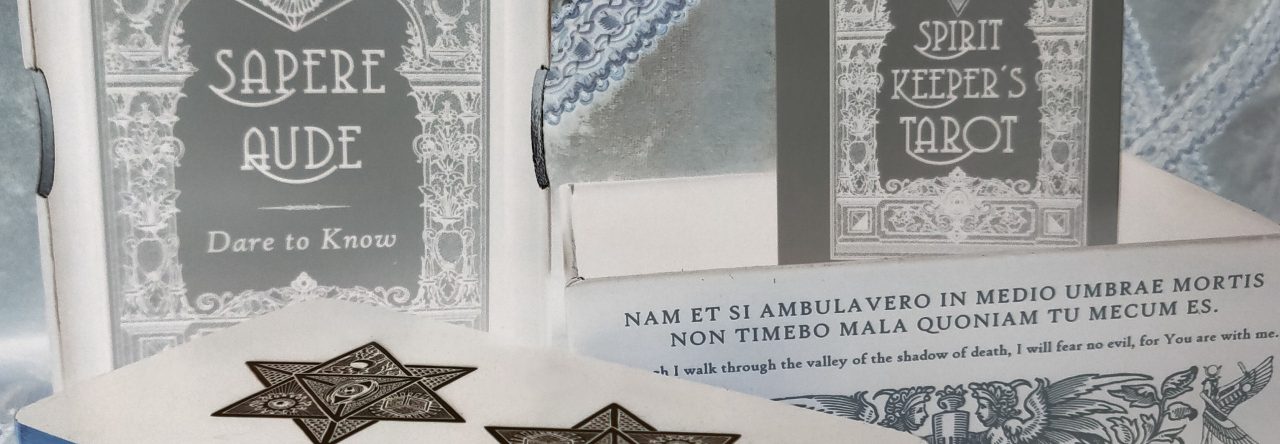
Whew that was kind of a long blog post title.
So here’s my conundrum. Recently I came across a highly visible, highly platformed video on Korean shamanism, by a white male academic. Don’t get me wrong– he did a fantastic job. It’s just that… a part of me does ask the question — why isn’t it an actual Korean shaman or mudang‘s video getting that level of visibility and exposure? Why is it when native practitioners talk about their traditions, their visibility and popularity is a small fraction of the view count that the white male academic gets?
Same goes for YouTube content on Taoism, inner alchemy, or esoteric Buddhism — the channels of white men garner the most visibility and occupy the top-ranking spaces. When it comes to educational content on Taoism and Buddhism, Western scholars overshadow the contributions of indigenous practitioners and Asian scholars. The imbalance has the impact of erasing lived experiences and native expertise, and all insights valued as authoritative are inevitably filtered through a white Western lens.
Worse yet, click into any of the lower-ranking videos on these subjects by native practitioners and skim through the comments section — you’ll find white men correcting the alleged inaccuracies of the native practitioners. Also, funny point — POCs can always spot the white dude in the comments section, irrespective of what profile photo or handle they use.
I call this a conundrum because I don’t have a clear solution — it’s a tension between inclusivity (welcoming all voices and perspectives on my lived tradition) and protecting marginalized voices (when the white male voice and perspective talks over the voice and perspective of the lived tradition). Notice how it’s always a white guy who says he knows the most authentic version of the tradition that is not even his to be authenticating, or how his interpretation of a sacred text that he’s appropriating is more accurate. He hijacks the culture and then positions himself as the expert.
At best, a POC is given secondary, lower-level credit for the purpose of validating the expertise of the white guy standing center stage. Not to mention, a POC voice is only platformed if they agree with the Eurocentric point of view. If a POC expert dare challenge established Western expertise — just watch what happens next.
On one hand, I want to welcome anyone and everyone to engage with my cultural traditions in any way that is going to be of benefit to the collective spiritually. I truly believe that anyone, regardless of background, can become deeply knowledgeable in these traditions. I truly believe that welcoming diversity of backgrounds to engage in my cultural traditions enriches us all.
But then when native voices are continuously sidelined due to implicit bias, and systemic structures reinforce racial disparities, I struggle with how to be both inclusive and protective. Consistently, it’s a POC born and raised in the tradition, practicing a living tradition, who gets sidelined by a popular white male influencer.
I’ve also had to observe how white male academics will publicly declare a native practitioner of a tradition to be historically inaccurate, because what the native practitioner is teaching is not aligned with what the white male academic read out of an “authoritative” book written by another white guy from the 1800s.
Adding to the issue of whose voice gets amplified, I recently watched a panel discussion on the state and future of the occult and witchcraft communities. A key topic was the increasing value placed on academic credentials over lived experience, positioning scholarly analysis as more authoritative than firsthand practitioner knowledge. The only not-a-white-man on the panel pointed out that this trend is disproportionately excluding women and once again centering white male voices. I would have liked to see all the panelists then chime in and flesh out that point further with discussion, but instead, I felt like her point was met with obligatory neutral nods and then the discourse continued in a different direction. Meanwhile, another panelist, a white man, felt compelled to ask, “Why can’t I criticize women?”
Now, let’s be clear—no one said he couldn’t. If you put your ideas into the public sphere, you invite critique, and that’s fair game. But the way he framed the question? The energy behind it? The fact that, out of all possible concerns, this was the one he felt needed urgent discussion in a public forum? It gives… I dunno… fragile masculinity?
This moment encapsulates a larger issue: the discomfort some have when power dynamics shift, even slightly. The panelist’s question wasn’t just about the right to criticize women—it was a reaction to the idea that certain voices, traditionally dominant, might need to make room for others. When those accustomed to holding the mic are asked to pass it, there’s often a reflexive defensiveness, a need to reassert control over the conversation. And that right there is the crux of the problem—not just in academia, not just in esoteric studies, but in every space where marginalized voices fight to be heard. If the mere act of making space for others feels like an attack, then maybe it’s time to rethink who really holds the power in these conversations.
In short, the imbalance of visibility and credibility granted to white male academics in fields like Korean shamanism, Taoism, Shinto, and esoteric Buddhism—while indigenous practitioners often struggle to gain recognition—is a frustrating and recurring issue in academic and spiritual spaces. This pattern is part of a larger conversation about the tendency of marginalized voices to be overlooked. Indigenous voices are treated as quaint background noise until a white male perspective validates them, and it’s only with a white male academic’s validation does an indigenous voice become even remotely authoritative.
When an indigenous voice – or even a non-white academic – asserts a perspective that runs contrary to established Eurocentric academia, I’ve personally witnessed white academics immediately launch into an attack on that indigenous expert’s academic credibility and credentials.
This imbalance is not just about who gets to speak—it’s about whose knowledge is valued, whose expertise is recognized, and whose history is written and remembered.
You’ll hear academics talk about the importance of peer-reviewed analysis. No one disagrees with that, not even native practitioners. But in the case of white academics claiming the importance of peer-reviewed analysis, peer-reviewed by who? Other white academics who are reading the same books you’re reading? Peer-reviewed by your echo chamber where there is zero racial let alone cognitive diversity?
None of this is to say that white male academics should stop studying or speaking on these subjects. But maybe if you find yourself occupying an outsized amount of space in a field not native to your cultural lineage, consider using that influence to redirect attention to the voices of those whose traditions you’re engaging with. Share the mic. Let someone else take center stage for a change.
I don’t want reclaiming space to be an exercise of gatekeeping. I want equity. It’s about recognizing that knowledge keepers exist outside white academia. Heck, even in the realm of academia, consider the credibility you assign to an academic from a U.S. or British university vs. an academic from the top university in, say, China, South Korea, or Japan, Taiwan, or Singapore. When I’ve quoted from Beijing University or the National University of Singapore professors who have dedicated their lives to studying the subjects I’m writing about, literally a white person from a college in the Midwest I’ve never heard of will declare that these professors are wrong and misinformed (about their own heritage, no less).
If an actual native practitioner who was born and raised in the tradition says “XYZ,” then maybe before pecking out “that’s wrong, because historically it was actually ABC, as noted in this white Christian dude’s translation and interpretation of your lived tradition,” consider personal experience as a form of expertise, too. And if that concept makes you uncomfortable, well… maybe interrogate why.
And maybe we could each do our part to push to center the voices of indigenous knowledge keepers and those born and raised in the tradition, who live the tradition, rather than prioritizing the academic voices. Why are you challenging the academic rigor of something learned through oral tradition and inherited from generations of in-group practice, rather than being open-hearted to the wisdom that it holistically is trying to convey to humanity? Why dismiss the truth and veracity of what someone has to say about their own cultural practice and interpretation of their inherited sacred texts, simply because they don’t have a PhD?
Instead of spotlighting the white male academic, perhaps white male academics will consider using their platforms to amplify indigenous voices who have generational and inherited knowledge. With a sensitivity to the power and sociopolitical dynamics at play, maybe white dudes with a love of Asian culture can honor and validate a diversity of perspectives, rather than impose academic gatekeeping as the sole standard of truth. And maybe try to muster some respect for cultural practitioners as authorities. Acknowledge that individuals speaking on their own cultural practices and sacred texts possess deep, lived expertise. Do not dismiss their insights or interpretations merely because you perceive them as lacking formal academic credentials.
 benebell wen
One way of fighting off VMS is condoms 🙊 Although I’ve heard that VMAS are not as easy to get rid off once they have rooted into academic circles 🤔
LikeLike
Dear Benebell, how are you? Are you worried about your friends again?
Yea, in these circumstances, I’m worried about a few of my friends too…
And I’m worried about YOU–If you’re falling into a reactionary trend or if you’re continuing to believe in yourself, in your following, and your center-stage position–If that’s even what you ~desire~.
To the issue though, a few points that might help:
Before I got fired, my ex-manager constantly harassed me about not holding other people to my own standards, because that is what tends to break people.
My manager honestly could have been lecturing both of us at the same time, because she likes “Tao of Pooh” and does a lot of gardening, while you are also an over-achiever in many regards.
You, Benebell, come across the wires as a total freak anomaly of a person with a heart for the craft, a mind for exegetical research, and technical publishing skills.
Point being…
Joe Shmoe the actual mudang somewhere in Korea probably doesn’t even care about weblogs enough to try and build a following, so we might have to accept that he ends up having a nerdy white-guy academic follower who records the jams as a protest to the western military industrial complex.
What would really be so wrong with that?
My ultimate takeaway from this article is that we are both horrified how academics think they can divide and conquer the Taoist magical square.
Not only is academic exhalation an insult to practitioners with actual experience, it’s also an insult to academics who swore to have none of this type of experience.
Sorry to say this again, but it reminds me of the fascist Germans.
In the end, divide-and-conquer is not compatible with unify-and-save, so you have to choose if you care about the land, or if you are willing to see it destroyed.
Please, don’t kill your friends,
–Brad
LikeLike
This is my personal thought and I will refer to a general problem of Western culture.
The article insightfully addresses a longstanding issue in the way Western academia and media often dominate discussions about indigenous and non-Western traditions.
Historically, Western culture has positioned itself as a superior, universal authority, asserting the ability to understand, dominate, and explain other cultures. This mindset has led to the marginalization of minority voices, ensuring that their perspectives remain underrepresented in mainstream conversations.
Indigenous knowledge is frequently overshadowed, often only gaining validation through a Western lens.
However, I believe this issue runs deeper than a mere visibility imbalance. The real value in understanding different cultures comes from engaging with lived, practical experiences rather than relying solely on theoretical or academic interpretations. True researchers and scholars, particularly those committed to cross-cultural understanding, recognize the immense importance of listening to indigenous voices, those who live, practice, and pass down these traditions.
Only through such direct engagement we can hope to achieve a deeper, more nuanced understanding of any culture, beyond the surface-level knowledge often perpetuated by dominant academic frameworks.
LikeLike
I always enjoy reading your thoughts and couldn’t agree with you more. Thank you for this post.
LikeLike
I completely agree with you, Benebell. Although, I’m a white woman. Well white for people from South America for very valid reasons and hispanic/latina for the rest of the world, because I’m from Spain.
I’m personally sick of the glorification of many ascended masters in spirituality being white men or men. I’m sure there have been many women, non-white folks, who were spiritually enlightened just like you are, for example, but I don’t see many discussing these people quotes, theories, predictions, doctrines, not even within the occult circles. Yeah, sometimes some female authors are brought up, but not with the same level of admiration and respect.
I’m also sick of people who tend to gatekeep the occult discussions saying who doesn’t have a recognised training in occult matters should not enter the discussion at all. It is like in academia with the intent sometimes to have occult matters acknowledged within academia and follow the academic canon to seek knowledge and training. Academia is a self-preserving, self-agrandising world which is rooted in classism, sexism, ageism, and ableism. It is elitist and in most cases it has become stuck in a rut blocking innovation, progress, and true knowledge.
I will always listen to you more than any white man talking about Eastern Asian wisdom. It is only logical. In fact, I’m very grateful you are generous enough to share your lived tradition, wisdom, and practice derived knowledge with us who unfortunately can’t speak the language and for sure could not have the same experience you have of the culture and traditions.
LikeLike
Sigh. My doctoral dissertation was on the impact of non-Western medicine on the biomedical model. Yup a mouthful. It grew out of studying anthropology since high school. All that said, picture this. The chair of the anthropology department back in 1972-1975 while I was getting my BA had written an acclaimed ethnography on Andalusian gypsy flamenco dancers. To my horror, the woman had no idea how to play the castanets nor a guitar nor could she dance. I wanted back then to be an ethnomusicologist because I was a musician. Writing a book about people who breathed the guitar and sang from their feet without ever learning how to play a single musical instrument nor studying how to sing or dance to me was blasphemy.
Fast forward over the years and I got involved in an interdisciplinary Ph.D. program studying scientific and scholarly communication. What I learned about how citations are fudged and tenure is awarded to those who got “in” with the right committee members made me hate academia.
The only way Taoist practitioners or shamans or Finnish Sami seers are ever going to get views on the various platforms or have their films win awards is if they figure out the algorithms on Google and they have to find a way to add English, French, and German, and Spanish subtitles and market themselves.
I’m hooked on a Mongolian martial artist who dresses up in native costumes and races horses while shooting arrows and doing stunt riding. She’s becoming very famous. She’s also drop dead gorgeous and can wield weapons.
Academics are smug. If someone has something to say, it will eventually get heard over the drowning out of the smug academic.
My housemate, by the way, is half Shoshone and a retired bull rider. He mocks “whites” “you people” for believing anything a native says about BigFoot or giants or paranormal tales. He says natives ever since Whites arrived in Nevada have made stuff up so people would run off and write books.
He also said ONLY someone who has ridden bulls in the arena or roped a cow at top speed should ever talk about the sport. His distain for weekend cowboys while we sat in a bar watching a live rodeo was embarrassing and thrilling all at the same time. Everyone knows him. He’s 6 ft solid muscle and has a reputation for knocking guys out flat if you mess with him.
I am hoping World TikTok catches on and people’s videos do go viral. I know I never want to make a video or write a book about a tradition I did not grow up in nor a skill I cannot myself perform.
Great post as always.
LikeLike
Although acedemics has its place, the arrogance and narrow scope of these men is concerning. Tone of a person has weight here. Is the white man sharing the mic? Is he giving credit where credit is due? His information came from “somewhere”. Acedemics often get trapped in a slice of time. The people who practice and live these traditions know they are not fixed but ever evolving and changing. They are fluid. The value of this natural evolution of lived experiences is brushed aside. These primary sources of inheritance are busy living their understandings and beliefs and often don’t even know the value of their experiences and knowledge because it’s such a natural part of their essence.
White men over value their own voices and understanding and do not give enough value to the voices of others.
LikeLike
Dear Benebell,
Thank you for another thought-provoking post. You touched on some of the deeply troubling aspects of Western culture that’ve been bouncing around in my head for some time. From the get go, Western culture has grown out of a tap root of elitism, moral superiority, and self-righteous chauvinism that seems almost impossible to now eradicate. To accept any flower of Western wisdom seems to require the acceptance of the rotting layers of a couple of millennia of do-do in which it has grown. One paradox is that the growth and development of culture requires appropriation, while the theory and practice of being cultured is to behave with fairness and respect toward others. Plato and all those old dudes who followed were keener to borrow the ideas 😊 and take credit for them than to give credit fairly. We keep justifying the theft only to rebrand it as a fair market practice.
Keep voicing these challenges to the norms Benebell Wen. The cumulative vibrations of a thousand voices questioning may be the only means by which we tip back toward balance.
–Mary
LikeLike
White male guy here. I’d like to provide my two cents suggesting as one driving factor in this the notion that one approaches the unfamiliar through the familiar.
For most white Western people that familiarity starts from their upbringing, meaning a mostly European-Christian-ish cultural background, which may or may not be religious. Those among us who become curious about the world at large, we go after that knowledge either in a somewhat chaotic way, since the culture at large doesn’t provide a clear structured path for this; or, if we’re of a more systematic disposition, through the structured paths available, meaning academicians. In both cases, this almost always means someone who speaks to us in a way that’s close enough to that upbringing we start with, so that what they’re talking is a mix of “lots of familiar” with “a little bit of unfamiliar”, enough to keep our ears and eyes open, not enough to turn us away due to extreme unfamiliarity.
So, we have here a huge set of “all white people”, and a subset, within that group, of “while people curious about the non-white world”. Most of this groups stays at a shallow level. But some of them, once they reach full familiarity with this layer, go one step further, moving out of their comfort zone, but also in a way that whatever they’re coming into contact with is also a mix of “lots of familiar” with “a little bit of unfamiliar”. The structure is the same, it just so happens their baseline familiarity is expanded compared to the larger group they were a part of originally. That’s when they start learning of the original voices of “the other”, but still through the comments of interpreters who translate it for them.
This process repeats via progressive narrowing, until we get to the subset of the subset of the subset of … “white people at large” who give absolute preference to humbly learning and practicing directly under masters from those traditions, never pretending to know better than they do about their own living path even if possessing large bookish knowledge of the topic acquired earlier on.
These circles within circles, IMHO, explain the phenomenon you refer to, of the content that is prevalent in Western platforms, both popular and academic, focusing so much in white scholars. There’s a LOT more people in the group “white people curious about the non-white world”, for whom white academics are the “lots of familiar” through which they can learn “a little bit of unfamiliar”, than white people in the subset of the subset… for whom learning directly from the source without any filter feels best. By extension, there’s a lot more content targeting that first group, which in turn is watched and followed by that group, than content for, and followed by, the latter group.
I suspect the only way to overcome this would be for that unfamiliar not to be unfamiliar anymore, meaning providing white children, from early childhood, an immense amount of contact with other cultures and traditions, similar to how most everyone in the world became familiar with white cultures via Hollywood and other American cultural exports.
An example of such an inverse movement is manga and, more recently, manwha and then manhua, which have been providing white children with a barebones familiarity with Japanese, Korean and Chinese cultures. Still not enough to overcome the iron weight of their baseline culture, but enough to move them a few steps along the path, to the point the more dedicated fans do in fact give preference to hearing the perspective of native authors, artists, editors, producers, voice actors, industry executives etc. over those of any Western white researcher specialized on, say, Japanese Pop Cultural Studies.
I myself am 48 years now. It took me about 30 years to get to the point I’m so familiar with the East I can easily follow and kinda, mostly (I suppose?), grasp what native voices are saying (even if far from fully) without relying on Western academics as a bridge. In that I have the good luck of knowing English, a language to which boatloads of content from other cultures is translated. Were I stuck to my native Brazilian Portuguese though, and I guess the most I’d know about anything ranging from India to Japan would be via translations of some Theosophical and Perennialist books — not exactly good references, but better than nothing.
And without these, I’d be stuck with what I learned from my teachers back when I majored in Philosophy in the early 2000s. I once asked them why we didn’t have any class on Eastern philosophies. What I got back was a look of dismissal, and a reply of “Ah, that’s because there’s no such thing as Eastern philosophy. The East have wisdom traditions, but not philosophy, no. That’s something the Greek developed, and only the West developed, which is why that’s what the teach.”
I hope this helps, and I’d love to know whether you think the above has any merit!
PS: I got your I Ching book from Amazon US two weeks ago. I’m now saving and will import the other ones as soon as I can afford them. Thanks for making all of this available, and so easy to understand!
LikeLike
hi Benebell,
first question, wha ‘‘tis a POC? Please thank you.
Shelly
LikeLike
Hi Shelly! POC stands for “People of Color,” which is used as a broad term in discussions on diversity, equity, and inclusion to refer to people from racial and ethnic backgrounds that have historically experienced systemic discrimination or marginalization. ❤ It's a term used for helping us acknowledge certain shared experiences of race having an impact on our opportunities and treatment.
LikeLike
Well… It would be possible to list different groups of people (for lack of better terms) throughout history and in the present, and also list shared experiences and differing experiences and, so to speak, compare and trade survival tactics.
LikeLike
Indigenous practices were not created to play fencing games with the non pigmented skin golf spiritual seekers ….one should never bark to a dog…they will always bark better… indigenous culture is to be kept as it was..
silent and internal, it’s not for tv, magazines, and pressed paper…
Don’t be afraid.. don’t be angry
Ignorant people dig their own graves according to their taste of mental furniture…
LikeLike
Wise words. If you bark to a dog and it barks better, how do you human to a human without that human humaning better? =P
LikeLike
A human.. drunk in awareness In front of a less visible reality will listen and absorb..a human in love with his projected image will always look for a larger mirror…why insist with someone who seeks only mirrors? Better to throw a bone to a dog…that he understands with a different rumor…..
LikeLike
hi Benebel.
I’ve been wondering about this general situation since reading Carlos Casteneda in the 70s. He started a fashion for fiction about native teachers going to great lengths to teach white people. Usually North Americans. Just like the aliens are only interested in US?
it’s all colonialism.
then there is the fact that genuine shamanic spiritual experiences of deeper wider realities do not find into frontal-brain-obsessed western academia.
and academia in itself is a tool of colonial rape and pillage.
LikeLike
What nonsense, benebel is just demonstrating her anti white racism, she practices cultural appropriation by making money out of western esotericism and then complains about others who she claims do the same.
LikeLike
this idea of being white black yellow etc it’s a skin pigmentation factor which is related to a external habitat or exposure to environment..
But mind conditioning towards having “security”that indeed could be the root factor of building an academia shield to reach that goal..so what or better how white skin became a center topic? People who kept inside of closed quarters for a long time as during the middle age period were called Nobles,meaning that they had economical power and would no expose themselves to external factors like sun and wind,so their skin became extremely white to the point of being called Blue blood people, which meant a person who did not had to work physically,so as time went by having become disciples of wealth,on their “free” time they would dedicate to ‘inter..tainment” like music,literature,gossip and food,that was why they created the word “soldiers” from the latin Soldo or payment to guarantee their “security ” just to add a cherry to the cake,men died easily on battles and their wives had to move out of the castles walls so living in the forest in a hut these women lived out of what they could find and we’re not able to accumulate food as the nobles did..so rats visited the deposits of the rich and left alone those women,as rats diseases hit the elite like the Peast,what was the reaction of the nobility when seeing that their were affected or infected and those women no! Whiches! Burn them!! As we can see when the backround of a culture is based on having things, how can we not see that fear generates desire for security? And that is the Moto of colonialism and all their mirrors…how can one jump in the unknown carrying that kind of weight on their minds?
To see today a “White” scholar that visits a tribe or a foreign culture to do “studies” on their behavior,and ends up writing,publishing books making lectures becoming notorious etc etc without putting in to question the true reason of insecurity which is born out of a projected mirror of denial of one’s true natural being..
LikeLike
Quick question: What is one’s true nature? Is it the same as one’s everyday existence? Things really are the way they are, strange at times, out of the ordinary, but still our bodies are mortal and so are we (unless…)
LikeLike
bearing in mind that words cannot express inner knowledge or the true self..we can try to describe the first steps to dive in to that pond..we humans as we call ourselves tend to be distracted with the outside world play..very little time is dedicated to bare observation, wich should not be confused with what we understand as meditation..as the word itself gives a hint Medit (measure) action..meaning only to watch without interference from our intellectual minds… when this action (to observe) is constantly practiced,we begun to perceive that no matter how secluded one may be,we are never a-lone..our minds get impulses from everything,so by not reacting to any of these stimulus, we keep on observing,a door opens to our ancestry memory..(millions of years of genetical information deposited within) if one manages not to start trying to self explain anything,a very slippery marble like surface may appear and we begin to walk on it very carefully..our ancestor mind starts to wake up and put us back on the trail… there we begin to see that everything has a language and we can understand it by exchanging contact..look at that being we call stone and perceive what it went trough to reach that condition and there we realize that it was everything.. pulverized everything that became solidified carrying it’s experience..if we can see that..we start to return to our original self.. Everything….
LikeLike
so far so good, I’m with you, although admittedly sometimes not at all, sometimes intense, but some people in society tend to pin diagnoses (yes plural) on me when saying or doing stuff like that =p
LikeLike
Please allow that these simple thoughts come in to your good sense … perhaps you have chosen a too medieval hard ground to express your moving water thoughts and water does not permeate in it easily..it’s a bit like when you shake the dust out of a sleeping carpet that the surrounders never new or pretended it did not exist,surely they were never expecting anyone that could put in to question such a “hard soil” ..perhaps you are considered a threat… specially if it comes from a person that might resemble (simbolically speaking) a “Wich” like those of the middle age spoken before..all they did was to live in the forest in which they managed to survive in total solitude without fear even of the darkness of the night…so I’ll tell you a nice sparkling story…
there was a wise man sitting on a log of wood watching the movements of the sorrounding nature ..a man comes near him and says.. master…you are always so peaceful and happy…what is the secret of your state of mind?
the man replied..it’s very simple,never start a discussion with an idiot…the man then says..
i am sorry but i don’t agree with that at all.. the wise man then said.. you are absolutely right!!
LikeLike
the western lense is an illusional energetic program; the illusion was created as to take away the power from culture, medicine and authenticity;
the same idea goes for western medicine, why is it that the world listens to a predominantly white empire of “medicine”?which is only based off of the last few hundred years?
LikeLike
the most important thing to do when we realize that an “empire domination” is taking place is not to forget that we all have inside of us a non measurable ancestral memory which is the precise “target” for destruction of the present empire dominion.. what should also be properly identified is the cause of this obcessionate desire of “proving” at all costs to be superior in any cultural background…..FEAR of the unknown is the basic cause…to face this phenomena, it is required a powerful self delusionment movement…but how can a fear intoxicated mind allow freedom of questioning?. that’s why they concentrate in creating empires…to avoid questioning their disease..
An important detail to be aware is that in recent years some of the less known arts are now for sale..
LikeLike
We are all originally native, it’s racist to single out white people for getting in touch with shamanism, Taoism, inner alchemy, or esoteric Buddhism, would you feel the same if an African started a youtube channel? You are of Asian heritage but have written about western esoteric practices, it’s hypocrisy and small mindedness that you are demonstrating.
LikeLike
Wow, most of the comments here are crazy, but typically white and to be expected. I agree with you Benebell. I find it disheartening that it’s 2025 and the same stuff is going on. Recently got into a discussion with someone about why the algorithm always pushes white. Even on language. I was looking at a Japanese language video, wanted to find similar – by native speakers, and it kept returning white people speaking Japanese under the search term and ‘for you’ suggestions. No, not for me! Where are all the native speakers??? I know they’re out there but buried under the white psyche/psychosis that can only cope with seeing itself first and throughout.
Also a peeve is the whiteness that always “just so happens” to go and learn something indigenous and be better than the indigenous people in it, in a quarter or half the time, i.e. “Natives learning their tradition usually take ten years to get to maestro status, but look at me, I’ve got it down in 2/5 years, now come and pay me money.”
There’s an insatiable, disembodied greed in the process of it which then lends itself to misinterpretations and misinformation abounding. Particularly for me with the I Ching – Thank the Heavens for your book because I’d been through so many other books and adaptations etc. all of which carrying the overwhelmingly deafening tones of “ah…here walks a white man…” throughout the discourse.
It is a shame but it is true to say that the self-declared authorities will never have it, partly because they keep self-declaring themselves the authority. And for fear of or to escape persecution, some indigenous or native tradition keepers will bow or defer or silently let this go on through because of the deep and detailed history of the violence of whiteness and its perpetrators throughout history.
The approach of a lot of those addressing cultures other than their own who happen to be white/white passing/white chasing also tend to take an admonishing tone “let me tell you why you were wrong on this/why I’m the only one who knows how to speak on this” – is the innate need of supremacy to have itself be the only asserting, speaking and consulted authority – the very top of a collectively imagined heap – coloniserrrrrrrrrrrrrrrrrrrrrrrrrrrrrrrrrrrrrrrrrrrrrrrrrrrrrrrrrrrrrrrrrrrrrrrrrrrrrrrrrrrrrrrrrrrrrrr genes/mindset/approach – and just look at where that’s got the world.
Regarding your work on middle and far Western traditions it’s thorough and in depth to far more of a greater level then ever goes in the reverse, besides which and as is the point, those traditions were authored and preserved as such that they could be referenced and studied in the way that they are, and the originators be it Hermes, Golden Dawn, Greek/Roman mythology etc. etc. are always heavily attributed as being the original definitive sources of their things. Nevermind the fact that you live in those places where those things would be the dominant spiritual culture so to speak – so your encounters with them with be at length and in depth, so those comments coming at you for your work in those areas are escaping context for the sake of literal sanctioning of whitewashing, which is ludicrous.
Thanks for speaking up and thanks for doing what you do, it is very much appreciated. Respect to you and your Ancestors and traditions.
Peace.
LikeLike
White middle class North American culture has a set of milquetoast assumptions which must be questioned if one is to live a fuller, more examined life. As a white, middle class North American male who knows the definition (and reality) of ethnocentrism – that’s why I’m here and have picked YOU as my guide to your area of expertise.
Your “I Ching: The Oracle” is a treasure to me.
I am not my body, the color of its skin, nor the culture I was born into this lifetime.
None of us are.
I would love you to introduce me to more expert voices that you see being shut out. You could use your channel to combat the very thing you are exposing here. I, as one of your students, would find that very valuable.
LikeLike