
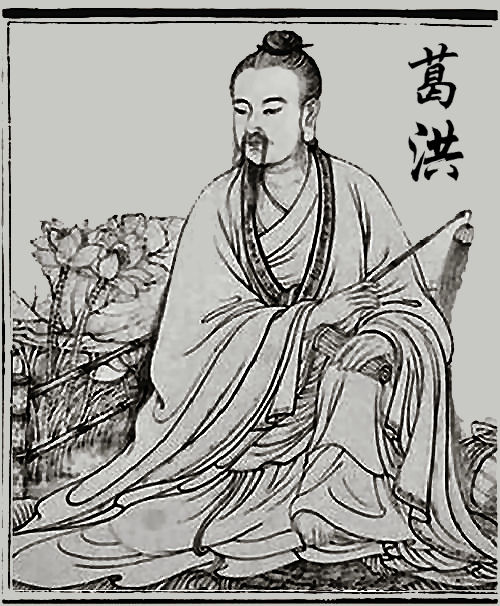
The Baopuzi 抱樸子 (circa 300 – 343 AD) by the celebrated alchemist and polymath Ge Hong 葛洪 is a Taoist grimoire that I would posit to be the most if not one of the most influential and impactful texts on Taoist mysticism.

Scans of the text you see in this video are from here [四部備要], this copy of it archived between 1924 and 1931 as part of a national effort to preserve essential ancient Chinese texts. You can also access a digitized version of it via the Chinese Text Project, ctext.org here.
This write-up is the companion blog post to the video to provide some additional notes on the Liu Jia Secret Mantra and other fun (to me) tidbits from the Baopuzi.

Source Text
The Liu Jia Secret Mantra 六甲秘祝 (Liu Jia Mi Zhu) appears in the Inner Chapters (內篇, Nei Pian), in the section titled “Climbing Mountains, Crossing Rivers” (登涉, Deng She), paragraph 5. In the page spread scan above, I’ve highlighted the nine-character mantra in yellow for your convenience of reference.
Here’s the complete passage that the Mantra is found in:
抱朴子曰:「入名山,以甲子開除日,以五色繒各五寸,懸大石上,所求必得。又曰,入山宜知六甲秘祝。祝曰,臨兵闘者,皆陣列前行。凡九字,常當密祝之,無所不辟。要道不煩,此之謂也。」
Translation:
When you are upon one of the sacred mountains, at timing corresponding to Jia Zi 甲子, hang five silk ribbons of the five colors [of the Wu Xing] that are about 5 fen 寸 in length [12.25 cm, or 4.82 in] on a boulder [or crag; near a great cliff] and as you place the ribbon on the stone, whisper quietly to yourself the nine-character Liu Jia Secret Mantra, then state your wish. In doing so, your wish shall now come true.
The five-colored silk ribbons is an offering to the living spirits dwelling at that sacred mountain, and you want to place it upon the most notable boulder or cliff area you can access, for that spirit to receive. Utterance of the Secret Mantra activates the connection and notifies the living spirits of your presence, and your petition.
Timing corresponding to Jia Zi 甲子 can mean the ascendant hour of 11:00 pm to 12:59 am, or it can mean the 11th lunar month, which corresponds roughly to the Gregorian calendar December to January, or any time during the year of the Metal Rat. Likened a bit to the concept of Olympic spirits, the astrological timing here ensures certain planetary and constellation alignments so the spirits you seek to petition will be present.
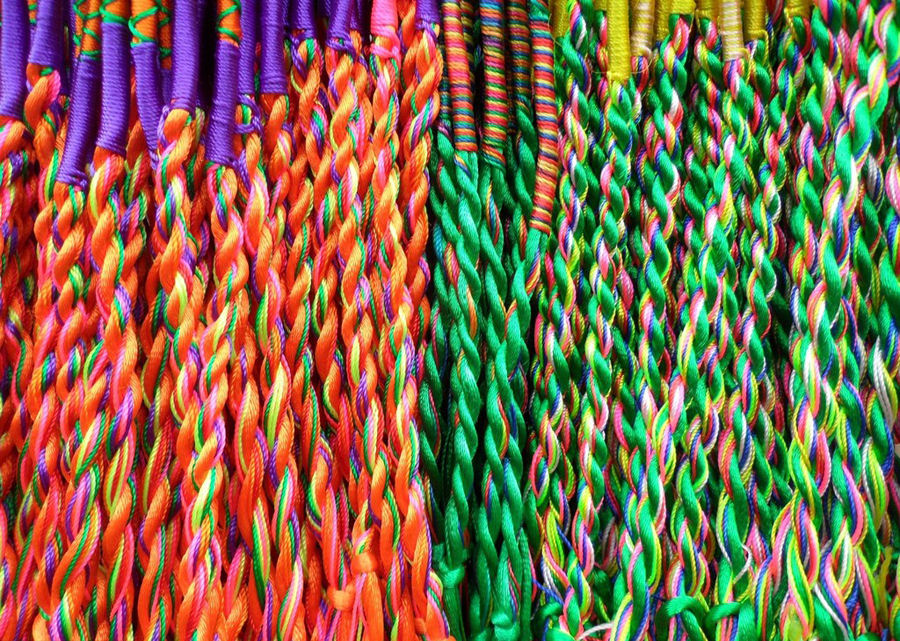
Five-Colored Silk String
Of note, the tradition of five-colored silk string continues to this day. Braided silk of five colors is worn around the wrist or ankle for protection from evil. Historically, people would petition for wishes to a river god, then toss the five-colored string into the river as an offering to the god (nowadays please don’t do that, for environmental reasons).

The All-Powerful Secret Mantra
Baopuzi calling this the Liu Jia 六甲 mantra is conveying that it is considered to be an “all-powerful,” all-purpose, for all seasons (as it were) magical spell and incantation. As noted in the video lecture, Liu Jia 六甲 means “year-round for all occasions and all purposes” because it references the 60-year lunar-solar calendar cycle and the complete roster of the 10 heavenly stems and 12 earthly branches:

And here’s the version of the Liu Jia Secret Mantra 六甲秘祝 found in the Baopuzi:
臨兵闘者,皆陣列前行
Lín bīng dòu zhě, jiē zhèn liè qián xíng.
The most popular (my law school legal training mind wants to call it the Majority View…) set of hand mudras associated with the recitation of these nine words is this:


Recommended Practice for Space Clearing
If you feel malefic energies have infiltrated your home and want to clear it all out, and then fortify the perimeter to keep it all out, start by standing at the center of your home, or as close to the center of your lot as possible. If your home has multiple floors, then you’ll have to repeat this for each floor.
Face north and clap three times. This signals the start. Turn to face east and this is where you begin. Form a “sword” with your dominant hand, as demonstrated at the end of the video at timestamp 36:08 (Secret Mantra Grid Demo in Hokkien). Recite each word as you draw one line to form a woven grid, as follows:
Now go back to facing north and repeat the above, the recitation and casting the nine-line woven grid. From the north position, turn to face west and repeat, and then face south and repeat.
Begin “pushing” outward by taking several paces out from that center and repeat the Mantra recitation while casting the woven grid with your “sword” hand mudra in a spiral path, moving counter-clockwise until you’ve done a full circle in eight directions around the outer-most perimeter of your home. In terms of how closely to walk a spiral path given the physical constraints of your house structure, let intuition and practicality guide you.
When you’ve reached the outer-most perimeter, you’ll want to perform this recitation eight times in the eight compass directions, and then you’re done. You should be facing north upon completion. Clap three times to signal the close.
Space cleared and fortified. The invading malignant forces are gone and will stay gone. Oftentimes, after this is done, practitioners will re-walk the spiral path from the center outward again but holding incense sticks to let the smoke of sacred incense consecrate the space. As you do this, you would recite a mantra invocation of a patron divinity. Alternative, recite an affirmation commanding that what you have Willed to be so Shall be so. I strongly recommend writing your own command rather than using another’s, because it’s more powerful and more integrated when it comes from you.
Space Clearing a Hotel Room
A popular Taoist folk practice is to stand in front of the open doorway to a hotel room, and either perform the grid casting noted above or recite the nine words with the nine hand mudras illustrated. You do it just once, and the theory goes that you’ve cast a huge, powerful guang or orb of protection around yourself. As you walk in, this bubble of guang astral light protection incinerates all negative juju. You basically turn yourself into a human metaphysical juju zapper. As you move around the room, you are incinerating all that bad energy until the entire space is cleared.
Casting a Protection Circle for Ritual Work or Divination
Prior to commencing ceremonial ritual work or an important divination, clear the work space by performing this Mantra in the eight directions circling around your work space. This helps to ensure no unwanted forces are influencing your ritual or divination results.
Personal Empowerment
In tantric Buddhist practice, this Mantra is recited in repetition while in a meditative state as a form of personal empowerment. A habitual meditation practice with the Liu Jia Secret Mantra will increase your abilities to harness guang 光 astral light and magnify the strength, agility, and momentum of your guang light so that it is as “thunderous as racing horse-drawn chariots.”
That reference comes from the Inner Chapter “暢玄” [Boundless Mystery] paragraph 1, where Ge Hong writes: “光乎日月,迅乎電馳,” meaning “the light of the sun and moon, the speed (& force) of thunderous racing horse-drawn chariots.” Sure, 光 (guang) means light, but it implies splendor, magnificence, something that radiates with a prominent halo, and thus exalted. In Taoist mysticism, it’s a reference to what I might compare to the Western esoteric concept of astral light. It’s understood that you use guang to empower Craft; you use guang to consecrate. The complete passage that line is found in is describing the Mysteries (玄, xuan) as the true source and origin of light and speed/force, which is ultimately the pureform of empowered qi that the Taoist master has cultivated.
And so the belief goes that meditative repeated recitation of this Liu Jia Secret Mantra has the long-term benefit of protecting and safeguarding you from dangers, disaster, and averting both temporal and spiritual threats, because it magnifies your ability to harness guang astral light and harness it with great speed and force.

Protection Talismans
Protection talismans with the Mantra inscribed on bronze coins are also popular. Or make your own by following this template in oracle bone script:
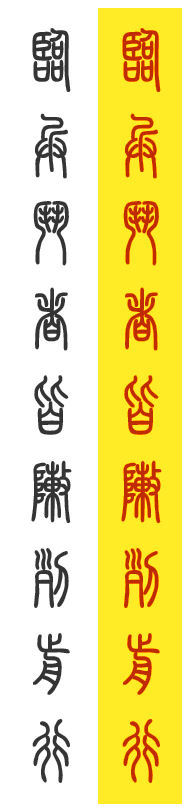
Traditionally, the nine characters are written in red ink on imperial yellow paper. It can be written in the vertical as you see above, and then the paper is rolled into a scroll, tucked into a tiny sealed vessel of some sort, and worn around the neck (or worn as part of an ornament in the hair).

Fu Talismans
A point I found generally amusing is how Ge Hong dismisses superstition, asserting how we should not act out of superstitious beliefs, but then proceeds to go on at length about sigils, talismans for protecting against demons and ghosts, and the magical spells to activate them.
Five Talismans for Home Protection
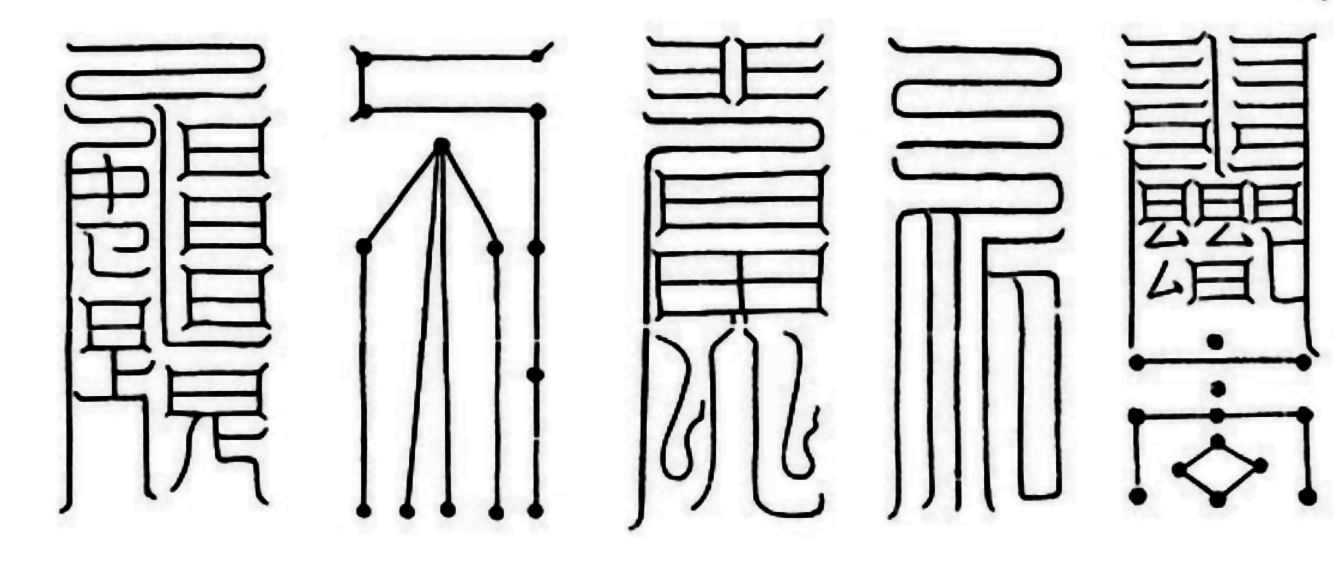
Above left to right are five talismans that Ge Hong tells us were revealed to him by Laojun, one of the Three Pure Ones and the deified form of Laozi (Lao Tzu). They’re to be inscribed on peach wood placards
I couldn’t quite make out whether he clarifies which talisman needs to placed in which direction. However, earlier in that same chapter he talks about empowering the Laozi talismans by beginning at true north.
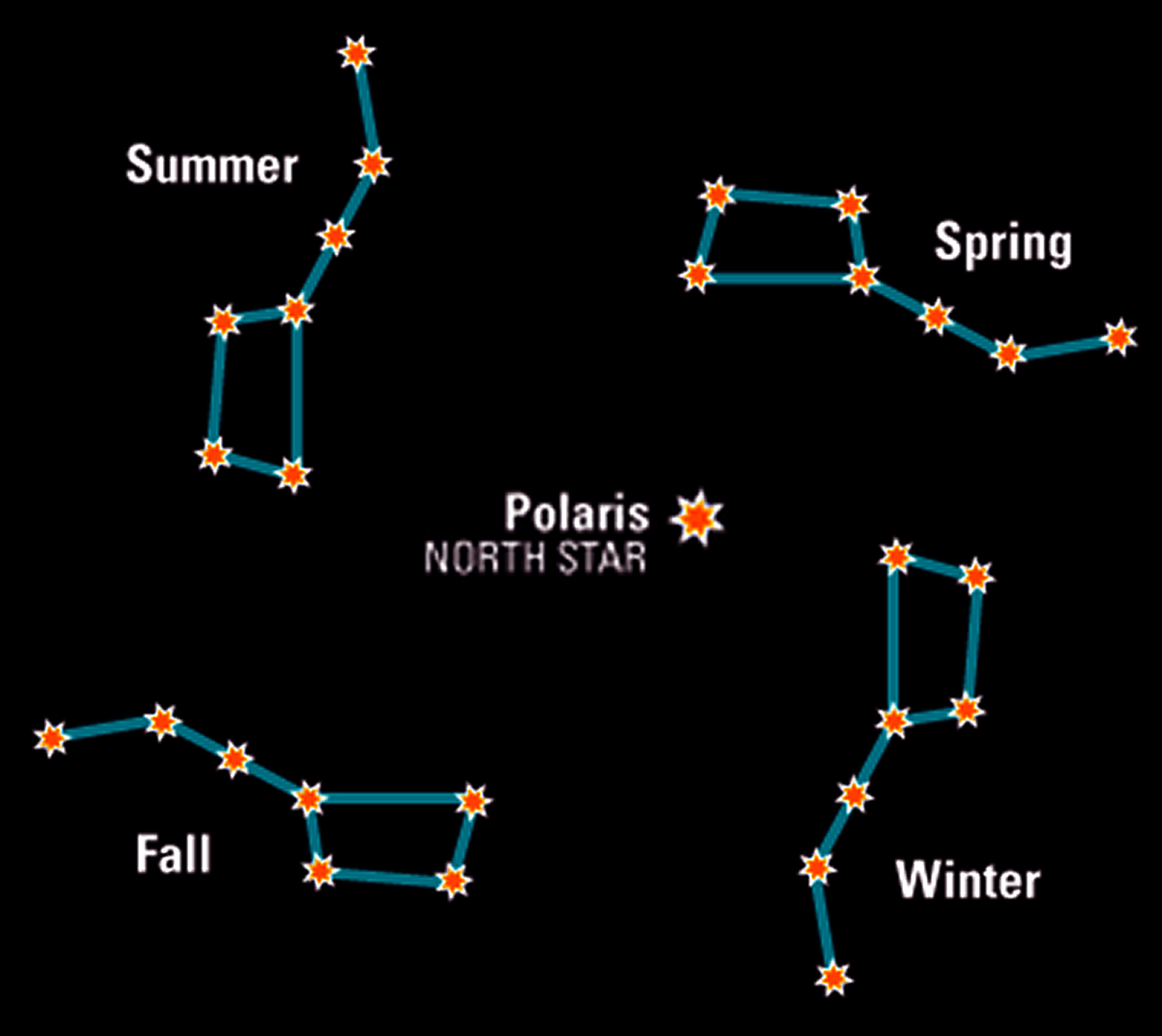
This suggests to me that it should most likely follow the direction that the Big Dipper’s ladle is pointing in, seasons in sequence, and so the five talismans in sequence above is right to left, right-most being #1, the center point of the area you want protected by this set of five talismans, then talisman #2 placed in the direction that the ladle faces in the spring, #3 placed where the Big Dipper ladle faces in the summer, talisman #4 (second one from the left in the above illustrations) placed where the Dipper ladle faces in autumn, and finally the left-most talisman #5 placed where the ladle faces in winter.
The peach wood painted talismans should be placed on beams, pillars, or strongly supported walls around the home at the stated positions. I will say, though, that in contemporary times, you don’t see the peach wood as often anymore, really for no other reason but cost savings. It’s just a lot easier and more budget-friendly to do it on paper.
Note that in the video lecture at the timestamp for “Hanging Talismans,” I’m discussing one passage about eight talismans for home protection hung in the eight directions. That’s a different set of Fu instructions from the one mentioned above, which is about a set of five, specifically for those who live on a remote mountain and may encounter dangers and hazards from living in such a place.
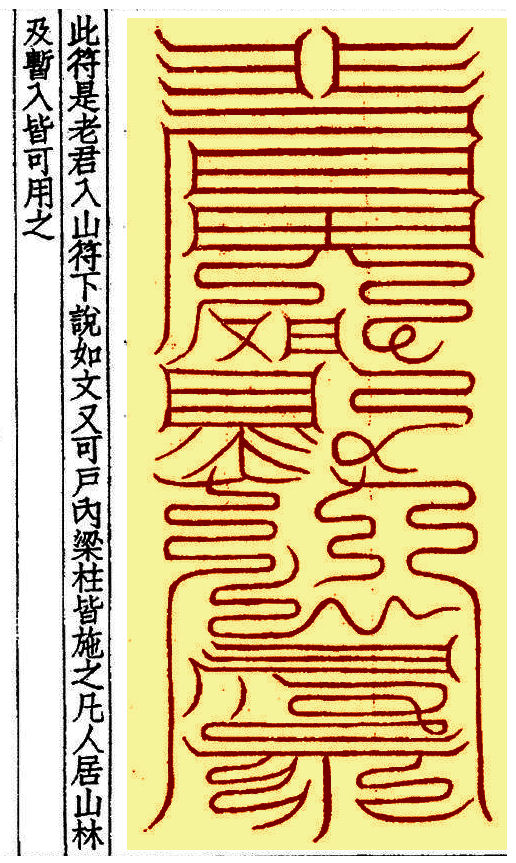
Laozi Entering the Mountain Fu Talisman
In the present day, the “Laojun (Laozi) Entering the Mountain” protection talisman has been repurposed as a talisman to clear the unwanted energies residual in a rental home, and then to continue safeguarding the home for the duration of your lease.
It is painted with red cinnabar or vermillion ink with a consecrated and blessed calligraphy brush, and as you paint the sigil, invoke the deified Laozi (Laojun) to lend his power. The paper talisman is then hung near the front entrance, on a beam or wall. You can opt to conceal the presence of the talisman by hiding it behind wall art or ornamentation.
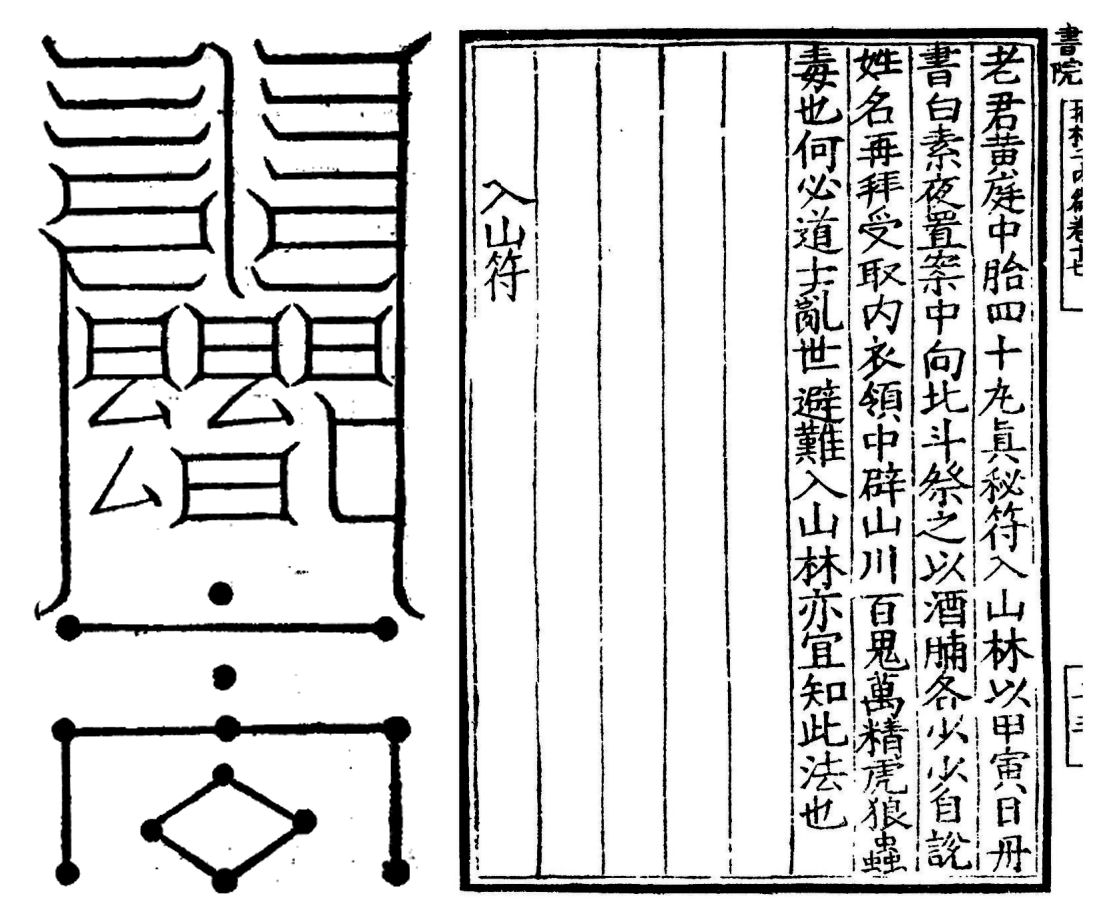
Forty-Nine True Secrets Fu Talisman
There is a talisman called the Forty-Nine True Secrets Fu 四十九真秘符, says Baopuzi, which was designed by an old gentleman by the name 黃庭中.
Cast the Fu talisman timed to Jia Yin 甲寅 (Wood Tiger), which you will place inside a case, and along with wine, present as offerings to the god Beidou 北斗, which also means the seven stars of the Big Dipper. State your name when you petition Beidou for protection and present these offerings; make sure Beidou knows it’s you who is requesting this protection.
The corresponding ascendant hour, by the way, is between 3:00 am and 4:59 am. The next day, anywhere you go, where danger would have lurked, Beidou will have placed poisons to vanquish those malevolent spirits. Also, the way he describes this, almost sounds like pesticides, as in the god Beidou will have preemptively sprayed pesticides everywhere you will go to keep away the menacing insects, tigers, and wolves.
As for what is the design of the Forty-Nine True Secrets Fu? Here’s where admittedly I got a bit confused. Captions numbering five talismans include the above in a group of five that you saw as part of the set for the “Five Talismans for Home Protection,” except Talisman #1 of the Five is on the same exact page as the passage referencing the Forty-Nine True Secrets Fu. So I’m not sure which is which.
Commentaries on the Baopuzi (that I found in Chinese) note that the Forty-Nine True Secrets Fu that’s referenced in this chapter isn’t actually pictured, or at least isn’t pictured in the orthodox version of the text. It’s unclear whether there is a version of this chapter floating about that does include the Forty-Nine True Secrets Fu.
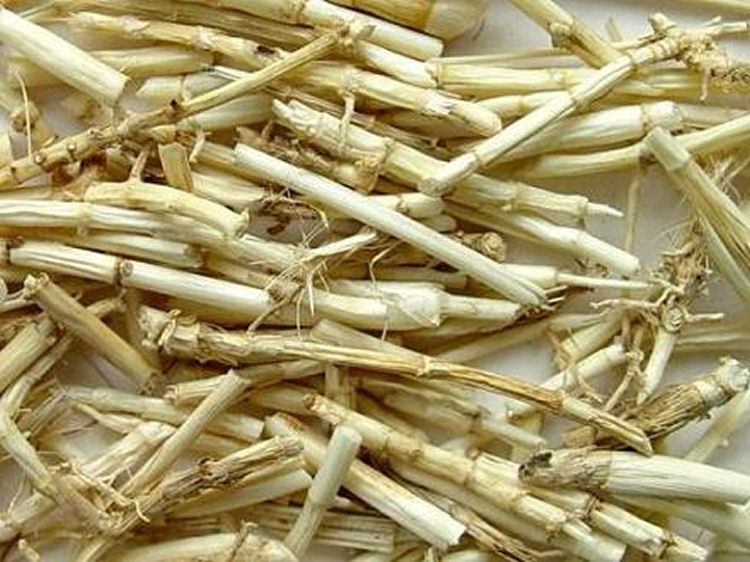
Bai Mao (Imperata Cylindrica) Wards Off Ghosts and Demons
Here’s the passage in question from the Inner Chapter 17, Climbing Mountains, Crossing Rivers 登涉:
山中見鬼來喚人,求食不止者,以白茅投之即死也。
The chapter talks about how the more remote and massive a land formation, such as a mountain, deep within its forests, the more powerful and active their gui 鬼, whether you want to interpret that as hungry ghosts or as demons. Given the reference to these gui begging for food, a common trope associated with hungry ghosts, I’m guessing that’s the intended meaning.
And so when you’re journeying through such remote regions and you encounter a hungry ghost, throw bai mao 白茅 at the ghost. Bai mao, or imperata root, is an oft-used herb in Traditional Chinese Medicine.
Spell to Prevent Drowning
If you need to swim across a large river, i.e., if you must Cross the Great Stream (ha ha … I Ching reference…), mix the blood of a chicken with incense powder 香末, typically that’s a reference to sandalwood incense powder, and water from this Great Stream that you must swim across, and bathe yourself in this mixture. This mixture wards off any of the malevolent water spirits that might try to drag you down and drown you.
This spell is sourced from paragraph 11 of that Inner Chapters section, “登涉.”
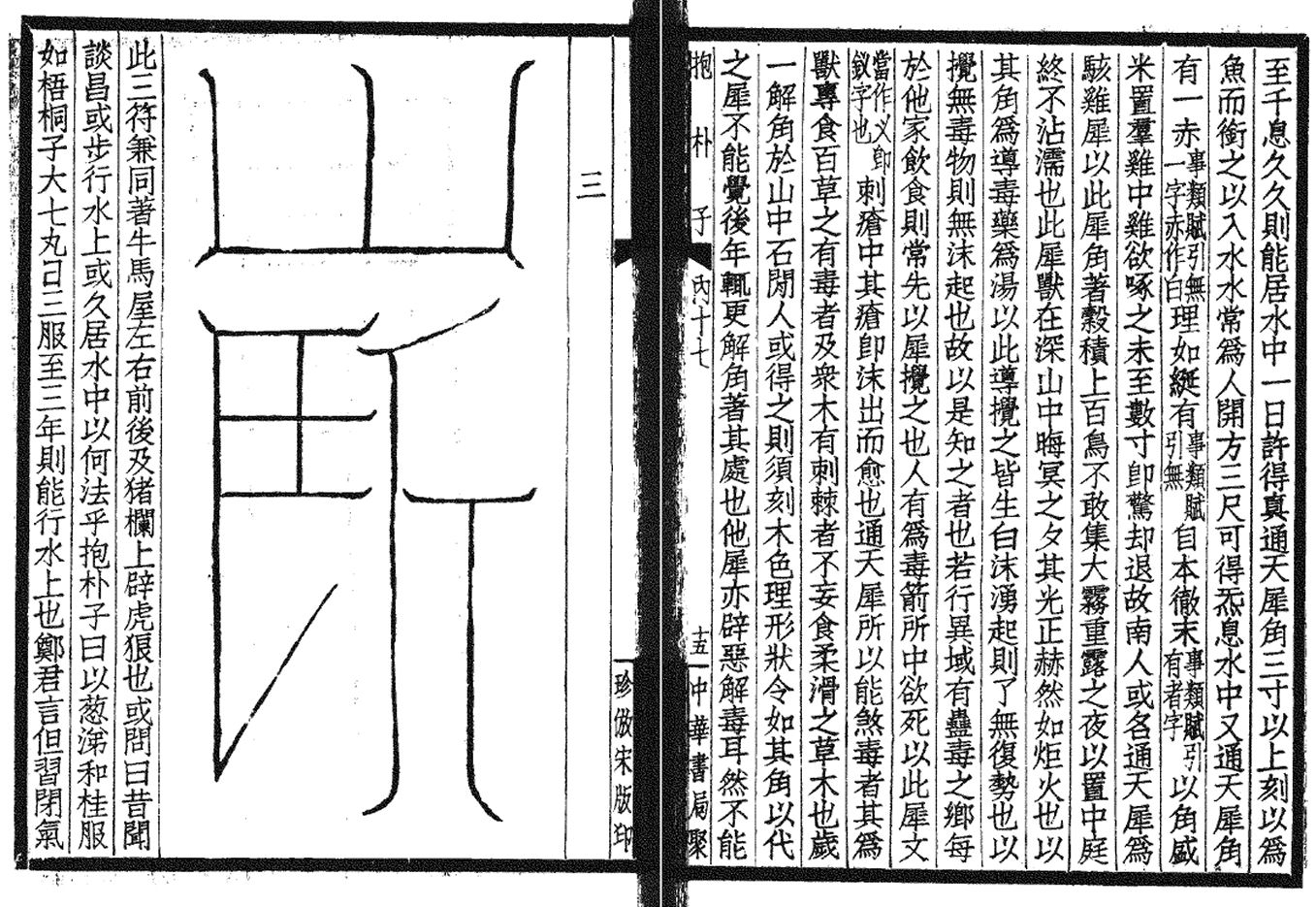
Rhinoceros Horn Talismans
Folk beliefs in the powerful metaphysical properties of rhino horns have endured for millennia in Asia. Here in the Baopuzi, Ge Hong describes a protection talisman for safe travels across large bodies of water. Source the largest most magnificent rhino horn you can find, then carve from it a figurine of a fish. Each of these fish figurines carved from the rhino horn are to be around 3 inches in length. A fish statuette carved from rhino horn will also ward off demon possessions.
 benebell wen
How cool! You are a genius❣️❣️🙏
Living in Japan, I have seen these magical hand gestures in TV dramas and historical movies and often wondered what they mean and where they come from. But when trying to ask someone about it Most people brush it off as some thing nobody knows anything about. And it stops there.Most people brush it off as some thing nobody knows anything about. And it stops there.Thank you so much for making this video. It’s sheds light on many of my old questions 🙏
LikeLike
Dearest Bell, Although Chinese Magic isn’t my path, the ritual of going to the Mountain and hanging 5 colored silks to alert the Spirits to your presence has just put tingles up my spine. And oddly enough I have a pack of Mudra cards sitting next to me!
As always your scholarly work and generosity is phenomenal. Thankyou.
kindest regards, Zig.
LikeLike
Thank you Bennewell Wen for sharing the teaching Chinese Taoisms and I Ching. Thank you very much for your time, passion and efforts to continue translating, explaining and sharing this incredible teachings. Love your works. May be blessed by all Taoism Deities and your Chinese Ancestors to continue spreading love and knowledges of Taoism.
LikeLike
Thank you Bennewell Wen for sharing the teaching Chinese Taoisms and I Ching. Thank you very much for your time, passion and efforts to continue translating, explaining and sharing this incredible teachings. Love your works. May you be blessed by all Taoism Deities and your Chinese Ancestors to continue spreading love and knowledges of Taoism.
Apology for missing “you”.
Kind regards,
Rosemary E
LikeLike
This is great. Thank you very much!
泰山 …climbing all those stairs. But it was not on a 甲子 day/month/year. Well, I didn’t know about this ritual back then anyways.
LikeLike
Hello,
Where did you study Classical Chinese?
LikeLike
I bought your book today. Looking forward to reading it.
Kind regards,
Christopher
LikeLike
This is wonderful! Thank you so much for translating all of this!!
LikeLike
NAMMYOHORENGEKYO TITLE OF THE LOTUS SUTRA SUPERSEDES ALL SO CALLED ESOTERIC TEACHINGS. SGI-USA.ORG
LikeLike