
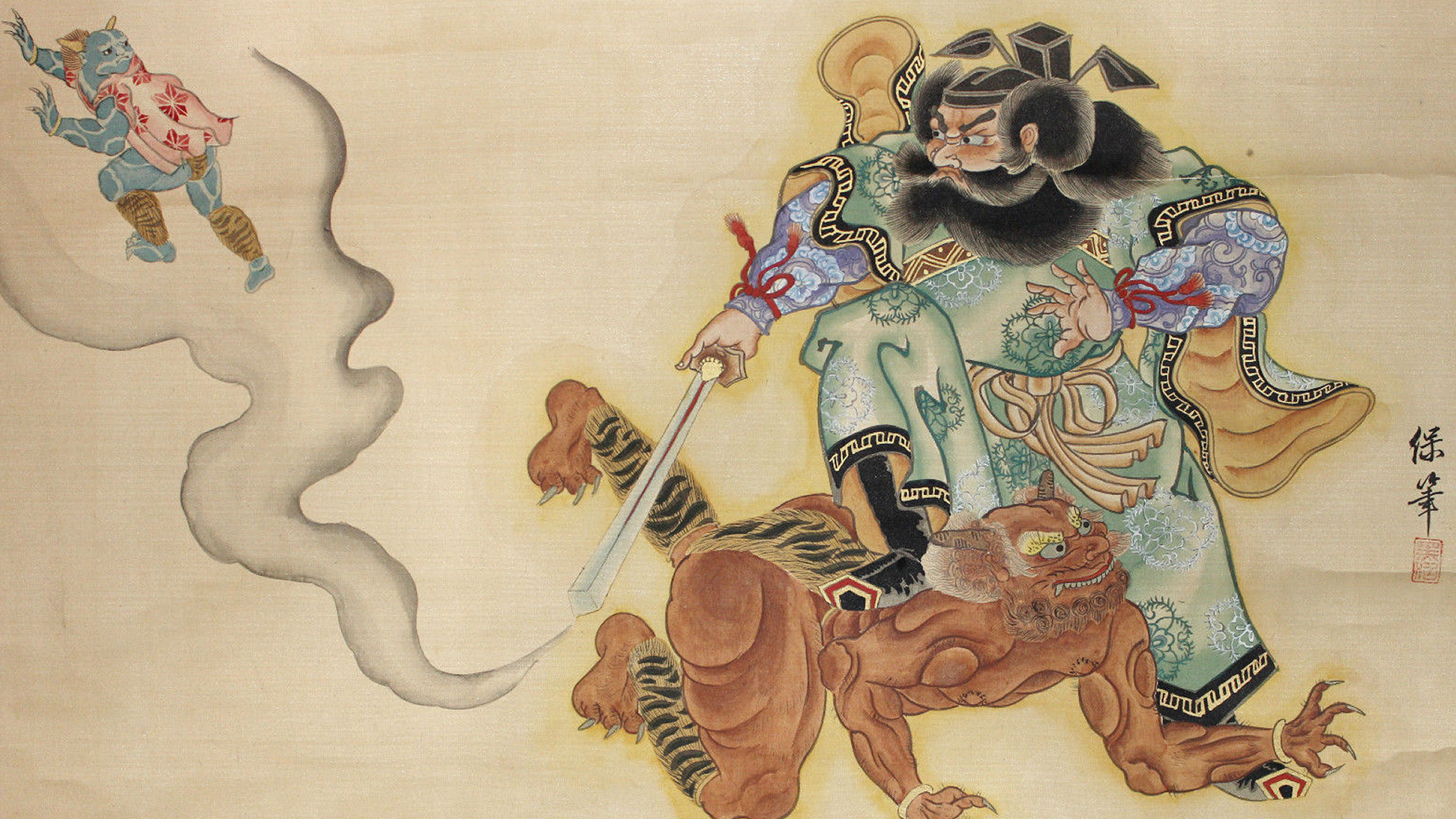
I stumbled upon an online discussion criticizing Fabrizio Pregadio’s translation of gui 鬼 to “demon, devil” [in Encyclopedia of Taoism (2008)], calling this translation inaccurate and problematic. The commenters in that discussion thread preferred the translation of gui to “ghost,” emphatically declaring that gui as ghost is the right approach, and that equating gui to demon or devil is wrong.
The rationale was that demon and devil have a connotation of evil in the West, which the term gui does not have. The term “ghost” is a bit more neutral – they say – and so gui as ghost is the better translation.
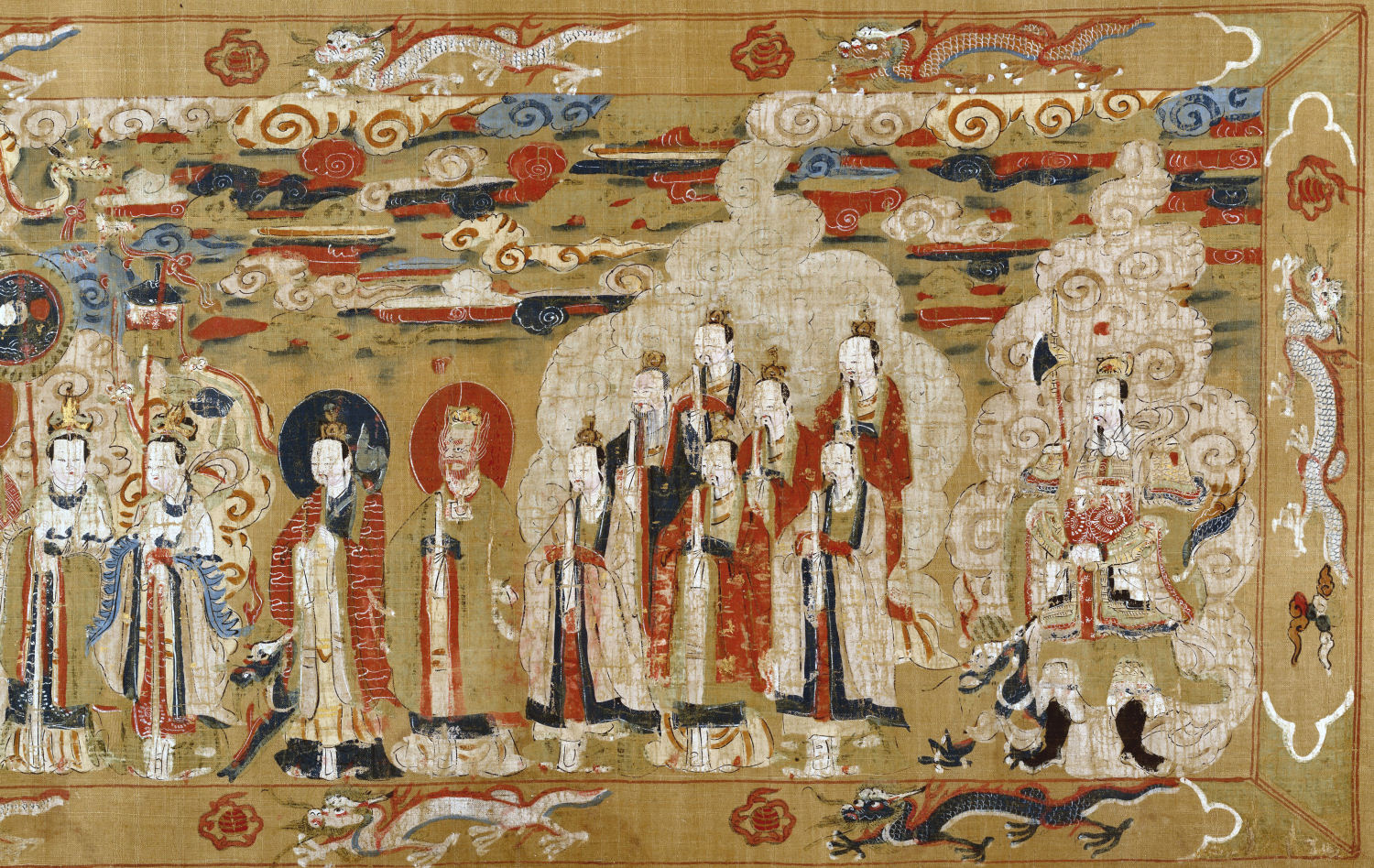
Likewise, there was issue with translating shen 神 to “god, spirit” because when Westerners were attempting to teach tai chi to Westerners and made reference to shen, it was interpreted by Christians as becoming possessed by literal spirits and personal gods within the body, which then led them to believe these spirits/gods were demons, and therefore practicing tai chi causes one to become possessed by the devil.
Therefore – concludes these tai chi teachers in the West – don’t translate shen to “god, spirit.” Instead, shen ought to be translated to “consciousness” and/or “mindfulness.”
A part of me sympathizes with that perspective. And a part of me wants to say no, the demon/god translations are not wrong. The problem is with those Christians and also, modernity’s determination to segregate consciousness-mindfulness from the cultural conceptions of demons and gods. Why should I or anyone white-wash and dilute explanation of these concepts just so they’re palatable to a Christianized Western society?
If you’re asking me – and dare I say, most native practitioners – gui does mean demon, devil and it also means ghost. However, our cultural perspective of what is implied by “demon, devil” is fundamentally different from the Christian perspective of “demon, devil.”
I mean heck, in everyday colloquial speech, gui is used to reference anyone considered “not us.” Outsiders, foreigners, anyone and anything we don’t understand and/or we fear gets called gui. Also, let’s not even get into the complexity of how a layperson’s conception of gui and demons is significantly different from a practitioner’s conception of gui and demons.
I have never thought of demons as “evil” in that good vs. evil sense. If we must personify and anthropomorphize, then at most I’d say demons and humans do not generally coexist well with one another. Some humans, however, notably the ones we refer to as practitioners, are adept at mediating between demons and humans so that the two might coexist in peace.
When I say “demon” in English, my mind does not think “evil devilish creature thing from a fire and brimstone sort of hell.” When I hear “demon” or “devil,” my mind thinks “English translation of gui” and then I assign it the meaning for gui that I am familiar with.
And so to me, demon as gui means a yin-dominant sentient but non-physical life force that can potentially influence the physical world. Whereas shen means a yang-dominant sentient but non-physical life force that can potentially influence the physical world.
And yes, we also have a term gui shen 鬼神 in effect combining both terms, which can mean the complete spectrum of demons, devils to gods, spirits, or gui shen in and of itself is a type of spirit entity, defined as one that is trapped here on earth but is not native to earth, and therefore does not belong on this plane. Although Taoism uses the designations of yin and yang, gui in contrast to shen, it’s not a mutually exclusive binary; it’s a spectrum, and at least according to mythology, fluid. In many of the legends we grow up with, gui become shen, and shen become gui.

If we want to get more accurate, the historical and traditional reference to the spectrum of demonology would be four classifications: Yao 妖 Mo魔 Gui 鬼 Guai 怪. And then we often pair 2 of those 4 designations to identify very specific identities of yin spirits, like Yao Gui 妖鬼, or Mo Gui 魔鬼, Yao Mo 妖魔, and Yao Guai 妖怪.
Does shen mean god, spirit, but also consciousness and arguably stretched to encompass transcendent mindfulness? Sure, yes. All of the above.
So I don’t think anybody is wrong. What I take issue with is the act of accusing another of being wrong and self-proclaiming one’s own definition as right.

If I translate gui to demon and then talk about the mystical system of ritualized practices related to gui as demonology and Christians then construe that to mean I’m in cahoots with their Biblical Satan and his evil demonic minions, well, that’s on them, not me. Why accommodate to their world view when I’m not even talking about Christianity?
Which is to say two different traditions speaking English use the word “demon” differently. I’m not Christian, so when I say “demon,” I mean gui. And to me, a gui is not evil and may or may not come from a spirit realm otherwise known as hell. To assume I mean an evil red spirit with devil horns and a pointy tail every time I say gui or demon is to impose a Christian world view where such a world view does not belong.
So that’s my rant for the day, especially as we near Ghost Month, the seventh lunar month of the year, which this year 2024 coincides with August.
The eve of the full moon in August 2024 will be the Ghost Festival. And though it’s translated to English as Ghost Month, it’s not just ghosts the way Westerners might define ghosts. It’s a month when the gates of hell open, so the gui from hell, in addition to what we call hungry ghosts, walk the earth.
I like the way my mom once described gui from Taoist/Buddhist hells to me — it’s not that they’re evil the way Christians describe demons, but they are probably like sociopaths. Gui are no worse than some humans we know. =)
 benebell wen
BBell. Thank you for yout post I appreciate how you break this down and help me to understand the different concepts. Very helpful.
Dennis H
LikeLiked by 1 person
amazing! Thanks for the insights and I love the rant (and its general themes for appeasing, not just the specific instances)
LikeLike
Hi Benebell,
I agree with your thoughts and explanations. I also laugh and 100% agree on your last sentence about “ GUI are no worse than some humans we know.” Most definitely, ghost if they want to make their presence known (most of the stories I heard) are harmless, and just spooky a little bit while co-workers especially ( the place where we mingle everyday) oftentimes stabs you in the back, or don’t talk at all or purposefully avoid and ignore each other. Too many immature and women in one place equals trouble, then add the laziness’s of co-workers when some others run while many strolling under the moonlight. This is the current experience in the nursing facility I worked at right now. So yeah, I would prefer to communicate with spirits than human sometimes. Thank you for reading.
Shelly
LikeLike
Thanks! This definition of the terms with either yin or yang dominant is really helpful. When looking it up in the dictionary it says “ghost/spirit/soul” on both and I was a little bit insecure when to use which. Now I know.
Never mind those who fear to be possessed by demons when practicing tai chi. It’s really their problem, not yours! If that’s what they believe, why do they want to learn tai chi in the first place? (and I thought I was a weirdo…)
That there is no 1:1 translation for many terms happens with any languages. (That’s where a thesaurus comes in handy.) One has to be mindful of the context.
LikeLiked by 1 person
It’s odd that they limit themselves to those terms when there are other terms available in English, like daemons and divinities, or elementals for that matter. Though this conflict also expresses the ancient clash between domesticating and foreignising approaches to translation – i.e. do they want to express the foreignness of the source in the destination language or domesticate the source into something that could have been written in the destination language.
LikeLike
horses can see them
LikeLiked by 1 person
Thanks for sharing; I thoroughly enjoyed this and agree with you. It reminds me a little of some content within one of my all-time favorite books: “Daimonic Reality” by Patrick Harpur. Blessings!
LikeLiked by 1 person
I am a huge fan of that book 👍
LikeLike
completely agree, Benebell. As a westerner I am tired of hearing the lectures of the so-called experts. When I want to learn about ghosts and demons from another culture, I am happy to learn what the actual culture believes. I wish people could chill and stop equating western with special snowflake 🙄
LikeLike
Pingback: All-Powerful, All-Purpose Secret Mantra from the Baopuzi – benebell wen
This article touched on a unique aspect of astrology I hadn’t thought about before. The influence of eclipses and spiritual portals is so mysterious—please expand on that!.Explore the power of astrology with Sigandur Chowdeshwari, a top astrologer in Bangalore. Get accurate predictions, personalized readings, and effective remedies for life’s challenges. Book your consultation today! Visit our website https://sigandurchowdeshwariastrologer.com/about-us.php and contact us +91 98459 43036
LikeLike
Thanks for this! Shen 神 frequently pops up in Buddhist texts. It’s even in the Heart Sutra, where the mantra at the end of the Sutra is referred to as 大 神 咒. Translators have really struggled with those three characters (well, the last two, anyway)! I’ve found several “translations” that leave 神 our altogether and just render 大 神 咒 as “the great mantra”! As a Westerner and a Buddhist I think it’s necessary to understand the different meanings behind characters like 神 and 鬼.
LikeLike