
Let’s make it unambiguously clear that nothing herein is science or evidence-based medicine.
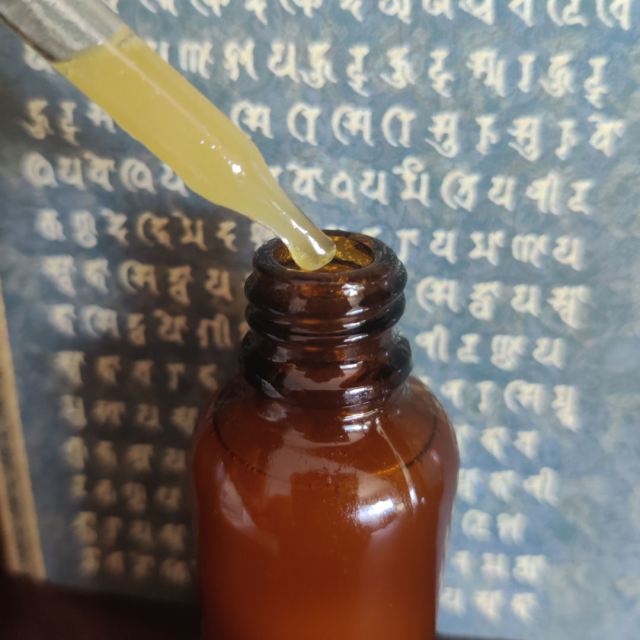
For the last three years, J and I have been routinely applying this multi-purpose antiviral treatment (in addition to getting vaccinated, boosting up the wazoo, and making prudent judgment calls with regard to masking). I sincerely believe this treatment oil has kept us Covid-free throughout the pandemic.
Oh, and not to mention, it’s great for my scalp, controlling dandruff, and promoting hair growth. Just a totally random incidental benefit. =)
You can convert the basic recipe into a mouth wash. Historically a myrrh mouth rinse was used after tooth extractions because the myrrh oil kills bacteria and sanitizes.
The base recipe also makes for a fantastic cologne. I get so many compliments about the scent when I wear this as a cologne.
Now let’s cover the ingredients one by one. Hyperlinked phrases in the post will take you to the relevant cited research. And yes, you’re going to notice how strikingly similar it is to the holy anointing oil recipe, and the Oil of Abramelin. (I use lemongrass in lieu of either galangal or calamus for multiple reasons, much of that reasoning rooted in TCM theory.)
Per its occult traditions, the base formula for this oil amplifies your personal power, which helps to increase the efficacy of your ritual magic. It is believed to consecrate all that it touches, to draw forth and magnify the holy in the mundane. This holy oil facilitates the ceremonial magician’s pursuit of the Great Work.
(And yes, this base recipe is also what I use for crafting the holy anointing oil that each SKT deck is anointed with.)
But it turns out there are a lot of practical and beauty benefits to this base oil formula as well! Myrrh, cinnamon, both lemongrass and galangal all happen to be anti-viral, anti-parasitic.
A key difference between how I craft this treatment oil and the holy anointing oil recipe is the process. For the holy anointing oil, all the herbal materials go into the hot oil infusion together.
For this treatment, I make each oil separately, so instead of mixing the noted proportions of myrrh, cinnamon, and lemongrass, etc. together at once in the oil infusion, I make just pure concentrated myrrh oil, then just pure concentrated cinnamon oil, then just concentrated lemongrass oil. After I have crafted three separate pure oils, I then combine them to make the treatment oil.
Another key difference is the carrier. For an anointing oil, the carrier will always be an oil. For this treatment, most of the times for most of the intended applications it’s a carrier oil, but sometimes I went with isopropyl alcohol or hard liquor instead, depending on the intended purpose for that batch.
TL;DR Recipe
- 1 part myrrh oil (base)
- 2 parts cinnamon oil (middle note)
- 1 part lemongrass oil (top note)
- either a neutral oil or a clear alcohol for the carrier, or witch hazel or vegetable glycerin (depends on purpose)
- optional adds (depending on purpose): frankincense, sandalwood, tea tree oil, marjoram oil, eucalyptus oil, mint oil, fennel oil, garlic oil, clove oil, ginger or galangal
Myrrh
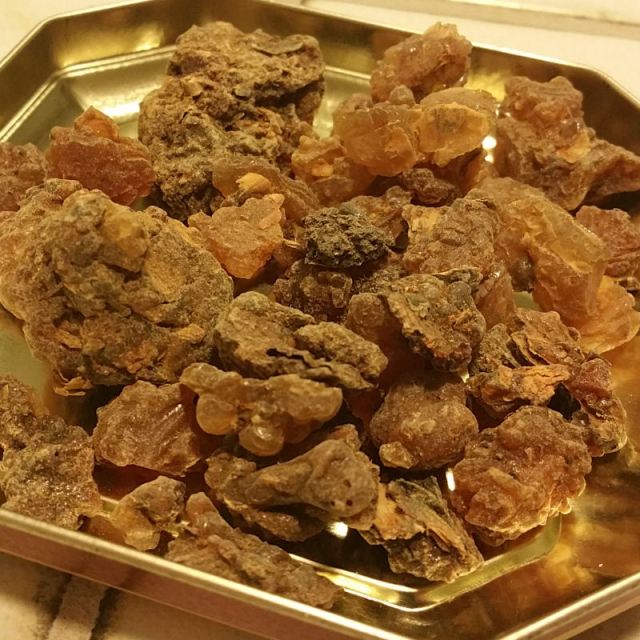
I’ve been intrigued by the research on the phytochemical constituents and pharmacological actions of the resinous extract of myrrh, which also has a long record in history of being used medicinally. Myrrh oil can be used as an antiseptic, astringent, is anti-microbial, and anti-parasitic. It can also work against respiratory infections like COVID-19. Traditional Egyptian Medicine has long used myrrh for treating infectious disease. In Traditional Chinese Medicine, myrrh was historically used to help treat respiratory issues, coughs, and phlegm.
Not to mention true myrrh oil smells divine, so for nothing else, I love it as a perfume. Likewise, there’s research on the hygienic functions of frankincense, which also is antimicrobial and found to measurably reduce contagions. So if you will be crafting a treatment oil for yourself, it might be a great idea to use both frankincense and myrrh for your base.
I’m particularly wary of buying commercial brand myrrh essential oils, especially when the pricing is cheap. That’s because I’ve made it from scratch and know how much myrrh resin it takes to make a potent, concentrated amount of this oil that it’s kind of impossible for you to sell high quality myrrh essential oil on the cheap.
Cinnamon
Traditional Persian Medicine has long touted the healing and warding properties of cinnamon, and now in the view of conventional medicine, we find that cinnamon may have health benefits in defense against viral infections, particularly against Covid, as the ingredient shares a common mechanism against RNA viruses.
Integrating cinnamon in addition to black cumin, black pepper, licorice root, honey, and vinegars could also be helpful. Several varieties of mushrooms are great antiviral foods and restrict virus absorption into the cells.
There’s an old wives’ tale that applying cinnamon oil throughout the length of your hair will reduce dandruff, quicken hair growth and also let your hair grow thicker and denser. No clue if there’s any merit to it, but it’s been one long-enduring old wives’ tale. =P
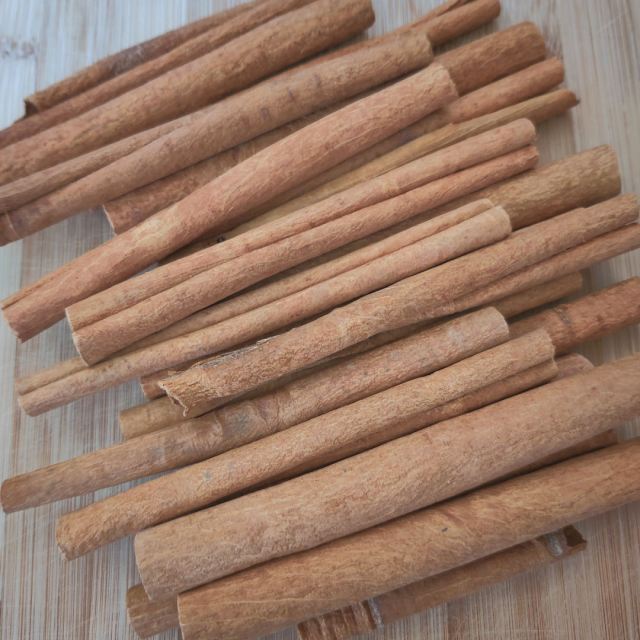
You can buy a bulky canister of rolled cinnamon bark. Slow-simmer or crockpot it in olive oil for 3 hours bare minimum and ideally 5 hours. Drain and keep that cinnamon oil. I then fill a glass jar with new additional cinnamon bark and fill that jar of new cinnamon bark with that cinnamon oil I just made. Store the glass jar somewhere dark, set it and forget it for three months. Drain and that’s my infused cinnamon oil.
If that sounds like way too much work and you are insistent on going the route of purchased commercial brand essential oils, then just know that cinnamon essential oil can often be highly irritating, so you’ll need to know your own sensitivities, tolerance for sting, and be hyper-mindful of proportions. So the “50% cinnamon oil” part of the recipe below probably cannot work for you if you’re using commercial cinnamon essential oil. And you must use a carrier oil! =)
Note that in a more traditional holy anointing oil recipe, it’d call for two different types of cinnamon– Ceylon cinnamon and cassia cinnamon. For ceremonial purposes, I’d follow that. For this practical treatment oil purpose, I just go with the “two parts” of whatever cinnamon I have on hand, and that’s usually cassia.
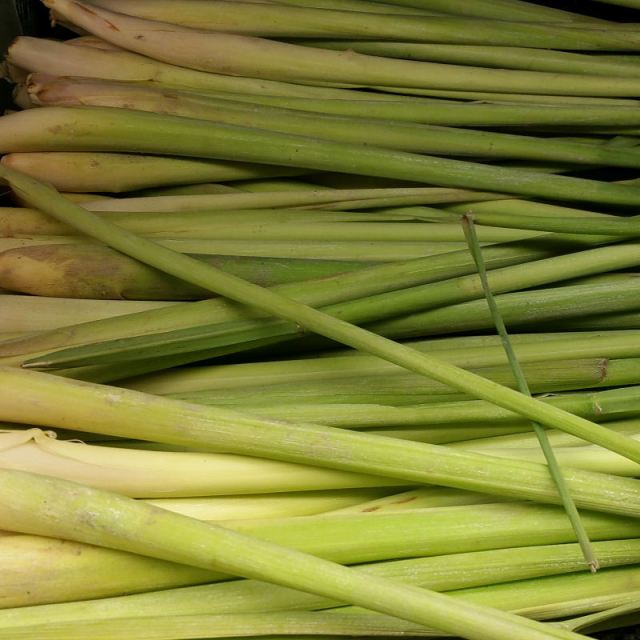
Lemongrass
Lemongrass essential oil, even at 0.1% concentration in a formula, was found to completely inhibit viral replication of certain types of viruses. Following TCM theory, lemongrass combats Windy and Damp conditions, which are the conditions that often breed infection.
In TCM, lemongrass is an herb used to expel cold and help with both the respiratory and digestive systems. In many Southeast Asian mystical traditions, lemongrass is believed to help facilitate your ability to see the future and see celestial (as opposed to underworld or ghostly) spirits. Lemongrass is also believed to have the power to exorcise demonic and malefic spirits, and is often integrated into exorcistic rituals.
I sun-dry fresh bundles of lemongrass (you can buy this at any local Asian grocery store). If there’s a lot of moisture in the air where you live and there’s some fear around possible rot or mold forming on the fresh lemongrass while it dries, spray the lemongrass with brandy or cognac (I like to go with Remy Martin XO because I’m Asian and that’s what Asians do…).
Once sun-dried, follow a macerated or infused oil recipe. Depending on what you plan on doing with the treatment, in lieu of an infused oil, you can make lemongrass infused baijiu (clear liquor) or vodka.

Infusion Time
First, I let the plant matter simmer at very, very low heat for three hours before draining away the simmering plant matter, taking that hot-infused oil, pouring it over a new batch of the plant matter to steep in a tightly sealed jar.
I work with three moon cycles, but basically three months. Each of the three sealed jars of oils needs to be steeped in the plant matter in a cool, dark place for a minimum of three months before you drain away that plant matter and combine the three oils for the treatment formula.
Oil Trinity in Four Parts…
In my homemade version using macerated oils, I don’t need another carrier oil for the treatment oil recipe because I used carrier oils already during the infusion process for the myrrh, cinnamon, and lemongrass.
First, forming the base note of the oil is the myrrh oil, filling your container 25%. To that it’s two parts or 50% cinnamon oil to form the middle. Then it’s one part or 25% of the lemongrass as the top note. The recipe is thus three ingredients in four parts, 1 part myrrh to 2 parts cinnamon, to 1 part lemongrass.
…But OK to Diverge
For the practical use of the treatment oil for its antiviral properties preventing microbial infection and inflammatory diseases, it’s okay to switch up the recipe a bit and add other historically medicinal oils.
By the way, the cited Minami, et al. study notes that there are in fact many active ingredients found to be effectively antiviral, such as tea tree oil, marjoram, eucalyptus, lavender, and peppermint, just to name a few, though at varying percentages of efficacy.
Other agents that are antimicrobial and antiviral agents include clove, turmeric, ginger, thyme, mint, fennel, primrose, and garlic, which you can read more about in this 2020 article, “Antioxidiant, Antimicrobial and Antiviral Properties of Herbal Materials.”
I should point out that I don’t have an immutable fixed recipe. I’ll switch it up a bit every time I make it. Sometimes I include frankincense, sometimes I don’t. Sometimes there’s galangal oil or ginger, and other times I leave it out.
Exactly what part of the cinnamon tree (bark or dried leaves) is used for the cinnamon oil depends on what I have on hand.
Sometimes I add sandalwood oil, especially if I’m using the treatment for my hair and scalp. I’m more tolerant of purchasing commercial brand sandalwood essential oil. =P So this is one I don’t tend to make myself from scratch.
If I’m making a batch to be used as mouthwash, I’ll add fennel. Myrrh and fennel have long been used as effective mouth rinses. Fennel oil is one I’ll make from scratch myself. I mean, dried fennel is so easy to get, inexpensive, and the oil so easy to make.
Can You Use Essential Oils?
In a pinch, can you use store-bought essential oils? While I don’t see why not, I’m personally quite wary of many commercial brands of essential oils. For starters, if it’s not food-grade, then definitely do not use it as an ingredient in a mouthwash. If you’re just crafting something that will be the equivalent of aromatherapy, then generally speaking it’s probably okay.
Your skin’s sensitivity to essential oils is something you’ll want to take into account. Whereas homemade infused oils are typically less likely to cause sensitivity problems, commercial essential oils, especially cinnamon and lemongrass, will.
If you go the route of crafting this formula with commercial bought essential oils, then (1) definitely do not ingest it unless the product clearly states that it is food grade, (2) you must use a carrier oil (such as olive oil) to dilute the base formula per your skin’s tolerance, and (3) spot test on your skin before applying your formula to sensitive areas.
I Think Numerology Matters
When you cook and bake a lot, you start to pick up on recurring patterns. A lot of the “tried and true” traditional recipes have really interesting ratios of ingredients. Like the 1-2-3 of shortbread recipes. Or the easy-to-remember “4 and 1/3, 1 and 2/3 to equal 6, then 2 and 2 and 2 for 6” recipe for bread dough (i.e., 4 and 1/3 c. flour to 1 and 2/3 c. warm water, plus 2 tbs. sugar, 2 tsp. yeast, and 2 tsp. salt). Or 3-cup chicken braise, or pound cake.
And so likewise when it comes to alchemical formulas, I think ratios probably matter. If there’s a golden harmony to the ratio, then there’s likely to be a golden harmony to the result.
Blessing with the Great Compassion Mantra
It’s not that I think you must bless with recitations of Kuan Yin’s Great Compassion Mantra. I don’t think that’s the part that’s universal. What’s “mandatory” (per my belief system) is a tried and true well-established sacred text that you feel deeply and personally connected to.
Needless to say, blessing your treatment oil with invocation or prayer or what-not is squarely in the realm of faith, if put nicely, and superstition, if put less nicely.
I would assert that it’s a necessary step, but I also would not defend that assertion should you challenge it. You do you. =)
Applications
Inside Your Face Mask
Throughout the pandemic, I would apply a few droplets of this oil into the inner lining of my N95 face masks… not unlike what plague doctors would apply inside the beaks of their protective masks. For this application, do not use rubbing alcohol or ethanol or anything of the like! Stick with the traditional all-oils formulation.
Nasal Spray/Treatment
After the the state of public health emergency had ended and face mask requirements were lifted, if either J or I were to be socializing where the majority of people would not be masking– including ourselves– we would apply the oil inside our nostrils (the way you would apply a nasal spray). Yes, it stings a bit, especially if you have sensitive skin, so that’s something to consider. Again, stick with the all-oils formulation and be mindful of the concentrations.
Surface Disinfectant
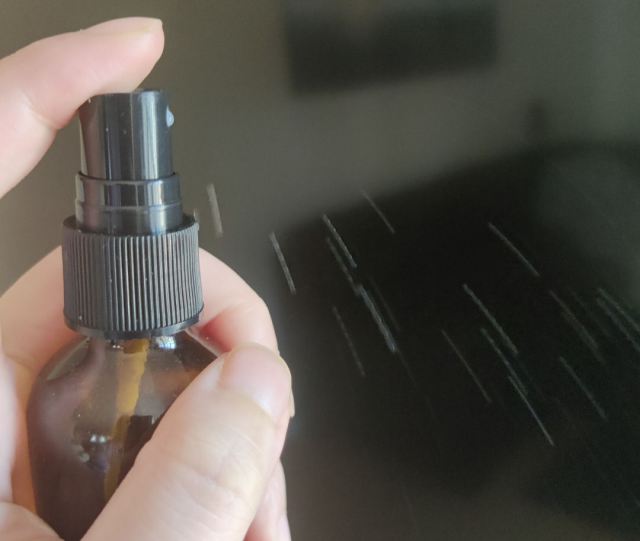
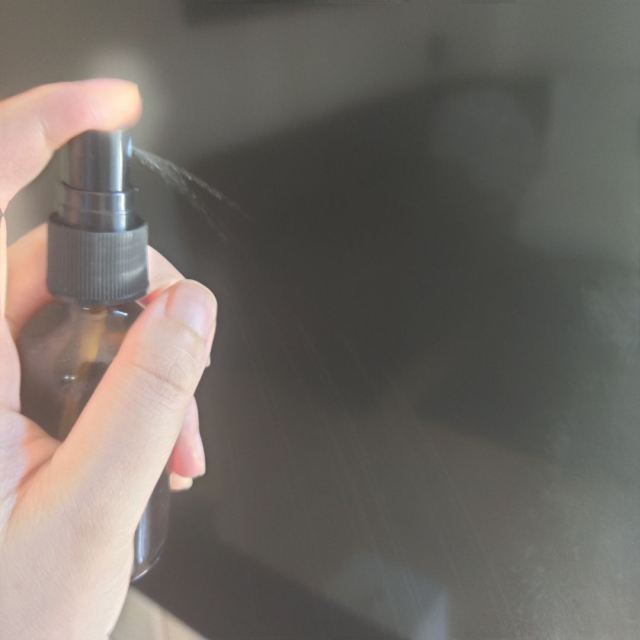
I’d make an air spray, put it in one of those dark glass spray bottles, and spray down a hotel room before we settle in and also spray down our cars. For a spray that I plan on using to disinfect surfaces (not humans), I’ll go with a 70% isopropyl alcohol carrier plus that oil trinity in four parts.
Perfume or Cologne
I also apply it all over myself just as you would cologne or perfume. Something I love about the combination of myrrh, cinnamon, and lemongrass as a scent is that by and large, it’s pleasing to everyone, and it’s gender-neutral, so anyone can wear it.
For a perfume/cologne roll-on, pour the formula into one of those roller ball application bottles and use a vegetable glycerin for the base. For a perfume/cologne spray, I like using witch hazel.
Mouthwash
I’ll make an ingestible version if I want to also be able to use it as a mouthwash, where the individual infused oils I’ve crafted are mixed in with some consecrated clean drinking water, and sea salt.
Oh, and if you’re making a mouthwash, then in addition to the base recipe of the three oils, I’d include fennel, oil of star anise, and oil of mint.
When it’s something like a mouthwash, then I will make sure to craft each oil from scratch on my own. Mint tends to grow rampant in gardens anyway, and you typically end up with more mint than you know what to do with. So make an infused oil! =)
General Aromatherapy
Personally, I’ve found that the scent of this specific formula helps me to alleviate nausea and even anxiety. The scent of this formula does help to lift my mood and put me in a state of calm, balance, and personal empowerment. So if for nothing else, I like it for its psychologically positive effects.
Holistic Health & Wellness Practices
To be holistic also means, to me, to not rely solely on any one thing. I’m not only just using this treatment oil and then being reckless with everything else. I’m careful and mindful on all fronts.
There are medical doctors whose knowledge and expertise I trust, who I know personally. I listen to them. I’m making sure my diet is one that will bolster my immune system. I love serving hot herbal teas to my loved ones and myself. More ginger and garlic in my cooking; integrate as much TCM as I can into lunch and dinner; and try to get in that routine physical exercise.
I also think it’s an important marker of holistic wellness practices to not judge other people’s lifestyle decisions. Don’t make people feel bad about the decisions they’ve arrived at for themselves. Don’t tell them their decisions are not “informed.” Do you really know that? It may be a different approach to “informed” from your approach.
All of us are subject to different forms of propaganda and misinformation. Many of us hold on to irrational religious beliefs– irrational religious beliefs provide comfort in times of distress. None of us are above reproach. Just do what makes sense, to the best of your knowledge and abilities, for you and your loved ones.
NOTE OF CAUTION
I feel goofy and patronizing for having to even write out this note of caution, but here we go. Just in case. When you’re crafting with herbs and plant materials to create a formula that you plan on applying to your skin or even ingesting, you need to be highly knowledgeable of the herbs and even more so of what happens when you combine such plant materials. You need to understand their shelf life, risk of rot, account for conditions to reduce the risk of mold, know how to work with natural preservatives, and command a balanced perspective of both practical and mystical implications. Always be mindful, do your homework, do your research and look for credible sources for that research, know yourself, and make prudent judgment calls.
 benebell wen
Awesome information, thanks so much. How long do you think the shelf life is of various oils crafted this way?
Definitely inspired me to get back into infusing oils! 😁
LikeLike
I’m not sure, and I would guess it also depends on how it is stored. As a general rule so, if it is something I would apply to the skin or the mouth rinse, I don’t use anything past 3 months. And that is observing diligent storage care. If it is a room spray, then one year.
LikeLike
I have been using boatloads of Frankincense and Myrrh since 2014. I could not agree more with everything you state. On myself for many many things and on my pets who have had many issues. Obviously do all the medical stuff, but I am a big believer in doing ALL the modalities. Thank you for this wonderful recipe.
LikeLike
Hi Bell. I am going to make the oils but I’m curious why you chose olive oil. I use a few different oils when cooking, including olive, depending on what I’m making, but this is my first time making an oil. Thank you!
LikeLike
Hopefully this video and write up explains: https://benebellwen.com/2018/01/15/oil-of-abramelin-or-holy-anointing-oil/ 😊
Of course you can use any carrier oil you like. 🙂
LikeLike
Somehow I knew there would be a short answer and a long answer 😂, so… I read the post, watched the video (need to watch again to take notes), downloaded the associated pdfs, found my copy of Abramelin, and checked my olive oil stock. (Yes, of course after watching/reading I will be using olive oil!) I love that your posts always come with homework. If I do this as strictly as possible, I have weeks to prepare before the New Moon. [P.S. The Great Compassion Mantra link from the above page is 404, but the link from the related blog post works fine.] As always, a huge thank you for the information and guidance!
LikeLiked by 1 person
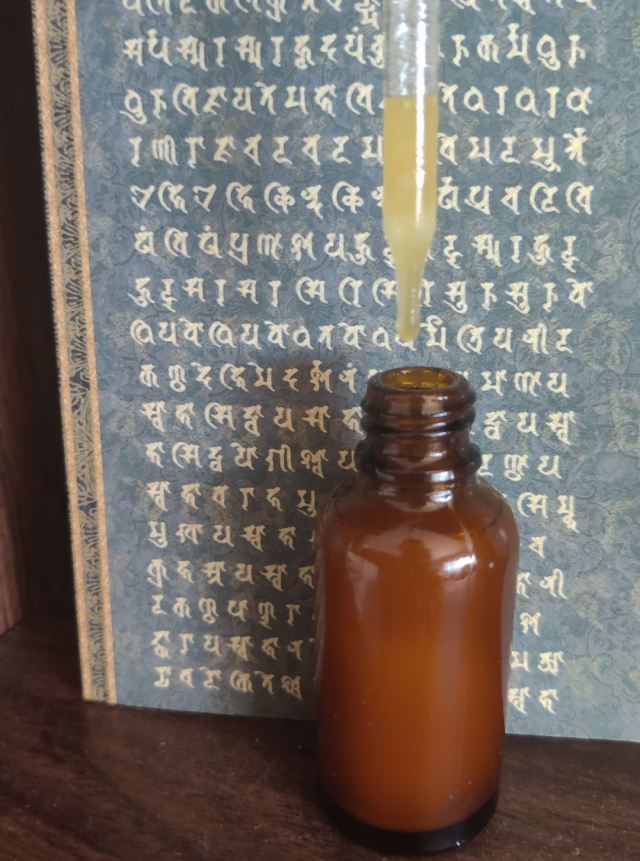
just wondering what the blue book is 🙂
LikeLike