Asking Smarter Questions in Divination

Botanical Dreams Oracle by Lynn Araujo and Catrin Welz-Stein

I partook in this thought leadership workshop and learned about the five categories of questions to ask for more effective, strategic decision-making. Being me and having the interests I do, of course I immediately connected these learnings to tarot, I Ching, and in general divinatory readings.

Teachers in nearly every divinatory tradition or system talk at length about the importance of how you ask and frame questions for divination. The quality of answers you receive — be that in strategic leadership, personal development, or divination – is directly influenced by the clarity, precision, and intention behind the questions you’re asking.

Apothecary Spirits Oracle by Eric Maille, Michael Anthony, and Thomas Witholt

A well-framed question acts like a lens. It brings your focus to what truly matters, and in the case of readings, hones the focus narrowly on what it is you most want or need to know. The better your question, the more noise will get filtered out of the reading result, enhancing meaningful insight.

Thinking about how to frame questions through the principles of these five categories is really helpful, I think. Hence, this share.
Continue reading “Asking Smarter Questions in Divination”

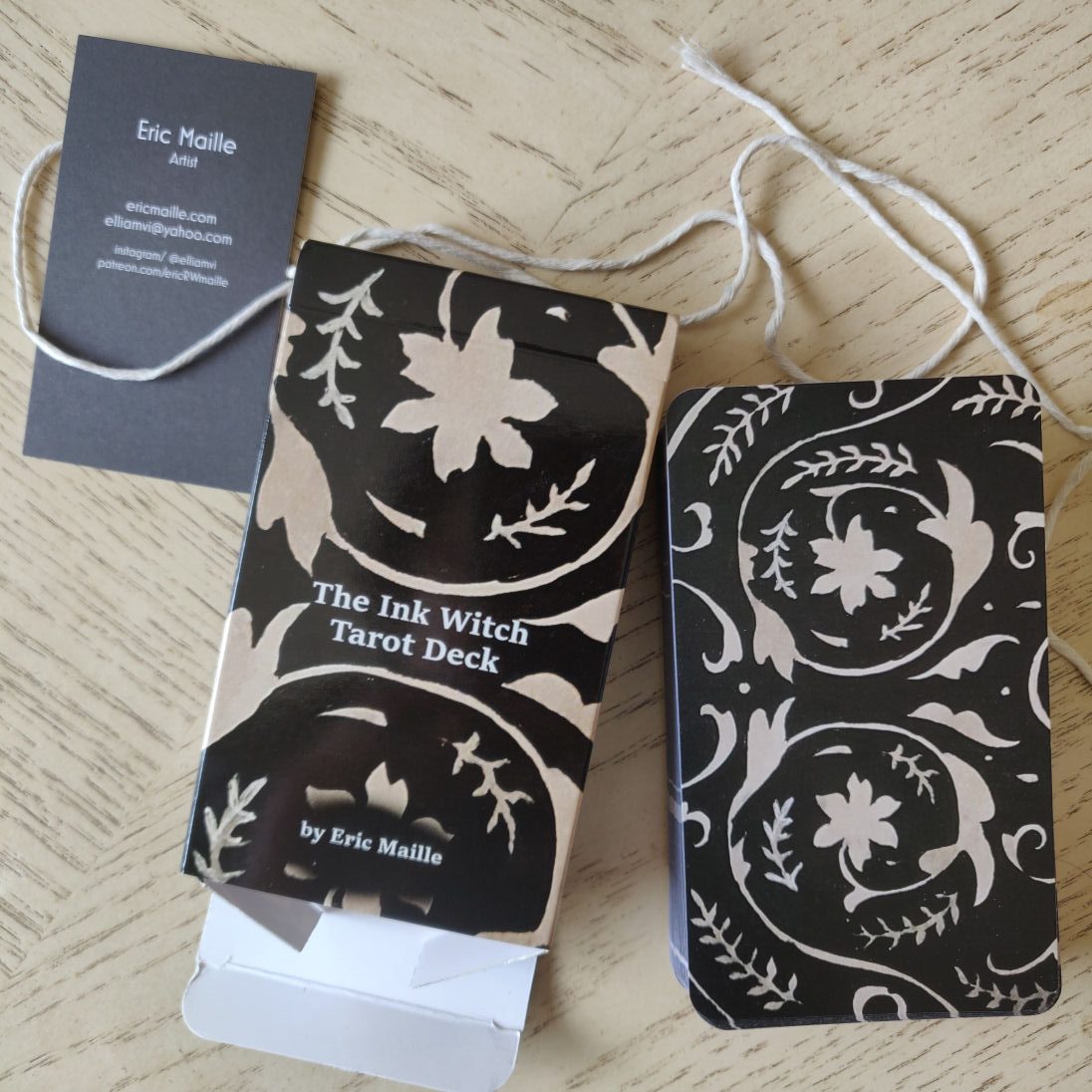
Ink Witch Tarot by Eric Maille

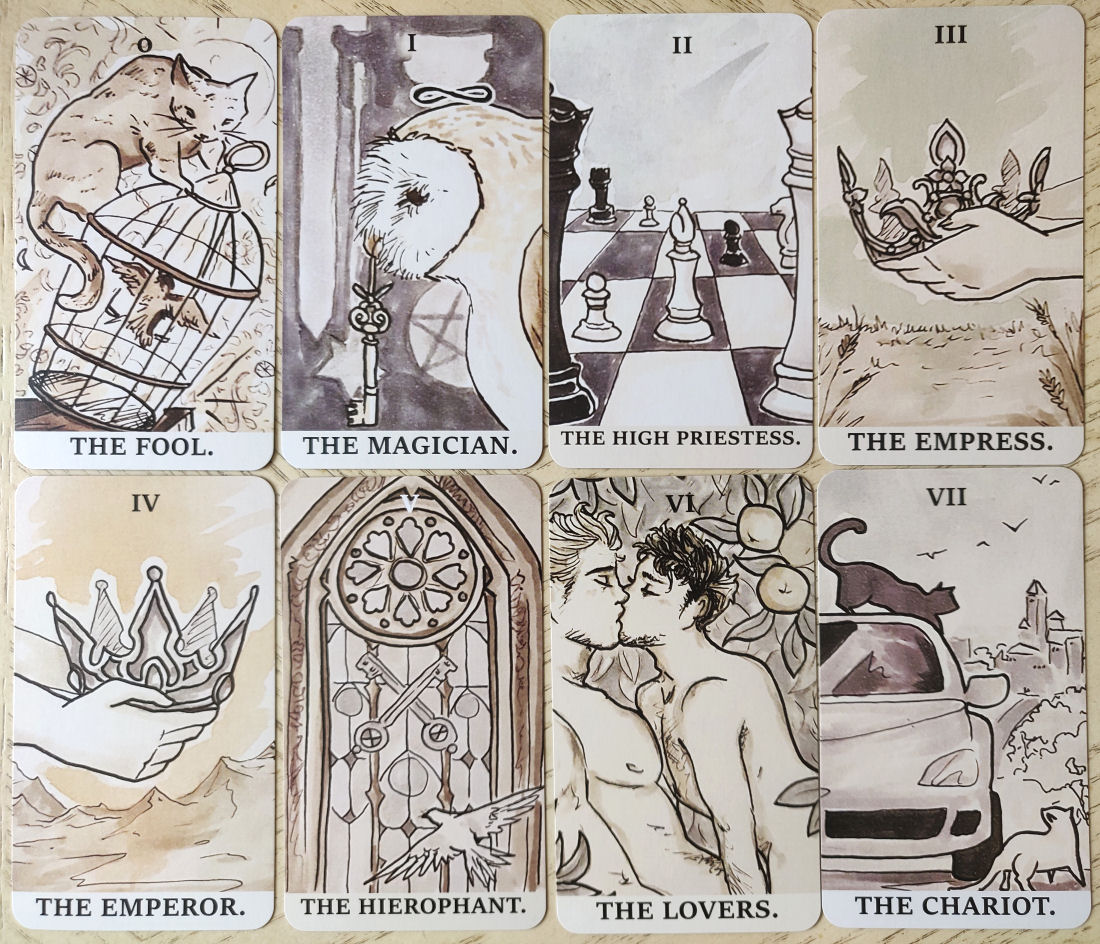
A while back I reviewed the book The Cards: The Evolution and Power of Tarot by Prof. Patrick Maille. Eric Maille is his son, an artist, and the creator of the Ink Witch Tarot. Maille is an Oklahoma-based artist and illustrator whose works explore “the irony that we as humans often feel poorly equipped to live out that experience, struggling against our environments, the people around us, and our own emotions” (per his artist statement). And you’re going to find that theme at the heart of these beautiful illustrations.

The art style here reminds me of haboku, a form of traditional Japanese ink brush painting that’s done in monochrome, expressing depth through sharp uses of contrast, an art style that tends to be impressionistic, soft, and flowing.

What is so compelling about the Ink Witch Tarot is the storytelling, and Maille’s artistic interpretations of each tarot card. In Key 0, I see The Fool as the bird, who appears to be in a precarious position, but the way that cage is about to fall off the tabletop, the door will swing open and that bird will be freed. If you view The High Priestess illustration as an in-process chess game, either the other side’s pawn is about to take the bishop or the bishop is about to take the other side’s king. Meanwhile both sides’ queens are side by side in the foreground, reminiscent of the traditional High Priestess’s twin pillars.

Continue reading “Ink Witch Tarot by Eric Maille”